

- Local time
- 02:50
- Currency
- Sri Lankan Rupee (LKR)
- Capital
- Sri Jayawardenepura Kotte / Colombo
- Calling code
- +94
- Drive on the
- left
Overview
Ancient royal cities, Kandy's Temple of the Tooth, tea country, wildlife parks and beaches on every coast, on an island where some part is always dry.
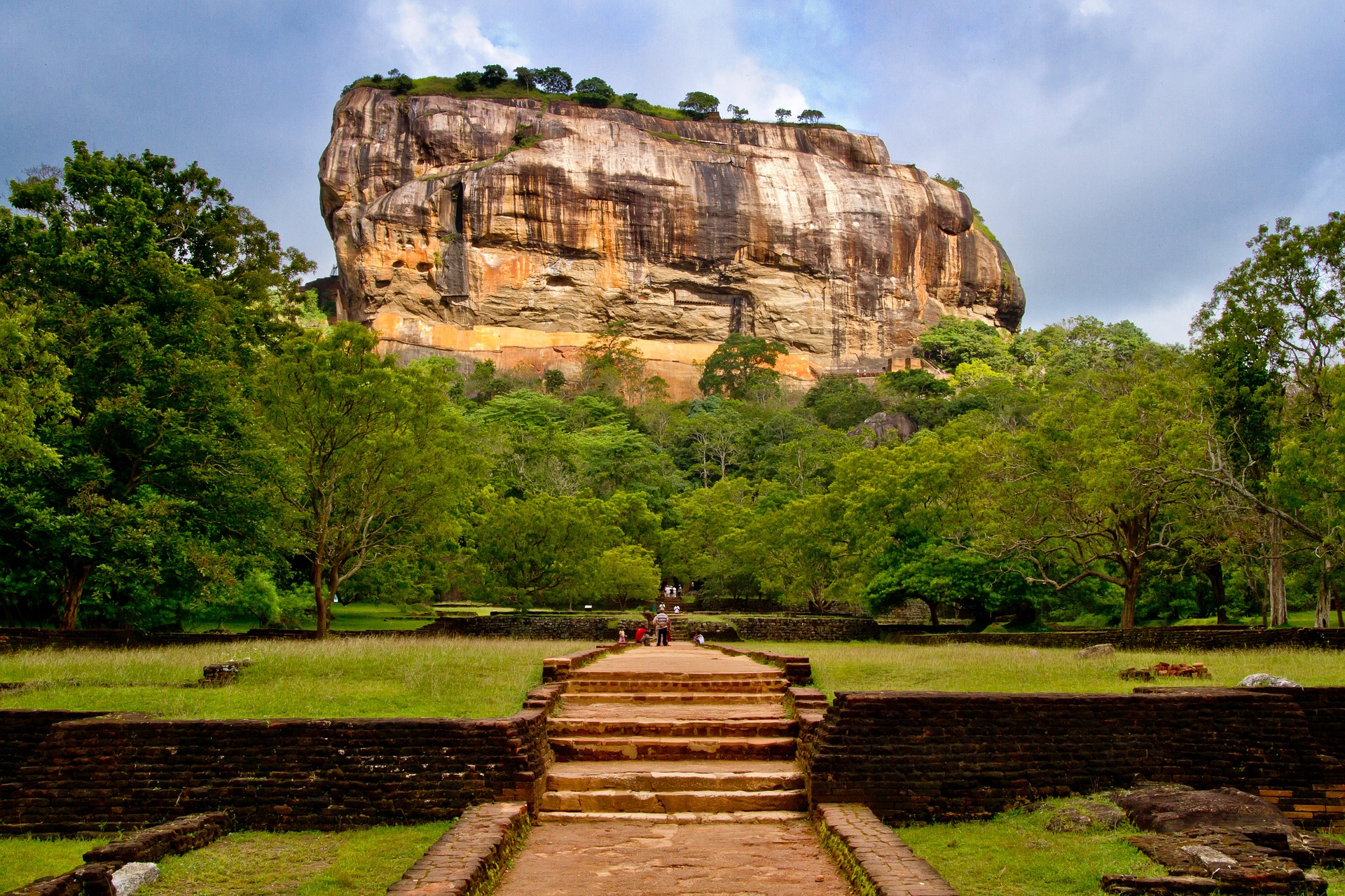
Sri Lanka, called Ceylon until 1972, is an island in the Indian Ocean just south of India, with more than 2,500 years of written history. The ruined royal cities of Anuradhapura and Polonnaruwa lie in the area known as the cultural triangle, Sigiriya has a fortress and palace ruin on a red rock, Dambulla a famous cave temple, and Kandy keeps the Temple of the Sacred Tooth Relic. The country has eight UNESCO World Heritage Sites, among them Galle's old town inside its Dutch fort, the Sinharaja rainforest and the Central Highlands. Inland are the cool hill country and its tea estates; along the coast are surf towns, beach resorts and boats that go out to look for whales. Most Sinhalese are Buddhist and most Tamils are Hindu, with large Muslim and Christian communities, and religion is taken seriously.
Two monsoons hit different coasts at different times of year, so there is good weather somewhere on the island in every season. Buses and trains reach nearly every tourist destination, which makes independent travel easy, but touts are a constant problem in tourist areas and foreigners pay much higher entry fees than locals at many sites. In the north and east, where the war that ended in 2009 did the most damage, accommodation and infrastructure are more limited and mine clearance continues in places: stay on roads and cleared paths. The UK does not advise against travel to any part of the country; Canada advises a high degree of caution.
- Anuradhapura and Polonnaruwa: Ruins of two ancient capitals, both UNESCO World Heritage Sites.
- Sigiriya and Dambulla: A red rock fortress with a palace ruin, and a cave temple complex nearby.
- Kandy: The Temple of the Sacred Tooth Relic and, usually in August, the Esala Perahera procession.
- The hill country: Tea estates around Nuwara Eliya and Ella, and the cloud forest of Horton Plains.
- Galle and the south coast: The old town inside Galle Fort, with beach villages such as Unawatuna and Mirissa nearby.
- Yala National Park: Safaris in a large animal sanctuary, with a chance of seeing the Sri Lankan leopard.
Places to visit
- City
- Town
- Coast
- Park
- Historic site
Cities
- Colombo: The commercial capital and largest city, with hotels, restaurants, nightlife and shopping.
- Sri Jayawardenepura Kotte: Also known as Kotte, the new capital of Sri Lanka.
- Anuradhapura: Partly restored ruins of ancient capitals, a UNESCO World Heritage Site.
- Polonnaruwa: The royal capital from the 11th to the 13th century, whose UNESCO-listed ruins lie in one compact area.
- Kandy: The spiritual heart of the country, home of the Temple of the Sacred Tooth Relic.
- Galle: An old town inside a Dutch fort, a UNESCO site that hosts the Galle Literary Festival.
- Nuwara Eliya: A cool hill town with Victorian buildings, tea estates and race days.
- Negombo: A Western Province town by the ocean, with a beach area and car hire companies.
- Jaffna: The northern capital, where the heritage of the Tamil-speaking community is on display.
- Trincomalee: An east coast city on a natural harbour, with the Koneswaram Temple and beaches north of town.
- Batticaloa: A city built on a lagoon, with shallow beaches and paddy fields around it.
Beyond the cities
- Sigiriya (site): An ancient city with a fortress and palace ruin on a high red rock, a UNESCO site.
- Dambulla (town): Near Sigiriya, known for its UNESCO-listed cave temple.
- Horton Plains National Park (park): A cloud forest in the central highlands with endangered plants and animals and the walk to World's End.
- Ella (town): A small hill country town among tea plantations, a base for walks such as Ella Rock.
- Kitulgala (town): A forest area known for white-water rafting, about 4 hours from Colombo.
- Sinharaja Forest Reserve (park): The largest rainforest in the country, a UNESCO site with almost all of Sri Lanka's endemic birds.
- Yala National Park (park): A large animal sanctuary in Hambantota, known for the Sri Lankan leopard.
- Unawatuna (coast): A beach resort on the south coast, very close to Galle.
- Mirissa (coast): A south coast beach village with nightlife, two surf spots and whale-watching boats.
- Arugam Bay (coast): A beach town on the south-east coast with several well-known surf spots.
- Pasikudah (coast): An east coast resort with white sand beaches and upscale hotels.
Regions
- Western Province: Colombo, the capital Kotte and the commuter belt, with beach towns such as Negombo and Bentota.
- Central Province: The hill country around Kandy and Nuwara Eliya, with tea estates, good hiking, Sigiriya and Dambulla.
- North Central Province: Anuradhapura and Polonnaruwa, the historic heart of the cultural triangle.
- Southern Province: Galle's fort, the beaches of Unawatuna, Mirissa and Tangalle, whale watching and Yala National Park.
- Uva: Highlands and tea around Ella, Haputale, Bandarawela and Badulla.
- Sabaragamuwa: The gem-mining centre of the country, with Ratnapura, and elephant safaris in Udawalawe National Park.
- Eastern Province: The natural harbour of Trincomalee, Batticaloa and long sandy beaches, with surfing at Arugam Bay.
- North Western Province: Coconut plantations, dolphin watching and Wilpattu National Park.
- Northern Province: Jaffna and Mannar, home to most of the Tamil-speaking population, with quiet beaches and ruins; it is still being rebuilt after the war.
Things to do
See
- Temple of the Sacred Tooth Relic Kandy: The temple that keeps a tooth of the Buddha, built as a royal palace and rebuilt several times; dress modestly and take off your shoes.
- Esala Perahera Kandy: A procession of dancers, musicians and dozens of elephants, usually in August over 10 days; the last five are the biggest.
- The ancient cities Anuradhapura and Polonnaruwa: Stupas and temple ruins of the kingdoms of Anuradhapura (about 200 BCE to 1000 CE) and Polonnaruwa (about 1070 to 1200).
- Sigiriya and the Dambulla cave temple Sigiriya and Dambulla: The fortress and palace ruin on Sigiriya's red rock, then the Buddha statues and paintings in the five caves of the Dambulla temple.
- Galle Fort Galle: Wander the cobbled streets of the old town, with colonial buildings, museums, shops and places to eat inside the fort.
Do
- Hill country walks Horton Plains, Ella and Adam's Peak: World's End in Horton Plains, Ella Rock, the trails around Adam's Peak and guided hikes in the Knuckles range.
- Wildlife safaris Yala and Udawalawe national parks: Leopards in Yala, elephants in Udawalawe; for birds, Sinharaja has almost all the endemic species and Kumana is known for migrants.
- Surfing Arugam Bay, Weligama and Mirissa: The west and south coasts are surfed from November to April; Weligama suits beginners and Arugam Bay is famous for its surf.
- White-water rafting Kitulgala: Rafting through rainforest, about 4 hours from Colombo.
Eat
- Rice and curry: Eat where the locals do, in the small restaurants called 'hotels', and try kottu roti and hoppers too.
Itineraries
The cultural triangle and Kandy in 8 days (8 days)
- Colombo (1 night): Arrival and a first look at the city.
- Anuradhapura (2 nights): The ruins of the ancient capitals.
- Sigiriya (2 nights): The rock fortress, with a visit to the Dambulla cave temple.
- Polonnaruwa (1 night): The medieval capital, with its ruins in one compact area.
- Kandy (2 nights): The Temple of the Sacred Tooth Relic; in August, the Esala Perahera.
Hill country and the south coast in 9 days (9 days)
- Kandy (2 nights): The Temple of the Sacred Tooth Relic.
- Nuwara Eliya (2 nights): Tea estates and the Hakgala gardens.
- Ella (2 nights): Walks among tea plantations and up Ella Rock.
- Yala National Park (1 night): A safari in search of the Sri Lankan leopard.
- Mirissa (1 night): Beach, surf and whale-watching boats.
- Galle (1 night): The old town inside the fort.
The east coast in 7 days (7 days)
- Trincomalee (2 nights): The harbour, the Koneswaram Temple and the beaches north of town.
- Pasikudah (2 nights): White sand beaches and upscale hotels.
- Batticaloa (1 night): The lagoon city, with paddy fields and shallow beaches.
- Arugam Bay (2 nights): Surf spots along the south-east coast.
Climate and best time to visit
| Jan | Feb | Mar | Apr | May | Jun | Jul | Aug | Sep | Oct | Nov | Dec | |
|---|---|---|---|---|---|---|---|---|---|---|---|---|
| Max °C | 30 | 32 | 34 | 34 | 33 | 33 | 33 | 33 | 33 | 32 | 30 | 29 |
| Min °C | 21 | 21 | 23 | 24 | 25 | 25 | 25 | 24 | 24 | 23 | 23 | 22 |
| Rain mm | 79 | 55 | 69 | 152 | 84 | 9 | 27 | 40 | 74 | 255 | 230 | 211 |
Sri Lanka is hot all year, and rain can fall in any month, but there are two main monsoons that hit different parts of the island. The southwest monsoon soaks the west and south coasts and the hill country, from April to July according to Wikivoyage (May to September according to Canada). The northeast monsoon brings rain to the east coast, from November to March according to Wikivoyage (December to February according to Canada). Between them, in March and April and in October and November, Canada says scattered but intense rain and thunderstorms are common, and Wikivoyage describes October and November as unsettled across the whole country.
For the west coast, the south and the hill country, January to March is a good choice: it falls outside the southwest monsoon, the hill country is at its sunniest then, and the surf season on the west and south coasts runs from November to April. The east coast, which the southwest winds reach with little moisture left, is the better choice in the middle of the year. Altitude makes a big difference: Nuwara Eliya, in the hills, is much cooler than Hambantota in the dry south, where it stays around 30 to 35 °C. In Anuradhapura, in the dry north-central plains, average maximums run from about 29 °C in December and January to 34 °C in April, and the wettest months are October to December, with more than 200 mm each; June is almost dry. Heavy rain can cause floods and landslides, and Canada notes that El Niño may raise the risk of droughts, floods and storms in late 2026 and 2027.
Getting there and around
| Main airports | CMB, JAF |
|---|---|
| International driving permit | Required |
Getting there
By air: Bandaranaike International Airport (CMB) is the main gateway, about 35 km and an hour by taxi from Colombo. SriLankan Airlines, the national carrier, flies to South and Southeast Asia, the Middle East, Europe and Australia, and Gulf and Turkish airlines connect Colombo with Europe through their hubs. There are no direct flights from North America. Jaffna International Airport (JAF) in the far north has flights from Chennai and Tiruchirappalli in India. The UK warns that some flights from Colombo through Middle Eastern hubs may be delayed or re-routed: check with your airline. Tuk-tuks are not allowed at Colombo airport.
By sea: in April 2025 a ferry ran several times a week between Nagapattinam in southern India and Kankesanturai near Jaffna, and a one-way ticket cost ₹4,500 (Indian rupees). If you sail your own boat, you need permission in advance to enter Sri Lankan waters.
Getting around
Buses go almost everywhere and are cheap: red buses are run by the state, the more common blue ones are private and known for fast, dangerous driving, and air-conditioned luxury buses on some tourist routes cost about twice as much and can be booked online. Canada considers public buses generally unsafe. Ask for a ticket and the fare, and insist on receiving one. Trains can be slower than buses but are more comfortable and inexpensive; 1st and 2nd class seats go on sale 30 days ahead and often sell out within minutes. In early 2026 Wikivoyage reported that, after cyclone damage at the end of 2025, trains did not run between Colombo or Kandy and the hill country around Ella and Badulla: check Sri Lanka Railways before you plan the hill country train. Stay inside the carriage while the train moves.
Tuk-tuks are everywhere: agree the fare first or ask for the meter, or book through PickMe or Uber, which also work for taxis. Many visitors hire a car with a driver, which Canada recommends over driving yourself. To drive you need a 1949 International Driving Permit, obtained before you travel, and a local recognition permit from the Automobile Association of Ceylon in Colombo (bring 2 passport photos), the permit counter at the airport or the Department of Motor Traffic in Werahera; your hire company can usually help. Rent only from companies registered with the Sri Lanka Tourist Board. Traffic drives on the left, roads outside cities are often poor and accidents are frequent, especially at night. Stop at security checkpoints when asked. Fuel is rationed with a weekly quota per vehicle, with special arrangements for the tourism sector.
Flying to Sri Lanka? PartnerCompare fares and find the cheapest datesSearch flightsWhere to stay
- Homestays and guesthouses: Found all over the country; the cheapest homestays often have no website and cannot be booked online.
- Hostels: Simple, cheap beds, found across the country.
- Boutique hotels and villas: Many small boutique hotels have opened along the coast in recent years.
- Beach hotels: Traditional resort hotels on the west coast, built for package holidays.
| Budget | About €25 a night for a simple homestay (Wikivoyage, checked October 2026) |
|---|---|
| Mid-range | €30 to €60 a night for a small boutique hotel on the coast (Wikivoyage, checked October 2026) |
Accommodation costs a little more than in Southeast Asia. Thefts from hotels and guesthouses happen: lock doors and windows and keep your passport and valuables in a safe place. Do not believe tuk-tuk drivers or strangers who say your hotel is closed or full; it is a common touting trick.
Eat and drink
Dishes to try
- Rice and curry: The staple: a large mound of rice with several curries and side dishes.
- Kottu roti: Chopped roti fried with vegetables and meat, best fresh from a street vendor; about Rs 1,000 in 2025.
- Hoppers and string hoppers: Uniquely Sri Lankan: hoppers are a typical breakfast with tea, string hoppers come with curry, pol sambol or dhal.
- Pol sambol: Grated coconut with chilli and lime juice, served with almost every curry.
- Kiribath: Rice cooked in coconut milk.
- Short eats: Spicy rolls and samosas filled with fish, chicken or potato, sold in small local restaurants.
Drinks
- Thambili: King coconut juice, cut open in front of you at roadside stalls.
- Lion Lager and Lion Stout: The common local beers; a large bottle of Lion Lager cost about Rs 1,000 in bars and restaurants in 2025.
- Arrack: The traditional spirit, often drunk with soda.
- Elephant House soft drinks: Local ginger beer and cream soda.
Food is spicy even when you ask for less, and it is usually cheap: in 2025 Wikivoyage listed a Sri Lankan breakfast of hoppers and tea at about Rs 1,200 and devilled fish with rice at about Rs 1,500. Local restaurants are confusingly called 'hotels'. Sri Lankans eat with the right hand, but every place has cutlery. Some kottu stalls have been closed for using stale roti, so ask locals where to go. Do not drink tap water: bottled water is sold everywhere, and the safer brands carry the SLS label. Alcohol is not sold on Poya (full moon) days and generally on religious holidays, the legal drinking age is 21 and drinking in public places is prohibited. Bars rarely measure spirits, so drinks are often strong; never leave a drink unattended.
Entry requirements and visas
| Passport validity | At least 6 months after the date you arrive (UK advice); Canada asks for 6 months beyond the date you leave |
|---|
| Passport | Entry | Max stay | Notes |
|---|---|---|---|
| United Kingdom | Eta | 30 days | Electronic Travel Authorization, free of charge; apply online before you travel. |
| Canada | Eta | 30 days | Electronic Travel Authorization needed for tourism; carry a copy of the approval. |
Other nationalities: check the official source below.
Most visitors need an Electronic Travel Authorization (ETA), applied for online before travelling, for a stay of up to 30 days. The UK says ETAs are free for British citizens; Wikivoyage reports that citizens of 40 countries could get a free ETA as of May 2026, while others paid a fee. Check that the passport number on your ETA matches your passport exactly: Wikivoyage reports that a single wrong digit can force you to buy a new visa at the airport. Canada also asks you to fill in an online arrival card, from 3 days before you arrive, and says customs officials will ask to see a return or onward ticket and proof of funds. You do not need a visa to transit by air if your connecting flight leaves within 24 hours.
You can extend your stay online or at the Department of Immigration and Emigration in Colombo; overstaying can lead to detention, a fine, deportation or a future ban. A yellow fever certificate is required if you arrive from a country with a risk of yellow fever. Visible tattoos of the Buddha can get you refused entry or deported. Customs rules are strict: declare anything that may be prohibited or taxed. Rules depend on your passport and can change: check the official link before you book.
Money and payments
| Currency | Sri Lankan Rupee (LKR) |
|---|---|
| Cards | Common |
The currency is the Sri Lankan rupee (LKR, Rs). In August 2026 Wikivoyage listed about Rs 335 to the US dollar, Rs 390 to the euro and Rs 450 to the pound. Credit cards are widely accepted in the cities and tourist centres, and there are ATMs in the main towns, though not all take international cards; Wikivoyage says People's Bank and Bank of Ceylon ATMs seem to charge no withdrawal fee. Card fraud is common, so use ATMs inside banks or hotels and keep your card in sight when you pay.
Shops refuse banknotes that are torn, stained, written on or wet, so check your change. Many packaged goods are printed with a Maximum Retail Price (MRP), which includes taxes and should not be exceeded. Entrance fees for foreigners at many sights are up to ten times what locals pay. In Wikivoyage's estimates, checked in October 2026, street food costs around €1 and a meal in a local restaurant €2 to €5. You cannot transfer money without an exchange control permit from the Central Bank of Sri Lanka.
Health
| Required vaccines | Yellow fever, only if you arrive from a country with yellow fever risk (CDC: travellers aged 9 months or more, including airport transits of more than 12 hours) |
|---|---|
| Recommended vaccines | Routine vaccines, including measles (MMR), Hepatitis A, Hepatitis B, Typhoid, for most travellers, Japanese encephalitis, for long stays or rural activities, Rabies, for some travellers: dogs with rabies are common and post-exposure vaccines are typically not readily available, Mpox, for travellers at risk of sexual exposure |
| Malaria | None |
| Tap water | Not safe |
Ask a travel health professional about vaccines at least 8 weeks before you go. The WHO certified Sri Lanka malaria-free in 2016. Mosquitoes carry dengue, which both Canada and the CDC list as a risk, as well as chikungunya and Zika: use repellent and cover up, and if you are pregnant discuss the trip with your doctor first. After heavy rain, avoid floodwater and muddy water, which can spread leptospirosis and melioidosis. Do not drink tap water. Stray dogs can carry rabies and may be aggressive at night; get medical care at once after a bite or scratch. Altitude sickness is a risk in parts of the country.
Emergency treatment outside the main cities is not readily available, and you may have to be taken to Colombo. Private hospitals can be expensive and may ask for proof of insurance or a deposit before admitting you; government hospitals are cheaper but not free for tourists and take cash only. Get insurance that covers medical evacuation. Bring your own medicines, as some are occasionally in short supply, and check that they are legal in Sri Lanka. For an ambulance call 1990, or the Accident Service at Colombo General Hospital on 011 269 1111.
This is general information, not medical advice: check with a travel health professional before you go.
Safety
- United States: Level 2: Exercise Increased Caution (2026-10-20)
- Canada: Exercise a high degree of caution (2026-10-20)
- United Kingdom: No advice against travel (2026-10-20)
Terrorist attacks cannot be ruled out and could target places visited by foreigners, such as hotels, bars, beaches, tourist sites, places of worship and large religious gatherings. Demonstrations are frequent in Colombo and can turn violent at short notice: stay away from them. The military keeps a strong presence in the north and east, with checkpoints and sudden road closures; stop when asked and follow instructions, and always carry identification. Mine clearance continues on the Jaffna Peninsula and in parts of the east: stay on main and paved roads and cleared paths, and take warning signs seriously. Do not photograph military bases, government buildings or VIP vehicles, and check the rules before flying a drone.
Low-level opportunistic crime has increased: bags are snatched from passing motorbikes, thefts from hotels and guesthouses happen, and Canada says pickpocketing is frequent on public transport. Carry bags on the side away from the road and keep your passport and money in a body belt. Card fraud and online scams are common, and touts in tourist areas push overpriced tours, shops and rooms. Drinks and snacks have been spiked to rob or assault travellers. Women report frequent harassment, especially in crowded places, and Canada says reports of sexual assault against foreign travellers are increasing. Same-sex sexual activity is illegal, though the UK is not aware of prosecutions.
Many beaches have dangerous surf and rip currents and are generally unsupervised; ask locally before swimming, and avoid rivers, where there may be crocodiles. Wild elephants occasionally attack people, so keep your distance from wildlife. Monsoon rains cause floods and landslides that close roads, and the UK warns of a higher risk during the inter-monsoon season; follow the Disaster Management Centre. Earthquakes and tsunamis can occur, so learn the evacuation plan if you stay on the coast. Fuel is rationed. The Sri Lanka Tourism hotline is 1912, 24 hours a day.
Customs and etiquette
Religion is taken seriously, and disrespect towards Buddhist images can lead to arrest. In temples, cover your shoulders and legs and take off your shoes and hat. Never turn your back to a statue of the Buddha or pose for a photo in front of one, never touch a monk, and give up the front seats of a bus when a monk or priest gets on. Clothes, jewellery or tattoos showing the Buddha can get you fined, arrested or deported.
Dress conservatively away from the beach; nude and topless sunbathing are not allowed. Use your right hand to pass money and small objects, and to eat if you try the local way. Shoes usually come off before entering a home. Kissing and hugging in public are frowned upon. Language is a sensitive matter, and some Tamils may be offended if addressed in Sinhala; politics, especially relations between Sinhalese and Tamils, is best avoided as a topic. Exporting antiques without a licence is illegal, and drug offences carry long prison sentences, including for passengers in transit.
Language
| Official languages | Sinhala, Tamil |
|---|---|
| English | Common |
| Hello | ආයුබෝවන් (āyubōvan); Tamil: வணக்கம் (vanakkam) |
|---|---|
| Thank you | ස්තූතියි (sthūthiyi); Tamil: நன்றி (nandri) |
| Please | කරුණාකරල (kalunākərəla) |
| Yes / No | ඔව් / නෑ (ovu / næ) |
| Sorry | කණගාටුයි (kanəgātuyi) |
| Goodbye | ආයුබෝවන් (āyubōvan) |
| Do you speak English? | ඔයා ඉංග්රීසි කතා කරනවද? (oyā ingrīsi kathā kərənəvadhə?) |
| Help! | උදව් කරන්න! (udavu kərannə!) |
What to pack
- Passport, a copy and your ETA approval: You must carry identification; a copy is usually accepted, but police can ask for the original.
- 1949 International Driving Permit and 2 passport photos: Needed for the local recognition permit if you want to drive.
- Clothes that cover shoulders and legs: Required in temples.
- Insect repellent: Dengue, chikungunya and Zika are spread by mosquitoes.
- Prescription medicines: Some medicines are occasionally in short supply.
- Tampons: Hard to find outside Colombo.
- Small banknotes: For tuk-tuks and taxis, and because torn notes are refused.
Quick reference
Country facts
| Capital | Sri Jayawardenepura Kotte / Colombo |
|---|---|
| Population | 21,756,000 (2025) |
| Area | 61,860 km² |
| Time zone | Asia/Colombo (UTC+5.5) |
| Calling code | +94 |
| Driving side | left |
Staying connected
| SIM and eSIM | Dialog, Airtel, Mobitel and Hutch sell SIM cards; in 2025 airport packages cost around €9 for 50 to 60 GB over 30 days. 4G coverage is good, and Dialog has the best reputation. |
|---|---|
| Wi-Fi | Free in most restaurants and guesthouses. |
Useful apps
- PickMe: Tuk-tuks and taxis across the island, with prices shown in advance.
- Uber: Taxis and tuk-tuks, using your home account and card.
Emergency numbers
| Police | 118/119 |
|---|---|
| Ambulance | 1990 (UK) or 110 (Canada) |
| Fire | 111 (UK) or 110 (Canada) |
| Tourist police | 011 242 1052 |
Frequently asked questions
Do I need a visa for Sri Lanka?
Most visitors need an Electronic Travel Authorization (ETA), applied for online before travelling, for stays of up to 30 days. It is free for British citizens. Rules depend on your passport, so check the official link before you book.
When is the best time to visit Sri Lanka?
January to March for the west and south coasts and the hill country; the east coast is better in the middle of the year. October and November are unsettled across the island.
Can I drink the tap water in Sri Lanka?
No. Drink bottled water; the safer brands carry the SLS label.
Is there malaria in Sri Lanka?
No. The WHO certified Sri Lanka malaria-free in 2016, but dengue is a risk, so protect yourself from mosquito bites.
Can I take the train from Kandy to Ella?
In early 2026 Wikivoyage reported that trains were not running between Colombo or Kandy and the hill country around Ella after cyclone damage. Check Sri Lanka Railways before you plan.
Can I drive myself in Sri Lanka?
Yes, with a 1949 International Driving Permit and a local recognition permit, but roads are often poor and accidents are frequent. Many visitors hire a car with a driver.
More Travel Stories from Asia
 Cambodia
Sources This guide was last checked on · 26 sources
- Wikivoyage: Sri Lanka · Overview, Places to visit, Things to do, Itineraries, Climate and best time to visit, Getting there and around, Where to stay, Eat and drink, Entry requirements and visas, Money and payments, Health, Safety, Customs and etiquette, Language, What to pack, Staying connected, Frequently asked questions
- Wikivoyage: Polonnaruwa · Overview, Places to visit
- Wikidata: Sri Lanka · Overview, Places to visit, Money and payments, Country facts
- UK FCDO: Sri Lanka regional risks · Overview, Safety
- Government of Canada: Sri Lanka travel advice (updated 13 October 2026) · Overview, Climate and best time to visit, Getting there and around, Where to stay, Eat and drink, Entry requirements and visas, Money and payments, Health, Safety, Customs and etiquette, What to pack, Emergency numbers, Frequently asked questions
- Wikivoyage: Ella · Places to visit, Things to do, Itineraries
- Wikivoyage: Trincomalee · Places to visit, Itineraries
- Wikivoyage: Kandy · Things to do
- Wikivoyage: Galle · Things to do
- Wikivoyage: Dambulla · Things to do
- WMO World Weather Information Service: Anuradhapura · Climate and best time to visit
- UK FCDO: Sri Lanka safety and security · Getting there and around, Where to stay, Eat and drink, Money and payments, Safety, Customs and etiquette, What to pack
- UK FCDO: Sri Lanka warnings and insurance · Getting there and around, Safety
- UK FCDO: Sri Lanka entry requirements (travel advice updated 21 September 2026) · Entry requirements and visas, Money and payments, Health, Frequently asked questions
- ISO 4217 (SIX), published 2026-09-17 · Money and payments
- CDC Travelers' Health: Sri Lanka · Health, Frequently asked questions
- UK FCDO: Sri Lanka health · Health, What to pack
- WHO: Countries and territories certified malaria-free · Health, Frequently asked questions
- US Department of State: Sri Lanka travel advisory · Safety
- UK FCDO: Sri Lanka travel advice · Safety
- Wikivoyage: Sinhala phrasebook · Language
- Wikivoyage: Tamil phrasebook · Language
- World Bank, SP.POP.TOTL · Country facts
- World Bank, AG.LND.TOTL.K2 · Country facts
- IANA Time Zone Database, zone.tab · Country facts
- UK FCDO: Sri Lanka getting help · Emergency numbers
Suggest an update
Travel rules, prices and timetables change. If something in this guide is out of date, tell us: we check every suggestion against an official source before changing the page.