

- Local time
- 03:27
- Currency
- Thai Baht (THB)
- Capital
- Bangkok
- Calling code
- +66
- Drive on the
- left
Overview
Bangkok's temples, the old capitals of Ayutthaya and Sukhothai, the hills of the north and islands on two seas, with food worth the trip on its own.
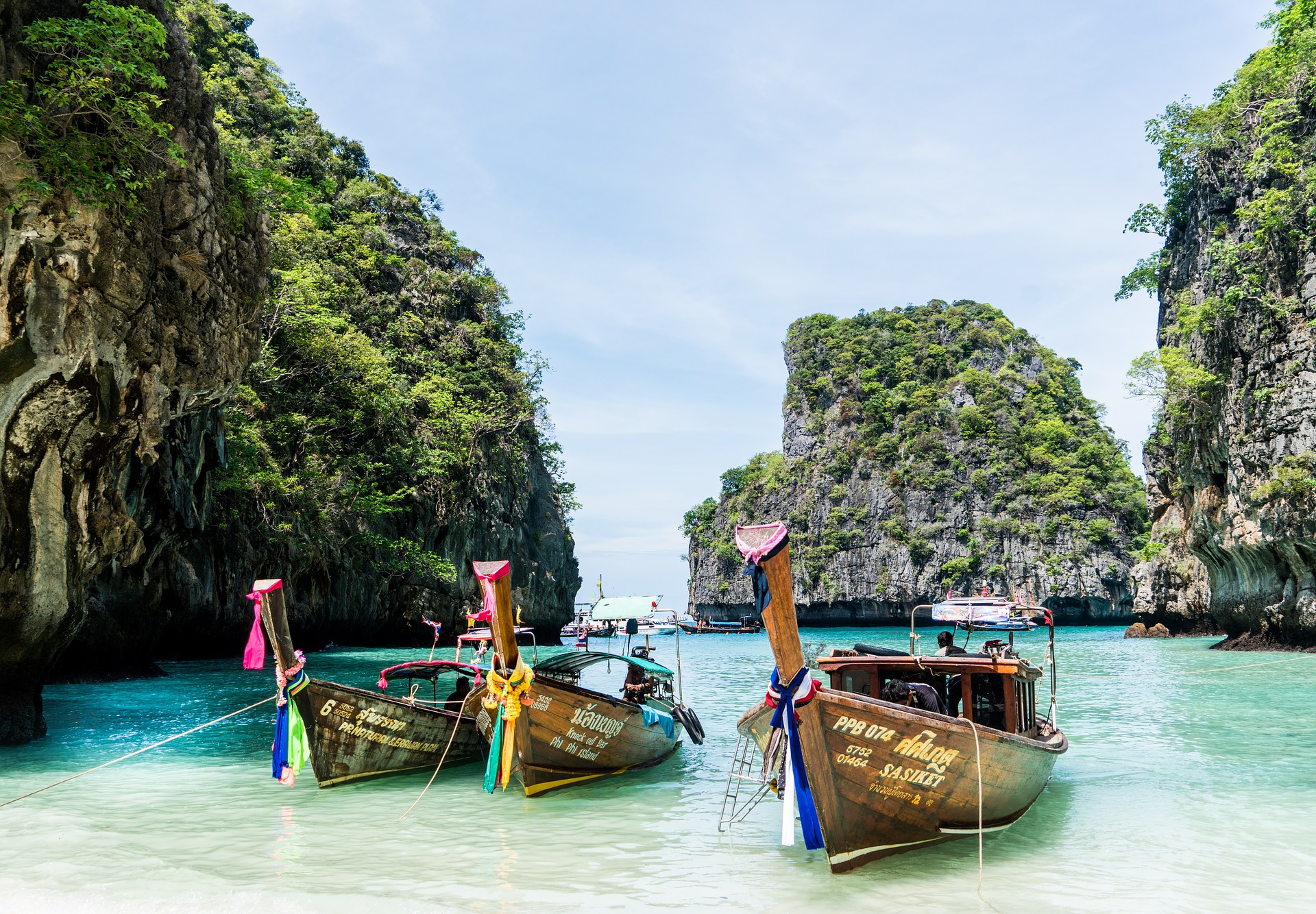
Thailand is one of the most visited countries on Earth and, for most travellers, the gateway to Southeast Asia: Bangkok is an intercontinental flight hub and the country is very well set up for tourism. Known as Siam until 1939, it is the only country in the region never colonised by a foreign power. Bangkok has the Grand Palace and Wat Pho, the ruins of the former capitals Ayutthaya and Sukhothai tell the country's history, and the mountainous north around Chiang Mai is the heart of Lanna culture and home to the hill tribes. The coast runs for 3,219 km with more than 1,400 islands, among them the beach islands of Phuket, Ko Samui and Ko Pha Ngan.
Thailand is not as cheap as it used to be, Bangkok's traffic is notorious and scams aimed at tourists are common in the busiest areas, but outside the backpacker hubs you still find a culture very much its own. The cool, dry months from November to February are the most popular. The UK and Canada advise against travel to the southernmost provinces near the Malaysian border and to the area along the Cambodian border: check the official advice before you go. The places in this guide are outside those areas.
- Bangkok: The Grand Palace with the Emerald Buddha, Wat Pho, Wat Arun and huge markets.
- Ayutthaya and Sukhothai: The ruins of two former capitals of Siam, both UNESCO World Heritage Sites.
- Chiang Mai and the north: Lanna culture, Wat Doi Suthep and treks to hill-tribe villages.
- Kanchanaburi: The Bridge over the River Kwai, the Death Railway and the Second World War museums.
- Phuket and Krabi: Beach resorts, with Ao Nang, Rai Leh, Ko Phi Phi and Ko Lanta in Krabi Province.
- Ko Samui, Ko Pha Ngan and Ko Tao: Islands reached by ferry from Surat Thani, the Full Moon Party and the diving centre of Ko Tao.
Places to visit
- City
- Coast
- Island
- Park
Cities
- Bangkok: The frenetic capital, called Krung Thep by Thais, with the Grand Palace and the main airports.
- Ayutthaya: The old capital of Siam, a UNESCO World Heritage Site.
- Chiang Mai: The unofficial capital of the north and the heart of Lanna culture, the base for treks.
- Chiang Rai: The gateway to the Golden Triangle, hill-tribe villages and mountain treks.
- Kanchanaburi: Home of the Bridge over the River Kwai and many Second World War museums.
- Nakhon Ratchasima: Also called Khorat, the largest city of Isaan, the north-east.
- Pattaya: One of the main beach resorts, known for its wild nightlife.
- Sukhothai: The first Thai capital, where the ruins still stand.
Beyond the cities
- Khao Sok National Park (park): A wildlife reserve of jungle where you can spend the night in the forest.
- Khao Yai National Park (park): The first national park of Thailand and the closest to Bangkok, with waterfalls and night safaris.
- Ko Lipe (island): A small island inside Tarutao National Park, with reefs and beaches.
- Ko Pha Ngan (island): Home of the Full Moon Party, with long stretches of quiet coast.
- Ko Samet (island): The nearest island beach to Bangkok; hotels fill up at weekends.
- Ko Samui (island): A former hippie island in the Gulf that has gone upmarket.
- Krabi Province (coast): Beaches and water sports in the south, including Ao Nang, Rai Leh, Ko Phi Phi and Ko Lanta.
- Phuket (island): The first of the Thai beach islands to become famous, now very developed but with some fine beaches left.
Regions
- Northern Thailand: Chiang Mai, the remains of ancient kingdoms, hill tribes and the Golden Triangle.
- Isaan: The large north-east, close in culture to Laos, with backcountry villages, its own cuisine and Khmer ruins.
- Central Thailand: Bangkok, the lowlands and the historic heart of the country.
- Eastern Thailand: Beaches and islands within easy reach of Bangkok, such as Pattaya and Ko Samet.
- Southern Thailand: Rainforest and coastline on the Andaman Sea and the Gulf of Thailand, with Phuket, Krabi, Ko Samui and Ko Tao; also the centre of Malay and Muslim culture in Thailand.
Things to do
See
- Grand Palace, Wat Pho and Wat Arun Bangkok: The decorated royal compound with Wat Phra Kaew, home of the Emerald Buddha and the most sacred temple in Thailand; Wat Pho and Wat Arun are among the other cultural sights. Cover shoulders and legs.
- The old capitals Ayutthaya and Sukhothai: UNESCO-listed ruins; Sukhothai combines with Si Satchanalai and Kamphaeng Phet.
- Second World War sites Kanchanaburi: The Bridge over the River Kwai, the Death Railway built by prisoners of war, and museums nearby.
- Songkran and Loy Krathong Chiang Mai, Bangkok and across the country: The New Year water fight in April and the November festival of floating offerings; Chiang Mai also releases lanterns.
Do
- Treks to hill-tribe villages Chiang Mai and Chiang Rai: Visit the Akha, Lahu, Karen, Hmong, Mien and Lisu peoples; Chiang Mai is the usual base.
- Diving and snorkelling Ko Tao, the Similan Islands and Ko Lipe: Ko Tao is a major diving centre and the Similans have fine reefs; check the operator's credentials and safety kit.
- Sea-canoeing and rock climbing Phang Nga Bay and Rai Leh: Paddle among the limestone islands of Phang Nga Bay or climb the cliffs of Rai Leh in Krabi.
- Thai massage: Traditional massage is offered everywhere, from small street-corner shops to hotel spas.
Eat
- Street food: Food from stalls and small pavement restaurants is usually safe, cooked in front of you and cheap.
Shop
- Markets Bangkok and Chiang Mai: Night markets in almost every town, the largest in Bangkok and Chiang Mai, sell clothes, Thai silk and handicrafts, with food courts; there is also the huge Chatuchak Weekend Market in Bangkok. Haggle.
Itineraries
Bangkok and the old capitals in 8 days (8 days)
- Bangkok (3 nights): The Grand Palace, Wat Pho, Wat Arun and the markets.
- Ayutthaya (1 night): The ruins of the old capital of Siam.
- Sukhothai (2 nights): The first Thai capital; add Si Satchanalai if you have time.
- Chiang Mai (2 nights): Lanna culture and Wat Doi Suthep.
The north in 7 days (7 days)
- Chiang Mai (4 nights): Lanna culture, night bazaar and a trek to hill-tribe villages.
- Chiang Rai (3 nights): Mountain treks and the Golden Triangle.
Phuket, Khao Sok and Krabi in 9 days (9 days)
- Phuket (3 nights): Beaches and the gateway airport.
- Khao Sok National Park (2 nights): A night in the jungle.
- Krabi Province (4 nights): Ao Nang, Rai Leh and the islands; best outside the May to October rains.
Climate and best time to visit
| Jan | Feb | Mar | Apr | May | Jun | Jul | Aug | Sep | Oct | Nov | Dec | |
|---|---|---|---|---|---|---|---|---|---|---|---|---|
| Max °C | 32 | 33 | 34 | 35 | 34 | 33 | 33 | 33 | 32 | 32 | 32 | 31 |
| Min °C | 21 | 23 | 25 | 26 | 26 | 25 | 25 | 25 | 25 | 24 | 23 | 21 |
| Rain mm | 9 | 30 | 29 | 65 | 220 | 149 | 155 | 197 | 344 | 242 | 48 | 10 |
Thailand is hot and humid all year, with three seasons. The cool season, from November to the end of February, is the driest and the most popular time to visit: in Bangkok December and January bring about 10 mm of rain a month, with highs of about 31 to 32 °C and nights near 21 °C. Only in the northern mountains does it get cool, down to about 5 °C. Flights and rooms are expensive and hard to find around Christmas, New Year and Chinese New Year.
The hot season runs from March to April, when temperatures can reach 40 °C. The rainy season runs from May to October: in Bangkok September is the wettest month, with about 344 mm. Heavy rain can bring flash floods and landslides, especially in the north, the north-east and the mountains, and caves, lakes and waterfalls are at particular risk. Ko Samui and the south-east have their rains later, usually from November to March. Weather patterns have become less predictable, so check the Thai Meteorological Department for warnings.
Getting there and around
| Main airports | BKK, DMK, HKT |
|---|---|
| International driving permit | Required |
Getting there
By air: Bangkok has two airports. Suvarnabhumi (BKK) is the main one, used by most full-service airlines; the older Don Mueang (DMK) serves mainly low-cost carriers. Phuket (HKT) also has intercontinental flights, and Hat Yai, Krabi, Ko Samui and Chiang Mai have international flights, mostly within Southeast Asia. Flights through the Middle East have been disrupted: check with your airline before you travel.
By land: the land border crossings with Cambodia are closed. The busiest crossing to Laos is the Friendship Bridge between Nong Khai and Vientiane, with a sleeper train from near Vientiane to Bangkok; not every Lao crossing is open to foreigners. The main road crossing from Malaysia is Bukit Kayu Hitam to Sadao. Trains from Malaysia enter at Padang Besar, but the UK advises against all but essential travel on the Hat Yai to Padang Besar line. Some crossings with Myanmar are open to foreigners, but you need visas in advance, and Canada advises a high degree of caution in the border areas of Mae Hong Son and Tak. Visa-exempt entry over land is normally limited to 2 entries a calendar year.
Getting around
Domestic flights are the quickest way to cover long distances, and with some research you can fly almost anywhere for under 2,000 baht. Trains of the State Railway of Thailand cover most of the country; they are slower than buses but safer, and the sleepers between Bangkok and Chiang Mai sell out, so book early (sales open 60 days ahead). Trains in Bangkok now leave from Krung Thep Aphiwat station. Government buses (the Transport Company, BKS) run from a terminal in every province; avoid the private "VIP" buses sold on Khao San Road, and keep valuables with you, as thefts from luggage holds are reported.
In towns, use songthaews (shared pick-ups), the Grab app, or metered taxis in Bangkok: insist on the meter, and agree the price before you get into a tuk-tuk. Driving is on the left, and you need an International Driving Permit with your licence. Road accidents are very common, above all on motorbikes. Rental scooters are often unregistered or poorly maintained, helmets are compulsory, and riding without the right licence can invalidate your insurance. Avoid mountain roads at night, especially in the rainy season. Boats link the mainland and the islands, including ferries from Surat Thani to Ko Samui and Ko Pha Ngan; do not board one that looks overloaded.
Flying to Thailand? PartnerCompare fares and find the cheapest datesSearch flightsWhere to stay
- Guesthouses: Usually the cheapest option, from basic fan rooms with shared bathrooms to rooms with more comfort.
- Hostels: In big cities and tourist areas; a private room in a guesthouse can cost about the same as a dorm bed.
- Thai hotels: About 500 to 1,500 baht, with private bathroom and towels; guests are mostly Thai.
- Tourist hotels: Around 1,000 baht, with pool, room service and TV.
- Boutique, business and luxury hotels: Boutique hotels from 2,000 baht, business and luxury hotels from 4,000 baht.
- Homestays: Common in rural areas, usually with meals included.
- Camping: National parks charge 80 baht for a campsite and rangers rent out gear; never leave food in the tent.
Prices above are Wikivoyage averages consulted in October 2026; they vary by region and season, and on popular island beaches you may find little under 300 to 400 baht even in low season. The low season, from May to August, brings discounts of 30 to 50%; the peak is from December to February. Look at the room before you agree a price, and in small places get the agreed price in writing. Airbnb is illegal except for stays of more than 30 days.
Break-ins happen at budget guesthouses, so a padlock of your own is useful. A toxic pesticide, aluminium phosphide, has caused deaths in Thai hotels: if a room has a grey, green or yellow powder or smells of rotten fish or garlic, stay elsewhere.
Eat and drink
Dishes to try
- Pad Thai: Stir-fried noodles, sold cheaply at street stalls.
- Som tam: Green papaya salad, part of the classic Isaan meal.
- Larb: A meat salad eaten with sticky rice, another Isaan classic.
- Green curry (kaeng khiao wan): Curry with chicken, sometimes served with roti.
- Miang kham: Small bites wrapped in a leaf.
Drinks
- Thai iced tea (chaa yen): Strong, sweet and orange, with condensed milk; ask for chaa dam yen without milk.
- Coconut water and fruit shakes: Cheap everywhere; Thais often add salt to fruit juice.
- Beer: Singha, Chang and Leo are the local brands, and stronger than many lagers.
- Sang Som and Mekhong: Sold as Thai whisky but made from sugar cane, so in fact rum; usually mixed with soda or cola.
- Krathing Daeng: The original Thai Red Bull: sweet, flat and strong in caffeine.
| Tipping | Not common: Thais round up taxi fares. Tipping is now usual in high-end hotels and tourist restaurants, but Wikivoyage suggests no more than 50 baht, and none when a service charge is added. |
|---|
Thai food balances strong flavours: lime, lemongrass, coriander, fish sauce and small, very hot chillies. Staff will often ask if you want it spicy (phet). You eat with a fork and spoon, spoon in the right hand; chopsticks are for noodle soups, and sticky rice is eaten with your right hand. Dishes are shared and arrive as they are cooked, so start when the first one comes. Food from street stalls is usually safe, and water served in restaurants is boiled.
Vegetarians manage well, but fish sauce is in almost everything: look for restaurants with the yellow and red เจ sign. Halal food is marked with a green crescent. With serious allergies it is hard, as labelling is poor. Shops and supermarkets do not sell alcohol between midnight and 11:00, except in licensed hotels, airport terminals and authorised venues, and there are a few days a year, around religious holidays and elections, when it cannot be sold. Imported wine and spirits are heavily taxed. Methanol in alcoholic drinks has caused deaths: see Safety.
Entry requirements and visas
| Passport validity | At least 6 months after the date you arrive, with at least 1 blank page (UK advice); Canada also asks for 6 months on entry |
|---|
| Passport | Entry | Max stay | Notes |
|---|---|---|---|
| United Kingdom | Visa free | 30 days | Tourism only, from 15 September 2026; business travel needs a visa. Visa-exempt entry by land is normally limited to 2 entries a calendar year. |
| Canada | Visa free | 30 days | Tourism; can be extended by up to 30 days at an immigration office, at the officer's discretion. |
Other nationalities: check the official source below.
Many visitors can enter Thailand for tourism without a visa, but the rules changed on 15 September 2026: under the visa exemption scheme UK citizens can now stay up to 30 days. If you hold another passport, check the current rules with the Thai embassy or the official Thai e-visa website, because they depend on your nationality. Everyone must fill in the online Digital Arrival Card before arriving by air, land or sea, within the 3 days before arrival. Officers may ask for an onward or return ticket and proof of funds (at least 10,000 baht per person or 20,000 baht per family) and can refuse entry without them. Get your entry stamp from the immigration officer, never from visa shops or travel agents: the date on the stamp sets how long you can stay.
Overstaying costs 500 baht a day up to 20,000 baht, and you risk detention, deportation and a ban of up to 10 years. Dual nationals should enter and leave on the same passport. You need a yellow fever certificate if you arrive from a country with yellow fever risk. Because of Ebola, travellers arriving from affected regions are screened and must go through quarantine or self-isolation for at least 21 days. Customs rules are strict: no more than 200 cigarettes per person, and vapes and e-cigarettes are illegal. Rules depend on your passport and can change: check the official link before you book.
Money and payments
| Currency | Thai Baht (THB) |
|---|---|
| Cards | Common |
The currency is the baht (THB, ฿), divided into 100 satang. Notes are 20, 50, 100, 500 and 1,000 baht; carry 20s and 100s, as small shops and taxis are often short of change, and check 1,000-baht notes, which are sometimes forged. Banknotes and coins carry the King's portrait, so never step on them or damage them. Cards are widely accepted in restaurants, malls and shops that serve tourists, sometimes with a 2 to 3% surcharge. ATMs are everywhere, but in March 2026 most charged a 250-baht fee for foreign cards. When an ATM or shop offers to charge you in your own currency, refuse and pay in baht. Card fraud and ATM skimming happen: use ATMs inside banks and cover your PIN.
Exchange offices in Bangkok often give better rates than ATMs, especially for large, clean notes. Very remote areas and some small islands have no banks or ATMs, so bring cash. Shops showing a "VAT Refund for Tourists" sign refund the 7% VAT on purchases of at least 2,000 baht a day in one shop: ask for the P.P.10 form and claim it when you leave from an international airport. Baht are hard to exchange outside the neighbouring countries.
Health
| Required vaccines | Yellow fever, only if you arrive from a country with yellow fever risk (including airport transits of more than 12 hours) |
|---|---|
| Recommended vaccines | Routine vaccines, including measles (MMR), Hepatitis A, Hepatitis B, Typhoid, for most travellers, Japanese encephalitis, for long stays or rural trips, Rabies, for some travellers, Chikungunya, to consider for stays of 6 months or more, Mpox, for travellers at risk of sexual exposure |
| Malaria | Some areas |
| Tap water | Not safe |
Ask a travel health professional about vaccines and malaria tablets at least 6 to 8 weeks before you go. Malaria occurs mainly in the provinces bordering Myanmar, Cambodia and Malaysia, especially in rural and forest areas, where the CDC recommends preventive medicine. There are rare cases in Bangkok, Chiang Mai, Chiang Rai, Ko Pha Ngan, Ko Samui and Phuket, and none on the islands of Krabi Province or in Pattaya. Dengue can be caught anywhere, cities included, and Zika is also a risk: both are spread by mosquitoes, so use repellent and cover up at dusk. Dogs with rabies are found; rabies treatment is available in most of the country. Avoid floodwater, which can carry leptospirosis and melioidosis.
Tap water is usually not drinkable outside Bangkok: bottled water is cheap, and factory ice is generally safe. Private hospitals are of a high standard but expensive, and all hospitals ask for a guarantee of payment, so get good insurance. Public hospitals do not always meet UK standards, particularly outside Bangkok. Pharmacies often sell medicines without a prescription, but this is illegal and police have occasionally caught tourists. Air pollution can reach dangerous levels in Bangkok and Chiang Mai, and from January to April crop burning brings smoke haze to the north. For an ambulance, call 1669.
This is general information, not medical advice: check with a travel health professional before you go.
Safety
- United States: Level 1: Exercise Normal Precautions (2026-10-20)
- Canada: Exercise a high degree of caution (2026-10-20)
- United Kingdom: Advises against all but essential travel to parts of the country (2026-10-20)
The UK FCDO advises against all but essential travel to the provinces of Pattani, Yala and Narathiwat, to the districts of Chana, Thepa, Na Thawi and Saba Yoi in southern Songkhla, and on the Hat Yai to Padang Besar railway. Canada advises against all travel to Narathiwat, Pattani, Yala and southern Songkhla, including Hat Yai city east of Highways 408 and 4113. Along the Cambodian border, the UK advises against all but essential travel within 20 km and Canada against all travel within 50 km; the land crossings are closed, temples near the border such as Khao Phra Wihan are closed, and there are unexploded landmines. Check the advice before you go. Both governments warn that attacks are possible anywhere, including tourist areas, and advise you to avoid protests and political gatherings.
Petty theft is common: watch out for bag snatchers on motorbikes and in open tuk-tuks, and for thefts on overnight buses and trains. Drinks are spiked in tourist areas, and alcoholic drinks containing methanol have killed people; take extra care at full moon parties and during Songkran, when assaults are reported. Never leave your passport as a deposit for a scooter or jet ski, and photograph rented vehicles before you leave. Avoid touts who say a temple is closed and offer a tour, gem dealers promising resale profits, and bars that overcharge: confirm prices before you order. Motorbike accidents are the main cause of death among visitors. At sea, respect red flags: riptides and jellyfish, which are common close to shore in the rainy season, have killed swimmers.
Laws are strict. Criticising the monarchy (lèse-majesté) is a crime with long prison sentences. Possessing or using vapes and e-cigarettes is illegal, and smoking in public can be fined up to 5,000 baht. Cannabis is allowed only on a Thai medical prescription, and taking it out of the country is illegal. Drug offences carry heavy sentences, up to the death penalty. Drones must be registered with the NBTC within 30 days. Carry your passport or a copy of its photo page, as police may ask to see it.
Customs and etiquette
Respect for the royal family is taken very seriously, by law and by custom. Say nothing that could sound disrespectful, never step on a coin or banknote with the King's portrait, and stand still when the national anthem plays in public places at 08:00 and 18:00, or when the royal anthem plays in cinemas before the film. Thais greet with the wai, palms pressed together and a slight bow; as a visitor you are not expected to return it, and a small bow is enough. Address people as Khun followed by their first name.
The head is sacred and the feet are low: do not touch anyone's head, point with your feet or step over someone's legs. Take your shoes off before entering homes and temples, and step over raised thresholds. In temples and palaces cover your shoulders and knees; men need long trousers. Women must not touch a monk or hand him anything directly. Do not pose beside a Buddha statue, wear Buddha images on clothes, or take a Buddha statue out of the country without a licence. Keep your voice down and your temper in check, as making someone lose face can cause real trouble, and do not walk around topless away from the beach. Defamation laws are strict, online comments included.
Language
| Official languages | Thai |
|---|---|
| English | Limited |
| Hello (said by a man / a woman) | สวัสดีครับ / สวัสดีค่ะ (sa-wat-dii khráp / sa-wat-dii khâ) |
|---|---|
| Thank you | ขอบคุณ (khop khun) |
| Please | กรุณา (karunaa) |
| Yes / No | ใช่ / ไม่ใช่ (chai / mai chai) |
| Sorry / Excuse me | ขอโทษ (kho thot) |
| Goodbye | ลาก่อน (laa kon) |
| Do you speak English? | พูดภาษาอังกฤษได้ไหม (phuut phaasaa ang-krit dai mai?) |
| How much? | เท่าไหร่ (thâo-rai) |
| Help! | ช่วยด้วย (chûai dûai) |
What to pack
- Passport, plus a copy of the photo page and entry stamp: Police may ask to see your passport; a copy is usually accepted.
- 1968 International Driving Permit: Needed with your licence to drive or ride; UK permits cannot be bought outside the UK.
- Clothes that cover shoulders and knees: Required in temples and palaces; men need long trousers there.
- Slip-on shoes or sandals: You take your shoes off at temples, homes and some shops.
- Insect repellent and sunscreen without oxybenzone or octinoxate: Mosquitoes carry dengue; those sunscreens are banned in marine national parks.
- Prescriptions for your medicines: You may need them at customs.
- A padlock and earplugs: For budget rooms and lockers, and for noisy buses.
- No vape or e-cigarette: They are illegal in Thailand, with heavy fines.
Quick reference
Country facts
| Capital | Bangkok |
|---|---|
| Population | 71,619,863 (2025) |
| Area | 510,890 km² |
| Time zone | Asia/Bangkok (UTC+7) |
| Calling code | +66 |
| Driving side | left |
Staying connected
| SIM and eSIM | Prepaid SIM cards from AIS, DTAC, TrueMove and National Telecom are sold in convenience stores from about 50 baht; bring your passport. In November 2025 7-Eleven sold a 30-day, 30 GB SIM for 199 baht. Airport counters work 24 hours but sell pricier tourist SIMs. |
|---|---|
| Roaming | Roaming onto Thai networks depends on agreements between operators: check with your provider. Coverage is very good in cities and on resort islands; AIS is strongest in the countryside. |
| Wi-Fi | Common in accommodation, cafés and restaurants used to foreign guests. |
Useful apps
- LINE: The messaging app most Thais use; WhatsApp is less common.
- Grab: Ride hailing in larger cities and beach resorts, with fixed prices and card payment.
- Bolt: Ride hailing, often cheaper than Grab but in fewer cities.
- Thailand Tourist Police: Contact the tourist police, also without a Thai SIM.
Emergency numbers
| Emergency | 191 |
|---|---|
| Police | 191 |
| Ambulance | 1669 |
| Fire | 199 |
| Tourist police | 1155 |
Frequently asked questions
Do I need a visa for Thailand?
Many visitors do not for a short holiday: UK citizens and Canadians can stay up to 30 days visa-free for tourism. Everyone must fill in the online Digital Arrival Card before arrival. Rules depend on your passport and changed in September 2026, so check the official link before you book.
When is the best time to visit Thailand?
November to February, the cool and dry season, is the most popular. March and April are very hot, and the rains run from May to October; Ko Samui and the south-east get their rain from November.
Can I drink the tap water in Thailand?
Usually not outside Bangkok. Bottled water is cheap, restaurant water is boiled and factory ice is generally safe.
Is it safe to rent a scooter in Thailand?
Motorbike accidents are the main cause of death among visitors. You need the right licence and an International Driving Permit, helmets are compulsory, and without a licence your insurance may not pay.
Can I bring a vape to Thailand?
No. Possessing or using vapes and e-cigarettes is illegal, with fines, confiscation and possible detention.
Is cannabis legal in Thailand?
Only for medical use with a Thai prescription. Recreational use is illegal, and taking cannabis out of Thailand is a crime.
Are there areas of Thailand to avoid?
The UK and Canada advise against travel to the southernmost provinces near the Malaysian border and to areas along the Cambodian border. Check their advice before you go.
More Travel Stories from Asia
 Cambodia
From the original Tourist4Tourist guide, written by travellers. Not yet checked against current sources.
Top destinations
Off the tourist trail! – Most visitors flock to Thailand and head straight for the tourist meccas of Pattaya, Phuket, Samui and Chiang Mai. These can be fun, if yo enjoy hotels and buses and coaches and hamburgers. But the opposite is also possible in Thailand, and it is in these wayward loactions that you will dsicover the heart of the country and the friendliest, most welcoming people, and have the most meomorable of times.
Sources This guide was last checked on · 17 sources
- Wikivoyage: Thailand · Overview, Places to visit, Things to do, Itineraries, Climate and best time to visit, Getting there and around, Where to stay, Eat and drink, Entry requirements and visas, Money and payments, Health, Safety, Customs and etiquette, Language, What to pack, Staying connected, Frequently asked questions
- Wikidata: Thailand · Overview, Money and payments, Country facts
- UK FCDO: Thailand warnings and insurance · Overview, Getting there and around, Safety
- Government of Canada: Thailand travel advice (updated 13 October 2026) · Overview, Things to do, Getting there and around, Where to stay, Entry requirements and visas, Money and payments, Health, Safety, Frequently asked questions
- UK FCDO: Thailand safety and security · Things to do, Climate and best time to visit, Getting there and around, Eat and drink, Money and payments, Safety, Customs and etiquette, What to pack, Frequently asked questions
- WMO World Weather Information Service: Bangkok · Climate and best time to visit
- UK FCDO: Thailand entry requirements (updated 12 October 2026) · Getting there and around, Entry requirements and visas, What to pack, Frequently asked questions
- ISO 4217 (SIX), published 2026-09-17 · Money and payments
- CDC Travelers' Health: Thailand · Health, Frequently asked questions
- UK FCDO: Thailand health · Health
- US Department of State: Thailand travel advisory · Safety
- UK FCDO: Thailand travel advice · Safety
- Wikivoyage: Thai phrasebook · Language
- World Bank, SP.POP.TOTL · Country facts
- World Bank, AG.LND.TOTL.K2 · Country facts
- IANA Time Zone Database, zone.tab · Country facts
- UK FCDO: Thailand getting help · Staying connected, Emergency numbers
Suggest an update
Travel rules, prices and timetables change. If something in this guide is out of date, tell us: we check every suggestion against an official source before changing the page.