

- Local time
- 02:26
- Currency
- Bangladeshi Taka (BDT)
- Capital
- Dhaka
- Calling code
- +880
- Drive on the
- left
Overview
Bangladesh is a land of rivers: mangrove forests with Bengal tigers, a beach over 100 km long, old mosques and Buddhist ruins, and the crowded lanes of Old Dhaka. Best from October to April.
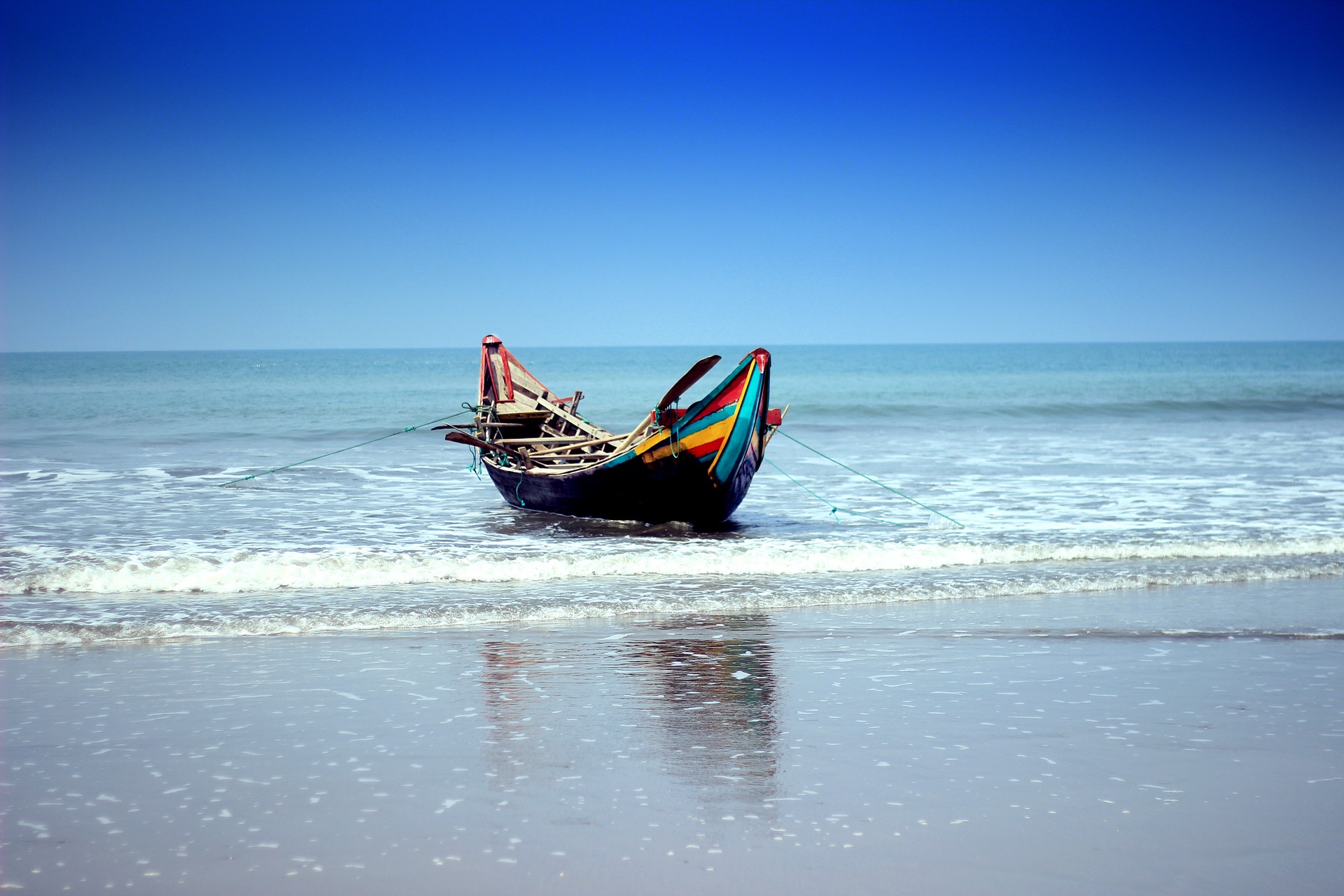
Bangladesh lies on the delta of the Ganges and the Brahmaputra, almost surrounded by India, with a coast on the Bay of Bengal and a short border with Myanmar. More than 230 rivers cross it, and travelling by boat is one of the best ways to see the country. In the south-west the Sundarbans, the largest mangrove forest in the world and a UNESCO site, shelter rare Bengal tigers and many birds; in the south-east Cox's Bazar has a sandy beach of about 112 km.
History is everywhere: the mosques of Bagerhat, the ruins of the Buddhist monastery at Paharpur, the Mughal fort of Lalbagh in Old Dhaka. Dhaka itself is one of the most densely populated cities on earth, with traffic to match. The country is still little known to foreign tourists, so expect curiosity and a lot of attention, mostly friendly. Bangladesh is a Muslim-majority country with a large Hindu minority.
- The Sundarbans: The world's largest mangrove forest, home of the Bengal tiger, explored by boat from Khulna.
- Old Dhaka: Lalbagh Fort, Ahsan Manzil and narrow lanes of century-old buildings and workshops.
- Cox's Bazar: The country's favourite beach, about 112 km of unbroken sand.
- Bagerhat: A historic town of mosques, including the Sixty Dome Mosque.
- Sylhet: Tea gardens and the shrine of the Sufi saint Hazrat Shahjalal.
- The Rocket Steamer: A slow paddle-steamer journey through the river delta from Dhaka towards Barisal and Khulna.
Places to visit
- City
- Coast
- Island
- Historic site
Cities
- Dhaka: The fast-growing capital, with the historic quarter of Old Dhaka.
- Chittagong: Chattogram, a commercial city and a major seaport in the south-east.
- Sylhet: The largest city of the north-east, with one of the holiest Sufi shrines in the country.
- Khulna: A city on the Rupsha river, known for shrimp, and the starting point for the Sundarbans.
- Barisal: A southern river city of rice fields and floating markets, best reached by boat.
- Rajshahi: The "Silk City" of the north-west.
- Mymensingh: A historic city on the Brahmaputra.
Beyond the cities
- Sundarbans (park): A UNESCO-listed mangrove forest with rich birdlife and endangered Bengal tigers.
- Cox's Bazar (coast): The main beach destination, lively and crowded with Bangladeshi holidaymakers.
- Saint Martin's Island (island): Bangladesh's only coral island, quiet and full of coconut palms.
- Bagerhat (site): A historic centre with several old mosques, among them the Sixty Dome Mosque.
- Paharpur (site): The ruins of Somapura Mahavihara, an ancient Buddhist monastery.
Regions
- Dhaka Division: The capital and the centre of the country.
- Chittagong Division: The port city, Cox's Bazar, Saint Martin's Island and the Chittagong Hill Tracts, where Canada advises against all travel and the UK against all but essential travel.
- Northeastern Bangladesh: Sylhet and the tea gardens.
- Southern Bangladesh: Khulna, Barisal, Bagerhat and the Sundarbans, a world of rivers.
- Rajshahi Division: Rajshahi and the ruins of Paharpur in the north-west.
- Rangpur Division: The farming and trading north-west.
Things to do
See
- Lalbagh Fort Dhaka: The Mughal fort in Old Dhaka, the city's best-known sight.
- Ahsan Manzil and the lanes of Old Dhaka Dhaka: A palace by the river and blocks of specialised shops and artisans.
- Sixty Dome Mosque Bagerhat: The best known of Bagerhat's historic mosques.
- Paharpur monastery Paharpur: The ruins of a large Buddhist monastery of the Pala era.
- Tea gardens Sylhet and Sreemangal: Green hills of tea plantations in the north-east.
Do
- A trip on the Rocket Steamer Dhaka to Barisal and Khulna: Cabins on the upper deck and Bengali meals on board; avoid the rainy season and Eid, when boats are packed.
- A boat trip in the Sundarbans Sundarbans: Mangrove channels and birdlife, with tours starting from Khulna.
- Cox's Bazar beach Cox's Bazar: Long sands and the bustle of local holidaymakers.
Eat
- Street food Dhaka and Chittagong: Phuchka and chotpoti, and biryani in Old Dhaka.
Shop
- Handicrafts at Aarong Dhaka, Chittagong, Sylhet, Khulna: Crafts and traditional clothing at fixed prices.
Itineraries
Dhaka and the river delta in 7 days (7 days)
- Dhaka (2 nights): Old Dhaka and Lalbagh Fort.
- Barisal (1 night): By the overnight Rocket Steamer or a river launch.
- Khulna (1 night): With a side trip to the mosques of Bagerhat.
- Sundarbans (3 nights): A boat tour into the mangroves from Khulna.
Chittagong, Cox's Bazar and Saint Martin's in 6 days (6 days)
- Chittagong (1 night): By air or air-conditioned bus from Dhaka.
- Cox's Bazar (3 nights): The long beach.
- Saint Martin's Island (2 nights): The coral island, for a quieter stay.
Dhaka and Sylhet in 5 days (5 days)
- Dhaka (2 nights): The capital's historic sights.
- Sylhet (3 nights): The Shahjalal shrine and the tea gardens.
Climate and best time to visit
| Jan | Feb | Mar | Apr | May | Jun | Jul | Aug | Sep | Oct | Nov | Dec | |
|---|---|---|---|---|---|---|---|---|---|---|---|---|
| Max °C | 25 | 28 | 32 | 34 | 33 | 32 | 31 | 32 | 32 | 32 | 30 | 26 |
| Min °C | 13 | 16 | 20 | 24 | 25 | 26 | 26 | 26 | 26 | 24 | 19 | 14 |
| Rain mm | 7 | 25 | 63 | 154 | 341 | 337 | 373 | 316 | 314 | 175 | 34 | 15 |
Bangladesh has a tropical monsoon climate. In Dhaka the dry season runs from November to February, with an average maximum of 25 to 30 °C and very little rain; nights in January fall to about 13 °C. April and May are the hottest months, at around 33 °C. From May to September each month brings more than 300 mm of rain, and streets in Dhaka and Chittagong flood quickly in heavy downpours.
Wikivoyage suggests October to April; November to February are the driest and coolest months. The monsoon, from June to September, can cause floods and transport disruption, and tropical cyclones can hit the coast. Air pollution is severe from November to March.
Holidays and events
- 21 February 2026 · International Mother Language Day
- 26 March 2026 · Independence and National Day
- 14 April 2026 · Bengali New Year
- 1 May 2026 · Labour Day
- 5 August 2026 · July Mass Uprising Day
- 16 December 2026 · Victory Day
- 25 December 2026 · Christmas Day
Getting there and around
| Main airports | DAC, CGP, ZYL |
|---|---|
| International driving permit | Required |
Getting there
By air: the main gateway is Hazrat Shahjalal International Airport in Dhaka, with international flights also from Chittagong and Sylhet. Biman Bangladesh Airlines flies direct to London, and there are good connections through the Middle East and the hubs of South-East Asia. At the airports, beware of theft, touts and taxi overcharging: arrange your taxi in advance.
From India: the Maitree Express runs between Kolkata and Dhaka, the Bandhan Express between Kolkata and Khulna, and buses cross from Kolkata and other border cities.
Getting around
By boat is the most rewarding way to travel: ferries and launches link the river cities, though they get dangerously overcrowded at festivals. Domestic flights with Biman, US-Bangla and Novoair are affordable. Air-conditioned long-distance buses such as Green Line and Shyamoli are more comfortable than local buses. The UK government warns that buses in general are badly maintained and badly driven, and advises against travelling by bus alone or at night. Trains are slow, and the network is old.
In the cities, cycle rickshaws and CNG auto-rickshaws need a fare agreed in advance, and are banned on major roads. Ride-hailing apps such as Uber and Pathao work in the cities; Uber drivers usually want cash. Driving yourself is not advised: traffic drives on the left, accidents are common and night driving is especially dangerous. If you do drive, you need a 1949 International Driving Permit.
Flying to Bangladesh? PartnerCompare fares and find the cheapest datesSearch flightsWhere to stay
- International hotels: Chains such as Radisson, InterContinental, Marriott and Pan Pacific in the main cities.
- Mid-range and budget hotels: Everywhere; the cheapest can be dirty and some refuse foreigners.
- River cabins: First and second class cabins on the Rocket Steamer and other launches, for overnight journeys.
Even cheap hotels often provide a mosquito net. Book ferry cabins several days ahead when you can.
Eat and drink
Dishes to try
- Hilsa (ilish): The national fish, cooked in many ways; it has a lot of fine bones.
- Rice and dal: The base of every meal; Bangladeshi dal is thinner, more like a soup.
- Biryani: Old Dhaka is famous for it.
- Vegetable curries: Potato, aubergine, squash and gourds.
- Phuchka and chotpoti: The street snacks of Dhaka and Chittagong.
- Sweets: Shondesh, chomchom, lal jaam and many more.
Drinks
- Tea: Everywhere, usually with milk; ask for red tea if you want it black.
- Fruit and sugarcane juice: Plentiful; be wary of ice and dirty blenders.
- Coconut water: Widely sold and a safe choice.
| Tipping | About 15% is expected in upscale restaurants; at street stalls and simple eateries tips are the exception. Drivers and delivery staff appreciate a modest tip. |
|---|
Pork is not sold in most of the country. Alcohol is strictly regulated: foreign visitors may drink in licensed venues, mostly in big hotels and clubs. Black-market drinks have caused methanol poisoning and deaths, so avoid alcohol from unlicensed sources. Choose street food that is freshly cooked and hot. Smoking in public places is prohibited.
Entry requirements and visas
| Passport validity | At least 6 months, with at least 2 blank pages and no damage |
|---|
| Passport | Entry | Max stay | Notes |
|---|---|---|---|
| United Kingdom | Visa required | Apply in advance; a single-entry visa on arrival for 15 to 30 days may be issued at Dhaka airport at the officer's discretion. | |
| Canada | Visa required | Get a visa before you travel; a 30-day visa on arrival exists, but entry can be refused. |
Other nationalities: check the official source below.
You need a visa. The UK and Canadian governments advise getting it in advance from a Bangladeshi mission; a visa on arrival exists but is not guaranteed. For a visa on arrival you need a return or onward ticket and proof of funds. If you plan to use Bangladesh as a base for trips to nearby countries, ask for a multiple-entry visa.
Travellers may have to fill in an online arrival card before entering and a departure card before leaving. Make sure your passport is stamped on arrival: you can be fined for overstaying. If you arrive from, or have transited through, a country with yellow fever, you need proof of vaccination. Rules depend on your passport: check the official link before you book.
Money and payments
| Currency | Bangladeshi Taka (BDT) |
|---|---|
| Cards | Common |
The currency is the Bangladeshi taka (BDT, Tk or ৳). ATMs are common in cities and towns and most accept Visa and Mastercard; foreign cards are typically charged a fee of about Tk 500 per withdrawal, as listed on Wikivoyage in October 2026. Shops in the cities often take cards, but carry cash for rickshaws, street food and Uber, whose drivers usually want cash. Exchange shops give the best rates, then banks; hotels give poor ones. When you enter or leave Bangladesh, you must declare funds over US$5,000 or Tk 5,000, or their equivalent. You cannot leave with more US dollars than you declared on arrival.
Health
| Required vaccines | Yellow fever: proof of vaccination if you arrive from, or have transited through an airport of, a country where yellow fever occurs, Polio: the UK says proof of vaccination is needed in certain circumstances |
|---|---|
| Recommended vaccines | Routine vaccines, including measles (MMR), Hepatitis A, Hepatitis B, Typhoid, Japanese encephalitis, for long stays in rural areas, Rabies: ask a travel clinic, Cholera: ask a travel clinic, Mpox, for travellers at risk of sexual exposure |
| Malaria | Some areas |
| Tap water | Not safe |
Dengue occurs all year and is most common in the rainy season, from May to September, including in Dhaka, and chikungunya and Zika are also present. Malaria is a risk in some districts, including the Chittagong Hill Tracts, Chittagong, Cox's Bazar, Sylhet and Mymensingh, but not in Dhaka. Protect yourself from mosquito bites. Check vaccines with a travel health professional at least 6 to 8 weeks before you go.
Do not drink tap water: it is not certified as safe, and some tube wells contain arsenic. Medical facilities are poor and you will be asked to pay first, so get insurance that covers evacuation. Call 999 for an ambulance. Swimming in rivers and lakes is unwise.
This is general information, not medical advice: check with a travel health professional before you go.
Safety
- United States: Level 2: Exercise Increased Caution (2026-10-20)
- Canada: Exercise a high degree of caution (2026-10-20)
- United Kingdom: Advises against all but essential travel to parts of the country (2026-10-20)
The UK advises against all but essential travel to the Chittagong Hill Tracts (Rangamati, Khagrachari and Bandarban districts), and Canada against all travel there. Both governments warn that demonstrations and general strikes (hartals) can turn violent with little warning, and the UK assesses that terrorists are very likely to try to carry out attacks. Stay away from protests and large gatherings.
Violent crime has increased since 2024. Thieves often work in pairs on motorbikes or CNGs; keep your phone and valuables out of sight. Female travellers often face harassment, and there is a risk of sexual assault: avoid isolated areas when alone. Do not accept food, drinks or cigarettes from strangers, as drugging happens. Road, bus, rail and ferry accidents are frequent. Floods in the monsoon, cyclones and earthquakes are natural risks. Same-sex sexual activity is illegal and can be punished with life imprisonment.
Customs and etiquette
Bangladesh is a majority Muslim country, generally moderate and tolerant of other faiths. Men and women should dress modestly; women should cover shoulders and legs, and a salwar kameez or a large scarf is a good choice. During Ramadan, do not eat, drink or smoke in public. Behave respectfully in places of worship and ask if you are unsure: some are closed to non-believers.
Use your right hand to shake hands, give or receive things. Do not offer to shake hands with women: put your hand on your heart and bow slightly. Respect elders and do not call them by their first name. People ask direct personal questions and communicate indirectly to save face; avoid criticising the country or religion, and do not compare Bangladesh with India or Pakistan. Never give alcohol or pork as a gift to a Muslim. Carry copies of your passport and visa. Some drug offences are punishable by life imprisonment or the death penalty. It is illegal to photograph government offices, airports, military sites or officials, official residences and demonstrations.
Language
| Official languages | Bangla |
|---|---|
| English | Limited |
| Which country are you from? | Desh kothay? |
|---|---|
| I don't need it | Amar dorkar nai |
| No need | Lagbey nah |
| Excuse me / Pardon me (polite) | Maaf koren |
| I have no change | Amar bangthi poisha nai |
What to pack
- Loose cotton clothes that cover shoulders and legs: It is humid, and modest dress is expected; women may want a salwar kameez or a large scarf.
- Insect repellent: Dengue and malaria are spread by mosquitoes.
- Plug adapters: Sockets come in old British, new British and Europlug types, at 220 V.
- Copies of your passport and visa: Officials may ask for ID; keep the originals safe.
- Return ticket and proof of funds: Needed if you plan to ask for a visa on arrival.
- Face mask: Air pollution is severe from November to March.
Quick reference
Country facts
| Capital | Dhaka |
|---|---|
| Population | 175,686,899 (2025) |
| Area | 130,170 km² |
| Time zone | Asia/Dhaka (UTC+6) |
| Calling code | +880 |
| Driving side | left |
Staying connected
| SIM and eSIM | Grameenphone and Banglalink are the most widespread networks, followed by Robi, Teletalk and Airtel. SIM cards are cheap, 4G covers the country and data prices are among the lowest in the world. |
|---|---|
| Wi-Fi | Free wifi in some places in the cities; outside them, mobile data is the best option. |
Useful apps
- Pathao: Ride hailing
- Obhai: Ride hailing
- Uber: Ride hailing, usually paid in cash
- Shohoz: Ride hailing and boat tickets
Emergency numbers
| Emergency | 999 (Canada: from a mobile phone only) |
|---|
Frequently asked questions
Do I need a visa for Bangladesh?
Yes. Get it in advance if you can: a visa on arrival exists at Dhaka airport, but it is issued at the officer's discretion. Check the official link before you book.
When is the best time to visit Bangladesh?
Between October and April. November to February are the driest and coolest months; the monsoon from June to September brings floods.
Is it safe to travel to Bangladesh?
The UK and Canada advise against travel to the Chittagong Hill Tracts and warn about demonstrations, crime and terrorism. Read their advice and avoid protests.
Can I drink the tap water in Bangladesh?
No. Drink bottled or boiled water; some tube wells also contain arsenic.
Can I drink alcohol in Bangladesh?
Foreign visitors can drink in licensed venues, mostly big hotels and clubs, but you may need a liquor permit. Avoid black-market alcohol, which has caused methanol poisoning.
What should I wear in Bangladesh?
Modest clothes: women should cover shoulders and legs, and men should avoid shorts. Light cotton helps with the humidity.
More Travel Stories from Asia
 Cambodia
Sources This guide was last checked on · 17 sources
- Wikivoyage: Bangladesh · Overview, Places to visit, Things to do, Itineraries, Climate and best time to visit, Getting there and around, Where to stay, Eat and drink, Entry requirements and visas, Money and payments, Health, Safety, Customs and etiquette, Language, What to pack, Staying connected, Frequently asked questions
- Wikidata: Bangladesh · Overview, Places to visit, Money and payments, Country facts
- Government of Canada: Bangladesh travel advice · Places to visit, Entry requirements and visas, Money and payments, Health, Safety, Customs and etiquette, Emergency numbers, Frequently asked questions
- WMO World Weather Information Service: Dhaka · Climate and best time to visit, Frequently asked questions
- UK FCDO: Bangladesh safety and security · Climate and best time to visit, Getting there and around, Eat and drink, Money and payments, Safety, Customs and etiquette, What to pack, Frequently asked questions
- UK FCDO: Bangladesh health · Climate and best time to visit, Health, What to pack
- Nager.Date: public holidays in Bangladesh, 2026 · Holidays and events
- UK FCDO: Bangladesh entry requirements · Entry requirements and visas, Health, Frequently asked questions
- ISO 4217 (SIX), published 2026-09-17 · Money and payments
- US CDC: Travelers' health, Bangladesh · Health
- US Department of State: Bangladesh travel advisory · Safety
- UK FCDO: Bangladesh travel advice · Safety
- UK FCDO: Bangladesh warnings and insurance (updated 9 October 2026) · Safety, Frequently asked questions
- World Bank, SP.POP.TOTL · Country facts
- World Bank, AG.LND.TOTL.K2 · Country facts
- IANA Time Zone Database, zone.tab · Country facts
- UK FCDO: Bangladesh getting help · Emergency numbers
Suggest an update
Travel rules, prices and timetables change. If something in this guide is out of date, tell us: we check every suggestion against an official source before changing the page.