

- Local time
- 21:09
- Currency
- Hungarian Forint (HUF)
- Capital
- Budapest
- Calling code
- +36
- Drive on the
- right
Overview
Hungary is Budapest's Danube banks, Buda Castle and thermal baths, Lake Balaton's summer resorts, the puszta of Hortobágy, the wine of Tokaj and Eger, and baroque towns, caves and folk villages across a small, landlocked country.
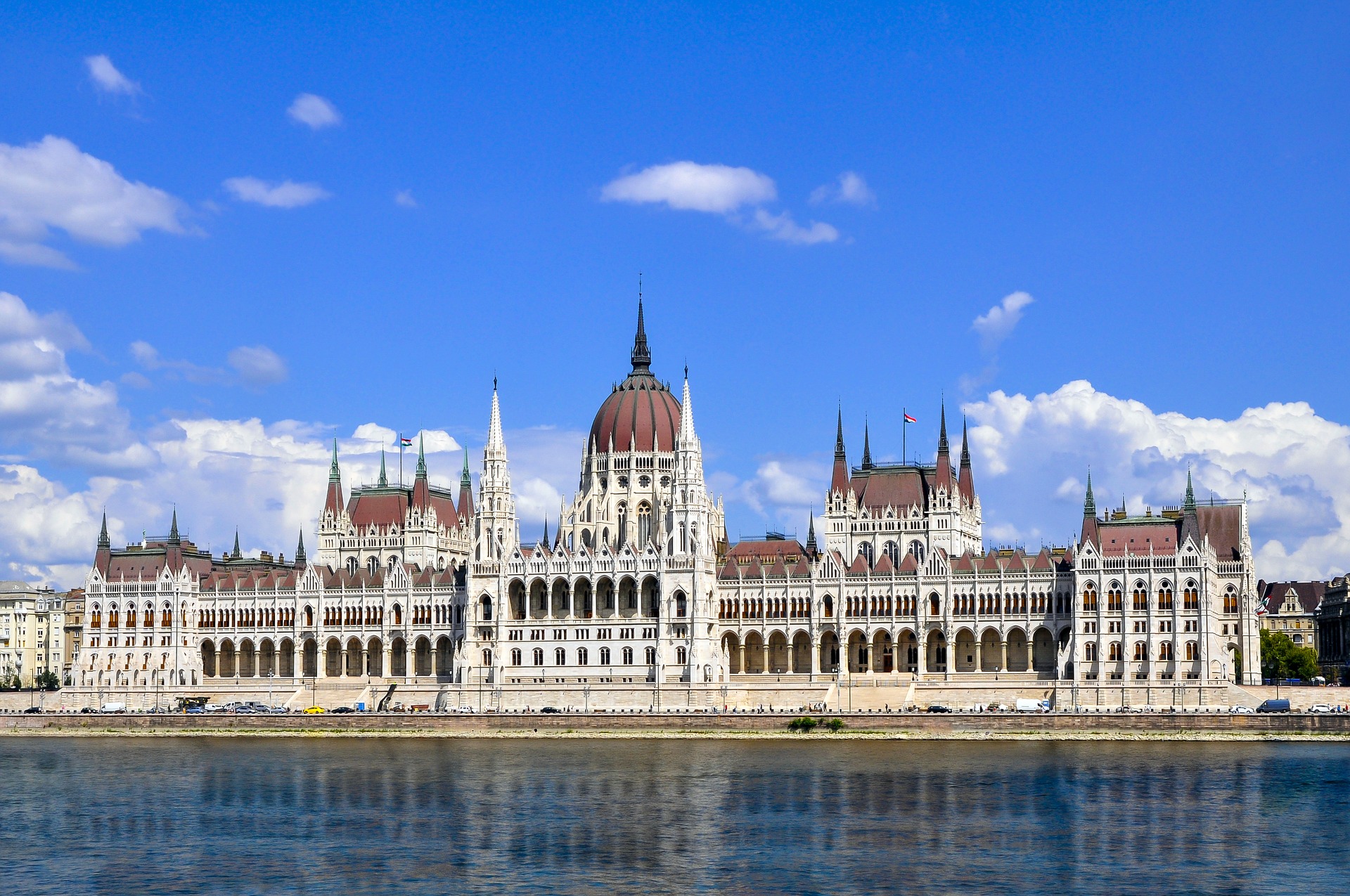
Hungary is a small landlocked country in Central Europe. Budapest, the capital, has Habsburg architecture, Ottoman-era bathhouses, green parks, museums and a lively nightlife; its Danube banks, Buda Castle Quarter and Andrássy Avenue are a World Heritage Site. The villages keep strong folk traditions, and the country has many thermal springs, from the Széchenyi baths in Budapest to the warm lake at Hévíz.
Lake Balaton is the main summer destination. The east is the Great Plain, with the grasslands of Hortobágy National Park, while the north has low mountains, wine regions such as Tokaj and the caves of Aggtelek. Trains and buses fan out from Budapest. English is spoken by younger people and in Budapest, much less in the countryside; German is spoken almost as widely as English.
- Budapest: The Danube banks, Buda Castle, Andrássy Avenue and the thermal baths.
- Lake Balaton: The summer lake, with wine hills and the spa at Hévíz nearby.
- Danube Bend: Szentendre, Visegrád and Esztergom, by boat from Budapest.
- Hortobágy National Park: The puszta: open grassland, horses and birdlife.
- Tokaj: A World Heritage wine region known for sweet Tokaji aszú.
- Hollókő: A World Heritage old village and its surroundings.
Places to visit
- City
- Town
- Park
- Historic site
- Area
Cities
- Budapest: The capital: parks, museums, thermal baths and a lively nightlife.
- Debrecen: The second-largest city, in the east near Hortobágy.
- Győr: A baroque centre full of cafés, restaurants and boutiques.
- Kecskemét: Known for its music scene, plum brandy and Art Nouveau buildings.
- Miskolc: The third-largest city, near the Bükk hills, with a cave bath at Miskolc-Tapolca.
- Pécs: A pleasant cultural centre and university town with an Early Christian necropolis.
- Szeged: A southern city, known as the sunniest in Hungary.
Beyond the cities
- Lake Balaton (area): The great lake of Hungary, the main summer holiday area.
- Hévíz (town): A spa town on a thermal lake near Lake Balaton.
- Szentendre (town): A Danube Bend town, reached by riverboat from Budapest.
- Visegrád (town): A Danube Bend town on the boat route from Budapest.
- Esztergom (town): A Danube Bend town with a huge basilica.
- Sopron (town): A popular sightseeing town on the Austrian border, officially bilingual.
- Tokaj (town): Heart of the Tokaj wine region, famous for sweet Tokaji aszú.
- Hollókő (site): A World Heritage old village and its surroundings.
- Pannonhalma Archabbey (site): A World Heritage Benedictine abbey.
- Aggtelek National Park (park): World Heritage caves with dripstones and stalagmites.
- Hortobágy National Park (park): Hungary's largest protected area, a semi-natural grassland (puszta).
Regions
- Central Hungary: The main entry point, with Budapest.
- Lake Balaton: The summer lake; Siófok is its unofficial summer capital.
- Western Transdanubia: Historic town centres and castles near the Austrian border.
- Northern Hungary: Historic towns, wine regions and cave baths.
- Northern Great Plain: The eastern plain, with Debrecen and Hortobágy.
- Southern Great Plain: The southern plain, with Szeged and Kecskemét.
- Central Transdanubia: Between the Danube and Lake Balaton.
- Southern Transdanubia: The south-west, with Pécs.
Things to do
See
- Budapest on the Danube Budapest: The river banks, the Buda Castle Quarter and Andrássy Avenue, all World Heritage.
- Aggtelek caves Aggtelek National Park: Caves with dripstones and stalagmites.
- Hollókő and Pannonhalma: An old village and a Benedictine abbey, both World Heritage.
Do
- Thermal baths Budapest: The Széchenyi baths are the most famous of hundreds of spas fed by thermal springs.
- Cave bath Miskolc: Bathing inside a cave at Miskolc-Tapolca.
- Lake Balaton and Hévíz Lake Balaton: Summer resorts, wine hills and a thermal lake.
- Danube Bend by boat Szentendre, Visegrád and Esztergom: Riverboats and hydrofoils from Budapest to the towns of the Danube Bend.
- Riding and birdwatching on the puszta Hortobágy National Park: Open plains, a long tradition of horsemanship and rich birdlife.
- Busójárás Mohács: A February tradition in which the people of Mohács noisily chase away bad spirits in the streets.
Eat
- Goulash and lángos: Paprika stews and soups, and fried dough with sour cream and garlic.
Drink
- Wine cellars Tokaj, Eger and Villány: Tokaji aszú, Egri Bikavér and good wine at low prices in the cellars.
Itineraries
Budapest and the Danube Bend in 5 days (5 days)
- Budapest (3 nights): Buda Castle, the Danube banks and a thermal bath.
- Szentendre (1 night): By riverboat from Budapest.
- Esztergom (1 night): The basilica, via Visegrád.
Budapest and Lake Balaton in 6 days (6 days)
- Budapest (3 nights): The capital and its baths.
- Lake Balaton (2 nights): Swimming, wine hills and lake ferries.
- Hévíz (1 night): A soak in the thermal lake.
Northern and eastern Hungary in 7 days (7 days)
- Budapest (2 nights): Start in the capital.
- Miskolc (2 nights): The cave bath and a day trip to the Aggtelek caves.
- Tokaj (1 night): Wine cellars and sweet aszú.
- Debrecen (2 nights): A base for the Hortobágy puszta.
Climate and best time to visit
| Jan | Feb | Mar | Apr | May | Jun | Jul | Aug | Sep | Oct | Nov | Dec | |
|---|---|---|---|---|---|---|---|---|---|---|---|---|
| Max °C | 3 | 5 | 11 | 17 | 22 | 25 | 28 | 27 | 22 | 16 | 9 | 3 |
| Min °C | -3 | -2 | 2 | 7 | 12 | 14 | 16 | 16 | 12 | 7 | 2 | -2 |
| Rain mm | 31 | 26 | 31 | 40 | 62 | 64 | 58 | 56 | 45 | 35 | 49 | 39 |
In Budapest, average highs go from about 3 °C in January to 28 °C in July, and nights from December to February are below freezing. May and June are the wettest months, January and February the driest. The climate is continental: storms are frequent after hot summer days, the west is wetter than the east, and the Great Plain has hot summers, cold winters and little rain.
May to September is the warm season, and July and August are the time for swimming in Lake Balaton; May, June and September are milder for city sightseeing.
Holidays and events
- 1 January 2026 · New Year's Day
- 15 March 2026 · 1848 Revolution Memorial Day
- 3 April 2026 · Good Friday
- 5 April 2026 · Easter Sunday
- 6 April 2026 · Easter Monday
- 1 May 2026 · Labour day
- 24 May 2026 · Pentecost
- 25 May 2026 · Whit Monday
- 20 August 2026 · State Foundation Day
- 23 October 2026 · 1956 Revolution Memorial Day
- 1 November 2026 · All Saints Day
- 25 December 2026 · Christmas Day
- 26 December 2026 · St. Stephen's Day
Getting there and around
| Main airports | BUD, DEB, SOB |
|---|---|
| International driving permit | Recommended |
Getting there
By air: Budapest Liszt Ferenc Airport is the main gateway, served by low-cost airlines as well as major ones; Debrecen and Hévíz–Balaton (Sármellék) also have international flights.
By train: Budapest is a rail hub with frequent trains from Austria, Germany, Czechia and Slovakia, and at least one a day from Croatia, Italy, Romania, Slovenia, Switzerland and Ukraine. International buses link Budapest with many European countries, and from May to September a hydrofoil runs on the Danube from Vienna and Bratislava.
Getting around
There are no regular domestic flights: almost anywhere can be reached within three hours by train or bus. The rail network fans out from Budapest, so cross-country trips often mean changing there. Intercity trains are fast and clean but need a seat reservation; trains to Lake Balaton are often full in summer. Buses are frequent and cost the same as non-Intercity trains. In Budapest and other cities, validate your ticket at the metro entrance or as soon as you board a bus or tram: inspectors fine those who do not. Riverboats run from Budapest to the Danube Bend, and a ferry crosses Lake Balaton.
Driving: traffic drives on the right. Motorways need an e-vignette, bought before you use them and checked by cameras. The alcohol limit is zero, dipped headlights are compulsory outside towns even by day, and you may not turn right on red. The FCDO says you can use a UK photocard licence, but a paper licence may need updating or an international driving permit as well. Canada says you should carry an international driving permit. Speed limits are 50 km/h in towns, 90 km/h outside and 130 km/h on motorways. Many drivers speed and overtake aggressively. Use officially marked taxis, ideally booked by phone, check the meter, and check your change.
Flying to Hungary? PartnerCompare fares and find the cheapest datesSearch flightsWhere to stay
- Hostels: Well-rated hostels are cheapest on weekdays and in low season.
- Village tourism: Farmhouses and rural guesthouses are popular and well organised.
- Campgrounds: Campgrounds are available.
Village tourism is well developed and a good way to see rural life; near Budapest you can rent a rural house and combine the capital with a national park.
Eat and drink
Dishes to try
- Gulyás: A light paprika-flavoured soup: what Hungarians call goulash.
- Pörkölt: The thick paprika stew known as goulash abroad.
- Csirke paprikás: Chicken stewed in a paprika sauce.
- Sült libacomb: Roast goose leg, one of the most common dishes.
- Lángos: Deep-fried dough, usually with salt, garlic and sour cream.
- Palacsinta: Hungarian pancakes, savoury or sweet.
- Somlói galuska: A traditional cake to try in a cukrászda (pastry shop).
Drinks
- Tokaji aszú: A sweet dessert wine made from grapes with noble rot.
- Egri Bikavér: The strong red 'Bull's Blood' of Eger.
- Pálinka: Strong fruit brandy, often offered to guests on arrival.
- Unicum: A bitter herbal digestif in a round black bottle.
- Kávé: Strong espresso-like coffee; ask for hosszú kávé for a long coffee.
| Tipping | About 10% in restaurants, bars and taxis; tell the server the amount when you pay rather than leaving it on the table. If the bill already includes a service charge (szervizdíj), no tip is expected. |
|---|
Food is tasty and paprika-spiced but rarely hot, and often cooked with lard. Restaurants may add a service charge of 10–12%, but only if the menu says so. Some bars and restaurants overcharge tourists: always see the menu and prices before ordering, and check the bill. In ordinary restaurants vegetarian mains are often limited to fried cheese or mushrooms, but Budapest has plenty of vegetarian and vegan places.
Hungarian wine is often sweet: look for száraz on the label if you want it dry. By tradition, many Hungarians do not clink beer glasses.
Entry requirements and visas
| Passport validity | Issued less than 10 years before you arrive, and valid at least 3 months after you leave the Schengen area |
|---|
| Passport | Entry | Max stay | Notes |
|---|---|---|---|
| EU / EEA | Freedom of movement | Free movement with a valid passport or national ID card. | |
| United Kingdom | Visa free | 90 days | 90 days in any 180-day period across the whole Schengen area. |
| Canada | Visa free | 90 days | Less than 90 days in any 180-day period in the Schengen area. |
Other nationalities: check the official source below.
Hungary is in the Schengen area. UK and Canadian visitors can stay up to 90 days in any 180-day period without a visa, counting days in other Schengen countries. Canada warns that you may be refused entry if you have an unpaid fine from a previous visit. Non-EU visitors are registered in the EU Entry/Exit System, and Canada notes that the ETIAS travel authorisation is not yet open for applications.
Cash of €10,000 or more must be declared, and meat and dairy products cannot be brought in from outside the EU. Rules depend on your passport: check the official link before you book.
Money and payments
| Currency | Hungarian Forint (HUF) |
|---|---|
| Cards | Common |
Hungary uses the forint (Ft, HUF). Euros are accepted at most hotels and some restaurants and shops, but at poor rates and with change in forints: pay in forints when you can. Cards work in major shops and larger restaurants, and almost everywhere tourists go in Budapest, but small places may take only cash.
ATMs are common even in small towns. Euronet machines typically add a fee of 2,000–2,500 Ft (as listed on Wikivoyage in October 2026), while bank ATMs do not. Exchange rates are worse at airports and big stations, so change only what you need there, and never change money on the street.
Costs and budget
According to Eurostat, in 2024 the general price level in Hungary was about 71% of the EU average, food in shops about 95% and restaurants and hotels about 72%.
Health
| Recommended vaccines | Routine vaccines, including measles (MMR), Hepatitis A, Hepatitis B, Tick-borne encephalitis, for extensive time outdoors where ticks are found, Mpox, for travellers at risk of sexual exposure |
|---|---|
| Malaria | None |
| Tap water | Safe |
Rabid dogs are not commonly found, but rabies is present in some wild animals. Canada notes that the risk of tick-borne encephalitis is highest from April to November for people who hike or camp in forests. With a European (EHIC) or UK (GHIC) health card you get medically necessary state healthcare; it does not replace travel insurance. Call 112 for an ambulance. Outside Budapest few doctors and pharmacists speak English.
Tap water is safe to drink, even in remote villages, though it can taste unpleasant. Do not drink it on trains or where it is marked as not drinkable. Bottled water is cheap.
This is general information, not medical advice: check with a travel health professional before you go.
Safety
- United States: Level 1: Exercise Normal Precautions (2026-10-20)
- Canada: Take normal security precautions (2026-10-20)
- United Kingdom: No advice against travel (2026-10-20)
All three governments advise normal precautions. Pickpocketing and bag snatching are common in Budapest and other cities, on busy public transport, at stations and markets; watch your bags on trains, especially as they pull into stations. Some bars, clubs and restaurants charge tourists huge bills, sometimes with taxi drivers paid to bring them in: check prices before ordering, and be wary of invitations on the street. Drinks have been spiked in Budapest bars. Demonstrations are held on national holidays such as 15 March and 23 October.
Always carry your passport: the police can ask for ID, and a copy is not accepted. Drug penalties are severe, and the communist red star, hammer and sickle, Nazi and Arrow Cross symbols are banned in public, even on clothing. Emergency number 112.
Customs and etiquette
Hungarians put the family name first, as in Kovács István, though most switch the order when speaking a foreign language. Do not use first names or the informal te unless invited to; Hungarian has a polite form of address for strangers. People are direct, which is not meant as rudeness. Offer your seat to older people on public transport, keep your voice down in public, and take your shoes off when you enter a home.
History is a sensitive subject: avoid discussing the 1956 revolution, the Treaty of Trianon, the communist era or relations with Russia, and avoid mocking Hungarian patriotism. Use Roma rather than other terms.
Illegal drugs, including cannabis, carry severe penalties: the FCDO says to expect a long jail sentence and heavy fines for possessing, using or smuggling them, including when transiting through the airport.
Same-sex sexual activity is legal. The FCDO says Budapest is generally tolerant and open, but outside Budapest showing affection in public may receive unwanted attention. Canada says a child protection law passed in March 2025 has been used to ban the Budapest Pride March and lets authorities use facial recognition technology to identify and fine anyone who takes part in these events, and that LGBT+ travellers should carefully consider the risks of travelling to Hungary.
Language
| Official languages | Hungarian |
|---|---|
| English | Limited |
| Hello | Szervusz / Szia (informal) SER-voos / SEE-ah |
|---|---|
| Please | Kérem KEY-rem |
| Thank you | Köszönöm KUH-suh-nuhm |
| Yes / No | Igen / Nem EE-gen / nem |
| Excuse me | Elnézést EL-ney-zeysht |
| Goodbye | Viszontlátásra VEE-sont-la-tash-rah |
| Do you speak English? | Beszél angolul? BE-seyl AHN-go-lool |
| The bill, please | A számlát kérem ah SAM-lat KEY-rem |
What to pack
- Passport: You must carry it at all times; a copy is not accepted.
- Some forints in cash: Small places may not take cards, and euros get poor rates.
- Swimsuit: For the thermal baths and Lake Balaton.
- EHIC or GHIC and travel insurance: For state healthcare and anything it does not cover.
- Insect repellent: Ticks are a risk in forests from April to November.
Quick reference
Country facts
| Capital | Budapest |
|---|---|
| Population | 9,514,251 (2025) |
| Area | 91,260 km² |
| Time zone | Europe/Budapest (UTC+1) |
| Calling code | +36 |
| Driving side | right |
Staying connected
| SIM and eSIM | 4G covers most of the country. |
|---|---|
| Wi-Fi | Free Wi-Fi is common in shopping centres and, in Budapest, in most cafés and pubs; ask for the password when you order. |
Emergency numbers
| Emergency | 112 |
|---|
Frequently asked questions
Do I need a visa for Hungary?
Not for short stays with a UK or Canadian passport: up to 90 days in any 180-day period in the Schengen area. Check the official link before you book.
Can I pay in euros in Hungary?
Often, at hotels and some shops, but at poor rates and with change in forints. Paying in forints is better.
Should I tip in Hungary?
Yes, about 10%, unless a service charge is already on the bill. Tell the server the amount when you pay.
Do I need a vignette to drive?
Yes, for motorways: buy the e-vignette before you use them, as cameras check number plates.
Can I drink the tap water?
Yes, except on trains and where it is marked as not drinkable.
Is English widely spoken?
In Budapest and among younger people, yes; in the countryside it is rare. German is spoken almost as widely as English.
More Travel Stories from Europe
 Svalbard +1
Sources This guide was last checked on · 19 sources
- Wikivoyage: Hungary · Overview, Places to visit, Things to do, Itineraries, Climate and best time to visit, Getting there and around, Where to stay, Eat and drink, Entry requirements and visas, Money and payments, Health, Safety, Customs and etiquette, Language, What to pack, Staying connected, Frequently asked questions
- Wikidata: Hungary · Overview, Places to visit, Things to do, Money and payments, Country facts
- WMO World Weather Information Service: Budapest · Climate and best time to visit
- Nager.Date: public holidays in Hungary, 2026 · Holidays and events
- Government of Canada: Hungary travel advice (updated 11 August 2026) · Getting there and around, Entry requirements and visas, Health, Safety, Customs and etiquette, What to pack, Frequently asked questions
- UK FCDO: Hungary safety and security · Getting there and around, Eat and drink, Customs and etiquette, What to pack, Frequently asked questions
- UK FCDO: Hungary entry requirements · Entry requirements and visas, Frequently asked questions
- Your Europe (EU): Travel documents for EU nationals · Entry requirements and visas
- ISO 4217 (SIX), published 2026-09-17 · Money and payments
- Eurostat: price level indices, 2024 (EU27 = 100) · Costs and budget
- CDC Travelers' Health: Hungary · Health
- UK FCDO: Hungary health · Health
- US Department of State: Hungary travel advisory · Safety
- UK FCDO: Hungary travel advice · Safety
- Wikivoyage: Hungarian phrasebook · Language
- World Bank, SP.POP.TOTL · Country facts
- World Bank, AG.LND.TOTL.K2 · Country facts
- IANA Time Zone Database, zone.tab · Country facts
- UK FCDO: Hungary getting help · Emergency numbers
Suggest an update
Travel rules, prices and timetables change. If something in this guide is out of date, tell us: we check every suggestion against an official source before changing the page.