

- Local time
- 07:37
- Currency
- Pakistani Rupee (PKR)
- Capital
- Islamabad
- Calling code
- +92
- Drive on the
- left
Overview
Mughal Lahore, Gandharan ruins and the Karakoram peaks of Gilgit-Baltistan, but the UK and Canada advise against travel to large parts of Pakistan.
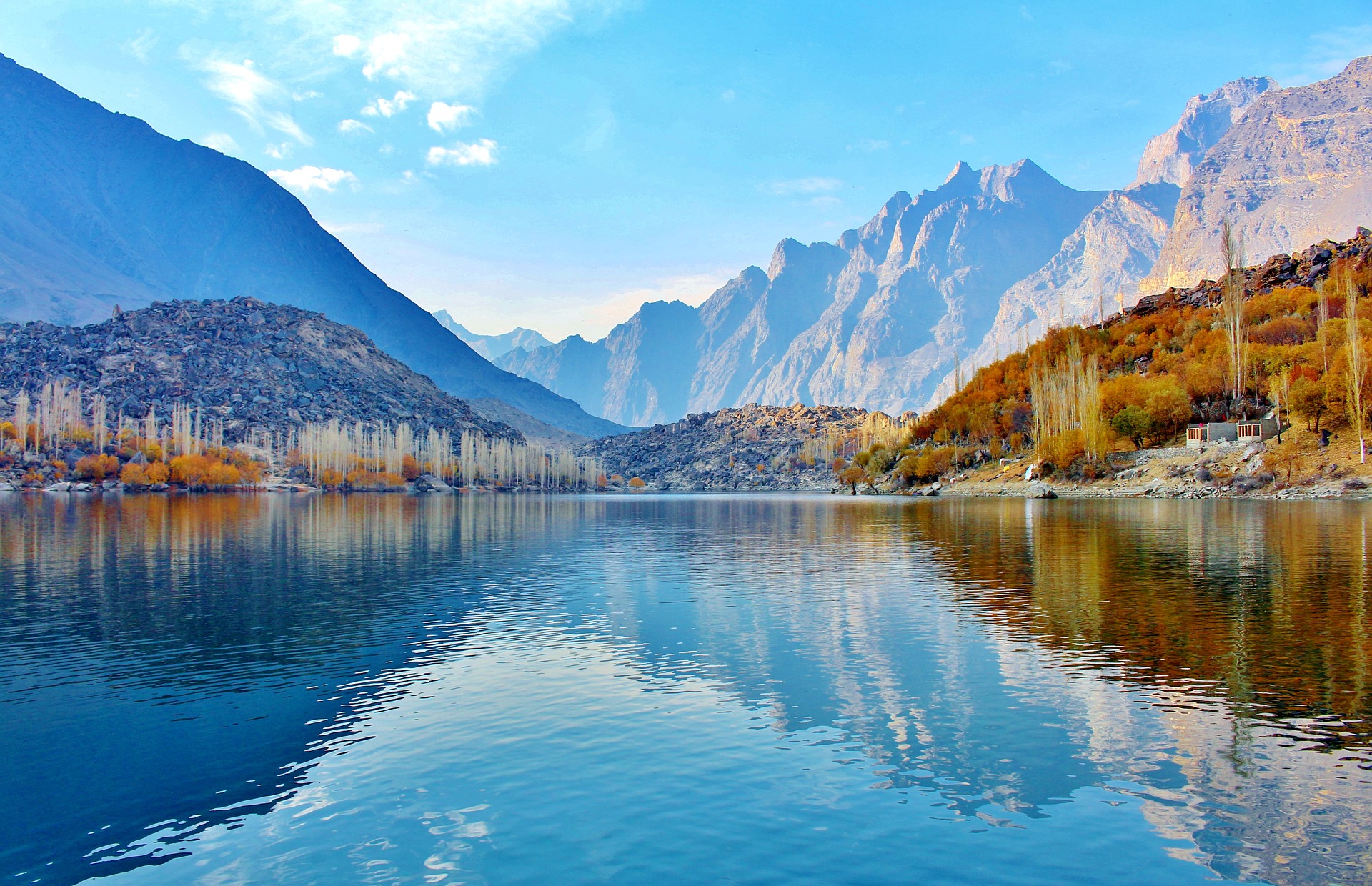
Pakistan sits where South, Central and West Asia meet, on old trade routes such as the Khyber Pass and the road over the Karakoram to China. Its history runs from the Indus Valley cities of Mohenjo-daro and Harappa and the Buddhist ruins of Taxila to the Mughal monuments of Lahore. In the far north, Gilgit-Baltistan holds five peaks over 8,000 m, among them K2, at 8,611 m the second highest mountain in the world, and some of the largest glaciers outside the polar regions. Pakistanis take pride in their hospitality to guests, called mehmanawazi in Urdu, although foreign visitors are few and draw attention.
Read the official advice before you plan anything. The US says reconsider travel and Canada says exercise a high degree of caution in the whole country (October 2026), citing terrorism, civil unrest and kidnapping. The UK FCDO and Canada advise against all travel to Balochistan, most of Khyber Pakhtunkhwa, including Peshawar, and the areas near the Afghan border and the Line of Control, and the FCDO advises against all but essential travel to Azad Jammu and Kashmir and northern Sindh. This guide covers the areas outside those zones: Lahore and northern Punjab, Islamabad, and Gilgit-Baltistan, which Canada says not to reach by road.
- Lahore: The cultural capital of Pakistan, with the Lahore Fort, the Badshahi Mosque and the Shalimar Gardens.
- Islamabad: A planned capital with a calmer pace than other cities, the Faisal Mosque and walks in the Margalla Hills.
- Taxila: Ruins of the Gandhara civilization, once a major centre of Buddhism, listed by UNESCO.
- Rohtas Fort: An ancient fort in Punjab and a UNESCO World Heritage Site.
- Hunza Valley: A mountain valley on the Karakoram Highway, with Baltit Fort and Attabad Lake.
- Skardu: The largest town in Gilgit-Baltistan and a base for mountaineering expeditions, with lakes and fort hotels nearby.
Places to visit
- City
- Town
- Park
- Historic site
- Area
Cities
- Islamabad: The federal capital, a planned city with a more relaxed feel than the others; Canada advises keeping a low profile.
- Rawalpindi: Islamabad's twin city and the headquarters of the military.
- Lahore: Capital of Punjab and the cultural capital of Pakistan, with a Walled City and Mughal monuments.
- Faisalabad: A major city in Punjab and the centre of the textile industry.
- Multan: The City of Saints in southern Punjab, known for tombs, blue pottery and khussa shoes; the FCDO says to take security advice before you go.
- Karachi: The largest city, the financial capital and an industrial port; Canada advises against non-essential travel to most of the city.
- Peshawar: Capital of Khyber Pakhtunkhwa and gateway to the Khyber Pass; the FCDO and Canada advise against all travel.
- Gilgit: Capital of Gilgit-Baltistan, an old Silk Road town and a hub for trekking in the Karakoram.
- Skardu: The largest town in Gilgit-Baltistan and, with Gilgit, a hub for mountaineering expeditions.
Beyond the cities
- Taxila (site): Ruins of a Gandharan city that was a major centre of Buddhism, a UNESCO World Heritage Site.
- Murree (town): A popular Himalayan hill station, about an hour's drive from Islamabad.
- Khewra Salt Mine (site): The second largest salt mine in the world, about two hours south of Islamabad by motorway.
- Rohtas Fort (site): An ancient fort in Punjab, listed by UNESCO.
- Nankana Sahib (town): A small town near Lahore, birthplace of Guru Nanak, the founder of Sikhism, and a Sikh holy site.
- Harappa (site): Ruins of one of the cities of the Indus Valley Civilization.
- Mohenjo-daro (site): A UNESCO-listed Indus Valley city in northern Sindh, where the FCDO advises against all but essential travel.
- Hunza Valley (area): A valley on the Karakoram Highway before the Chinese border, with Baltit Fort in Karimabad.
- Attabad Lake (area): A high-altitude lake in upper Hunza.
- Khunjerab National Park (park): A park around the Khunjerab Pass, where the Karakoram Highway crosses into China. Canada advises against all travel within 10 km of the Chinese border, except the pass and the highway leading to it.
- Satpara Lake (area): A lake about 8 km from Skardu, known for trout fishing.
- Deosai National Park (park): A national park on the Deosai Plains, with Sheosar Lake.
Regions
- Punjab: The most populous and fertile province, with Lahore, many historic shrines and mosques, and Islamabad in the north.
- Gilgit-Baltistan: The far north, with some of the highest mountains in the world and trekking to rival Nepal; foreigners must register on arrival.
- Sindh: Karachi, the Indus Valley ruins of Mohenjo-daro and a culture shaped by Sufism; the FCDO advises against all but essential travel to the north.
- Khyber Pakhtunkhwa: Rugged, mountainous and mainly Pashtun; the FCDO and Canada advise against travel to most of the province.
- Azad Kashmir: Forested mountains and valleys; Canada advises against all travel and the UK against all but essential travel.
- Balochistan: The largest and most remote province; the FCDO and Canada advise against all travel.
Things to do
See
- Lahore Fort and the Badshahi Mosque Lahore: The fort, a UNESCO site, faces the Mughal-era Royal Mosque across a square in the Walled City; Minar-e-Pakistan stands in the park in front.
- Shalimar Gardens Lahore: A Mughal garden on the Grand Trunk Road towards Wagah, listed by UNESCO with the Lahore Fort.
- The Wagah border ceremony Wagah, near Lahore: The daily flag ceremony at the border with India; the crossing is closed, but visitors can still attend. Canada asks for a high degree of caution on the road there.
- Faisal Mosque and the Pakistan Monument Islamabad: Two landmarks of the capital; Islamabad also has the Lok Virsa Museum and the National Art Gallery.
- Taxila Taxila: The ruins of a Gandharan city and Buddhist centre, a UNESCO World Heritage Site.
- Khewra Salt Mine Khewra Salt Mine: The second largest salt mine in the world, run as a tourist complex, about two hours from Islamabad.
- Baltit Fort Hunza Valley: A fort in Karimabad, now a museum, with a café.
Do
- Walk in the Margalla Hills Islamabad: Big, steep Himalayan foothills easily reached from the city; between March and November start before 7:30 am, and bring sturdy shoes and plenty of water.
- Trekking in the Karakoram Gilgit-Baltistan: Peaks over 6,000 m and most national parks need a permit, which can take up to two months: go with a reputable agency, on established routes and never alone.
Eat
- Lahore's food streets Lahore: Street food and local specialities at Gawalmandi and Anarkali food streets.
Itineraries
Lahore, Islamabad and northern Punjab in 8 days (8 days)
- Lahore (3 nights): The Walled City, the Lahore Fort and the Badshahi Mosque, the Shalimar Gardens and the Wagah ceremony.
- Rohtas Fort (0 nights): A UNESCO-listed fort in Punjab.
- Islamabad (3 nights): The Faisal Mosque, the Lok Virsa Museum and an early walk in the Margalla Hills.
- Taxila (0 nights): Gandharan and Buddhist ruins, a day trip from Islamabad.
- Khewra Salt Mine (0 nights): About two hours south of Islamabad by motorway.
- Murree (2 nights): A hill station about an hour from Islamabad.
Hunza by air in 7 days (7 days)
- Islamabad (1 night): Flights to Gilgit are often cancelled by weather: keep a spare day.
- Gilgit (1 night): Fly in, in under an hour, and register with the local authorities.
- Hunza Valley (4 nights): Baltit Fort in Karimabad and Attabad Lake.
- Khunjerab National Park (0 nights): Up to the Khunjerab Pass on the Karakoram Highway, usually open from April to November. Stay on the highway: Canada advises against all other travel within 10 km of the Chinese border.
- Islamabad (1 night): Fly back from Gilgit.
Skardu by air in 5 days (5 days)
- Islamabad (1 night): Flights to Skardu depend on the weather: keep a spare day.
- Skardu (3 nights): Kachura Lake, the Buddha rock carving and Shigar Fort, now a hotel.
- Satpara Lake (0 nights): Trout fishing, with a permit from the Fisheries Department.
- Islamabad (1 night): Fly back from Skardu.
Climate and best time to visit
| Jan | Feb | Mar | Apr | May | Jun | Jul | Aug | Sep | Oct | Nov | Dec | |
|---|---|---|---|---|---|---|---|---|---|---|---|---|
| Max °C | 18 | 20 | 25 | 31 | 36 | 38 | 35 | 34 | 34 | 31 | 26 | 20 |
| Min °C | 3 | 6 | 11 | 16 | 21 | 24 | 24 | 24 | 21 | 15 | 8 | 4 |
| Rain mm | 56 | 84 | 92 | 64 | 35 | 75 | 311 | 338 | 109 | 32 | 15 | 36 |
According to Wikivoyage, Pakistan has four seasons: a cool, dry winter from December to February, a hot, dry spring from March to May, the southwest monsoon from June to September and the retreating monsoon in October and November. In Islamabad, the WMO reference station, January averages a maximum of about 18 °C and a minimum of about 3 °C, June peaks at about 38 °C, and July and August bring over 300 mm of rain each. On the plains temperatures can reach 50 °C in June and July. The FCDO warns that monsoon floods and landslides, usually from late June to early October, can damage roads and bridges in every province.
October and November are dry in Islamabad and cooler than the summer, with maximums of about 31 °C and 26 °C and under 35 mm of rain; March and April are mild too but wetter. Air pollution is a health hazard from October to February, worst in Lahore. In Gilgit-Baltistan winter snow blocks roads and can delay flights for days, and the Khunjerab Pass to China usually opens only from April to November, so plan mountain trips for the warmer months.
Getting there and around
| Main airports | ISB, LHE, KHI |
|---|---|
| International driving permit | Required |
Getting there
By air: Islamabad (ISB), Lahore (LHE) and Karachi (KHI) are the main gateways, with direct flights from Europe, North America, the Middle East and Southeast Asia; most flights come from the Gulf. British Airways flies from London to Islamabad and Lahore, and Virgin Atlantic from London and Manchester to Islamabad and from London to Lahore. Regional tensions can close airspace at short notice, as in May 2025, when airlines suspended flights: check with your airline before you travel. The FCDO also warns that problems with fuel supply may disrupt transport.
By land: the Wagah crossing, the only official one with India, is closed, although the daily border ceremony still takes place. The Khunjerab Pass on the Karakoram Highway, the only official crossing with China, is open to foreign tourists, usually from April to November, but snow and landslides can close it without warning; you need your Pakistani visa and your Chinese entry documents. All the crossings with Iran are in Balochistan, and the border areas with Afghanistan are among those where the FCDO advises against travel; both borders can close at short notice.
Getting around
Read the safety advice before you plan any journey. The UK FCDO advises against using the railways, because of the risk of attacks and derailments, and against public transport, including the Metro Bus between Rawalpindi and Islamabad; Canada also advises against public transport, taxis and trains. Do not hail taxis in the street or use e-taxis or taxi apps: the FCDO says to call a reputable licensed company, which then sends a driver. Arrange to be met at the airport, especially after dark.
Domestic flights: PIA, Airblue and SereneAir link the main cities, and PIA flies from Islamabad to Gilgit and Skardu. Flights to the mountains are often delayed or cancelled by bad weather and are often overbooked, so check in early and keep spare days. Driving: traffic keeps to the left. You need the 1968 International Driving Permit with your licence; British drivers must get it in the UK before they leave. Motorways such as Islamabad to Lahore are in good condition, but most other roads are poor, driving is erratic and accidents are common: avoid driving after dark, and expect checkpoints without warning. In the north, landslides block mountain roads and the Babusar Pass closes with snow; travel there only in daylight and clear weather, with an experienced local driver. The FCDO advises against all travel on the Karakoram Highway between Mansehra and Chilas, and Canada says not to travel to Gilgit-Baltistan by road.
Flying to Pakistan? PartnerCompare fares and find the cheapest datesSearch flightsWhere to stay
- Budget hotels: Usually near bus and train stations; see the room first, because hot water and air conditioning are luxuries.
- Mid-range hotels: Air conditioning and hot water; ask whether there is a working generator. The government-run PTDC hotels are often old but well located.
- Top-end hotels: Serena, Pearl Continental and Marriott, with visible security around the perimeter.
- Fort hotels: In Baltistan, Shigar Fort northeast of Skardu and Khaplu Fort, a former palace, are now hotels.
- Government rest houses: Old rest houses in rural and mountain areas, now hard to book.
Pakistan has hotels in every price range, but cleanliness often disappoints, bathrooms above all, and in the north you may be the only guest. Choose your accommodation carefully: Canada advises staying in Islamabad only in hotels with strict security, such as metal detectors and a closed perimeter. Many budget and mid-range hotels in the cities take only men, so women travelling alone often end up in upper mid-range or top-end hotels. Canada notes that many hotels let only married couples share a room. In some places the word "hotel" also means a restaurant.
Eat and drink
Dishes to try
- Biryani: Spiced rice with meat, chicken or fish, in many versions such as Lahori and Sindhi.
- Nihari: Beef or mutton simmered for hours in a thick, spicy gravy, eaten with naan, often at breakfast.
- Kebabs: Seekh kebab on skewers, chicken tikka, shami kebab and the spicy chapli kebab from Peshawar.
- Haleem: A thick stew of meat, lentils and wheat.
- Daal with roti: Lentils with flatbread, the everyday meal for all classes.
- Halwa puri: Fried bread with sweet semolina halwa, a weekend breakfast in the cities.
Drinks
- Chai: Tea with lots of sugar, often with milk, such as the thick doodh pati of Punjab; green tea is common too.
- Kashmiri chai: Pink milky tea with pistachios and almonds, for weddings and winter.
- Lassi: A yoghurt drink, sweet or salty, also with mango.
- Sugarcane juice: Pressed fresh in summer; vendors do not always clean their equipment, so choose carefully.
| Tipping | Expected in restaurants, 5 to 10% at sit-down places, according to Wikivoyage; porters and drivers appreciate a small tip for good service. |
|---|
Pakistani food is a mix of Mughal, Afghan, Central Asian and Persian cooking, with more meat than elsewhere in South Asia: goat, mutton, beef and chicken. Food in Punjab can be very hot, while dishes in the north are milder, so say if you want yours less spicy. Breads such as naan, roti and paratha come with most meals. Eat with your right hand. Pork is not sold.
Do not drink tap water: buy bottled water and check the seal, because some vendors refill old bottles, and avoid ice. Drinking alcohol is illegal for Muslims; non-Muslims need a licence from the authorities, and public drinking is illegal. Alcohol is sold to non-Muslims in special shops and in bars of most top-end hotels.
Entry requirements and visas
| Passport validity | At least 6 months after the date of your visa application (UK advice); Canada asks for 6 months beyond the date you expect to leave |
|---|
| Passport | Entry | Max stay | Notes |
|---|---|---|---|
| United Kingdom | Visa required | Visa needed; apply in advance. | |
| Canada | Evisa | Tourist visa required; Canadians can apply for a Pakistani online visa. |
Other nationalities: check the official source below.
You need a visa, arranged before you travel. Canada says its citizens can apply through Pakistan's online visa system. Make sure your passport is stamped when you arrive: leaving is difficult without an entry stamp. Do not overstay; if your visa expires, apply online for an exit permit before you try to leave.
Travel to Khyber Pakhtunkhwa, Balochistan and several districts of Azad Kashmir needs advance permission, and all foreign visitors must register with the local authorities in Gilgit-Baltistan. You need a yellow fever certificate if you arrive from a country with a risk of transmission, and Canada says that if you stay more than four weeks you must show proof of a polio vaccination from the previous 12 months when you leave. Importing alcohol or pork is illegal. Holders of a valid NICOP card for overseas Pakistanis can enter without a visa. Rules depend on your passport and can change: check with the Pakistani embassy or the official link before you book.
Money and payments
| Currency | Pakistani Rupee (PKR) |
|---|---|
| Cards | Limited |
The currency is the Pakistani rupee (PKR, Rs). Pakistan runs mainly on cash. Large stores, upmarket restaurants and hotels accept Visa, Mastercard and American Express, but small family-run shops almost never take cards, and some shops add their 2 to 3% card fee. ATMs are found in the main cities, but many do not accept foreign cards: the large banks HBL, MCB, National Bank of Pakistan and United Bank have the most ATMs, and it helps to carry cards from two providers. In Gilgit-Baltistan very few ATMs work with foreign cards, so bring enough cash for the whole stay.
Change money at licensed exchange companies and ask for the best rate, which is often negotiable. Keep small notes: traders and drivers often say they have no change for Rs 500 or 1,000. Credit card fraud is common, so do not let your card out of sight. Bargain with street vendors, but not in department stores. Rupees exchange badly abroad, so spend them before you leave.
Health
| Required vaccines | Yellow fever, only if you arrive from a country with risk of transmission (CDC: including airport transits of more than 12 hours there), Polio: proof of vaccination when you leave, if you stay more than four weeks (Canada) |
|---|---|
| Recommended vaccines | Routine vaccines, including measles (MMR), Polio: a single adult booster if you were fully vaccinated as a child, Hepatitis A, Hepatitis B, Typhoid, for most travellers, Rabies, for some travellers: dogs with rabies are common and vaccine is hard to find locally, Japanese encephalitis, for long stays or rural trips, Cholera, may be considered, Chikungunya, for stays of 6 months or more |
| Malaria | Some areas |
| Tap water | Not safe |
The CDC lists malaria in all areas below 2,500 m, including all cities, and recommends preventive medicine for travellers to certain areas. Dengue is also spread by mosquitoes, mostly during the monsoon from July to September, so protect yourself from mosquito bites. Drink only bottled, boiled or filtered water, and boil fresh milk. Pakistan runs a large polio vaccination programme: show proof of vaccination if a vaccination team asks. See a travel health professional at least 8 weeks before you go.
Summer heat can reach 50 °C on the plains, and air pollution is a hazard from October to February, worst in Lahore. Altitude sickness is a risk in Gilgit-Baltistan. Medical care is below UK standards, especially in remote areas; private care is expensive but available in all major cities, so get insurance that covers evacuation, and Canada says trekkers need cover for helicopter rescue. Medicines are often in short supply: bring what you need. For an ambulance, call 1122; in the mountains it can take over an hour to arrive.
This is general information, not medical advice: check with a travel health professional before you go.
Safety
- United States: Level 3: Reconsider Travel (2026-10-20)
- Canada: Exercise a high degree of caution (2026-10-20)
- United Kingdom: Advises against all travel to parts of the country; Advises against all but essential travel to parts of the country (2026-10-20)
The UK FCDO advises against all travel to Balochistan; to most districts of Khyber Pakhtunkhwa, including Peshawar and Swat, and the N45 highway to Chitral and the Kalash valley; to the Karakoram Highway between Mansehra and Chilas; and to within 10 miles of the Afghan border and the Line of Control. It advises against all but essential travel to Azad Jammu and Kashmir, to Sindh north of and including Nawabshah, to Dera Ghazi Khan, to five more districts of Khyber Pakhtunkhwa and to within 5 miles of the border with India, except the road to the Wagah ceremony. Canada advises against all travel to Balochistan, Pakistan-administered Kashmir and Khyber Pakhtunkhwa except the Haripur and Abbottabad districts, against non-essential travel to Chitral and most of Karachi, and tells travellers not to go to Gilgit-Baltistan by road. Emergency measures were introduced in Khyber Pakhtunkhwa on 11 October 2026, and there are reports of road closures and internet disruption. Demonstrations in Azad Jammu and Kashmir have closed roads and cut mobile and internet services, and local authorities have advised visitors to avoid the area. Travelling against this advice can invalidate your insurance; check the advice before you go.
The threat of terrorism is high throughout Pakistan, and attacks have hit Islamabad, Lahore and Karachi as well as the border provinces. Places of worship, hotels, restaurants, markets, tourist sites and transport hubs can be targets. Keep a low profile, vary your routes, limit your movements on Friday afternoons, avoid demonstrations, religious gatherings and crowds, and take extra care during Ramadan, Muharram, the Eid holidays and national days such as 23 March and 14 August. In Islamabad avoid the Red Mosque (Lal Masjid) and protests around Aabpara Market. Local authorities may require a police escort or a No Objection Certificate in higher-risk areas, and some areas near military and nuclear sites are closed to foreigners.
Always carry photo ID. Street crime and credit card fraud are common; in Karachi armed robbery, carjacking and kidnapping occur. Women travelling alone may face harassment: Canada advises not to travel alone, especially at night. Same-sex sexual acts are illegal. Do not photograph military sites, airports, bridges or dams: people have been arrested for spying. Monsoon floods and landslides hit from late June to early October, and earth tremors are common.
Customs and etiquette
Pakistan is a Muslim country and people dress conservatively. Men and women should cover their shoulders and legs in public, and women should cover their heads in mosques and holy places and in rural areas. Take off your shoes before you enter a religious building, and ask first: some mosques are closed to non-Muslims, and many do not admit women. During Ramadan do not eat, drink, smoke or chew gum in public in the daytime, including in your car. Blasphemy is illegal and broadly defined, including comments on social media, with penalties up to death: be sensitive about religion. Drug offences are punished severely, with prison, heavy fines or even the death penalty.
Use your right hand to eat, shake hands and pass money. Men and women do not shake hands with each other, and men should never touch a woman they do not know well. Ask before you photograph anyone. Hospitality matters: accept the tea and sweets you are offered, bring a small gift such as sweets when you visit a home, and if you are someone's guest at a restaurant, offer firmly to pay. Expect direct questions about your family and work. Be careful with politics, the military, Kashmir and relations with India, which are sensitive subjects. Loud behaviour in public is frowned upon.
Language
| Official languages | Urdu, English |
|---|---|
| English | Common |
| Hello | السلام علیکم (As-salaam alaykum) |
|---|---|
| Thank you | شکریہ (Shukriyaa) |
| Please | برائے مہربانی (Baraaye meharbaani) |
| Yes / No | جی / نہیں (Jee / Nahee) |
| Excuse me | سنئے (Suniye) |
| Sorry | معاف کیجئے (Maaf keejiye) |
| Goodbye | خدا حافظ (Khuda haafiz) |
| Do you speak English? | آپ انگریزی بولتے ہے؟ (Aap angrezi boltay hai?) |
| Help! | مدد (Madad) |
What to pack
- Passport with your visa, and photo ID: You must carry ID at all times and may be detained without it.
- 1968 International Driving Permit: Needed with your licence to drive; British drivers cannot buy it outside the UK.
- Proof of polio vaccination: Needed when you leave if you stay more than four weeks.
- Modest clothes and a headscarf for women: Shoulders and legs covered in public; heads covered in mosques and rural areas.
- Your medicines: Shortages are frequent and some imported medical supplies are restricted.
- Insect repellent: Malaria and dengue are present below 2,500 m.
- Enough cash for the north: Very few ATMs in Gilgit-Baltistan take foreign cards.
Quick reference
Country facts
| Capital | Islamabad |
|---|---|
| Population | 255,219,554 (2025) |
| Area | 770,880 km² |
| Time zone | Asia/Karachi (UTC+5) |
| Calling code | +92 |
| Driving side | left |
Staying connected
| SIM and eSIM | Jazz, Telenor, Ufone, Zong and Onic sell cheap prepaid SIM cards; bring your passport and visa. In Gilgit-Baltistan the network is SCOM: buy its SIM at SCO shops in Gilgit, and allow about 24 hours for activation. |
|---|---|
| Wi-Fi | Wi-Fi hotspots are common in hotels, malls and cafés, and 5G covers 16 cities, but mobile data and internet can be cut without warning during protests and unrest. |
Emergency numbers
| Emergency | 1122 |
|---|---|
| Police | 15 |
Frequently asked questions
Is it safe to travel to Pakistan?
The US says reconsider travel and Canada says exercise a high degree of caution. The UK and Canada advise against all travel to Balochistan, most of Khyber Pakhtunkhwa and the areas near the borders, and the threat of terrorism is high across the country. Read the official advice before you plan anything.
Do I need a visa for Pakistan?
Yes. Most visitors must apply in advance through Pakistan's online visa system. Rules depend on your passport, so check with the Pakistani embassy before you book.
When is the best time to visit Pakistan?
On the plains, October and November or March and April, when it is mild; summer brings heat up to 50 °C and the monsoon. For Gilgit-Baltistan go in the warmer months, when roads and the Khunjerab Pass are open.
Can I drink the tap water in Pakistan?
No. Drink bottled water with an unbroken seal, or boiled or filtered water, and avoid ice.
Is there malaria in Pakistan?
Yes. The CDC lists malaria in all areas below 2,500 m, including all cities, and recommends preventive medicine for certain areas; ask a travel health professional before you go.
Can I drink alcohol in Pakistan?
It is illegal for Muslims. Non-Muslims need a licence, and drinking in public is illegal; alcohol is sold in special shops and in bars of most top-end hotels.
More Travel Stories from Asia

 Laos
 Cambodia
Sources This guide was last checked on · 25 sources
- Wikivoyage: Pakistan · Overview, Places to visit, Things to do, Itineraries, Climate and best time to visit, Getting there and around, Where to stay, Eat and drink, Entry requirements and visas, Money and payments, Health, Safety, Customs and etiquette, Language, What to pack, Staying connected, Frequently asked questions
- Wikivoyage: Gilgit-Baltistan · Overview, Places to visit, Things to do, Itineraries, Climate and best time to visit, Getting there and around, Where to stay, Eat and drink, Money and payments, Staying connected
- Wikivoyage: Punjab (Pakistan) · Overview, Places to visit, Things to do, Itineraries, Climate and best time to visit
- Wikidata: Pakistan · Overview, Places to visit, Money and payments, Country facts
- UK FCDO: Pakistan warnings and insurance · Overview, Getting there and around, Safety, Frequently asked questions
- Government of Canada: Pakistan travel advice (updated 19 October 2026) · Overview, Places to visit, Things to do, Itineraries, Getting there and around, Where to stay, Entry requirements and visas, Money and payments, Health, Safety, Customs and etiquette, What to pack, Staying connected, Frequently asked questions
- US Department of State: Pakistan travel advisory · Overview, Safety, Frequently asked questions
- UK FCDO: Pakistan regional risks · Places to visit, Things to do, Itineraries, Getting there and around, Entry requirements and visas, Safety
- Wikivoyage: Lahore · Things to do, Itineraries, Getting there and around, Eat and drink
- Wikivoyage: Islamabad · Things to do, Itineraries, Getting there and around
- UK FCDO: Pakistan entry requirements (updated 13 October 2026) · Things to do, Climate and best time to visit, Getting there and around, Entry requirements and visas, Health, What to pack, Frequently asked questions
- Wikivoyage: Gilgit · Itineraries, Getting there and around
- Wikivoyage: Skardu · Itineraries, Getting there and around
- WMO World Weather Information Service: Islamabad · Climate and best time to visit
- UK FCDO: Pakistan safety and security · Climate and best time to visit, Getting there and around, Where to stay, Eat and drink, Money and payments, Safety, Customs and etiquette, What to pack, Staying connected
- UK FCDO: Pakistan health · Climate and best time to visit, Health, What to pack
- Wikivoyage: Karachi · Getting there and around
- CDC Travelers' Health: Pakistan · Entry requirements and visas, Health, What to pack, Frequently asked questions
- ISO 4217 (SIX), published 2026-09-17 · Money and payments
- UK FCDO: Pakistan travel advice · Safety
- Wikivoyage: Urdu phrasebook · Language
- World Bank, SP.POP.TOTL · Country facts
- World Bank, AG.LND.TOTL.K2 · Country facts
- IANA Time Zone Database, zone.tab · Country facts
- UK FCDO: Pakistan getting help · Emergency numbers
Suggest an update
Travel rules, prices and timetables change. If something in this guide is out of date, tell us: we check every suggestion against an official source before changing the page.