

- Local time
- 09:07
- Currency
- Myanmar Kyat (MMK)
- Capital
- Naypyidaw
- Calling code
- +95
- Drive on the
- right
Overview
Bagan's temples, Inle Lake and Yangon's pagodas, but Canada and the US advise against all travel to Myanmar and the UK against travel to much of it.
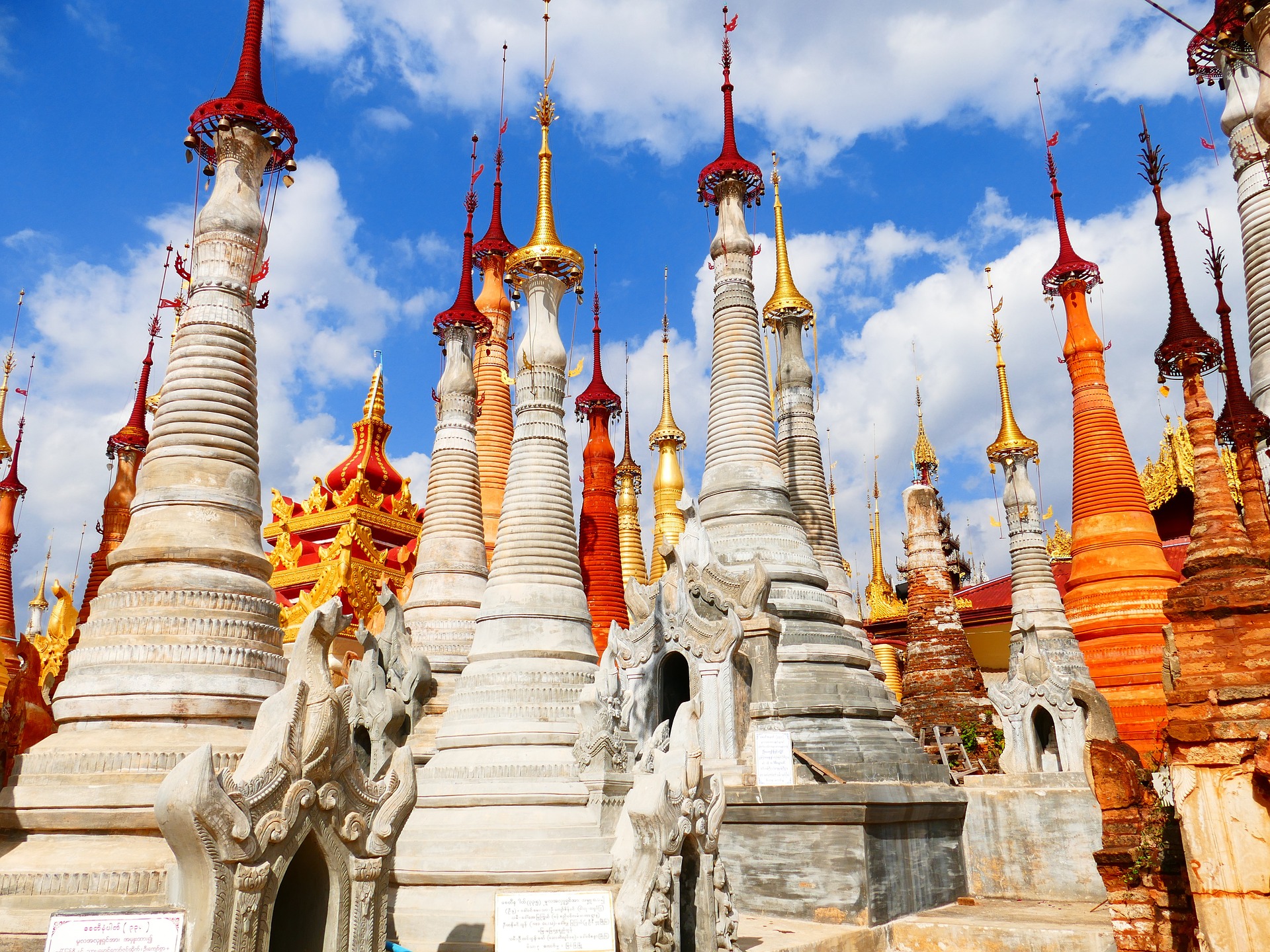
Myanmar, also called Burma, is a mainly Theravada Buddhist country in Southeast Asia, and its sights are mostly religious and historic: the thousands of ancient pagodas of Bagan near the Irrawaddy River, a UNESCO World Heritage Site, the pagodas of Yangon, the royal city of Mandalay and the floating villages of Inle Lake, where the Intha people live in stilt houses. Spirit houses for the nats, the traditional spirits, stand all over the country, and teahouses are where people meet.
Canada advises against all travel to Myanmar and the US Department of State says do not travel (October 2026); Canada cites politically motivated violence, terrorism, kidnapping and arbitrary detention during the armed conflict. The UK FCDO advises against all travel to large parts of the country and against all but essential travel to others, including southern Shan State and most of Mandalay Region. Travel outside the main cities is restricted to designated areas, and the rules can change at short notice. Read the official advice before you make any plan.
- Yangon: The largest city and economic centre, with the Shwedagon Pagoda and colonial-era buildings.
- Bagan: An archaeological zone with thousands of ancient pagodas near the Irrawaddy River, listed by UNESCO.
- Mandalay: The former capital of the Konbaung kings, built around the Royal Palace, with a jade market.
- Inle Lake: A large shallow lake with floating villages, stilt houses and boats paddled with one leg.
- Kyaiktiyo: A gilded rock balanced on the edge of a cliff, a major pilgrimage site.
- Mrauk U: The former capital of the Rakhine Kingdom, with many old pagodas and temples.
Places to visit
- City
- Town
- Coast
- Mountain
- Historic site
- Area
Cities
- Yangon: Formerly Rangoon: the economic centre and main gateway, known for its pagodas and colonial architecture.
- Mandalay: Former capital of the Konbaung kings, built around the Royal Palace, and the trading centre of Upper Myanmar.
- Naypyidaw: The newly designated capital, formerly Pyinmana.
- Bago: Formerly Pegu: a historic city near Yangon with many Buddhist sights. In Bago Region the FCDO advises against all travel east of the Yangon-Mandalay Expressway and all but essential travel elsewhere.
- Twante: A delta town known for its pottery, close to Yangon.
- Pyin U Lwin: Formerly Maymyo: a former British hill station with cooler temperatures. In Mandalay Region the FCDO advises against all travel to the north and all but essential travel to the rest.
- Taunggyi: The capital of Shan State, where the FCDO advises against all or all but essential travel.
- Mawlamyine: Formerly Moulmein: the capital of Mon State, where the FCDO advises against all travel.
- Kawthaung: A beach town in the far south, across the water from Ranong in Thailand.
Beyond the cities
- Bagan (site): Thousands of ancient pagodas near the Irrawaddy River, a UNESCO World Heritage Site.
- Mount Popa (mountain): An extinct volcano known as the Mount Olympus of Myanmar, green above the hot plains, a day trip from Bagan.
- Inle Lake (area): A shallow lake in Shan State with Intha floating villages, boat trips, hiking and silk.
- Pyay (town): A town on the Irrawaddy between Yangon and Bagan, known for Sri Kittara, an ancient Pyu capital.
- Pathein (town): A river town in the Irrawaddy delta known for its umbrellas; the FCDO advises against all but essential travel to Pathein township.
- Ngwe Saung (coast): A long white sand beach on the Ayeyarwady coast, reached through Pathein.
- Kyaiktiyo (site): A gilded rock on the edge of a cliff and a major pilgrimage site in Mon State, where the FCDO advises against all travel.
- Ngapali (coast): A beach resort on the Bay of Bengal in Rakhine State, where the FCDO advises against all travel.
- Mrauk U (site): The old capital of the Rakhine Kingdom, full of pagodas, in Rakhine State, where the FCDO advises against all travel; land routes there are closed to foreigners.
- Kengtung (town): A Golden Triangle town known for trekking to Akha and Ann villages; land routes there are closed to foreigners.
Regions
- Southern Myanmar: The lowlands of the Irrawaddy Delta, with Yangon.
- Central Myanmar: Mandalay, the historic and archaeological sites and the cool hill towns.
- Western Myanmar: Remote mountains and beaches on the Bay of Bengal.
- Northern Myanmar: A large region reaching into the southern Himalayas, home to many peoples.
- Eastern Myanmar: The Golden Triangle and a great number of ethnic groups.
- Southeastern Myanmar: The southern coast along the Thai border, with many offshore islands.
Things to do
See
- Shwedagon Pagoda Yangon: A religious landmark of Yangon; licensed guides there can also arrange a car and driver for longer trips.
- The temples of Bagan Bagan: Thousands of temples, pagodas and stupas; electric bicycles are now the usual way to get around them.
- Inwa Mandalay: Another former royal capital, with ruins, as a day trip from Mandalay.
- Mount Popa Mount Popa: A sacred extinct volcano, an easy day trip from Bagan.
- Chinlone: The national sport: players keep a rattan ball in the air without using their hands.
Do
- A boat trip on Inle Lake Inle Lake: Stilt-house villages and boats paddled with one leg. The lake is in Shan State, where the FCDO advises against all or all but essential travel.
Eat
- Mohinga for breakfast: Rice noodles in fish broth, often called the national dish, sold all over the country.
Drink
- Teahouses: Order sweet milk tea rather than the instant coffee, and pay at the end for the snacks you have eaten from the table.
Shop
- Lacquerware Bagan: Bowls, cups and boxes; the finer pieces bend and flex, the stiff ones are poorer quality.
- Jade market Mandalay: Watch traders bargain over raw jade. Buy gems only from licensed shops: the FCDO warns of gem scams.
Climate and best time to visit
| Jan | Feb | Mar | Apr | May | Jun | Jul | Aug | Sep | Oct | Nov | Dec | |
|---|---|---|---|---|---|---|---|---|---|---|---|---|
| Max °C | 30 | 30 | 31 | 33 | 32 | 31 | 30 | 30 | 30 | 31 | 31 | 30 |
| Min °C | 22 | 21 | 22 | 24 | 26 | 25 | 25 | 25 | 25 | 24 | 24 | 23 |
| Rain mm | 2 | 5 | 13 | 37 | 240 | 456 | 418 | 439 | 380 | 184 | 138 | 23 |
Myanmar has three seasons. The cool season from November to February is the main travel season: in Yangon middays are around 32 °C and nights about 19 °C, and in Mandalay nights can drop to 13 °C. March and April are the hot season, with highs up to 36 °C in Yangon and 37 °C in Mandalay. The rainy season runs from May to October, and the FCDO warns that roads can become impassable and bridges damaged.
The south around Yangon gets more rain than the drier centre around Mandalay. In the hills, at Inle Lake and Pyin U Lwin, winter nights can fall below 10 °C. The table shows the WMO station on Coco Island: under 40 mm of rain a month from January to April, then 240 mm in May and over 400 mm a month from June to August.
Getting there and around
| Main airports | RGN, MDL |
|---|---|
| International driving permit | Required |
Getting there
By air: Yangon International Airport (RGN) is the main gateway, with flights from many Asian cities; from outside the region the easiest route is via Bangkok or Singapore. Mandalay (MDL) has flights to neighbouring countries. Canada advises you to enter and leave through the same port of entry, such as Yangon airport, to avoid problems with immigration.
By land: Canada advises against all travel to Myanmar, including through its land borders. Crossings can close with little or no notice, and in 2026 entering by land ranges from difficult to impossible: none of the crossings with Thailand is open to tourists, and elsewhere you need special permits in advance and may have to join a guided tour. Small longtail boats cross from Ranong in Thailand to Kawthaung: make sure you go through immigration.
Getting around
Travel outside the major cities is restricted to designated tourist areas, some areas need permission from the authorities, and military and opposition forces can close roads at short notice. Expect police and military checkpoints, and carry your passport with your visa. Domestic flights are the least uncomfortable way to cover long distances; private airlines sometimes leave early or add stops, so reconfirm one or two days before. In Yangon domestic flights use Terminal 3. Trains are slow and timetables unreliable, and the Gokteik Viaduct has been closed since it was damaged in August 2025. Long-distance buses assign seats: book a day ahead and sit near the front. Boats and ferries are often in poor condition and overloaded, and fatal accidents are common.
Driving: the UK says to carry at least a 1969 International Driving Permit with your licence, while Canada says Canadian licences and international permits are not recognised and driving without a Myanmar licence is illegal. Traffic keeps to the right, but most cars are right-hand drive, and serious accidents are common. Avoid the roads after dark: the FCDO reports attacks with landmines and explosive devices on the Yangon-Mandalay Expressway and National Highway 1. A driver involved in an accident with a pedestrian is always at fault and can be detained. You can hire a car with a driver instead. In Yangon motorbikes are banned; Grab works for ride-hailing, and taxis have red and white plates.
Where to stay
- Hotels licensed for foreigners: Usually clean, with hot water; breakfast is included except at the top end.
- Budget rooms: Shared or private bathroom; bedding can be worn and rooms poorly ventilated.
- Cubicle rooms: Small windowless singles in some cheap city hotels, clean but cramped.
- Top-end hotels: The major hotels in Yangon and Mandalay have an almost constant power supply.
Canada says you must show proof of a hotel booking on arrival, and staying with friends or colleagues is not accepted. Rooms in the main tourist areas can sell out, so book ahead. Camping in the wild is not legal. Power cuts are frequent: ask whether the hotel has a generator. The FCDO warns that attacks can affect hotels and restaurants, including those linked to the military or seen as such.
Eat and drink
Dishes to try
- Mohinga: Rice vermicelli in a fish broth with coriander and chilli, usually eaten at breakfast.
- Lahpet thoke: Tea leaf salad: fermented tea leaves with fried nuts, often offered to guests.
- Burmese curry: Spicy and oily, with plenty of onion or tomato and no coconut milk.
- Onnokauswe: Noodles in a thick coconut milk soup with chicken, with many side toppings.
- Nan gyi thoke: Rice noodle salad with chicken sauce, eaten mostly in central Myanmar.
- Shan tofu: Yellow blocks made from mung beans rather than soya, fried or in a cold noodle salad.
Drinks
- Milk tea (la-phet-yay): Black tea with milk, sold in markets and teahouses and usually very sweet.
- Yenwejan: Light tea, free on restaurant tables and safe to drink because the water is boiled.
- Toddy: Fermented palm sugar drink, popular in central Myanmar.
- Myanmar Beer: The most popular beer in the country.
| Tipping | Burmese people rarely tip, but tips are appreciated for good service; give them in cash to the person who served you. |
|---|
Rice is at the centre of every meal, fish sauce flavours many dishes and good vegetarian food is easy to find. Burmese cooking borrows from India and China, and Shan, Rakhine and Kachin food each have their own style. Most cheap and mid-priced restaurants cook with palm oil, and the cheaper ones may serve curry at room temperature. Do not drink tap water: use bottled water with a sealed cap; factory-made ice in restaurants is usually fine.
Entry requirements and visas
| Passport validity | At least 6 months after the date you arrive (UK advice); Canada asks for 6 months beyond the date you expect to leave |
|---|
| Passport | Entry | Max stay | Notes |
|---|---|---|---|
| United Kingdom | Evisa | Visa needed before travel; tourist e-visa online, no visa on arrival. | |
| Canada | Evisa | 28 days | Tourist visa required, valid for 28 days; eVisas are available. |
Other nationalities: check the official source below.
Most visitors need a visa arranged before they travel, either at an embassy or as a tourist e-visa; the UK says there is no visa on arrival. According to Wikivoyage the tourist e-visa allows 28 days, single entry, through the airports of Yangon, Mandalay and Naypyidaw or the boat crossing from Ranong to Kawthaung. Canada says you must show proof of a hotel booking on arrival. If you overstay, you pay a fine in US dollars and could be detained. Foreign journalists, and tourists mistaken for journalists, have been refused entry.
You need a yellow fever certificate if you arrive from a country with a risk of transmission. Declare foreign currency worth more than US$10,000 and any gold, gems or jewellery on arrival; you cannot bring in gold for trading, or a drone without a permit. Myanmar does not recognise dual nationality. Rules depend on your passport and change often: check with the Myanmar embassy or the official link before you book.
Money and payments
| Currency | Myanmar Kyat (MMK) |
|---|---|
| Cards | Limited |
The currency is the kyat (MMK), pronounced "chat". Myanmar runs largely on cash: many ATMs do not accept foreign cards, banks can limit daily withdrawals, and many shops take only cash. Visa is accepted more widely than Mastercard; if you want to pay a hotel or restaurant by card, phone ahead. Bring US dollars in perfect condition, with no folds, tears or pen marks: changers prefer large notes, inspect them closely and may refuse notes with serial numbers starting AB or CB. You can change dollars at banks, but the UK says some money exchanges have closed under pressure from the authorities.
Visa overstay fines and excess baggage charges are paid in US dollars. Changing money on the black market is illegal. Kyat cannot be legally exchanged abroad, so change what is left at Yangon airport before you fly. Canada says other foreign currencies and travellers cheques are not accepted.
Health
| Required vaccines | Yellow fever, only if you arrive from a country with risk of transmission (CDC: including airport transits of more than 12 hours there) |
|---|---|
| Recommended vaccines | Routine vaccines, including measles (MMR), Hepatitis A, Hepatitis B, Typhoid, for most travellers, Japanese encephalitis, for long stays or rural trips, Rabies, for some travellers: dogs with rabies are common, Cholera, may be considered: transmission is widespread |
| Malaria | Widespread |
| Tap water | Not safe |
The CDC lists malaria in all areas of Myanmar and recommends preventive medicine in all areas, with a different choice of drugs in Bago, Tanintharyi, Kachin, Kayah, Kayin and Shan; dengue, chikungunya and Zika are also present, so protect yourself from mosquito bites at all times. Do not drink tap water, and avoid swimming in rivers and lakes, which can carry schistosomiasis. See a travel health professional at least 8 weeks before you go. Altitude sickness is a risk in parts of the country.
The public health system is under severe strain. Private clinics operate, but good care is hard to find outside Yangon and Mandalay, curfews can make emergency care hard to reach at night, and serious cases may need transfer to Thailand. You usually pay in cash up front, so get insurance that covers evacuation. UK prescriptions are not accepted in local pharmacies and medicines on sale may be counterfeit: bring what you need. Rabies treatment may be limited or not available. For an ambulance, call 192.
This is general information, not medical advice: check with a travel health professional before you go.
Safety
- United States: Level 4: Do Not Travel (2026-10-20)
- Canada: Avoid all travel (2026-10-20)
- United Kingdom: Advises against all travel to parts of the country; Advises against all but essential travel to parts of the country (2026-10-20)
Canada advises against all travel to Myanmar and tells Canadians already there to leave if they can do so safely; the US says do not travel. The UK FCDO advises against all travel to Chin, Kachin, Kayah, Kayin, Mon and Rakhine states, Sagaing and Magway regions, northern Shan State, the north of Mandalay Region, most of Tanintharyi Region and Bago Region east of the Yangon-Mandalay Expressway. It advises against all but essential travel to southern and eastern Shan State, the rest of Mandalay and Bago regions, southern Tanintharyi and seven townships of Ayeyarwady Region, Pathein among them. For Yangon and Naypyidaw it no longer advises against travel but warns of a heightened risk. Travelling against this advice can invalidate your insurance; check the advice before you go.
Fighting continues across much of the country, with airstrikes and attacks on military and government sites, checkpoints and businesses linked to the military; attacks are more likely after sunset, and security forces step up their presence around national dates such as Independence Day (4 January) and Thingyan in mid-April. Some areas are under martial law or curfew, and ignoring a curfew can mean detention. Carry your passport with your visa, avoid demonstrations and do not photograph police, the military or protests. Landmines are a serious risk in rural areas: stay on main roads. Canada advises keeping food and water for at least 7 days, cash and a charged phone.
Common crime includes bag snatching, pickpocketing and gem scams. Beware of job offers that look too good: scam centres hold trafficked foreigners, especially around Myawaddy and Tachileik. Laws are strict: long prison terms or the death penalty for drugs, prosecution for insulting religion (including Buddha tattoos), and criminal investigations of foreigners under defamation laws, for example over a critical online hotel review. Same-sex relations are illegal.
Customs and etiquette
Dress modestly, above all at pagodas, temples and monasteries: shorts, short skirts and sleeveless tops cause offence. You must remove shoes and socks before entering the whole temple complex, including the outdoor areas, so slip-on shoes help. If you arrive in the wrong clothes, you can usually rent a longyi, the sarong worn by men and women. Insulting religion is a crime, and this includes images of the Buddha used in a disrespectful way. Bringing in religious materials without written permission from the authorities is also illegal. Swastikas in temples are Buddhist symbols. Exporting gems is illegal, and buying or owning cultural or archaeological artefacts needs a permit.
Ask before you photograph or touch a monk, offer monks food rather than money and put cash in the temple donation boxes; on public transport, give them your seat. Public displays of affection are frowned upon. Hand over business cards with your right hand, palm up, your left hand under your right elbow. Address older men as U and older women as Daw. Avoid political and religious discussions: the person you talk to may be the one at risk.
Language
| Official languages | Burmese |
|---|---|
| English | Limited |
| Hello | မင်္ဂလာပါ (Min ga la ba) |
|---|---|
| Thank you | ကျေးဇူးတင်ပါတယ် (Kyeizu tin ba de) |
| Please | ကျေးဇူးပြု၍ (Kyeizu pyu yue) |
| Yes / No | ဟုတ်တယ် / မဟုတ်ဘူး (Ho de / Ma ho bu) |
| Excuse me | ခင်ဗျာ (Ka mya?) |
| Sorry | တောင်းပန်ပါတယ် (Tau pa par de) |
| Goodbye | သွားတော့မယ် (Thwa dau me) |
| Do you speak English? | In glei za ga go pyaw thet de la? |
| Help! | A ku nyi lo de! |
What to pack
- Passport with your visa: Needed at the many police and military checkpoints.
- Proof of your hotel booking: Canada says you must show it on arrival.
- Clean, uncreased US dollars: Myanmar runs on cash, and changers refuse damaged notes.
- Your medicines: UK prescriptions are not accepted, fakes are on sale and shortages happen.
- Modest clothes and slip-on shoes: For pagodas and monasteries, where shoes and socks come off.
- Insect repellent: Malaria, dengue and Zika are present.
- Power bank: Canada advises being ready for power and internet outages.
- 1969 International Driving Permit: The UK says to carry it with your licence and to get it before you leave; Canada says driving without a Myanmar licence is illegal.
Quick reference
Country facts
| Capital | Naypyidaw |
|---|---|
| Population | 54,850,648 (2025) |
| Area | 652,670 km² |
| Time zone | Asia/Yangon (UTC+6.5) |
| Calling code | +95 |
| Driving side | right |
Staying connected
| SIM and eSIM | Buy a local SIM card for a small fee on arrival and top it up with cards from kiosks or supermarkets. Phones get a 30-day grace period; for longer stays register the IMEI on the CEIR portal or the phone is blocked. |
|---|---|
| Roaming | Foreign SIM cards do not work reliably in Myanmar. |
| Wi-Fi | Widely available in Yangon hotels and malls, but the authorities cut the internet at times and block Facebook and WhatsApp; VPNs are often blocked too, and communications may be monitored. |
Useful apps
- Grab: Ride-hailing, with payment by card or cash.
Emergency numbers
| Police | 199 |
|---|---|
| Ambulance | 192 |
| Fire | 191 |
Frequently asked questions
Is it safe to travel to Myanmar?
Canada advises against all travel and the US says do not travel. The UK advises against all or all but essential travel to most regions outside Yangon and Naypyidaw. Read the official advice before you plan anything.
Do I need a visa for Myanmar?
Most visitors do, and must get it before travelling, often as a tourist e-visa. UK and Canadian citizens cannot get a tourist visa on arrival. Rules depend on your passport, so check with the Myanmar embassy before you book.
Can I pay by card in Myanmar?
Only in some hotels and restaurants, so phone ahead. Myanmar runs largely on cash and many ATMs do not take foreign cards: bring US dollars in perfect condition and change them at banks.
Can I drink the tap water in Myanmar?
No. Drink bottled water with a sealed cap.
Is there malaria in Myanmar?
Yes. The CDC lists malaria in all areas and recommends preventive medicine in all areas; ask a travel health professional before you go.
When is the best time to visit Myanmar?
November to February, the cool season. March and April are hot, and the rains from May to October can close roads.
More Travel Stories from Asia

 Laos
 Cambodia
Sources This guide was last checked on · 18 sources
- Wikivoyage: Myanmar · Overview, Places to visit, Things to do, Climate and best time to visit, Getting there and around, Where to stay, Eat and drink, Entry requirements and visas, Money and payments, Health, Customs and etiquette, Language, What to pack, Staying connected, Frequently asked questions
- Wikidata: Myanmar · Overview, Places to visit, Money and payments, Country facts
- UK FCDO: Myanmar warnings and insurance · Overview, Safety, Frequently asked questions
- Government of Canada: Myanmar travel advice (updated 15 October 2026) · Overview, Getting there and around, Where to stay, Entry requirements and visas, Money and payments, Health, Safety, Customs and etiquette, What to pack, Staying connected, Frequently asked questions
- US Department of State: Myanmar travel advisory · Overview, Safety, Frequently asked questions
- UK FCDO: Myanmar regional risks · Places to visit, Getting there and around, Where to stay, Safety
- UK FCDO: Myanmar safety and security · Things to do, Climate and best time to visit, Getting there and around, Safety, Customs and etiquette, What to pack, Staying connected
- WMO World Weather Information Service: Coco-Island · Climate and best time to visit
- UK FCDO: Myanmar entry requirements (updated 4 August 2026) · Entry requirements and visas, Money and payments, Health, What to pack, Frequently asked questions
- ISO 4217 (SIX), published 2026-09-17 · Money and payments
- CDC Travelers' Health: Burma (Myanmar) · Health, Frequently asked questions
- UK FCDO: Myanmar health · Health, What to pack
- UK FCDO: Myanmar travel advice · Safety
- Wikivoyage: Burmese phrasebook · Language
- World Bank, SP.POP.TOTL · Country facts
- World Bank, AG.LND.TOTL.K2 · Country facts
- IANA Time Zone Database, zone.tab · Country facts
- UK FCDO: Myanmar getting help · Emergency numbers
Suggest an update
Travel rules, prices and timetables change. If something in this guide is out of date, tell us: we check every suggestion against an official source before changing the page.