

- Local time
- 13:41
- Currency
- Japanese Yen (JPY)
- Capital
- Tokyo
- Calling code
- +81
- Drive on the
- left
Overview
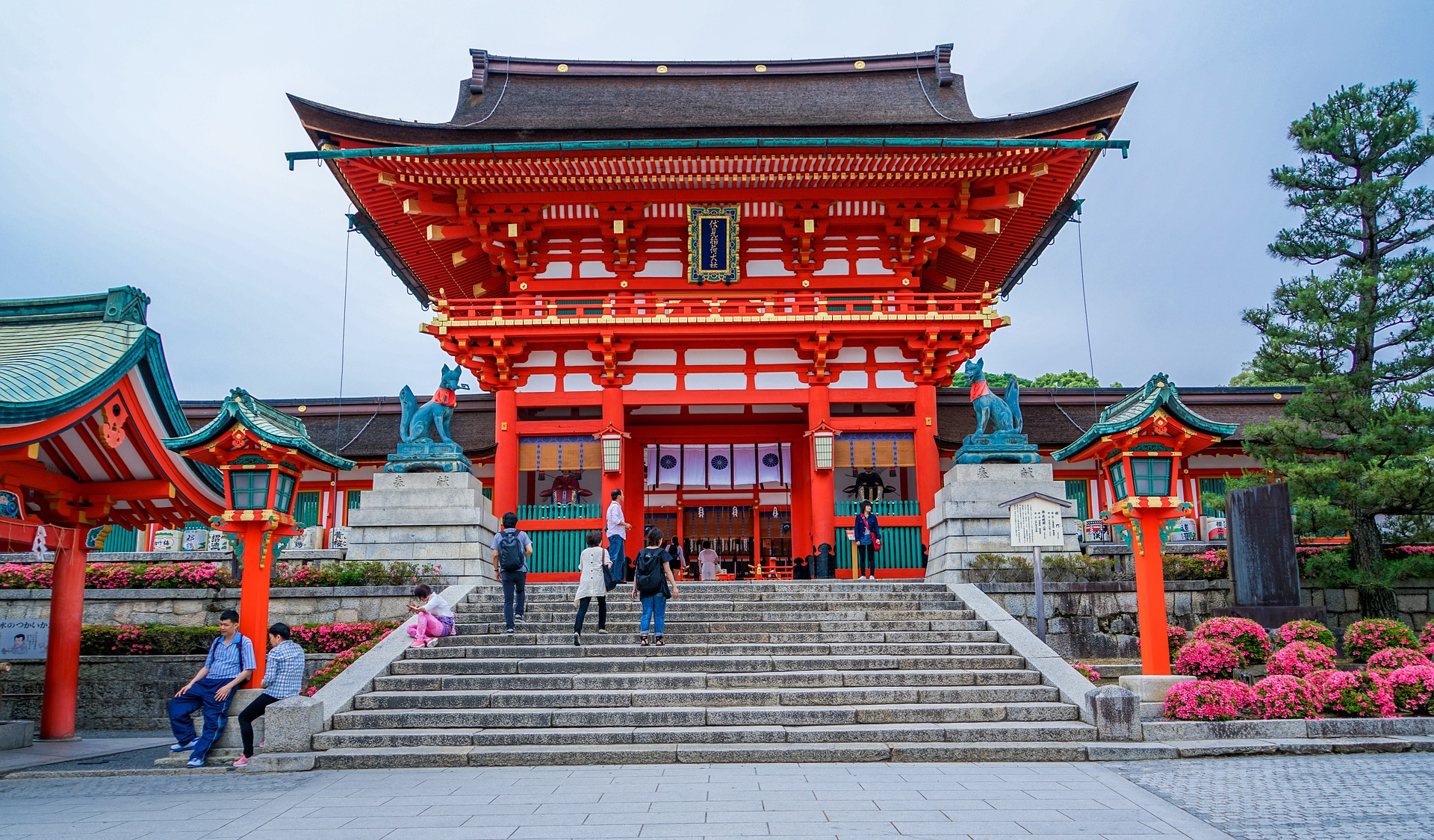
Japan pairs Tokyo's neon and Kyoto's temples and gardens with Mount Fuji, Hiroshima and Miyajima, hot springs, castles and snowy Hokkaido, linked by fast, punctual trains, with superb food and four distinct seasons.
Japan is an island nation in East Asia whose island character produced a distinctive, intricate culture, with lasting influence from China. Ultra-modern cities and high technology sit beside living traditions: Tokyo, the capital, is vast and densely populated, while Kyoto, the ancient capital, has Buddhist temples, Shinto shrines and gardens. Nara, Hiroshima, Kanazawa and Nagasaki each have their own history, and the countryside has hot springs, mountains and old villages such as Shirakawa-go.
Spring, with the cherry blossoms of March and April, and autumn, with its colours, are the best seasons. Trains are the main way to travel and are usually very punctual. Japanese cuisine is one of the reasons to come, and so is pop culture. English is not widely spoken outside the main sights and big hotels, but people go out of their way to help visitors.
- Kyoto: The ancient capital: temples, Zen gardens and shrines.
- Tokyo: The capital, modern, huge and full of food and shopping.
- Mount Fuji: The snow-topped volcano, Japan's highest peak at 3,776 m.
- Hiroshima and Miyajima: The Atomic Bomb Dome, and the floating torii gate just offshore.
- Nara: The first capital of a united Japan, with Todaiji and its great Buddha.
- Onsen: Hot spring baths, often outdoors with mountain views.
Places to visit
- City
- Town
- Island
- Park
- Mountain
- Historic site
Cities
- Tokyo: The capital and main financial centre, modern and densely populated.
- Kyoto: The ancient capital and cultural heart, with Buddhist temples and gardens.
- Osaka: A large, dynamic city in the Kansai region.
- Nara: The first capital of a united Japan, with temples and historic buildings.
- Hiroshima: A port city with a formal garden, Hiroshima Castle and the Atomic Bomb Dome.
- Kanazawa: A historic city on the west coast, home of the Kenrokuen garden.
- Nagasaki: An old port with a blend of Chinese, Japanese and European influences.
- Sapporo: The largest city in Hokkaido, famous for its snow festival.
- Sendai: Tohoku's largest city, the 'city of forests' for its tree-lined avenues.
Beyond the cities
- Mount Fuji (mountain): The iconic snow-topped volcano, Japan's highest peak (3,776 m).
- Miyajima (island): Just off Hiroshima, site of the iconic floating torii gate.
- Mount Koya (mountain): The mountaintop headquarters of Shingon Buddhism.
- Shirakawa-go (town): One of the best-preserved and most picturesque historic villages.
- Nikko Toshogu (site): One of the most famous Shinto shrines.
- Kamakura (town): Zen temples and the great open-air Buddha of Kotokuin.
- Sado Island (island): An island off Niigata, once a place of exile, now a summer getaway.
- Shiretoko National Park (park): Unspoiled wilderness in north-eastern Hokkaido.
- Yakushima (island): A UNESCO World Heritage island of giant cedars and misty forests.
- Okinawa Island (island): The main island of semi-tropical Okinawa, with Second World War memorials.
- Yaeyama Islands (island): The far end of Okinawa: diving, beaches and jungle river trips.
Regions
- Hokkaido: The snowy northern island: wide open spaces, cold winters and Ainu culture.
- Tohoku: The rural north-east of Honshu, known for seafood, skiing and hot springs.
- Kanto: The coastal plain around Tokyo and Yokohama.
- Chubu: Mountainous central Honshu, with the Japan Alps and Nagoya.
- Kansai: Western Honshu: Osaka, Kyoto, Nara and Kobe.
- Chugoku: The rural south-west of Honshu, with Hiroshima and Okayama.
- Shikoku: The smallest main island, for Buddhist pilgrims and white-water rafting.
- Kyushu: The southernmost main island, with Fukuoka and Kitakyushu.
- Okinawa: A semi-tropical island chain, once an independent kingdom, with its own customs.
Things to do
See
- Temples and Zen gardens Kyoto: Head temples, Zen temples and the famous rock garden of Ryoanji.
- Todaiji Nara: The temple with the largest Buddha statue in Japan.
- Peace sites Hiroshima: The Atomic Bomb Dome, in the first city ever hit by an atomic bomb.
- The floating torii Miyajima: The gate of Itsukushima Shrine standing in the sea.
- Kenrokuen Kanazawa: One of the official "Top Three Gardens" of Japan.
Do
- Onsen: Hot spring baths, best in an outdoor rotenburo or a country ryokan.
- Cherry blossoms: Hanami picnics and festivals when the sakura bloom in March and April.
- Shikoku pilgrimage Shikoku: The 88 Temple Pilgrimage, a demanding 1,647 km trail around the island.
Eat
- Sushi, ramen and tempura: Eaten where they were born, from cheap noodle bars to kaiseki dinners.
Drink
- Izakaya: Japanese pubs marked by red lanterns, often with all-you-can-drink deals.
Shop
- Anime and electronics Tokyo: Akihabara for manga, anime, games and electronics.
Itineraries
Tokyo, Kyoto and Hiroshima in 10 days (10 days)
- Tokyo (4 nights): The capital, with a day trip to Kamakura.
- Kyoto (3 nights): Temples and gardens, and a day trip to Nara.
- Hiroshima (2 nights): The Peace sites and the ferry to Miyajima.
- Osaka (1 night): A large, dynamic city close to Kansai Airport.
Kanazawa and the mountain villages in 6 days (6 days)
- Tokyo (2 nights): Start in the capital.
- Kanazawa (2 nights): The Kenrokuen garden and the historic city.
- Shirakawa-go (1 night): A night in a historic village.
- Kyoto (1 night): End in the ancient capital.
Hokkaido in 6 days (6 days)
- Sapporo (3 nights): The city and, in winter, the snow festival.
- Shiretoko National Park (3 nights): Wilderness in the north-east; carry a bear bell.
Climate and best time to visit
| Jan | Feb | Mar | Apr | May | Jun | Jul | Aug | Sep | Oct | Nov | Dec | |
|---|---|---|---|---|---|---|---|---|---|---|---|---|
| Max °C | 10 | 11 | 14 | 19 | 24 | 26 | 30 | 31 | 28 | 22 | 17 | 12 |
| Min °C | 1 | 2 | 5 | 10 | 15 | 19 | 22 | 24 | 20 | 15 | 9 | 4 |
| Rain mm | 60 | 57 | 116 | 134 | 140 | 168 | 156 | 155 | 225 | 235 | 96 | 58 |
In Tokyo, average highs go from about 10 °C in January to 31 °C in August, and January nights average just above freezing. Rain falls all year, most in September and October. Summer begins with the rainy season in June and turns very hot and humid in July and August; the FCDO notes temperatures often above 35 °C and a real risk of heat stroke. Hokkaido and north-east Japan get heavy snow in winter, while the Pacific coast of Honshu is milder.
Spring and autumn are the best seasons: March and April bring the cherry blossoms, and autumn has fair days and bright colours. Typhoons can hit from June to December, most often from July to September and mainly in the south. Winter is good for skiing and hot springs.
Holidays and events
- 1 January 2026 · New Year's Day
- 12 January 2026 · Coming of Age Day
- 11 February 2026 · Foundation Day
- 23 February 2026 · The Emperor's Birthday
- 20 March 2026 · Vernal Equinox Day
- 29 April 2026 · Shōwa Day
- 3 May 2026 · Constitution Memorial Day
- 4 May 2026 · Greenery Day
- 5 May 2026 · Children's Day
- 6 May 2026 · Substitute holiday for Constitution Memorial Day
- 20 July 2026 · Marine Day
- 11 August 2026 · Mountain Day
- 21 September 2026 · Respect for the Aged Day
- 23 September 2026 · Autumnal Equinox Day
- 12 October 2026 · Sports Day
- 3 November 2026 · Culture Day
- 23 November 2026 · Labour Thanksgiving Day
Getting around
| Main airports | NRT, HND, KIX, NGO, FUK, CTS |
|---|
Trains are the most popular way to travel and usually very punctual; the Shinkansen bullet trains link the main cities. The Japan Rail Pass covers almost all JR trains, but you now need to travel a lot for it to pay off; regional passes also exist. Buy an IC card such as Suica, PASMO or ICOCA: you tap in and out on trains and most buses, and it also pays in convenience stores and vending machines. Highway buses are a cheap alternative, including overnight. Taxis are clean, safe and a bit expensive; the driver opens the rear door, and licensed taxis have green plates.
Driving is on the left. You need an international driving permit (the 1949 version) with your licence, and the alcohol limit is very low. Driving in big cities is slow and parking is hard, but a car helps in rural areas. Watch for cars turning across pedestrian crossings on green.
Flying to Japan? PartnerCompare fares and find the cheapest datesSearch flightsWhere to stay
- Ryokan: Traditional inns with dinner and breakfast, from about ¥8,000 per person; arrive by 17:00.
- Minshuku: Family-run budget inns with simpler food and shared bathrooms, mostly in the countryside.
- Business hotels: Around ¥10,000 a night near main stations, with tiny rooms and en-suite bathrooms.
- Capsule hotels: A sleeping pod for about ¥3,000–4,000; separated by sex, and few take women.
- Western-style hotels: Japanese chains dominate; five-star hotels start around ¥20,000 per person.
Prices are often per person, not per room, so check which meals are included. Hotels must copy your passport. Larger hotels take cards, but many small places and ryokan are cash only. Beds are small, check-out is usually at 10:00, and traditional houses can be cold inside in winter. Rooms are scarce during Golden Week, and many places do not take bookings more than 3 to 6 months ahead.
Eat and drink
Dishes to try
- Sushi and sashimi: Raw fish on vinegared rice, or on its own; fingers are fine for sushi.
- Rāmen, soba and udon: Wheat and buckwheat noodles; slurping is expected.
- Tempura: Shrimp and vegetables deep-fried in light batter.
- Okonomiyaki: A savoury cabbage pancake with fillings of your choice, often cooked at your table.
- Yakitori: Grilled chicken skewers.
- Kaiseki: An elaborate multi-course seasonal meal, often served at ryokan.
- Teishoku: A set meal of main dish, rice, soup and pickles at a shokudō, for ¥500–1,000.
Drinks
- Green tea: Served free with almost every meal, hot in winter and cold in summer.
- Sake (nihonshu): Rice wine of about 15% alcohol, usually not served hot.
- Shōchū: A stronger distilled spirit of rice, yam or grain.
- Umeshu: A sweet-sour liqueur of ume fruit.
- Japanese whisky and beer: Award-winning whiskies, and lagers such as Kirin, Asahi, Sapporo and Suntory.
| Tipping | Not part of Japanese culture and may cause confusion: staff may even run after you to return the money. Exceptions are high-end ryokan and guides, with the money in an envelope. |
|---|
Many restaurants show plastic models or photos of their dishes, and cheap chains often sell meal tickets from a machine. Never stand chopsticks upright in rice or pass food from chopsticks to chopsticks. Strict vegetarians will struggle, as fish stock (dashi) turns up in many dishes. Train stations sell ekiben, boxed meals for the journey.
The drinking age is 20, and drinking in public is legal. Izakaya pubs, marked by red lanterns, often offer all-you-can-drink deals for about ¥1,000 for 90 minutes.
Entry requirements and visas
| Passport validity | Valid for the whole length of your stay, with a blank page for the entry stamp |
|---|
| Passport | Entry | Max stay | Notes |
|---|---|---|---|
| United Kingdom | Visa free | 90 days | Permission to stay up to 90 days is given on arrival; you can apply for an extension of another 90 days. |
| Canada | Visa free | 90 days | No tourist visa needed for up to 90 days; overstaying is a criminal offence. |
| United States | Visa free | 90 days | Entry permission on arrival, usually for up to 90 days. |
| EU / EEA | Visa free | 90 days | Entry permission on arrival, usually for up to 90 days; some Europeans can ask for 180. |
Other nationalities: check the official source below.
UK, Canadian, US and EU citizens get permission to stay on arrival, usually for up to 90 days; working is not allowed. You can fill in the immigration and customs forms in advance with the Visit Japan Web service and show the QR code at the airport.
Meat products, including sausages and ham, cannot be brought in without permission. Some common medicines are illegal in Japan, including Vicks inhalers and cold remedies with pseudoephedrine: check yours before you travel. Rules depend on your passport: check the official link before you book.
Money and payments
| Currency | Japanese Yen (JPY) |
|---|---|
| Cards | Common |
Japan uses the yen (¥, JPY). Visa, Mastercard and JCB are widely accepted, but some cafés, bars, restaurants, small shops and lodgings take only cash or IC cards, especially in small towns: carry enough cash. ATMs are in most convenience stores and stations and usually charge ¥110 or ¥220 per withdrawal. IC cards such as Suica pay for transport and in many shops.
A 10% consumption tax applies (8% on take-away food and soft drinks). Visitors spending at least ¥5,000 in a shop in a day can shop tax-free by showing their passport. Shops usually open 10:00–20:00, while convenience stores are open around the clock.
Health
| Recommended vaccines | Routine vaccines, including measles (MMR), Hepatitis A: consider it, Hepatitis B, Japanese encephalitis, for stays of a month or more in affected areas, or shorter trips with time in rural areas, hiking or camping |
|---|---|
| Malaria | None |
| Tap water | Safe |
The CDC does not recommend the Japanese encephalitis vaccine for short trips to cities. Canada notes that tick-borne encephalitis is a risk in some areas, highest for hikers and campers from April to November; rabid dogs are not common. Medical care is of high quality but expensive: expect to pay the full cost and have good insurance. Few doctors speak English. Call 119 for an ambulance.
Some common medicines are banned under Japan's anti-stimulant law, including Vicks inhalers, allergy and sinus medicines, cold remedies with pseudoephedrine and some painkillers with codeine: check with the Japanese embassy before you travel. Tap water is safe everywhere. In July and August heat stroke is a real risk.
This is general information, not medical advice: check with a travel health professional before you go.
Safety
- United States: Level 1: Exercise Normal Precautions (2026-10-20)
- Canada: Take normal security precautions (2026-10-20)
- United Kingdom: No advice against travel (2026-10-20)
All three governments advise normal precautions, and street crime is very rare. The FCDO warns about Tokyo's nightlife districts, especially Kabukicho, Roppongi, Shibuya and Ikebukuro: drinks have been spiked and huge sums charged to credit cards. Do not follow street touts into bars, and check prices before you order. Women may be groped on crowded trains; some lines have women-only carriages at rush hour. Pickpockets work in crowded places.
Always carry your passport: a copy is not accepted. Drug laws are very strict, and you can be held for up to 23 days without charge. Japan has frequent earthquakes and active volcanoes: follow tsunami warnings and local instructions. Bears have attacked people in mountain and forest areas. There is a restricted zone around the Fukushima Daiichi nuclear plant. Police 110, ambulance and fire 119.
Customs and etiquette
Bowing is used to greet, thank and apologise. Take off your shoes where others do, and never walk on tatami in shoes or slippers. In a bath or onsen, wash and rinse thoroughly before getting in, and keep your towel out of the water. Many onsen, pools and beaches refuse people with tattoos or ask you to cover them. Hand things over with both hands, especially business cards.
Keep your voice down on trains and in public, and ask before reclining your seat on the Shinkansen. There are very few rubbish bins, so carry your rubbish with you. Smoking is banned on the streets of Tokyo and other cities except in designated areas. Do not tip.
Language
| Official languages | Japanese |
|---|---|
| English | Limited |
| Hello | こんにちは (Konnichiwa) kon-nee-chee-wah |
|---|---|
| Please | お願いします (Onegai shimasu) oh-neh-gah-ee shee-mahs |
| Thank you | ありがとうございます (Arigatō gozaimasu) ah-ree-GAH-toh go-ZAH-ee-mahs |
| Excuse me | すみません (Sumimasen) soo-mee-mah-sen |
| Goodbye | さようなら (Sayōnara) sah-YOH-nah-rah |
| Do you speak English? | 英語が話せますか? (Eigo ga hanasemasu ka?) EH-goh gah hah-nah-seh-mahs KAH |
What to pack
- Passport: You must carry it at all times.
- Cash in yen: Many small restaurants, shops and inns take only cash.
- Shoes that slip on and off, and socks: You often take your shoes off indoors.
- Your medicines, checked in advance: Some common medicines are illegal in Japan.
- Plug adapter: Japan uses types A and B at 100 V.
Quick reference
Country facts
| Capital | Tokyo |
|---|---|
| Population | 123,366,734 (2025) |
| Area | 364,500 km² |
| Time zone | Asia/Tokyo (UTC+9) |
| Calling code | +81 |
| Driving side | left |
Electricity and plugs
| Plug types | A, B |
|---|---|
| Voltage | 100 V |
Staying connected
| SIM and eSIM | A roaming plan from your home carrier is usually easiest. Prepaid data-only SIMs are sold at airports, Bic Camera and Yodobashi Camera stores and some convenience stores. 3G phones do not work. |
|---|---|
| Wi-Fi | Public Wi-Fi is common but usually needs registration; the Japan Free Wi-Fi app by NTT makes it easier. |
Emergency numbers
| Police | 110 |
|---|---|
| Ambulance | 119 |
| Fire | 119 |
Frequently asked questions
Do I need a visa for Japan?
Not for tourist stays of up to 90 days with a UK, Canadian, US or EU passport. Check the official link before you book.
Is the Japan Rail Pass worth it?
It used to be a bargain, but now it only pays off if you travel a lot on JR trains.
Should I tip in Japan?
No. Tipping is not customary and can cause confusion.
Can I pay by card everywhere?
Not everywhere: cards are widely accepted, but many small places take only cash or IC cards.
Can I go to an onsen with tattoos?
Many onsen and public baths refuse visitors with tattoos; others ask you to cover them. Private baths are an alternative.
Do I need the Japanese encephalitis vaccine?
Not for a short trip to cities, says the CDC; it is recommended for long stays or rural trips in affected areas.
Sources This guide was last checked on · 18 sources
- Wikivoyage: Japan · Overview, Places to visit, Things to do, Itineraries, Climate and best time to visit, Holidays and events, Getting around, Where to stay, Eat and drink, Entry requirements and visas, Money and payments, Health, Safety, Customs and etiquette, Language, What to pack, Electricity and plugs, Staying connected, Frequently asked questions
- Wikidata: Japan · Overview, Places to visit, Things to do, Money and payments, Country facts, Electricity and plugs
- WMO World Weather Information Service: Tokyo · Climate and best time to visit
- UK FCDO: Japan safety and security · Climate and best time to visit, Getting around, Customs and etiquette, What to pack
- Nager.Date: public holidays in Japan, 2026 · Holidays and events
- Government of Canada: Japan travel advice (updated 13 October 2026) · Getting around, Entry requirements and visas, Health, Safety, Frequently asked questions
- UK FCDO: Japan entry requirements · Entry requirements and visas, Frequently asked questions
- ISO 4217 (SIX), published 2026-09-17 · Money and payments
- CDC Travelers' Health: Japan · Health, Frequently asked questions
- UK FCDO: Japan health · Health, What to pack
- US Department of State: Japan travel advisory · Safety
- UK FCDO: Japan travel advice · Safety
- UK FCDO: Japan regional risks · Safety
- Wikivoyage: Japanese phrasebook · Language
- World Bank, SP.POP.TOTL · Country facts
- World Bank, AG.LND.TOTL.K2 · Country facts
- IANA Time Zone Database, zone.tab · Country facts
- UK FCDO: Japan getting help · Emergency numbers
Suggest an update
Travel rules, prices and timetables change. If something in this guide is out of date, tell us: we check every suggestion against an official source before changing the page.