

- Local time
- 08:07
- Currency
- Indian Rupee (INR)
- Capital
- New Delhi
- Calling code
- +91
- Drive on the
- left
Overview
India holds the Taj Mahal, the palaces of Rajasthan, the ghats of Varanasi, rock-cut temples and the Himalayas, with a different cuisine in every region. Most visitors apply for an e-visa.
India is one of the world's oldest civilisations and one of its most diverse countries, with 28 states that are often bigger than European nations and dozens of languages. The classic sights are in the north: the Taj Mahal in Agra, Delhi, the Pink City of Jaipur and Varanasi, the most sacred Hindu city, on the Ganges. Further afield are the Golden Temple of the Sikhs in Amritsar, the rock-cut caves of Ellora and Ajanta, the ruins of Hampi and the temples of Khajuraho, Konark and Madurai.
The big cities each have their own character: Mumbai is the financial capital and home of Bollywood, Kolkata the cultural capital, Bengaluru the hub of high technology. The north has severe air pollution in winter, but trains cover the whole country and food alone is a reason to come. Most visitors need a visa, usually obtained online as an e-visa.
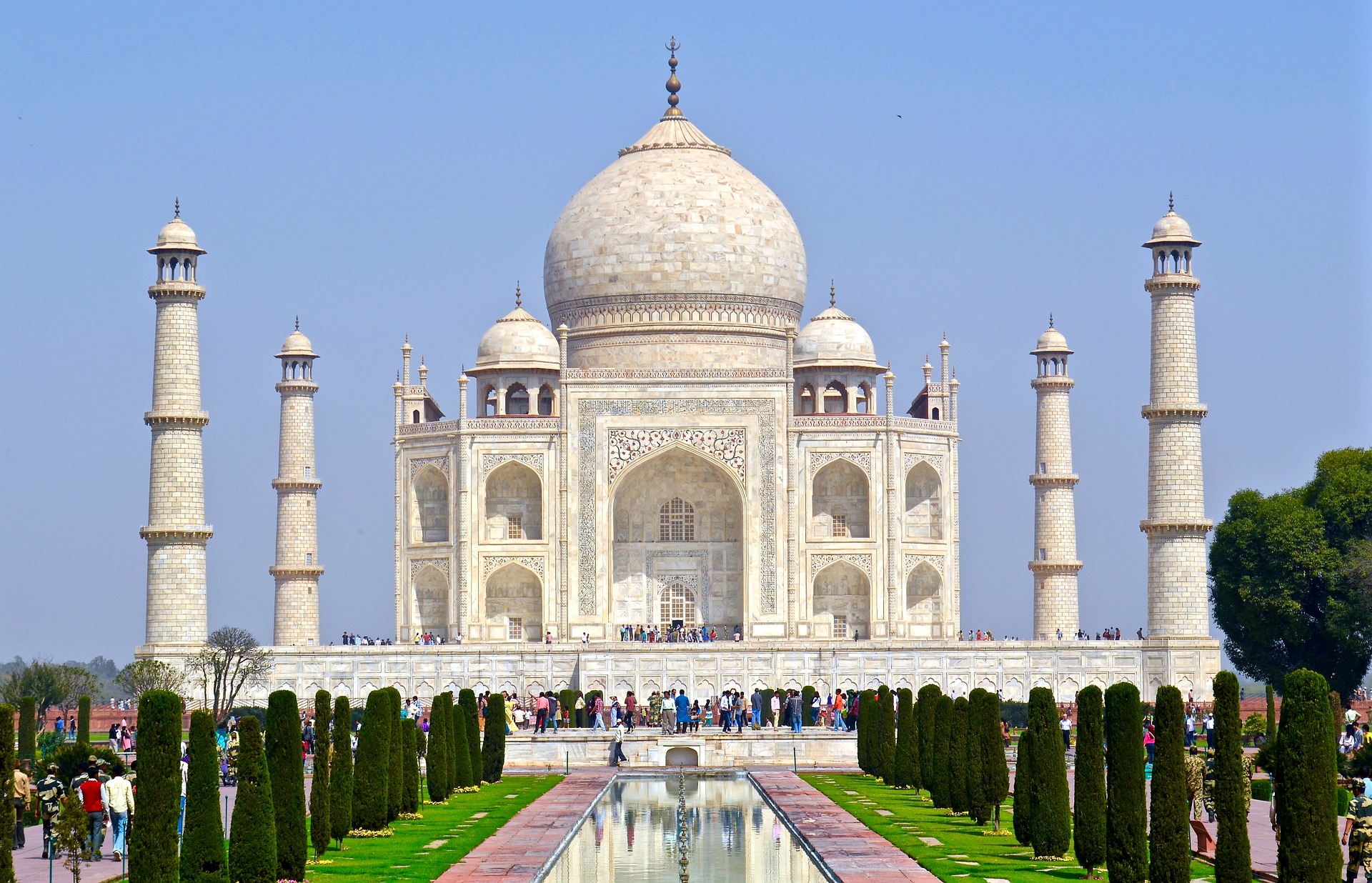
- Taj Mahal: The marble tomb in Agra, one of the Seven Wonders of the Modern World.
- Varanasi: The most sacred Hindu city, on the banks of the Ganges.
- Jaipur: The Pink City, a showcase of medieval Rajput culture.
- Golden Temple: The holiest Sikh site, in Amritsar.
- Ellora and Ajanta: Rock-cut cave monasteries and temples, holy to Buddhists, Jains and Hindus.
- Hampi: The ruins of the Vijayanagara empire.
Places to visit
- City
- Town
- Historic site
Cities
- Delhi: The capital and the heart of northern India.
- Mumbai: The financial capital and home of the Hindi film industry.
- Jaipur: The Pink City, a showcase of Rajput culture.
- Varanasi: The most sacred Hindu city, on the Ganges, and one of the oldest inhabited cities in the world.
- Kolkata: The cultural capital, with many colonial buildings.
- Bengaluru: The garden city turned hub of high technology.
- Chennai: The main port of the south and a cultural centre.
- Hyderabad: Known for pearls, diamonds and biryani.
- Shimla: The capital of Himachal Pradesh, more than 2 km up in the Himalayas.
Beyond the cities
- Taj Mahal (site): The marble tomb in Agra.
- Golden Temple (site): The holiest Sikh site, in Amritsar.
- Ellora Caves (site): Rock-cut monasteries and temples of three religions.
- Ajanta Caves (site): Buddhist cave monasteries near Ellora.
- Hampi (site): The ruins of the Vijayanagara empire.
- Khajuraho (site): Temple complexes famous for their erotic sculptures.
- Konark (site): The Sun Temple, a UNESCO World Heritage site.
- Meenakshi Temple (site): A spectacular Hindu temple in Madurai.
- Bodh Gaya (town): Where the Buddha attained enlightenment, with the Mahabodhi temple.
Regions
- Himalayan North: The mountain states, including Shimla.
- Plains: Delhi, Agra, Varanasi and the Ganges plain.
- Western India: Rajasthan with Jaipur, Gujarat, Mumbai and Goa.
- Central India: Khajuraho and the heart of the country.
- Eastern India: Kolkata, Bodh Gaya and Konark.
- North-Eastern India: The hill states, some of which need special permits.
- Southern India: Bengaluru, Chennai, Hyderabad, Hampi and Madurai.
Things to do
See
- The Taj Mahal Agra: The marble mausoleum, India's most famous building.
- The ghats of Varanasi Varanasi: Life and ritual on the banks of the Ganges in the holiest Hindu city.
- The Golden Temple Amritsar: The holiest Sikh site.
- Rock-cut caves Ellora and Ajanta: Monasteries and temples carved out of the rock.
- The ruins of Hampi Hampi: The remains of the Vijayanagara capital.
Do
- A long-distance train journey: One of the biggest rail networks in the world, and the best way to meet the country.
Eat
- A thali: A full meal on one plate, with breads or rice and several dishes.
- Biryani Hyderabad: The rice dish Hyderabad is famous for.
Drink
- Tea: Sold everywhere, including by hawkers on trains.
Itineraries
Delhi, Agra and Jaipur in 7 days (7 days)
- Delhi (3 nights): The capital.
- Taj Mahal (1 night): Stay in Agra to see the Taj Mahal.
- Jaipur (3 nights): The Pink City of Rajasthan.
Varanasi and Bodh Gaya in 5 days (5 days)
- Varanasi (3 nights): The ghats on the Ganges.
- Bodh Gaya (2 nights): The Mahabodhi temple, where the Buddha attained enlightenment.
Mumbai and the cave temples in 6 days (6 days)
- Mumbai (3 nights): The financial capital.
- Ellora Caves (3 nights): With a day at the Ajanta Caves.
Climate and best time to visit
| Jan | Feb | Mar | Apr | May | Jun | Jul | Aug | Sep | Oct | Nov | Dec | |
|---|---|---|---|---|---|---|---|---|---|---|---|---|
| Max °C | 21 | 24 | 30 | 37 | 41 | 40 | 35 | 34 | 34 | 33 | 28 | 23 |
| Min °C | 7 | 9 | 14 | 21 | 25 | 28 | 26 | 26 | 24 | 19 | 13 | 8 |
| Rain mm | 19 | 17 | 11 | 30 | 29 | 54 | 217 | 248 | 134 | 15 | 7 | 15 |
India's climate runs from tropical in the south to humid subtropical in the north, with four seasons: winter (December to February), summer (March to May), monsoon (June to September) and autumn (October and November). In Delhi, January days reach about 21 °C and nights fall to about 7 °C; in May and June the average maximum passes 40 °C, and low-lying areas can exceed 50 °C. Most of Delhi's rain falls in July and August.
In Delhi, October, November, February and March are mild and dry. From December to February, fog can disrupt flights, and severe air pollution affects northern cities from October to February. Cyclones hit coastal states between May and November, and the monsoon brings floods; the Himalayas are cold all year.
Getting there and around
| Main airports | DEL, BOM, BLR, CCU, HYD, MAA, AMD, GOI, GOX, COK, TRV |
|---|---|
| International driving permit | Required |
Getting there
By air: the main gateways are Delhi, Mumbai and Bengaluru, with long-haul flights also to Kolkata, Hyderabad, Chennai and Ahmedabad, and flights from the Gulf to Goa, Kochi and other cities. IndiGo and Air India are the largest Indian airlines. You must show a ticket or boarding pass and ID even to enter the airport terminal.
By land: there are road crossings from Nepal, Bhutan and Bangladesh, with buses from Dhaka to Kolkata and to Agartala. The Wagah-Attari crossing with Pakistan is closed except for the daily border ceremony. The e-visa has restrictions on the land borders where you can enter.
By sea: as of 2026, the only scheduled passenger ferry links Nagapattinam in Tamil Nadu with Kankesanthurai in northern Sri Lanka, usually several times a week.
Getting around
Trains are the best way to travel: one of the biggest networks in the world, cheaper than flying and efficient, though rarely on time. Most trains have AC and non-AC classes; carry valid ID on trains and watch your bags, as thefts are common; women-only carriages exist on local trains. Domestic flights are plentiful.
In cities, Uber, Ola and Rapido (motorbikes and auto-rickshaws) work in most places, including airports, though Goa bans ride-hailing apps, and pre-paid taxi booths are an alternative; avoid hailing taxis on the street alone at night. Auto-rickshaws are cheap, but agree the fare or insist on the meter. Driving yourself is risky: the UK government warns of a high road death rate, wandering livestock and dangerous night driving. Traffic drives on the left. You need an International Driving Permit (the UK says the 1949 version) with your licence, and Canada advises against driving or riding motorcycles in India.
Flying to India? PartnerCompare fares and find the cheapest datesSearch flightsWhere to stay
- Hotels: From basic one-star to five-star chains across the country.
- Palace hotels: Stay in a former maharaja's palace, for example in Udaipur.
- Bed and breakfasts: Increasingly common, usually with air conditioning or a fan and Wi-Fi.
Overcharging of foreigners is widespread in walk-in bookings, so compare prices online or bargain hard. Some hotels do not accept foreigners at all. Your accommodation must register you with the authorities through the online C-form, and you need your passport with a valid visa to get a room.
Eat and drink
Dishes to try
- Roti, naan and paratha: The breads of the wheat-growing north, used to scoop up curries.
- Sambhar and rasam: Lentil and vegetable stew and a thin peppery soup, served with rice in the south.
- Thali: A full meal on one plate.
- Biryani: The rice dish Hyderabad is famous for.
- Dal: Lentils in many regional forms.
Drinks
- Tea: Sold everywhere, from stalls to train platforms.
- Beer and rum: Favourite local drinks, where alcohol is allowed.
| Tipping | Traditionally little or none. Up to 10% in better restaurants, which may also add a service charge. Taxi and rickshaw drivers may not legally charge above the meter. |
|---|
Every region has its own cuisine, and food can be very spicy: ask for a dish not spicy if you prefer. Drink only sealed bottled water and check the seal.
Alcohol rules vary by state: drinking is banned in Bihar, Gujarat (permits are available), Mizoram, Nagaland and Lakshadweep, where breaking the law can mean 5 to 10 years in prison. Elsewhere the drinking age ranges from 18 to 25, drinking in public places is illegal, and "dry days" apply on some holidays and during elections. Avoid bootleg alcohol, which can contain methanol.
Entry requirements and visas
| Passport validity | At least 6 months after the date you arrive, with at least 2 blank pages |
|---|
| Passport | Entry | Max stay | Notes |
|---|---|---|---|
| United Kingdom | Evisa | A visa is required; depending on the purpose you can apply for a regular visa or an e-visa. | |
| Canada | Visa required | Tourist stays are limited to 180 consecutive days, even on longer visas. |
Other nationalities: check the official source below.
You need a visa unless you hold an OCI card. Depending on your passport and the purpose of your trip, you can apply for a regular visa or an e-visa. The e-visa has restrictions on the airports, seaports and land borders where you can enter. Choose the right visa type, as entering on the wrong one can lead to deportation.
All foreigners must fill in an online e-arrival card up to 72 hours before arrival. As a health measure, all international passengers must also complete a Self-Declaration Form on the Air Suvidha portal up to 24 hours before arrival. Overstaying brings fines, detention and future bans. Some north-eastern states and border areas need special permits. Satellite phones and satellite GPS devices are illegal without a licence, even in transit, and vapes are banned. You need a yellow fever certificate if you arrive from a country with yellow fever risk, and proof of polio vaccination if you arrive from a polio-affected country. Rules depend on your passport: check the official link before you book.
Money and payments
| Currency | Indian Rupee (INR) |
|---|---|
| Cards | Common |
The currency is the Indian rupee (INR, ₹). You must declare foreign cash above US$5,000, or above US$10,000 in cash and travellers' cheques together. Visitors may not bring rupees into India or take them out, so change money or withdraw cash once you arrive, at banks and authorised exchange offices. ATMs are plentiful in cities and take Visa and Mastercard, usually up to ₹10,000 a withdrawal. Larger hotels, chain stores and many restaurants take cards, but small shops almost never do, so keep coins and small notes for tea, buses and auto-rickshaws. Large sums are counted in lakh (100,000) and crore (10 million). Mobile payments by UPI (Google Pay, PhonePe, Paytm) are now common, even at village stalls, but are hard to set up without an Indian bank account or phone number.
Health
| Required vaccines | Yellow fever: certificate if you arrive from or through a country with transmission risk, Polio: proof of vaccination if you arrive from a polio-affected country, such as Afghanistan, Nigeria or Pakistan |
|---|---|
| Recommended vaccines | Routine vaccines, including measles (MMR), Hepatitis A, Hepatitis B, Typhoid, Chikungunya, for stays of 6 months or more, Japanese encephalitis, for long stays or rural trips, Rabies: ask a travel clinic, Mpox, for travellers at risk of sexual exposure |
| Malaria | Some areas |
| Tap water | Not safe |
The CDC lists malaria risk throughout the country below 2,000 m, including Mumbai and New Delhi, varying by area and season. Dengue, chikungunya and Zika are also spread by mosquitoes. Check vaccines and antimalarials with a travel health professional at least 6 to 8 weeks before you go. Severe air pollution affects northern cities from October to February. Altitude sickness is a risk in the mountains; trekking insurance should cover altitudes above 2,400 m and helicopter rescue.
Medical care in major cities may be good, and private hospitals often offer a higher level of care, but it is usually very limited in rural areas. Call 112 for an ambulance. Drink only sealed bottled water, and rest on arrival rather than doing too much at once.
This is general information, not medical advice: check with a travel health professional before you go.
Safety
- United States: Level 2: Exercise Increased Caution (2026-10-20)
- Canada: Exercise a high degree of caution (2026-10-20)
- United Kingdom: Advises against all travel to parts of the country (2026-10-20)
The UK advises against all travel within 10 km of the border with Pakistan and to the Union Territory of Jammu and Kashmir, except travel by air to and within the city of Jammu, and against all but essential travel to Manipur. It warns that terrorists are very likely to try to carry out attacks, especially around major holidays. Strikes and demonstrations can turn violent, and stampedes have happened at large gatherings.
Scams, card skimming and pickpockets target tourists, and thieves on motorbikes snatch bags. Women travellers often face harassment, and serious sexual assaults have been reported, so avoid isolated places, including beaches, when alone. Do not accept food or drinks from strangers. Drug penalties are harsh, with long pre-trial detention. Strong currents cause drownings, and road accidents are common. Same-sex relationships are legal, but attitudes are conservative.
Customs and etiquette
The usual greeting is namaste, with palms together in front of the chest; a handshake is fine in cities, but do not offer your hand to someone of the opposite sex unless they offer first. Public displays of affection are frowned upon outside big cities. Dress modestly, especially at religious sites and in rural areas.
People often ask direct personal questions about your job, family or salary: it is a way of getting to know you, not rudeness. Speak clearly rather than in hints, as indirect language may be misunderstood. Be careful with cameras and binoculars near military sites, airports and railway stations: photographing military installations, airports and dams is prohibited. Smoking is banned in most public places. Carry your passport and Indian visa at all times. Several states ban the slaughter and eating of beef, and some ban religious proselytism.
Language
| Official languages | Hindi, English |
|---|---|
| English | Common |
| Hello (Hindu greeting) | Namaste |
|---|---|
| Hello (Muslim greeting) | Salām alaikum |
| Hello (Sikh greeting) | Sat shrī akāl |
| Hello (Tamil) | Vaṇakkam |
What to pack
- Printed e-visa approval and e-arrival card: Needed at immigration.
- Modest, loose clothes: Expected at religious sites and in rural areas, and comfortable in the heat.
- Insect repellent: Malaria and dengue are spread by mosquitoes.
- A mask for polluted cities: Air pollution is severe in the north from October to February.
- No satellite phone or GPS tracker: They are illegal without a licence, even in transit.
- Prescriptions in their original packaging: Most prescription medicines also need a prescription in India.
Quick reference
Country facts
| Capital | New Delhi |
|---|---|
| Population | 1,463,865,525 (2025) |
| Area | 2,973,190 km² |
| Time zone | Asia/Kolkata (UTC+5.5) |
| Calling code | +91 |
| Driving side | left |
Staying connected
| SIM and eSIM | Jio, Airtel and Vi offer cheap prepaid monthly plans with data and unlimited domestic calls; Jio is the low-cost operator that pushed prices down. You need your passport, and many shops will not sell SIMs to foreigners, so go to an operator's own store. Prepaid SIMs bought elsewhere in India do not work in Jammu and Kashmir or Ladakh. |
|---|
Useful apps
- Uber: Taxis and auto-rickshaws in most cities
- Ola: Taxis and auto-rickshaws
- 112 India: Emergency calls with location tracking
Emergency numbers
| Emergency | 112 |
|---|
Frequently asked questions
Do I need a visa for India?
Yes, unless you hold an OCI card. Depending on your passport, you can apply for a regular visa or an e-visa, and everyone fills in an e-arrival card. Check the official link before you book.
When is the best time to visit India?
For Delhi and the north, October and November and February and March are mild and dry. Summer is extremely hot, and the monsoon runs from June to September.
Can I drink the tap water in India?
No. Drink sealed bottled water and check the seal is intact.
Is alcohol legal in India?
It depends on the state: it is banned in Bihar, Gujarat, Mizoram, Nagaland and Lakshadweep, and drinking ages range from 18 to 25 elsewhere.
Can I visit Kashmir?
The UK advises against all travel to Jammu and Kashmir except to the city of Jammu by air. Read the official advice before planning.
How should I get around India?
Trains are the classic way to cover long distances; in cities use Uber or Ola, or agree the fare with auto-rickshaw drivers.
More Travel Stories from Asia

 Laos
 Cambodia
Sources This guide was last checked on · 16 sources
- Wikivoyage: India · Overview, Places to visit, Things to do, Itineraries, Climate and best time to visit, Getting there and around, Where to stay, Eat and drink, Entry requirements and visas, Money and payments, Health, Safety, Customs and etiquette, Language, What to pack, Staying connected, Frequently asked questions
- Wikidata: India · Overview, Places to visit, Money and payments, Country facts
- WMO World Weather Information Service: New Delhi · Climate and best time to visit, Frequently asked questions
- UK FCDO: India health · Climate and best time to visit, Health, What to pack, Frequently asked questions
- UK FCDO: India safety and security · Climate and best time to visit, Getting there and around, Eat and drink, Health, Safety, Customs and etiquette, What to pack
- Government of Canada: India travel advice · Getting there and around, Entry requirements and visas, Money and payments, Health, Safety, Customs and etiquette, Frequently asked questions
- UK FCDO: India entry requirements · Where to stay, Entry requirements and visas, Money and payments, What to pack, Frequently asked questions
- ISO 4217 (SIX), published 2026-09-17 · Money and payments
- US CDC: Travelers' health, India · Health
- US Department of State: India travel advisory · Safety
- UK FCDO: India travel advice · Safety
- UK FCDO: India warnings and insurance (updated 7 October 2026) · Safety, Frequently asked questions
- World Bank, SP.POP.TOTL · Country facts
- World Bank, AG.LND.TOTL.K2 · Country facts
- IANA Time Zone Database, zone.tab · Country facts
- UK FCDO: India getting help · Emergency numbers
Suggest an update
Travel rules, prices and timetables change. If something in this guide is out of date, tell us: we check every suggestion against an official source before changing the page.