

- Local time
- 09:21
- Currency
- Georgian Lari (GEL)
- Capital
- Tbilisi
- Calling code
- +995
- Drive on the
- right
Overview
Georgia mixes old Tbilisi, cave monasteries and medieval towers in the high Caucasus with one of the world's oldest wine traditions and famous hospitality. Most visitors can stay a year without a visa.
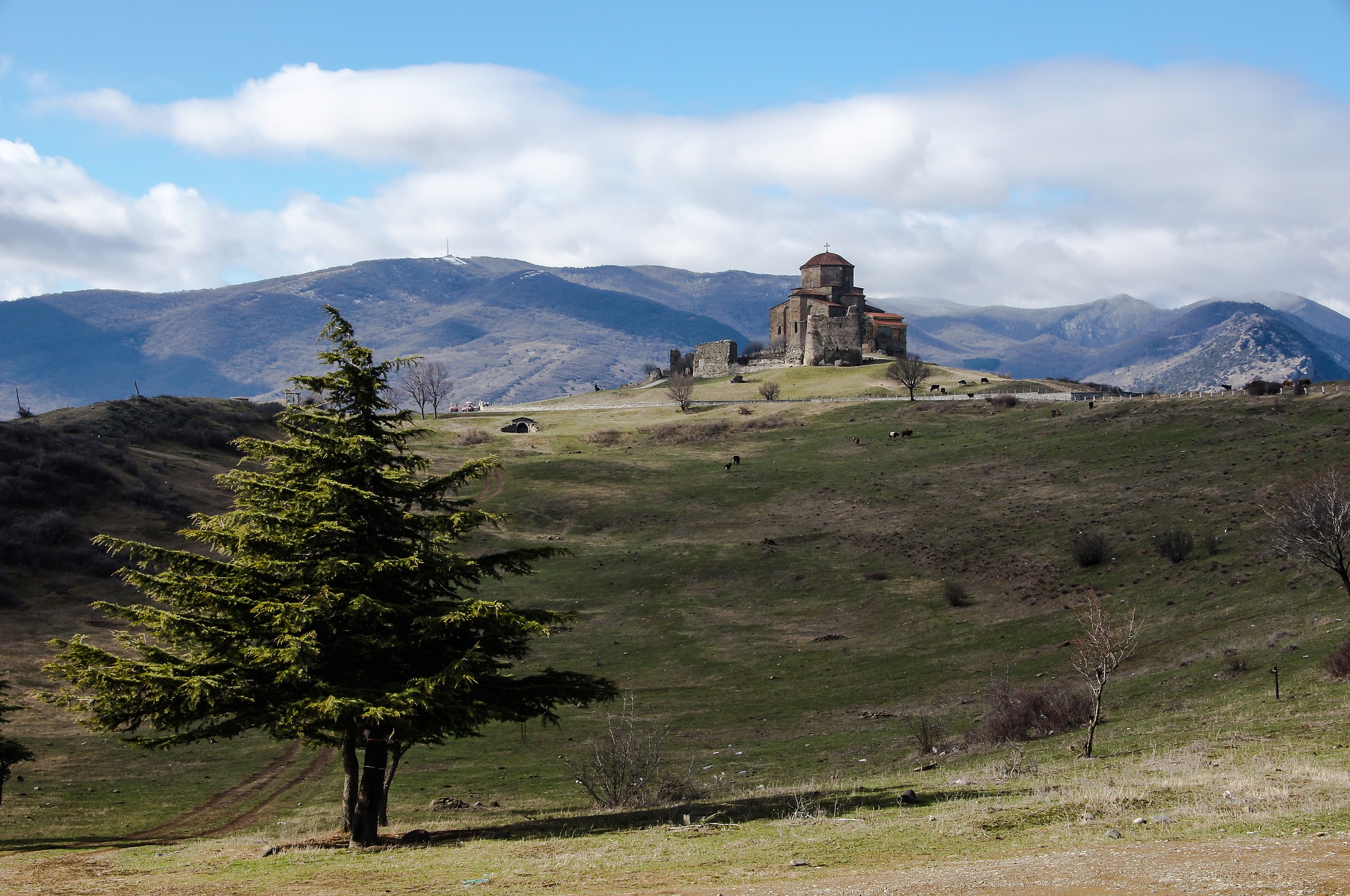
Georgia sits in the Caucasus between the Black Sea and the mountains, with a culture and language of its own that have survived centuries of struggle between empires. The countryside is dotted with fortified towers, monasteries and UNESCO sites: the old capital and spiritual centre of Mtskheta, the cave town of Uplistsikhe, the 12th-century cave monastery of Vardzia and the tower villages of Svaneti, among the highest inhabited places in Europe.
Tbilisi, the capital, mixes classical and ultramodern buildings and holds nearly a third of the population; Batumi has palm trees and skyscrapers on the Black Sea. Wine is part of the national identity, with archaeological traces of wine-making thousands of years old, and Kakheti is the main wine region. Georgians are hospitable to a fault, and a supra, a traditional feast with many toasts, is an experience in itself.
- Tbilisi: The cosmopolitan capital, a mix of old and ultramodern buildings.
- Mtskheta: The former capital and centre of the Georgian Orthodox Church, a UNESCO site, an easy day trip from Tbilisi.
- Svaneti: Mestia and Ushguli, mountain villages with medieval towers and great hiking.
- Kazbegi: High mountains and the hilltop Holy Trinity church, along the Georgian Military Highway.
- Kakheti: The wine region around Sighnaghi and Telavi.
- Vardzia: A 12th-century cave monastery above a river gorge.
Places to visit
- City
- Town
- Mountain
- Historic site
- Area
Cities
- Tbilisi: The capital and most cosmopolitan city, home to nearly a third of Georgians.
- Batumi: The second city, with classical buildings, skyscrapers and palm trees on the Black Sea.
- Kutaisi: The third city and capital of ancient Colchis, with two UNESCO sites.
- Mtskheta: The historic capital of eastern Georgia and centre of the Georgian Orthodox Church.
- Sighnaghi: A small hill town known for its views and wine.
- Telavi: The capital of Kakheti, a base for wineries, castles and monasteries.
- Borjomi: A small town of famous mineral water, next to a national park.
- Akhaltsikhe: The base for Vardzia and the Sapara Monastery.
- Gori: Stalin's birthplace, with a museum, and the nearest town to Uplistsikhe.
Beyond the cities
- Kazbegi (mountain): High peaks and the Holy Trinity church on a hill above a ravine.
- Svaneti (area): The high valleys around Mestia, a UNESCO site with many hiking trails.
- Ushguli (town): A small village of medieval towers in Upper Svaneti.
- Vardzia (site): A 12th-century cave monastery overlooking a river gorge.
- Uplistsikhe (site): A Silk Road cave city about 3,600 years old.
- David Gareja (site): A 6th-century cave monastery with frescoes, near Udabno.
- Shatili (town): A mountain village of medieval stone fortresses in a deep gorge.
Things to do
See
- Old and new Tbilisi Tbilisi: Walk between classical and ultramodern buildings in the capital.
- Mtskheta's churches Mtskheta: The spiritual centre of Georgian Orthodoxy, a day trip from Tbilisi.
- Cave monasteries Vardzia and David Gareja: Rock-cut monasteries from the 6th and 12th centuries.
Do
- Hiking in Svaneti Svaneti: Trails from Mestia, including the route to Ushguli.
- Tusheti and Kazbegi: Remote mountain hikes; Tusheti needs a 4WD or a local guide.
- Borjomi-Kharagauli National Park Borjomi: Georgia's largest national park, with varied wildlife.
- Black Sea resorts Batumi: Swimming at the many seaside resorts.
- Hot springs: Found across the country; Nokalakevi near Martvili is among the best.
Eat
- A supra: A traditional feast led by a toastmaster, the tamada, lasting for hours.
Drink
- The Kakheti wine route Kakheti: Wineries such as the Tsinandali estate, around Sighnaghi and Telavi.
Itineraries
Tbilisi and the Kakheti wine country in 6 days (6 days)
- Tbilisi (3 nights): The capital, with a day trip to Mtskheta.
- Sighnaghi (2 nights): Views and wineries.
- Telavi (1 night): Castles, monasteries and more wineries.
Tbilisi to Kazbegi in 4 days (4 days)
- Tbilisi (2 nights): Start in the capital.
- Kazbegi (2 nights): Along the Georgian Military Highway to the high Caucasus.
Western Georgia in 7 days (7 days)
- Kutaisi (2 nights): The old capital of Colchis.
- Svaneti (3 nights): Mestia and a hike to Ushguli.
- Batumi (2 nights): The Black Sea coast.
Holidays and events
- 1 January 2026 · New Year's Day
- 2 January 2026 · New Year's Day (second day)
- 7 January 2026 · Christmas Day (Orthodox)
- 19 January 2026 · Epiphany (Orthodox)
- 3 March 2026 · Mother's Day
- 8 March 2026 · International Women's Day
- 9 April 2026 · National Unity Day
- 10 April 2026 · Good Friday
- 11 April 2026 · Holy Saturday
- 12 April 2026 · Easter Sunday
- 13 April 2026 · Easter Monday
- 9 May 2026 · Day of Victory over Fascism
- 12 May 2026 · Saint Andrew the First-Called Day
- 26 May 2026 · Independence Day
- 28 August 2026 · Saint Mary's Day
- 14 October 2026 · Day of Svetitskhoveli Cathedral
- 23 November 2026 · Saint George's Day
Getting around
Marshrutkas, privately run minibuses, are the most common way to get around, between cities and inside them; they leave mostly in the morning and their destinations are written in Georgian. Buses link the big cities and airports, and Georgian Railways runs trains around the country.
Taxis have no meters: agree the price first, or use apps such as Bolt (Tbilisi, Batumi, Kutaisi), Maxim or Yandex Taxi, which avoid haggling and language problems. Few drivers speak English. Seat belts are compulsory and speed cameras are everywhere, but road accidents are frequent, so take care on the roads.
Flying to Georgia? PartnerCompare fares and find the cheapest datesSearch flightsWhere to stay
- Hotels: Western European chains are growing in Tbilisi, Batumi and other cities.
- Hostels: Spreading fast but often unsigned: get exact directions and GPS coordinates.
- Guesthouses and homestays: Countless in the countryside, the cheapest and most enjoyable option, with little privacy.
Guesthouses are so common that booking ahead is often unnecessary; owners will usually match the price shown on booking websites. Hosts usually communicate through WhatsApp or Viber.
Eat and drink
Dishes to try
- Khinkali: Large dumplings filled with spiced meat, mushrooms or cheese; bite, sip the juice, and leave the twisted top.
- Khachapuri: Cheese-filled bread: imeruli is round, megruli has extra cheese on top, acharuli is boat-shaped with an egg.
- Lobiani: Bread filled with beans.
- Pkhali: A classic of Georgian canteens, served alongside khachapuri.
Drinks
- Wine: Reds such as Saperavi, Mukuzani and the semi-sweet Khvanchkara and Kindzmarauli; whites such as Tsinandali and Rkatsiteli.
- Chacha: A strong grape spirit similar to grappa, often home-made.
- Limonati: Georgian lemonades in flavours such as pear and tarragon.
- Borjomi: The famous mineral water from the spa town of the same name.
Georgian food is rich in meat, garlic, coriander, walnuts and dill, and simple local restaurants are often better than those on the main tourist streets. If you are invited to a home, expect to be fed generously. At a supra, the tamada leads at least 20 toasts, with wine or brandy. Exporting home-bottled wine is prohibited.
Entry requirements and visas
| Passport validity | Valid for the length of your stay |
|---|
| Passport | Entry | Max stay | Notes |
|---|---|---|---|
| United Kingdom | Visa free | 365 days | Up to one year without a visa; work requires a permit. |
| Canada | Visa free | 365 days | Up to 365 days without a visa. |
Other nationalities: check the official source below.
British and Canadian citizens can stay up to a year without a visa, and Wikivoyage lists EU citizens (who can also travel with an ID card), Americans and Australians among the many nationalities with the same right. Everyone must have health and accident insurance covering the whole stay, for at least 30,000 lari, and may be asked to show it at check-in or on arrival.
Since 1 March 2026 foreigners need a work permit to work in Georgia, including remote work. A few British citizens have been refused entry or exit, apparently linked to taking part in demonstrations or to unpaid fines. Entering from Russia through Abkhazia or South Ossetia is illegal under Georgian law. Rules depend on your passport: check the official link before you book.
Money and payments
| Currency | Georgian Lari (GEL) |
|---|
The currency is the Georgian lari (GEL, ₾), divided into 100 tetri. Prices are sometimes quoted in US dollars or euros, but you must pay in lari. Outside the main towns ATMs are rare and cards may not work, so carry enough cash. Keep small notes: 50, 100 and 200 lari notes are hard to use, especially in taxis. Lari are difficult to change outside the region.
Health
| Recommended vaccines | Routine vaccines, including measles (MMR), Hepatitis A, Hepatitis B, Rabies: ask a travel clinic |
|---|---|
| Tap water | Varies |
Check vaccines with a travel health professional at least 6 to 8 weeks before you go. Rabies is a risk and stray dogs are common: if a dog bites or scratches you, get treatment at once in Tbilisi or a major town. Vipers are found especially in early summer, and few places outside the big towns have anti-venom. There is a small risk of tick-borne encephalitis, and altitude sickness is possible at Gudauri, Mount Kazbek and Mount Tetnuldi.
Water quality varies, and bottled water is easy to find. There is no free healthcare for visitors: treatment in Tbilisi is good but can be expensive, and facilities elsewhere are limited. Call 112 for an ambulance.
This is general information, not medical advice: check with a travel health professional before you go.
Safety
- United States: Level 1: Exercise Normal Precautions (2026-10-20)
- Canada: Take normal security precautions (2026-10-20)
- United Kingdom: Advises against all travel to parts of the country (2026-10-20)
The UK advises against all travel to Abkhazia and South Ossetia and against all but essential travel to the areas next to their administrative boundary lines. Georgia does not recognise the crossings into those regions from Russia.
Crime is low, but watch for pickpockets in crowds and for drink spiking: buy your own drinks and keep them in sight. Protests have taken place in Tbilisi for many months, mainly around Parliament on Rustaveli Avenue, and some have turned violent: stay away from demonstrations. Ethnic minorities and LGBT+ people may face harassment. Drug offences, including cannabis, carry sentences of 5 to 25 years. Roads are dangerous, with frequent accidents.
Customs and etiquette
Georgians are very hospitable: if a Georgian invites you, they will usually pay, and arguing about the bill can embarrass your host. People speak directly and loudly, which is often simply a lively conversation, and ask personal questions as a way of getting to know you.
Georgia is a conservative Orthodox Christian society. Women cover their heads in churches, and modest clothes are expected in places of worship and in the countryside. Avoid bringing up Abkhazia, South Ossetia or relations with Russia: these are painful subjects. You do not have to carry ID, but show your passport if the police or a hotel ask for it.
Language
| Official languages | Georgian |
|---|---|
| English | Limited |
What to pack
- Proof of health and accident insurance: Required for every visitor, with at least 30,000 lari of cover for the whole stay.
- WhatsApp, installed and activated before you arrive: Almost everyone, from guesthouses to drivers, communicates through it.
- A headscarf: Women cover their heads in churches.
- Cash in small lari notes: ATMs and card payments are rare outside the main towns.
- Offline maps and GPS: Mountain trails are often remote.
Quick reference
Country facts
| Capital | Tbilisi |
|---|---|
| Population | 3,935,766 (2025) |
| Area | 69,490 km² |
| Time zone | Asia/Tbilisi (UTC+4) |
| Calling code | +995 |
| Driving side | right |
Staying connected
| SIM and eSIM | Magti has the best coverage, Beeline is the cheapest and Geocell is the third network. Operators have desks at Tbilisi airport, and Magti sells an eSIM you can install before you arrive. |
|---|---|
| Wi-Fi | Free in most hostels and hotels, even in Mestia, and in some cafés; the city network in Tbilisi often fails. |
Useful apps
- WhatsApp: The standard way to contact hosts, drivers and restaurants
- Bolt: Taxis in Tbilisi, Batumi and Kutaisi
Emergency numbers
| Emergency | 112 |
|---|
Frequently asked questions
Do I need a visa for Georgia?
Not for UK and Canadian citizens, who can stay up to a year; EU, US and Australian citizens are also visa-exempt according to Wikivoyage. Check the official link before you book.
Do I need travel insurance for Georgia?
Yes. All visitors must have health and accident insurance for the whole stay, with at least 30,000 lari of cover.
Can I visit Abkhazia or South Ossetia?
The UK advises against all travel there, and entering them from Russia is illegal under Georgian law.
Can I pay by card in Georgia?
In cities, often yes, but outside the main towns ATMs and card payments are rare. Payments must be in lari.
Can I drink the tap water in Georgia?
Quality varies; bottled water is widely available.
How do I eat khinkali?
Hold it by the twisted top, bite the side and sip the juice, then eat the rest and leave the top on your plate.
Sources This guide was last checked on · 16 sources
- Wikivoyage: Georgia (country) · Overview, Places to visit, Things to do, Itineraries, Getting around, Where to stay, Eat and drink, Entry requirements and visas, Money and payments, Health, Safety, Customs and etiquette, Language, What to pack, Staying connected, Frequently asked questions
- Wikidata: Georgia · Overview, Places to visit, Money and payments, Country facts
- Nager.Date: public holidays in Georgia, 2026 · Holidays and events
- UK FCDO: Georgia warnings and insurance (updated 15 September 2026) · Getting around, Safety, Frequently asked questions
- Government of Canada: Georgia travel advice (updated 27 August 2026) · Getting around, Entry requirements and visas, Health, Safety, Frequently asked questions
- UK FCDO: Georgia entry requirements · Entry requirements and visas, What to pack, Frequently asked questions
- ISO 4217 (SIX), published 2026-09-17 · Money and payments
- UK FCDO: Georgia safety and security · Money and payments, Safety, Customs and etiquette
- UK FCDO: Georgia health · Health, What to pack, Frequently asked questions
- US CDC: Travelers' health, Georgia · Health
- US Department of State: Georgia travel advisory · Safety
- UK FCDO: Georgia travel advice · Safety
- World Bank, SP.POP.TOTL · Country facts
- World Bank, AG.LND.TOTL.K2 · Country facts
- IANA Time Zone Database, zone.tab · Country facts
- UK FCDO: Georgia getting help · Emergency numbers
Suggest an update
Travel rules, prices and timetables change. If something in this guide is out of date, tell us: we check every suggestion against an official source before changing the page.