

- Local time
- 14:13
- Currency
- US Dollar (USD)
- Capital
- Dili
- Calling code
- +670
- Drive on the
- left
Overview
Reefs off Dili and Atauro, mountain treks, coffee highlands and Portuguese forts in one of the world's newest countries. For divers and adventurers.
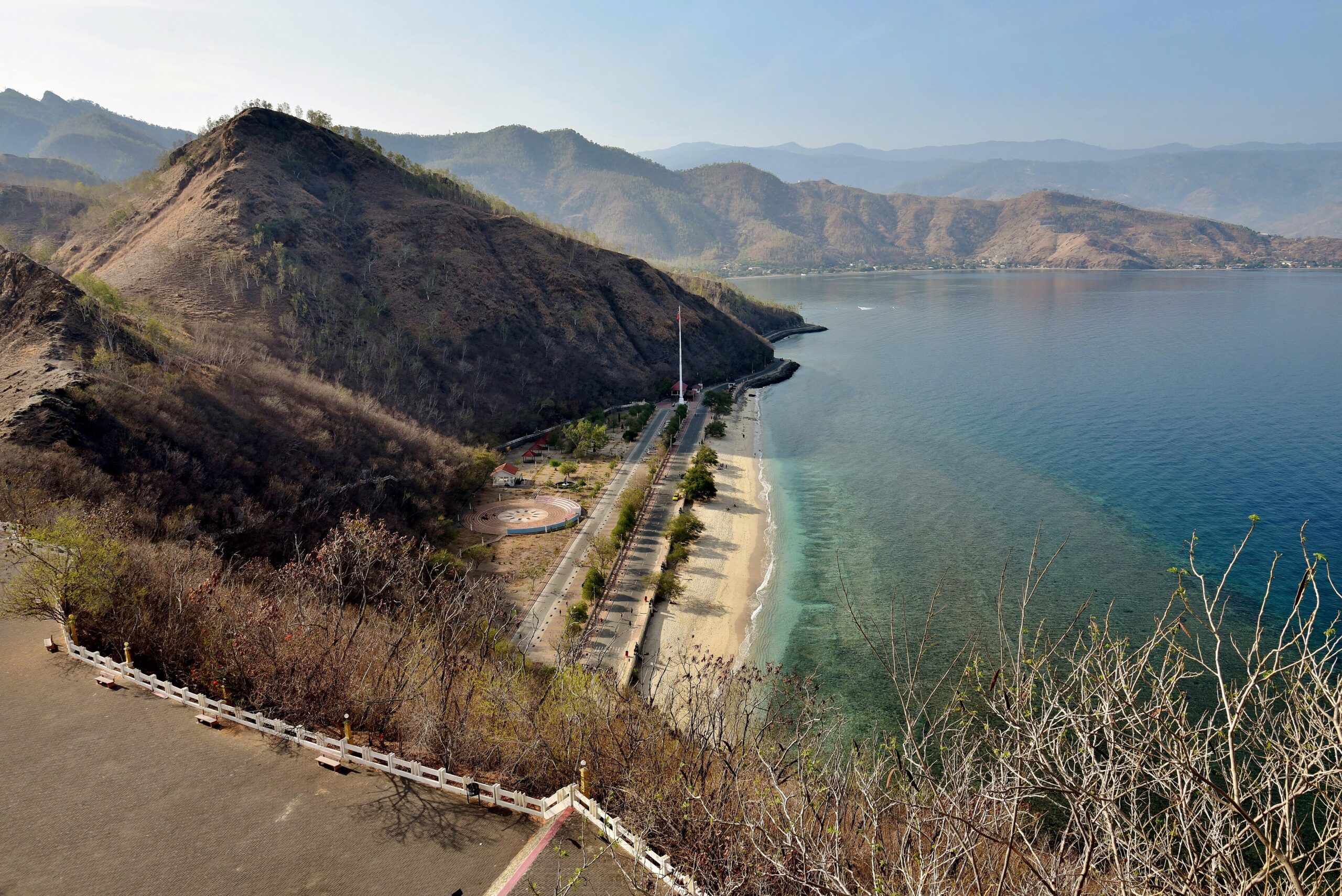
Timor-Leste, also called East Timor, covers the eastern half of the island of Timor, the exclave of Oecussi and Atauro Island. It was a Portuguese colony, then occupied by Indonesia, and became independent on 20 May 2002; like the Philippines, it has a Roman Catholic majority. The name says the same thing twice: timur means east in Malay and leste means east in Portuguese. Divers come for the reefs at the base of the Coral Triangle, with dive sites a few minutes from central Dili and around Atauro, and hikers for the mountains and the coffee-growing highlands.
Travel here is basic. Outside Dili, hotels, restaurants and public transport are very limited, roads are poor and mountain roads can become impassable in the rainy season, which runs from about November to April. The dry season lasts from about June to October. The currency is the US dollar and the economy runs on cash. The UK does not advise against travel to any part of the country; Canada advises a high degree of caution because of crime and a fragile security situation, so read the Safety section before you go.
- Atauro Island: Diving and snorkelling from eco-lodges, and local fishermen who still use handmade goggles and spear guns.
- Diving near Dili: Shore and boat dives a few minutes from the city centre and along the coast east and west of town.
- Nino Konis Santana National Park: The country's first national park, with birds, prehistoric rock art, coral reefs, Lake Ira Lalaro and Jaco Island.
- Coffee highlands: Plantations above 1,000 m around Ermera and Maubisse, where it can be as cool as 15 °C.
- Mount Tatamailau: Treks on a peak of about 3,000 m, one of several mountains walkers come for.
- Baucau: The second city, known for its colonial architecture and Japanese caves.
Places to visit
- City
- Town
- Island
- Park
- Area
Cities
- Dili: The capital, with the only international airport, the widest choice of hotels and restaurants, and dive sites a few minutes from the centre.
- Baucau: The second largest city, known for its colonial architecture and Japanese caves.
- Ermera: A town in the highlands, in one of the regions where Timor-Leste's coffee is grown.
- Gleno: The capital of Ermera district, set in a valley.
- Liquiçá: A small district just west of Dili, with coffee farms and dive sites along the coast.
- Lospalos: The capital of Lautém district, linked to Dili by bus.
- Maliana: The third largest city, near the border with Indonesia.
- Suai: A town with many traditional fishing villages dating from Portuguese times, near the Salele border crossing.
Beyond the cities
- Atauro Island (island): An island off Dili, reached by ferry, for diving, snorkelling, eco-lodges and wooden sculptures.
- Nino Konis Santana National Park (park): The first national park, in the east: birdwatching, diving, trekking and prehistoric rock art.
- Jaco Island (island): An uninhabited island in the national park, reached by boat, with eco-lodges nearby in Tutuala.
- Lake Ira Lalaro (area): A wetland lake in the national park, home to estuarine crocodiles.
- Maubisse (town): A coffee-growing town 65 km from Dili, reached by angguna.
- Mount Tatamailau (mountain): A peak of about 3,000 m and one of the main trekking areas.
Regions
- North Coast: Where most people live, with cultural and historical sites and Atauro for diving.
- South Coast: The length of the mainland's south side, with coffee plantations and trekking.
- Oecussi: A mountainous exclave where few travellers go, with ruins from the Indonesian occupation.
Things to do
See
- Nino Konis Santana National Park Nino Konis Santana National Park: Birdwatching, diving, trekking and prehistoric archaeological sites in a protected area of lowland rainforest and coast.
- Portuguese forts and churches: Colonial forts, churches and monuments are spread across the country; Baucau is known for its colonial buildings.
- History of the resistance Balibo, Dili and Baucau: Sites linked to the occupation and the resistance, including Balibo, Santa Cruz in Dili and the Japanese caves in Baucau.
Do
- Dive and snorkel around Atauro Atauro Island: Dives for every level around the island, with eco-lodges supported by local NGOs.
- Shore diving from Dili Dili: Pertamina Pier is 5 minutes from the centre and Dili Rock 10 minutes west; wall dives such as K41 and Secret Garden are within an hour east. Two dive companies are based in Dili.
- Boat trip to Jaco Island Jaco Island: A boat ride to the uninhabited island; local fishermen will also cook fish for you on request.
- Trekking Mount Tatamailau, Mount Matebian and Mount Kablaki: Mountain treks of up to about 3,000 m. Unexploded ordnance is still found outside Dili, so never trek alone and hire an experienced guide.
- Birdwatching: About 260 bird species have been recorded, some of them found only on Timor.
- Coffee plantation visits Ermera, Maubisse, Manufahi and Liquiçá: Winding mountain roads lead to farms above 1,000 m; coffee cooperatives can arrange a field visit.
Shop
- Tais and local coffee Dili: Buy hand-woven tais cloth and silver jewellery at the Tais market, and coffee beans at a traditional market rather than in a supermarket.
Itineraries
Dili and Atauro in 6 days (6 days)
- Dili (3 nights): Shore dives near town, the Tais market and fruit stalls on the waterfront.
- Atauro Island (3 nights): Ferry from Dili; diving, snorkelling and woodcarvings.
The east in 7 days (7 days)
- Dili (1 night): Arrange a car with a driver; travel by day only.
- Baucau (2 nights): Colonial architecture and the Japanese caves.
- Lospalos (1 night): A stop on the way east.
- Nino Konis Santana National Park (3 nights): Birdwatching, Lake Ira Lalaro and a boat to Jaco Island.
Coffee highlands in 5 days (5 days)
- Dili (1 night): Contact a coffee cooperative to arrange farm visits.
- Ermera (2 nights): Coffee plantations in the hills.
- Maubisse (2 nights): More coffee farms, 65 km from Dili.
Getting around
| Main airports | DIL |
|---|---|
| International driving permit | Required |
Buses, mostly small, link Dili with Baucau, Maliana, Lospalos and Suai, and vans, minibuses (mikrolets) and light trucks with benches (anggunas) run on to the villages. Most leave very early in the morning and drive around looking for passengers before setting off. In 2026 Wikivoyage listed US$5 for Dili to Baucau by bus and 25 centavos for a mikrolet ride in Dili or Baucau. Canada warns that buses are overcrowded and do not meet international safety standards, and that assaults have happened on public transport, including taxis. Yellow taxis have no meter: agree the fare first, or book through your hotel. Ferries link Dili with Atauro and Oecussi, and Aero Dili flies between Dili and Oecussi. Ferry accidents are common, so check for life jackets and do not board a boat that looks overloaded.
Driving: traffic drives on the left. Bring your licence and an International Driving Permit; Canada says you can drive on them for up to 3 months. If you hire a car, you will probably have to hire a driver too; a 4WD cost about US$85 a day in Dili according to Wikivoyage. Roads are generally poor and accidents, especially with motorbikes and scooters, are common. Main routes are often single-track mountain roads that can become impassable in the rainy season from November to April. Roadblocks are common. Outside Dili travel in convoy when you can, avoid travelling at night and do not travel alone. The speed limit in Dili is 40 km/h.
Flying to Timor-Leste? PartnerCompare fares and find the cheapest datesSearch flightsWhere to stay
- Hotels: Dili has hotels at every price level; outside the capital the choice is very limited.
- Eco-lodges: On Atauro Island and near Jaco Island in Tutuala, some run with the support of local NGOs.
Plan your nights before you leave Dili: Canada notes that hotels, restaurants and other tourist services are very limited outside the capital. Keep your room locked at all times, as the UK advice recommends.
Eat and drink
Dishes to try
- Rice: The staple; taro, cassava, sweet potatoes and maize are also widely grown.
- Fried fish: A popular dish; prawns are a delicacy.
- Chicken curry: Curries are a standard dish, and chicken curry is the favourite.
- Tropical fruit: Papayas, mangoes and bananas from the fruit stalls along the Dili waterfront.
Drinks
- Coffee: Grown organically in the highlands; some varieties, such as robusta, are very high in caffeine.
- Beer: Widely available in bars and restaurants.
| Tipping | Restaurant bills do not include a service charge. Tipping is optional; a 10% tip is a lot of money locally. |
|---|
Traditional dishes use plenty of spices, and fish is an important part of the diet. Dili has restaurants serving Portuguese and Italian food, as well as Chinese, Japanese and Thai. Outside the capital the choice is much smaller. Do not drink tap water: boil or treat it, or buy bottled water.
Entry requirements and visas
| Passport validity | At least 6 months after the date you arrive, with 2 blank pages (UK advice); Canada asks for 6 months beyond the date you leave and 1 blank page |
|---|
| Passport | Entry | Max stay | Notes |
|---|---|---|---|
| United Kingdom | Visa on arrival | 30 days | Single-entry tourist visa at Dili airport or seaport, US$30 in cash. |
| Canada | Visa on arrival | 30 days | Tourist visa on arrival at Dili airport and the Port of Dili, with an entry fee. |
| EU / EEA | Visa free | 90 days | Citizens of Schengen Area countries, up to 90 days in any 180-day period, according to Wikivoyage; confirm with the embassy. |
| United States | Visa on arrival | 30 days | US$30 in cash, according to Wikivoyage; confirm with the embassy. |
| Australia | Visa on arrival | 30 days | US$30 in cash, according to Wikivoyage; confirm with the embassy. |
Other nationalities: check the official source below.
Most visitors who are not exempt get a 30-day, single-entry tourist visa on arrival at Dili airport or Dili seaport. It costs US$30, in cash only, and there are no ATMs or exchange offices at the airport or the land borders, so carry the exact amount. You can extend the visa by 30 days; apply at least 15 days before it expires. Officials may ask to see a return or onward ticket and proof that you have enough money for your stay.
By land the advice differs. The UK says you can buy a visa on entry at the Batugade crossing or in advance at the Timor-Leste consulates in Denpasar and Kupang; Canada says you need a Visa Application Authorization, applied for online or at an embassy, before you reach the border. For Oecussi by land you need a separate visa, available at the Wini checkpoint or in advance. You must declare goods that may be taxed or prohibited, and cash of US$20,000 or more needs authorisation from the Central Bank before you arrive. Rules depend on your passport and can change: check with the Timor-Leste embassy or the official link before you book.
Money and payments
| Currency | US Dollar (USD) |
|---|---|
| Cards | Rare |
The currency is the US dollar (USD, $), and the economy runs on cash. Timor-Leste also issues its own centavo coins, equal to US cents; US coins are rarely accepted. Bring recent notes: the UK advice says notes printed before 2009 are usually refused (the Central Bank in Dili will change them), and small notes such as $5 are the easiest to spend. Few places take credit cards. There are ATMs in Dili, but they can charge high fees and are often out of order, and outside the municipal capitals ATMs and banks are rare. According to Wikivoyage, BNU ATMs are the most reliable for foreign cards and accept Visa and Plus cards; no ATM takes Mastercard. Exchange offices are few and rates are poor, so arrive with enough dollars.
Health
| Recommended vaccines | Routine vaccines, including measles (MMR), Hepatitis A, Hepatitis B, Typhoid, Japanese encephalitis, for long stays or rural trips, Rabies, for some travellers: dogs with rabies are common |
|---|---|
| Malaria | None |
| Tap water | Not safe |
No vaccinations are required to enter Timor-Leste. See a travel health professional about the recommended ones at least 8 weeks before you go. Dengue and chikungunya are spread by mosquitoes, so use repellent and cover up. Canada rates the malaria risk to travellers as very low and does not recommend antimalarial tablets for most visitors. Keep out of floodwater and muddy water after heavy rain, which can carry leptospirosis and melioidosis. Do not drink tap water. If an animal bites or scratches you, wash the wound and get medical care at once: rabies vaccines may only be available in larger towns.
Medical care is limited, especially outside Dili, and dental care is poor. Clinics often want payment up front. For a serious illness or injury you will probably need evacuation to Australia or Singapore, which is difficult because few airlines fly from Timor-Leste, so get insurance that covers medical evacuation. Altitude sickness is a risk in the mountains. For an ambulance call 110 or +670 331 1044, but emergency services are unreliable: get yourself to a hospital if you can. Dili National Hospital is in Bidau Santana.
This is general information, not medical advice: check with a travel health professional before you go.
Safety
- United States: Level 2: Exercise Increased Caution (2026-10-20)
- Canada: Exercise a high degree of caution (2026-10-20)
- United Kingdom: No advice against travel (2026-10-20)
The UK FCDO does not advise against travel to any part of Timor-Leste. Canada advises a high degree of caution because of crime and a fragile security situation. Gang violence, robbery and assault happen, especially in Dili, and thieves target foreigners: men on motorbikes snatch phones and bags, and gangs have thrown stones at cars, mainly in the evening and at night. Fights between martial arts groups break out, mostly at night; foreigners have not been targeted, but leave the area at once. Avoid demonstrations and large crowds, particularly around Tasi Tolu and Comoro in Dili and near the airport, and take extra care around elections, when unrest can start with little warning. Do not show expensive items, do not travel alone, take care after dark and book taxis through your hotel.
Women travellers report harassment and groping, including on Beach Road in Dili: avoid taxis and public transport alone at night. Crocodiles are often seen in inland waterways, on the south coast and in the east, and sometimes on beaches near Dili, so ask locally before you swim; currents and riptides are common. Unexploded ordnance is still found outside Dili, so trek only with a guide. The rainy season from November to April brings flash floods and landslides; in Dili, watch for uncovered manholes on flooded streets. Earthquakes are a risk. Carry a copy of your passport photo page and visa, and note that foreigners may not take part in political activities. Emergency numbers are unreliable.
Customs and etiquette
Most Timorese are Roman Catholic, and Canada advises dressing conservatively, behaving discreetly and respecting religious and social traditions; some religious or cultural sites need special permission to enter. The Indonesian occupation cost a great many lives: do not speak well of it or of the idea of Timor-Leste joining Indonesia, and if you are not sure a topic is sensitive, leave it alone. Many people look back fondly on Portuguese rule.
In markets, expect to be stared at and to be quoted high prices. Office hours are generally 08:30 to 17:30, with a lunch break from 12:00 that often lasts until 14:00 because people go home to eat. Same-sex relations are legal, but LGBTQ+ travellers may face discrimination.
Language
| Official languages | Tetum, Portuguese |
|---|---|
| English | Limited |
| Hello | Ola / Elo |
|---|---|
| Good morning | Bondia |
| Thank you | Obrigadu (said by a man) / Obrigada (said by a woman) |
| Please | Favór ida |
| Yes / No | Sin / Lae |
| Excuse me | Kolisensa |
| Sorry | Deskupa |
| Do you speak English? | Ita bele ko'alia Inglés? |
| Help! | Ajuda! |
What to pack
- US dollars in cash, recent and in small notes: The visa costs US$30 in cash and there are no ATMs at the airport or borders; old notes are often refused.
- Copy of your passport photo page and visa: Carry it in case the authorities ask to see it.
- International Driving Permit: Needed with your licence to drive.
- Insect repellent: Dengue and chikungunya are spread by mosquitoes.
- Reef shoes: Protect your feet from coral cuts and stonefish.
- Travel health kit: Medical care is limited outside Dili.
- Modest clothes: Conservative dress is expected, especially at religious sites.
Quick reference
Country facts
| Capital | Dili |
|---|---|
| Population | 1,418,517 (2025) |
| Area | 14,870 km² |
| Time zone | Asia/Dili (UTC+9) |
| Calling code | +670 |
| Driving side | left |
Staying connected
| SIM and eSIM | Timor Telecom has the best rural coverage but costs more; Telemor is the best choice around Dili; Telkomcel is the third operator. In 2026 a Telemor SIM with 26 GB for 7 days cost US$3. |
|---|---|
| Roaming | 4G covers populated areas, but coverage is poor outside Dili and the larger towns, which is why many Timorese carry SIMs from two operators. |
Emergency numbers
| Police | 112 |
|---|---|
| Ambulance | 110 |
| Fire | 115 |
Frequently asked questions
Do I need a visa for Timor-Leste?
Most visitors get a 30-day tourist visa on arrival at Dili airport or seaport for US$30 in cash; Wikivoyage says Schengen citizens do not need one. Rules depend on your passport and differ at land borders, so check the official link before you book.
What currency does Timor-Leste use?
The US dollar, alongside local centavo coins. Bring recent, small notes: few places take cards and ATMs are unreliable outside Dili.
Can I drink the tap water in Timor-Leste?
No. Boil or treat it, or drink bottled water.
When is the best time to visit Timor-Leste?
The dry season, from about June to October. The rainy season from November to April brings flash floods and can close mountain roads.
Is there malaria in Timor-Leste?
The CDC does not list malaria for Timor-Leste, and Canada rates the risk to travellers as very low. Protect yourself from mosquitoes anyway, because of dengue and chikungunya.
Can I drive myself in Timor-Leste?
Yes, with your licence and an International Driving Permit, but roads are poor, accidents are common and car hire usually comes with a driver. Avoid driving at night.
Sources This guide was last checked on · 15 sources
- Wikivoyage: Timor-Leste · Overview, Places to visit, Things to do, Itineraries, Getting around, Where to stay, Eat and drink, Entry requirements and visas, Money and payments, Health, Safety, Customs and etiquette, Language, What to pack, Staying connected, Frequently asked questions
- Wikidata: Timor-Leste · Overview, Places to visit, Money and payments, Country facts
- Government of Canada: Timor-Leste travel advice (updated 13 October 2026) · Overview, Things to do, Itineraries, Getting around, Where to stay, Entry requirements and visas, Money and payments, Health, Safety, Customs and etiquette, What to pack, Frequently asked questions
- UK FCDO: Timor-Leste safety and security · Overview, Itineraries, Getting around, Where to stay, Money and payments, Safety, What to pack
- UK FCDO: Timor-Leste entry requirements (updated 10 December 2025) · Getting around, Entry requirements and visas, What to pack, Frequently asked questions
- ISO 4217 (SIX), published 2026-09-17 · Money and payments
- CDC Travelers' Health: Timor-Leste · Health, Frequently asked questions
- UK FCDO: Timor-Leste health · Health
- US Department of State: Timor-Leste travel advisory · Safety
- UK FCDO: Timor-Leste travel advice · Safety
- UK FCDO: Timor-Leste getting help · Safety, Emergency numbers
- Wikivoyage: Tetum phrasebook · Language
- World Bank, SP.POP.TOTL · Country facts
- World Bank, AG.LND.TOTL.K2 · Country facts
- IANA Time Zone Database, zone.tab · Country facts
Suggest an update
Travel rules, prices and timetables change. If something in this guide is out of date, tell us: we check every suggestion against an official source before changing the page.