

- Local time
- 09:22
- Currency
- Euro (EUR)
- Capital
- Zagreb
- Calling code
- +385
- Drive on the
- right
Overview
Croatia pairs a long Adriatic coastline of walled towns and islands with a quieter inland of hills, vineyards and lakes. Part of the EU, the euro area and Schengen, it is easy to reach and to get around.
Most visitors come for the coast, and it is easy to see why: more than a thousand islands, clear water, and a string of towns where the old centre is still the heart of daily life. Dubrovnik is the famous one, but Split, built inside and around a Roman emperor's palace, Zadar, Šibenik and the Istrian towns around Pula each have a character of their own. Inland Croatia is a different country: the capital Zagreb, with its easy-going city life, the hills and wine cellars of Slavonia to the east, and the lakes and waterfalls of Plitvice in between.
Practical life is simple. Croatia joined the EU in 2013, and since 1 January 2023 it uses the euro and is part of the Schengen area, so there are no regular border checks when you arrive from another Schengen country, although Slovenia checks its border with Croatia. The coast has a Mediterranean climate with hot, dry summers, while the interior has real winters and warm summers. Ferries link the mainland to the islands and to Italy, and buses reach almost every town.
Summer on the coast is busy and expensive, especially in July and August, and many seaside hotels close for the winter. Late spring and September give you the same sea with fewer people.
- Zagreb: The capital: a lively, walkable city with a fine old upper town.
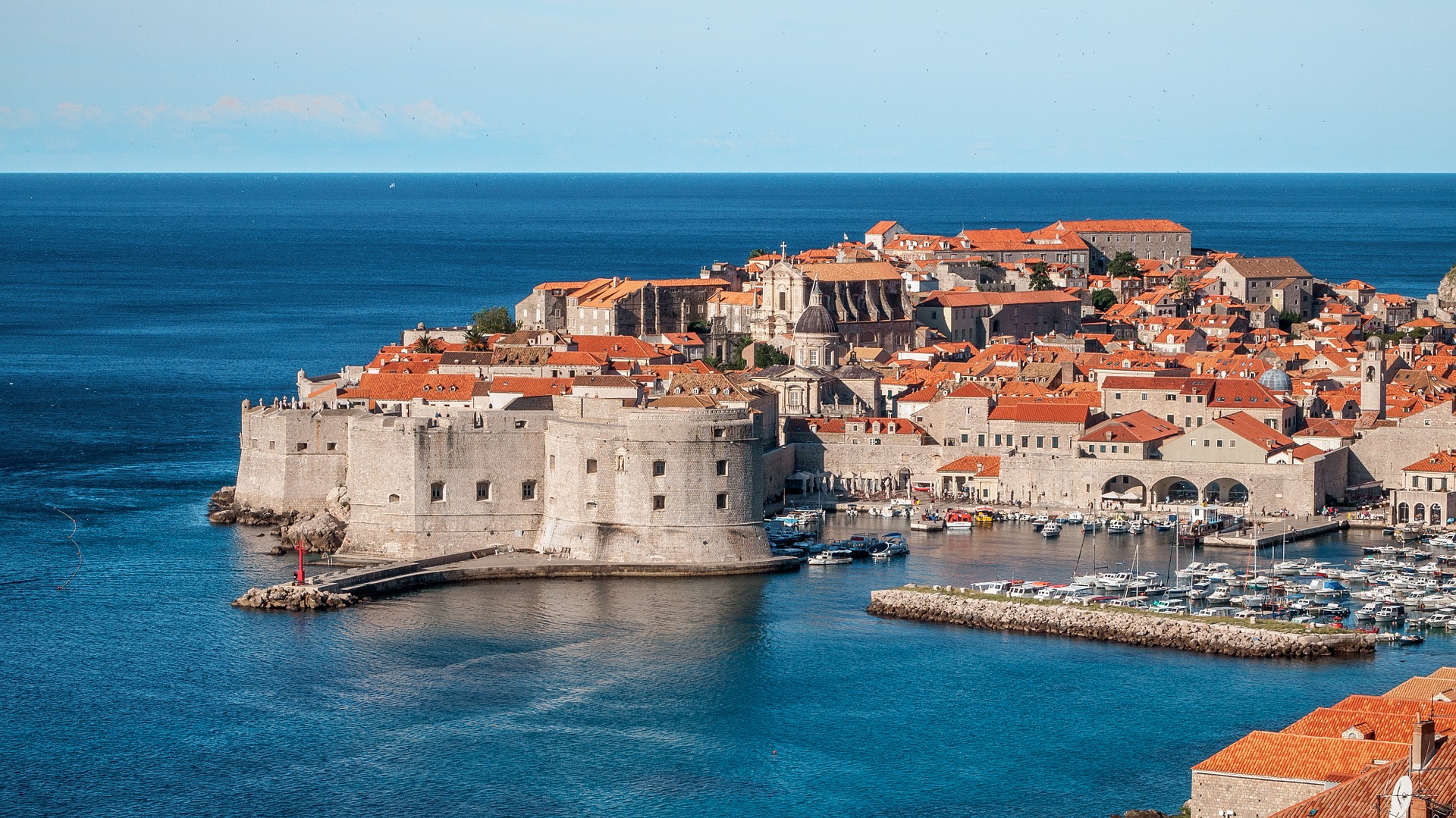
- Dubrovnik: A walled city on the sea and a UNESCO World Heritage site.
- Split: A living city inside the palace of the Roman emperor Diocletian.
- Istria: Pula's Roman amphitheatre, hill towns, truffles and a coast close to Italy.
- Plitvice Lakes: Terraced lakes and waterfalls in a national park, inland from the coast.
- The islands: Hvar, Korčula, Brač and Cres among more than a thousand, reached by ferry.
Places to visit
- City
- Island
- Park
- Historic site
Cities
- Zagreb: The capital: an easy-going city with a historic upper town and the Dolac market.
- Split: A living town built in and around the palace of the Roman emperor Diocletian, and the main ferry port for the central islands.
- Dubrovnik: A walled city on the sea, independent for most of its history, and a UNESCO World Heritage site.
- Zadar: A historic coastal town in a scenic area, often overlooked by visitors in a hurry.
- Šibenik: A Dalmatian town with a UNESCO-listed cathedral, close to Krka National Park.
- Pula: The main town of Istria, with a well-preserved Roman amphitheatre.
- Rijeka: Croatia's main port, with a character quite different from the Dalmatian towns.
- Osijek: The main city of Slavonia, in the east, surrounded by vineyards and wine cellars.
Beyond the cities
- Plitvice Lakes National Park (park): Terraced lakes and waterfalls, a UNESCO World Heritage site.
- Krka National Park (park): A river valley of waterfalls near Šibenik.
- Hvar (island): An island with a charming old port and the UNESCO-listed Stari Grad Plain.
- Korčula (island): An island with an attractive old town and a string of small villages.
- Brač (island): A long, narrow island a short ferry ride from Split, with Supetar as its main port.
- Krk (island): A large island, now connected to the mainland.
- Cres (island): A large, well-developed island in the Kvarner Gulf.
- Euphrasian Basilica, Poreč (site): An early Christian basilica complex in Istria, a UNESCO World Heritage site.
Regions
- Istria: The peninsula in the north-west: Roman Pula, hill towns, truffles and a coast close to Italy.
- Kvarner: The gulf around Rijeka, with the islands of Krk and Cres.
- Dalmatia: The long southern coast and its islands: Zadar, Šibenik, Split and Dubrovnik.
- Central Croatia: Zagreb and the green hills around it.
- Slavonia: The flat, fertile east, with Osijek, vineyards and the wetlands of Kopački Rit.
Things to do
See
- Dubrovnik's old city and walls Dubrovnik: A complete walled city on the sea, listed by UNESCO.
- Diocletian's Palace Split: A Roman emperor's palace that became the heart of a town, listed by UNESCO.
- Plitvice Lakes Lika: Walk the boardwalks between the terraced lakes and waterfalls.
- Krka waterfalls Šibenik: A river valley of cascades, easy to visit from Šibenik.
- Pula Arena Pula: A well-preserved Roman amphitheatre, the symbol of Pula.
- UNESCO sites off the main route: Trogir's historic centre, Šibenik Cathedral, the Euphrasian Basilica in Poreč and the Stari Grad Plain on Hvar.
Do
- Island hopping by ferry: Ferries are cheap and frequent, and the slowest way is often the best way to see the islands.
- Sailing: Marinas along the coast make Croatia a sailing destination; skippers need an International Certificate of Competence.
Eat
- Dolac market Zagreb: Zagreb's main market, for fresh cheese with cream and seasonal produce.
Drink
- Wine cellars of Slavonia Slavonia: Many cellars in the east offer tours and tastings.
Itineraries
Dalmatian coast and islands in a week (7 days)
- Split (2 nights): Diocletian's Palace and the old town.
- Hvar (2 nights): By ferry from Split.
- Korčula (1 night): By ferry along the islands.
- Dubrovnik (2 nights): The city walls, early in the morning.
Zagreb, Plitvice and the coast in 5 days (5 days)
- Zagreb (2 nights): The upper town and the Dolac market.
- Plitvice Lakes National Park (1 night): Stay nearby to walk the lakes before the crowds arrive.
- Zadar (2 nights): End the trip on the sea.
Istria and Kvarner in 5 days (5 days)
- Pula (2 nights): The Roman amphitheatre.
- Poreč (1 night): The Euphrasian Basilica.
- Krk (2 nights): Connected to the mainland, no ferry needed.
Climate and best time to visit
| Jan | Feb | Mar | Apr | May | Jun | Jul | Aug | Sep | Oct | Nov | Dec | |
|---|---|---|---|---|---|---|---|---|---|---|---|---|
| Max °C | 10 | 11 | 14 | 17 | 23 | 27 | 30 | 30 | 25 | 20 | 15 | 12 |
| Min °C | 5 | 6 | 8 | 11 | 15 | 19 | 22 | 22 | 18 | 14 | 10 | 7 |
| Rain mm | 78 | 65 | 64 | 62 | 55 | 51 | 28 | 43 | 67 | 78 | 112 | 105 |
The coast has a Mediterranean climate: in Split the average maximum is about 30 °C in July and August, and those two months are also the driest. Winters are mild and wetter, with most rain between October and December. Inland the climate is continental: in Zagreb the average January maximum is about 3 °C, with frost at night, while July reaches about 27 °C.
May, June and September are the best months for most trips: the coast is less crowded and cheaper than in July and August. On the coast a cold, dry wind from the mountains, the bura, can blow hard for a day or two.
Holidays and events
- 1 January 2026 · New Year's Day
- 6 January 2026 · Epiphany
- 5-6 April 2026 · Easter Sunday and Monday
- 1 May 2026 · International Workers' Day
- 30 May 2026 · National Day
- 4 June 2026 · Corpus Christi
- 22 June 2026 · Anti-Fascist Struggle Day
- 5 August 2026 · Victory and Homeland Thanksgiving Day
- 15 August 2026 · Assumption Day
- 1 November 2026 · All Saints' Day
- 18 November 2026 · Remembrance Day
- 25 December 2026 · Christmas Day
- 26 December 2026 · St Stephen's Day
Getting there and around
| Main airports | ZAG, SPU, DBV, ZAD, PUY, RJK, OSI |
|---|
Getting there
By air: Zagreb is the hub of Croatia Airlines, with flights across Europe; Split and Dubrovnik have many seasonal flights, and there are also airports at Zadar, Pula, Rijeka and Osijek. Airports in nearby countries, such as Trieste, Venice, Ljubljana and Graz, can be a good alternative.
By sea: car ferries link Croatia with Ancona and Bari in Italy, and catamarans run between Venice and the towns of Istria.
By train and bus: there are direct trains from Austria, Germany, Hungary, Slovenia and Switzerland, including a night train from Munich to Zagreb, and buses from Venice and Trieste to Istria. Expect checks at the border with Slovenia.
Getting around
Buses are reliable and cheap, and reach almost every town. Trains connect the main cities except Dubrovnik: take the train to Split and continue by bus or ferry. Ferries are the way to the islands.
Driving: the speed limit is 50 km/h in towns, 90 km/h outside, 110 km/h on main roads and 130 km/h on motorways. Dipped headlights are compulsory from 1 November to 31 March, winter tyres from 15 November to 15 April, and a reflective vest must be kept inside the car. The blood alcohol limit is 0.05%, and zero for drivers under 24. A UK photocard licence is valid for up to a year; other visitors should check whether they need an International Driving Permit. For roadside assistance, dial 1987.
Flying to Croatia? PartnerCompare fares and find the cheapest datesSearch flightsWhere to stay
- Hotels: Mostly four and five stars, especially on the coast.
- Private rooms and apartments: The most common choice on the coast, usually with a kitchen and often a terrace.
- Rural homestays: Inland, a little pricier but with breakfast and home-cooked meals.
Prices are highest from June to September, and above all in July and August. Many coastal hotels close in winter, but every main town has at least one place open all year. Bed and breakfasts are rare. Keep your booking confirmation: border staff may ask where you are staying.
Eat and drink
Dishes to try
- Fish and seafood: On the coast: grilled fish, squid, octopus and scampi, often caught the night before.
- Dalmatian pršut and Pag cheese: Dry-cured ham and the sheep's cheese of the island of Pag.
- Istrian truffles and maneštra: Truffle dishes and a thick bean and vegetable soup.
- Štrukli: Pastry filled with fresh cheese, a speciality of Zagreb and the north.
- Kulen and čobanac: Spicy paprika sausage and a shepherd's stew of mixed meats, from Slavonia.
- Burek and ćevapčići: Cheese or meat pastry and grilled minced meat: the country's street food.
- Sarma: Sauerkraut rolls filled with minced meat and rice, slow-cooked for hours.
Drinks
- Rakija: Fruit brandy, from plums, grapes, figs or honey.
- Wine: Croatia has hundreds of wines with protected origin.
- Bevanda and gemišt: Red wine with water on the coast, white wine with sparkling water inland.
- Maraschino: Cherry liqueur made with the marasca cherries of Zadar.
- Karlovačko and Ožujsko: The two most popular local beers.
| Tipping | Not included in the bill. Round up for drinks; 5-10% in restaurants if you were happy with the service. |
|---|
Croatian food changes with the region: seafood and olive oil on the coast, truffles in Istria, game and mushrooms in the mountains, paprika and pork in Slavonia. Tap water is safe and good everywhere. Avoid home-made wine sold in plastic bottles at markets.
Entry requirements and visas
| Passport validity | Issued less than 10 years before you arrive, and valid at least 3 months after you leave the Schengen area |
|---|
| Passport | Entry | Max stay | Notes |
|---|---|---|---|
| EU / EEA | Freedom of movement | EU free movement rules apply. | |
| United Kingdom | Visa free | 90 days | 90 days in any 180-day period across the whole Schengen area. |
| Canada | Visa free | 90 days | 90 days in any 180-day period across the whole Schengen area. |
| United States | Visa free | 90 days | 90 days in any 180-day period across the whole Schengen area. |
| Australia | Visa free | 90 days | 90 days in any 180-day period across the whole Schengen area. |
Other nationalities: check the official source below.
- EES (Entry/Exit System): fingerprints and photo at the border, free
- ETIAS (travel authorisation, EUR 20): not in operation yet
Croatia is part of the Schengen area, so the Schengen rules apply. Visitors from the UK, the US, Canada and Australia can stay up to 90 days in any 180-day period without a visa, and the days spent in other Schengen countries count towards the same limit. Overstaying can lead to a ban of up to 3 years.
At the border you may be asked to show where you are staying, a return or onward ticket, travel insurance and enough money for your stay. Since the EU's Entry/Exit System started, non-EU visitors register their fingerprints and a photo on the first entry: there is nothing to do before you travel, but allow extra time at the border and at the airport when you leave.
ETIAS, the online travel authorisation for visa-free visitors, is not in operation yet: the EU will announce its start several months in advance. If you carry €10,000 or more in cash or equivalents, you must declare it to customs when you enter or leave the EU. Rules depend on your passport and can change, so check the official link before you book.
Money and payments
| Currency | Euro (EUR) |
|---|
Costs and budget
- Tip in a restaurant: 5-10% of the bill
- Tip for a drink: round up to the next euro
Croatia is cheaper than the EU average overall, but not where travellers spend most. According to Eurostat, in 2024 the general price level was about 71% of the EU average, while restaurants and hotels cost about 95% and food in shops about 104%. In practice, eating out and sleeping on the coast in summer cost about as much as in western Europe, and prices are highest in July and August.
Health
| Recommended vaccines | Routine vaccines, including measles (MMR), Hepatitis A, Hepatitis B, Tick-borne encephalitis, if you will spend a lot of time outdoors, Rabies, only for some travellers: ask a travel clinic |
|---|---|
| Malaria | None |
| Tap water | Safe |
No vaccinations are required to enter Croatia. Check the recommended ones with a travel clinic at least 8 weeks before you go. Tap water is safe to drink.
From April to November, and above all in summer, ticks are common in inland forests and meadows: cover up when hiking, and use insect repellent in the wetlands of eastern Slavonia. On the coast, the sun is the most common problem: use a high-factor sunscreen.
With a European (EHIC) or UK (GHIC) health card you can get medically necessary state healthcare, but there is always a charge for treatment, up to EUR 530 according to the UK government. The card is not a substitute for travel insurance. For an ambulance, dial 112.
This is general information, not medical advice: check with a travel health professional before you go.
Safety
- United States: Level 1: Exercise normal precautions (2026-10-20)
- Canada: Take normal security precautions (2026-10-20)
- United Kingdom: No advice against travel (2026-10-20)
Crime is low and violent crime is rare. Pickpockets work in tourist areas, so keep valuables in the hotel safe and avoid carrying large sums of cash. Some clubs presented as "gentlemen's clubs" have overcharged visitors by thousands of euros: check prices before you order.
In some town centres, including Split and Dubrovnik, you can be fined on the spot for walking around shirtless or in swimwear, drinking in public spaces or climbing on monuments. Always carry your passport or ID card.
Outside the tourist areas, unexploded mines remain in some areas affected by the war of the 1990s, including eastern Slavonia, Brod-Posavina County, Karlovac County, parts of Zadar County and remote areas of the Plitvice Lakes National Park: stay on marked paths. In the mountains the weather can change quickly even in summer, and nights can be cold.
Customs and etiquette
Croats are proud of their independence, won in 1991. Do not call the country Yugoslavia or the language Serbo-Croatian, and approach the war of the 1990s with tact. Many people also dislike hearing Croatia described as a Balkan country: they see it as Mediterranean and Central European.
Dress for the town, not the beach: in Split, Dubrovnik and other towns you can be fined for walking around shirtless or in swimwear, for drinking in public spaces and for climbing on monuments. Tips are welcome but small: round up for a drink, 5-10% for a meal.
Language
| Official languages | Croatian |
|---|---|
| English | Common |
| Hello | Bok / Dobar dan bohk / DOH-bar dahn |
|---|---|
| Please | Molim MOH-leem |
| Thank you | Hvala HVAH-lah |
| Yes / No | Da / Ne da / neh |
| Excuse me | Oprostite oh-PROHS-tee-teh |
| Goodbye | Do viđenja doh vee-JEH-nyah |
| How much is a ticket to ...? | Koliko košta karta za ...? koh-LEE-koh KOHSH-tah KAHR-tah zah |
What to pack
- Passport or ID card: You must carry it at all times.
- Proof of accommodation and a return ticket: Border staff may ask for them, together with travel insurance.
- EHIC or GHIC and travel insurance: State healthcare is not free, and the card does not replace insurance.
- Plug adapter: Only if your plugs are not type C or F (the European two-pin plugs).
- High-factor sunscreen and a hat: Summer sun on the coast burns quickly.
- Insect repellent and long sleeves: For ticks inland and mosquitoes in eastern Slavonia.
- A shirt or cover-up for town: Walking around in swimwear can be fined in Split, Dubrovnik and other towns.
- Reflective vest, if you drive: It must be inside the car, not in the boot: check your rental car has one.
Quick reference
Country facts
| Capital | Zagreb |
|---|---|
| Population | 3,876,200 (2025) |
| Area | 55,960 km² |
| Time zone | Europe/Zagreb (UTC+1) |
| Calling code | +385 |
| Driving side | right |
Electricity and plugs
| Plug types | C, F |
|---|---|
| Voltage | 230 V |
Staying connected
| SIM and eSIM | Three networks: Hrvatski Telekom, A1 and Telemach. Prepaid SIM cards are sold at kiosks, post offices and shops, and do not need an ID. |
|---|---|
| Roaming | With an EU SIM card you pay home prices for calls, texts and data (roam like at home). Other visitors should check their provider's rates, or buy a local SIM. |
Emergency numbers
| Emergency | 112 |
|---|
Frequently asked questions
Do I need a visa for Croatia?
Not for short trips if you hold an EU, UK, US, Canadian or Australian passport: you can stay up to 90 days in any 180-day period in the Schengen area. Check the official EU link before you book, because rules can change.
What currency does Croatia use?
The euro, since 1 January 2023. Keep some small change for tips.
Is Croatia in the Schengen area?
Yes, since 1 January 2023. There are no regular border checks when you arrive from another Schengen country, although there are checks at the border with Slovenia.
When is the best time to visit Croatia?
May, June and September: the weather is warm, the coast is less crowded and prices are lower than in July and August.
Can I drink the tap water in Croatia?
Yes. Tap water is safe and good throughout the country.
Do I need vaccinations for Croatia?
None are required. Make sure your routine vaccines are up to date, and ask a travel clinic about hepatitis A and B and, if you will spend time outdoors, tick-borne encephalitis.
More Travel Stories from Europe
 Svalbard +1

Sources This guide was last checked on · 22 sources
- Wikivoyage: Croatia · Overview, Places to visit, Things to do, Itineraries, Climate and best time to visit, Getting there and around, Where to stay, Eat and drink, Costs and budget, Health, Customs and etiquette, Language, What to pack, Staying connected, Emergency numbers, Frequently asked questions
- European Union: Croatia (member since 2013, euro and Schengen since 1 January 2023) · Overview, Frequently asked questions
- UNESCO World Heritage List: Croatia · Overview, Places to visit, Things to do
- UK FCDO: Croatia entry requirements · Overview, Getting there and around, Where to stay, Entry requirements and visas, What to pack, Frequently asked questions
- Wikidata: Croatia · Places to visit, Things to do, Money and payments, What to pack, Country facts, Electricity and plugs
- Government of Canada: Croatia travel advice (updated 11 August 2026) · Things to do, Entry requirements and visas, Health, Safety, Frequently asked questions
- WMO World Weather Information Service: Split · Climate and best time to visit, Frequently asked questions
- WMO World Weather Information Service: Zagreb · Climate and best time to visit
- Nager.Date: public holidays in Croatia, 2026 · Holidays and events
- UK FCDO: Croatia safety and security · Getting there and around, Safety, Customs and etiquette, What to pack
- European Union: ETIAS official website · Entry requirements and visas
- ISO 4217 (SIX), published 2026-09-17 · Money and payments
- Eurostat: price level indices, 2024 (EU27 = 100) · Costs and budget
- CDC Travelers' Health: Croatia · Health, Frequently asked questions
- UK FCDO: Croatia health · Health, What to pack
- US Department of State: Croatia travel advisory · Safety
- Wikivoyage: Croatian phrasebook · Language
- World Bank, SP.POP.TOTL · Country facts
- World Bank, AG.LND.TOTL.K2 · Country facts
- IANA Time Zone Database, zone.tab · Country facts
- Your Europe: mobile roaming costs · Staying connected
- UK FCDO: Croatia getting help · Emergency numbers
Suggest an update
Travel rules, prices and timetables change. If something in this guide is out of date, tell us: we check every suggestion against an official source before changing the page.