

- Local time
- 21:09
- Currency
- Swedish Krona (SEK)
- Capital
- Stockholm
- Calling code
- +46
- Drive on the
- right
Overview
Forests, lakes and 270,000 islands, Stockholm on its archipelago, Viking heritage, Lapland's wilderness and the right to roam almost anywhere.
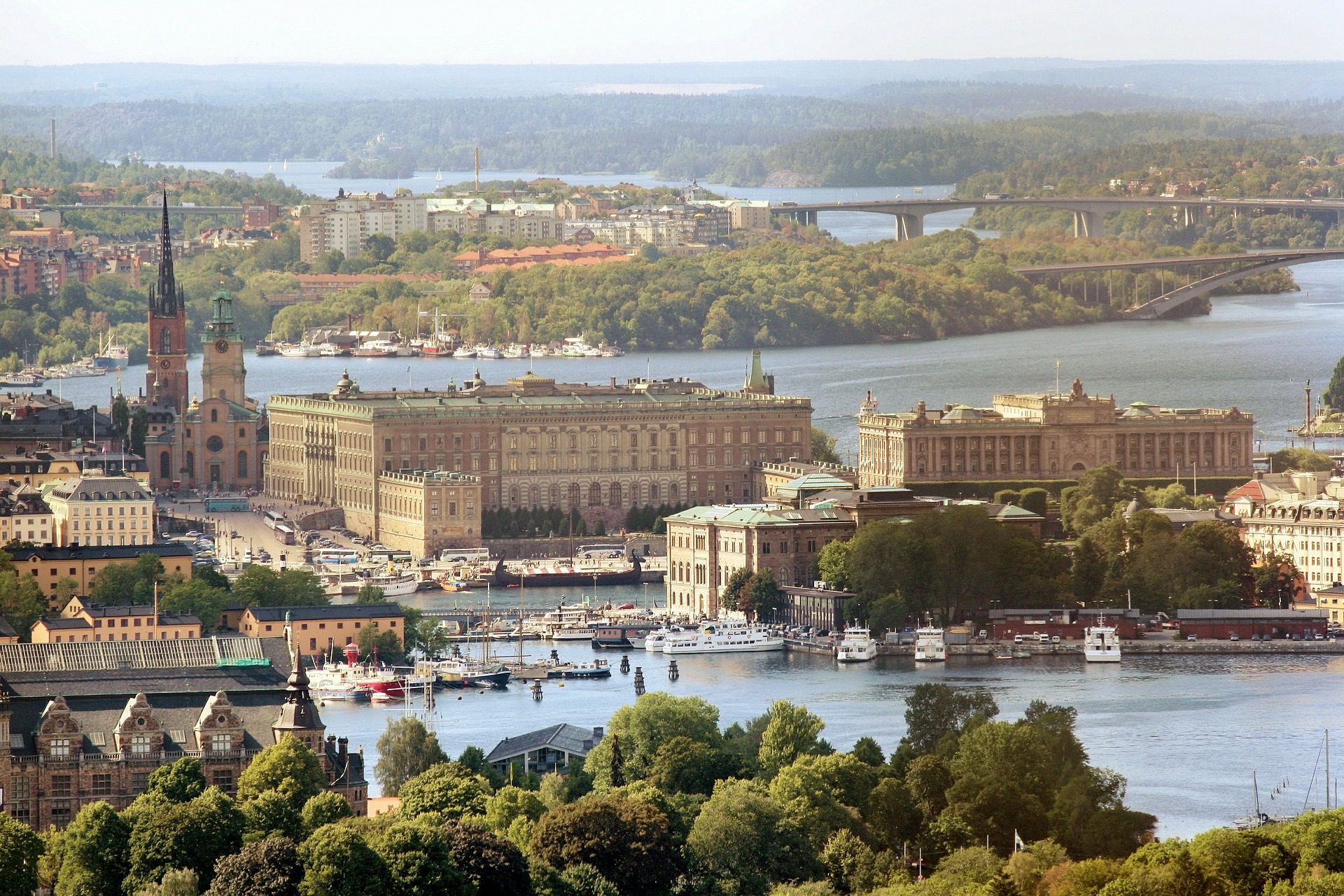
Sweden is the largest Nordic country, a land of deep forests and countless lakes with some 270,000 islands, many open to visitors through the right to roam. Stockholm, the compact and historic capital, is spread over islands and is the gateway to its archipelago; Gothenburg has canals and a botanical garden, Malmö modern architecture and a bridge to Copenhagen, and Visby on Gotland a medieval city wall listed by UNESCO.
In the north, Laponia's national parks are one of Europe's great wildernesses, with the midnight sun in summer and the Northern Lights in winter. Summers, from late May to early September, are mild, around 20 °C; the rest of the year is cool or cold. Sweden uses the krona (SEK) and is part of the EU and the Schengen area.
- Stockholm: A historic capital on islands, with the Vasa Museum and the archipelago.
- Visby: A Hanseatic town on Gotland with an impressive city wall, a UNESCO site.
- Laponia and Kiruna: Arctic wilderness, the Jukkasjärvi ice hotel and the Northern Lights.
- Uppsala: The old centre of Viking Sweden, with a great cathedral and university.
- High Coast: The most scenic stretch of the Norrland coast.
- Kungsleden: A popular summer trail between cabins in the northern mountains.
Places to visit
- City
- Coast
- Island
- Park
- Mountain
- Area
Cities
- Stockholm: The capital and largest city, spread over several islands.
- Gothenburg: The second city and largest port, with canals and cobbled streets.
- Malmö: Linked to Copenhagen by the Öresund Bridge.
- Uppsala: The centre of Viking-age Sweden, with a famous cathedral and university.
- Visby: The only city on Gotland, with an impressive Hanseatic city wall.
- Lund: A lively, pretty university city.
- Karlskrona: A UNESCO-listed naval base since the 17th century.
- Umeå: The largest city of Norrland, known for its birches and university.
Beyond the cities
- Stockholm archipelago (island): Islands of every shape and size off Stockholm.
- Ekerö (area): Lake islands with the royal residence of Drottningholm and the Viking settlement of Birka.
- Laponia (park): Vast Arctic wilderness of national parks, listed by UNESCO.
- Kiruna (area): Sweden's northern edge: a large mine, a space centre and the Jukkasjärvi ice hotel.
- High Coast (coast): The most scenic part of the Norrland coast.
- Åre (mountain): One of Sweden's largest ski resorts, with 44 lifts.
- Öland (island): The second largest island, with long beaches.
- Siljansbygden (area): The heartland of Swedish folk culture in Dalarna.
- Bergslagen (area): The traditional heartland of Swedish mining and metalworking.
Regions
- Götaland: The south of the country.
- Svealand: Central Sweden.
- Norrland: The vast north, with Umeå, the High Coast and, at the northern edge, Kiruna.
Things to do
See
- Vasa Museum Stockholm: One of the first stops for many visitors to the capital.
- Royal palaces: Eleven belong to the monarchy, most open to the public, such as Drottningholm and the Stockholm Palace.
- Northern Lights Kiruna: In winter in the far north.
Do
- Hiking the Kungsleden: A summer trail between cabins and campsites in the northern mountains.
- Sarek and Laponia Laponia: Rugged wilderness for experienced hikers, with moose and wolverines.
- Archipelago by boat or canoe Stockholm archipelago: Sail or paddle and camp on islands under the right to roam.
- Seal and lobster safaris: In the Kosterhavet marine park.
- Midsummer: Celebrated on the Friday between 19 and 25 June; expect shops to close.
- Skiing Åre: One of the largest ski resorts.
Drink
- Fika: The coffee-and-cake ritual in a konditori.
Itineraries
Stockholm and around in 5 days (5 days)
- Stockholm (3 nights): The old town, the Vasa Museum and Drottningholm on Ekerö.
- Stockholm archipelago (1 night): Islands by boat.
- Uppsala (1 night): Cathedral, university and Viking history.
The south in 5 days (5 days)
- Gothenburg (2 nights): Canals and the botanical garden.
- Malmö (2 nights): Modern architecture, with a day in Lund.
- Karlskrona (1 night): The UNESCO-listed naval town.
Climate and best time to visit
| Jan | Feb | Mar | Apr | May | Jun | Jul | Aug | Sep | Oct | Nov | Dec | |
|---|---|---|---|---|---|---|---|---|---|---|---|---|
| Max °C | 1 | 1 | 5 | 11 | 17 | 21 | 24 | 22 | 17 | 10 | 5 | 3 |
| Min °C | -3 | -3 | -1 | 3 | 7 | 12 | 15 | 14 | 10 | 6 | 2 | -1 |
| Rain mm | 37 | 29 | 27 | 29 | 34 | 62 | 62 | 66 | 53 | 51 | 48 | 48 |
Sweden is cool or cold from October to April, and mild from late May to early September, with temperatures around 20 °C. In Stockholm the average maximum is about 1 °C in January and February and 23 °C in July, when rain is slightly heavier. The north is much colder, with snow from January to April in Norrland and Dalarna.
June to August is the season for islands, hiking and the midnight sun north of the Arctic Circle; winter brings skiing and the Northern Lights. In Stockholm the sun sets around 15:00 in December. Storms occur in early spring and autumn, and dry summers can bring bans on open fires.
Holidays and events
- 1 January 2026 · New Year's Day
- 6 January 2026 · Epiphany
- 3 April 2026 · Good Friday
- 5 April 2026 · Easter Sunday
- 6 April 2026 · Easter Monday
- 1 May 2026 · International Workers' Day
- 14 May 2026 · Ascension Day
- 24 May 2026 · Pentecost
- 6 June 2026 · National Day of Sweden
- 19 June 2026 · Midsummer Eve
- 20 June 2026 · Midsummer Day
- 31 October 2026 · All Saints' Day
- 24 December 2026 · Christmas Eve
- 25 December 2026 · Christmas Day
- 26 December 2026 · St. Stephen's Day
- 31 December 2026 · New Year's Eve
Getting there and around
| Main airports | ARN, GOT, NYO |
|---|
Getting there
By air: Stockholm Arlanda (ARN), 40 km from the centre, is the main airport; Gothenburg Landvetter (GOT) serves the west, and budget airlines use Stockholm Skavsta (NYO), about 100 km away. Copenhagen airport has a direct rail link to southern Sweden. Airport coaches (Flygbussarna) cost about 70 to 120 kr (Wikivoyage, read in 2026). There are border controls for travellers from Denmark and Germany.
Getting around
Trains (SJ and others) cover much of the country; tickets bought online in advance are cheaper, and an Interrail pass can pay off. Domestic flights help with the long distances of Norrland. Taxis: Canada says fares are not regulated and have no upper limit, so always confirm the rate before your journey and use only officially marked taxis. Driving: the drink-drive limit is 0.02%, and even one beer can put you over; driving tired is treated like drunk driving. Collisions with moose, deer and boar are a major danger at dawn and dusk. A congestion tax applies to vehicles entering and exiting Stockholm and Gothenburg. Winter tyres are compulsory from 1 December to 31 March, and at any other times the police designate. The UK says you can drive with a UK licence, and that hire companies often have stricter requirements, such as a year of driving experience and a minimum age. Canada says a Canadian licence can be used for up to one year and that you should also carry an international driving permit. The right of public access lets you walk, cycle, swim and paddle on most land, but not through private gardens.
Flying to Sweden? PartnerCompare fares and find the cheapest datesSearch flightsWhere to stay
- Wild camping: Allowed for one night in one spot on uncultivated land, under the right of public access. Canada says camping is not permitted within 70 m of a dwelling or cultivated land.
- Campsites: In most towns; a tent pitch cost about 100 to 150 kr, up to 400 kr in peak weeks (Wikivoyage, read in 2026).
- Hostels, hotels and holiday homes: Across the country; many old manors are now hotels.
Check fire bans before lighting a campfire: summer forests can be very dry. SMHI publishes fire-risk and weather warnings.
Eat and drink
Dishes to try
- Köttbullar: Meatballs with potatoes, brown sauce and lingonberry jam.
- Sill: Pickled herring, a summer and holiday classic.
- Gravlax: Cured salmon.
- Pytt i panna: Diced fried meat, onion and potato, with beetroot and an egg.
- Ärtsoppa: Pea soup with pork, traditionally on Thursdays, followed by thin pancakes.
Drinks
- Coffee: Strong filter coffee, often with a free refill.
- Brännvin: Distilled, usually seasoned spirits.
Swedish food is Nordic: meat, fish, dairy, potatoes, bread, berries and wild mushrooms. Fika, coffee with a pastry in a café, is a daily ritual.
Entry requirements and visas
| Passport validity | Issued less than 10 years before you arrive, and valid at least 3 months after you leave the Schengen area |
|---|
| Passport | Entry | Max stay | Notes |
|---|---|---|---|
| EU / EEA | Freedom of movement | Free movement with a valid passport or national ID card. | |
| United Kingdom | Visa free | 90 days | 90 days in any 180-day period across the whole Schengen area. |
| Canada | Visa free | 90 days | 90 days in any 180-day period across the whole Schengen area. |
| United States | Visa free | 90 days | 90 days in any 180-day period across the whole Schengen area. |
| Australia | Visa free | 90 days | 90 days in any 180-day period across the whole Schengen area. |
Other nationalities: check the official source below.
- EES (Entry/Exit System): fingerprints and photo at the border, free
- ETIAS (travel authorisation, EUR 20): not in operation yet
Sweden is part of the Schengen area. Visitors from the UK, the US, Canada and Australia can stay up to 90 days in any 180-day period without a visa, counting the days spent in other Schengen countries. Non-EU visitors register fingerprints and a photo in the EU's Entry/Exit System (EES) on their first entry: allow extra time at the border, and at the airport when you leave.
Border staff may ask for a return ticket, proof of accommodation, travel insurance and enough money. Sweden has border controls for arrivals from Denmark across the Öresund and from Germany.
ETIAS, the online travel authorisation for visa-free visitors, is not in operation yet. Rules depend on your passport and can change: check the official link before you book.
Money and payments
| Currency | Swedish Krona (SEK) |
|---|
Sweden uses the krona (SEK), written kr. Cards are accepted almost everywhere, usually with a PIN, and contactless phone payments work; you may need ID for credit card purchases. The UK says many shops, cafes and restaurants do not accept cash, so make sure you have a debit or credit card. Some small countryside cafés and farm shops take only cash or Swish (which needs a Swedish bank account), so carry a little cash. Banknotes and coins from before 2017 are no longer valid, apart from the 10 kronor coin of 1991 to 2009. Do not expect stores to accept foreign currency, except near the borders; larger stores in Stockholm and at larger airports and railway stations often take euros, typically at unfavourable rates. If you carry €10,000 or more in cash or equivalents, you must declare it to customs when you enter or leave the EU.
Costs and budget
- Cup of coffee in a café, often with refill (Wikivoyage, read in 2026): about 35 kr
- Airport coach (Wikivoyage, read in 2026): 70 to 120 kr
- Tent pitch at a campsite (Wikivoyage, read in 2026): 100 to 150 kr
According to Eurostat, in 2024 the general price level in Sweden was about 118% of the EU average, food in shops about 106% and restaurants and hotels about 117%.
Wild camping under the right of public access is free, and train tickets are cheaper when booked early online.
Health
| Recommended vaccines | Routine vaccines, including measles (MMR), Hepatitis B, for unvaccinated travellers under 60, Tick-borne encephalitis, if you will spend time in forests between April and November, Hepatitis A: consider it, Rabies, only if you will work with wildlife, Mpox, for travellers at risk of sexual exposure |
|---|---|
| Tap water | Safe |
Healthcare is excellent, and English is widely spoken in the main hospitals. In the remote north, help can be far away: the nearest ambulance may be 100 km away. Ticks and biting insects are common in summer. A European (EHIC) or UK (GHIC) card covers medically necessary state healthcare. Dial 112.
This is general information, not medical advice: check with a travel health professional before you go.
Safety
- United States: Level 2: Exercise Increased Caution (2026-10-20)
- Canada: Exercise a high degree of caution (2026-10-20)
- United Kingdom: No advice against travel (2026-10-20)
Canada advises a high degree of caution because of the threat of terrorism. The UK says terrorists are likely to try to carry out attacks in Sweden. Pickpockets target tourists in big cities, at stations, festivals and airports. Gang violence, including shootings and explosions, occurs mainly in Stockholm, Gothenburg and Malmö. Canada says it has not typically happened in tourist areas, but incidents have occurred in public places such as bars and restaurants. Avoid drunken brawls on weekend nights.
In the Arctic north and the mountains, weather changes fast, avalanches are possible and rescue is limited: never go alone, stay on marked trails and get insurance that covers helicopter rescue. Take care on ice and near old mine shafts in mining districts.
Customs and etiquette
Swedes value privacy, personal space and equality; service staff may seem less attentive than elsewhere, out of respect. Say hej to everyone and tack often: Swedes rarely say please. Drunkenness is part of some festivals, such as Midsummer, but never before work or driving.
Drugs, cannabis included, are strictly prohibited, even in small quantities, with jail sentences of up to 10 years and heavy fines. Paying for sex is illegal, and so is physical punishment of children.
Language
| Official languages | Swedish |
|---|---|
| English | Widespread |
| Hello | Hej hay |
|---|---|
| Good morning | God morgon good MOR-ron |
| Thank you | Tack tack |
| Excuse me | Ursäkta OOSH-ehk-ta |
| Sorry | Förlåt fur LOWT |
| Goodbye | Hej då hay doe |
| Do you speak English? | Talar du engelska? TAH-lar deu EHNG-ehl-ska |
What to pack
- Card with a PIN: Cards are used almost everywhere and need a PIN.
- Some cash: Small rural cafés may take only cash or Swish.
- Insect and tick repellent: Mosquitoes and ticks in summer.
- Warm, waterproof layers: Weather in the mountains and the north changes quickly.
- A sleep mask: Summer nights are only twilight.
Quick reference
Country facts
| Capital | Stockholm |
|---|---|
| Population | 10,596,620 (2025) |
| Area | 407,270 km² |
| Time zone | Europe/Stockholm (UTC+1) |
| Calling code | +46 |
| Driving side | right |
Staying connected
| SIM and eSIM | Main networks: Telia, Tele2, Telenor and Tre, with wide 4G; in the central and northern interior Telia has the best coverage. Some brands sell prepaid SIMs without a Swedish ID number, but every prepaid SIM must be registered before use; a passport or identity card is accepted. Telenor SIMs can be registered online, while Telia and Halebop need a visit to a Telia store. Hallon SIMs need BankID, so avoid them. |
|---|---|
| Roaming | With an EU SIM card you pay home prices for calls, texts and data (roam like at home). Others should check their provider's rates. |
Emergency numbers
| Emergency | 112 |
|---|
Frequently asked questions
Do I need a visa for Sweden?
Not for short trips with an EU, UK, US, Canadian or Australian passport: Sweden is in the Schengen area, so you can stay up to 90 days in any 180-day period. Check the official EU link before you book.
Can I pay in euros?
Mostly not: Sweden uses the krona. Larger stores in Stockholm and at larger airports and railway stations often take euros, typically at unfavourable rates, and cards with a PIN are accepted almost everywhere.
Can I camp anywhere?
For one night on uncultivated land, at least 70 m from a dwelling or cultivated land, under the right of public access; check fire bans first.
Can I drink the tap water?
Yes: Wikivoyage says tap water is safe to drink.
Where can I see the Northern Lights?
In winter in the far north, around Kiruna and Laponia.
When is the best time to visit?
June to August for mild weather and long days; winter for snow and the Northern Lights.
More Travel Stories from Europe
 Svalbard +1
Sources This guide was last checked on · 21 sources
- Wikivoyage: Sweden · Overview, Places to visit, Things to do, Itineraries, Climate and best time to visit, Getting there and around, Where to stay, Eat and drink, Money and payments, Costs and budget, Health, Safety, Customs and etiquette, Language, What to pack, Staying connected, Frequently asked questions
- WMO World Weather Information Service: Stockholm · Climate and best time to visit, Frequently asked questions
- Nager.Date: public holidays in Sweden, 2026 · Holidays and events
- UK FCDO: Sweden safety and security · Getting there and around, Safety, Customs and etiquette, What to pack
- Government of Canada: Sweden travel advice (updated 11 August 2026) · Getting there and around, Where to stay, Entry requirements and visas, Money and payments, Health, Safety, Frequently asked questions
- UK FCDO: Sweden entry requirements · Entry requirements and visas, Money and payments, Frequently asked questions
- European Union: ETIAS official website · Entry requirements and visas
- Your Europe (EU): Travel documents for EU nationals · Entry requirements and visas
- Wikidata · Money and payments, Country facts
- ISO 4217 (SIX), published 2026-09-17 · Money and payments
- Eurostat: price level indices, 2024 (EU27 = 100) · Costs and budget
- UK FCDO: Sweden health · Health
- US CDC: Travelers' health, Sweden · Health
- US Department of State: Sweden travel advisory · Safety
- UK FCDO: Sweden travel advice · Safety
- Wikivoyage: Swedish phrasebook · Language
- World Bank, SP.POP.TOTL · Country facts
- World Bank, AG.LND.TOTL.K2 · Country facts
- IANA Time Zone Database, zone.tab · Country facts
- Your Europe: mobile roaming costs · Staying connected
- UK FCDO: Sweden getting help · Emergency numbers
Suggest an update
Travel rules, prices and timetables change. If something in this guide is out of date, tell us: we check every suggestion against an official source before changing the page.