

- Local time
- 10:35
- Currency
- Swiss Franc (CHF)
- Capital
- Vaduz
- Calling code
- +423
- Drive on the
- right
Overview
A tiny Alpine principality between Switzerland and Austria, with castles, marked hiking trails and a small ski resort at Malbun. Part of Schengen.
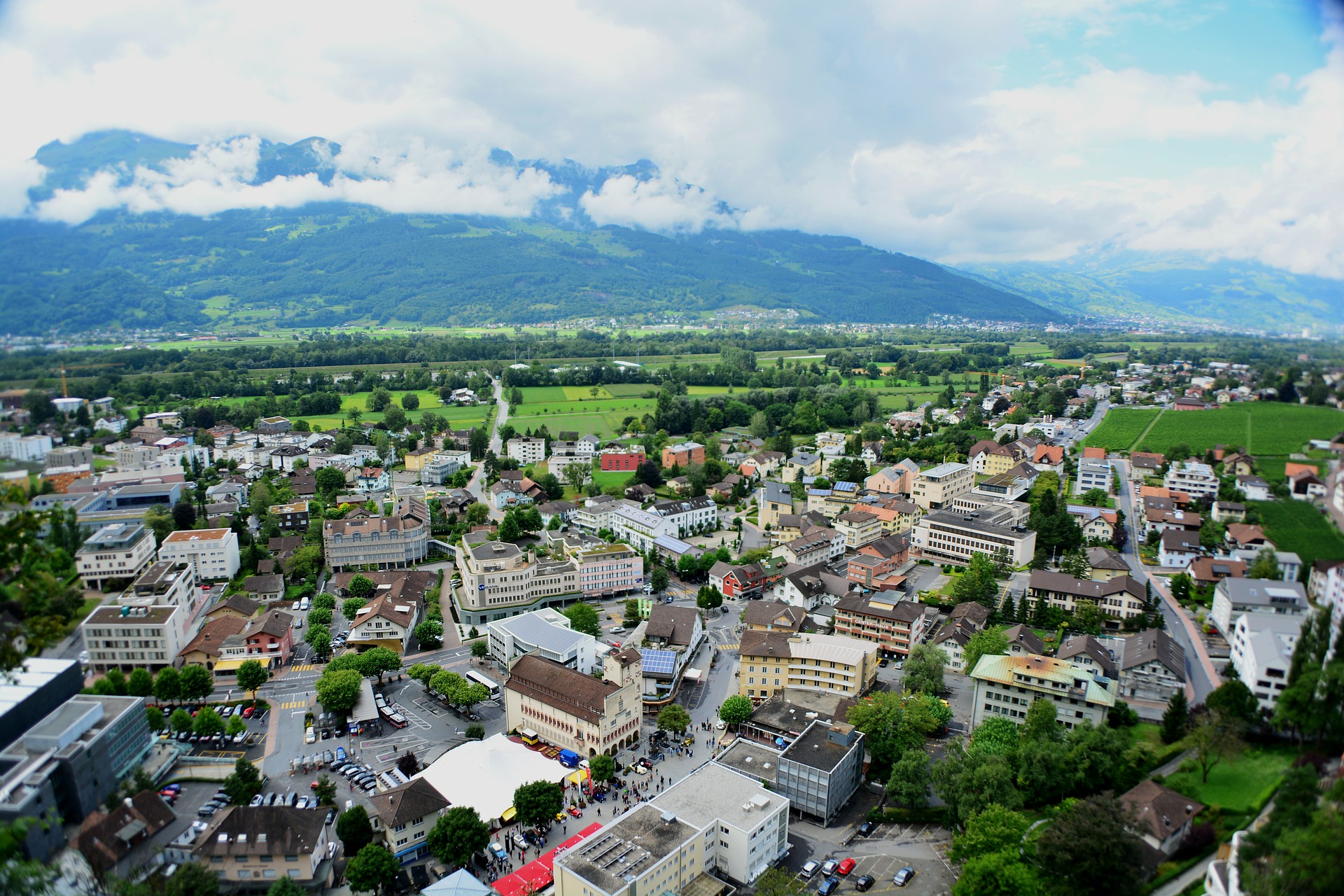
Liechtenstein is a small, mountainous, German-speaking country squeezed between Switzerland and Austria, with no coast and no airport. Most people live in the wide Rhine Valley in the west, where Vaduz, the capital, has the shops, the restaurants, the Kunstmuseum and a view of the princely castle on the hill. To the east the land climbs quickly into the Alps, and the highest point, the Grauspitz, reaches 2,599 m.
You can cross the whole country by bike in a few hours, so most visitors combine it with a trip to Switzerland or Austria. Staying longer pays off if you like walking: the country is full of marked trails, and Malbun has skiing at lower prices than the big resorts next door. Liechtenstein uses the Swiss franc, has an open border with Switzerland and is part of the Schengen area.
- Vaduz: The capital, with the Kunstmuseum, souvenir shops and the princely castle above the town.
- Malbun: A small ski and snowboard resort, cheaper than its Swiss and Austrian neighbours.
- Balzers: A town in the south with a church and a Gothic castle.
- Triesenberg: An Alpine village high above the Rhine Valley.
- The Liechtenstein Trail: A 77 km marked footpath across the whole country, in five stages.
Places to visit
- City
- Town
- Mountain
Cities
- Vaduz: The capital and main shopping street, with a modest cathedral and the Kunstmuseum.
- Schaan: The largest town, with the railway station and the country's youth hostel.
- Balzers: A southern town with a church and a castle.
- Triesen: A small town south of Vaduz, with a one-man fruit distillery.
- Triesenberg: An Alpine village high in the mountains, on the road to Malbun.
- Schellenberg: A northern village with a museum of rural houses.
Beyond the cities
- Malbun (mountain): The country's ski and snowboard area.
- Bendern (town): Known as the birthplace of Liechtenstein, in 1699.
- Nendeln (town): A village with a ceramics works and Roman ruins.
- Ruggell (town): A northern village with a nature reserve of rare plants and animals.
Regions
- Highlands: Vaduz, Balzers, Schaan, Triesen, Triesenberg and the ski area of Malbun.
- Lowlands: The quieter north: Bendern, Nendeln, Schellenberg and Ruggell.
Things to do
See
- Vaduz Castle Vaduz: The home of the princely family is closed to the public, but you can see it from close up on the road to Triesenberg (bus 21).
- Kunstmuseum Liechtenstein Vaduz: The art museum of the capital.
- Balzers Castle Balzers: A Gothic castle in the southern town.
- Early morning view: Drive up the mountains east of the river for a view over Vaduz and Switzerland.
Do
- The Liechtenstein Trail: 77 km across the country in five stages; most walkers need two or three days.
- Skiing at Malbun Malbun: A small resort with lift prices below those of Switzerland and Austria.
- Cycling the Rhine Valley: Good roads and bike lanes between Balzers and Schaan.
- A stamp in your passport: The tourist office and some souvenir shops stamp your passport for CHF 3 or €3; there is also a postal museum.
Drink
- Local wine and schnapps: Wine from the prince's vineyard in Vaduz and fruit schnapps from a small distillery in Triesen (tours on Saturdays).
Itineraries
Vaduz and the mountains in 2 days (2 days)
- Vaduz (1 night): The centre, the Kunstmuseum and the view of the castle.
- Malbun (1 night): Up through Triesenberg, for skiing in winter or walks in summer.
The Liechtenstein Trail in 3 days (3 days)
- Balzers (1 night): The southern end, below the castle.
- Vaduz (1 night): Halfway, in the capital.
- Schellenberg (1 night): The quieter northern villages.
Holidays and events
- 1 January 2026 · New Year's Day
- 2 January 2026 · St. Berchtold's Day
- 6 January 2026 · Epiphany
- 2 February 2026 · Candlemas
- 17 February 2026 · Shrove Tuesday
- 19 March 2026 · Saint Joseph's Day
- 3 April 2026 · Good Friday
- 6 April 2026 · Easter Monday
- 1 May 2026 · Labour Day
- 14 May 2026 · Ascension Day
- 24 May 2026 · Pentecost
- 25 May 2026 · Whit Monday
- 4 June 2026 · Corpus Christi
- 15 August 2026 · National Holiday
- 8 September 2026 · Nativity of Our Lady
- 1 November 2026 · All Saints Day
- 8 December 2026 · Immaculate Conception
- 24 December 2026 · Christmas Eve
- 25 December 2026 · Christmas Day
- 26 December 2026 · St. Stephen's Day
- 31 December 2026 · New Year's Eve
Getting around
| Main airports | ZRH |
|---|---|
| International driving permit | Not required |
Buses are the way to get around: Liemobil runs the whole network. In 2024 a day ticket cost CHF 12 and a 7-day ticket CHF 24; you can buy single tickets from the driver or in the FAIRTIQ and SBB Mobile apps. Validate your ticket and keep it until the end of the journey, because inspectors carry out random checks. The few trains are commuter services, mostly on weekday mornings and evenings.
Driving: you can drive with a UK or Canadian licence; rental companies may ask for an International Driving Permit, and you must carry a warning triangle. Priority to the right applies at junctions, even on minor roads. Mountain roads are steep and winding, speed cameras are common and fines are high. In winter, use winter tyres and snow chains and check conditions before you set off.
Flying to Liechtenstein? PartnerCompare fares and find the cheapest datesSearch flightsWhere to stay
- Hotels: Few, and on the expensive side.
- Youth hostel: One, in Schaan; it closes in winter.
- Campsites: Four: Camping Mittagspitz is the only full-service one, the other three, in Bendern, Vaduz and Triesen, are full most of the year.
| Tourist tax | Added to the bill: at Camping Mittagspitz it was €2 on top of about €22 for a tent pitch in April 2024. |
|---|
Rooms are expensive and few, so many visitors sleep across the border in Feldkirch, Austria, where prices are lower, and come in by bus.
Eat and drink
Dishes to try
- Bakery rolls and pastries: The many small bakeries are the best place for a warm roll or pastry.
Drinks
- Liechtenstein wine: Made in small amounts, partly from the prince's vineyard in Vaduz, and sold in supermarkets and tourist shops.
- Local beer: A local brewery makes Helles and unfiltered wheat beer.
- Fruit schnapps: From a one-man distillery in Triesen.
There are few restaurants outside the larger towns, and Vaduz has the widest choice. Expect Swiss prices.
Entry requirements and visas
| Passport validity | Issued less than 10 years before you arrive, and valid at least 3 months after you leave the Schengen area |
|---|
| Passport | Entry | Max stay | Notes |
|---|---|---|---|
| EU / EEA | Freedom of movement | EEA and Swiss citizens need only a valid ID card or passport. | |
| United Kingdom | Visa free | 90 days | 90 days in any 180-day period across the whole Schengen area. |
| Canada | Visa free | 90 days | 90 days in any 180-day period across the whole Schengen area. |
| United States | Visa free | 90 days | 90 days in any 180-day period across the whole Schengen area. |
| Australia | Visa free | 90 days | 90 days in any 180-day period across the whole Schengen area. |
Other nationalities: check the official source below.
- EES (Entry/Exit System): fingerprints and photo at the border, free
- ETIAS (travel authorisation, EUR 20): not in operation yet
Liechtenstein is part of the Schengen area. Visitors from the UK, the US, Canada and Australia can stay up to 90 days in any 180-day period without a visa, counting the days spent in other Schengen countries. Non-EU visitors register fingerprints and a photo in the EU's Entry/Exit System (EES) on their first entry: allow extra time at the border, and at the airport when you leave.
Switzerland handles immigration and customs for Liechtenstein, and the border between the two is open. Coming from Austria, expect occasional customs checks, because Liechtenstein is not in the EU. Border staff may ask for a return or onward ticket and proof that you have enough money for your stay.
ETIAS, the online travel authorisation for visa-free visitors, is not in operation yet. Rules depend on your passport and can change: check the official link before you book.
Money and payments
| Currency | Swiss Franc (CHF) |
|---|
Liechtenstein uses the Swiss franc (CHF). Many shops accept euros, but the rate is often poor and you get your change in euros. Supermarkets usually give the best rate and take notes up to €100, so paying there with a larger euro note is a simple way to get francs. Prices are similar to Switzerland, which means higher than most of Europe.
Health
| Recommended vaccines | Routine vaccines, including measles (MMR), Hepatitis B, Seasonal flu, Tick-borne encephalitis, if you will hike or camp in forests between April and November, Hepatitis A: consider it, Rabies, only if you will work with wildlife |
|---|---|
| Tap water | Safe |
No vaccinations are required to enter. Check your routine vaccines and the ones you may need with a travel health clinic at least 6 to 8 weeks before you go. Ticks are active from April to October, and altitude sickness is possible in the mountains.
Healthcare is excellent but expensive, and serious cases may be transferred to Switzerland or Austria. A European (EHIC) or UK (GHIC) card gives access to medically necessary state healthcare, but it does not replace travel insurance. For an ambulance, dial 144 or 112. Tap water is safe to drink.
This is general information, not medical advice: check with a travel health professional before you go.
Safety
- United States: Level 1: Exercise Normal Precautions (2026-10-20)
- Canada: Take normal security precautions (2026-10-20)
- United Kingdom: No advice against travel (2026-10-20)
Crime is low, but bag-snatching and pickpocketing happen, and the Canadian government reports thefts on trains, especially overnight. Keep your passport and valuables secure. The police enforce traffic rules strictly, with speed cameras and heavy fines.
The real risks are in the mountains. Avalanches are possible all year round, weather changes fast even in summer, and heavy rain in spring and summer can cause floods and landslides. Do not hike alone, stay on marked trails, check the forecast and the European Avalanche Warning Service, and leave your route with someone. Off-piste skiing is very dangerous: make sure your insurance covers mountain rescue and helicopter evacuation.
Customs and etiquette
Liechtensteiners are proud of their independence and do not like being called German, Austrian or Swiss. The princely family is widely respected, so keep that in mind when you talk to locals. It is a traditional Catholic country, and on Sundays the streets are quiet apart from the tourist shops.
Penalties for drugs, cannabis included, are severe.
Language
| Official languages | German |
|---|---|
| English | Common |
| Good morning | Guten Morgen GOO-tun MOR-gun |
|---|---|
| Please | Bitte BEE-tuh |
| Thank you | Danke schön DAN-kuh shurn |
| Excuse me | Entschuldigung en-TSHOOL-dee-goong |
| Goodbye | Auf Wiedersehen owf VEE-dur-zane |
| Do you speak English? | Sprechen Sie Englisch? shprekhun zee ENG-leesh |
What to pack
- Passport or EU/EEA ID card: Needed for the Schengen area; carry it even though the Swiss border is open.
- EHIC or GHIC and travel insurance: Healthcare is expensive, and mountain rescue should be covered.
- Hiking boots and warm layers: The weather in the mountains changes quickly, even in summer.
- Some Swiss francs: Euros are accepted in many shops, but at a poor rate.
Quick reference
Country facts
| Capital | Vaduz |
|---|---|
| Population | 41,024 (2025) |
| Area | 160 km² |
| Time zone | Europe/Vaduz (UTC+1) |
| Calling code | +423 |
| Driving side | right |
Staying connected
| SIM and eSIM | In 2021 all the Swiss networks covered Liechtenstein with 4G; the Austrian signal does not reach over the mountains. |
|---|---|
| Roaming | Liechtenstein is in the European Economic Area, so with an EU SIM card you pay home prices for calls, texts and data (roam like at home). Check your provider's rates if you have a Swiss or non-EU SIM. |
| Wi-Fi | Widely available in public places. |
Emergency numbers
| Police | 117 |
|---|---|
| Ambulance | 144 |
| Fire | 118 |
Frequently asked questions
Do I need a visa for Liechtenstein?
Not for short trips with an EU, UK, US, Canadian or Australian passport: Liechtenstein is in the Schengen area, so you can stay up to 90 days in any 180-day period. Check the official EU link before you book.
Is there an airport in Liechtenstein?
No. The nearest major airport is Zurich, about 115 km away; from there take a train to Buchs or Sargans and a bus to Vaduz.
Which currency is used in Liechtenstein?
The Swiss franc. Many shops take euros, but the rate is often poor and the change comes in euros.
Can I get a Liechtenstein stamp in my passport?
Yes: the tourist office and some souvenir shops stamp it for CHF 3 or €3.
Can I drink the tap water?
Yes, tap water is safe to drink.
Is Liechtenstein good for skiing?
It has one small resort, Malbun, with lift prices below those of Switzerland and Austria.
More Travel Stories from Europe
 Portugal
Sources This guide was last checked on · 18 sources
- Wikivoyage: Liechtenstein · Overview, Places to visit, Things to do, Itineraries, Getting around, Where to stay, Eat and drink, Entry requirements and visas, Money and payments, Health, Safety, Customs and etiquette, Language, What to pack, Staying connected, Frequently asked questions
- UK FCDO: Liechtenstein entry requirements · Overview, Entry requirements and visas, What to pack, Frequently asked questions
- Nager.Date: public holidays in Liechtenstein, 2026 · Holidays and events
- UK FCDO: Liechtenstein safety and security · Getting around, Safety, Customs and etiquette, What to pack
- Government of Canada: Liechtenstein travel advice (updated 11 August 2026) · Getting around, Entry requirements and visas, Health, Safety, Frequently asked questions
- European Union: ETIAS official website · Entry requirements and visas
- Wikidata · Money and payments, Country facts
- ISO 4217 (SIX), published 2026-09-17 · Money and payments
- UK FCDO: Liechtenstein health · Health, What to pack
- US CDC: Travelers' health, Liechtenstein · Health
- US Department of State: Liechtenstein travel advisory · Safety
- UK FCDO: Liechtenstein travel advice · Safety
- Wikivoyage: German phrasebook · Language
- World Bank, SP.POP.TOTL · Country facts
- World Bank, AG.LND.TOTL.K2 · Country facts
- IANA Time Zone Database, zone.tab · Country facts
- Your Europe: mobile roaming costs · Staying connected
- UK FCDO: Liechtenstein getting help · Emergency numbers
Suggest an update
Travel rules, prices and timetables change. If something in this guide is out of date, tell us: we check every suggestion against an official source before changing the page.