

- Local time
- 11:06
- Currency
- Turkish Lira (TRY)
- Capital
- Ankara
- Calling code
- +90
- Drive on the
- right
Overview
Istanbul's domes and minarets, Ephesus and the ruins of the Aegean and Mediterranean coasts, Cappadocia's fairy chimneys, Pamukkale's white terraces and the mountains of the east: Turkey bridges Europe and Asia.
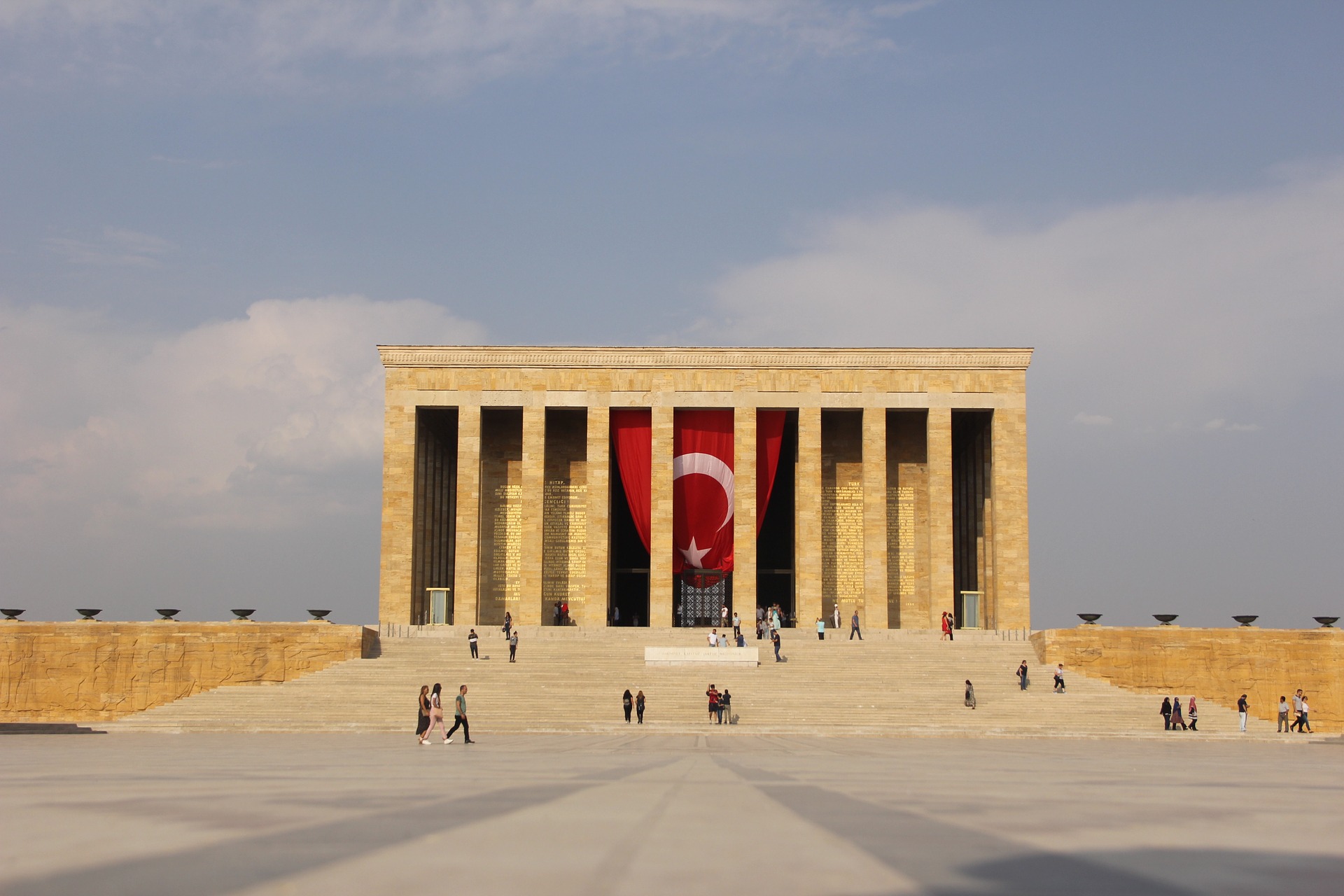
Turkey straddles Europe and Asia, and the two sides shape its culture as much as its map. Istanbul, its largest city and the former capital of the Byzantine and Ottoman empires, spreads over both continents; the capital is Ankara, in the steppes of Central Anatolia. Greek and Roman ruins line the western and southern coasts, the Lycian shore is deeply indented and backed by pine-covered mountains, and resorts such as Bodrum and Antalya fill up in summer.
Inland, Cappadocia has fairy chimneys, cave churches and underground cities, while Konya is the home of Rumi's tomb and the Sufi tradition. The misty, forested mountains of the eastern Black Sea are only a few hours from the open steppe, and the south-east has very ancient ruins, historic cities and bazaars. The FCDO and Canada advise against all travel within 10 km of the Syrian border, and Canada also advises against all travel near the Iraqi border: read the safety section before planning a trip to the far south-east.
- Istanbul: Hagia Sophia, mosques and bazaars in the city that spans two continents.
- Cappadocia: Fairy chimneys, cave churches and underground cities in the central highlands.
- Ephesus: The well-preserved ruins of a Graeco-Roman city near the Aegean coast.
- Pamukkale: "Cotton Castle": white travertine terraces with pools of thermal water.
- The Mediterranean coast: Ölüdeniz, Antalya and the Lycian Way along the Mediterranean.
- Sümela Monastery: A monastery clinging to a cliff near Trabzon, on the Black Sea.
Places to visit
- City
- Coast
- Park
- Mountain
- Historic site
- Area
Cities
- Istanbul: The largest city, former capital of the Byzantine and Ottoman empires, spread over two continents.
- Ankara: The capital and second largest city.
- Izmir: The third largest city, a base for beach resorts on the Aegean.
- Antalya: A fast-growing city on the Mediterranean, hub of many beach resorts.
- Bodrum: A fashionable Aegean town with a castle, Roman ruins and lively nightlife, crowded in summer.
- Edirne: The second capital of the Ottoman Empire, near the European border.
- Konya: Heartland of the Sufi order, with Rumi's tomb and Seljuk architecture.
- Trabzon: The gateway to the north-east, close to Sümela Monastery.
- Urfa: A south-eastern city of fine architecture where Turkish, Kurdish, Arabic and Assyrian cultures mix.
Beyond the cities
- Cappadocia (area): Moon-like landscape of fairy chimneys, underground cities and cave churches.
- Ephesus (site): The well-preserved ruins of a Graeco-Roman city on the west coast.
- Pamukkale (site): White travertine terraces with shallow pools of thermal water.
- Gallipoli (area): Site of the 1915 Anzac landing, with many First World War memorials.
- Ölüdeniz (coast): The "Blue Lagoon", one of the best-known beaches in Turkey.
- Sümela Monastery (site): A monastery clinging to cliffs outside Trabzon.
- Mount Nemrut (mountain): A UNESCO World Heritage site with ancient statues on its summit and wide views.
- Ani (site): Ruins of the medieval Armenian capital, the "city of a thousand churches".
- Uludağ (park): A national park with belts of forest and the country's main ski resort.
Regions
- Marmara: The most urban region, with Istanbul, cradle of the Byzantine and Ottoman empires.
- Aegean Turkey: Greek and Roman ruins between the sea and olive groves.
- Mediterranean Turkey: Pine-clad mountains rising from an indented coast, with Antalya and Antioch.
- Central Anatolia: Steppes with the capital, Hittite and Phrygian ruins and Cappadocia.
- Black Sea Turkey: Forested mountains for trekking and rafting.
- Eastern Anatolia: High mountains and harsh winters, with Armenian and Georgian influences.
- Southeastern Anatolia: Very ancient ruins, historic cities and Göbekli Tepe. The FCDO and Canada advise against all travel within 10 km of the Syrian border; Canada also near the Iraqi border, and advises against non-essential travel to Hakkari and Şırnak provinces.
Things to do
See
- Hagia Sophia Istanbul: Built in 537, it was the largest cathedral in the world for almost a thousand years.
- Ephesus Ephesus: Marble streets and monuments of a Graeco-Roman city, largely restored.
- Fairy chimneys and cave churches Cappadocia: Houses and churches carved into the rock, and underground cities.
- Travertine pools Pamukkale: White terraces of thermal water cascading down a hillside.
- Sümela Monastery Sümela Monastery: A monastery built into a cliff near Trabzon.
- Rumi's tomb Konya: The heart of the Sufi tradition, amid elegant Seljuk buildings.
Do
- A hamam: A Turkish bath, with a scrub and massage; choose one that looks clean.
- The Lycian Way: A long walk along the Mediterranean coast past ancient cities, hamlets and pine forests.
- The Turkish Riviera: Resort beaches between Alanya and Kuşadası on the Aegean and Mediterranean.
Eat
- Kebab and meze: Lentil soup, a spread of meze and grilled meat, from cheap kebab joints up.
Drink
- Rakı: The aniseed spirit, mixed with water and drunk with meze or seafood.
Shop
- Carpets and bazaars: Bargaining is expected in souvenir and carpet shops.
Itineraries
Istanbul and the Aegean in 10 days (10 days)
- Istanbul (4 nights): Hagia Sophia, mosques and bazaars on two continents.
- Izmir (2 nights): A base for the ruins of Ephesus.
- Pamukkale (1 night): The white travertine terraces.
- Bodrum (3 nights): Castle, Roman ruins and the sea.
Central Anatolia in 7 days (7 days)
- Ankara (2 nights): The capital, reached by fast train from Istanbul.
- Cappadocia (3 nights): Fairy chimneys, cave churches and underground cities.
- Konya (2 nights): Rumi's tomb and Seljuk architecture; fast trains run back to Istanbul.
The Mediterranean coast in 7 days (7 days)
- Antalya (4 nights): The resort hub of the Turkish Riviera.
- Ölüdeniz (3 nights): The Blue Lagoon beach.
Climate and best time to visit
| Jan | Feb | Mar | Apr | May | Jun | Jul | Aug | Sep | Oct | Nov | Dec | |
|---|---|---|---|---|---|---|---|---|---|---|---|---|
| Max °C | 4 | 6 | 11 | 17 | 22 | 26 | 30 | 30 | 26 | 20 | 13 | 6 |
| Min °C | -4 | -3 | 0 | 5 | 9 | 13 | 15 | 15 | 11 | 7 | 2 | -1 |
| Rain mm | 39 | 35 | 37 | 42 | 51 | 34 | 15 | 11 | 17 | 26 | 31 | 46 |
The table shows Ankara, on the central plateau: highs of about 4 °C in January, with nights below freezing, and 30 °C in July and August, when it hardly rains. Turkey is not all Mediterranean, though. The Aegean and Mediterranean coasts have hot, dry summers, often reaching 35 °C, and mild winters with occasional heavy rain. The Black Sea coast is rainy all year, even in summer. Istanbul and the Marmara region have warm, humid summers and grey, wet winters. Inland the climate is continental: hot, dry summers and cold, snowy winters, and nights in the east can approach −40 °C. The FCDO warns of extreme heat and frequent wildfires in summer: lighting fires or dropping cigarettes in risk areas can bring a fine or prison.
Holidays and events
- 1 January 2026 · New Year's Day
- 20 March 2026 · Eid al-Fitr First Day
- 21 March 2026 · Eid al-Fitr Second Day
- 22 March 2026 · Eid al-Fitr Third Day
- 23 April 2026 · National Independence & Children's Day
- 1 May 2026 · Labour Day
- 19 May 2026 · Atatürk Commemoration & Youth Day
- 27 May 2026 · Eid al-Adha First Day
- 28 May 2026 · Eid al-Adha Second Day
- 29 May 2026 · Eid al-Adha Third Day
- 30 May 2026 · Eid al-Adha Fourth Day
- 15 July 2026 · Democracy and National Unity Day
- 30 August 2026 · Victory Day
- 29 October 2026 · Republic Day
Getting around
| Main airports | IST, SAW |
|---|
Long-distance buses are the backbone of travel: comfortable, air-conditioned, with reserved seats, drinks on board and frequent departures from each city's otogar. Fast YHT trains link Istanbul, Eskişehir, Ankara, Konya and Sivas (Istanbul to Ankara or Konya takes under 5 hours); book on the TCDD website, which opens 15 to 30 days ahead. Conventional trains are slow and scenic. Domestic flights by Turkish Airlines, AJet, Pegasus and SunExpress reach every city. Dolmuş minibuses cover shorter routes.
Taxis: use a registered taxi with a meter, or an app such as BiTaksi, Uber or Martı; unofficial taxis are risky. Driving is on the right and local driving can be reckless, so drive defensively. Speed limits are 50 km/h in towns, 90–110 km/h outside and 130 km/h on motorways, the alcohol limit is 0.05%, and phones may not be used while driving. UK drivers need a 1968 international driving permit and a green card for insurance. After an accident, Canada advises staying at the scene and calling 112.
Flying to Turkey? PartnerCompare fares and find the cheapest datesSearch flightsWhere to stay
- Pansiyon: Family guesthouses and B&Bs, the low-cost choice; ask whether breakfast is included.
- Resort hotels: All-inclusive packages are much cheaper booked at home than as a walk-in guest.
- Hotels: Five-star hotels, many run by international chains, in all big cities and resorts.
- Hostels: Few, mostly in Istanbul around Sultanahmet and Taksim.
- Campsites: Kamping on private land along the coast, with basic facilities.
Prices vary hugely, and bargaining can work, especially out of season. The FCDO reports that some hotels refuse to check in under-18s without a parent or guardian unless there is written, sometimes notarised, consent: check in advance.
Eat and drink
Dishes to try
- Kebap: Döner shaved from a turning spit, şiş on skewers and many regional kinds.
- Meze: Small starters of olives, cheese, pickles and vegetables, a meal in themselves.
- Mercimek çorbası: Lentil soup, the usual start to a meal.
- Menemen: Eggs scrambled with peppers, onion and tomato, served in a clay bowl.
- Hamsi: Black Sea anchovies, fried, grilled or baked with rice.
- Baklava: Layers of filo pastry and ground nuts soaked in syrup; Gaziantep is known for it.
- Lokum: Turkish delight, a soft sweet of rosewater and sugar.
Drinks
- Çay: Tea, the everyday drink, offered after meals and in shops.
- Türk kahvesi: Strong coffee in tiny cups; order it sade (no sugar), orta or şekerli.
- Rakı: The aniseed national spirit, 40%, turned cloudy with water.
- Turkish wine: From local grapes such as Kalecik Karası and Öküzgözü.
| Tipping | Not obligatory, but 10% is usual in restaurants if you are happy. Tips cannot be added to a card bill, so leave cash. Some places add a service charge or a cover charge (kuver), which must be listed. |
|---|
Turkish cooking is a set of regional cuisines: olive oil in the west, butter elsewhere, fish in the north and west, spices in the south-east. Pork is hard to find outside the big cities. Vegetarians do best in the Aegean region and with olive-oil dishes (zeytinyağlı). Alcohol is sold in Tekel shops and supermarkets. The FCDO warns of deaths from methanol in illegally made spirits and fake branded bottles, and of drinks spiked by strangers.
Entry requirements and visas
| Passport validity | Valid at least 150 days from the date you arrive, with at least 1 blank page |
|---|
| Passport | Entry | Max stay | Notes |
|---|---|---|---|
| United Kingdom | Visa free | 90 days | Up to 90 days in any 180-day period for tourism or business (British citizen passports). |
| Canada | Visa free | 90 days | No tourist visa for up to 90 days in a 180-day period. |
| EU / EEA | Visa free | 90 days | Visa-free for up to 90 days, except Cyprus; Latvia 30 days. Several EU countries can use a biometric ID card. |
| United States | Visa free | 90 days | Visa-free for tourism and business. |
Other nationalities: check the official source below.
UK, Canadian, EU and US citizens can visit without a visa for up to 90 days. If you need an e-visa, apply only on the official Turkish government site: third-party sites charge extra. At a land border, make sure your passport is stamped and dated. A day trip to a Greek island means entering the Schengen area, with EES checks at the border.
You can bring in any amount of money, but you cannot take out Turkish lira worth more than US$5,000, and other currency above that amount must be declared. Buying or exporting antiquities is illegal. Rules depend on your passport: check the official link before you book.
Money and payments
| Currency | Turkish Lira (TRY) |
|---|---|
| Cards | Widespread |
Turkey uses the Turkish lira (₺, TL, TRY). Visa and Mastercard are widely accepted, American Express much less; sellers may ask for photo ID with a card. ATMs are widely available in cities and towns; avoid machines that force dynamic currency conversion. Exchange offices compete hard and usually beat banks. The FCDO notes that banks and exchanges may refuse US$50 and US$100 notes because of counterfeits.
Bargaining is expected in souvenir and carpet shops. In restaurants, 10% is a usual tip, left in cash.
Costs and budget
According to Eurostat, in 2024 the general price level in Turkey was about 51% of the EU average, food in shops about 77% and restaurants and hotels about 69%.
Health
| Recommended vaccines | Routine vaccines, including measles (MMR), Hepatitis A, Hepatitis B, Typhoid, for most travellers, Rabies: ask a doctor, for people at higher risk |
|---|---|
| Malaria | None |
| Tap water | Varies |
Rabid dogs are common, says the CDC, and most towns have packs of stray dogs, which can be aggressive: keep away, and get medical help at once if bitten. Wikivoyage advises drinking bottled water, as tap water is heavily chlorinated and not guaranteed. Call 112 for an ambulance. Have insurance: the EHIC and GHIC are not valid, UK prescriptions are not accepted in pharmacies, and some common medicines are controlled, so carry the right papers.
If you plan medical, cosmetic or dental treatment, note that the FCDO knows of 7 British nationals who died after medical procedures in Turkey in 2025, and advises talking to your own doctor first. Altitude sickness is a risk in parts of the country.
This is general information, not medical advice: check with a travel health professional before you go.
Safety
- United States: Level 2: Exercise Increased Caution (2026-10-20)
- Canada: Exercise a high degree of caution (2026-10-20)
- United Kingdom: Advises against all travel to parts of the country (2026-10-20)
The FCDO and Canada advise against all travel within 10 km of the Syrian border. Canada also advises against all travel within 10 km of the Iraqi border and against non-essential travel to Hakkari and Şırnak provinces. Areas near the Iraqi and Iranian borders in Hakkari need a permit from the governor's office, and Mount Ararat is a military zone that needs a permit and a fee. The FCDO says terrorists are likely to try to carry out attacks, mostly in the south-east, Ankara and Istanbul. Demonstrations are frequent and can turn violent: stay away.
Pickpockets and bag snatchers work the tourist areas of Istanbul. Be wary of strangers who offer to change money or take you to a bar or restaurant. Carrying photo ID is compulsory. Drug sentences run from 4 to 24 years. Earthquakes are common; follow AFAD and local advice. Paragliding, quad biking and jeep safaris cause deaths and injuries: use reputable operators and check your insurance. Respect beach flags. Emergency number: 112.
Customs and etiquette
Turks are very hospitable. Take your shoes off in homes and bring a small gift, but not alcohol unless you know your hosts well. In mosques, cover shoulders and legs, women cover their hair (scarves are often lent at the door), and shoes come off. During Ramadan, avoid eating, drinking or smoking in public in the daytime.
It is a crime to insult the Turkish nation, the flag, the President or Atatürk, including online, and defacing banknotes is illegal. Do not photograph military sites, and ask before photographing people. Smoking is banned indoors in public places and on public transport. Public affection between same-sex couples may draw unwanted attention in conservative areas.
Language
| Official languages | Turkish |
|---|---|
| English | Limited |
| Hello | Merhaba mehr-hah-bah |
|---|---|
| Please | Lütfen luet-fen |
| Thank you | Teşekkür ederim teh-shek-uer eh-der-eem |
| Yes / No | Evet / Hayır eh-vet / hah-yuhr |
| Excuse me | Afedersiniz af-fair-dair-sin-niz |
| Goodbye (said by the one staying) | Güle güle guele guele |
| Do you speak English? | İngilizce biliyor musunuz? |
What to pack
- Passport: Carrying photo ID is compulsory.
- A scarf and clothes covering shoulders and legs: For visiting mosques.
- Some cash in lira: For tips, which cannot be added to a card bill.
- Sun protection: Summer heat can be extreme.
- Papers for your medicines: Some common medicines are controlled in Turkey.
Quick reference
Country facts
| Capital | Ankara |
|---|---|
| Population | 85,878,556 (2025) |
| Area | 769,630 km² |
| Time zone | Europe/Istanbul (UTC+3) |
| Calling code | +90 |
| Driving side | right |
Staying connected
| SIM and eSIM | Turkcell, Vodafone and Türk Telekom sell prepaid SIM cards, cheaper in city shops than at the airport. A foreign phone used with a Turkish SIM is blocked after 120 days unless its IMEI is registered. Some eSIM services are restricted in Turkey: check with your provider. |
|---|---|
| Wi-Fi | Hotels, cafés and restaurants offer Wi-Fi to guests, and many towns have free public Wi-Fi in central squares after registering with your phone. |
Emergency numbers
| Emergency | 112 |
|---|
Frequently asked questions
Do I need a visa for Turkey?
Not for up to 90 days with a UK, Canadian, EU (except Cypriot) or US passport. Check the official link before you book.
How long must my passport be valid?
At least 150 days from the day you arrive, with a blank page.
Is it safe to travel to Turkey?
The FCDO and Canada advise against all travel within 10 km of the Syrian border; Canada adds the Iraqi border. Elsewhere the advice is to take extra care, with attention to terrorism and demonstrations.
Can I drink the tap water?
It is safer to drink bottled water, which is cheap and sold everywhere.
Should I tip in Turkey?
Tipping is not obligatory, but about 10% in restaurants is common, in cash.
Are museums open every day?
Many museums and sites close on Mondays, with exceptions. A museum pass covers many of them.
More Travel Stories from Europe
 Portugal
Sources This guide was last checked on · 20 sources
- Wikivoyage: Turkey · Overview, Places to visit, Things to do, Itineraries, Climate and best time to visit, Getting around, Where to stay, Eat and drink, Entry requirements and visas, Money and payments, Health, Safety, Customs and etiquette, Language, What to pack, Staying connected, Frequently asked questions
- Wikidata: Turkey · Overview, Money and payments, Country facts
- UK FCDO: Turkey warnings and insurance · Overview, Safety, Frequently asked questions
- Government of Canada: Türkiye travel advice (updated 29 September 2026) · Overview, Places to visit, Getting around, Entry requirements and visas, Health, Safety, Frequently asked questions
- UK FCDO: Turkey regional risks · Places to visit, Safety
- WMO World Weather Information Service: Ankara · Climate and best time to visit
- UK FCDO: Turkey safety and security · Climate and best time to visit, Getting around, Where to stay, Eat and drink, Money and payments, Safety, Customs and etiquette, What to pack, Staying connected
- Nager.Date: public holidays in Turkey, 2026 · Holidays and events
- UK FCDO: Turkey entry requirements · Entry requirements and visas, Frequently asked questions
- ISO 4217 (SIX), published 2026-09-17 · Money and payments
- Eurostat: price level indices, 2024 (EU27 = 100) · Costs and budget
- CDC Travelers' Health: Türkiye (Turkey) · Health, Frequently asked questions
- UK FCDO: Turkey health · Health
- US Department of State: Turkey travel advisory · Safety
- UK FCDO: Turkey travel advice · Safety
- Wikivoyage: Turkish phrasebook · Language
- World Bank, SP.POP.TOTL · Country facts
- World Bank, AG.LND.TOTL.K2 · Country facts
- IANA Time Zone Database, zone.tab · Country facts
- UK FCDO: Turkey getting help · Emergency numbers
Suggest an update
Travel rules, prices and timetables change. If something in this guide is out of date, tell us: we check every suggestion against an official source before changing the page.