

- Local time
- 11:55
- Currency
- Euro (EUR)
- Capital
- Vilnius
- Calling code
- +370
- Drive on the
- right
Overview
Vilnius's UNESCO-listed old town, an island castle at Trakai, the dunes of the Curonian Spit and lakes and forests in between. Euro and Schengen.
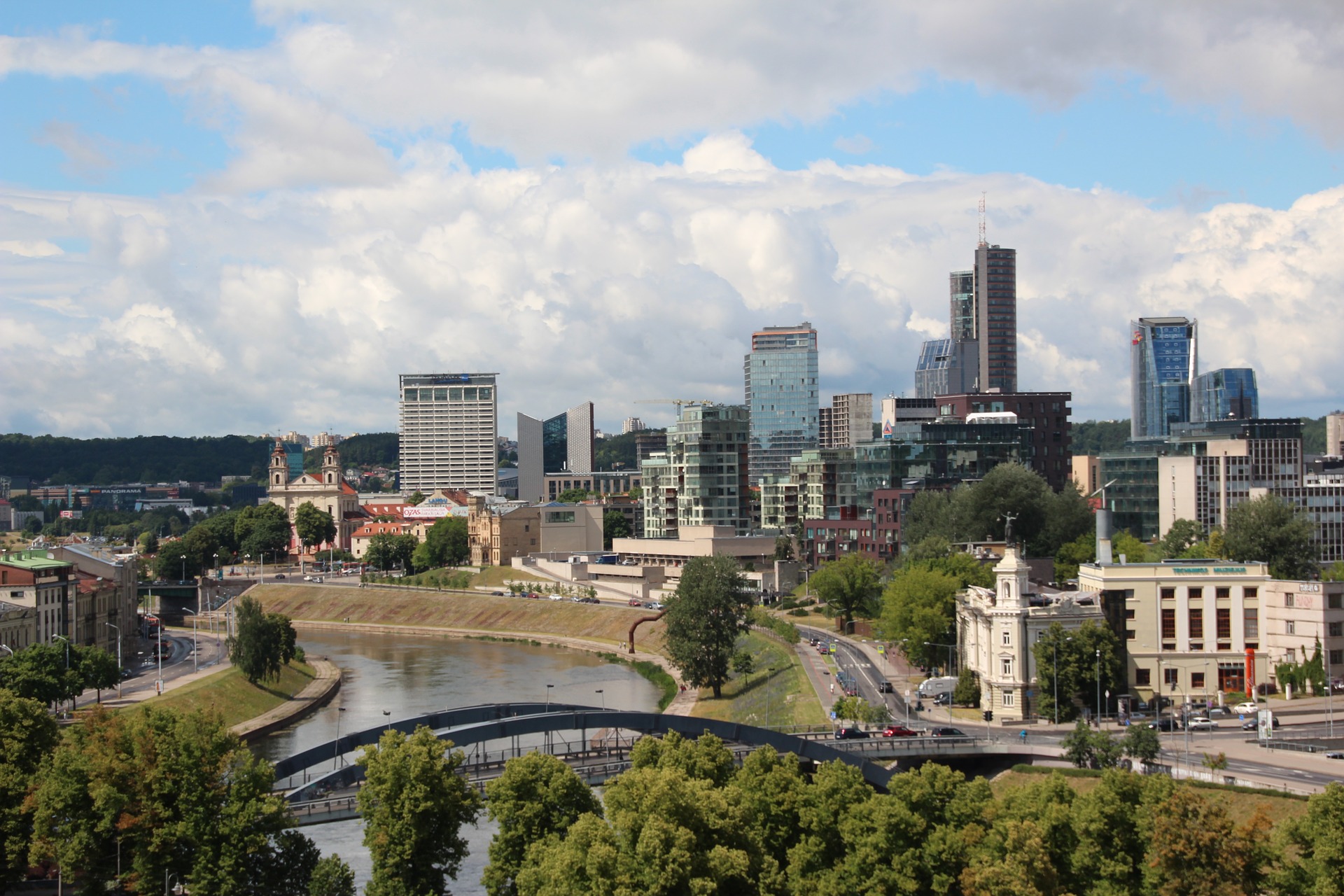
Vilnius is the main reason most people come: its old town is a long, partly pedestrian mix of Gothic, Renaissance, Baroque and neoclassical buildings, listed by UNESCO, with the country's best museums, hotels and restaurants. Beyond the capital Lithuania is low-lying and mostly rural, a compact country of small towns, villages, castles, manor houses, lakes and forests, with sculptures and hill forts that recall its pagan past.
Kaunas, the second city, has a compact old town and interwar modernist architecture. On the coast, Klaipėda is the ferry port for the Curonian Spit, a 99 km strip of dunes and forest, and Palanga has the best beaches. Lithuania uses the euro and is part of the Schengen area. Summers are mild and the wettest season, winters are cold, with snow and sleet.
- Vilnius Old Town: A UNESCO-listed old town, from the Gates of Dawn to the cathedral and castle.
- Trakai: A red-brick castle on an island in a lake, 28 km west of Vilnius.
- Kaunas: The second city, with a compact old town and interwar modernist buildings.
- Curonian Spit: A 99 km strip of sand dunes, forest and quiet villages, a short ferry ride from Klaipėda.
- Hill of Crosses: More than 100,000 crosses on a hill north of Šiauliai.
- Aukštaitija National Park: Lakes and forests, home to elk, deer and wild boar.
Places to visit
- City
- Coast
- Park
- Historic site
Cities
- Vilnius: The capital, with a UNESCO-listed old town and the country's best museums, hotels and restaurants.
- Kaunas: The second city, with interwar modernist architecture, a compact old town and the main sports venues.
- Klaipėda: The country's only port, with a half-timbered old town and ferries to the Curonian Spit.
- Trakai: A small town 28 km west of Vilnius, known for its island castle.
- Šiauliai: Museums, sculptures and old churches, 12 km from the Hill of Crosses.
- Panevėžys: An industrial town with museums, churches and a heritage narrow-gauge railway.
- Palanga: The seaside resort with the country's best beach, long and sandy.
Beyond the cities
- Curonian Spit (coast): A 99 km strip of dunes, forest and villages, a UNESCO World Heritage Site shared with Russia.
- Hill of Crosses (site): A hill planted with more than 100,000 crosses, north of Šiauliai.
- Aukštaitija National Park (park): A land of lakes and forests in the north-east.
- Dzūkija National Park (park): A national park south of Alytus, which is the usual base.
- Žemaičių Kalvarija (site): A pilgrimage village with a Stations of the Cross walk and a big church festival in July.
- Nemunas Delta (park): Wetlands near Šilutė for bird-watching and fishing.
Regions
- Aukštaitija: The higher ground of the east, historically the land of the Aukštaitians, with Aukštaitija National Park.
- Samogitia: The west, historically the land of the Samogitians.
- Dzūkija: One of the five ethnographic regions, home to Dzūkija National Park.
- Sūduva: One of the five ethnographic regions.
- Lithuania Minor: One of the five ethnographic regions.
Things to do
See
- Vilnius Old Town Vilnius: Walk the 2 km from the Gates of Dawn past the Town Hall and the university to the cathedral, the castle and the main museum.
- Užupis Vilnius: A bohemian district that has proclaimed itself an independent republic.
- Trakai Island Castle Trakai: Red towers reflected in the lake: the most attractive castle in the country.
- Hill of Witches Curonian Spit: Wooden sculptures of folk tales and legends near the village of Juodkrantė.
- Hill of Crosses Šiauliai: More than 100,000 crosses, from small and simple to huge.
- Kernavė Kernavė: A well-preserved archaeological site on the site of the medieval capital.
Do
- Beaches and water sports: Palanga has the best beach; the west coast of the Curonian Spit is breezy for water sports, and the lagoon is calmer for children.
- Basketball Kaunas: An even bigger sport than football; Žalgiris is the famous Kaunas club.
- Cycling the EuroVelo routes: EuroVelo 10 and 11 cross the country, waymarked and in good repair.
Shop
- Amber: The Baltic's signature gem, sold in many shops and market stalls, especially in Klaipėda.
Itineraries
Vilnius and Trakai in 4 days (4 days)
- Vilnius (3 nights): The old town, Užupis and a trip to Kernavė.
- Trakai (1 night): The island castle and the lake.
From Vilnius to the coast in 7 days (7 days)
- Vilnius (2 nights): The old town and museums.
- Kaunas (1 night): Hourly trains from Vilnius, 70 to 90 minutes.
- Šiauliai (1 night): For the Hill of Crosses, 12 km north.
- Klaipėda (1 night): The old town and the ferry port.
- Curonian Spit (2 nights): Dunes, forest and the Hill of Witches at Juodkrantė.
Climate and best time to visit
| Jan | Feb | Mar | Apr | May | Jun | Jul | Aug | Sep | Oct | Nov | Dec | |
|---|---|---|---|---|---|---|---|---|---|---|---|---|
| Max °C | -2 | -1 | 4 | 12 | 18 | 21 | 23 | 23 | 17 | 10 | 4 | -1 |
| Min °C | -6 | -7 | -3 | 2 | 8 | 11 | 13 | 12 | 8 | 4 | -1 | -5 |
| Rain mm | 48 | 37 | 42 | 43 | 57 | 73 | 89 | 75 | 66 | 55 | 47 | 53 |
Lithuania has cold winters and mild summers. In Vilnius the average maximum stays below 0 °C in January and February and the average minimum is around -6 °C, with snow and sleet. In July and August the average maximum is 22 to 23 °C. Summer is also the wettest season (July averages 89 mm of rain in Vilnius), while late winter and spring are the driest.
June to August is the best time for the coast and the countryside. The coast is milder, while the south-east, Vilnius included, has warmer summers and harsher winters. Bring waterproofs and a warm layer at any time of year.
Holidays and events
- 1 January 2026 · New Year's Day
- 16 February 2026 · The Day of Restoration of the State of Lithuania
- 11 March 2026 · Day of Restoration of Independence of Lithuania
- 5 April 2026 · Easter Sunday
- 6 April 2026 · Easter Monday
- 1 May 2026 · International Working Day
- 24 June 2026 · St. John's Day
- 6 July 2026 · Statehood Day
- 15 August 2026 · Assumption Day
- 1 November 2026 · All Saints' Day
- 2 November 2026 · All Souls' Day
- 24 December 2026 · Christmas Eve
- 25 December 2026 · Christmas Day
- 26 December 2026 · St. Stephen's Day
Getting around
| Main airports | VNO, KUN, PLQ |
|---|
Trains (LTG Link) are useful between Vilnius and Kaunas: hourly, 70 to 90 minutes, €8 to €10 (euro) for a standard single in 2025. Other routes are infrequent and the trains are short, so book ahead. Buses reach every town and most villages; Autobusubilietai.lt sells tickets in English. City buses and trolleybuses are cashless: tap your bank card or use a travel card.
Driving: headlights must be on at all times, winter tyres are compulsory from 10 November to 1 April, and fixed speed cameras are common. Rural roads can be poorly lit, with farm vehicles, cyclists without lights and deer. Drink-driving limits are stricter than in the UK, and fines are heavy. An EU or UK licence is enough to rent a car; other drivers may need an International Driving Permit. Taxis are cheap by Western European standards: book by phone or app (Bolt covers most cities) rather than hailing one in the street, and make sure the meter is on.
Flying to Lithuania? PartnerCompare fares and find the cheapest datesSearch flightsWhere to stay
- Hotels: Vilnius has the widest choice in every price range and Kaunas a good one; provincial towns have one or two, mostly for business travellers.
- Rooms in private homes: Locals rent out spare rooms, a style known as "staying with grandmother".
- Self-catering country houses: Scattered all over the countryside; Countryside.lt lists many.
The country is small, so you can stay in Vilnius or Kaunas and visit most places on day trips.
Eat and drink
Dishes to try
- Cepelinai: Large potato dumplings filled with meat, named after zeppelins.
- Šaltibarščiai: A cold summer soup of beetroot and soured milk.
- Kugelis: Oven-baked grated potato, also called plokštainis.
- Bulviniai blynai: Potato pancakes with different sauces.
- Skilandis: Cold-smoked pork stomach stuffed with minced meat and garlic.
- Žagarėliai: Thin, curly fried pastries dusted with sugar.
Drinks
- Beer (alus): The main drink; popular brands include Švyturys, Kalnapilis, Utenos and Volfas Engelman.
- Midus: Mead made from honey, from beer strength up to 40% when distilled.
- Coffee: Cafés often serve "lazy" coffee: boiling water poured over the grounds, unfiltered.
| Tipping | Not deeply rooted but appreciated: about 5% is standard, and it may already be on the bill or offered on the card machine. |
|---|
Lithuanians eat a lot of pork, and vegetarians do fine in Vilnius and Kaunas but may struggle elsewhere. If you get a menu in English or German, compare it with the Lithuanian one, which can be cheaper. Shops do not sell alcohol between 20:00 (15:00 on Sundays) and 10:00, or at all on 1 September; bars and restaurants can serve it whenever they are open. Drinking in public places is illegal, and smoking is banned in cafés, bars and restaurants.
Entry requirements and visas
| Passport validity | Issued less than 10 years before you arrive, and valid at least 3 months after you leave the Schengen area |
|---|
| Passport | Entry | Max stay | Notes |
|---|---|---|---|
| EU / EEA | Freedom of movement | EU free movement rules apply. | |
| United Kingdom | Visa free | 90 days | 90 days in any 180-day period across the whole Schengen area. |
| Canada | Visa free | 90 days | 90 days in any 180-day period across the whole Schengen area. |
| United States | Visa free | 90 days | 90 days in any 180-day period across the whole Schengen area. |
| Australia | Visa free | 90 days | 90 days in any 180-day period across the whole Schengen area. |
Other nationalities: check the official source below.
- EES (Entry/Exit System): fingerprints and photo at the border, free
- ETIAS (travel authorisation, EUR 20): not in operation yet
Lithuania is part of the Schengen area. Visitors from the UK, the US, Canada and Australia can stay up to 90 days in any 180-day period without a visa, counting the days spent in other Schengen countries. Non-EU visitors register fingerprints and a photo in the EU's Entry/Exit System (EES) on their first entry: allow extra time at the border, and at the airport when you leave.
At the border you may be asked for proof of accommodation, travel insurance, a return or onward ticket and enough money for your stay; Canada notes that you may be asked to show medical insurance, or buy it from a Lithuanian insurer on arrival. You cannot bring meat or milk products into the EU, and cash of €10,000 or more must be declared. Poland has reintroduced checks on its border with Lithuania.
ETIAS, the online travel authorisation for visa-free visitors, is not in operation yet. Rules depend on your passport and can change: check the official link before you book.
Money and payments
| Currency | Euro (EUR) |
|---|
Lithuania uses the euro (EUR) since 2015. Ticket machines, bus booking sites and city transport take Western bank cards, and city buses are cashless. Card and ATM fraud happens in tourist areas: cover the keypad when you type your PIN and prefer ATMs inside banks or shops.
Costs and budget
- Train Vilnius to Kaunas, standard single (2025): €8 to €10
- Bus Vilnius to Kaunas (2025): €10
- Tip in a restaurant: about 5%
According to Eurostat, in 2024 the general price level in Lithuania was about 78% of the EU average, food in shops about 101% and restaurants and hotels about 86%.
Taxis are inexpensive by Western European standards, and EU students with an ISIC card get large discounts on buses and in many museums.
Health
| Recommended vaccines | Routine vaccines, including measles (MMR), Hepatitis A, Hepatitis B, Tick-borne encephalitis, if you will hike or camp in forests between April and November, Typhoid, for most travellers |
|---|---|
| Tap water | Safe |
No vaccinations are required to enter. Check your routine vaccines and the ones you may need with a travel health clinic at least 6 to 8 weeks before you go. Forest ticks can carry Lyme disease and encephalitis, and mosquitoes are a nuisance in summer.
Good healthcare is found mainly in the big cities, and doctors usually expect payment straight away. A European (EHIC) or UK (GHIC) card gives access to medically necessary state healthcare, but it does not replace travel insurance. For an ambulance dial 112; for non-urgent medical advice, 113. Tap water is safe to drink.
This is general information, not medical advice: check with a travel health professional before you go.
Safety
- United States: Level 1: Exercise Normal Precautions (2026-10-20)
- Canada: Take normal security precautions (2026-10-20)
- United Kingdom: No advice against travel (2026-10-20)
Lithuania is generally safe, but petty crime is common: watch for pickpockets in busy places and on public transport, avoid unlit streets and parks at night and do not leave bags unattended in bars. Drinks have been spiked in Vilnius and at festivals, so keep your drink with you. Use a taxi app or a registered taxi with a meter.
On the roads, drivers can be aggressive and rural roads are poorly lit. Flights can be disrupted at short notice, including temporary closures of Vilnius Airport: follow local alerts (the LT72 warning system has some information in English). On the Curonian Spit, the walk south along the Lithuanian side eventually reaches the Russian border.
Customs and etiquette
Vilnius is cosmopolitan, but outside the capital society is traditional and conservative, and most people are Roman Catholic. Public displays of affection between same-sex couples can draw hostile reactions, especially in small towns.
Drugs, cannabis included, are strictly illegal even in tiny amounts, with jail sentences of up to 10 years. Drinking alcohol in public places is illegal. Flying a drone requires registration and authorisation, and drones are banned near airports and military sites.
Language
| Official languages | Lithuanian |
|---|---|
| English | Common |
| Good morning | Labas rytas LAH-bahs REE-tahs |
|---|---|
| Please | Prašau prah-SHOW |
| Thank you | Ačiū AH-choo |
| Excuse me | Atsiprašau aht-sih-prah-SHAOO |
| Goodbye | Sudie soo-DYAH |
| Do you speak English? | Ar kalbate angliškai? ahr KAHL-bah-ta AHN-glihsh-kai |
| How much is a ticket to ...? | Kiek kainuoja bilietas iki ...? kyek kai-NWAH-yah BIH-lyeh-tahs IH-kih |
What to pack
- Passport or EU/EEA ID card: Needed for the Schengen area and the border checks.
- Proof of travel and health insurance: Border staff may ask for it.
- Waterproofs and a warm layer: Rain and cool days are possible at any time of year.
- Insect and tick repellent: Mosquitoes in summer and ticks in the forests.
- A contactless bank card: City buses are cashless.
Quick reference
Country facts
| Capital | Vilnius |
|---|---|
| Population | 2,888,774 (2025) |
| Area | 62,590 km² |
| Time zone | Europe/Vilnius (UTC+2) |
| Calling code | +370 |
| Driving side | right |
Staying connected
| SIM and eSIM | Three networks: Bitė, Telia and Tele2. About 97% of the country has 4G and the big cities and highways have 5G; prepaid SIM cards are sold at kiosks and shops. |
|---|---|
| Roaming | With an EU SIM card you pay home prices for calls, texts and data (roam like at home). Others should check their provider's rates or buy a local SIM. |
| Wi-Fi | Widely available in public places, sometimes for a fee. |
Emergency numbers
| Emergency | 112 |
|---|
Frequently asked questions
Do I need a visa for Lithuania?
Not for short trips with an EU, UK, US, Canadian or Australian passport: Lithuania is in the Schengen area, so you can stay up to 90 days in any 180-day period. Check the official EU link before you book.
Which currency does Lithuania use?
The euro, since 2015.
How do I get from Vilnius to Kaunas?
By train (hourly, 70 to 90 minutes) or bus (every 30 minutes, about 90 minutes); both cost around €10 in 2025.
Can I drink the tap water in Lithuania?
Yes, tap water is safe to drink.
Do I need to tip in Lithuania?
It is appreciated: about 5% is standard, and it may already be included.
When is the best time to visit Lithuania?
June to August, when it is warmest, though summer is also the wettest season.
More Travel Stories from Europe
 Portugal
Sources This guide was last checked on · 20 sources
- Wikivoyage: Lithuania · Overview, Places to visit, Things to do, Itineraries, Climate and best time to visit, Getting around, Where to stay, Eat and drink, Money and payments, Costs and budget, Health, Safety, Customs and etiquette, Language, What to pack, Staying connected, Frequently asked questions
- UK FCDO: Lithuania safety and security · Overview, Things to do, Getting around, Safety, Customs and etiquette
- Wikidata: Lithuania · Places to visit, Money and payments, Country facts
- WMO World Weather Information Service: Vilnius · Climate and best time to visit, Frequently asked questions
- Nager.Date: public holidays in Lithuania, 2026 · Holidays and events
- Government of Canada: Lithuania travel advice (updated 11 August 2026) · Getting around, Entry requirements and visas, Money and payments, Health, Safety, Customs and etiquette, What to pack, Frequently asked questions
- UK FCDO: Lithuania entry requirements · Entry requirements and visas, What to pack, Frequently asked questions
- European Union: ETIAS official website · Entry requirements and visas
- ISO 4217 (SIX), published 2026-09-17 · Money and payments
- Eurostat: price level indices, 2024 (EU27 = 100) · Costs and budget
- UK FCDO: Lithuania health · Health
- US CDC: Travelers' health, Lithuania · Health
- US Department of State: Lithuania travel advisory · Safety
- UK FCDO: Lithuania travel advice · Safety
- Wikivoyage: Lithuanian phrasebook · Language
- World Bank, SP.POP.TOTL · Country facts
- World Bank, AG.LND.TOTL.K2 · Country facts
- IANA Time Zone Database, zone.tab · Country facts
- Your Europe: mobile roaming costs · Staying connected
- UK FCDO: Lithuania getting help · Emergency numbers
Suggest an update
Travel rules, prices and timetables change. If something in this guide is out of date, tell us: we check every suggestion against an official source before changing the page.