

- Local time
- 12:26
- Currency
- Euro (EUR)
- Capital
- Dublin
- Calling code
- +353
- Drive on the
- left
Overview
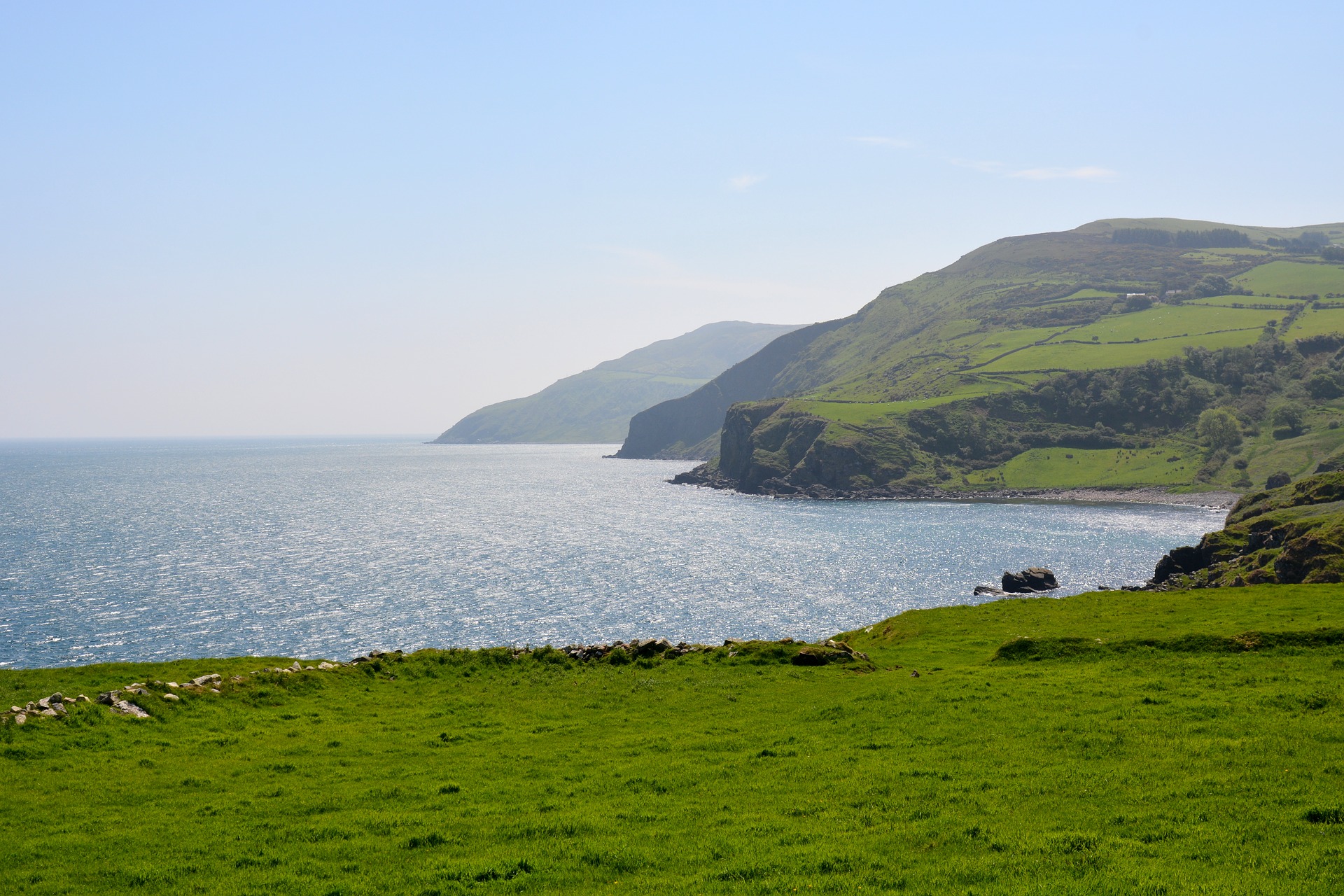
Ireland pairs lively Dublin, Galway and Cork with a wild Atlantic coast of peninsulas and cliffs, from the Ring of Kerry to the Burren and Connemara, prehistoric and early Christian sites, pubs with trad music and very changeable weather.
The Republic of Ireland covers most of the island of Ireland, west of Great Britain; the other six counties form Northern Ireland, part of the United Kingdom, and the border between them has no checks. Dublin, the capital, is the most cosmopolitan city, while Cork, Galway, Kilkenny and Limerick each have their own character. Scenery is at its best where green fields meet crags or sea cliffs, and the Atlantic coast has a series of dramatic peninsulas.
The island is dotted with prehistoric monuments, such as Brú na Bóinne, and monastic sites, such as Glendalough and Skellig Michael. English is the everyday language almost everywhere, and Irish is spoken in the Gaeltacht areas of the west. The climate is mild but very changeable, with rain possible on any day. The Irish are known for being welcoming and for their sense of humour.
- Dublin: The lively capital, with a great range of sights.
- Ring of Kerry: The circuit of a scenic peninsula, usually from Killarney.
- Cliffs of Moher and the Burren: A barren limestone upland in County Clare that ends in great sea cliffs.
- Brú na Bóinne: Neolithic monuments in County Meath, the oldest from about 3100 BC.
- Galway and Connemara: A colourful town of trad music, and the Irish-speaking hills and bogs to its west.
- Skellig Michael: An astonishing monastery on a rock in the Atlantic off County Kerry.
Places to visit
- City
- Town
- Coast
- Island
- Historic site
- Area
Cities
- Dublin: The lively capital and the most cosmopolitan city, with many sights.
- Cork: The second city, on the River Lee, known for food, pubs and shopping.
- Galway: A colourful town of good food, trad music and ales, next to Connemara.
- Killarney: A popular, pleasant town and the start of most Ring of Kerry trips.
- Kilkenny: An attractive medieval town, home of a comedy festival in early June.
- Limerick: A Georgian street plan and a castle, with more castles nearby.
- Waterford: Ireland's oldest city, with Viking, medieval and Georgian heritage.
- Sligo: Limestone scarps, prehistoric megaliths and the landscapes that inspired W. B. Yeats.
Beyond the cities
- Brú na Bóinne (site): Neolithic monuments in County Meath; entry slots are limited.
- Glendalough (site): A medieval monastic complex in a deep valley in County Wicklow.
- Cliffs of Moher (coast): Great sea cliffs where the Burren meets the Atlantic.
- The Burren (area): A haunting, barren limestone upland in County Clare.
- Connemara (area): An Irish-speaking area of granite, bog and small islands in County Galway.
- Aran Islands (island): Inhabited islands with prehistoric and early Christian sites.
- Ring of Kerry (coast): The circuit of a scenic peninsula, usually starting from Killarney.
- Dingle (town): A lovely seaside town in County Kerry.
- Skellig Michael (island): An astonishing monastery in the Atlantic off County Kerry.
Regions
- East Coast and Midlands: The Irish heartland, with the capital, Dublin.
- Shannon Region: Castles and the Cliffs of Moher.
- Southwest Ireland: A scenic, rainy coast with the Ring of Kerry and Blarney Castle.
- West Ireland: The least populous region, with Galway and the Aran Islands.
- Northwest Ireland and Lakelands: Natural beauty and growing tourism.
- Southeast Ireland: A cosmopolitan area, famous for Waterford crystal.
Things to do
See
- Brú na Bóinne Brú na Bóinne: Neolithic monuments built around 3000 BC; access slots are limited, so book.
- Glendalough Glendalough: A monastic site in a scenic valley, easy on a bus day tour from Dublin.
- Cliffs of Moher Cliffs of Moher: Sea cliffs at the edge of the Burren in County Clare.
Do
- Ring of Kerry Ring of Kerry: A drive around a scenic Atlantic peninsula from Killarney.
- Aran Islands Aran Islands: Prehistoric and early Christian sites, reached by ferry or small plane.
- Gaelic games: Gaelic football and hurling, played by clubs in almost every parish.
- Trace your ancestors Dublin: Births, marriages and deaths since 1864 can be searched online free at the General Register Office.
Eat
- Full Irish breakfast: Eggs, sausages, bacon, black and white pudding and soda bread.
Drink
- A pint of stout Cork: Guinness everywhere, Murphy's and Beamish in Cork.
After dark
- Trad music Galway: Traditional music sessions in pubs.
Itineraries
Dublin and the west coast in 8 days (8 days)
- Dublin (3 nights): The capital, with day trips to Glendalough and Brú na Bóinne.
- Galway (2 nights): Trad music and a day in Connemara.
- Aran Islands (1 night): Early Christian and prehistoric sites.
- Killarney (2 nights): The Ring of Kerry.
The south-east and south in 6 days (6 days)
- Kilkenny (1 night): The medieval town.
- Waterford (1 night): Ireland's oldest city.
- Cork (2 nights): Food, pubs and stout.
- Killarney (2 nights): The Ring of Kerry or Dingle.
Clare and Galway in 4 days (4 days)
- Limerick (1 night): The castle and the Georgian centre.
- The Burren (2 nights): Limestone uplands and the Cliffs of Moher.
- Galway (1 night): End in a music pub.
Climate and best time to visit
| Jan | Feb | Mar | Apr | May | Jun | Jul | Aug | Sep | Oct | Nov | Dec | |
|---|---|---|---|---|---|---|---|---|---|---|---|---|
| Max °C | 8 | 8 | 12 | 12 | 15 | 18 | 20 | 19 | 17 | 14 | 10 | 8 |
| Min °C | 2 | 2 | 3 | 5 | 7 | 10 | 12 | 12 | 10 | 7 | 5 | 3 |
| Rain mm | 63 | 49 | 53 | 54 | 60 | 67 | 56 | 73 | 60 | 79 | 73 | 73 |
In Dublin, average highs range from about 8 °C in winter to 19–20 °C in July and August, and winter nights average just above freezing. Rain falls all year, most in October and least in February. The climate is mild but changeable, with "four seasons in one day" and few extremes: temperatures rarely go above 25 °C or below −5 °C. The west gets more rain than the east.
June to August are the warmest months, but rain is likely at any time of year, so bring a waterproof coat. Canada notes seasonal storms and heavy rain that can cause flooding and close roads.
Holidays and events
- 1 January 2026 · New Year's Day
- 2 February 2026 · Saint Brigid's Day
- 17 March 2026 · Saint Patrick's Day
- 3 April 2026 · Good Friday
- 6 April 2026 · Easter Monday
- 4 May 2026 · May Day
- 1 June 2026 · June Holiday
- 3 August 2026 · August Holiday
- 26 October 2026 · October Holiday
- 25 December 2026 · Christmas Day
- 26 December 2026 · St. Stephen's Day
Getting around
| Main airports | DUB, SNN, ORK, NOC, KIR |
|---|
Buses are the main public transport: Bus Éireann (Expressway) and other companies run long-distance routes from Dublin, many via Dublin Airport. Trains run by Irish Rail are quick and comfortable but the network is limited, radiating from Dublin to the main cities; journeys seldom take more than 2–3 hours. Dublin has trams. Taxi fares are regulated nationally. There are only a couple of domestic flights, from Dublin to Donegal and Kerry, and small planes and ferries serve the Aran Islands.
A car is not worth it in Dublin, but helps in the countryside, where public transport is limited. Drive on the left and give way to the right at roundabouts; turning on a red light is not allowed. Rural roads can be narrow, uneven and winding. Place names are in English and Irish, but only in Irish in the Gaeltacht areas. Canadians can drive on their licence and should carry an International Driving Permit.
Flying to Ireland? PartnerCompare fares and find the cheapest datesSearch flightsWhere to stay
- Hotels: All standards, including some very luxurious ones.
- Bed and breakfast: Widely available, often family-run, friendly and good value.
- Hostels: Tourist-board-approved independent hostels, and An Óige youth hostels, often in remote and beautiful places.
- Camping: Fewer official campsites than in many countries; wild camping is tolerated, ideally with permission.
If you camp wild, ask the landowner, especially if your tent will be seen from their house, and never camp in a field with livestock. Hotels and B&Bs may have smoking rooms: say what you prefer when you book.
Eat and drink
Dishes to try
- Full Irish breakfast: Eggs, sausages, back bacon, black and white pudding, with soda bread or potato farls.
- Seafood chowder: A regional speciality, not found everywhere.
- Oysters: Another regional speciality.
- Boxty: A regional potato dish.
- Meat, potatoes and cabbage: The base of hearty traditional cooking.
Drinks
- Guinness: The stout brewed in Dublin; a pint costs from about €4.20 to €7 in Dublin tourist spots.
- Murphy's and Beamish: The stouts of Cork, found mainly in the south.
- Smithwick's: An ale popular especially in rural areas.
- Bulmers: A popular cider, sold as Magners outside the Republic.
- Irish whiskey: Spelled with an "e"; brands include Jameson and Tullamore.
| Tipping | Not a general habit. In restaurants 10–15% is standard; elsewhere people round up or leave small coins. Tipping is not expected in pubs. |
|---|
Traditional cooking is hearty, but Irish food has become much more varied and cosmopolitan in recent decades. Table manners are relaxed: just do not disturb other diners.
Pubs serve last drinks at 23:30 from Sunday to Thursday and 00:30 on Friday and Saturday, with half an hour to finish; nightclubs serve until 02:00. Smoking is banned in all pubs, though many have heated outdoor areas. Alcohol can be expensive, especially in tourist areas.
Entry requirements and visas
| Passport validity | Valid for the whole of your stay (Canada); British citizens do not legally need a passport |
|---|
| Passport | Entry | Max stay | Notes |
|---|---|---|---|
| EU / EEA | Freedom of movement | Ireland is in the EU. | |
| United Kingdom | Freedom of movement | Common Travel Area: no visa, and you can live, work or study in Ireland. | |
| Canada | Visa free | 90 days | No tourist visa needed for stays of up to 90 days. |
Other nationalities: check the official source below.
Ireland is in the EU but not in the Schengen area, so Schengen rules and the EU Entry/Exit System do not apply. British and Irish citizens travel freely between the UK and Ireland under the Common Travel Area, which also covers the Isle of Man, Jersey and Guernsey. British citizens do not legally need a passport to enter, but some airlines and ferry companies accept only a passport: check with your carrier. Canadians need no visa for up to 90 days, and a passport is needed to travel between Ireland and other European countries.
If you go on to Northern Ireland, the UK's entry rules apply. Cash of €10,000 or more must be declared. Rules depend on your passport: check the official link before you book.
Money and payments
| Currency | Euro (EUR) |
|---|---|
| Cards | Widespread |
Ireland uses the euro. ATMs are found in every town, often inside shops and pubs, and Irish ATMs do not usually charge fees (your bank may). Visa and Mastercard are accepted everywhere, and American Express and Diners Club fairly widely. Cards use chip and PIN; signature-only cards still work, though staff in quiet areas may be unsure how to process them.
Near the border, UK pounds are often accepted, with change given in euro.
Costs and budget
According to Eurostat, in 2024 the general price level in Ireland was about 118% of the EU average, food in shops about 114% and restaurants and hotels about 129%.
Health
| Recommended vaccines | Routine vaccines, including measles (MMR), Hepatitis A: consider it, Hepatitis B, for unvaccinated travellers under 60 |
|---|---|
| Malaria | None |
| Tap water | Safe |
Rabid dogs are not commonly found. Call 112 or 999 for an ambulance. People who live in the UK can use state healthcare when visiting Ireland, and a UK prescription can be used at Irish pharmacies, paying the full price. Make sure your travel insurance covers medical care.
Tap water is generally drinkable, but in some buildings avoid water from bathroom taps, which may come from a tank.
This is general information, not medical advice: check with a travel health professional before you go.
Safety
- United States: Level 1: Exercise Normal Precautions (2026-10-20)
- Canada: Take normal security precautions (2026-10-20)
- United Kingdom: No advice against travel (2026-10-20)
All three governments advise normal precautions, and crime is relatively low by European standards. Pickpockets and bag snatchers work at tourist sites, in hotels, bars and restaurants, on public transport and at airports, often in organised groups using distractions. Car break-ins happen, particularly in tourist areas of Dublin, and hire cars are favourite targets: never leave belongings in the car. Avoid deserted streets at night in Dublin or Cork and take a taxi home. Victims of crime can get help from the Irish Tourist Assistance Service through the Gardaí, the police.
Demonstrations can happen at short notice in the cities. Drug penalties are severe, even for small amounts of cannabis. Walking trails are not always marked and the weather can change quickly, even in summer. Emergency numbers 112 and 999.
Customs and etiquette
The Irish are welcoming, friendly and approachable: ask locals for advice or directions. On country roads people greet each other in passing, and a hello or a comment on the weather is enough. Storytelling and wit are common, and Irish humour, often self-mocking, can be hard for visitors to read. Time is treated flexibly, but be on time when invited to a home or for business.
Call the language "Irish", not "Gaelic". Smoking is banned in almost all enclosed workplaces, including pubs, restaurants and cafés. Americans are strongly advised not to order the cocktail known as an "Irish Car Bomb".
Language
| Official languages | Irish, English |
|---|---|
| English | Widespread |
| Hello | Dia dhuit DEE-a GHWIT |
|---|---|
| Please | Le do thoil LE do HULL |
| Thank you | Go raibh maith agat GUH ROH MAH ug-ut |
| Excuse me | Gabh mo leithscéal goh mah lesh-kyale |
| Goodbye | Slán slawn |
| Do you speak English? | An bhfuil Béarla agat? ahn will BAYR-la ug-ut |
What to pack
- Waterproof coat: Rain is likely even in summer.
- Layers: The weather can bring "four seasons in one day".
- Passport: Some airlines and ferries ask for one even from British citizens.
- International Driving Permit: Canada advises carrying one with your licence.
- Card with chip and PIN: It is the standard for card payments.
Quick reference
Country facts
| Capital | Dublin |
|---|---|
| Population | 5,484,367 (2025) |
| Area | 68,890 km² |
| Time zone | Europe/Dublin (UTC+0) |
| Calling code | +353 |
| Driving side | left |
Staying connected
| SIM and eSIM | Three networks, Eir, Three and Vodafone, sell prepaid credit from €5 to €40 in many shops. Dublin has 5G; small places may have no signal on approach roads. EU and UK phones are covered by roaming agreements; near the border your phone may connect to a UK network, which can cost extra. |
|---|---|
| Wi-Fi | Canada advises avoiding unsecured public Wi-Fi networks, which can be used to steal card details. |
Emergency numbers
| Emergency | 112 or 999 |
|---|
Frequently asked questions
Is Ireland in the Schengen area?
No. Ireland is in the EU but not in Schengen, so Schengen visas and the Entry/Exit System do not apply.
Do British citizens need a passport for Ireland?
Not legally, under the Common Travel Area, but some airlines and ferries require one: check with your carrier.
Do I need a car?
Not in Dublin, where it is best avoided, but it helps in the countryside, where public transport is limited.
Should I tip in Ireland?
In restaurants 10–15% is standard. Tipping is not expected in pubs.
When do pubs close?
Last drinks are at 23:30 from Sunday to Thursday and 00:30 on Friday and Saturday.
Can I drink the tap water?
Generally yes, though in some buildings you should avoid water from bathroom taps.
More Travel Stories from Ireland
 Ireland
Sources This guide was last checked on · 18 sources
- Wikivoyage: Ireland · Overview, Places to visit, Things to do, Itineraries, Climate and best time to visit, Getting around, Where to stay, Eat and drink, Entry requirements and visas, Money and payments, Health, Safety, Customs and etiquette, Language, What to pack, Staying connected, Frequently asked questions
- Wikidata: Ireland · Overview, Places to visit, Things to do, Money and payments, Country facts
- WMO World Weather Information Service: Dublin · Climate and best time to visit
- Government of Canada: Ireland travel advice (updated 26 May 2026) · Climate and best time to visit, Getting around, Entry requirements and visas, Safety, What to pack, Staying connected, Frequently asked questions
- Nager.Date: public holidays in Ireland, 2026 · Holidays and events
- UK FCDO: Ireland entry requirements · Entry requirements and visas, What to pack, Frequently asked questions
- ISO 4217 (SIX), published 2026-09-17 · Money and payments
- Eurostat: price level indices, 2024 (EU27 = 100) · Costs and budget
- CDC Travelers' Health: Ireland · Health, Frequently asked questions
- UK FCDO: Ireland health · Health
- US Department of State: Ireland travel advisory · Safety
- UK FCDO: Ireland travel advice · Safety
- UK FCDO: Ireland safety and security · Safety
- Wikivoyage: Irish phrasebook · Language
- World Bank, SP.POP.TOTL · Country facts
- World Bank, AG.LND.TOTL.K2 · Country facts
- IANA Time Zone Database, zone.tab · Country facts
- UK FCDO: Ireland getting help · Emergency numbers
Suggest an update
Travel rules, prices and timetables change. If something in this guide is out of date, tell us: we check every suggestion against an official source before changing the page.