


- Local time
- 09:55 (capital)
- Currency
- Euro (EUR)
- Capital
- Lisbon
- Calling code
- +351
- Drive on the
- right
Overview
Beaches and long warm summers, Lisbon and Porto, historic towns, port wine and pastéis de nata, plus the islands of Madeira and the Azores.
Portugal sits on the western edge of the Iberian peninsula, with two archipelagos, Madeira and the Azores, out in the Atlantic. It is one of the sunniest countries in Europe and has become a favourite for its beaches, food and history. Lisbon, the capital of seven hills, mixes monumental limestone buildings with a lively culture; Porto, on the Douro, has a UNESCO-listed riverfront; and towns such as Sintra, Coimbra, Évora, Óbidos and Guimarães are full of castles, palaces and old streets.
The Algarve has the most popular beaches, with warmer, calmer water than the Atlantic west coast, where surfers head for Nazaré and Peniche. Inland are the vineyards of the Douro, where port wine is made, the plains of the Alentejo and the mountains of Serra da Estrela and Peneda-Gerês. Portugal has 17 UNESCO World Heritage Sites. It uses the euro and is part of the Schengen area.
- Lisbon: The capital, with Belém, Jerónimos Monastery and St George's Castle.
- Porto and the Douro: The riverfront Ribeira and the vineyards where port wine is made.
- Sintra: Romantic palaces such as Pena, a day trip from Lisbon.
- The Algarve: The most popular beaches, with warmer, calmer water.
- Coimbra and Évora: A historic university town and a city of Roman and Moorish heritage.
- Madeira and the Azores: Atlantic islands of wildlife, laurel forest and hiking trails.
Places to visit
- City
- Town
- Coast
- Park
- Mountain
- Historic site
- Area
Cities
- Lisbon: The capital, city of seven hills, with the UNESCO-listed monuments of Belém.
- Porto: The northern capital on the Douro, with a UNESCO-listed historic centre.
- Coimbra: A medieval university town; the university is a UNESCO World Heritage Site.
- Évora: The capital of the Alentejo, a "museum city" of Roman, Moorish and Portuguese architecture.
- Guimarães: The birthplace of the nation, with a UNESCO-listed centre.
- Braga: The city of archbishops, home to the Bom Jesus sanctuary.
- Aveiro: Known as the "Venice" of Portugal.
- Funchal: The capital of Madeira.
- Angra do Heroísmo: One of the capitals of the Azores, with a UNESCO-listed centre.
Beyond the cities
- Sintra and Pena Palace (site): Castles and the Romantic Pena Palace near Lisbon.
- Cabo da Roca (coast): The westernmost point of mainland Europe, near Sintra and Cascais.
- Alto Douro Wine Region (area): UNESCO-listed vineyards where port wine has been made for 2,000 years.
- Óbidos (town): A well-preserved walled village.
- Laurisilva of Madeira (park): A UNESCO-listed laurel forest with unique plants and animals.
- Peneda-Gerês National Park (park): Portugal's only national park.
- Serra da Estrela (mountain): The highest mountains of mainland Portugal, with skiing in winter.
- Côa Valley rock art (site): Prehistoric rock engravings, a UNESCO World Heritage Site.
- Ponta Delgada (town): The main gateway to the Azores, with its own airport.
Regions
- Northern Portugal: Porto, the northern capital, Braga, Guimarães and the Douro valley.
- Beiras: One of the mainland regions, between the north and the Tagus valley.
- Tagus Valley: Lisbon and its surroundings, including Sintra and Cascais.
- Alentejo: Évora, the regional capital, and quiet beaches on the Costa Vicentina.
- Algarve: The south coast and Portugal's most popular beaches.
- Azores: The Atlantic archipelago, wet and rainy, with Ponta Delgada and Angra do Heroísmo.
- Madeira: An Atlantic archipelago with little rain, laurel forest and Funchal.
Things to do
See
- Jerónimos Monastery and Belém Lisbon: Fine cloisters, and the original pastéis de Belém nearby.
- St George's Castle Lisbon: Climb the battlements for views over the city.
- Cais da Ribeira Porto: The UNESCO-listed riverfront of old buildings and rabelo boats.
- Sintra's palaces Sintra and Pena Palace: A royal day trip from Lisbon, ending in Cascais on the coast.
- Fátima and Batalha: The Marian shrine visited by pilgrims, and the Manueline Batalha Monastery nearby.
Do
- Beaches of the Algarve: The most popular beaches, with warmer and calmer sea than the west coast.
- Surfing: Beaches all along the west coast, near Lisbon and at Peniche, and the giant waves of Nazaré.
- Hiking in Madeira and the Azores: Spectacular but sometimes narrow and slippery paths: check closures before you go.
Drink
- Port wine tasting Porto: Vintage, LBV, tawny, ruby and white port.
Shop
- Cork and azulejos: Cork products, tiles, leather goods and regional handicrafts.
Itineraries
Lisbon to Porto in 8 days (8 days)
- Lisbon (3 nights): Belém, the castle and a day in Sintra and Cascais.
- Óbidos (1 night): The romantic walled village.
- Coimbra (1 night): The university and the old town.
- Porto (3 nights): The Ribeira, port wine and a trip up the Douro.
Lisbon and the Alentejo in 5 days (5 days)
- Lisbon (3 nights): The capital, Belém and Sintra.
- Évora (2 nights): Roman ruins with Moorish and Portuguese architecture.
Climate and best time to visit
| Jan | Feb | Mar | Apr | May | Jun | Jul | Aug | Sep | Oct | Nov | Dec | |
|---|---|---|---|---|---|---|---|---|---|---|---|---|
| Max °C | 16 | 16 | 16 | 17 | 19 | 21 | 24 | 25 | 24 | 21 | 19 | 17 |
| Min °C | 12 | 11 | 12 | 12 | 13 | 16 | 18 | 19 | 18 | 16 | 14 | 13 |
| Rain mm | 112 | 109 | 100 | 85 | 60 | 49 | 33 | 57 | 96 | 120 | 130 | 136 |
The climate table above is for Angra do Heroísmo in the Azores, which is mild all year (average maximum 16 °C in January, 25 °C in August) and wet from October to March. Mainland Portugal is one of the sunniest countries in Europe: spring and summer are usually sunny, and in July and August average maximums reach 35 to 40 °C inland and 30 to 35 °C in the north. Autumn and winter are often rainy and windy, mild near the sea but below freezing inland, with snow on the northern mountains such as the Serra da Estrela. Madeira is fairly dry.
May, June and September avoid the worst summer heat. Wildfires are a risk from April to October.
Holidays and events
- 1 January 2026 · New Year's Day
- 17 February 2026 · Carnival
- 3 April 2026 · Good Friday
- 5 April 2026 · Easter Sunday
- 25 April 2026 · Freedom Day
- 1 May 2026 · Labour Day
- 4 June 2026 · Corpus Christi
- 10 June 2026 · National Day
- 15 August 2026 · Assumption Day
- 5 October 2026 · Republic Day
- 1 November 2026 · All Saints Day
- 1 December 2026 · Restoration of Independence
- 8 December 2026 · Immaculate Conception
- 25 December 2026 · Christmas Day
Getting around
| Main airports | LIS, OPO, FAO, FNC, PDL |
|---|
Trains (CP) are slightly faster than buses but less frequent: Alfa Pendular high-speed trains link Braga, Porto, Aveiro, Coimbra, Lisbon and Faro, with 40% off if you book at least five days ahead. Lisbon and Porto have metros. Buses (Rede Expressos, FlixBus and regional companies) reach places the railway does not. Flights are the main way to Madeira and the Azores and between their islands. Strikes can disrupt transport, including airports, at short notice.
Driving: motorways link all the big cities, but most use electronic tolls (Via Verde): register your plate at the border or check your rental company's arrangement. Some secondary roads are poor and local driving can be erratic. Dipped headlights must be on at all times, the alcohol limit is 0.05%, and you must carry ID when driving. A UK photocard licence is valid; a Canadian one for up to 185 days. Rental cars and foreign plates attract break-ins: leave nothing inside. Taxis are beige or black and green with meters; Bolt and Uber also operate.
Flying to Portugal? PartnerCompare fares and find the cheapest datesSearch flightsWhere to stay
- Pensões and residenciais: Simple, home-like inns in most towns; in 2017 a double room with bathroom cost €25 to €35 off season.
- Pousadas: Luxury hotels in palaces, castles and historic buildings.
- Casas de campo: Rural B&Bs, comfortable and affordable; not always open all year, so book ahead.
- Youth hostels and campsites: A wide network across the country.
Wild camping is not allowed without the landowner's agreement. Holiday villas and apartments are another option; make sure they have good locks, as burglaries of holiday rentals happen.
Eat and drink
Dishes to try
- Bacalhau: Salt cod, cooked in countless ways.
- Caldo verde: Kale and potato soup with smoked sausage, from the Minho.
- Grilled sardines: A classic of the grills outside many restaurants.
- Carne de porco à alentejana: Pork and clams, from the Alentejo.
- Leitão: Roast suckling pig from Mealhada, near Coimbra.
- Pastéis de nata: Custard tarts, best warm with cinnamon; called pastéis de Belém in Lisbon.
Drinks
- Port: Fortified wine from the Douro, from young ruby to aged tawny and vintage.
- Vinho verde: Light, fresh wine from the Minho, north of Porto.
- Ginjinha: Cherry liqueur, typical of Lisbon and Óbidos.
- Bica: Strong espresso, drunk several times a day.
| Tipping | Not expected. For exemplary service leave 8 to 10% in restaurants, €1 to €2 after a full meal in a café, and round up taxi fares. |
|---|
Restaurants often put bread and starters on the table and charge for them per person: refuse them if you do not want them. Check your bill and change, as overcharging tourists is common. In places without a menu, ask for the price first. Vegetarians may struggle in traditional restaurants. The drinking age is 18.
Entry requirements and visas
| Passport validity | Issued less than 10 years before you arrive, and valid at least 3 months after you leave the Schengen area |
|---|
| Passport | Entry | Max stay | Notes |
|---|---|---|---|
| EU / EEA | Freedom of movement | EU free movement rules apply. | |
| United Kingdom | Visa free | 90 days | 90 days in any 180-day period across the whole Schengen area. |
| Canada | Visa free | 90 days | 90 days in any 180-day period across the whole Schengen area. |
| United States | Visa free | 90 days | 90 days in any 180-day period across the whole Schengen area. |
| Australia | Visa free | 90 days | 90 days in any 180-day period across the whole Schengen area. |
Other nationalities: check the official source below.
- EES (Entry/Exit System): fingerprints and photo at the border, free
- ETIAS (travel authorisation, EUR 20): not in operation yet
Portugal is part of the Schengen area. Visitors from the UK, the US, Canada and Australia can stay up to 90 days in any 180-day period without a visa, counting the days spent in other Schengen countries. Non-EU visitors register fingerprints and a photo in the EU's Entry/Exit System (EES) on their first entry: allow extra time at the border, and at the airport when you leave.
Border staff may ask for an onward or return ticket and proof that you have enough money. Children under 18 travelling alone or without a parent need a notarised letter of authorisation, or entry may be refused. You cannot bring meat or milk products into the EU.
ETIAS, the online travel authorisation for visa-free visitors, is not in operation yet. Rules depend on your passport and can change: check the official link before you book.
Money and payments
| Currency | Euro (EUR) |
|---|
Portugal uses the euro (EUR). Multibanco ATMs are everywhere and usually charge no extra fee; avoid Euronet machines, which charge high fees and poor rates. Exchange offices near tourist sites give worse rates. VAT is included in prices: 23% on the mainland, lower in Madeira and the Azores.
Costs and budget
- Double room in a pensão, off season (2017): €25 to €35
- Meal in a simple local restaurant (Wikivoyage, read in 2026): €5 to €10 per person
- Tip after a full meal in a café: €1 to €2
According to Eurostat, in 2024 the general price level in Portugal was about 82% of the EU average, food in shops about 102% and restaurants and hotels about 76%.
Health
| Recommended vaccines | Routine vaccines, including measles (MMR), Hepatitis B, Hepatitis A: consider it, Rabies, only if you will work with wildlife |
|---|---|
| Tap water | Safe |
Tap water is safe. UK prescriptions are not recognised and some medicines, such as antibiotics, are strictly controlled, so bring enough in the original packaging. Public hospitals are of European standard, but can be overwhelmed, and private clinics may want payment in advance.
A European (EHIC) or UK (GHIC) card gives access to medically necessary state healthcare, but does not replace travel insurance. Dial 112 for emergencies; for non-urgent medical advice call 808 24 24 24 on the mainland (press 9 for English).
This is general information, not medical advice: check with a travel health professional before you go.
Safety
- United States: Level 1: Exercise Normal Precautions (2026-10-20)
- Canada: Take normal security precautions (2026-10-20)
- United Kingdom: No advice against travel (2026-10-20)
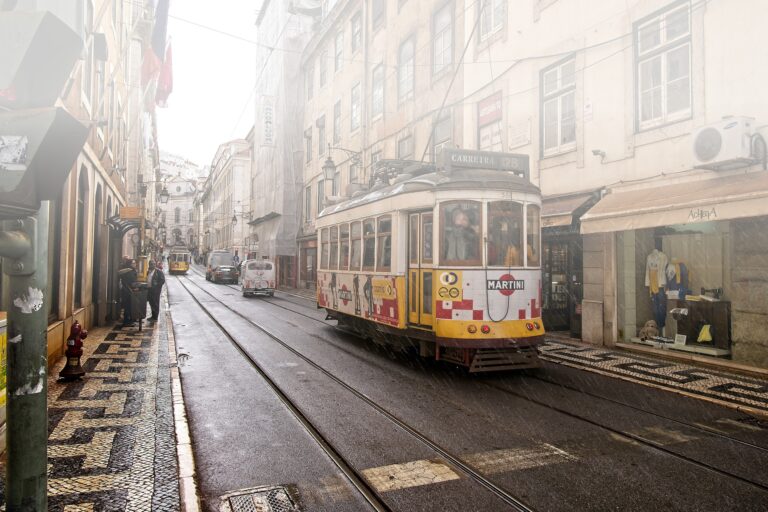
Portugal is relatively safe, but pickpockets and bag thieves are common in Lisbon and Porto, especially on Lisbon's trams 15, 25 and 28, at viewpoints, stations and beaches. Car break-ins are frequent, especially rental cars. Drinks can be spiked in nightlife areas, and drinks in Portuguese bars are often stronger than in the UK.
People drown every year: some beaches have strong currents, so obey the flags (red means no swimming) and swim parallel to the shore if caught in a rip. Cliffs erode, particularly in the Algarve, and warnings are enforced with fines. Wildfires are a risk from April to October, and starting one, even by accident, is a crime. In Albufeira a code of conduct bans antisocial behaviour, with on-the-spot fines of €150 to €1,800, and loud speakers are banned on beaches.
Customs and etiquette
Portugal is nominally Catholic but largely secular. Dress decently and keep quiet in churches. Topless sunbathing is common on beaches, and there are nudist beaches. Lisbon is gay-friendly, while small towns are more conservative.
You must show photo ID if a police officer asks. Using drugs is an administrative offence, not a crime, but possession is still prohibited and trafficking is punished severely. Gambling is legal only in licensed venues.
Language
| Official languages | Portuguese |
|---|---|
| English | Common |
| Hello | Olá oh-LAH |
|---|---|
| Good morning | Bom dia bohm DEE-uh |
| Please | Por favor poor fuh-VOHR |
| Thank you | Obrigado (said by a man) / Obrigada (by a woman) aw-bree-GAH-doo / aw-bree-GAH-duh |
| Excuse me | Com licença kohm lee-SEHN-suh |
| Goodbye | Adeus ah-DIHWSH |
| Do you speak English? | Fala inglês? FAH-luh een-GLIHSH |
What to pack
- Photo ID: Police can ask for it, and it is compulsory when driving.
- Enough prescription medicine: UK prescriptions are not recognised in Portugal.
- Sunscreen and a hat: July and August are very hot, especially inland.
- Walking boots: Paths in Madeira and the Azores are narrow and slippery after rain.
- Notarised consent letter for children: Needed for under-18s travelling without a parent.
Quick reference
Country facts
| Capital | Lisbon |
|---|---|
| Population | 10,804,871 (2025) |
| Area | 91,606 km² |
| Time zone | Europe/Lisbon (UTC+0), Atlantic/Madeira (UTC+0), Atlantic/Azores (UTC-1) |
| Calling code | +351 |
| Driving side | right |
Staying connected
| Roaming | With an EU SIM card you pay home prices for calls, texts and data (roam like at home). Others should check their provider's rates or buy a local SIM. |
|---|
Emergency numbers
| Emergency | 112 |
|---|
Frequently asked questions
Do I need a visa for Portugal?
Not for short trips with an EU, UK, US, Canadian or Australian passport: Portugal is in the Schengen area, so you can stay up to 90 days in any 180-day period. Check the official EU link before you book.
Do I have to pay for bread and starters?
Yes, if you eat them: they are charged per person. Send them back if you do not want them.
Do I need to tip in Portugal?
No, but 8 to 10% is appreciated for exemplary service in a restaurant.
Can I drink the tap water?
Yes, tap water is safe.
How do motorway tolls work?
Most are electronic (Via Verde): register your plate at the border or check the arrangement with your rental company.
When is the best time to visit Portugal?
May, June and September; July and August are very hot inland, and the Algarve is busiest.
More Travel Stories from Portugal
 Portugal
Sources This guide was last checked on · 20 sources
- Wikivoyage: Portugal · Overview, Places to visit, Things to do, Itineraries, Climate and best time to visit, Getting around, Where to stay, Eat and drink, Money and payments, Costs and budget, Health, Safety, Customs and etiquette, Language, What to pack, Frequently asked questions
- Wikidata: Portugal · Places to visit, Money and payments, Country facts
- WMO World Weather Information Service: Angra do Heroismo · Climate and best time to visit, Frequently asked questions
- UK FCDO: Portugal safety and security · Climate and best time to visit, Getting around, Safety, Customs and etiquette, What to pack
- Nager.Date: public holidays in Portugal, 2026 · Holidays and events
- Government of Canada: Portugal travel advice (updated 11 August 2026) · Getting around, Entry requirements and visas, Health, Safety, Frequently asked questions
- UK FCDO: Portugal entry requirements · Entry requirements and visas, What to pack, Frequently asked questions
- European Union: ETIAS official website · Entry requirements and visas
- ISO 4217 (SIX), published 2026-09-17 · Money and payments
- Eurostat: price level indices, 2024 (EU27 = 100) · Costs and budget
- UK FCDO: Portugal health · Health, What to pack
- CDC Travelers' Health: Portugal · Health
- US Department of State: Portugal travel advisory · Safety
- UK FCDO: Portugal travel advice · Safety
- Wikivoyage: Portuguese phrasebook · Language
- World Bank, SP.POP.TOTL · Country facts
- World Bank, AG.LND.TOTL.K2 · Country facts
- IANA Time Zone Database, zone.tab · Country facts
- Your Europe: mobile roaming costs · Staying connected
- UK FCDO: Portugal getting help · Emergency numbers
Suggest an update
Travel rules, prices and timetables change. If something in this guide is out of date, tell us: we check every suggestion against an official source before changing the page.