


- Local time
- 08:46
- Currency
- Euro (EUR), CFP Franc (XPF)
- Capital
- Paris
- Calling code
- +33
- Drive on the
- right
Overview
France goes far beyond Paris: Loire châteaux, Provence villages and lavender, the Riviera, Mont Saint-Michel, Alpine skiing under Mont Blanc, great wine regions and a gastronomic meal on UNESCO's heritage list, linked by fast TGV trains.
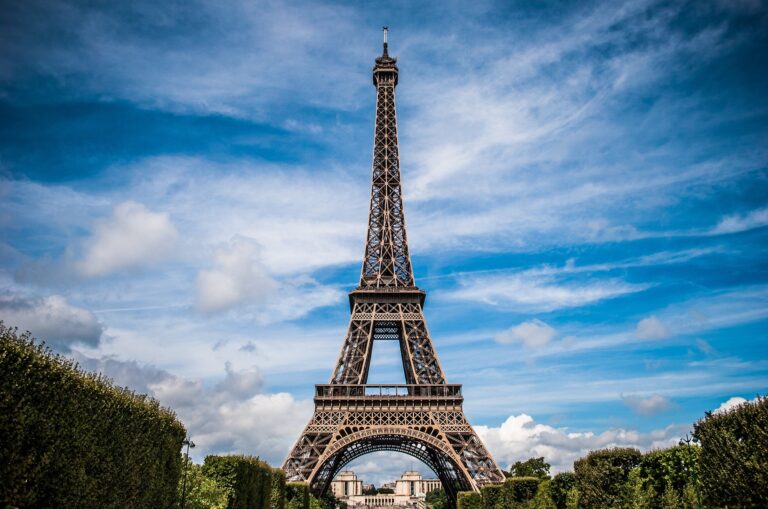
For most visitors France starts with Paris, the "City of Light": the Eiffel Tower, the Arc de Triomphe and the Louvre with the Mona Lisa. But the country is far more varied. The Loire Valley is lined with Renaissance châteaux, Normandy has Mont Saint-Michel and the D-Day beaches, Provence has picturesque villages, lavender and vineyards, and the Riviera has Nice and its seafront promenade. Lyon is known as the country's culinary capital, Bordeaux for its wine, Strasbourg for its canal-ringed centre.
The climate gets warmer as you go south and wetter as you go west, with long hot summers on the Mediterranean and snowy winters in the Alps and Pyrenees, where Chamonix sits below Mont Blanc. The gastronomic meal of the French is on UNESCO's list of intangible heritage, and every region has its own dishes and wines. High-speed TGV trains link the main cities, mostly via Paris. French is the only official language, and a simple bonjour goes a long way.
- Paris: The Eiffel Tower, the Louvre, the Musée d'Orsay and lively cafés.
- Loire Valley: A river valley of Renaissance châteaux and wine.
- Mont Saint-Michel: A monastery and town on a rock cut off from the mainland at high tide.
- French Riviera: The Mediterranean coast of Nice and glamorous seaside resorts.
- Provence: The Luberon's villages, the Camargue wetlands and the Verdon Gorge.
- French Alps: Ski country below Mont Blanc, explored from Chamonix.
Places to visit
- City
- Coast
- Park
- Mountain
- Historic site
- Area
Cities
- Paris: The "City of Light", home of the Eiffel Tower and the Louvre.
- Lyon: France's culinary capital, with a history from Roman times to the Resistance.
- Marseille: The cosmopolitan second city: a Mediterranean harbour, the calanques and seafood.
- Nice: The heart of the Riviera, with its seafront promenade; the gateway to Monaco.
- Bordeaux: A city of wine, stone mansions and elegant terraces.
- Strasbourg: A historic centre ringed by canals, and seat of many European institutions.
- Toulouse: The "Pink City" of brick buildings, with an aerospace industry and a southern feel.
- Lille: A northern city with a handsome centre and a busy cultural life.
- Nantes: A green city linked to Jules Verne, seafarers and Breton culture.
Beyond the cities
- Mont Saint-Michel (site): A monastery and town on a small rock, cut off at high tide.
- Loire Valley (area): Known for its wines and Renaissance châteaux such as Chambord and Chenonceau.
- French Riviera (coast): The Côte d'Azur: Mediterranean resorts and yachts.
- Luberon (area): Classic Provence of picturesque villages and wine.
- Verdon Gorge (park): A turquoise river canyon for kayaking, hiking, climbing or a scenic drive.
- Camargue (area): A vast river delta and wetland with a strong Provençal cowboy culture.
- French Alps (mountain): Ski country, home of Mont Blanc, explored from Chamonix.
- Disneyland Paris (site): France's most popular theme park, with its own TGV station.
Regions
- Île-de-France: Paris and the wealthy countryside around it, with Versailles.
- Normandy: Mont Saint-Michel, the D-Day beaches and Monet's home.
- Brittany: A rugged western peninsula of Celtic culture, standing stones and crêpes.
- Centre-Val de Loire: Farmland and vineyards, with châteaux and historic towns along the Loire.
- Pays de la Loire: The lower Loire Valley and the Vendée on the Atlantic coast.
- Hauts-de-France: The north, marked by the world wars and its industrial past.
- Grand Est: The east, where French and Germanic culture meet.
- Bourgogne-Franche-Comté: Medieval history, gentle scenery and Burgundy wine.
- Auvergne-Rhône-Alpes: French skiing, volcanic landscapes and Lyon.
- Nouvelle-Aquitaine: The largest region, a land of contrasts, with Bordeaux.
- Occitanie: The south, where the Pyrenees meet the Mediterranean; Toulouse.
- Provence-Alpes-Côte d'Azur: The Riviera, Marseille, Avignon and the Camargue.
- Corsica: A Mediterranean island with Italian influences, Napoleon's birthplace.
Things to do
See
- The Louvre Paris: Art from antiquity to the 19th century, including the Mona Lisa.
- Musée d'Orsay Paris: French art from 1848 to 1914 in a former railway station: Impressionists, Degas and Monet.
- Château de Versailles Île-de-France: The former royal court of Louis XIV.
- Loire châteaux Loire Valley: Amboise, Villandry, Azay-le-Rideau, Chambord and Chenonceau.
- Mont Saint-Michel Normandy: The abbey on its rock in the bay, cut off at high tide.
Do
- Mont Blanc Chamonix: Climbing, hiking and skiing below Mont Blanc, the highest mountain in Western Europe.
- Verdon Gorge Provence: Kayaking, hiking and climbing in a turquoise canyon.
Eat
- Bakeries: Fresh baguettes, croissants and pains au chocolat in every village.
- Regional cooking Lyon and the regions: Every region has its own dishes; ask locals where to eat.
Drink
- Wine regions: Champagne, Burgundy, Bordeaux, the Rhône and the Loire.
Itineraries
Paris and the Loire châteaux in 7 days (7 days)
- Paris (4 nights): The Louvre, Orsay and a day trip to Versailles.
- Loire Valley (3 nights): Chambord, Chenonceau and the vineyards.
Provence and the Riviera in 8 days (8 days)
- Marseille (2 nights): The old harbour and the calanques.
- Luberon (2 nights): Picturesque villages and wine.
- Verdon Gorge (1 night): Kayaking or a drive along the cliffs.
- Nice (3 nights): The Riviera, with Monaco close by.
Lyon and the Alps in 6 days (6 days)
- Lyon (3 nights): Food and history from Roman times to the Resistance.
- French Alps (3 nights): Chamonix and Mont Blanc: skiing in winter, hiking in summer.
Climate and best time to visit
| Jan | Feb | Mar | Apr | May | Jun | Jul | Aug | Sep | Oct | Nov | Dec | |
|---|---|---|---|---|---|---|---|---|---|---|---|---|
| Max °C | 7 | 8 | 12 | 15 | 19 | 22 | 24 | 25 | 21 | 16 | 10 | 8 |
| Min °C | 3 | 3 | 5 | 7 | 11 | 13 | 16 | 15 | 13 | 9 | 5 | 4 |
| Rain mm | 54 | 44 | 49 | 53 | 65 | 55 | 63 | 43 | 55 | 60 | 52 | 59 |
France gets warmer as you go south and wetter as you go west. Paris and the Loire Valley have mild winters and warm summers: in Paris highs average about 7 °C in January and 24 °C in July and August, with rain spread through the year. The north-west (Brittany, Normandy) is mild and wet, like southern England; the east has cold winters and hot summers. The Mediterranean coast and Corsica have short, mild winters and long, hot, sunny summers, and the Rhône Valley is swept by the cold mistral wind. The Alps, the Pyrenees and the Auvergne get plenty of snow in winter.
For cities and touring, May, June and September are the most comfortable; winter is for skiing. From April to October there is a high risk of wildfires, especially on the Mediterranean coast, in Corsica and in the south-west: check local advice, as forests and sites can close at short notice.
Holidays and events
- 1 January 2026 · New Year's Day
- 6 April 2026 · Easter Monday
- 1 May 2026 · Labour Day
- 8 May 2026 · Victory in Europe Day
- 14 May 2026 · Ascension Day
- 25 May 2026 · Whit Monday
- 14 July 2026 · Bastille Day
- 15 August 2026 · Assumption Day
- 1 November 2026 · All Saints' Day
- 11 November 2026 · Armistice Day
- 25 December 2026 · Christmas Day
Getting there and around
| Main airports | CDG, ORY |
|---|
Getting there
By air: Paris Charles de Gaulle (CDG) is the main intercontinental airport and Air France's hub; allow at least an hour for connections, more if you change terminal. Orly (ORY), the second Paris airport, handles many domestic and European flights.
By train: high-speed trains reach France from most neighbouring countries: Eurostar from London through the Channel Tunnel to Lille and Paris, and from Belgium, the Netherlands and Cologne; TGV and ICE trains from southern Germany; Lyria from Switzerland; and TGVs from Italy.
Getting around
Trains go almost everywhere. On high-speed TGVs a reservation is obligatory. The network centres on Paris, so a trip between two regional cities is often faster via the Paris area, changing at Massy, Marne-la-Vallée or Charles de Gaulle Airport; in Paris itself the main stations are linked only by RER and metro. Domestic flights are banned on routes that the train covers in under two and a half hours. Strikes are frequent and can disrupt roads and public transport: check with your operator.
Tickets and taxis: validate your ticket and keep it until the end of your journey, because random checks can mean a fine. Illegal taxis work at Paris airports and train stations and charge much more than official ones: at airports, use only the official taxi stations.
Driving: most motorways (autoroutes) are toll roads. Keep your entry ticket, or you pay for the longest distance; some booths may not accept foreign cards. A UK photocard licence is valid, and so is a Canadian licence for the first year of your stay, but hire companies may ask for an International Driving Permit. In certain mountain areas winter tyres or chains are required from 1 November to 31 March, and central Paris, Lyon and Grenoble require an air-pollution sticker on weekdays from 8am to 8pm. Every vehicle must carry a reflective vest and a warning triangle. At junctions, give way to vehicles coming from the right, even on secondary roads. Police give on-the-spot fines, and drink-driving laws are strict.
Flying to France? PartnerCompare fares and find the cheapest datesSearch flightsWhere to stay
- Hotels: Rated 1 to 5 stars on a blue shield at the entrance; maximum rates are posted outside.
- Chambres d'hôte: B&Bs by the night; breakfast must be included in the price.
- Gîtes: Self-catering cottages, mostly in the countryside, usually rented by the week.
- Campsites: Very common and graded with stars; most take tents, camper vans and caravans.
Hotels in city centres and near stations are often small, so book ahead. Bargaining is not the norm, but you can ask for a discount. On the coast, three- and four-star campsites must usually be booked in advance for July and August. Outside campsites, you cannot camp on beaches, on public roads, in woods or in natural, regional and national parks, or on private land without the owner's consent.
Eat and drink
Dishes to try
- Cassoulet: Beans with duck, pork and sausages, from the south-west.
- Choucroute: Fermented cabbage with pork, from Alsace.
- Boeuf bourguignon: Beef slow-cooked in red wine, from Burgundy.
- Fondue savoyarde and raclette: Melted cheese dishes from the Alps.
- Bouillabaisse: Fish soup with saffron from Marseille; the real one is expensive.
- Croissants and pains au chocolat: The usual breakfast, from any bakery.
Drinks
- Wine: From Champagne, Burgundy, Bordeaux, the Rhône and the Loire; labelled by region rather than grape.
- Beer: Popular especially in the north, where you can find bière de garde.
| Tipping | Not expected: service is included in prices by law. People leave small change, or €1 to €5 if the service was good. |
|---|
Always greet staff with bonjour (or bonsoir in the evening) and wait to be shown to a table. Restaurants aimed at tourists can be ordinary or overpriced: ask locals or hotel staff for tips. Bakeries are cheap and found everywhere, from villages to city streets.
The legal age to buy alcohol is 18. Drinks in French bars are often stronger than in the UK, and drink spiking happens: keep your glass in sight.
Entry requirements and visas
| Passport validity | Issued less than 10 years before you arrive, and valid at least 3 months after you leave the Schengen area |
|---|
| Passport | Entry | Max stay | Notes |
|---|---|---|---|
| EU / EEA | Freedom of movement | Free movement with a valid passport or national ID card. | |
| United Kingdom | Visa free | 90 days | 90 days in any 180-day period across the whole Schengen area. |
| Canada | Visa free | 90 days | 90 days in any 180-day period; longer stays need a visa. |
| Australia | Visa free | 90 days | Visa-exempt for short stays in the Schengen area. |
Other nationalities: check the official source below.
France is in the Schengen area. UK and Canadian visitors can stay up to 90 days in any 180-day period without a visa, counting days in other Schengen countries; overstaying can lead to a ban of up to 3 years. At the border you may be asked for travel insurance, proof of accommodation, a return ticket and enough money. If you stay with friends or family, your host may need to get you an invitation (attestation d'accueil) from the town hall.
Non-EU visitors register fingerprints and a photo in the EU Entry/Exit System on their first entry: allow extra time at the border and when you leave. Canada says Canadians will also need ETIAS, an online travel authorisation for 30 European countries; applications are not yet open, so apply only through the official EU website once it launches. Rules depend on your passport: check the official link before you book.
Money and payments
| Currency | Euro (EUR), CFP Franc (XPF) |
|---|---|
| Cards | Widespread |
Mainland France uses the euro (€). Prices use a comma for decimals, so 2,99 € is two euros 99. Almost all shops, restaurants and hotels take Visa and Mastercard; American Express is mostly accepted only in high-end shops, and some shops post a minimum spend for cards. Foreign currencies such as dollars or pounds are rarely accepted.
Shops, hotels and restaurants must display their prices, visible from outside; for hotels the posted rate is a maximum, and it may be lower when rooms are hard to fill. If you carry €10,000 or more in cash or equivalents, you must declare it to customs when you enter or leave the EU.
Costs and budget
According to Eurostat, in 2024 the general price level in France was about 109% of the EU average, food in shops about 110% and restaurants and hotels about 110%.
Health
| Recommended vaccines | Routine vaccines, including measles (MMR), Hepatitis A: consider it, Hepatitis B, Tick-borne encephalitis, for long stays or time outdoors in forests and countryside, Mpox, for travellers at risk of sexual exposure |
|---|---|
| Malaria | None |
| Tap water | Safe |
With a European (EHIC) or UK (GHIC) health card you get medically necessary state healthcare on the same terms as French citizens, though it is not always free: take travel insurance too. The FCDO lists dengue, chikungunya, biting insects and ticks among the health risks, and altitude sickness in the mountains: protect yourself from mosquito and tick bites. Hospital emergency departments are signed Urgences.
Tap water is drinkable, except where it is marked eau non potable. Emergency numbers: 15 medical, 17 police, 18 fire, or 112.
This is general information, not medical advice: check with a travel health professional before you go.
Safety
- United States: Level 2: Exercise Increased Caution (2026-10-20)
- Canada: Exercise a high degree of caution (2026-10-20)
- United Kingdom: No advice against travel (2026-10-20)
Canada advises a high degree of caution because of the threat of terrorism, and the FCDO says attacks are very likely, including in crowded places, transport hubs and tourist sites: stay alert and follow the authorities. Demonstrations and strikes are frequent and can turn violent or disrupt travel. Local curfews can be introduced at short notice: check local media. Pickpockets, often in gangs, work on the Paris Métro, the RER and at main stations; keep valuables in separate pockets and your bag across your body. There have been serious assaults on RER line B (the line to both Paris airports and Gare du Nord) and line D.
You must be able to prove your identity when asked, or within 4 hours at a police station. Covering your face in public is illegal, and drug penalties are severe. On the Atlantic coast, especially in Gironde and Landes, there are strong currents: swim where lifeguards and flags are. In summer, check the wildfire alerts.
Customs and etiquette
Every exchange starts with bonjour (or bonsoir in the evening): skipping it is as rude as not saying please. Use vous with adults you do not know, and switch to tu only when invited. The French speak their mind and enjoy a debate: it is rarely meant as an insult.
On the Métro, let people off before you board, and stand on the right on moving walkways. Smoking is banned in all enclosed public spaces and outdoors where children gather, such as parks, beaches and bus stops. Keep ID with you: you may be asked to prove who you are.
Language
| Official languages | French |
|---|---|
| English | Limited |
| Hello / Good evening | Bonjour / Bonsoir bohn-ZHOOR / bohn-SWAHR |
|---|---|
| Please | S'il vous plaît seel voo PLEH |
| Thank you | Merci mehr-SEE |
| Excuse me | Excusez-moi ehk-skew-zay MWAH |
| Goodbye | Au revoir oh ruh-VWAHR |
| Do you speak English? | Parlez-vous anglais ? par-lay voo ahn-GLEH |
| The bill, please | L'addition, s'il vous plaît lah-dee-SYOHN seel voo PLEH |
What to pack
- Passport or ID: You must be able to prove your identity when asked.
- Proof of accommodation and return ticket: Border officers may ask for them.
- EHIC or GHIC and travel insurance: State healthcare is not always free.
- Plug adapter: France uses types C and E; old German-type plugs without a hole for the earth pin do not fit.
Quick reference
Country facts
| Capital | Paris |
|---|---|
| Population | 68,720,337 (2025) |
| Area | 538,950 km² |
| Time zone | Europe/Paris (UTC+1) |
| Calling code | +33 |
| Driving side | right |
Electricity and plugs
| Plug types | C, E |
|---|---|
| Voltage | 230 V |
| Frequency | 50 Hz |
Staying connected
| SIM and eSIM | Orange, SFR, Free and Bouygues sell prepaid SIM cards; they must be activated, usually online, and ID may be needed. Coverage is almost total, with gaps in rural and mountain areas. |
|---|---|
| Roaming | France is in the EU: with a SIM card from another EU country you pay home prices ("roam like at home"). Other visitors should check their provider's rates. |
Emergency numbers
| Emergency | 112 |
|---|---|
| Police | 17 |
| Ambulance | 15 |
| Fire | 18 |
Frequently asked questions
Do I need a visa for France?
Not for short stays with a UK or Canadian passport: up to 90 days in any 180-day period in the Schengen area. Check the official link before you book.
Should I tip in France?
It is not expected, since service is included by law. Leave small change, or €1 to €5 for good service.
Can I drink the tap water?
Yes, unless it is marked eau non potable.
Are French motorways free?
Most are toll roads. Keep your entry ticket, and note that some booths may not accept foreign cards.
Do people speak English?
Staff in big hotels and attractions usually speak some, but many people do not. Start with bonjour and a few words of French.
When is the best time to visit?
May, June and September for cities and touring; winter for skiing in the Alps.
More Travel Stories from France
 France
Sources This guide was last checked on · 21 sources
- Wikivoyage: France · Overview, Places to visit, Things to do, Itineraries, Climate and best time to visit, Getting there and around, Where to stay, Eat and drink, Entry requirements and visas, Money and payments, Health, Safety, Customs and etiquette, Language, What to pack, Electricity and plugs, Staying connected, Frequently asked questions
- Wikidata: France · Overview, Places to visit, Money and payments, Country facts, Electricity and plugs
- UNESCO Intangible Cultural Heritage: Gastronomic meal of the French · Overview
- WMO World Weather Information Service: Paris · Climate and best time to visit
- UK FCDO: France travel advice · Climate and best time to visit, Safety
- Nager.Date: public holidays in France, 2026 · Holidays and events
- UK FCDO: France safety and security · Getting there and around, Eat and drink, Safety, Customs and etiquette, What to pack
- Government of Canada: France travel advice (updated 19 October 2026) · Getting there and around, Entry requirements and visas, Money and payments, Health, Safety, Frequently asked questions
- UK FCDO: France entry requirements · Entry requirements and visas, What to pack, Frequently asked questions
- Your Europe (EU): Travel documents for EU citizens · Entry requirements and visas
- ISO 4217 (SIX), published 2026-09-17 · Money and payments
- Eurostat: price level indices, 2024 (EU27 = 100) · Costs and budget
- CDC Travelers' Health: France · Health
- UK FCDO: France health · Health
- US Department of State: France travel advisory · Safety
- Wikivoyage: French phrasebook · Language
- World Bank, SP.POP.TOTL · Country facts
- World Bank, AG.LND.TOTL.K2 · Country facts
- IANA Time Zone Database, zone.tab · Country facts
- Your Europe: Roaming, using a mobile phone in the EU · Staying connected
- UK FCDO: France getting help · Emergency numbers
Suggest an update
Travel rules, prices and timetables change. If something in this guide is out of date, tell us: we check every suggestion against an official source before changing the page.