

- Local time
- 20:04
- Currency
- Botswanan Pula (BWP)
- Capital
- Gaborone
- Calling code
- +267
- Drive on the
- left
Overview
Safaris in the Okavango Delta, elephants in Chobe and the open Kalahari, in a stable country where English is widely spoken.
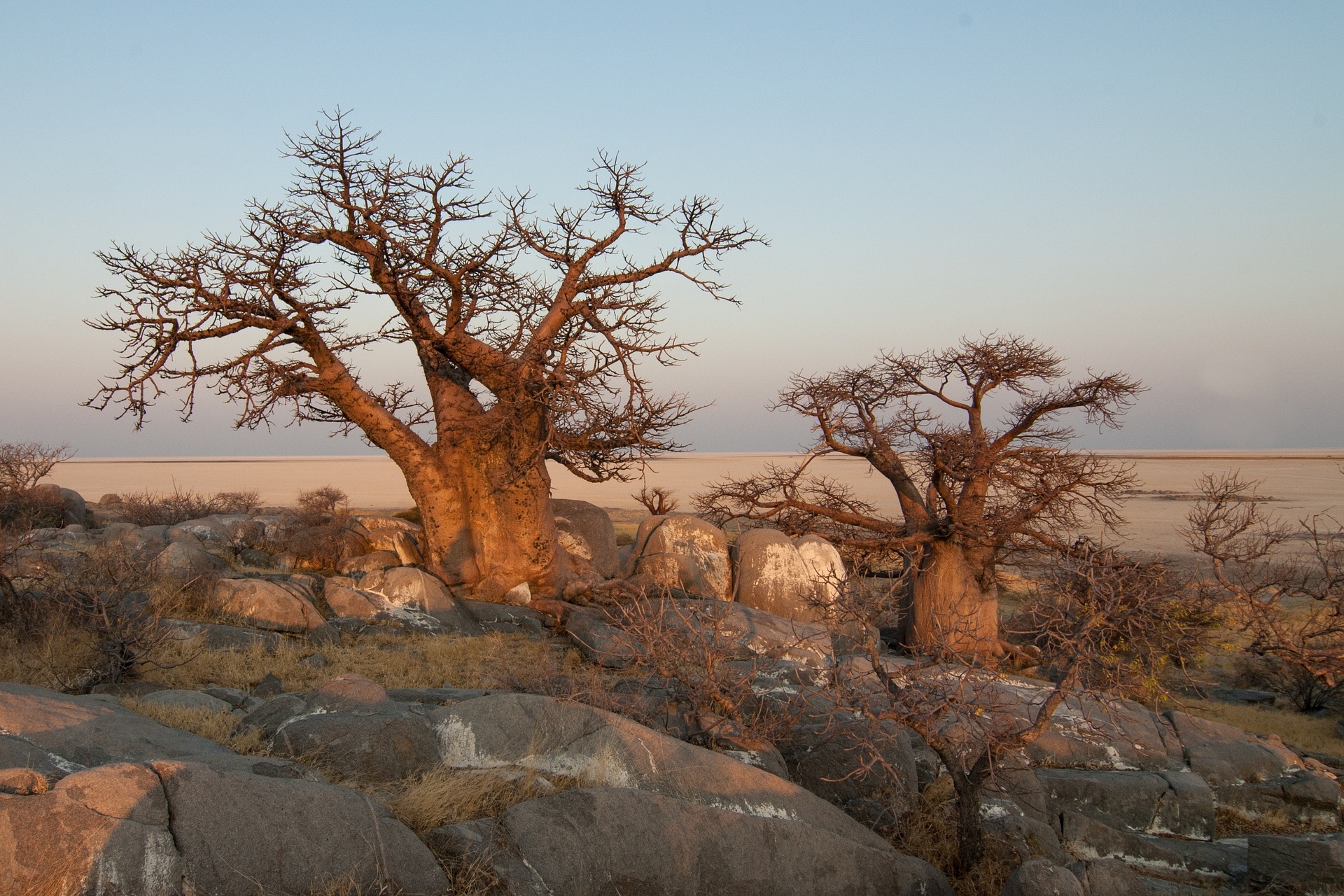
Botswana is a landlocked country in Southern Africa, bordered by Namibia, South Africa, Zambia and Zimbabwe, and wildlife is the main reason to come. Parks and reserves cover nearly a fifth of the land. The Okavango Delta, where a river spreads out into the Kalahari instead of reaching the sea, draws animals from far around; Chobe National Park has a large population of elephants and is close to Victoria Falls; and the salt pans of Makgadikgadi attract many birds all year. The Tsodilo Hills hold thousands of rock paintings.
The country has been a stable democracy since independence in 1966, and diamonds have made it one of the wealthier countries in Africa. Roads are mostly paved, English is used everywhere in daily business, and neither the UK nor Canada advises against travel to any part of it. Lodges range from cheap backpacker dorms to private camps at over USD 1,000 a night. Maun is the base for the Okavango Delta.
- Okavango Delta: A river that spreads into the Kalahari, with swamps and channels full of wildlife; part of it is the Moremi Game Reserve.
- Chobe National Park: A large elephant population and easy sightings of zebras and lions, near Victoria Falls.
- Makgadikgadi Pans: Bleak salt pans that attract a wide variety of birds all year.
- Central Kalahari Game Reserve: One of the largest wildlife reserves in the world, in the Kalahari.
- Tsodilo Hills: Around 4,500 rock paintings, one of the largest collections in Africa.
- Kgalagadi Transfrontier Park: A cross-border park in the Kalahari.
Places to visit
- City
- Park
- Historic site
- Area
Cities
- Gaborone: The neat, compact capital in the south-east, and the starting point for travel in the country.
- Maun: The main tourist centre of the north and the gateway to the Okavango Delta, with good road, bus and air links.
- Kasane: A small town on the Chobe River, the base for Chobe National Park and Victoria Falls.
- Francistown: The second city, site of a gold rush in the 19th century.
- Ghanzi: A cattle-ranching town in the Kalahari and a fuel stop on the road to Maun.
- Gweta: A small village and gateway to the Makgadikgadi Pans.
- Nata: A small village where the roads to Francistown, Kasane and Maun meet.
- Kanye: A town in the south with some natural sites.
- Tsabong: A village in the Kalahari with a camel park.
Beyond the cities
- Okavango Delta (area): A delta formed by a river flowing into the Kalahari instead of the ocean; it grows to about 100,000 km² in the floods of July and August.
- Moremi Game Reserve (park): The part of the Okavango Delta set aside as a game reserve.
- Chobe National Park (park): Known for its elephants, with zebras and lions easy to spot.
- Makgadikgadi Pans (area): Salt pans that draw large numbers of birds all year.
- Nxai Pan National Park (park): One of the country's other game parks.
- Central Kalahari Game Reserve (park): One of the largest wildlife reserves in the world.
- Kgalagadi Transfrontier Park (park): A cross-border park in the Kalahari.
- Tsodilo Hills (site): Hills with around 4,500 rock paintings, made over a very long span of time.
- Northern Tuli Game Reserve (park): A reserve where wildlife, landscapes and history meet.
Regions
- Southeast: Home to Gaborone and most of the population, and the starting point for travel in the country.
- Okavango-Chobe: The north, with the Okavango Delta and game reserves such as Chobe and Moremi.
- Kalahari: The thinly populated Kalahari Desert and its edges.
Things to do
See
- Elephants of Chobe Kasane: See the park's many elephants, and zebras and lions, from a base in Kasane.
- Victoria Falls Kasane: The falls are close to Kasane, across the border.
- Makgadikgadi Pans Gweta: Salt pans with birds all year, reached from Gweta.
- Tsodilo Hills rock art: Around 4,500 rock paintings, one of the largest collections of rock art in Africa.
- National arts festival: In mid-July, a chance to see many of the country's peoples performing in one place.
Do
- Safari in the Okavango Delta Maun: Explore the swamps and channels of the delta from Maun, including the Moremi Game Reserve.
- Central Kalahari Game Reserve: Desert wildlife in one of the largest reserves in the world; go with a reputable operator.
Eat
- Seswaa: Try the national meat dish, boiled and shredded, with pap or sorghum porridge.
Shop
- Crafts of D'Kar and Xai-Xai: Villages with arts and crafts, where you can join in performances.
Itineraries
Okavango, Makgadikgadi and Chobe in 9 days (9 days)
- Maun (4 nights): Fly in from Johannesburg, Cape Town or Gaborone; trips into the delta and Moremi.
- Gweta (2 nights): The gateway to the Makgadikgadi Pans.
- Kasane (3 nights): Chobe National Park and a day at Victoria Falls.
The Kalahari road from Gaborone to Maun in 7 days (7 days)
- Gaborone (2 nights): The capital and the starting point for travel in the country.
- Ghanzi (2 nights): By the Trans-Kalahari Highway from Lobatse; fill up with fuel and water.
- Maun (3 nights): The Okavango Delta.
Climate and best time to visit
| Jan | Feb | Mar | Apr | May | Jun | Jul | Aug | Sep | Oct | Nov | Dec | |
|---|---|---|---|---|---|---|---|---|---|---|---|---|
| Max °C | 33 | 32 | 30 | 28 | 25 | 23 | 23 | 26 | 30 | 31 | 32 | 32 |
| Min °C | 19 | 19 | 17 | 13 | 8 | 5 | 5 | 8 | 13 | 16 | 18 | 19 |
| Rain mm | 114 | 89 | 66 | 33 | 11 | 5 | 0 | 3 | 19 | 44 | 80 | 89 |
The rainy season runs from November to March, with heavy storms and a risk of flash floods that can make roads unsafe and close border crossings at short notice. In Gaborone almost all the year's rain falls in these months, and the average maximum is above 30 °C from October to February. From May to September it is dry: from May to August maximums are about 22-26 °C, but nights are cold, down to about 5 °C in June and July, so dress in layers.
The Okavango Delta floods in July and August, when it triples in size, and the rains can also flood parts of the Chobe district. Before the rains, drought can hit the Kgalagadi, North-East and Central districts. May to September, the dry season, is the easier time to travel.
Holidays and events
- 1 January 2026 · New Year's Day
- 3 April 2026 · Good Friday
- 6 April 2026 · Easter Monday
- 1 May 2026 · Labour Day
- 14 May 2026 · Ascension Day
- 1 July 2026 · Sir Seretse Khama Day
- 20 July 2026 · Presidents' Day
- 30 September 2026 · Independence Day
- 1 October 2026 · Botswana Day holiday
- 25 December 2026 · Christmas Day
- 26 December 2026 · St. Stephen's Day
Getting around
| Main airports | GBE, MUB |
|---|---|
| International driving permit | Recommended |
Driving: traffic is on the left, and the main roads are paved and well kept, but outside towns stray wildlife and livestock are a real danger, above all at night, and drink-driving and speeding cause many fatal accidents. Rural roads have few signs, so use GPS; carry fuel, water and a spare tyre, and in remote areas travel with a second vehicle or a satellite phone. The Trans-Kalahari Highway from Lobatse to Ghanzi is paved and fine for a normal car. You can drive on a UK photocard licence for up to 90 days; Canada says you need an International Driving Permit, and car hire firms often ask for one. The blood alcohol limit is 0.05%.
Buses run from Gaborone to most cities and are fairly comfortable on the main routes; arrive early, as they fill up. Canada advises against the minibuses called kombis, which are often overcrowded. In towns, use licensed taxis with blue number plates, booked through a recognised company or your hotel, and agree the fare first. Passenger trains stopped during Covid and had not restarted when we checked.
Flying to Botswana? PartnerCompare fares and find the cheapest datesSearch flightsWhere to stay
- Safari lodges and camps: Many are in remote wilderness areas; prices range from cheap dorms on backpacker tours to private lodges at over USD 1,000 a night.
- Hotels: Most are in or near the larger towns.
- Campsites: Plentiful, including at fuel stops such as Kang on the Trans-Kalahari Highway.
- Backpacker hostels: Found in a few places.
For remote areas, book transport and accommodation in advance. There have been isolated break-ins at lodges in the Chobe area, especially those on the river: lock your room, keep valuables in a safe and tell your operator if your room does not seem secure. In parks, wildlife areas are not always fenced: stay within the authorised limits, especially after dark.
Eat and drink
Dishes to try
- Seswaa: The national dish: beef, goat or lamb boiled until tender with just enough salt, then shredded, usually served with pap.
- Pap: Maize meal porridge.
- Bogobe jwa lerotse: Sorghum porridge cooked with lerotse, a local melon that looks like a watermelon.
- Samp: One of the staples Botswana shares with its neighbours.
- Vetkoek: Another Southern African staple you will find here.
- Mopane worms: One of the country's traditional foods.
Drinks
- Castle and Lion: The beers made in Botswana.
- Madila: Fermented sour milk, eaten on its own or added to porridge.
- Ginger beer: A favourite non-alcoholic drink, often home-made.
Botswana's food is close to that of the rest of Southern Africa, built around porridges of maize or sorghum and meat. Many soft drinks are bottled in the country, and a local company, Native Foods, makes drinks such as Mosukujane iced tea.
Entry requirements and visas
| Passport validity | At least 6 months beyond your stay, with 3 blank pages |
|---|
| Passport | Entry | Max stay | Notes |
|---|---|---|---|
| United Kingdom | Visa free | 90 days | For visits; work, study or volunteering need a visa. |
| Canada | Visa free | 90 days | For tourism or business; ask immigration to extend. |
| United States | Visa free | 90 days | Up to 90 days in any 365-day period. |
| EU / EEA | Visa free | 90 days | EU countries, Norway, Iceland and Liechtenstein; up to 90 days in any 365-day period. |
| Australia | Visa free | 90 days | As a Commonwealth country; up to 90 days in any 365-day period. |
Other nationalities: check the official source below.
Many passports, including those of the UK, the EU, the US, Canada and Australia, can visit for up to 90 days without a visa. Others need an e-visa before arrival. Make sure your passport is stamped when you enter, because an unstamped passport can suggest illegal entry. Dual nationals must enter on the passport they used to leave the previous country.
Children under 18 need a certified copy of their full birth certificate, and a signed consent from any parent who is not travelling. You need a yellow fever certificate only if you arrive from a country with yellow fever risk, including after an airport transit of more than 12 hours there. Declare cash worth BWP 10,000 or more. Travellers from areas affected by Ebola may face health checks. Rules depend on your passport and can change: check with the Botswana High Commission or embassy before you book.
Money and payments
| Currency | Botswanan Pula (BWP) |
|---|
The currency is the pula (BWP), divided into 100 thebe; the word means rain in Setswana. Wikivoyage describes it as one of the most stable currencies in Africa. Declare foreign or local cash worth BWP 10,000 or more when you arrive. Do not carry large sums of cash, and keep cards and phones out of sight in the car, as smash-and-grab thefts happen at traffic lights.
Costs and budget
- Shared taxi ride in town (2022): P9
- Road safety levy for a foreign car at the border: P50
- Road transport permit for a foreign car: P52
Botswana is not a cheap safari country: lodges range from inexpensive dorms on backpacker tours to private lodges at more than USD 1,000 a night. Getting around towns is cheap, since taxis on fixed routes cost very little. The prices here are those listed on Wikivoyage when we read it in October 2026.
Health
| Required vaccines | Yellow fever certificate, only if you arrive from a country with yellow fever risk (from 1 year of age, including airport transits of more than 12 hours) |
|---|---|
| Recommended vaccines | Routine vaccines, including measles (MMR), Hepatitis A, Hepatitis B, Typhoid, for rural areas or long stays, Rabies, for some travellers: ask a travel clinic |
| Malaria | Some areas |
| Tap water | Varies |
Malaria is present in the north and east, including Chobe National Park, the Okavango and Ngamiland, Ghanzi, Boteti and the North-East district around Francistown, with rare cases in some southern districts and none in Gaborone. The CDC recommends prescription medicine for the risk areas: see a travel clinic at least 8 weeks before you go, and note that the UK reported in April 2025 that malaria had spread to areas where it is not usually found. In towns tap water is chlorinated and drunk by locals, but short-term visitors should drink bottled water; outside towns, do not drink it. Do not swim in rivers or lakes, because of wild animals and schistosomiasis, avoid dead animals because of anthrax, and protect yourself from ticks in the bush.
Healthcare is good in the main towns but limited in rural areas, and public facilities face shortages of medicines; private hospitals are better but want payment up front. Serious cases may need evacuation to South Africa, so get insurance that covers it. Carry a prescription for every medicine you bring. For an ambulance, dial 997; for the police, 999.
This is general information, not medical advice: check with a travel health professional before you go.
Safety
- United States: Level 2: Exercise Increased Caution (2026-10-20)
- Canada: Exercise a high degree of caution (2026-10-20)
- United Kingdom: No advice against travel (2026-10-20)
No part of Botswana is under a travel warning from the UK. Canada advises a high degree of caution because of crime, which occurs across the country and especially in the border areas with South Africa, Zimbabwe and Namibia. Attacks on tourists are rare, but violent crime is rising in Gaborone, Francistown and Maun. Smash-and-grab thefts happen at traffic lights: keep doors locked, windows closed and bags out of sight, and do not stop for hitchhikers. Avoid walking alone at night, and do not resist if you are attacked.
In the parks, wildlife is the main risk. Areas are often unfenced with few signs, and animals can be dangerous, especially if you are on foot. Hire a guide from a reputable company, leave your vehicle only when a guide or warden says it is safe, and follow park rules. Animals also roam the open highways, so take great care when driving after dark. In the rainy season, flash floods can make roads unsafe.
Customs and etiquette
People are friendly, and a greeting in Setswana, Dumela, is a good start. Directions are usually given by landmarks rather than street names. Always ask before you photograph people, and never photograph military or government installations. Carry photo ID at all times; a copy of your passport photo page is usually enough if you can show the original when asked.
Wildlife laws are strict: buying, selling or exporting any animal or animal part, including horns, tusks and bones, needs a government permit or a receipt from a licensed shop. Drug offences can bring fines of up to BWP 500,000 or 25 years in prison. Same-sex relations are legal, but public attitudes are less tolerant, so avoid displays of affection. Accessing or publishing pornography is illegal.
Language
| Official languages | English, Tswana |
|---|---|
| English | Widespread |
| Hello (to one person / to several) | Dumela / Dumelang |
|---|---|
| How are you? | O tsogile jang? |
| Please | Ka tsweetswee |
| Thank you | Ke a leboga |
| Yes / No | Ee / Nnyaa |
| Goodbye (to someone staying / leaving) | Sala sentle / Tsamaya sentle |
| Do you speak English? | A o bua Sekgowa? |
| Where is the toilet? | Ntlwana ya boithusetso e kae? |
What to pack
- Passport with 3 blank pages: Required by Botswana, valid at least 6 months.
- Children's birth certificates and parental consent: Required at the border for anyone under 18.
- International Driving Permit: Canada requires one, and car hire firms often ask for it.
- Prescriptions for your medicines: Undeclared medicines can lead to a fine.
- Antimalarial medicine and repellent: For the north, including Chobe and the Okavango.
- Warm layers: Winter mornings from June to August are very cold, afternoons hot.
- Water, fuel and a satellite phone: For remote areas, where help is far away.
Quick reference
Country facts
| Capital | Gaborone |
|---|---|
| Population | 2,562,122 (2025) |
| Area | 566,730 km² |
| Time zone | Africa/Gaborone (UTC+2) |
| Calling code | +267 |
| Driving side | left |
Staying connected
| SIM and eSIM | Buy a local SIM card and data bundle: speeds are 4G in and around the big cities, and 3G or 2G in very rural areas. |
|---|---|
| Wi-Fi | Free Wi-Fi is common in shopping malls, shops and libraries, though shop hotspots often allow only about 15 minutes and public networks are slow; internet cafés are easy to find. |
Emergency numbers
| Police | 999 |
|---|---|
| Ambulance | 997 |
| Fire | 998 |
Frequently asked questions
Do I need a visa for Botswana?
Not if you hold a UK, EU, US, Canadian or Australian passport: you can stay up to 90 days. Check the rules with the embassy or high commission before you book.
Is there malaria in Botswana?
Yes, in the north and east, including Chobe and the Okavango Delta, but not in Gaborone. Ask a travel clinic about prevention.
Is it safe to travel to Botswana?
The US, Canada and the UK all publish advice for Botswana; neither the UK nor Canada advises against travel to any area. The main risks are crime in towns and wildlife in the parks.
When is the best time to visit Botswana?
The dry season from May to September is the easier time to travel; nights are cold in June and July. Rain falls from November to March.
Can I drink the tap water in Botswana?
In towns it is chlorinated, but visitors should drink bottled water; outside towns, do not drink it.
What language is spoken in Botswana?
English and Setswana are official, and almost everyone you meet speaks English.
More Travel Stories from Africa
 Kenya
Sources This guide was last checked on · 18 sources
- Wikivoyage: Botswana · Overview, Places to visit, Things to do, Itineraries, Climate and best time to visit, Getting around, Where to stay, Eat and drink, Entry requirements and visas, Money and payments, Costs and budget, Health, Safety, Customs and etiquette, Language, What to pack, Staying connected, Frequently asked questions
- Wikidata: Botswana · Overview, Places to visit, Money and payments, Country facts
- UK FCDO: Botswana travel advice (updated 1 June 2026) · Overview, Safety
- Government of Canada: Botswana travel advice (updated 14 October 2026) · Overview, Things to do, Climate and best time to visit, Getting around, Where to stay, Entry requirements and visas, Money and payments, Health, Safety, Customs and etiquette, What to pack, Staying connected, Frequently asked questions
- UK FCDO: Botswana safety and security · Things to do, Itineraries, Climate and best time to visit, Getting around, Where to stay, Money and payments, Safety, Customs and etiquette, What to pack
- Wikivoyage: Maun · Itineraries, Getting around
- WMO World Weather Information Service: Gaborone · Climate and best time to visit
- Nager.Date: public holidays in Botswana, 2026 · Holidays and events
- UK FCDO: Botswana entry requirements · Entry requirements and visas, Money and payments, What to pack, Frequently asked questions
- CDC Travelers' Health: Botswana · Entry requirements and visas, Health, What to pack, Frequently asked questions
- ISO 4217 (SIX), published 2026-09-17 · Money and payments
- UK FCDO: Botswana health · Health
- UK FCDO: Botswana getting help · Health, Emergency numbers
- US Department of State: Botswana travel advisory · Safety
- Wikivoyage: Tswana phrasebook · Language
- World Bank, SP.POP.TOTL · Country facts
- World Bank, AG.LND.TOTL.K2 · Country facts
- IANA Time Zone Database, zone.tab · Country facts
Suggest an update
Travel rules, prices and timetables change. If something in this guide is out of date, tell us: we check every suggestion against an official source before changing the page.