

- Local time
- 01:37
- Currency
- New Zealand Dollar (NZD)
- Capital
- Avarua
- Calling code
- +682
- Drive on the
- left
Overview
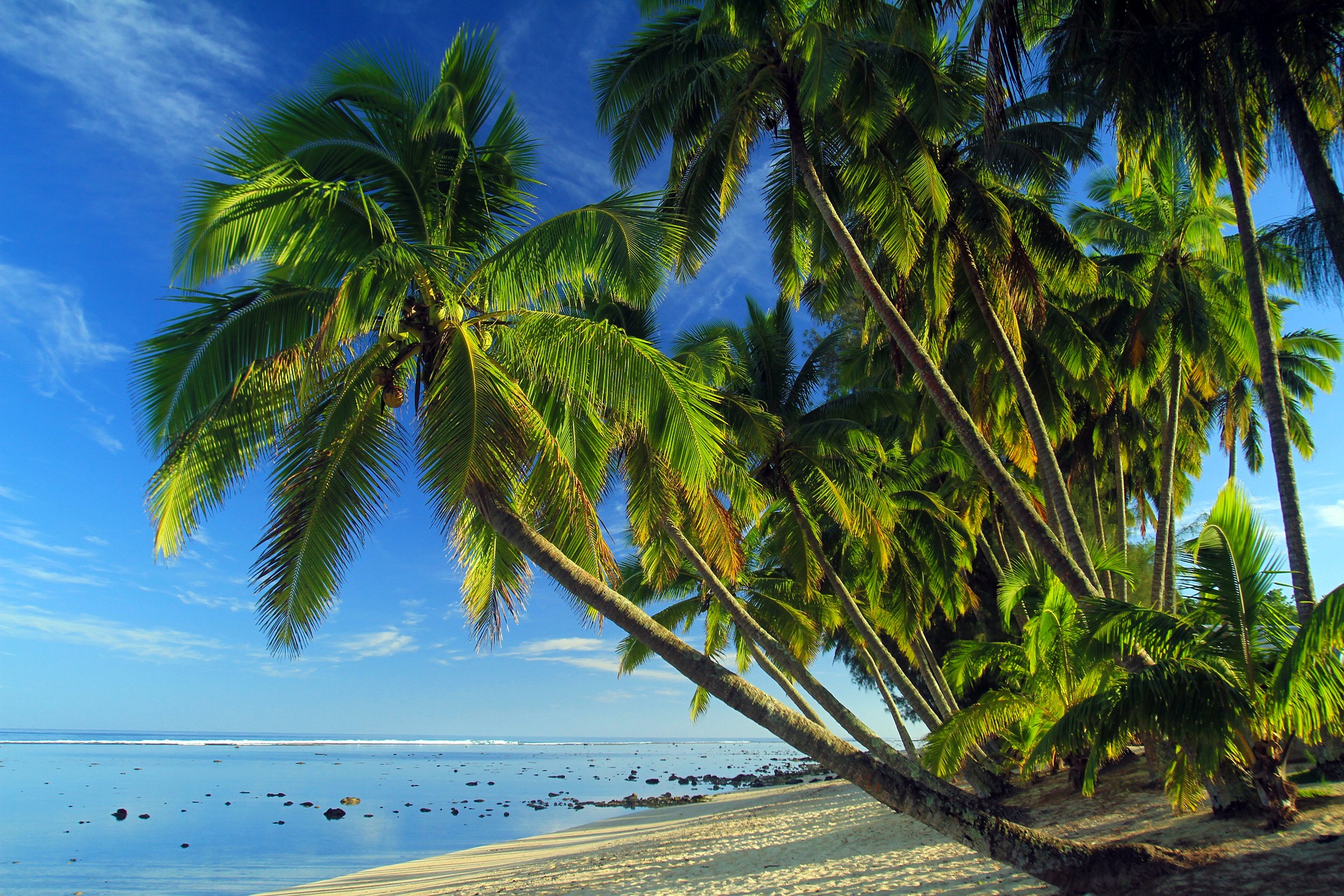
The Cook Islands are 15 islands in free association with New Zealand: Rarotonga's lagoon and mountains, Aitutaki's turquoise lagoon and quiet outer atolls. Easy-going, safe and uses the New Zealand dollar.
The Cook Islands are 15 islands spread over 2.2 million km² of the South Pacific, self-governing in free association with New Zealand. Almost all visitors stay on Rarotonga, where the small capital Avarua sits on the north coast, and on Aitutaki, whose lagoon is dotted with sand bars and 21 uninhabited islets. The southern group is volcanic and hilly; the seven northern atolls are low, remote and hard to reach.
Tourism is well organised on the two main islands, yet relaxed: there are no touts and tourist scams are unheard of, so you have to take the first step to organise things. Most people are Christian and most businesses close on Sunday. The climate is tropical, with average maximums of about 25 °C from May to October and 29 °C from November to April, the rainier season, when cyclones are possible.
- Aitutaki lagoon: Sand bars, coral ridges and 21 uninhabited islets, with snorkelling at Maina.
- Muri Beach, Rarotonga: A shallow, sandy lagoon on the south-east coast.
- Diving off Rarotonga: Turtles, eagle rays and reef sharks inside the lagoon and beyond the reef.
- Atiu caves: Limestone caverns such as Anatakitaki, home of the rare kopeka bird.
- Cook Islands Christian Church: A white-coral church on Rarotonga built in 1853, where visitors can attend services.
Places to visit
Cities
- Avarua: The capital and largest town, on the north coast of Rarotonga, with the daily market.
Beyond the cities
- Rarotonga (island): The main island, with the airport, most hotels and dive sites all around.
- Aitutaki (island): A lagoon island with sand bars and uninhabited islets.
- Atiu (island): An island riddled with limestone caves.
- Suwarrow National Park (park): The country's only national park.
Regions
- Southern Cook Islands: Mostly volcanic, hilly islands with most of the population, including Rarotonga and Aitutaki.
- Northern Cook Islands: Low coral atolls near the equator, sparsely inhabited and hard to reach.
Things to do
See
- Anatakitaki cave Atiu: A large cave that is home to the kopeka, a bird found only on Atiu.
- A cultural show Rarotonga: Dancing at one of the larger resorts.
- Sunday church service Rarotonga: Visitors are welcome at the Cook Islands Christian Church; dress respectfully.
Do
- Snorkelling and diving Rarotonga: In the calm lagoon or outside the reef, with turtles, rays and reef sharks.
- Aitutaki lagoon cruise Aitutaki: Small boats visit the islets and sand bars, with snorkelling stops.
- Muri Beach Rarotonga: Shallow water with sea cucumbers and coral; wear reef shoes.
Eat
- Local food at the market Avarua: Ika mata and other local dishes, plus a fortnightly "Go Local" market.
Drink
- Brewery tour Rarotonga: Taste local beers at one of the two microbreweries.
Holidays and events
- 1 January 2026 · New Year's Day
- 2 January 2026 · New Year's Day (second day)
- 3 April 2026 · Good Friday
- 6 April 2026 · Easter Monday
- 25 April 2026 · Anzac Day
- 1 June 2026 · King's Birthday
- 3 July 2026 · Ra o te Ui Ariki
- 4 August 2026 · Constitution Day
- 26 October 2026 · Gospel Day
- 25 December 2026 · Christmas Day
- 26 December 2026 · St. Stephen's Day
Getting around
| Main airports | RAR |
|---|
Air Rarotonga flies between the islands, and booking directly is usually cheaper. Most outer islands have unpaved runways. There are no scheduled ferries between the islands; freighters reach all inhabited islands, but sailings can be weeks apart. On Rarotonga buses run but can be irregular, and taxis should be official, with the fare agreed or metered. Traffic drives on the left; Canada says to carry an International Driving Permit. Scooter accidents are common: always wear a helmet, and avoid riding after dark, especially on Friday and Saturday nights.
Flying to Cook Islands? PartnerCompare fares and find the cheapest datesSearch flightsWhere to stay
- Resorts and luxury accommodation: On Rarotonga and Aitutaki, from NZ$700 a night at the top end.
- Comfortable lodges and backpackers: Much cheaper options on the main islands.
- Family stays: On outer islands with little accommodation you will often stay with a village family.
Book your accommodation before you arrive: there are no public campsites and camping is discouraged. Most places arrange airport transfers. Many outer islands switch off electricity overnight, so bring a torch.
Eat and drink
Dishes to try
- Ika mata: Raw fish with coconut milk and finely chopped vegetables.
- Umu food: Cooked in the traditional earth oven.
- Curried eke: Octopus in coconut curry.
- Rukau: Taro leaves cooked with coconut cream.
- Poke: A cooked banana or pawpaw pudding with coconut milk.
Drinks
- Local beer: From the Matutu and Cook Islands breweries on Rarotonga.
| Tipping | Quite unusual, as in New Zealand: a warm thank you is better. |
|---|
Do not eat reef fish such as snapper, which can cause ciguatera poisoning; most restaurants do not serve it. Imported goods, from wine to fresh milk, are expensive, though prices overall are much lower than in Tahiti. Drink options are very limited on the outer islands.
Entry requirements and visas
| Passport validity | At least 6 months beyond your departure date |
|---|
| Passport | Entry | Max stay | Notes |
|---|---|---|---|
| Canada | Visa free | 31 days | No tourist visa for up to 31 days; show an onward ticket and proof of funds. |
| United Kingdom | Visa free | 31 days | 31-day entry permit on arrival for bona fide visitors, according to Wikivoyage. |
| EU / EEA | Visa free | 31 days | 31-day entry permit on arrival, according to Wikivoyage. |
| United States | Visa free | 31 days | 31-day entry permit on arrival, according to Wikivoyage. |
| Australia | Visa free | 31 days | 31-day entry permit on arrival, according to Wikivoyage. |
Other nationalities: check the official source below.
The Cook Islands issue entry permits, not visas: genuine visitors get 31 days on arrival (90 days for New Zealand passport holders), extendable through the Ministry of Foreign Affairs and Immigration. You must have an onward ticket and may be asked for proof of booked accommodation. Working is not allowed. Rules can change: check with the Cook Islands Ministry of Foreign Affairs and Immigration before you book.
Money and payments
| Currency | New Zealand Dollar (NZD) |
|---|---|
| Cards | Common |
The currency is the New Zealand dollar (NZD). The Cook Islands also issue their own coins and a $3 note, which can only be used locally. Most hotels, shops and restaurants take major credit cards. There are a handful of ATMs on Rarotonga and two on Aitutaki, and none on the other islands. Haggling is considered rude.
Health
| Recommended vaccines | Routine vaccines, including measles (MMR), Hepatitis A, Hepatitis B, Typhoid, Rabies, only for some travellers: ask a travel clinic |
|---|---|
| Malaria | None |
| Tap water | Not safe |
Do not drink tap water. Dengue, chikungunya and Zika have broken out, and mosquitoes are a nuisance especially on Aitutaki: use repellent. Medical facilities on Rarotonga are limited and serious cases are flown to Auckland; there is no recompression chamber, so divers should be insured for evacuation. Comprehensive travel insurance is essential. For an ambulance, call 998.
This is general information, not medical advice: check with a travel health professional before you go.
Safety
- Canada: Take normal security precautions (2026-10-20)
There are no major hazards and violent crime is rare, though petty theft happens. Beaches are rarely supervised, lagoon currents can be strong and riptides are common: ask locally where it is safe to swim, and wear reef shoes against coral and stonefish. Scooter and motorcycle accidents are the most common danger on the roads. Stray dogs can be aggressive. Cyclones are possible from November to April, and tsunamis can follow earthquakes. Police: 999.
Customs and etiquette
Greet people with "kia orana", "may you live long". Most Cook Islanders are Christian: on Sunday most businesses close, and if you stay with a family you may be asked to join in grace before meals. Dress conservatively away from the beach. On an outer island, a pig given to the village chief or your host family is considered a very good gesture. Pay the marked price: haggling is taboo.
Language
| Official languages | English |
|---|---|
| English | Common |
| Hello ("may you live long") | Kia orana |
|---|
What to pack
- Onward ticket and accommodation booking: Required to enter; camping is not allowed.
- Reef shoes: Coral rocks are sharp beyond sandy beaches.
- A torch with batteries: Many outer islands switch off power at night.
- Insect repellent: Mosquitoes can carry dengue, chikungunya and Zika.
- A helmet if you ride a scooter: Scooter accidents are common.
Quick reference
Country facts
| Capital | Avarua |
|---|---|
| Population | 14,222 (2023) |
| Area | 240 km² |
| Time zone | Pacific/Rarotonga (UTC-10) |
| Calling code | +682 |
| Driving side | left |
Staying connected
| Wi-Fi | Wifi is usually available on the main islands but slow; some islands have no internet or mobile reception at all. |
|---|
Emergency numbers
| Police | 999 |
|---|---|
| Ambulance | 998 |
Frequently asked questions
Do I need a visa for the Cook Islands?
No. Visitors get a 31-day entry permit on arrival with an onward ticket and a passport valid 6 months beyond departure. Check official advice before you book.
What currency do the Cook Islands use?
The New Zealand dollar, alongside local coins and $3 notes that only work in the islands.
Can I drink the tap water?
No, tap water is not safe to drink.
Do I need to tip?
Tipping is unusual; a sincere thank you is better.
When is the best time to visit?
May to October is drier and a little cooler; November to April brings most rain and possible cyclones.
Sources This guide was last checked on · 7 sources
- Wikivoyage: Cook Islands · Overview, Places to visit, Things to do, Getting around, Where to stay, Eat and drink, Entry requirements and visas, Money and payments, Health, Safety, Customs and etiquette, Language, What to pack, Staying connected, Emergency numbers, Frequently asked questions
- Government of Canada: Cook Islands travel advice (updated 14 October 2026) · Things to do, Getting around, Entry requirements and visas, Money and payments, Safety, Customs and etiquette, What to pack, Frequently asked questions
- Nager.Date: public holidays in Cook Islands, 2026 · Holidays and events
- Wikidata · Money and payments, Country facts
- ISO 4217 (SIX), published 2026-09-17 · Money and payments
- CDC Travelers' Health: Cook Islands · Health
- IANA Time Zone Database, zone.tab · Country facts
Suggest an update
Travel rules, prices and timetables change. If something in this guide is out of date, tell us: we check every suggestion against an official source before changing the page.