

- Local time
- 00:37
- Currency
- New Zealand Dollar (NZD)
- Capital
- Alofi
- Calling code
- +683
- Drive on the
- left
Overview
Niue, the Rock of Polynesia, is a raised coral island of 1,600 people between Tonga and the Cook Islands: limestone chasms and sea caves, reef pools for snorkelling, whales offshore and a slow, friendly island life.
Niue is a single island about halfway between Tonga and the Cook Islands, 2,300 km north-east of New Zealand, with which it is in free association. With around 1,600 people it is one of the least populated countries in the world. Alofi, the administrative centre, may be the smallest capital anywhere.
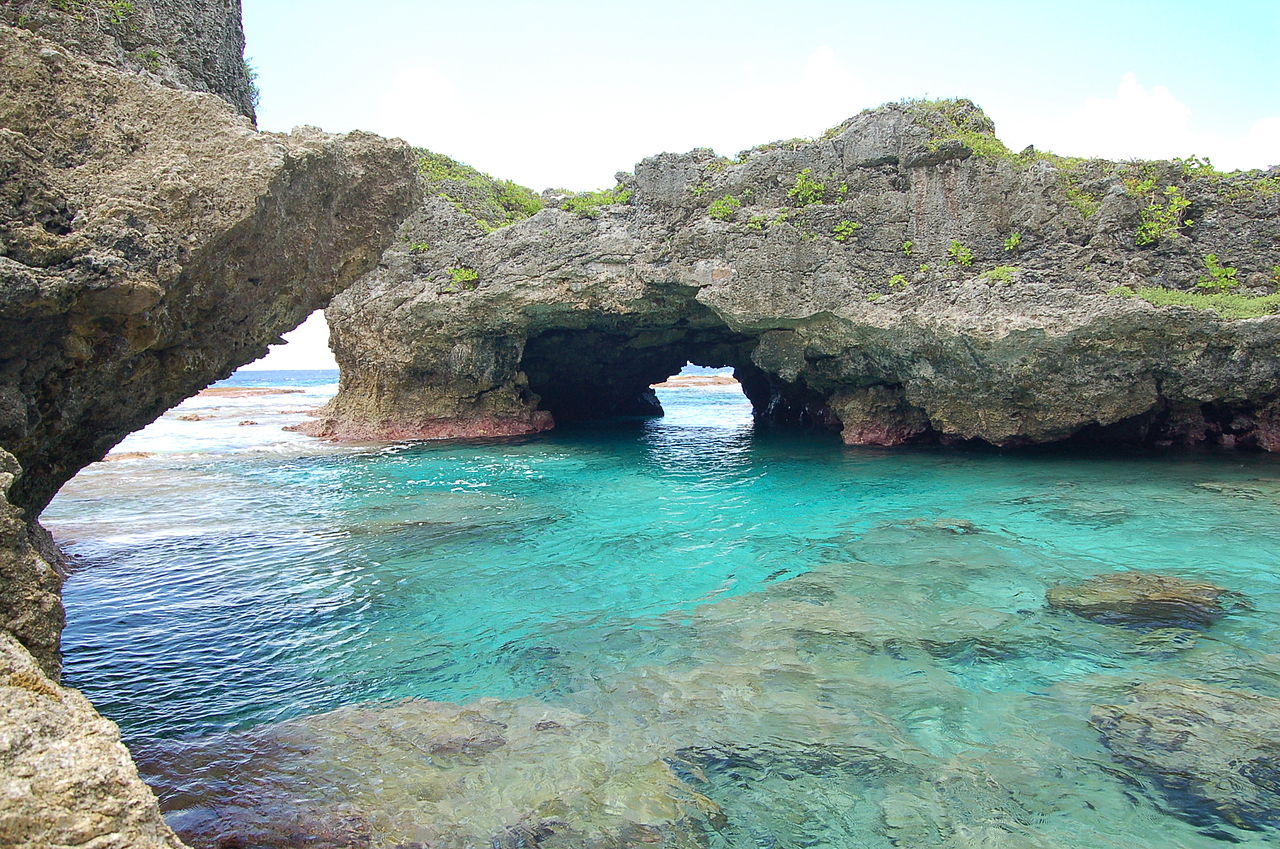
Niue is not a beach island: its coast is a ring of limestone cliffs riddled with caves, chasms and arches, with tiny secluded coves and reef pools full of fish at low tide. Visitors come to follow the "sea tracks" down to the shore, swim in Matapa Chasm, scramble through the Talava Arches, dive the underwater caverns and watch for whales and dolphins. Sunday is reserved for church, and much of island life stops.
- Matapa Chasm: A deep, sheltered pool between 10 m cliffs, great for swimming and snorkelling.
- Talava Arches: A huge rock arch and caves at the end of a short, rocky trail.
- Sea tracks: Paths from the road to the coast, ending in caves, coves and reef pools.
- Diving: Underwater caverns, called cathedrals, with a local dive operator.
- Huvalu Forest: Rainforest covering a fifth of the island, protected by the village of Hakupu.
Places to visit
- City
- Town
- Park
- Historic site
Cities
- Alofi: The administrative centre, with most accommodation, restaurants, the market and the supermarket.
Beyond the cities
- Avatele (town): A village with the island's largest beach, of coarse sand.
- Hikutavake (town): Northern village where the trails to Matapa Chasm and the Talava Arches start.
- Matapa Chasm (site): A cool, fish-filled pool shut off from the sea by boulders.
- Talava Arches (site): A massive arch surrounded by caves; the path ends in a rock scramble.
- Avaiki Cave (site): A cave pool open to the reef, for swimming at low tide; no swimming on Sundays.
- Liku (town): East-coast village with a sea track through a large cave to tiny coves.
- Togo Chasm (site): A 45-minute track through coral pinnacles, then a ladder down to a hidden beach.
- Huvalu Forest Conservation Area (park): Pristine rainforest; do not explore it alone, as it is easy to get lost.
- Mutalau (town): Where Christianity reached Niue, at the Uluvehi landing.
Things to do
See
- Talava Arches Hikutavake: Allow 30–45 minutes return, take water and watch the sharp, slippery rocks.
Do
- Swim in Matapa Chasm Hikutavake: Cool water and fish between cliffs; best after the hot walk to Talava.
- Dive the caverns: Niue Dive runs dives and courses; there is no decompression chamber, so don't dive the day before you fly.
- Snorkel the reef pools Alofi: Utuko Reef and the pools at Hio Beach are good for beginners; seek local advice before snorkelling outside the reef.
- Explore a sea track Liku: Walk down to caves, coves and reef pools; leave before the tide comes back.
- Join a weaving group: Village women teach pandanus weaving; bring food to share.
- Play touch rugby: Most villages have a green where locals play in the evening; just ask to join.
Eat
- Alofi market Alofi: Tuesday and Friday mornings: fruit, coconut porridge, coconut crab and handicrafts.
Holidays and events
- 1 January 2026 · New Year's Day
- 2 January 2026 · Takai Commission Holiday
- 3 April 2026 · Good Friday
- 6 April 2026 · Easter Monday
- 1 June 2026 · King's Official Birthday
- 19 October 2026 · Constitution Day
- 26 October 2026 · Peniamina Gospel Day
- 25 December 2026 · Christmas Day
- 26 December 2026 · St. Stephen's Day
Getting around
| Main airports | IUE |
|---|
There is no public transport and no taxis: arrange your airport transfer before you arrive (most accommodation includes one). Rent a car or bicycle; driving round the island takes about 75 minutes, cycling about three hours. Traffic drives on the left, the main road is paved, and you need a local driving licence from the police, issued when you show your home licence. Drive carefully in the rainy season and after dark, and watch for stray animals. There is a single petrol station, in Alofi South. Villages are small and easy to walk around, and hitchhiking is common.
Flying to Niue? PartnerCompare fares and find the cheapest datesSearch flightsWhere to stay
- Backpackers and guesthouses: In Alofi, with shared kitchens.
- Motels and holiday apartments: Around Alofi and towards Avatele, some with sea views.
- Resort: Niue's only resort, with restaurant, bar and pools.
Book before you arrive: it is an entry requirement. Most accommodation is in or near Alofi, with nothing on the east side of the island. Camping is discouraged because of mosquitoes, and locals may take it as a refusal of their hospitality.
Eat and drink
Dishes to try
- Uga: Coconut crab, a local speciality, sold at the Alofi market.
- Coconut porridge: A cheap market breakfast.
- Tropical produce: Passion fruit, taro, cassava, kumara and vanilla from the market and roadside stalls.
Drinks
- Coconut water: The best drink on a hot day.
- Noni juice: For the adventurous, at a local farm.
All the main restaurants are in Alofi, with fish and chips, curry, sushi, pizza and buffets with dancing on some nights; book ahead so they stay open for you. Most visitors self-cater. Shops close on Sundays and keep short hours on Saturdays, so stock up on Friday. Visitors can buy a few bottles of duty-free alcohol in their first days.
Entry requirements and visas
| Passport validity | At least 3 months beyond your departure date (Canada) or arrival date (Wikivoyage) |
|---|
| Passport | Entry | Max stay | Notes |
|---|---|---|---|
| Canada | Visa free | 30 days | For tourism and business. |
Other nationalities: check the official source below.
Tourists do not need a visa for stays of up to 30 days. You must have a confirmed accommodation booking, a return or onward ticket and enough money for your stay, or you may be sent back; camping and couchsurfing are not accepted as accommodation. Rules depend on your passport and can change: check the official rules before you book.
Money and payments
| Currency | New Zealand Dollar (NZD) |
|---|---|
| Cards | Limited |
Niue uses the New Zealand dollar and the economy is mostly cash-based. There are no ATMs; cards issued by New Zealand banks work in most businesses, and more places now take Visa and Mastercard, usually with a surcharge, but the system is often down. Bring more cash than you think you will need. The visitor information centre takes major cards for accommodation and tours. Prices are a little higher than in New Zealand.
Health
| Required vaccines | Yellow fever certificate, only if you arrive from a country with a risk of yellow fever |
|---|---|
| Recommended vaccines | Routine vaccines, including measles (MMR), COVID-19, Hepatitis A, Hepatitis B, Typhoid, Rabies, only for some travellers: ask a travel clinic |
| Malaria | None |
| Tap water | Safe |
Tap water is drinkable. The CDC lists dengue: mosquitoes peak between December and March, so protect yourself from bites. Wear reef shoes, as coral cuts easily become infected; wash any cut with plenty of soap and water. Niue Foou Hospital in Alofi handles emergencies, but serious cases go to New Zealand or Australia, so take travel insurance. Emergency number: 999.
This is general information, not medical advice: check with a travel health professional before you go.
Safety
- Canada: Take normal security precautions (2026-10-20)
Niue is very safe and crime is minimal. The real risks are natural: there are no lifeguards, tidal currents and rip tides are common, and some caves, such as Vaikona, should only be explored with a guide, as people have been lost and injured. Do not walk alone in the Huvalu Forest. Wear a helmet when cycling. Cyclones and heavy rain come between November and April, and earthquakes and tsunamis can occur.
Customs and etiquette
Niue is conservative and churchgoing. On Sundays fishing, kayaking and diving are banned by law, and swimming is officially banned too, though swimming away from villages is tolerated. Wear swimwear only at swimming spots, never in villages, and do not swim nude or topless. Wave to everyone you pass, and don't refuse an offer of dinner or a cup of tea. Drunken behaviour is frowned on and has led to deportations; dress conservatively and avoid public displays of affection.
Language
| English | Widespread |
|---|
What to pack
- Reef shoes: Against coral cuts and stonefish; hard to find on the island.
- Snorkelling gear: Hard to find locally; snorkelling on your own is free.
- Plenty of New Zealand dollars in cash: There are no ATMs and card systems often fail.
- Insect repellent: Mosquitoes can carry dengue.
- Water bottle: Trails to the chasms and sea tracks are hot.
Quick reference
Country facts
| Capital | Alofi |
|---|---|
| Population | 1,821 (2025) |
| Area | 260 km² |
| Time zone | Pacific/Niue (UTC-11) |
| Calling code | +683 |
| Driving side | left |
Staying connected
| SIM and eSIM | Telecom Niue is the only provider: buy a SIM at its airport office; coverage is limited to Alofi and the villages. |
|---|---|
| Roaming | Niue does not support international roaming. |
| Wi-Fi | Free and paid Wi-Fi at the airport, many hotels, bars and restaurants, but slow and unreliable. |
Frequently asked questions
Do I need a visa for Niue?
Tourists can stay up to 30 days without a visa, with booked accommodation, a return ticket and enough money. Check the official rules before you book.
How do I get to Niue?
Air New Zealand flies from Auckland twice a week; it is the only airline.
Are there beaches?
Only tiny coves: Niue is ringed by cliffs, caves and reef pools rather than long sandy beaches.
Can I drink the tap water?
Yes, the tap water is drinkable.
Are there ATMs?
No. Bring plenty of New Zealand dollars in cash.
What happens on Sundays?
Shops close and fishing, kayaking and diving are banned by law: plan a quiet day.
Sources This guide was last checked on · 7 sources
- Wikivoyage: Niue · Overview, Places to visit, Things to do, Getting around, Where to stay, Eat and drink, Entry requirements and visas, Money and payments, Health, Safety, Customs and etiquette, Language, What to pack, Staying connected, Frequently asked questions
- Nager.Date: public holidays in Niue, 2026 · Holidays and events
- Government of Canada: Niue travel advice (updated 15 October 2026) · Getting around, Entry requirements and visas, Money and payments, Safety, Customs and etiquette, What to pack, Frequently asked questions
- Wikidata · Money and payments, Country facts
- ISO 4217 (SIX), published 2026-09-17 · Money and payments
- CDC Travelers' Health: Niue · Health, Frequently asked questions
- IANA Time Zone Database, zone.tab · Country facts
Suggest an update
Travel rules, prices and timetables change. If something in this guide is out of date, tell us: we check every suggestion against an official source before changing the page.