

- Local time
- 00:27
- Currency
- US Dollar (USD)
- Capital
- Hagåtña
- Calling code
- +1671
- Drive on the
- right
Overview
Guam is a US island territory in the western Pacific, with Tumon Bay's beaches and hotels, Chamorro culture, Second World War sites and good diving. Most visitors fly in from East Asia.
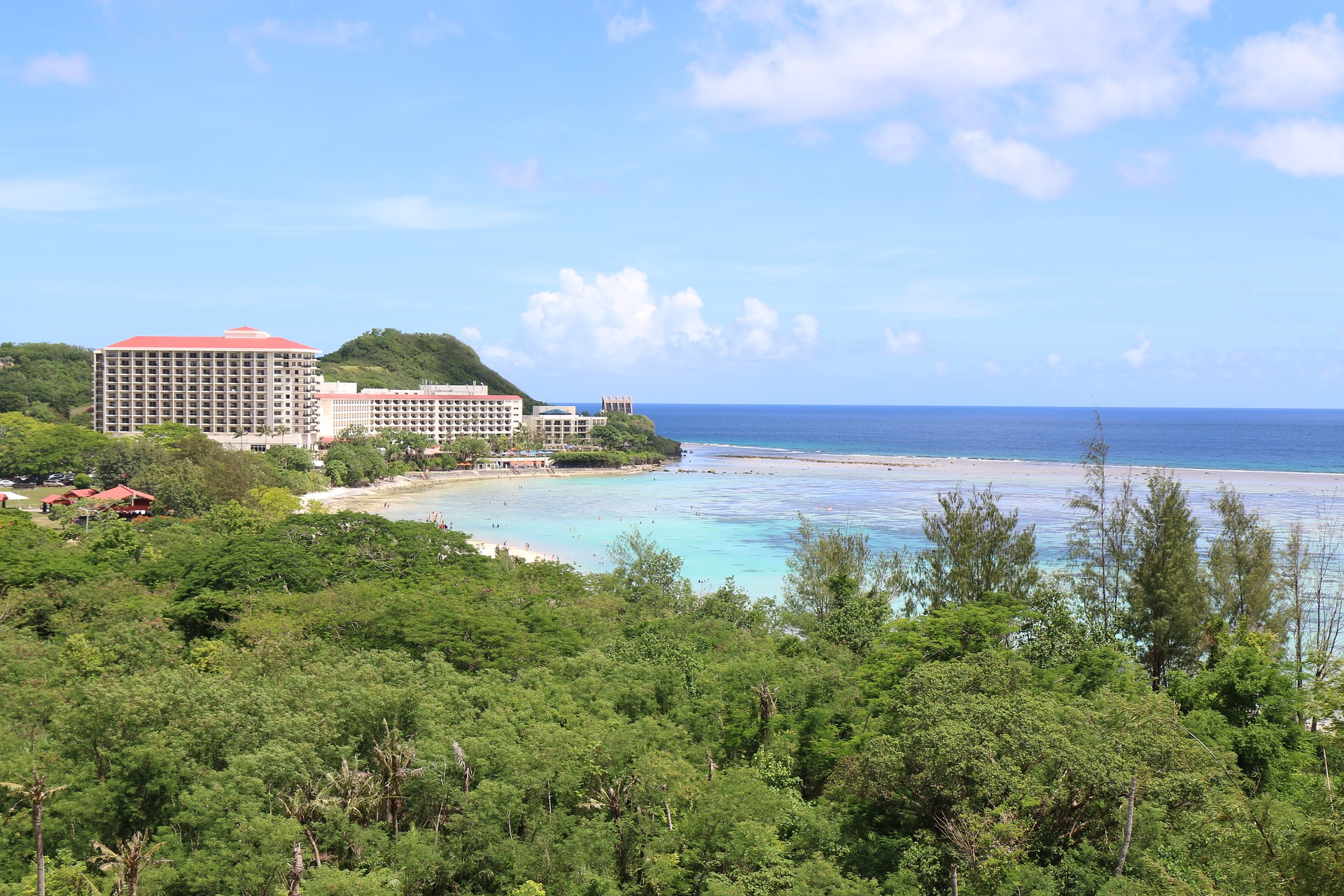
Guam is the largest and southernmost of the Mariana Islands, about three quarters of the way from Hawaii to the Philippines. It is a US territory, and most of its visitors come from Japan, South Korea and Taiwan, a few hours' flight away. The tourist centre is Tumon Bay, with high-rise hotels, beaches, an aquarium and shows; the south is rural, with black-sand beaches at Talofofo and the strongest Chamorro traditions.
The island has a long history, from the latte stones of the early Chamorro to Spanish rule and the battles of the Second World War, remembered at the War in the Pacific National Historical Park. Divers explore the reef and the wrecks of Apra Harbor. The climate is warm and humid all year, with a dry season from January to June and a rainy season, when typhoons are possible, from July to December.
- Tumon Bay: The tourist centre: beaches, hotels, an aquarium and evening shows.
- War in the Pacific National Historical Park: Former battlefields, gun emplacements and trenches from the Second World War.
- Apra Harbor wrecks: Wrecks from the two world wars, thought to be the only place where such wrecks touch.
- Ritidian Point: The northern tip, protected by the Guam National Wildlife Refuge.
- Southern Guam: Rural villages, Cocos Island and the black-sand beaches of Talofofo.
Places to visit
- City
- Historic site
Cities
- Tumon: Where most tourists stay, on the central west coast, part of Tamuning.
- Hagåtña: The small capital, with a beachfront walk towards Tamuning.
- Dededo: The most populous village on the island.
- Tamuning: The third most populous and most industrial village, home of the main hospital.
- Mangilao: Home to the University of Guam.
- Talofofo: A village in the jungles of southern Guam, with black-sand beaches.
Beyond the cities
- War in the Pacific National Historical Park (site): Second World War battlefields, with beaches and turquoise water.
- Guam National Wildlife Refuge (park): Protects Ritidian Point, the northernmost point of Guam.
Regions
- Northern Region: Large military areas, including Andersen Air Force Base, and the villages of Dededo and Yigo.
- Central/Metropolitan Region: Most villages, the international airport and the shops, restaurants and hotels of Tumon.
- Southern Region: Rural and least developed, where Chamorro culture is best preserved.
Things to do
See
- War in the Pacific park: Battlefields and gun positions; do not touch wartime objects you may find.
Do
- Dive the west coast: Shore and boat dives, including the Blue Hole reef chimney for advanced divers.
- Apra Harbor wrecks Apra Harbor: The SMS Cormoran II and Tokai Maru, from the First and Second World Wars.
- Tumon Bay beaches Tumon: Beaches that are also wildlife reserves; check rip current forecasts.
Eat
- Chamorro Village: Local Chamorro food, especially on Wednesday nights.
Shop
- Shopping: Malls, outlets and big stores with large souvenir sections.
Getting around
| Main airports | GUM |
|---|
A rental car is the easiest way to get around; the major US companies are at the airport. The island-wide speed limit is 35 mph (56 km/h), but driving is often aggressive and accidents are more than twice as frequent as on the US mainland. Old coral-surfaced roads, mainly in the south, are very slippery in the rain, and southern roads flood easily. Canada says to carry an International Driving Permit. Public buses are slow and unreliable; private trolley buses link Tumon's hotels and the malls. Taxis are expensive: agree the fare or ask for the meter. Uber and Lyft do not operate officially; a local app, Stroll, does.
Flying to Guam? PartnerCompare fares and find the cheapest datesSearch flightsWhere to stay
- High-rise hotels and resorts: Along Tumon Bay.
- Cheaper hotels near the airport: Around Harmon, a mixed industrial area.
Flights through Guam often involve an overnight layover, so plan ahead. Some hotels offer airport pickups, which helps because taxis are expensive.
Eat and drink
Dishes to try
- Chamorro food: Best tried at Chamorro Village.
- Fresh seafood: Fish, octopus and crab, grilled, baked or as sashimi.
- Barbecue: A local passion: if you are invited to a family barbecue, go.
About 90% of the food is imported, mostly from the US mainland. Tumon and the main roads have a wide choice of Japanese, Korean, Filipino, Chinese, Mexican and American restaurants, plus all the familiar fast-food chains.
Entry requirements and visas
| Passport | Entry | Max stay | Notes |
|---|---|---|---|
| United States | Freedom of movement | US citizens need no passport from the US mainland, but need ID and proof of citizenship when flying back to Honolulu. | |
| Canada | Visa free | 180 days | No ESTA or visa needed for up to 6 months, according to Wikivoyage; Canada says to confirm the US requirements. |
| United Kingdom | Visa free | 45 days | 45 days with no prior authorisation under the Guam-CNMI Visa Waiver Program, or 90 days with an ESTA under the US Visa Waiver Program. |
| Australia | Visa free | 45 days | 45 days with no prior authorisation under the Guam-CNMI Visa Waiver Program, or 90 days with an ESTA. |
Other nationalities: check the official source below.
Entry rules are largely the same as for the United States: anyone who does not need a US visa can visit, using the US Visa Waiver Program (with an ESTA), the Guam-CNMI Visa Waiver Program (no prior application, 45 days, for some countries) or a US visa. Everyone must fill in the Guam Electronic Declaration Form within 72 hours before arrival; there is wifi in the baggage hall if you forget. Leaving for Honolulu means a US customs pre-inspection, so arrive early at the airport. Rules depend on your passport and can change: check the official US links before you book.
Money and payments
| Currency | US Dollar (USD) |
|---|
Guam uses the US dollar (USD). Prices can be high, because most goods are shipped a long way. US citizens returning from Guam get a higher duty-free allowance than from other places.
Health
| Recommended vaccines | Routine vaccines, including measles (MMR), Hepatitis A, Hepatitis B, Typhoid, Rabies, only for some travellers: ask a travel clinic |
|---|---|
| Malaria | None |
| Tap water | Varies |
Tap water is generally drinkable, but since Typhoon Mawar in 2023 some areas have been under a precautionary boil-water notice: check the Guam Waterworks Authority. Hiking and swimming in fresh water carry a small risk of leptospirosis. The main public hospital is in Tamuning and a modern private hospital is in Dededo. For emergencies, call 911.
This is general information, not medical advice: check with a travel health professional before you go.
Safety
- Canada: Take normal security precautions (2026-10-20)
Violent crime is fairly low, but property crime is high: rental cars carry stickers and are targeted, so leave nothing inside. Currents and rip tides can be strong; the weather service issues a daily surf zone forecast. Unexploded Second World War ordnance may remain on beaches, farms and dive sites: do not touch unknown objects. Typhoons usually occur from July to December, and earthquakes happen every few years.
Customs and etiquette
The Chamorro, the island's indigenous people, have a culture that mixes Asian, Spanish and American influences and are welcoming to visitors. Most are Catholic. Observe the usual courtesies and lean towards modest clothing away from the beach.
Language
| Official languages | English, Chamorro |
|---|---|
| English | Widespread |
Quick reference
Country facts
| Capital | Hagåtña |
|---|---|
| Population | 168,999 (2025) |
| Area | 541 km² |
| Time zone | Pacific/Guam (UTC+10) |
| Calling code | +1671 |
| Driving side | right |
Staying connected
| SIM and eSIM | Three local carriers: Docomo Pacific, GTA and IT&E; the big US mainland networks do not cover Guam, so expect roaming charges. Visitor SIMs are sold by Docomo Pacific and IT&E. |
|---|
Frequently asked questions
Do I need a visa for Guam?
Rules follow the US: UK and Australian citizens can visit for 45 days under the Guam-CNMI Visa Waiver Program, or 90 days with an ESTA. Check the official US links before you book.
What currency does Guam use?
The US dollar.
Is the tap water safe?
Generally yes, but some areas have had boil-water notices since 2023: check before drinking.
Do US phones work in Guam?
Only by roaming: AT&T, Verizon and T-Mobile have no network there. Local visitor SIMs are an alternative.
When is the best time to visit?
The dry season runs from January to June; typhoons are possible from July to December.
Sources This guide was last checked on · 8 sources
- Wikivoyage: Guam · Overview, Places to visit, Things to do, Getting around, Where to stay, Eat and drink, Entry requirements and visas, Money and payments, Health, Safety, Customs and etiquette, Language, Staying connected, Frequently asked questions
- Government of Canada: Guam travel advice (updated 18 October 2026) · Things to do, Getting around, Entry requirements and visas, Health, Safety, Frequently asked questions
- Wikidata · Money and payments, Country facts
- ISO 4217 (SIX), published 2026-09-17 · Money and payments
- CDC Travelers' Health: Guam · Health
- World Bank, SP.POP.TOTL · Country facts
- World Bank, AG.LND.TOTL.K2 · Country facts
- IANA Time Zone Database, zone.tab · Country facts
Suggest an update
Travel rules, prices and timetables change. If something in this guide is out of date, tell us: we check every suggestion against an official source before changing the page.