

- Local time
- 19:07
- Currency
- Australian Dollar (AUD)
- Capital
- Funafuti
- Calling code
- +688
- Drive on the
- left
Overview
Tuvalu is nine low-lying coral islands in the central Pacific and one of the least visited countries on Earth: a narrow atoll capital, a lagoon conservation area, wartime relics and a slow, non-commercial island life.
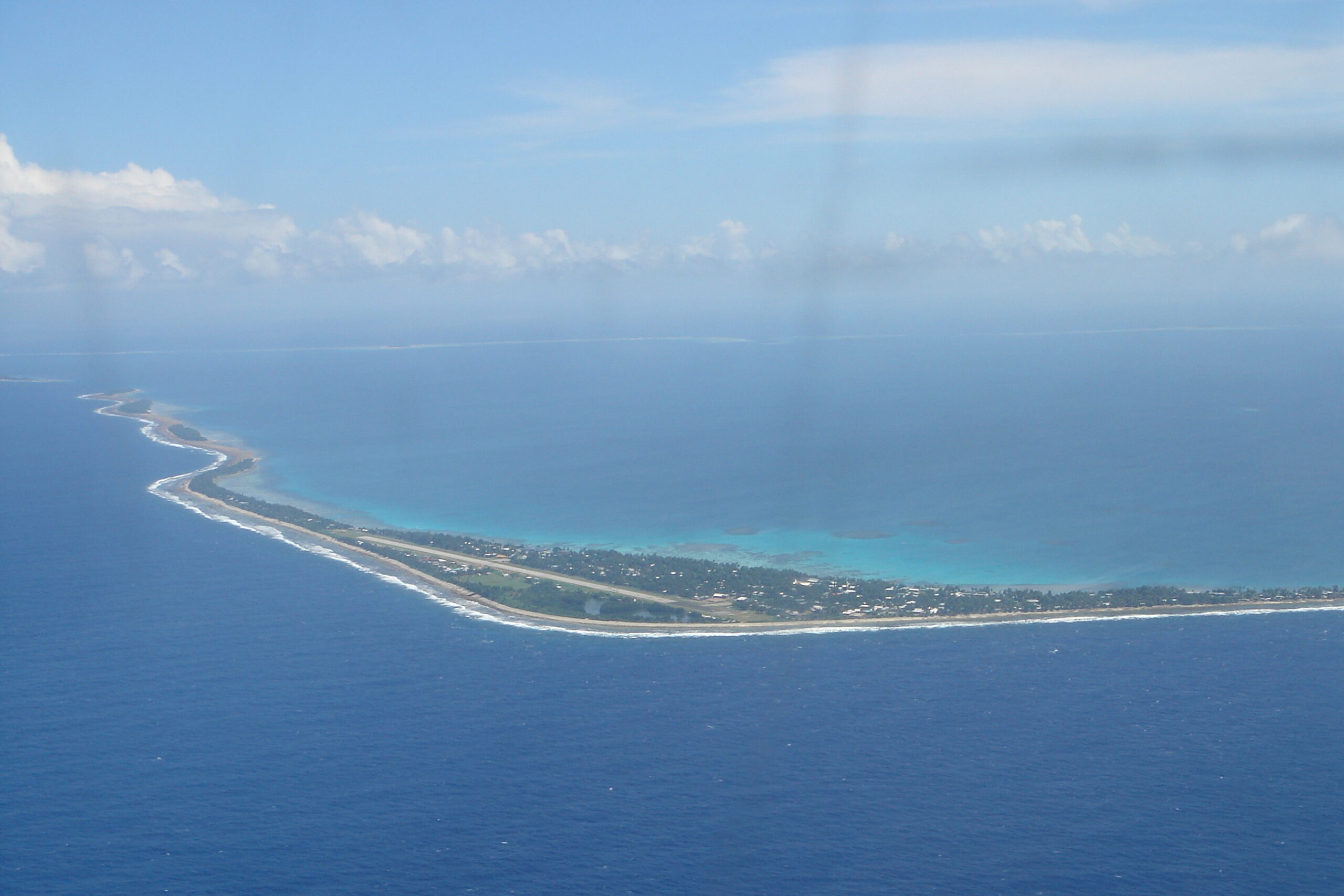
Tuvalu is a chain of nine small atolls and reef islands between Hawaii and Australia, with just 26 km² of land, the highest point about 3 metres above sea level. It is the fourth smallest country in the world and one of the most remote, and rising seas threaten its future. Most people live on Fongafale, the main islet of the capital atoll Funafuti, so narrow in places that you can see the ocean on both sides.
There are no big sights, no hills or rivers, and no resorts: tourism is entirely non-commercial, with simple guesthouses and a very slow pace. Visitors come for the lagoon and the Funafuti Conservation Area, Second World War airstrips and wrecks, village life on the outer islands and the fatele, Tuvalu's traditional song and dance.
- Funafuti Conservation Area: Reefs, lagoon and islets with rich marine life for snorkelling and diving.
- Second World War remains: Airstrips, bunkers and plane wrecks on Fongafale and Nanumea.
- Fatele: Traditional song and dance at community celebrations.
- The runway: When no plane is due, the airstrip becomes a community space for games and exercise.
- Philatelic Bureau: Tuvalu's stamps, a must for collectors.
Places to visit
- City
- Island
- Park
Cities
- Fongafale: The main islet of Funafuti, with the airport, guesthouses, shops and most of the population.
Beyond the cities
- Funafuti (island): The capital atoll, a long, slender ring of islets around a large lagoon.
- Funafuti Conservation Area (park): Reefs, lagoon, channel and islet habitats on the western side of the atoll.
- Nanumea (island): An outer atoll with wartime remains near its village.
- Nukufetau (island): An outer atoll; its islet of Motulalo has an old airstrip and plane wrecks.
- Vaitupu (island): A quiet, traditional outer island, home of the country's only high school.
Regions
- Funafuti
Things to do
See
- Wartime relics Fongafale: Airstrips, bunkers and plane wrecks left by US troops.
- Watch a fatele: Traditional dances at the maneapa, the community hall, on special occasions.
Do
- Snorkel the conservation area Funafuti Conservation Area: Excellent marine life; use a reputable, fully licensed dive company.
- Explore by scooter or bicycle Fongafale: Guesthouses rent them; one road runs the length of the islet.
- Play te ano: The national ball game, a little like volleyball.
- Visit the outer islands: By government ferry or cargo boat, for villages, coconut groves and sandy paths.
Shop
- Women's Handicraft Centre Fongafale: Local crafts at the airport.
Holidays and events
- 1 January 2026 · New Year's Day
- 9 March 2026 · Commonwealth Day
- 3 April 2026 · Good Friday
- 6 April 2026 · Easter Monday
- 11 May 2026 · Gospel Day
- 11 May 2026 · King's Official Birthday
- 3 August 2026 · National Children's Day
- 1 October 2026 · Tuvalu Day
- 2 October 2026 · Tuvalu Day Holiday
- 25 December 2026 · Christmas Day
- 26 December 2026 · St. Stephen's Day
Getting there and around
| Main airports | FUN |
|---|---|
| International driving permit | Recommended |
Getting there
By air: all international flights land at Funafuti International Airport (FUN). Fiji Airways flies from Nadi and Suva in Fiji: according to AeroRoutes, in October 2026 it planned 3 flights a week from Nadi and 2 from Suva from 12 December 2026. Schedules change often and delays or cancellations happen, so check before you travel. Guesthouses are within walking distance and can arrange pickups. A siren clears the runway before each plane.
By sea: there are no regular international passenger ferries; cargo ships occasionally take a few passengers, and yachts can anchor in Funafuti lagoon and clear customs near the main wharf.
Getting around
On Fongafale, walk, cycle or rent a scooter; traffic is light. Traffic drives on the left, many roads are unpaved and poorly lit, so take care after dark. The UK says a UK photocard licence is valid for two weeks; Canada advises carrying an International Driving Permit. There are no domestic flights: government ferries and cargo boats link the outer islands, taking hours or more than a day, with timetables that change. Before boarding, check the boat is not overloaded and has working safety equipment.
Flying to Tuvalu? PartnerCompare fares and find the cheapest datesSearch flightsWhere to stay
- Vaiaku Lagi Hotel: The state-owned hotel facing the lagoon, with air-conditioned rooms, a bar and airport transfers.
- Lodges and guesthouses: Simple places on Funafuti, many with restaurants; they can arrange airport pickups.
Accommodation is simple and limited, and most of it is on Fongafale, close to the airport.
Eat and drink
Dishes to try
- Fish: Plentiful and fresh.
Lodge restaurants serve Chinese, Italian and Indian dishes as well as local fish, and bars serve soft drinks and alcohol at mealtimes.
Entry requirements and visas
| Passport validity | At least 6 months after the date you arrive (UK advice); Canada asks for 6 months beyond the date you expect to leave Tuvalu |
|---|
| Passport | Entry | Max stay | Notes |
|---|---|---|---|
| United Kingdom | Visa free | 30 days | Longer stays need an extension from the Department of Immigration in Funafuti. |
| Canada | Visa on arrival | Visa issued on arrival. |
Other nationalities: check the official source below.
British citizens can visit without a visa for up to one month, and Canadians can get a visa on arrival. Officers may ask for a return or onward ticket and proof of funds. Rules depend on your passport and can change: check with Tuvalu's immigration department before you book.
Money and payments
| Currency | Australian Dollar (AUD) |
|---|---|
| Cards | Rare |
Tuvalu uses the Australian dollar, alongside its own coins, which are worth the same but are only accepted in Tuvalu. The UK and Canada say there are no ATMs and cards are not accepted, so bring enough Australian dollars in cash for your whole stay; exchanging money locally is expensive. Prices are fairly low for the Pacific.
Health
| Recommended vaccines | Routine vaccines, including measles (MMR), COVID-19, Hepatitis A, Hepatitis B, Typhoid, Rabies, only for some travellers: ask a travel clinic, Mpox, for travellers at risk of sexual exposure |
|---|---|
| Malaria | None |
| Tap water | Not safe |
Drink only boiled or bottled water and avoid ice: tap water is often rainwater from rooftops, and fresh water and even bottled water can run short. Dengue, spread by mosquitoes, is a sporadic risk according to Canada, so avoid bites. The only hospital is on Funafuti, and nurses serve the outer islands; serious cases need evacuation to Fiji or Australia, so take insurance and enough of your own medicines. Ambulance: 911 or 999.
This is general information, not medical advice: check with a travel health professional before you go.
Safety
- United States: Level 1: Exercise Normal Precautions (2026-10-20)
- Canada: Take normal security precautions (2026-10-20)
- United Kingdom: No advice against travel (2026-10-20)
Crime is very low, though petty theft occurs. The sea is the main danger: currents on the outer coasts can be extremely strong and coral cuts easily. The UK advises against swimming in the Funafuti lagoon, which is highly polluted. If you dive, use a reputable licensed company: serious accidents have happened where basic safety was missing. Leave the runway when the siren sounds. The cyclone and rainy season runs from November to April or May, and high tides and storm surges can flood low areas.
Customs and etiquette
Tuvalu is a conservative, Christian society: dress conservatively, behave discreetly and respect religious and social traditions. Sunday is a day of rest and church. Drug penalties include fines and prison. Sex between men is illegal, with prison terms of up to 14 years.
Language
| Official languages | Tuvalu, English |
|---|---|
| English | Common |
| Hello | Talofa |
|---|---|
| Thank you | Fakafetai |
What to pack
- Australian dollars in cash: No ATMs, and cards are not accepted.
- Your medicines: Medical facilities are basic.
- Water purification: Tap water must be boiled, and bottled water can run short.
- Reef shoes: Coral easily causes cuts and scrapes.
- Insect repellent: Dengue is present.
Quick reference
Country facts
| Capital | Funafuti |
|---|---|
| Population | 9,492 (2025) |
| Area | 26 km² |
| Time zone | Pacific/Funafuti (UTC+12) |
| Calling code | +688 |
| Driving side | left |
Electricity and plugs
| Plug types | I |
|---|
Staying connected
| SIM and eSIM | Tuvalu Telecom runs the only mobile network (GSM 900); buy a local SIM in Funafuti. |
|---|---|
| Roaming | Foreign networks do not work in Tuvalu. |
| Wi-Fi | Wikivoyage's entry for the Vaiaku Lagi Hotel, last updated in August 2016, lists internet in the rooms; connections are poor. |
Emergency numbers
| Emergency | 911 |
|---|---|
| Police | 911 |
| Ambulance | 999 or 911 |
| Fire | 000 |
Frequently asked questions
Do I need a visa for Tuvalu?
UK citizens can visit for up to one month without a visa, and Canadians can get a visa on arrival. Check the official rules for your passport before you book.
How do I get to Tuvalu?
Fly from Nadi or Suva in Fiji with Fiji Airways to Funafuti. Flights are few, so book early and expect changes.
Can I pay by card?
No. There are no ATMs and cards are not accepted: bring all the Australian dollars you need.
Can I drink the tap water?
No. Drink boiled or bottled water and avoid ice.
When is the best time to visit?
Wikivoyage suggests the dry season, May to October; November to April brings heavy rain and the risk of cyclones.
Sources This guide was last checked on · 16 sources
- Wikivoyage: Tuvalu · Overview, Places to visit, Things to do, Getting there and around, Where to stay, Eat and drink, Entry requirements and visas, Money and payments, Health, Safety, Customs and etiquette, Language, Electricity and plugs, Staying connected, Frequently asked questions
- UK FCDO: Tuvalu safety and security · Things to do, Getting there and around, Money and payments, Safety, Customs and etiquette, What to pack, Staying connected, Frequently asked questions
- Nager.Date: public holidays in Tuvalu, 2026 · Holidays and events
- Government of Canada: Tuvalu travel advice (updated 13 October 2026) · Getting there and around, Entry requirements and visas, Money and payments, Health, Safety, Customs and etiquette, What to pack, Emergency numbers, Frequently asked questions
- AeroRoutes: Fiji Airways Tuvalu Service Changes From Dec 2026 · Getting there and around, Frequently asked questions
- UK FCDO: Tuvalu entry requirements · Entry requirements and visas, Frequently asked questions
- Wikidata · Money and payments, Country facts, Electricity and plugs
- ISO 4217 (SIX), published 2026-09-17 · Money and payments
- CDC Travelers' Health: Tuvalu · Health
- UK FCDO: Tuvalu health · Health, What to pack, Emergency numbers
- US Department of State: Tuvalu travel advisory · Safety
- UK FCDO: Tuvalu travel advice · Safety
- World Bank, SP.POP.TOTL · Country facts
- World Bank, AG.LND.TOTL.K2 · Country facts
- IANA Time Zone Database, zone.tab · Country facts
- UK FCDO: Tuvalu getting help · Emergency numbers
Suggest an update
Travel rules, prices and timetables change. If something in this guide is out of date, tell us: we check every suggestion against an official source before changing the page.