

- Local time
- 01:39
- Currency
- Samoan Tala (WST)
- Capital
- Apia
- Calling code
- +685
- Drive on the
- left
Overview
Samoa is a Polynesian nation of two main volcanic islands, Upolu and Savai'i, with village life, beach fales, waterfalls and lava fields. Visitors from every country get 60 days without a visa.
Samoa lies in the South Pacific and is made of ten islands. The two main ones, Upolu and Savai'i, have narrow coastal plains and rugged volcanic mountains inland, with waterfalls, lakes and national parks. Upolu holds the capital, Apia, the international airport and most of the people; Savai'i is larger, less developed and more traditional, with lava fields left by an eruption in 1911.
Fa'a Samoa, the Samoan way, shapes daily life: villages are run by their chiefs, Sunday is a day of rest, and modest dress is expected outside the beach. Many visitors stay in simple open beach fales. The climate is tropical, with a rainy season from about October to March and cyclones possible from November to April.
- Apia: The laid-back capital, with markets, restaurants and the Robert Louis Stevenson museum nearby.
- To Sua Ocean Trench: Cave-like formations in the volcanic rock.
- Savai'i lava fields: Lifeless lava fields crossed by the island's sealed road.
- Waterfalls and sliding rocks: Inland falls, and the natural slide at Papase'ea on Upolu.
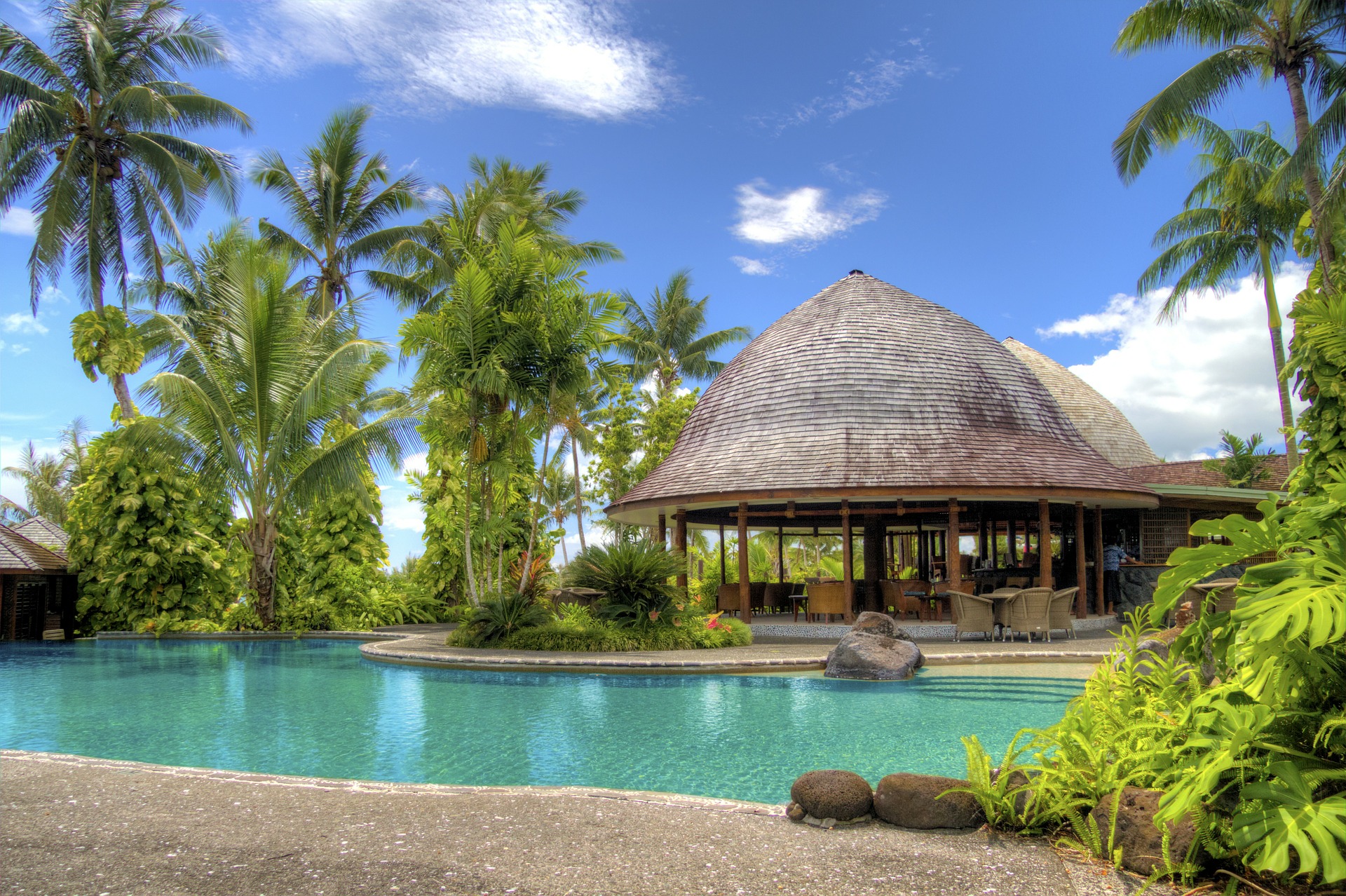
- Beach fales: Simple open huts on quiet beaches.
Places to visit
- City
Cities
- Apia: A slightly run-down, laid-back capital with good hotels, shops, bars and a public market.
Regions
- Upolu: Home of the capital, the international airport and most of the population, plus small offshore islands.
- Savai'i: The largest island, less developed than Upolu; most services are in Salelologa and at resorts.
Things to do
See
- National parks: O le Pupu Pue on Upolu has waterfalls and a coastal lava cliff walk; Falealupo on Savai'i has a canopy walkway.
- Blowholes Savai'i: Sea water forced up through tubes in the volcanic rock.
- Robert Louis Stevenson's house Apia: The writer's last home, now a museum, with his grave on the hill above.
- Kilikiti: The noisy village version of cricket, played on village greens.
Do
- Papase'ea Sliding Rocks Upolu: Slide down a small waterfall into the pool below.
- Diving and snorkelling: Around 900 fish species and 200 types of coral; wear footwear if you snorkel without fins.
Shop
- Apia Public Market Apia: Siapo (tapa cloth), kava, carved kava bowls and fresh produce.
Climate and best time to visit
| Jan | Feb | Mar | Apr | May | Jun | Jul | Aug | Sep | Oct | Nov | Dec | |
|---|---|---|---|---|---|---|---|---|---|---|---|---|
| Max °C | 30 | 31 | 31 | 31 | 30 | 30 | 30 | 30 | 30 | 30 | 30 | 31 |
| Min °C | 24 | 24 | 24 | 24 | 23 | 23 | 23 | 23 | 23 | 23 | 24 | 24 |
| Rain mm | 489 | 368 | 352 | 211 | 193 | 121 | 121 | 113 | 154 | 224 | 262 | 358 |
Samoa is hot all year: in Apia the average maximum stays around 30 °C and nights around 23 °C. Rain falls in every month, from about 115 mm in August to almost 500 mm in January.
May to September is the drier season. The cyclone season normally runs from November to the end of April, with most rain from December to March.
Holidays and events
- 1 January 2026 · New Year's Day
- 2 January 2026 · New Year's Day (second day)
- 3 April 2026 · Good Friday
- 4 April 2026 · Holy Saturday
- 6 April 2026 · Easter Monday
- 11 May 2026 · Mother's Day
- 1 June 2026 · Independence Day
- 10 August 2026 · Father's Day
- 12 October 2026 · Lotu a Tamaiti
- 25 December 2026 · Christmas Day
- 26 December 2026 · St. Stephen's Day
Getting around
| Main airports | APW |
|---|
Taxis are cheap: use officially marked ones and agree the fare first. Buses are cheap but irregular. A ferry links Upolu and Savai'i: do not board vessels that look overloaded. To drive you need a temporary local licence, sold by rental companies and the tourism office; traffic drives on the left, the speed limit is 40 km/h in villages and 56 km/h elsewhere, and night driving is best avoided.
Flying to Samoa? PartnerCompare fares and find the cheapest datesSearch flightsWhere to stay
- Beach fales: Simple, inexpensive open huts on the beach.
- Resorts, hotels and guest houses
- Village stays: Possible, especially on Savai'i; follow village rules.
Beaches belong to the nearest village, which often asks a small fee to use them.
Eat and drink
Dishes to try
- Umu: Food cooked on hot stones under banana leaves.
- Oka: Raw fish marinated in lemon juice, coconut cream and onion.
- Palusami: Taro leaves wrapped around coconut cream and cooked in the umu.
Drinks
- 'Ava (kava): The ceremonial drink that opens every important gathering.
- Vailima: The cheap local beer, sold everywhere.
| Tipping | Not practised or expected. |
|---|
Local dishes are easiest to find at the market in Apia. Drink bottled water.
Entry requirements and visas
| Passport validity | At least 6 months after the date you arrive |
|---|
| Passport | Entry | Max stay | Notes |
|---|---|---|---|
| United Kingdom | Visa free | 60 days | Free visitor permit on arrival. |
| Canada | Visa free | 60 days | Free visitor permit on arrival. |
| EU / EEA | Visa free | 60 days | Free visitor permit on arrival. |
| United States | Visa free | 60 days | Free visitor permit on arrival. |
| Australia | Visa free | 60 days | Free visitor permit on arrival. |
Other nationalities: check the official source below.
Visitors of all nationalities can stay up to 60 days without a visa and receive a free visitor permit on arrival. You may need an onward ticket, proof of funds and confirmed accommodation. You need a yellow fever certificate if you arrive from a country with a risk of yellow fever. Rules can change: check the Samoa Immigration website or your government's advice before you book.
Money and payments
| Currency | Samoan Tala (WST) |
|---|
The currency is the tālā (WST), divided into 100 sene. It is illegal to do business in a foreign currency, but changing money is easy, including at the airport banks. Haggling is considered rude.
Health
| Required vaccines | Yellow fever certificate, only if you arrive from a country with a risk of yellow fever |
|---|---|
| Recommended vaccines | Routine vaccines, including measles (MMR), Hepatitis A, Hepatitis B, Typhoid, Rabies, only for some travellers: ask a travel clinic |
| Malaria | None |
| Tap water | Not safe |
Samoa is free of malaria, but dengue, Zika and chikungunya occur: use repellent, also during the day. Drink bottled water. Serious emergencies usually mean evacuation to Australia, New Zealand or Hawaii, so get insurance that covers it. For an ambulance, call 911.
This is general information, not medical advice: check with a travel health professional before you go.
Safety
- United States: Level 1: Exercise Normal Precautions (2026-10-20)
- Canada: Take normal security precautions (2026-10-20)
- United Kingdom: No advice against travel (2026-10-20)
Serious crime is low and petty theft uncommon; women travelling alone should take care after dark, especially around the Beach Road bars in Apia. Stray dogs are common and can be aggressive. Lagoon currents are powerful and beaches rarely have lifeguards: take local advice before swimming or surfing. Samoa is in an earthquake and tsunami zone.
Customs and etiquette
Sunday is a holy day: most businesses close and you should not walk through villages. Many villages hold a prayer curfew at sundown. Dress modestly away from the beach, with knee-length shorts or a lavalava (sarong); topless and nude bathing are taboo. Remove your shoes before entering a house, ask before photographing people, and ask permission before entering a lagoon. Drinking alcohol in public outside bars and restaurants is illegal, and the drinking age is 21. Same-sex sexual activity is illegal.
Language
| Official languages | Samoan, English |
|---|---|
| English | Common |
Quick reference
Country facts
| Capital | Apia |
|---|---|
| Population | 219,306 (2025) |
| Area | 2,780 km² |
| Time zone | Pacific/Apia (UTC+13) |
| Calling code | +685 |
| Driving side | left |
Emergency numbers
| Emergency | 911 |
|---|
Frequently asked questions
Do I need a visa for Samoa?
No, visitors of all nationalities can stay up to 60 days with a free permit on arrival. Check official advice before you book.
Can I drink the tap water in Samoa?
Drink bottled water: it is cheap and easy to find.
Do I tip in Samoa?
No, tipping is not practised or expected.
What should I know about Sundays?
Most shops close and you should not walk through villages; plan your day around it.
When is the best time to visit Samoa?
May to September is the drier season; cyclones are possible from November to April.
Sources This guide was last checked on · 16 sources
- Wikivoyage: Samoa · Overview, Places to visit, Things to do, Climate and best time to visit, Getting around, Where to stay, Eat and drink, Entry requirements and visas, Money and payments, Health, Safety, Customs and etiquette, Language, Frequently asked questions
- WMO World Weather Information Service: Apia · Climate and best time to visit
- UK FCDO: Samoa safety and security · Climate and best time to visit, Getting around, Safety, Customs and etiquette
- Nager.Date: public holidays in Samoa, 2026 · Holidays and events
- Government of Canada: Samoa travel advice (updated 26 May 2026) · Getting around, Entry requirements and visas, Safety, Customs and etiquette, Frequently asked questions
- UK FCDO: Samoa entry requirements · Entry requirements and visas, Frequently asked questions
- Wikidata · Money and payments, Country facts
- ISO 4217 (SIX), published 2026-09-17 · Money and payments
- CDC Travelers' Health: Samoa · Health
- UK FCDO: Samoa health · Health
- US Department of State: Samoa travel advisory · Safety
- UK FCDO: Samoa travel advice · Safety
- World Bank, SP.POP.TOTL · Country facts
- World Bank, AG.LND.TOTL.K2 · Country facts
- IANA Time Zone Database, zone.tab · Country facts
- UK FCDO: Samoa getting help · Emergency numbers
Suggest an update
Travel rules, prices and timetables change. If something in this guide is out of date, tell us: we check every suggestion against an official source before changing the page.