

- Local time
- 01:32 (capital)
- Currency
- Papua New Guinean Kina (PGK)
- Capital
- Port Moresby
- Calling code
- +675
- Drive on the
- left
Overview
Papua New Guinea is adventure travel: hundreds of cultures, highland festivals, the Kokoda Track, reefs and Second World War wrecks. Tourist services are thin and official advice urges great caution.
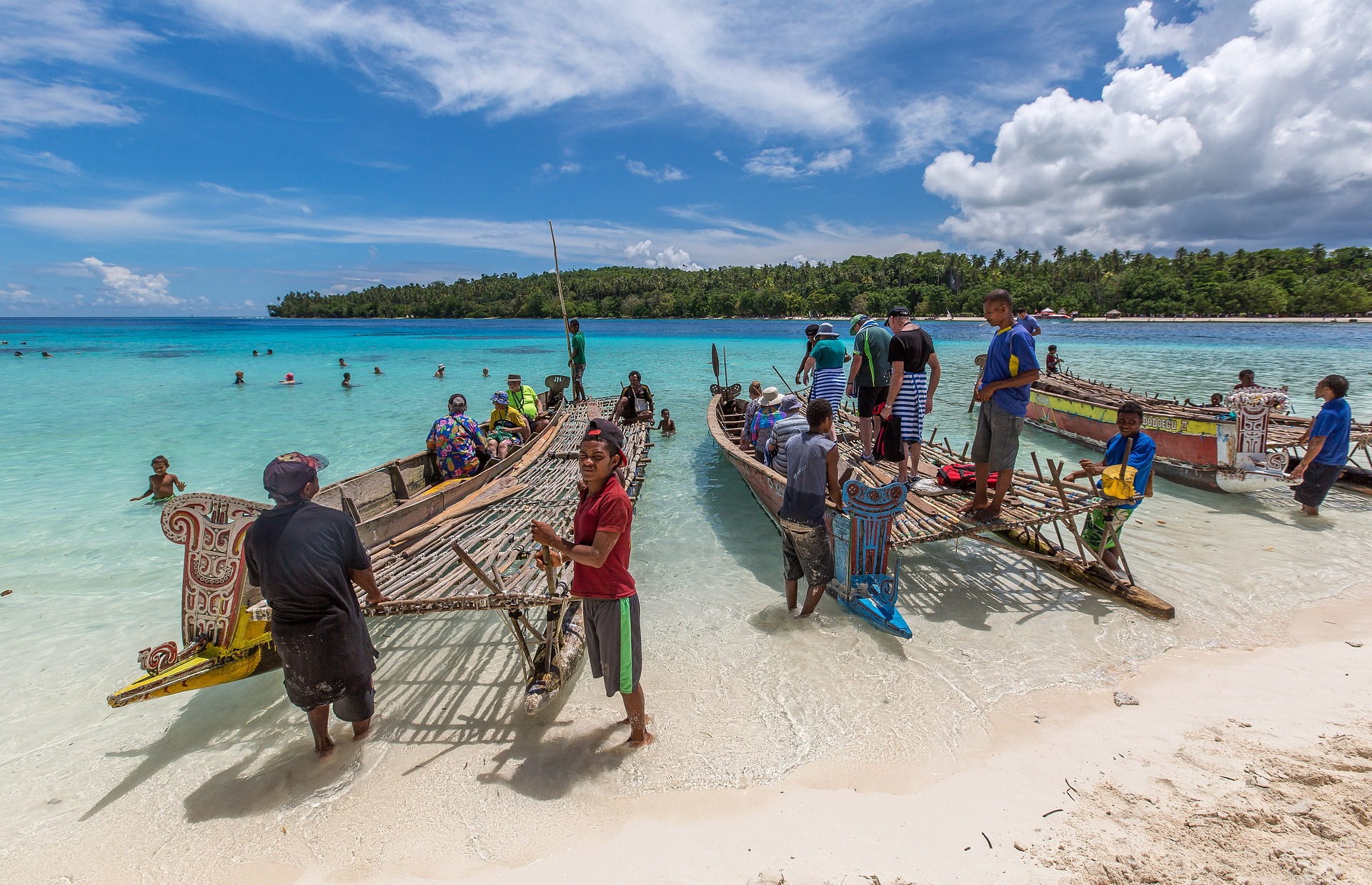
Papua New Guinea covers the eastern half of the island of New Guinea and many smaller islands. It has hundreds of ethnic groups and more than 800 languages, each with its own art, dance and dress, and many visitors come for the sing-sing performances of the Goroka and Mount Hagen shows in the highlands. The land runs from a spine of rainforest-covered mountains, topped by Mount Wilhelm, to the wetlands of the Sepik and Fly rivers and coral reefs where divers explore wartime wrecks. Birdwatchers come for more than 700 species, including birds of paradise.
Outside a handful of places, tourist infrastructure is limited: roads between regions are few, and most travel between towns is by plane. Read the official travel advice carefully before planning a trip. Canada advises against non-essential travel to the whole country because of crime and violence, the United States says to reconsider travel, and the UK advises against all but essential travel to parts of the Highlands. Official advice is to use trusted local travel companies and guides, especially for treks.
- Kokoda Track: A 96 km trek across the Owen Stanley Range, on a historic wartime trail.
- Goroka and Mount Hagen shows: Highland festivals where dozens of groups compete in sing-sing performances.
- Sepik River: River culture, elaborate carvings and the haus tambaran buildings, reached from Wewak.
- Madang: Diving on reefs and Second World War wrecks.
- Trobriand Islands: Islands known for their distinctive culture.
- Mount Wilhelm: The highest mountain, with views of both coasts of New Guinea from the top.
Places to visit
- City
- Coast
- Island
- Park
Cities
- Port Moresby: The capital, with the Parliament building, the national museum and zoological gardens.
- Lae: The second city and main commercial centre, at the start of the Highlands Highway.
- Goroka: A highland town with a pleasant climate, the centre of the coffee industry and home of the Goroka Show.
- Mount Hagen: A frontier town in the Highlands, with cool weather and highland culture.
- Madang: A coastal town known for its diving and the evening flights of bats.
- Wewak: The gateway to the Sepik River and its carvings.
- Alotau: The capital of Milne Bay province, gateway to remote islands.
- Rabaul: A town at the foot of an active volcano, badly damaged by an eruption in 1994.
- Vanimo: The town on the Indonesian border, popular for surfing.
Beyond the cities
- Kokoda Track (park): A 96 km trail across the Owen Stanley Range, famous for its role in the Second World War.
- Trobriand Islands (island): The "Islands of Love" of the anthropologist Malinowski, known for their culture.
- Louisiade Archipelago (island): A remote island group for diving and yachting.
- Tufi (coast): Fiord-like scenery, diving and bark tapa cloth.
- Mount Wilhelm (mountain): The highest mountain in Papua New Guinea, a climb of three or four days.
- Sepik River (area): A great river with its own culture, explored by long canoe trips.
Regions
- Southern Papua New Guinea: Port Moresby and the Central and Northern provinces, the starting point of most visits.
- Western Papua New Guinea: The little-visited Western and Gulf provinces, good for birdwatching.
- Madang-Morobe: Volcanic islands and diving at Madang; Morobe has Lae, the start of the Highlands Highway.
- Highlands: Fertile valleys and many distinct cultures; check official advice, which warns against parts of the region.
- Sepik: The Sandaun and East Sepik provinces and the Sepik River.
- Milne Bay: The eastern region, with many islands.
- New Britain: Second World War remains on land and under water, hot springs and the Baining fire dance.
- New Ireland and Manus: Fishing, diving, sailing and surfing.
- Bougainville: An autonomous island region, culturally close to the Solomon Islands.
Things to do
See
- Sing-sing at a highland show Goroka and Mount Hagen: More than fifty groups compete in the annual shows.
- Canoe up the Sepik Sepik: Visit villages and their impressive haus tambaran buildings.
Do
- Trek the Kokoda Track Owen Stanley Range: Six to twelve days over ridges and streams; walk with guides from a trusted company.
- Dive reefs and wrecks Madang and New Britain: Coral reefs and wartime aircraft wrecks with more than a dozen local dive operators.
- Birdwatching: Over 700 species, including many birds of paradise; bring binoculars and ask villagers for help.
- Climb Mount Wilhelm Highlands: A relatively easy climb to the highest summit; allow three or four days.
- Whitewater rafting Wahgi River: One of the best-known rafting rivers in the region.
- Flightseeing Port Moresby: Light-aircraft circuits to remote mountain airstrips leave early in the morning.
Shop
- Craft market Port Moresby: A monthly market opposite Ela Beach with crafts from every province; do not buy bird feathers.
Itineraries
A highland show and the coast in 8 days (8 days)
- Port Moresby (1 night): Arrive and fly on.
- Goroka (3 nights): Time it with the Goroka Show.
- Madang (4 nights): Diving and the coast, by road on the Highlands Highway or by air.
The Kokoda Track in 10 days (guided) (10 days)
- Port Moresby (1 night): Meet your trekking company.
- Kokoda Track (8 nights): Six to twelve days of walking, only with a trusted operator.
- Port Moresby (1 night): Back to the capital.
Climate and best time to visit
| Jan | Feb | Mar | Apr | May | Jun | Jul | Aug | Sep | Oct | Nov | Dec | |
|---|---|---|---|---|---|---|---|---|---|---|---|---|
| Max °C | 32 | 32 | 31 | 31 | 31 | 30 | 30 | 30 | 31 | 32 | 33 | 32 |
| Min °C | 24 | 24 | 23 | 24 | 24 | 23 | 22 | 23 | 23 | 24 | 24 | 24 |
| Rain mm | 192 | 141 | 190 | 105 | 56 | 22 | 14 | 12 | 14 | 15 | 40 | 98 |
Papua New Guinea lies just south of the equator and is hot all year on the coast: in Port Moresby the average maximum stays between about 30 and 32 °C. The highlands are distinctly cooler. The wet season runs roughly from December to March; in Port Moresby almost no rain falls from June to October, while January brings close to 200 mm.
June to September is the best time for trekking. The cyclone season normally runs from November to May, with a risk of floods and landslides in rural areas.
Holidays and events
- 1 January 2026 · New Year's Day
- 3 April 2026 · Good Friday
- 4 April 2026 · Holy Saturday
- 5 April 2026 · Easter Sunday
- 6 April 2026 · Easter Monday
- 8 June 2026 · King's Birthday
- 23 July 2026 · Remembrance Day
- 26 August 2026 · Repentance Day
- 16 September 2026 · Independence Day
- 25 December 2026 · Christmas Day
- 26 December 2026 · Boxing Day
Getting around
| Main airports | POM |
|---|
Flying is the usual way between towns: almost every settlement has an airstrip, and no major road links Port Moresby with the rest of the country. Air Niugini serves the provincial capitals and PNG Air many smaller towns. Delays and cancellations are frequent, and small planes in mountain terrain carry real risk. The Highlands Highway links Lae, Goroka, Mount Hagen and Madang, where buses (PMVs) are the common transport, but armed robberies on PMVs, taxis and cars have been reported, and many vehicles are not roadworthy.
Traffic drives on the left and the speed limit is 70 km/h. A UK photocard licence is valid for 6 months. Roads are poor, and after an accident crowds can turn violent: drive to the nearest safe place and report it to the police there. On the islands, people travel by banana boat (an open fibreglass boat with an outboard) and by ferries that run two or three times a week.
Flying to Papua New Guinea? PartnerCompare fares and find the cheapest datesSearch flightsWhere to stay
- Hotels: Very expensive: at least US$100 a night, often much more; most in Port Moresby are in guarded compounds.
- Guesthouses in towns: The budget option in towns, still around US$40 a night.
- Village guesthouses: The cheapest option, around US$15 a night, and a way to meet local people.
- Lodges: Tourist lodges serve a mix of local and Western food.
Port Moresby has international hotels, mid-range hotels and guesthouses; regional towns have fewer choices. Ask your hotel to arrange transport and guides, since many will drive or walk with you around town.
Eat and drink
Dishes to try
- Mumu: Meat and vegetables cooked in an underground oven.
- Kaukau: Sweet potato, a staple served with most meals.
- Rice and starches: Almost every meal has rice and another starch; food is generally not spicy.
Drinks
- SP Lager: The main local beer, often served fairly warm.
- Bottled water: Water quality varies from place to place, so stick to bottled water, even in good hotels.
Tourist lodges blend local food with a Western menu. There are few international chains: the ones you see are local or Australian. Deaths have been caused by alcohol containing methanol, so be careful with drinks of unknown origin.
Entry requirements and visas
| Passport validity | At least 6 months after the date you arrive |
|---|
| Passport | Entry | Max stay | Notes |
|---|---|---|---|
| United Kingdom | Visa on arrival | 60 days | A visa is required: apply online in advance, or get a visitor visa on arrival at Port Moresby airport. |
| Canada | Visa on arrival | 60 days | Tourist visa required: an e-visa before travel, or on arrival at Port Moresby airport. |
| EU / EEA | Visa on arrival | 60 days | Visa on arrival at the main airports, according to Wikivoyage; check the official site. |
| United States | Visa on arrival | 60 days | Visa on arrival at the main airports, according to Wikivoyage; check the official site. |
| Australia | Visa on arrival | 30 days | 30-day visa on arrival, according to Wikivoyage; check the official site. |
Other nationalities: check the official source below.
Everyone needs a visa. You can apply online in advance through the Immigration and Citizenship Services Authority (ICSA), or get a visitor visa on arrival at Jacksons International Airport in Port Moresby; Wikivoyage lists Mount Hagen, Alotau and Rabaul airports too. If you enter overland from Indonesia, get your visa in advance. All travellers must also complete the free online Digital Arrival Card within 72 hours before arrival.
You may be asked for an onward ticket and proof of funds. You need a yellow fever certificate if you arrive from a country with a risk of yellow fever, and many fruits, vegetables and animal products cannot be brought in. Rules depend on your passport and can change: check the official ICSA website before you book.
Money and payments
| Currency | Papua New Guinean Kina (PGK) |
|---|---|
| Cards | Common |
The currency is the kina (PGK, K), divided into 100 toea. ATMs are common in the main towns, but some foreign cards do not work and some machines charge high fees; there are ATMs in the arrivals area of Port Moresby airport. Credit cards are accepted in larger shops, hotels and restaurants, with occasional reports of fraud. Outside the cities you need cash in small notes, and foreign currency is not accepted in villages. Haggling is not really part of the culture.
Health
| Required vaccines | Yellow fever certificate, only if you arrive from a country with a risk of yellow fever |
|---|---|
| Recommended vaccines | Routine vaccines, including measles (MMR), Polio: an adult booster, because poliovirus has been found in the country, Hepatitis A, Hepatitis B, Typhoid, Japanese encephalitis, for longer stays or rural trips, Rabies, only for some travellers: vaccines are hard to find in the country |
| Malaria | Widespread |
| Tap water | Not safe |
Malaria is present throughout the country below 2,000 m, and the CDC recommends preventive medicine: talk to a travel health professional well before you go. Mosquitoes also carry dengue, Zika and chikungunya. Drink bottled water. Altitude sickness is a risk on high treks such as Mount Wilhelm.
Healthcare is limited outside the main towns, so get insurance that covers medical evacuation. For an ambulance, call 111.
This is general information, not medical advice: check with a travel health professional before you go.
Safety
- United States: Level 3: Reconsider Travel (2026-10-20)
- Canada: Avoid non-essential travel (2026-10-20)
- United Kingdom: Advises against all but essential travel to parts of the country (2026-10-20)
Canada advises against non-essential travel to Papua New Guinea because of high levels of crime and inter-ethnic violence, and the US advises to reconsider travel. The UK advises against all but essential travel to Hela and Southern Highlands provinces and to Enga province except Wabag district, because of tribal fighting, and warns about the area around the Porgera mine, the Indonesian border and central Bougainville.
There is a high risk of serious crime in Port Moresby, Lae and Mount Hagen. Armed robbery, carjacking at roadblocks and sexual assault are common; criminals target people at banks and ATMs. Do not walk after dark, do not travel alone, carry little cash and keep valuables out of sight. On the Kokoda Track, walk only with guides from trusted companies. Saltwater crocodiles live in coastal waters, rivers and lakes, so avoid swimming in the lowlands. There are unexploded wartime weapons along the Kokoda Track, at Milne Bay and at Rabaul. Earthquakes, tsunamis and volcanic eruptions happen, especially around Rabaul, Kimbe and Manam Island: follow local authorities.
Customs and etiquette
A friendly handshake matters when you greet people, but many Papua New Guineans avoid eye contact as a sign of respect and speak quietly. Speak English first: starting in Tok Pisin can suggest you think people do not know English. Never describe people as "Stone Age": it is deeply rude. Ask before taking photos of anyone, even at festivals.
Same-sex sexual activity between men is illegal. Drug offences, including for marijuana, carry long prison sentences.
Language
| English | Common |
|---|
| You drink, you drive, you die (a road-safety slogan) | Yu dring, yu draiv, yu dai |
|---|---|
| Go on a journey | Throwim way leg |
What to pack
- Visa or ICSA approval and Digital Arrival Card: Every visitor needs a visa, and the arrival card is compulsory.
- Malaria tablets and repellent: Malaria is present below 2,000 m.
- Warm clothes: The highlands are cool, and nights on deck are cold.
- Binoculars: Birdwatching is one of the main attractions.
- Cash in small kina notes: Market stalls and villages work in cash.
- Insurance with medical evacuation: Healthcare is limited outside the main towns.
Quick reference
Country facts
| Capital | Port Moresby |
|---|---|
| Population | 10,762,817 (2025) |
| Area | 452,860 km² |
| Time zone | Pacific/Port_Moresby (UTC+10), Pacific/Bougainville (UTC+11) |
| Calling code | +675 |
| Driving side | left |
Staying connected
| SIM and eSIM | Two mobile operators: Digicel PNG and bmobile-Vodafone. 4G covers Port Moresby and Lae; elsewhere expect 3G or 2G in populated places. |
|---|
Emergency numbers
| Police | 112 |
|---|---|
| Ambulance | 111 |
| Fire | 110 |
Frequently asked questions
Is Papua New Guinea safe to visit?
Official advice is cautious: Canada advises against non-essential travel, the US says to reconsider travel, and the UK advises against all but essential travel to parts of the Highlands. Official advice is to use trusted local companies and guides.
Do I need a visa for Papua New Guinea?
Yes, everyone does. Apply online through ICSA, or get a visitor visa on arrival at Port Moresby airport, and complete the Digital Arrival Card before you fly.
Is there malaria in Papua New Guinea?
Yes, throughout the country below 2,000 m. Ask a travel health professional about preventive medicine.
Can I drink the tap water?
Stick to bottled water, even in upmarket hotels: quality varies from place to place.
How do you get around Papua New Guinea?
Mostly by plane: roads link only some regions, and Port Moresby has no road to the rest of the country.
When is the best time to visit?
June to September is best for trekking; the wet season runs roughly from December to March.
Sources This guide was last checked on · 18 sources
- Wikivoyage: Papua New Guinea · Overview, Places to visit, Things to do, Itineraries, Climate and best time to visit, Getting around, Where to stay, Eat and drink, Entry requirements and visas, Money and payments, Health, Safety, Customs and etiquette, Language, What to pack, Staying connected, Frequently asked questions
- Wikidata: Papua New Guinea · Places to visit, Money and payments, Country facts
- UK FCDO: Papua New Guinea safety and security · Itineraries, Climate and best time to visit, Getting around, Safety, Customs and etiquette, Staying connected, Frequently asked questions
- WMO World Weather Information Service: Port Moresby · Climate and best time to visit
- Nager.Date: public holidays in Papua New Guinea, 2026 · Holidays and events
- UK FCDO: Papua New Guinea entry requirements · Entry requirements and visas, What to pack, Frequently asked questions
- Government of Canada: Papua New Guinea travel advice (updated 15 October 2026) · Entry requirements and visas, Safety, Frequently asked questions
- ISO 4217 (SIX), published 2026-09-17 · Money and payments
- CDC Travelers' Health: Papua New Guinea · Health, What to pack
- UK FCDO: Papua New Guinea health · Health, What to pack
- US Department of State: Papua New Guinea travel advisory · Safety
- UK FCDO: Papua New Guinea travel advice · Safety
- UK FCDO: Papua New Guinea regional risks · Safety
- UK FCDO: Papua New Guinea warnings and insurance · Safety, Frequently asked questions
- World Bank, SP.POP.TOTL · Country facts
- World Bank, AG.LND.TOTL.K2 · Country facts
- IANA Time Zone Database, zone.tab · Country facts
- UK FCDO: Papua New Guinea getting help · Emergency numbers
Suggest an update
Travel rules, prices and timetables change. If something in this guide is out of date, tell us: we check every suggestion against an official source before changing the page.