

- Local time
- 00:39
- Currency
- Fijian Dollar (FJD)
- Capital
- Suva
- Calling code
- +679
- Drive on the
- left
Overview
Fiji is an archipelago of 332 islands: beaches and reefs in the Mamanuca and Yasawa groups, rainforest and villages inland, and a mix of Fijian and Indian cultures. Most visitors arrive at Nadi.
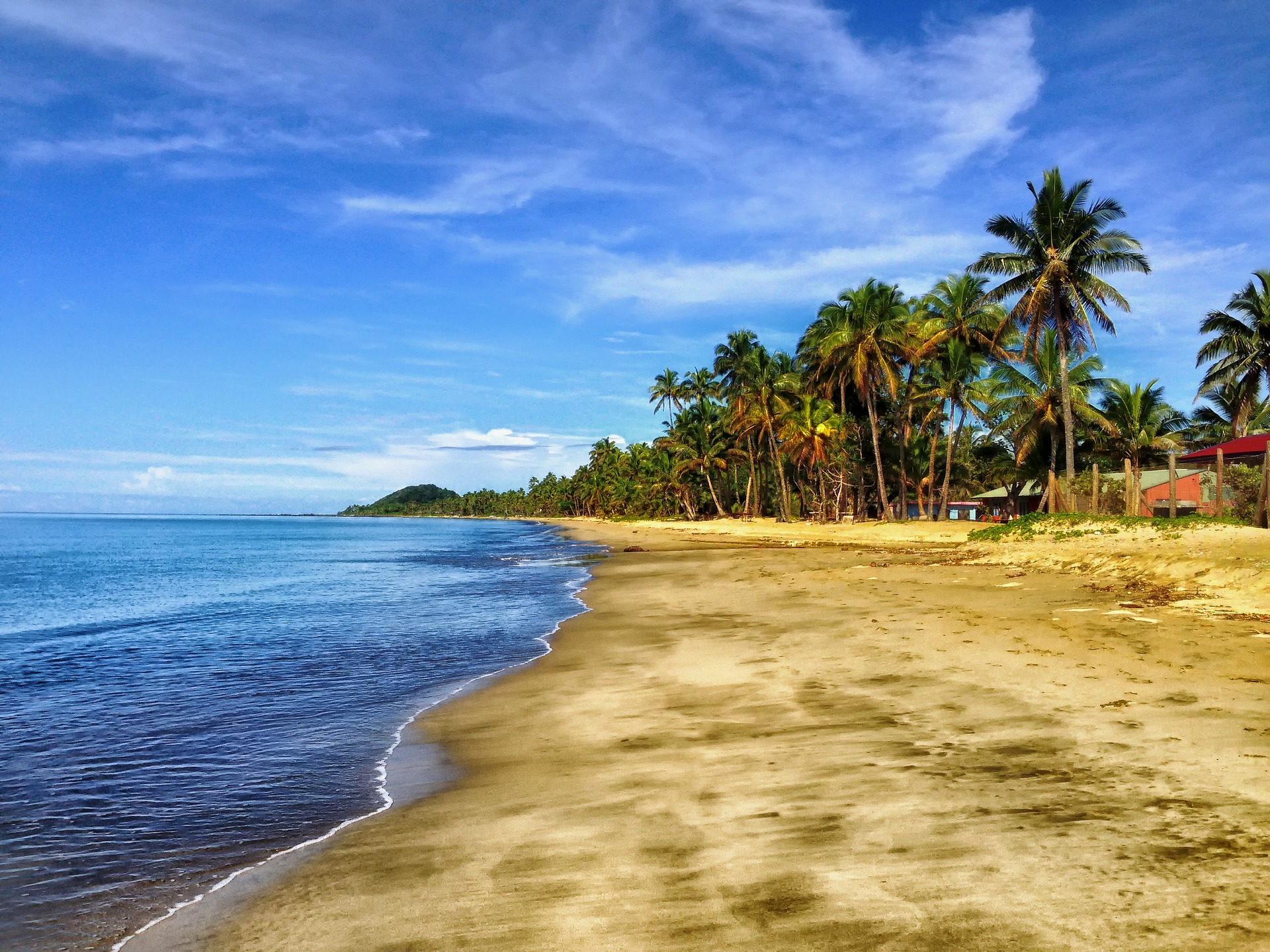
Fiji lies about 2,000 km north of New Zealand and is made of 332 islands, of which Viti Levu and Vanua Levu are the largest. Most visitors come for the sea: sandy beaches on the small Mamanuca Islands, island-hopping in the Yasawas, and diving or snorkelling on coral reefs from almost any island. Inland, the volcanic main islands have rainforest, waterfalls and remote villages, and Taveuni has the hiking trails of Bouma National Park.
Indigenous Fijian traditions are part of daily life, and the descendants of Indian labourers brought by the British make up nearly half the population, which shows in the food and the festivals. The capital, Suva, is rainy and mostly a business city; tourism is concentrated around Nadi, its international airport and the nearby islands. The climate is tropical all year, with a cyclone season from November to April.
- Mamanuca Islands: Small islands west of Viti Levu with sandy beaches and resorts, reached by ferry from Denarau.
- Yasawa Islands: A chain of islands for island-hopping, with the limestone Sawa-i-Lau cave.
- Taveuni: Rainforest, waterfalls and the ridge walks of Bouma National Park.
- Diving and snorkelling: Coral reefs reachable from almost any island.
- Village visits: A kava ceremony and traditional houses, for example at Navala on Viti Levu.
- Levuka: A port of entry on the island of Ovalau, in the Lomaiviti group.
Places to visit
- City
- Island
- Area
Cities
- Nadi: The transit hub next to the main international airport (pronounced "Nandi").
- Suva: The capital, on Viti Levu: rainy, business-oriented and home to the Fiji Museum.
- Lautoka: A city about 30 minutes north of Nadi, with boats to the Yasawa Islands.
- Levuka: A port of entry on the island of Ovalau.
- Nausori: A town on Viti Levu where buses leave for the mountainous interior.
Beyond the cities
- Mamanuca Islands (island): A group of tiny islands west of Viti Levu, with beaches and resorts.
- Yasawa Islands (island): A north-western chain popular for island-hopping.
- Taveuni (island): The third largest island, cut in half by the 180th meridian, with Bouma National Park.
- Denarau (area): A gated resort area near Nadi, with the marina for boats to the islands.
- Ovalau (island): The sixth largest island, in the Lomaiviti group, home to Levuka.
- Kadavu (island): An island south of Viti Levu.
- Nananu-i-Ra Island (island): A small island off the northern coast of Viti Levu.
Regions
- Viti Levu: The largest and most developed island, with most of the people, the capital Suva and the airport at Nadi.
- Vanua Levu: The second largest island, surrounded by smaller northern islands.
- Taveuni: The third largest island, the only home of the tagimoucia flower.
- Kadavu: An island south of Viti Levu.
- Yasawa Islands: A north-western group popular for island-hopping holidays.
- Mamanuca Islands: Tiny islands west of Viti Levu.
- Lomaiviti Islands: The central group between Viti Levu and the Lau Islands, including Ovalau.
- Lau Islands: Many small islands in the east; visits usually need an invitation from the local chief.
- Rotuma: A remote dependency, home to a different Polynesian people.
Things to do
See
- Sawa-i-Lau cave Yasawa Islands: Dive into a dark limestone cave in the Yasawas.
- Sigatoka sand dunes Viti Levu: Dunes in the Sigatoka Valley that were once a burial ground.
- A kava ceremony in a village Navala, Viti Levu: Navala still keeps its traditional bure houses; bring kava as a gift.
- Garden of the Sleeping Giant Nadi: Over 20 hectares of native orchids and tropical plants.
- Fiji Museum Suva: A good introduction to the history and culture of the islands.
Do
- Beach time in the Mamanucas Mamanuca Islands: Sandy beaches a ferry ride from Denarau Marina.
- Diving and snorkelling: Reefs off almost every island; choose a qualified, well-equipped operator.
- Bouma National Park Taveuni: A demanding hike along ridges and through dense rainforest.
- Whitewater rafting Pacific Harbour: Whitewater rafting and sea kayaking trips.
- A rugby match Suva: Rugby is the national sport; Fiji is a world power in rugby sevens.
Itineraries
Nadi and the islands in 8 days (8 days)
- Nadi (1 night): Arrive and rest near the airport.
- Mamanuca Islands (3 nights): By ferry from Denarau Marina; you must book at least one night at an island resort.
- Yasawa Islands (4 nights): Ferries take up to 5 or 6 hours to the far end of the chain.
Suva, Ovalau and Taveuni in 8 days (8 days)
- Suva (2 nights): The Fiji Museum and the capital.
- Ovalau (2 nights): Levuka, by ferry from eastern Viti Levu.
- Taveuni (4 nights): Fly rather than take the slow ferry from Suva, which takes 10 to 12 hours.
Climate and best time to visit
| Jan | Feb | Mar | Apr | May | Jun | Jul | Aug | Sep | Oct | Nov | Dec | |
|---|---|---|---|---|---|---|---|---|---|---|---|---|
| Max °C | 31 | 31 | 31 | 30 | 28 | 28 | 27 | 27 | 27 | 28 | 29 | 30 |
| Min °C | 24 | 24 | 24 | 23 | 22 | 21 | 20 | 21 | 21 | 22 | 23 | 23 |
| Rain mm | 315 | 286 | 371 | 391 | 267 | 164 | 142 | 159 | 184 | 234 | 264 | 263 |
Fiji has a tropical marine climate with little change in temperature through the year. In Suva the average maximum ranges from about 27 °C in July to 31 °C in February, and nights stay above 20 °C. Suva is wet all year: about 140 to 180 mm of rain a month from June to September, and close to 400 mm in the wettest months, March and April.
June to September, the southern winter, is cooler and drier. The tropical cyclone season normally runs from November to April, though cyclones can occur at other times, bringing strong winds, heavy rain, floods and landslides.
Getting around
| Main airports | NAN, SUV |
|---|
Buses are cheap and the safest way to travel by road; on the main road around Viti Levu they run every half hour. Share taxis (white minivans) leave when full. Use only taxis and minibuses with yellow registration plates, and ask for the meter. Roads are often in poor condition, with potholes and animals or pedestrians on the road: avoid driving outside towns at night. A UK licence is accepted, but rental companies forbid taking cars to other islands.
Boats: ferries to the Mamanuca and Yasawa islands leave from Denarau Marina near Nadi, with more services to the Yasawas from Lautoka. Slow car ferries link Viti Levu with Vanua Levu, Ovalau and Koro, but a trip can take 10 to 12 hours, so domestic flights are often worth the higher price. Check the safety equipment before boarding any boat, and avoid overloaded ones. The remote Lau Islands are reached only by charter or domestic flight, usually with an invitation from the local chief.
Flying to Fiji? PartnerCompare fares and find the cheapest datesSearch flightsWhere to stay
- Resorts: Most are near Nadi or on the Mamanuca Islands; international brands are mainly on Denarau Island.
- Backpacker lodges: Common in Nadi.
- Business hotels: The norm in Suva.
- Village stays: Amenities vary, sometimes without electricity; cover your shoulders and bring kava for the welcome.
Accommodation is available in every price range. Many travel agents take a commission of 15 to 20% as an up-front "deposit", so it can pay to book one night and negotiate the rest on the spot. Smaller places sometimes offer much lower local rates when you book in person.
Eat and drink
Dishes to try
- Kokoda: Raw fish or seafood marinated in lemon and coconut milk, similar to ceviche.
- Palusami: Taro leaves baked in coconut milk, often with meat or fish.
- Lovo: Food cooked in an earth oven, served at hotel feasts rather than in restaurants.
- Fish suruwa: A fish curry that originated in Fiji, part of a distinct Indo-Fijian cuisine.
- Thali with roti: Spicy, cheap Indian platters served with rice and flatbread.
- Root crops: Taro, yams, cassava and breadfruit are the base of traditional meals.
Drinks
- Kava (yaqona): A peppery drink from the root of a pepper plant that numbs the lips; do not mix it with alcohol.
- Fiji Bitter: The beer you will see everywhere.
- Fijian rum: Distilled from local sugarcane, under brands such as Bati and Ratu.
| Tipping | Virtually non-existent. Many resorts and dive centres have a "Christmas box" for tips shared among all staff. |
|---|
Locals eat in the cafés and small restaurants found in every town, where Indian, Chinese and Fijian dishes share the menu; fish and chips is a safe choice. Fresh tropical fruit is sold at the town markets. Kava is offered in ceremonies and as a gift when you visit a village; the UK government notes possible risks to the liver. Mature reef fish can occasionally cause fish poisoning.
Entry requirements and visas
| Passport validity | At least 6 months after the date you arrive |
|---|
| Passport | Entry | Max stay | Notes |
|---|---|---|---|
| United Kingdom | Visa free | 120 days | Up to 4 months; show a return or onward ticket. |
| Canada | Visa free | 120 days | Up to 4 months; show a return or onward ticket. |
| EU / EEA | Visa free | 120 days | Visitor permit on arrival, usually for 4 months. |
| United States | Visa free | 120 days | Visitor permit on arrival, usually for 4 months. |
| Australia | Visa free | 120 days | Visitor permit on arrival, usually for 4 months. |
Other nationalities: check the official source below.
Citizens of more than 100 countries, including the UK, the EU, the US, Canada and Australia, need no visa and get a visitor permit on arrival, usually for 4 months; it can be extended for a fee. You must show a return or onward ticket. You need a yellow fever certificate if you arrive from a country with a risk of yellow fever.
All luggage arriving at Nadi is X-rayed and most fresh food is confiscated. Declare cash worth FJ$10,000 or more. Rules depend on your passport and can change: check your government's travel advice or the Fiji Immigration Department before you book.
Money and payments
| Currency | Fijian Dollar (FJD) |
|---|---|
| Cards | Common |
The currency is the Fijian dollar (FJD, F$). Most tourist hotels and many restaurants accept credit cards, but carry cash for buses, markets and small shops. Not every ATM takes foreign cards: ANZ and Westpac machines accept Visa, Mastercard, Maestro and Cirrus. Australian dollars are accepted in some places, but not preferred. Prices in tourist areas are similar to Australia.
Health
| Required vaccines | Yellow fever certificate, only if you arrive from a country with a risk of yellow fever |
|---|---|
| Recommended vaccines | Routine vaccines, including measles (MMR), Hepatitis A, Hepatitis B, Typhoid, Rabies, only for some travellers: ask a travel clinic |
| Malaria | None |
| Tap water | Varies |
Check the recommended vaccines with a travel health professional before you go. Mosquitoes carry dengue, Zika and chikungunya: cover up and use repellent, especially at dawn and dusk. Urban tap water is treated and nearly always safe, and public warnings are issued when it is not; elsewhere boil or filter it if unsure. The sun is intense, so use high-factor sunscreen.
Basic emergency care is good in the towns, but serious cases often need evacuation to New Zealand or Australia, and outside urban areas even basic care is often missing. The only recompression chamber for divers is in Suva and does not always work. Get insurance that covers diving and medical evacuation. For an ambulance, dial 911.
This is general information, not medical advice: check with a travel health professional before you go.
Safety
- United States: Level 1: Exercise Normal Precautions (2026-10-20)
- Canada: Take normal security precautions (2026-10-20)
- United Kingdom: No advice against travel (2026-10-20)
The risk of serious crime is generally low, but petty theft is frequent in downtown Suva and Nadi, and violent crime, including sexual assault, happens sometimes in downtown Suva, on Denarau Island and in Colo-i-Suva Forest Park. Avoid walking after dark, even in a group, and avoid isolated areas and unattended beaches. Foreigners have been poisoned by alcohol adulterated with methanol: be careful where you drink. Watch for card skimming at ATMs, and for market touts and unaccredited travel counters.
Most beaches have no lifeguards or warning flags, and there are dangerous rip tides along reefs and river mouths: ask locally where it is safe to swim. Choose licensed, well-equipped operators for diving and boat trips. Roads are dangerous at night. In the cyclone season, from November to April, follow the Fiji Meteorological Service; Fiji is also in an earthquake zone, and tremors can trigger tsunami alerts. Avoid demonstrations.
Customs and etiquette
Greet people with "bula": it shows respect for the local culture, even in the cities. Fiji is a strongly Christian society, and many shops close on Sunday; many Indo-Fijians are Hindu or Muslim. Dress modestly: beachwear stays on the beach, and in towns and villages both men and women should cover their shoulders and knees, with shorts or a sulu (sarong). This matters most in churches and at kava ceremonies. Topless bathing and public nudity are illegal.
If you visit a village, bring kava as a gift (sevusevu) for your hosts, who will explain what is expected. Sharing is part of village life, and small items such as shoes may be "borrowed": the village chief can help get them back.
Language
| Official languages | English, Fijian, Hindi |
|---|---|
| English | Widespread |
| Hello (also "life") | Bula |
|---|---|
| Kava, the ceremonial drink | Yaqona yang-GO-na |
| Gift offered when visiting a village | Sevusevu |
| Sarong | Sulu |
What to pack
- Return or onward ticket: Border officers ask for it.
- A sulu or clothes that cover shoulders and knees: Expected in towns, villages, churches and kava ceremonies.
- Kava root: The customary gift if you visit a village.
- Insect repellent: Mosquitoes carry dengue, Zika and chikungunya.
- High-factor sunscreen and a hat: The tropical sun can burn in a short time.
- Insurance covering diving and evacuation: Serious cases are flown to New Zealand or Australia.
Quick reference
Country facts
| Capital | Suva |
|---|---|
| Population | 933,154 (2025) |
| Area | 18,333 km² |
| Time zone | Pacific/Fiji (UTC+12) |
| Calling code | +679 |
| Driving side | left |
Staying connected
| SIM and eSIM | Two networks, Vodafone and Digicel, plus Inkk on Vodafone's network. Prepaid SIM cards are sold cheaply at Nadi airport and in shops, and must be registered. |
|---|---|
| Roaming | Many foreign phones do not roam in Fiji, and coverage in rural areas and outer islands is limited or absent. |
| Wi-Fi | A local data SIM is usually cheaper than resort wifi; internet cafés are found in town centres. |
Emergency numbers
| Emergency | 911 |
|---|---|
| Fire | 910 |
Frequently asked questions
Do I need a visa for Fiji?
Not if you hold a UK, EU, US, Canadian or Australian passport: you get a visitor permit on arrival, usually for 4 months. Your passport needs 6 months' validity and you must show an onward ticket. Check official advice before you book.
Do I need to tip in Fiji?
No, tipping is virtually non-existent. Some resorts have a staff Christmas box if you want to leave something.
Is the tap water safe to drink in Fiji?
Urban tap water is treated and nearly always safe. Elsewhere, boil or filter it if you are unsure.
When is the best time to visit Fiji?
June to September, the southern winter, is cooler and drier. The cyclone season runs from November to April.
What should I wear when visiting a village?
Cover your shoulders and knees, men and women alike, and bring kava as a gift for your hosts.
Is there malaria in Fiji?
No, but mosquitoes carry dengue, Zika and chikungunya, so use repellent.
Sources This guide was last checked on · 15 sources
- Wikivoyage: Fiji · Overview, Places to visit, Things to do, Itineraries, Climate and best time to visit, Getting around, Where to stay, Eat and drink, Entry requirements and visas, Money and payments, Health, Safety, Customs and etiquette, Language, What to pack, Staying connected, Frequently asked questions
- WMO World Weather Information Service: Suva · Climate and best time to visit
- UK FCDO: Fiji safety and security · Climate and best time to visit, Getting around, Eat and drink, Safety, Customs and etiquette, What to pack, Staying connected, Frequently asked questions
- UK FCDO: Fiji entry requirements · Entry requirements and visas, Money and payments, What to pack, Frequently asked questions
- Government of Canada: Fiji travel advice (updated 14 October 2026) · Entry requirements and visas, Safety, Frequently asked questions
- Wikidata · Money and payments, Country facts
- ISO 4217 (SIX), published 2026-09-17 · Money and payments
- CDC Travelers' Health: Fiji · Health
- UK FCDO: Fiji health · Health
- US Department of State: Fiji travel advisory · Safety
- UK FCDO: Fiji travel advice · Safety
- World Bank, SP.POP.TOTL · Country facts
- World Bank, AG.LND.TOTL.K2 · Country facts
- IANA Time Zone Database, zone.tab · Country facts
- UK FCDO: Fiji getting help · Emergency numbers
Suggest an update
Travel rules, prices and timetables change. If something in this guide is out of date, tell us: we check every suggestion against an official source before changing the page.