

- Local time
- 23:39 (capital)
- Currency
- Australian Dollar (AUD)
- Capital
- Canberra
- Calling code
- +61
- Drive on the
- left
Overview
Australia has a whole continent to itself: reef, rainforest and red desert, Indigenous cultures older than 65,000 years and relaxed cities on the coast. Distances are huge, so plan flights.
Australia is the only country that covers an entire continent. Aboriginal people have lived here for at least 65,000 years, and the land they shaped holds some of the world's most recognisable natural sights: the Great Barrier Reef off Queensland, the Daintree rainforest, the rock of Uluṟu in the Red Centre, the gorges of Kakadu. Yet most Australians live in cities along the east and south-east coast, and Sydney, Melbourne, Brisbane and Perth are diverse, outdoor places where the beach is rarely far away.
The scale catches visitors out. Sydney to Perth is about 4,000 km by road, and much of the interior is semi-arid and thinly populated, so most people fly between regions and drive or take tours locally. The seasons are reversed for anyone from the northern hemisphere: December to February is summer, and the tropical north has its dry season in the southern winter. Australia is expensive by international standards, and every visitor except New Zealanders needs a visa or an electronic authority before travelling.
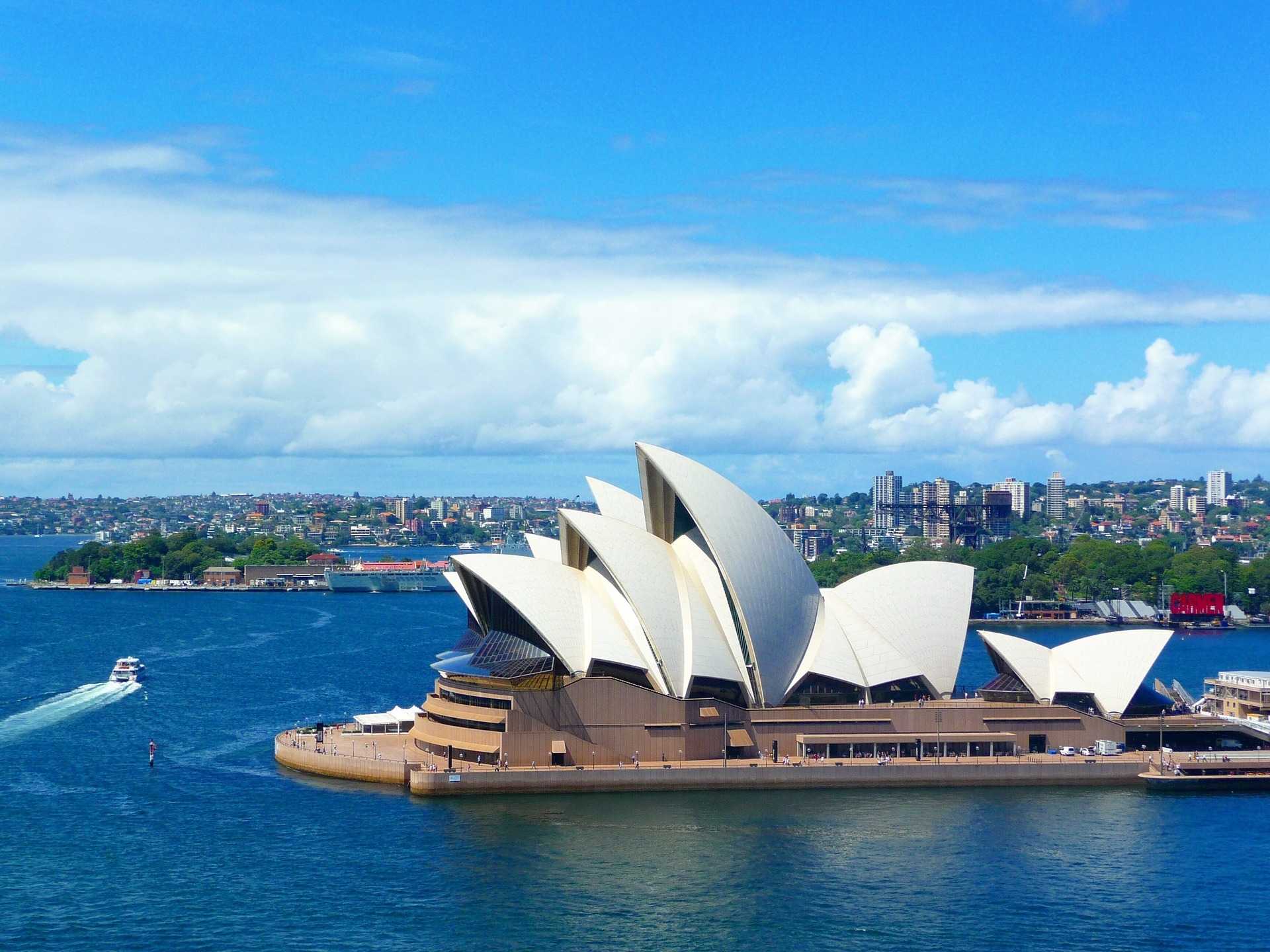
- Sydney: The oldest and largest city, with the Opera House, the harbour and many beaches.
- Great Barrier Reef: The world's largest coral reef system, reached from Cairns and the Queensland coast.
- Uluṟu and Kata Tjuṯa: The great rock formations of the Red Centre, in the middle of the outback.
- Melbourne: Coffee, culture and sport; the Great Ocean Road runs along the coast of Victoria.
- Kakadu and the Top End: Tropical national parks and Aboriginal culture around Darwin.
- Tasmania: Mountains and wilderness around Cradle Mountain, and historic Hobart.
Places to visit
- City
- Coast
- Island
- Park
- Area
Cities
- Sydney: Australia's oldest and most cosmopolitan city, on a famous harbour, with the Opera House and many beaches.
- Melbourne: The capital of coffee, culture and sport, often called the most European of Australian cities.
- Brisbane: The capital of sunny Queensland and a gateway to sandy beaches.
- Perth: One of the world's most remote big cities, on the south-western edge of Western Australia.
- Adelaide: The relaxed capital of South Australia, close to renowned wine regions.
- Cairns: The gateway to the Great Barrier Reef, Port Douglas and the Daintree.
- Darwin: The tropical capital of the Northern Territory, at the Top End.
- Hobart: The quiet capital of Tasmania, site of the second convict settlement in Australia.
- Canberra: The small, purpose-built national capital, with plenty of museums.
Beyond the cities
- Great Barrier Reef (area): The world's largest coral reef system, off the coast of Queensland.
- Uluṟu-Kata Tjuṯa National Park (park): Uluṟu (Ayers Rock) and Kata Tjuṯa (The Olgas), the rock formations of the Red Centre.
- Kakadu National Park (park): A huge tropical park in the Northern Territory, for nature and Aboriginal culture.
- Daintree Rainforest (park): An old, well-preserved tropical rainforest in north Queensland, home to cassowaries.
- Blue Mountains National Park (park): Mountains, lookouts and the Three Sisters rock formation, just west of Sydney.
- Great Ocean Road (coast): A coastal drive in Victoria past the Twelve Apostles rock stacks.
- Cradle Mountain-Lake St Clair National Park (park): Tasmania's most popular national park, with Australia's deepest lake.
- Whitsunday Islands (island): Islands off Queensland known for their white beaches.
- Kangaroo Island (island): Wildlife, beaches, wineries and honey farms off South Australia.
Regions
- New South Wales and the ACT: Sydney, a coast lined with beach towns, the Blue Mountains inland, and the capital Canberra.
- Northern Territory: From the red deserts around Uluṟu and Alice Springs up to tropical Darwin and Kakadu.
- Queensland: Warm weather, the Gold Coast, Brisbane, the Great Barrier Reef and the Daintree rainforest.
- South Australia: Adelaide, the Barossa Valley wines, the Flinders Ranges and the outback.
- Tasmania: A mountainous island state: Cradle Mountain in the west, beaches in the east, wilderness in the south.
- Victoria: Melbourne, surf beaches along the south-west coast, farmland and national parks.
- Western Australia: A vast state: Perth and Margaret River in the south-west, tropical coast in the far north.
Things to do
See
- Uluṟu and Kata Tjuṯa Northern Territory: The Red Centre's best-known sight, inside Uluṟu-Kata Tjuṯa National Park.
- Sydney Harbour Sydney: The Opera House and the Harbour Bridge, and a ferry across the water.
- Wildlife spotting: Kangaroos and wallabies in parks near most cities, echidnas on Kangaroo Island, koalas along the Great Ocean Road.
- Convict history Tasmania and Western Australia: Port Arthur in Tasmania and Fremantle Prison near Perth.
Do
- Snorkel or dive the reef Queensland and Western Australia: Boat trips to the Great Barrier Reef, or to Ningaloo Reef off Western Australia.
- Swim at a patrolled beach: From Bondi to Cable Beach in Broome; swim at patrolled beaches, because rip currents are common.
- Bushwalking: Walks in hundreds of national parks; some areas offer guided walks led by Aboriginal people.
- A game of footy or cricket Melbourne: Australian rules football in winter, or a summer Test match at the Melbourne Cricket Ground.
- A road trip: The Great Ocean Road, the Stuart Highway across the country, or the Gibb River Road.
Drink
- Wine regions: Cellar doors in the Barossa, Hunter and Yarra valleys, McLaren Vale and Margaret River.
Itineraries
Sydney, Melbourne and the Great Ocean Road in 10 days (10 days)
- Sydney (4 nights): The harbour and the beaches.
- Blue Mountains National Park (1 night): Lookouts and walks west of Sydney.
- Melbourne (3 nights): Fly from Sydney, or take the train.
- Great Ocean Road (2 nights): Drive west along the coast to the Twelve Apostles.
Reef, rainforest and Red Centre in 9 days (9 days)
- Cairns (4 nights): Boat trips to the reef and a day in the rainforest.
- Daintree Rainforest (2 nights): Reached from Cairns.
- Uluṟu-Kata Tjuṯa National Park (3 nights): Fly to the Red Centre for Uluṟu and Kata Tjuṯa.
The Top End in 6 days (6 days)
- Darwin (2 nights): Best in the dry season, during the southern winter.
- Kakadu National Park (4 nights): Nature and Aboriginal culture in a huge tropical park.
Climate and best time to visit
| Jan | Feb | Mar | Apr | May | Jun | Jul | Aug | Sep | Oct | Nov | Dec | |
|---|---|---|---|---|---|---|---|---|---|---|---|---|
| Max °C | 28 | 27 | 24 | 20 | 15 | 12 | 11 | 13 | 16 | 19 | 22 | 26 |
| Min °C | 13 | 13 | 11 | 7 | 3 | 1 | -0 | 1 | 3 | 6 | 9 | 11 |
| Rain mm | 62 | 54 | 53 | 50 | 48 | 40 | 42 | 47 | 53 | 65 | 64 | 53 |
Australia is big enough to have several climates. The north is hot and tropical, with a dry season during the southern winter (June to August), while the south is temperate. In Canberra the average maximum is about 28 °C in January and 11 °C in July, with frosty winter nights. In Darwin daytime temperatures rarely drop below 30 °C even in winter. Snow never falls in most of the country, but the Snowy Mountains in the south-east and the mountains of Tasmania get plenty in winter.
For the south, March, April and October are mild and fall outside the busy summer school holidays, which run from before Christmas to the end of January. The risk of bushfires is highest from October to February, and the tropical cyclone season, mainly in Queensland, the Northern Territory and Western Australia, normally runs from November to April. For the tropical north, travel in the dry winter months.
Holidays and events
- 1 January 2026 · New Year's Day
- 26 January 2026 · Australia Day
- 3 April 2026 · Good Friday
- 6 April 2026 · Easter Monday
- 25 April 2026 · Anzac Day
- 25 December 2026 · Christmas Day
- 28 December 2026 · St. Stephen's Day
Getting around
| Main airports | SYD, MEL, BNE, PER, ADL, CNS, DRW, OOL |
|---|
Flying is the practical way to cover long distances: Sydney to Perth is about 4,000 km by road. The main domestic airlines are Qantas, Virgin Australia and Jetstar, and flights on the Melbourne, Sydney and Brisbane corridor leave every 15 minutes during the day. Long-distance trains are slow and mostly scenic; The Ghan (Adelaide to Darwin) and the Indian Pacific (Sydney to Perth) are luxury tourist trains. Public transport works well in Sydney, Melbourne, Perth and south-east Queensland; elsewhere a car helps.
Driving: Australia drives on the left. Overseas licences are generally valid for three months; if yours is not in English you need an International Driving Permit, and hire companies may ask for one anyway. Speed limits are strictly enforced. Outside the cities, watch for wildlife at dusk and for road trains. In the outback, carry spare water, fuel and food, tell someone your route, and stay with your vehicle if it breaks down. Rental contracts often exclude unsealed roads and ferries.
Do not carry fruit and vegetables across state borders: there are quarantine checks between states.
Flying to Australia? PartnerCompare fares and find the cheapest datesSearch flightsWhere to stay
- Hotels: 4- and 5-star hotels in all state capitals cost around A$400 a night (2024); prices jump during big events.
- Pubs: Most pubs have rooms, often above the bar and with shared bathrooms; in small towns they may be the only option.
- Motels: A private room with its own shower and toilet; many have family rooms.
- Hostels and backpackers: A dorm bed in a capital city costs around A$50, less in Cairns.
- Holiday parks and camping
- Farm stays and bed and breakfasts
Accommodation is easy to find in the cities and tourist areas, but expensive by international standards. In Australian English a "hotel" can simply be a pub. Book well ahead for the summer school holidays, Easter and the end-of-school "schoolies" weeks in late November and early December, when young people fill some coastal towns.
Eat and drink
Dishes to try
- Meat pie and sausage roll: Sold at bakeries for a quick, cheap meal.
- Barbecue: Steaks, sausages, chops, chicken and fish; many parks have free public barbecues.
- Pub classics: Steak, fish and chips and chicken parmigiana.
- Kangaroo, crocodile and emu: Native meats found in some restaurants and butchers, especially in tourist areas.
- Vegemite on toast: A salty yeast spread: spread it very thin, with butter.
- Bush tucker: Native berries, nuts and seasonings, offered on some tours; macadamias are the best known.
Drinks
- Beer: Strongly regional brands and many microbreweries; glass sizes and names change from state to state.
- Wine: Good bottles often cost under A$15 in shops; visit the cellar doors of the main wine regions.
- Coffee: Café culture is strong, with Melbourne at its centre.
| Meal times | Cafés serve breakfast and light meals from early morning; most close by 4 pm. |
|---|---|
| Tipping | Not customary: service is included in prices. A small tip for exceptional service is optional, and some restaurants add a surcharge on weekends and public holidays. |
Many cheap restaurants are "BYO": they have no alcohol licence but let you bring your own wine, sometimes for a corkage fee. Pubs and clubs, such as bowling clubs and RSLs, often serve good-value meals, and visitors can usually sign in for free. Table manners follow European norms.
Entry requirements and visas
| Passport validity | Valid for the length of your stay |
|---|
| Passport | Entry | Max stay | Notes |
|---|---|---|---|
| United Kingdom | Eta | 90 days | You must have a visa: usually the free eVisitor, or an ETA through the app (service fee). Apply before you travel. |
| EU / EEA | Eta | 90 days | Free eVisitor visa, applied for online before travel. |
| Canada | Eta | 90 days | No tourist visa for up to 90 days, but you need an Electronic Travel Authority (ETA) before you fly. |
Other nationalities: check the official source below.
- Electronic Travel Authority (ETA, subclass 601): apply through the Australian ETA app
- eVisitor (subclass 651): free, for EU, EEA, Swiss and UK citizens
Every visitor except New Zealand citizens needs a visa or electronic authority before travelling. UK and EU citizens can usually get the free eVisitor; Canadians and citizens of many other countries apply for an ETA through the Australian government's app. Both allow stays of up to three months at a time. Travel with the same passport you used to apply. You need a yellow fever vaccination certificate if you arrive from a country with a risk of yellow fever.
Quarantine rules are strict. Declare all food, plant and animal products, including wooden items, on the Incoming Passenger Card, or throw them in the bins at the airport. Luggage is X-rayed and checked by dogs, and you can be fined heavily for not declaring. Rules depend on your passport and can change: check the official link before you book.
Money and payments
| Currency | Australian Dollar (AUD) |
|---|---|
| Cards | Widespread |
Australia is largely cashless: almost every business takes cards and phone payments, and Visa and Mastercard are the most widely accepted. A surcharge of 1 to 2% on card payments is common and legal in cafés, pubs and restaurants, and higher for American Express. ATMs are in almost every town and usually charge a fee of around A$2. Avoid currency exchange counters at airports, which give poor rates. Prices include 10% GST, which visitors may reclaim through the Tourist Refund Scheme if they meet the conditions.
Costs and budget
- Café meal: A$15 to A$20
- Main course in a restaurant: from about A$25
- Takeaway burger, sandwich or pizza slices: about A$10
- Small glass (middy or pot) of beer in a pub: about A$8
- Dorm bed in a capital city: about A$50
- Domestic flight between neighbouring eastern capitals: about A$150 one way
Australia is an expensive place to visit, and the cost for a foreign visitor depends on an exchange rate that moves a lot. In Wikivoyage's figures, a basic motel double starts around A$100 and a city-centre hotel double around A$200, and car hire costs about A$65 a day. Beaches, city parks and many art galleries are free; some national parks charge an entry fee.
Health
| Required vaccines | Yellow fever certificate, only if you arrive from a country with a risk of yellow fever |
|---|---|
| Recommended vaccines | Routine vaccines, including measles (MMR), Hepatitis B, Japanese encephalitis, only for some travellers to the Murray River and outer Torres Strait Islands areas, Rabies, only for some travellers: ask a travel clinic |
| Malaria | None |
| Tap water | Safe |
Check the recommended vaccines with a travel health professional before you go. Tap water in towns and cities is safe to drink; in remote outback areas it may be untreated, and you should always carry water when hiking or driving. Mosquitoes in the tropics can carry Ross River virus and dengue: use repellent.
The standard of healthcare is very good, but treatment can be expensive. UK visitors can get essential and urgent hospital treatment under the reciprocal agreement, which does not cover ambulances or evacuation, so travel insurance is still needed. For an ambulance, dial 000.
This is general information, not medical advice: check with a travel health professional before you go.
Safety
- United States: Level 1: Exercise Normal Precautions (2026-10-20)
- Canada: Take normal security precautions (2026-10-20)
- United Kingdom: No advice against travel (2026-10-20)
Violent crime is low. Petty theft happens mostly in the bigger cities, and break-ins to vehicles are common, so keep luggage out of sight. When renting accommodation, beware of online scams that ask you to transfer money abroad. The UK and Canada both note a threat of terrorism: stay alert in crowded places and follow the advice of local authorities.
Nature is the main risk. Rip currents can sweep away strong swimmers, so swim at patrolled beaches and respect the warning flags. Crocodiles, jellyfish, sharks, snakes and spiders live in many areas; follow warning signs. Bushfires can start suddenly, especially from November to February: download the official weather and emergency apps and follow local warnings. Heatwaves, floods and cyclones also occur. In the outback and in national parks help can take hours to arrive, so plan your route and carry water.
Customs and etiquette
Australians are informal: first names are normal from the first meeting, even with older people, and every exchange in a shop or bar starts with a quick "how are you going?". Treat service staff as equals and avoid boasting. Swimwear is fine on the beach and the road behind it, but put on a shirt and shoes to go further. Cover up a little more in churches.
Smoking is illegal in enclosed public spaces in every state, and you need a prescription to buy nicotine vapes. Some drinks in bars are stronger than in the UK.
Language
| English | Widespread |
|---|
| How are you? | How ya going? |
|---|---|
| Flip-flops | Thongs |
| Petrol station | Servo (service station) |
| Cooler box | Esky |
| Pickup truck | Ute yoot |
| Countryside, woodland | The bush |
| Sweets, candy | Lollies |
What to pack
- Visa or ETA approval: Every visitor except New Zealanders needs one before flying.
- Plug adapter: Australia uses type I plugs at 230 V.
- Sun protection and a water bottle: The sun is strong, and you should carry water on hot days and in the outback.
- Insect repellent: Mosquitoes in the tropics can carry Ross River virus and dengue.
- Travel insurance with evacuation cover: Ambulances and medical evacuation are expensive and not covered by reciprocal agreements.
- No fresh food in your luggage: Quarantine rules are strict: declare or bin all food on arrival.
Quick reference
Country facts
| Capital | Canberra |
|---|---|
| Population | 27,614,411 (2025) |
| Area | 7,688,287 km² |
| Time zone | Australia/Lord_Howe (UTC+11), Antarctica/Macquarie (UTC+11), Australia/Hobart (UTC+11), Australia/Melbourne (UTC+11), Australia/Sydney (UTC+11), Australia/Broken_Hill (UTC+10.5), Australia/Brisbane (UTC+10), Australia/Lindeman (UTC+10), Australia/Adelaide (UTC+10.5), Australia/Darwin (UTC+9.5), Australia/Perth (UTC+8), Australia/Eucla (UTC+8.75) |
| Calling code | +61 |
| Driving side | left |
Electricity and plugs
| Plug types | I |
|---|---|
| Voltage | 230 V |
Staying connected
| SIM and eSIM | Three networks: Telstra (best coverage, most expensive), Optus and Vodafone, all with 4G and 5G. Prepaid SIM cards are sold in supermarkets and post offices; bring photo ID such as your passport. |
|---|---|
| Roaming | Roaming on foreign SIM cards usually works on 4G, but calls can be expensive: check with your provider. Outside towns and highways there is often no coverage at all. |
| Wi-Fi | Telstra public payphones offer free calls to Australian numbers, and some have free wifi. |
Emergency numbers
| Emergency | 000 |
|---|
Frequently asked questions
Do I need a visa for Australia?
Yes, unless you are a New Zealand citizen. UK and EU citizens can usually get the free eVisitor, and Canadians apply for an ETA through the official app. Check the official link before you book.
Do I have to tip in Australia?
No. Service is included in prices, and tipping in bars, taxis and hotels is not expected. A small tip for exceptional service in a restaurant is optional.
Is tap water safe to drink in Australia?
Yes, in towns and cities. In remote outback areas it may be untreated, and you should always carry water when hiking or driving.
Can I bring food into Australia?
Only if you declare it: all food, plant and animal products must be declared on arrival or thrown away, and failing to declare can mean a heavy fine.
When is the best time to visit Australia?
For the south, March, April and October are mild and avoid the busy summer holidays. The tropical north is best in the dry season, during the southern winter.
Is it safe to swim in the sea?
Swim at patrolled beaches and respect the warning flags: rip currents are common. In the tropics, follow the signs about crocodiles and jellyfish.
Sources This guide was last checked on · 17 sources
- Wikivoyage: Australia · Overview, Places to visit, Things to do, Itineraries, Climate and best time to visit, Getting around, Where to stay, Eat and drink, Entry requirements and visas, Money and payments, Costs and budget, Health, Safety, Customs and etiquette, Language, What to pack, Electricity and plugs, Staying connected, Frequently asked questions
- Wikidata: Australia · Overview, Places to visit, Money and payments, What to pack, Country facts, Electricity and plugs
- WMO World Weather Information Service: Canberra · Climate and best time to visit
- UK FCDO: Australia warnings and insurance · Climate and best time to visit
- Nager.Date: public holidays in Australia, 2026 · Holidays and events
- UK FCDO: Australia safety and security · Getting around, Where to stay, Safety, Customs and etiquette, What to pack, Staying connected, Frequently asked questions
- Government of Canada: Australia travel advice (updated 14 October 2026) · Getting around, Entry requirements and visas, Health, Safety, Frequently asked questions
- UK FCDO: Australia entry requirements · Entry requirements and visas, What to pack, Frequently asked questions
- ISO 4217 (SIX), published 2026-09-17 · Money and payments
- CDC Travelers' Health: Australia · Health
- UK FCDO: Australia health · Health
- US Department of State: Australia travel advisory · Safety
- UK FCDO: Australia travel advice · Safety
- World Bank, SP.POP.TOTL · Country facts
- World Bank, AG.LND.TOTL.K2 · Country facts
- IANA Time Zone Database, zone.tab · Country facts
- UK FCDO: Australia getting help · Emergency numbers
Suggest an update
Travel rules, prices and timetables change. If something in this guide is out of date, tell us: we check every suggestion against an official source before changing the page.