

- Local time
- 02:45
- Currency
- Venezuelan Bolívar (VES)
- Capital
- Caracas
- Calling code
- +58
- Drive on the
- right
Overview
Venezuela has Angel Falls, the Andes around Mérida and Caribbean islands such as Los Roques, but Canada advises against all travel and the UK against all but essential travel.
Official advice is severe. Canada says to avoid all travel to Venezuela due to the heightened security situation, unstable political and economic situations, significant level of violent crime, the risk of arbitrary detention and the decline in basic living conditions. The UK FCDO advises against all travel to the border areas and several southern and western states, and against all but essential travel to the rest of the country. The US State Department rates Venezuela at Level 3: Reconsider Travel. Consular help is very limited, so read the safety section before you plan anything.
The country has the world's highest waterfall, Angel Falls, the Orinoco, the second longest river in South America, a long Caribbean coast with islands, the Andes in the north-west, the wide plains of Los Llanos and a highest point of 5,007 m at Pico Bolívar. More than 40% of the territory is protected.
Getting around takes planning: flights are limited, power cuts are frequent, fuel and water can be short outside Caracas, and many prices are quoted in US dollars.
- Angel Falls: The world's highest waterfall, in Canaima National Park in the Guiana Highlands.
- Los Roques: A Caribbean archipelago of beaches with clear water.
- Mérida: A university town in the Andes, known for outdoor activities.
- Coro: The first capital, whose colonial centre is a World Heritage Site.
- Los Llanos: The central plains, known for their wildlife.
- Margarita Island: A Caribbean island in the north-east of the country.
Places to visit
- City
- Coast
- Island
- Park
- Area
Cities
- Caracas: The capital and largest city, with theatres, museums, galleries, parks and colonial buildings.
- Mérida: A university town in the Andes, popular for outdoor activities and, in the past, for learning Spanish.
- Coro: The first capital of Venezuela, with a colonial centre listed as a World Heritage Site.
- Maracay: A former capital, now home to the main military garrison.
- Puerto La Cruz: The base for the beaches of eastern Venezuela.
Beyond the cities
- Angel Falls and Canaima National Park (park): The world's highest waterfall, in the Guiana Highlands of the south-east. The FCDO advises against all travel to large areas south of the Orinoco, so check your route.
- Los Roques (island): A Caribbean archipelago of clear-water beaches.
- Margarita Island (island): A Caribbean island of Nueva Esparta, in the north-east.
- Mochima National Park (park): A national park in the east of the country.
- Morrocoy National Park (park): A national park west of Caracas.
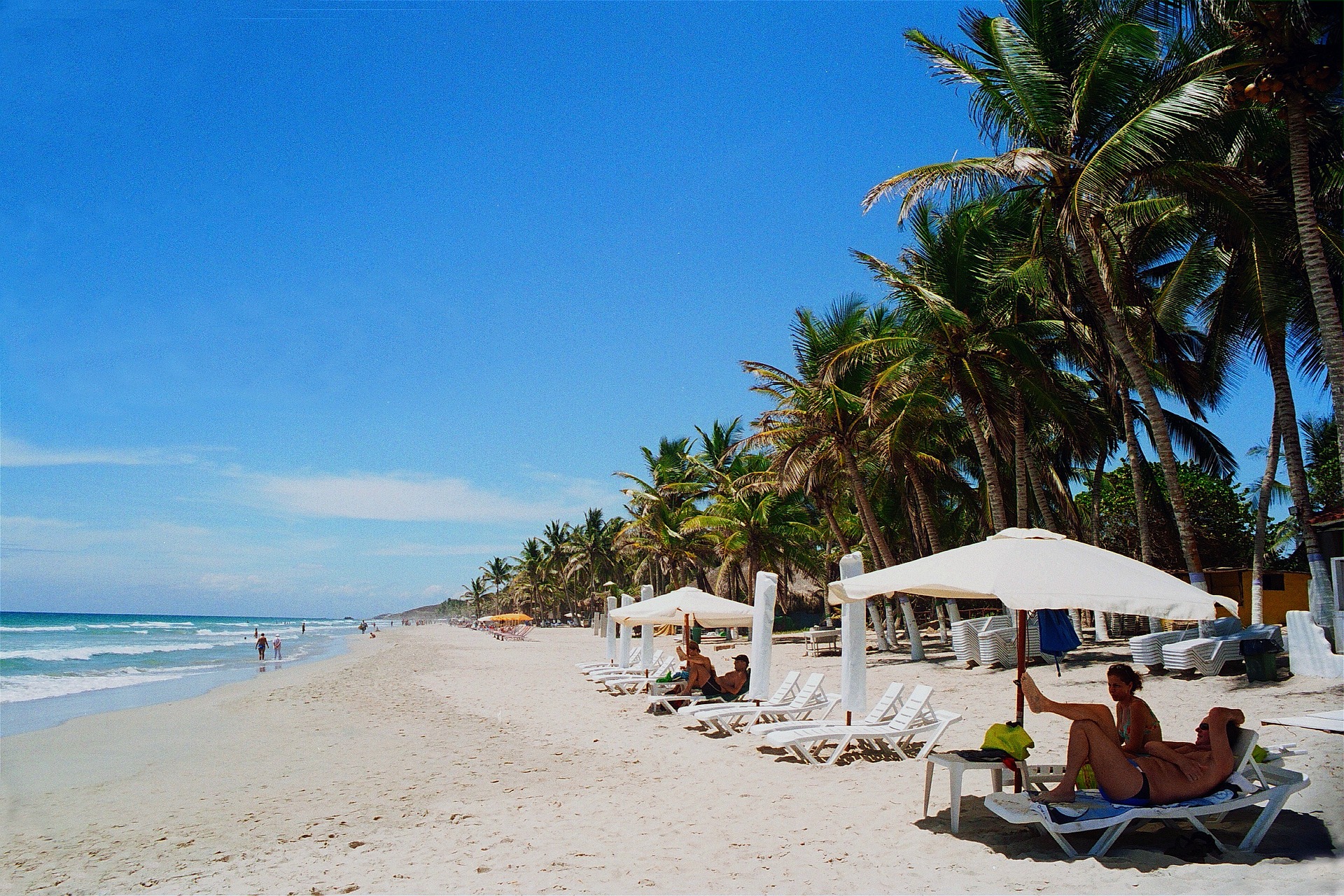
- Choroní (coast): A beach, also known as Playa Grande or El Malecón.
- Los Llanos (area): The central plains, known for wildlife; low-lying areas flood in the rainy season.
Regions
- Andes: The mountains of the north-west, with the university town of Mérida.
- Caribbean islands: Margarita Island, Los Roques and the other islands off the coast.
- Central: The region around the capital, Caracas.
- Guayana: The Guiana Highlands of the south-east, with Angel Falls. The FCDO advises against all travel to large areas south of the Orinoco.
- Los Llanos: The great central plains, with their wildlife.
- Northeast: The beaches of eastern Venezuela, around Puerto La Cruz.
- Northwest: The lowlands around Lake Maracaibo; the FCDO advises against all travel to Zulia state.
Things to do
See
- Angel Falls Canaima National Park: The world's highest waterfall, in the Guiana Highlands.
- Beaches of Los Roques Los Roques: Clear water and white sand in a Caribbean archipelago.
- Wildlife of Los Llanos Los Llanos: The plains are known for the animals you can spot there.
- Colonial Coro Coro: The historic centre of the first capital, a World Heritage Site.
- Ciudad Universitaria Caracas: The campus of the Central University of Venezuela, a World Heritage Site since 2002.
Do
- The Andes around Mérida Mérida: Mountain scenery and outdoor activities around the university town.
Eat
- Arepas: Try a reina pepiada, filled with chicken and avocado salad, or a dominó, with black beans and white cheese.
Drink
- Venezuelan rum: Dark aged rums such as Santa Teresa 1796, Pampero and Cacique.
Shop
- Chocolate: Venezuela grows fine cacao; El Rey is a reliable brand, and rum and chocolate are sold at the airport.
Itineraries
Caracas and Los Roques in 5 days (5 days)
- Caracas (2 nights): Museums, galleries and the university campus.
- Los Roques (3 nights): Beaches with clear water.
Mérida and the Andes in 5 days (5 days)
- Mérida (5 nights): Outdoor activities in the Andes.
Climate and best time to visit
| Jan | Feb | Mar | Apr | May | Jun | Jul | Aug | Sep | Oct | Nov | Dec | |
|---|---|---|---|---|---|---|---|---|---|---|---|---|
| Max °C | 29 | 31 | 32 | 31 | 32 | 30 | 31 | 29 | 30 | 30 | 30 | 28 |
| Min °C | 13 | 15 | 15 | 16 | 18 | 18 | 17 | 17 | 17 | 16 | 16 | 14 |
| Rain mm | 15 | 13 | 11 | 59 | 82 | 134 | 118 | 124 | 115 | 126 | 73 | 41 |
The WMO figures for Caracas show warm weather all year: average maximums between 28 °C and 32 °C and minimums between 13 °C and 18 °C. December to March is the driest period (11 to 41 mm of rain a month), and we suggest it for that reason; June to October is the wettest (115 to 134 mm).
The FCDO says the rainy season runs from May to November, with possible flooding in low-lying areas such as Los Llanos and in Andean valleys, mainly in Mérida state, and that the hurricane season, from June to November, affects parts of northern Venezuela. Gravel and dirt roads may need an off-road vehicle in the rainy season. Venezuela lost its last glacier in May 2024.
Holidays and events
- 1 January 2026 · New Year's Day
- 6 January 2026 · Epiphany
- 14 January 2026 · Feast of the Divina Pastora
- 15 January 2026 · Teacher's Day
- 12 February 2026 · Youth Day
- 16 February 2026 · Carnival
- 17 February 2026 · Carnival
- 8 March 2026 · International Women's Day
- 19 March 2026 · Saint Joseph's Day
- 21 March 2026 · Slavery Abolition Anniversary
- 31 March 2026 · Foundation anniversary Day of San Cristóbal, Táchira
- 19 April 2026 · Beginning of the Independence Movement
- 1 May 2026 · Labour Day
- 3 May 2026 · Festival of the Crosses
- 10 May 2026 · Mother's Day
- 14 May 2026 · Ascension Day
- 4 June 2026 · Corpus Christi
- 21 June 2026 · Father's Day
- 24 June 2026 · Anniversary of the Battle of Carabobo
- 27 June 2026 · Journalists' Day
- 5 July 2026 · Independence Day
- 19 July 2026 · Children's Day
- 24 July 2026 · Simón Bolívar's Birthday
- 25 July 2026 · Caracas City Foundation Day
- 3 August 2026 · Flag Day
- 8 September 2026 · Birth of the Blessed Virgin Mary
- 24 September 2026 · Feast of the Our Lady of Mercy
- 12 October 2026 · Day of Indigenous Resistance
- 1 November 2026 · All Saints' Day
- 2 November 2026 · All Souls' Day
- 8 December 2026 · Immaculate Conception Day
- 24 December 2026 · Christmas Eve
- 25 December 2026 · Christmas Day
- 31 December 2026 · New Year's Eve
Getting around
| Main airports | CCS |
|---|
The UK advises avoiding public transport, where robberies at gunpoint have happened, and using only pre-booked taxis, which hotels can arrange. Canada advises against mototaxis. In the cities, people also use the ride-hailing apps Ridery and Yummy. Taxis have no meters, so agree the fare first. The only passenger railway, about 40 km long, links Caracas and Cúa.
Driving is on the right, but traffic rules are often ignored and drunk driving is common. Speed limits are 80 km/h outside towns and 60 km/h in towns (50 km/h at night). Vehicles must carry a spare tyre, a wheel block, a jack and a warning triangle. Fuel is short outside Caracas, and not every station accepts international cards. Police and National Guard checkpoints are frequent: drive slowly, stop if asked, and carry ID. Avoid driving after dark. A UK photocard licence is valid for up to one year.
Where to stay
- Hotels: A good choice of expensive five-star hotels in Caracas.
- Posadas: Guest houses at tourist spots, each with its own style, often offering breakfast or dinner on request.
- Hostels: Very rare.
Posadas vary a lot in price and quality. In many simpler hotels the bed is a mattress on a concrete base. Power cuts and water rationing are common, sometimes for days, so ask whether the place has a generator.
Eat and drink
Dishes to try
- Arepas: Thick split corn cakes stuffed with all kinds of fillings, the national dish.
- Pabellón: The traditional lunch: rice, black beans and shredded meat with fried plantain.
- Cachapas: Corn pancakes, often topped with a salty cheese.
- Hallacas: Meat, olives and raisins in cornmeal, wrapped in plantain leaves and steamed; a Christmas dish.
- Empanadas: Pastries filled with cheese, meat or fish, usually fried.
- Cazuela de mariscos: A seafood soup.
Drinks
- Rum: Mostly dark and aged; Santa Teresa 1796 is among the best known.
- Beer: Polar is the most popular brand; Zulia and Regional are also sold everywhere.
- Coffee: Ask for 'de la máquina' for machine-made coffee; a 'guayoyo' can be very weak.
- Chicha andina: A non-alcoholic drink made from rice or corn flour.
- Malta: A fizzy, non-alcoholic malt drink.
| Tipping | If the bill includes a 10% service charge, leave a little change on top; if not, 10% is customary. Taxi drivers are not tipped. |
|---|
Restaurants sometimes show prices without the 16% tax and the service charge, usually 10%, so check before you order. Food is often more expensive than at home. Choose street food with care: fresh food and mayonnaise go off quickly in the heat.
Entry requirements and visas
| Passport validity | 6 months beyond your departure date |
|---|
| Passport | Entry | Max stay | Notes |
|---|---|---|---|
| United Kingdom | Visa free | 90 days | Tourist card issued on arrival by air; show a return or onward ticket. Arriving by land or sea, you may need a visa in advance. |
| Canada | Visa required | Tourist visa required before travel; visas are not available on arrival. | |
| Australia | Visa free | 90 days | Tourist card, according to Wikivoyage. |
Other nationalities: check the official source below.
Your passport must be valid for at least 6 months after the date you leave. British visitors arriving by air get a tourist card for up to 90 days, which can be extended by up to 90 days at a SAIME office. Canadians need a visa before they travel, and Canada warns that entering without one can lead to detention. Wikivoyage lists Australia and several EU countries among those whose citizens get a tourist card, but not the United States: check with a Venezuelan embassy. Anyone travelling for work, journalism, volunteering or study needs a visa.
Make sure your passport is stamped on entry. Declare goods worth more than US$1,000 and cash of US$10,000 or more. Children travelling without both parents need a permit from the parent who is not travelling. Some visitors are questioned at length on arrival or departure, and departing passengers may be searched for drugs. Rules depend on your passport and can change: check the official link before you book.
Money and payments
| Currency | Venezuelan Bolívar (VES) |
|---|---|
| Cards | Common |
The currency is the bolívar (VES), now issued as the bolívar digital. It keeps losing value: the official rate went from about 52 bolívars to the US dollar at the start of 2025 to 567 in June 2026. As of 2026 many prices are quoted in US dollars, often written 'REF', and Canada notes that you need US currency to buy basic goods. Bring US dollars in small notes, as shops and taxi drivers rarely have change.
Visa and Mastercard are widely accepted, but some card machines do not work with foreign cards, and shops ask for ID. ATMs are often out of order and dispense only small amounts. Banks and exchange offices use the official rate; the street market gives more but risks scams and theft, and you cannot change bolívars back. If your cards fail, the FCDO says friends can send money through Western Union for collection at Grupo Zoom branches.
Health
| Required vaccines | Yellow fever certificate, for travellers aged 1 and over arriving from Brazil, including airport transits of more than 12 hours there |
|---|---|
| Recommended vaccines | Routine vaccines, including measles (MMR), Hepatitis A, Hepatitis B, Yellow fever, from 9 months of age, except for trips limited to Caracas, Valencia, Margarita Island and some northern states, Typhoid, for some travellers, Rabies, for some travellers |
| Malaria | Some areas |
| Tap water | Not safe |
Malaria is present in all areas below 1,700 m and at Angel Falls; the CDC recommends preventive medicine for certain areas. Dengue, chikungunya and Zika are carried by mosquitoes, so cover up and use repellent. Avoid swimming in lakes and rivers because of schistosomiasis. Altitude sickness is a risk in the Andes of Mérida, Táchira and Trujillo. Ask a travel health professional at least 8 weeks before you go.
Medical supplies are very short: the Venezuelan Pharmaceutical Federation has reported a shortage of 80%. Bring all the medicine you need, with extra in case your return is delayed. Private clinics in the big cities give acceptable routine care, public hospitals are poor, and serious cases may need evacuation, so get insurance that covers it. Drink bottled water rather than tap water. For an ambulance, dial 911.
This is general information, not medical advice: check with a travel health professional before you go.
Safety
- United States: Level 3: Reconsider Travel (2026-10-20)
- Canada: Avoid all travel (2026-10-20)
- United Kingdom: Advises against all travel to parts of the country; Advises against all but essential travel to parts of the country (2026-10-20)
Canada advises against all travel to Venezuela due to the heightened security situation, unstable political and economic situations, significant level of violent crime, the risk of arbitrary detention and the decline in basic living conditions, including shortages of medication, gasoline and water. Canada has no open embassy in Venezuela. The UK FCDO advises against all travel to areas within 40 km of the borders with Colombia, Brazil and Guyana, to Amazonas state, Zulia state, the Orinoco Mining Arc south of the Orinoco in Bolívar state and the area south of the Orinoco in Delta Amacuro, and against all but essential travel to the rest of the country. The US rates Venezuela at Level 3: Reconsider Travel. Travelling against advice can invalidate your insurance, and consular help may be severely limited: have a plan for leaving or sheltering that does not depend on your government.
If you do travel, the official advice includes:
- Violent crime: armed robbery, mugging, carjacking and express kidnapping are common. Do not resist, show no valuables or phones, and do not walk in city streets at night.
- Transport: avoid public transport and use pre-booked taxis. Take special care at Maiquetía airport.
- Checkpoints: carry ID at all times (copies of your passport photo page and entry stamp are accepted). Some officials ask for bribes; beware of fake security staff.
- Shortages: power cuts can last days and cut phones and internet; water and fuel are often rationed. Keep supplies of water, food, cash and medicine.
- Demonstrations can turn violent: avoid them and do not cross barricades.
After two strong earthquakes on 24 June, La Guaira was declared a disaster zone with access controls, and aftershocks are possible. Sea currents can be strong and beaches rarely have lifeguards. Piracy has been reported at sea east of Puerto La Cruz and towards Trinidad and Tobago.
Customs and etiquette
Venezuelans are known for their hospitality. Nicknames such as 'gringo', 'flaco' (thin) or 'gordo' (fat) are used freely and usually meant kindly. People point by pushing out their lips and lifting their chin. Avoid discussing politics in public; Canada advises not to appear to take sides on local issues.
Always carry ID. Photographing military or strategic sites, including the presidential palace, is illegal, so avoid plane spotting. Drug trafficking carries prison sentences of 8 to 15 years. Same-sex relationships are legal, but public affection is frowned on and may draw police attention, and same-sex partners are not recognised by law. The age of consent is 18.
Language
| Official languages | Spanish |
|---|---|
| English | Limited |
| Hello | Hola OH-lah |
|---|---|
| Good morning | Buenos días BWEH-nohs DEE-ahs |
| Please | Por favor POHR fah-BOHR |
| Thank you | Gracias GRAH-syahs |
| Excuse me | Disculpe dees-KOOL-peh |
| Do you speak English? | ¿Habla usted inglés? AH-blah oos-TEHD een-GLEHS |
| I don't understand | No entiendo NOH ehn-TYEHN-doh |
| Where is the toilet? | ¿Dónde está el baño? DOHN-deh ehs-TAH EHL BAH-nyoh |
What to pack
- Copies of your passport photo page and entry stamp: You must carry ID at the many checkpoints; keep the passport safe.
- US dollars in small notes: Many prices are in dollars, cards do not always work and change is scarce.
- All the medicine you need, plus extra: Medical supplies are very short and your return may be delayed.
- An emergency kit: Canada advises a complete kit, as power cuts can last for days and shortages are common.
- Insect repellent: Mosquitoes carry malaria, dengue, chikungunya and Zika.
- A blanket or warm layer for buses: Long-distance buses are often heavily air-conditioned.
Quick reference
Country facts
| Capital | Caracas |
|---|---|
| Population | 28,516,896 (2025) |
| Area | 882,050 km² |
| Time zone | America/Caracas (UTC-4) |
| Calling code | +58 |
| Driving side | right |
Electricity and plugs
| Plug types | A, B |
|---|---|
| Voltage | 120 V |
| Frequency | 60 Hz |
Staying connected
| SIM and eSIM | Digitel sells pay-as-you-go SIM cards that work at once from official shops; Movistar and Digitel also offer eSIMs. Coverage is patchy, so download offline maps, and power cuts can take networks down. |
|---|---|
| Roaming | Foreign SIMs work in roaming, but expect high charges. |
Useful apps
- Ridery and Yummy: Ride-hailing in the cities
Emergency numbers
| Emergency | 911 |
|---|
Frequently asked questions
Is it safe to travel to Venezuela?
Canada advises against all travel to Venezuela, and the UK advises against all travel to border areas and several states and against all but essential travel elsewhere. The US rates it at Level 3: Reconsider Travel.
Do I need a visa for Venezuela?
British visitors arriving by air get a tourist card for up to 90 days. Canadians need a visa before they travel. Check the official link before you book.
Should I bring cash or use cards in Venezuela?
Bring US dollars in small notes. Many prices are quoted in dollars, cards are accepted in many places but do not always work, and ATMs are often out of order.
Can I drink the tap water in Venezuela?
It is better to drink bottled water.
Do I need a yellow fever vaccine for Venezuela?
A certificate is required if you arrive from Brazil. The CDC recommends the vaccine for most travellers, except for trips limited to Caracas, Valencia, Margarita Island and some northern states. Ask a travel health professional.
When is the best time to visit Venezuela?
December to March is the driest period in Caracas. The rainy season runs from May to November, when low-lying areas can flood.
Sources This guide was last checked on · 17 sources
- Government of Canada: Venezuela travel advice (updated 13 October 2026) · Overview, Getting around, Where to stay, Entry requirements and visas, Money and payments, Health, Safety, Customs and etiquette, What to pack, Staying connected, Frequently asked questions
- UK FCDO: Venezuela travel advice (updated 14 October 2026) · Overview, Places to visit, Getting around, Safety, Frequently asked questions
- US Department of State: Venezuela travel advisory · Overview, Safety, Frequently asked questions
- Wikivoyage: Venezuela · Overview, Places to visit, Things to do, Itineraries, Climate and best time to visit, Getting around, Where to stay, Eat and drink, Entry requirements and visas, Money and payments, Health, Safety, Customs and etiquette, Language, What to pack, Electricity and plugs, Staying connected, Frequently asked questions
- Wikidata: Venezuela · Overview, Places to visit, Money and payments, Country facts, Electricity and plugs
- WMO World Weather Information Service: Caracas · Climate and best time to visit
- UK FCDO: Venezuela safety and security · Climate and best time to visit, Getting around, Where to stay, Money and payments, Safety, Customs and etiquette, What to pack, Staying connected
- Nager.Date: public holidays in Venezuela, 2026 · Holidays and events
- UK FCDO: Venezuela entry requirements · Entry requirements and visas, Money and payments, Health, Frequently asked questions
- ISO 4217 (SIX), published 2026-09-17 · Money and payments
- CDC Travelers' Health: Venezuela · Health, Frequently asked questions
- UK FCDO: Venezuela health · Health, What to pack
- Wikivoyage: Spanish phrasebook · Language
- World Bank, SP.POP.TOTL · Country facts
- World Bank, AG.LND.TOTL.K2 · Country facts
- IANA Time Zone Database, zone.tab · Country facts
- UK FCDO: Venezuela getting help · Emergency numbers
Suggest an update
Travel rules, prices and timetables change. If something in this guide is out of date, tell us: we check every suggestion against an official source before changing the page.