

- Local time
- 14:22 (capital)
- Currency
- Argentine Peso (ARS)
- Capital
- Buenos Aires
- Calling code
- +54
- Drive on the
- right
Overview
Argentina runs from subtropical forest and Iguazú Falls in the north to the glaciers of Patagonia in the south, with Buenos Aires, the wine country of Mendoza and the Andes in between.
Argentina is a very large country, and the landscape changes completely from one end to the other: jungle and waterfalls in the north-east, grass plains in the centre, deserts and high valleys in the north-west, and the mountains, lakes and glaciers of Patagonia and Tierra del Fuego in the south. Aconcagua, at 6,960 m, is the highest mountain in the Americas, and the country protects its nature in 35 national parks.
Buenos Aires is the starting point for most trips, a big capital of cafés, steak houses, tango and old neighbourhoods such as San Telmo. Millions of European immigrants, many of them from Italy and Spain, shaped the food and the language. Distances are long, so plan on domestic flights or overnight buses, and be ready for a complicated currency: prices change quickly and many hotels quote in US dollars.
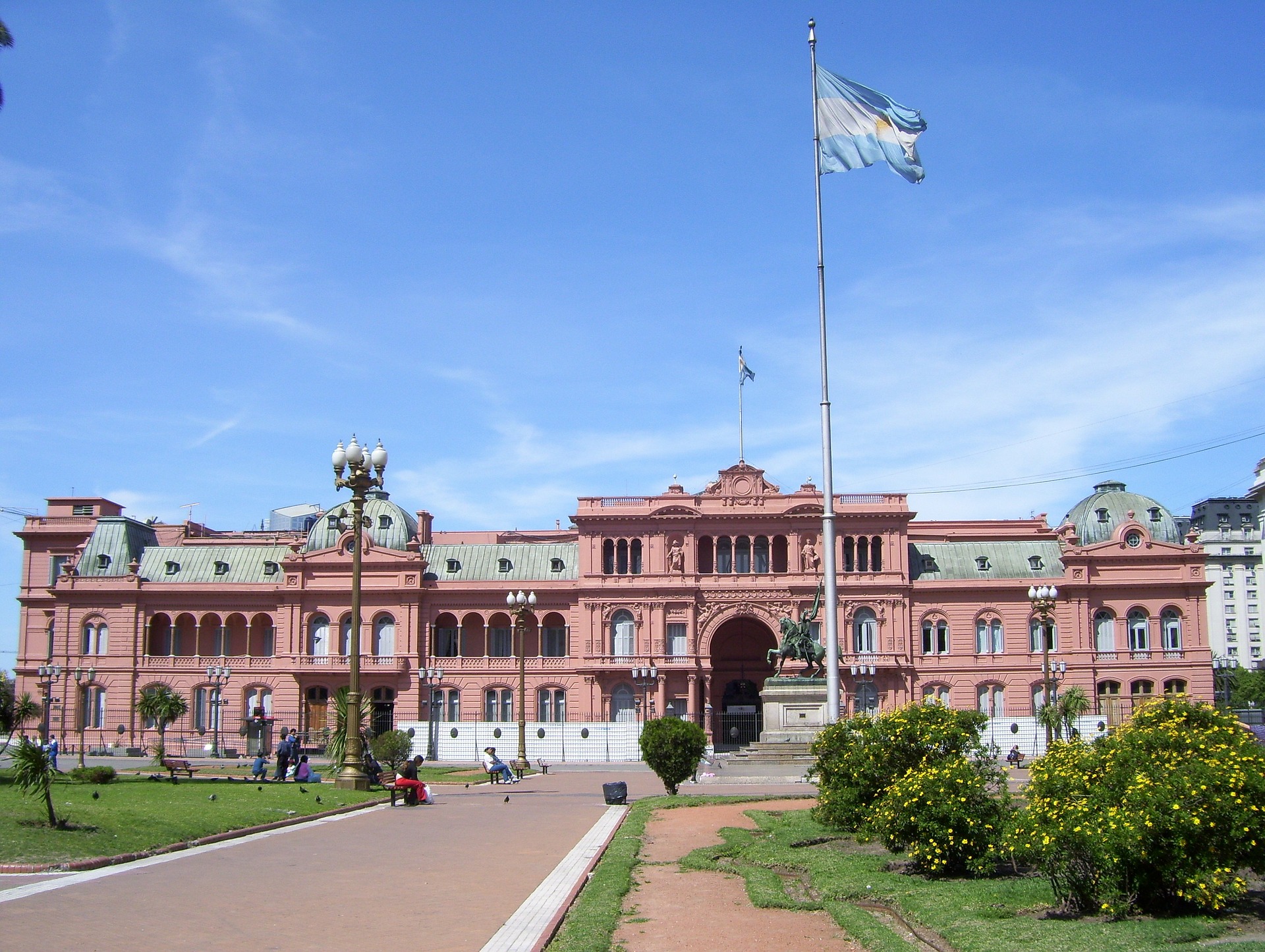
- Buenos Aires: The capital on the Río de la Plata, with San Telmo, Recoleta Cemetery and the Plaza de Mayo.
- Iguazú Falls: Huge waterfalls in the subtropical north-east corner of the country.
- Perito Moreno Glacier: The best-known glacier of Los Glaciares National Park, reached from El Calafate.
- Mendoza: The wine capital at the foot of the Andes, close to Aconcagua.
- Quebrada de Humahuaca: A narrow valley of coloured mountains and desert landscapes in Jujuy.
- Bariloche and the lakes: Skiing, trekking and chocolate shops in Nahuel Huapi National Park.
Places to visit
- City
- Town
- Park
- Area
Cities
- Buenos Aires: The capital on the shore of the Río de la Plata, and the most visited city in South America.
- Córdoba: The second city, a university town in the heart of the Pampas with fine colonial buildings, close to a mountain range.
- Mendoza: A relaxed city of broad avenues, base for the wine route and for Aconcagua.
- Salta: Known as 'La Linda' for its old town; start of the Train to the Clouds.
- San Carlos de Bariloche: At the foot of the Andes, for skiing, trekking and the lakes.
- Rosario: A city on the Paraná river, known for its neoclassical architecture.
- La Plata: The capital of Buenos Aires province, famous for its planned street grid.
- San Miguel de Tucumán: The largest city of the north-west, close to subtropical forest.
Beyond the cities
- Iguazú Falls (park): Waterfalls in the far north-east corner of the country.
- El Calafate (town): The base for Los Glaciares National Park and the Perito Moreno Glacier.
- Nahuel Huapi National Park (park): Lakes, rivers, waterfalls, peaks and forests at the foot of the Andes.
- Quebrada de Humahuaca (area): A narrow valley of coloured mountains in the arid north-west.
- Iberá Wetlands (park): A reserve of 13,000 km² of swampland, with the most varied wildlife in the country.
Regions
- Andean Northwest: High valleys, deserts and colonial towns such as Salta, close to Bolivia.
- Chaco: Lowlands of the north, hot and little visited.
- Cuyo: Desert and wine country at the base of the Andes, around Mendoza and San Juan.
- Mesopotamia: The humid north-east between the rivers, with Iguazú Falls and the Iberá Wetlands.
- Pampas: The great central plains, with Buenos Aires, Córdoba and Rosario.
- Patagonia: Plateau, lakes, glaciers and the Atlantic coast of the south.
- Tierra del Fuego: The southern tip of the continent, on the Beagle Channel.
Things to do
See
- San Telmo and Recoleta Buenos Aires: The oldest neighbourhood, with cafés, street artists, tango halls and antique markets, and the famous cemetery of Recoleta.
- Iguazú Falls Misiones: Walkways along the falls in the subtropical north-east, with an airport nearby.
- Perito Moreno Glacier El Calafate: Tours from El Calafate to the glaciers and Lake Argentino.
- Whales and penguins Puerto Madryn: Trips to Península Valdés and Punta Tombo to watch whales and nesting penguins.
Do
- Hiking and trekking Patagonia and the Andes: Trails around El Chaltén, El Bolsón and the lakes; carry a reliable map, as many routes are remote.
- Skiing Bariloche: Winter sports in the Andes, from June to September.
- Train to the Clouds Salta: A heritage railway through the mountains of the north-west.
- A football match Buenos Aires: Football is the national passion; matches can get rowdy, so go with care.
Eat
- Asado: Grilled beef at a parrilla, with chimichurri or salsa criolla and a bottle of wine.
Drink
- The Mendoza wine route Mendoza: Hundreds of wineries around the city, with the Andes in the background.
Itineraries
Buenos Aires and Iguazú in 6 days (6 days)
- Buenos Aires (4 nights): San Telmo, Recoleta, the Plaza de Mayo and an evening of tango.
- Iguazú Falls (2 nights): By domestic flight; allow a full day at the falls.
Patagonia in 9 days (9 days)
- San Carlos de Bariloche (4 nights): Lakes and walks in Nahuel Huapi National Park.
- El Calafate (3 nights): The Perito Moreno Glacier and Los Glaciares National Park.
- Buenos Aires (2 nights): Back to the capital for flights home.
The north-west and the wine country in 8 days (8 days)
- Salta (3 nights): The old town and the Train to the Clouds.
- Quebrada de Humahuaca (2 nights): Coloured mountains and traditional villages.
- Mendoza (3 nights): Wineries, and the Andes for a day in the mountains.
Climate and best time to visit
| Jan | Feb | Mar | Apr | May | Jun | Jul | Aug | Sep | Oct | Nov | Dec | |
|---|---|---|---|---|---|---|---|---|---|---|---|---|
| Max °C | 30 | 29 | 27 | 23 | 19 | 16 | 15 | 18 | 19 | 23 | 26 | 29 |
| Min °C | 20 | 19 | 18 | 14 | 11 | 8 | 7 | 9 | 10 | 13 | 16 | 18 |
| Rain mm | 139 | 127 | 140 | 119 | 92 | 59 | 61 | 64 | 72 | 127 | 118 | 119 |
Argentina's seasons are the reverse of Europe's and North America's: summer runs from December to February. In Buenos Aires the average maximum is about 30 °C in January and 15 °C in July, and rain falls all year. March and April, October and November are mild in the capital, with maximums between 22 °C and 27 °C.
The rest of the country is very different. The deserts of Cuyo can reach 45 °C in summer, the Andes are cold in winter and Patagonia is cool to warm in summer and cold in winter, with strong, constant winds and big changes in temperature within a single day: dress in layers. Mesopotamia, in the north-east, is hot and wet all year. Some border crossings with Chile and Bolivia close regularly in winter (June to September) because of the weather.
Holidays and events
- 1 January 2026 · New Year's Day
- 16 February 2026 · Carnival
- 17 February 2026 · Carnival
- 24 March 2026 · Day of Remembrance for Truth and Justice
- 2 April 2026 · Day of the Veterans and Fallen of the Malvinas War
- 3 April 2026 · Good Friday
- 1 May 2026 · Labour Day
- 25 May 2026 · May Revolution
- 15 June 2026 · Anniversary of the Passing of General Martín Miguel de Güemes
- 20 June 2026 · General Manuel Belgrano Memorial Day
- 9 July 2026 · Independence Day
- 17 August 2026 · General José de San Martín Memorial Day
- 12 October 2026 · Day of Respect for Cultural Diversity
- 23 November 2026 · National Sovereignty Day
- 8 December 2026 · Immaculate Conception Day
- 25 December 2026 · Christmas Day
Getting there and around
| Main airports | EZE, AEP |
|---|---|
| International driving permit | Required |
Getting there
By air: most visitors land at Ministro Pistarini airport (Ezeiza, EZE), about 40 km south-west of Buenos Aires. Domestic flights and some flights from São Paulo, Rio de Janeiro and Santiago use Aeroparque Jorge Newbery (AEP), closer to the centre: check which airport is on your ticket. At Ezeiza use an official taxi stand or a prepaid taxi.
By boat: catamarans and ferries link Buenos Aires with Colonia del Sacramento and Montevideo in Uruguay. By bus and car: international coaches run from all neighbouring countries, and there are many easy land crossings with Chile, Uruguay, Paraguay and Brazil.
Getting around
Long-distance buses are the usual way between cities. They are comfortable, and the better classes (cama, cama suite) have seats that recline into beds; buses often arrive late but almost always leave on time. You need ID to buy a ticket. Domestic flights save days on a country this size, but most pass through Buenos Aires, and non-residents often pay higher fares. Long-distance trains are few, slow and infrequent.
In Buenos Aires you need a SUBE card for the metro, buses and trains. Hail only radio taxis with a logo on the doors, or book by app; ridesharing apps also work. Driving: UK drivers need a 1949 International Driving Permit together with their licence, Canada says you should carry an international permit, and drivers must be over 21. Headlights must be on day and night. Canada warns of a high rate of traffic accidents, and some drivers ignore traffic lights and speed limits. Roads outside the big cities are mostly two-lane, some are gravel, and in remote areas you should fill the tank whenever you can.
Flying to Argentina? PartnerCompare fares and find the cheapest datesSearch flightsWhere to stay
- Hotels: From boutique hotels in Buenos Aires to luxury hotels and lakeside lodges in Patagonia.
- Hostels: Common on the main backpacker routes.
- Bed and breakfasts: In the cities and tourist towns.
- Estancias: Working farms in the countryside that take guests.
- Cabañas: Holiday cabins rented by the owners in the mountains, by the sea and in rural areas.
- Campsites: Many towns run cheap municipal campsites.
You must show ID when you check in. Many places publish their prices in US dollars, so agree the price in pesos before you pay. Wikivoyage reports that foreigners paying hotels with a foreign card are not charged the 21% VAT that Argentines pay.
Eat and drink
Dishes to try
- Asado: Beef and other meats grilled on a parrilla, the heart of Argentine eating.
- Bife de chorizo: A thick sirloin steak, one of the classic cuts.
- Empanadas: Baked pastries filled with meat, cheese or vegetables.
- Milanesa: A breaded meat fillet, on menus everywhere.
- Choripán: Grilled sausage in bread, sold at street grills.
- Dulce de leche and alfajores: Milk caramel, also as the filling of alfajor biscuits sold at every kiosk.
Drinks
- Mate: A bitter herbal drink shared from a gourd through a metal straw; ask before adding sugar.
- Wine: Mendoza is the best-known wine region.
- Fernet: A bitter Italian herbal spirit, usually mixed with cola.
| Meal times | Lunch is the big meal in the early afternoon; dinner is rarely before 20:30 and usually around 22:00. |
|---|---|
| Tipping | Not compulsory but customary: about 10% in restaurants and cafés, often in cash, unless the bill already includes 'cubierto'. Taxi drivers do not expect tips. |
Breakfast is light: coffee with medialunas (croissants) or toast. Between 18:00 and 20:00 people take tea with pastries, and many restaurants do not serve full meals until dinner. Pasta and sauce are often priced separately. Beef is a point of pride: putting ketchup or barbecue sauce on a steak is seen as disrespectful. The legal drinking age is 18, and smoking is banned in restaurants in Buenos Aires and Mendoza.
Entry requirements and visas
| Passport validity | Valid for the length of your stay |
|---|
| Passport | Entry | Max stay | Notes |
|---|---|---|---|
| United Kingdom | Visa free | 90 days | Tourism only. To stay longer, ask the Argentine Migration Office before your stay ends. |
| Canada | Visa free | No tourist visa required. |
Other nationalities: check the official source below.
Visitors from the UK can visit Argentina for tourism without a visa for up to 90 days, and Canadians do not need a tourist visa. Your passport must be valid for the whole stay. Every traveller gives fingerprints and a photo at immigration on entry and exit, and officials may ask for a return or onward ticket, proof of enough money and the address of your first night's accommodation. Passports are no longer stamped on entry. Canada reports stricter checks at points of entry under enhanced security measures, and some travellers face delays or are refused entry.
Children who live in Argentina need written permission from any parent not travelling with them to leave the country. Declare cash over US$10,000. Rules depend on your passport and can change: check the official link before you book.
Money and payments
| Currency | Argentine Peso (ARS) |
|---|---|
| Cards | Common |
The currency is the Argentine peso (ARS), written with the $ sign. Inflation is high and prices change fast, so treat any price you read with caution; many hotels quote in US dollars. Since the largest note is 20,000 pesos, cash payments mean carrying bundles of notes.
Foreign cards are processed at a special rate for tourists (the MEP rate), and cards are now accepted in most shops and chains, often contactless, though less widely than in Europe or the US. ATMs limit withdrawals on foreign cards and charge a high fixed fee: around AR$16,000 for about AR$100,000 in February 2026. Use ATMs inside banks and avoid them at night. Official exchange offices and large banks give good rates for US dollars and euros; street dealers ('arbolitos') are illegal and a risk.
Costs and budget
- Prepaid taxi, Ezeiza airport to Buenos Aires: about AR$50,000
- ATM fee on a foreign card: about AR$16,000
Argentina is not a cheap destination. National parks and the main sights charge foreigners more than locals, often double, and domestic flights cost more for non-residents. Prices move quickly with inflation, so check them close to your trip.
Health
| Recommended vaccines | Routine vaccines, including measles (MMR), Hepatitis A, Hepatitis B, Yellow fever, for Corrientes and Misiones provinces, Typhoid, for some travellers, Rabies, for some travellers, Mpox, for travellers at risk of sexual exposure |
|---|---|
| Malaria | None |
| Tap water | Varies |
No vaccines are required to enter Argentina. The CDC recommends yellow fever vaccination for travellers to Corrientes and Misiones provinces in the north-east; ask a travel health professional at least 8 weeks before you go. Mosquitoes carry dengue and Zika, so use repellent. Altitude sickness is a risk in the Andes, and hantavirus, carried by rodents, is present.
Wikivoyage reports that tap water is safe to drink, though sometimes strongly chlorinated; in rural areas of the north you may prefer bottled water. Medical care is good but can be expensive, and public hospitals are crowded: get travel insurance. For an ambulance, dial 107 or 911.
The WHO certified Argentina malaria-free in 2019.
This is general information, not medical advice: check with a travel health professional before you go.
Safety
- United States: Level 1: Exercise Normal Precautions (2026-10-20)
- Canada: Take normal security precautions (2026-10-20)
- United Kingdom: No advice against travel (2026-10-20)
Petty crime happens regularly in Buenos Aires and other big cities. Pickpockets and bag snatchers work on public transport, at bus and train terminals and in tourist areas, sometimes from motorbikes. Watch out for distraction tricks such as the 'mustard scam', where someone sprays a substance on you and an accomplice steals your bag while 'helping'. Keep your bag between your feet in cafés and never hang it on a chair.
Canada advises a high degree of caution in Greater Buenos Aires and in Rosario. In La Boca stay on Caminito Street and leave before dark. Use official exchange offices and ATMs inside banks, and take radio taxis or app cars at night. Demonstrations are common near Congress and the Casa Rosada: avoid them. Earthquakes are possible in Mendoza, San Juan, Salta and Jujuy, and wildfires and floods occur.
Customs and etiquette
In the cities people greet with a single kiss on the right cheek, even between men who know each other; a handshake is fine on first meeting. Argentines are direct, curious and often ask personal questions, and loud discussions are usually friendly. Outside Buenos Aires shops close for a siesta from about noon to 16:00 and reopen until 21:00 or 22:00.
The Falklands (Malvinas) are a sensitive subject, so avoid the topic and avoid wearing England football shirts or British flags. Keep your opinions on Argentine politics to yourself. Dress modestly in churches. Same-sex marriage is legal and Buenos Aires is very open, while smaller towns are more conservative. Even very small quantities of illegal drugs can mean a lengthy prison sentence. Carry ID. Wikivoyage says a copy of your passport is enough for everyday use, but the UK says you may need to show your passport when you pay by credit card.
Language
| Official languages | Spanish |
|---|---|
| English | Limited |
| Hello | Hola OH-lah |
|---|---|
| Good morning | Buenos días BWEH-nohs DEE-ahs |
| Please | Por favor POHR fah-BOHR |
| Thank you | Gracias GRAH-syahs |
| Excuse me | Disculpe dees-KOOL-peh |
| Do you speak English? | ¿Habla usted inglés? AH-blah oos-TEHD een-GLEHS |
| I don't understand | No entiendo NOH ehn-TYEHN-doh |
| Where is the toilet? | ¿Dónde está el baño? DOHN-deh ehs-TAH EHL BAH-nyoh |
What to pack
- Passport and a photocopy: You need ID for bus tickets, flights and hotels; carry the copy day to day.
- Layers and a windproof jacket: Patagonia and the Andes are cold and windy, and temperatures swing within a day.
- Insect repellent: Mosquitoes carry dengue and Zika in the north.
- Some US dollars in cash: Exchange rates for cash are competitive and ATM fees on foreign cards are high.
- Plug adapter: Sockets are type C and I at 220 V; check that your devices accept 220 V.
- 1949 International Driving Permit: Needed with a UK licence if you plan to drive.
Quick reference
Country facts
| Capital | Buenos Aires |
|---|---|
| Population | 45,851,378 (2025) |
| Area | 2,736,690 km² |
| Time zone | America/Argentina/Buenos_Aires (UTC-3), America/Argentina/Cordoba (UTC-3), America/Argentina/Salta (UTC-3), America/Argentina/Jujuy (UTC-3), America/Argentina/Tucuman (UTC-3), America/Argentina/Catamarca (UTC-3), America/Argentina/La_Rioja (UTC-3), America/Argentina/San_Juan (UTC-3), America/Argentina/Mendoza (UTC-3), America/Argentina/San_Luis (UTC-3), America/Argentina/Rio_Gallegos (UTC-3), America/Argentina/Ushuaia (UTC-3) |
| Calling code | +54 |
| Driving side | right |
Electricity and plugs
| Plug types | C, I |
|---|---|
| Voltage | 220 V |
| Frequency | 50 Hz |
Staying connected
| SIM and eSIM | Prepaid SIM cards from Movistar, Claro and Personal are sold in phone shops; top up at kiosks by asking for a 'recarga virtual'. |
|---|---|
| Wi-Fi | Most cafés and restaurants offer free Wi-Fi; Buenos Aires has free public Wi-Fi called BA Wifi. |
Useful apps
- BA Cómo Llego: Routes on city buses in Buenos Aires
- Ridesharing apps: Available in the cities; check the driver and plate before getting in
Emergency numbers
| Police | 911 or 101 |
|---|---|
| Ambulance | 107 |
| Fire | 100 |
Frequently asked questions
Do I need a visa for Argentina?
Not for tourism if you hold a UK or Canadian passport, and UK visitors can stay up to 90 days. Check the official link before you book.
Can I drink the tap water in Argentina?
Wikivoyage reports that it is safe, though sometimes strongly chlorinated, and that in rural areas of the north you may prefer bottled water.
Should I bring cash or use cards in Argentina?
Both. Cards are widely accepted in shops and chains, but ATMs charge high fees on foreign cards, so many visitors bring some US dollars to change at official exchange offices.
Do I need a yellow fever vaccine for Argentina?
It is not required to enter the country, but the CDC recommends it for travellers to Corrientes and Misiones provinces in the north-east. Ask a travel health professional.
When is the best time to visit Argentina?
In Buenos Aires, March, April, October and November are mild. Patagonia is cold in winter and windy all year, so check the climate of each region you plan to visit.
Do I have to tip in Argentina?
It is customary to leave about 10% in restaurants and cafés, often in cash, unless the bill already includes 'cubierto'. Taxi drivers do not expect tips.
More Travel Stories from South America
 Colombia +1
Sources This guide was last checked on · 18 sources
- Wikivoyage: Argentina · Overview, Places to visit, Things to do, Itineraries, Climate and best time to visit, Getting there and around, Where to stay, Eat and drink, Entry requirements and visas, Money and payments, Costs and budget, Health, Safety, Customs and etiquette, Language, What to pack, Electricity and plugs, Staying connected, Frequently asked questions
- Wikidata: Argentina · Overview, Places to visit, Money and payments, Country facts, Electricity and plugs
- Government of Canada: Argentina travel advice (updated 14 October 2026) · Things to do, Climate and best time to visit, Getting there and around, Entry requirements and visas, Money and payments, Health, Safety, Staying connected, Frequently asked questions
- WMO World Weather Information Service: Buenos Aires · Climate and best time to visit
- Nager.Date: public holidays in Argentina, 2026 · Holidays and events
- UK FCDO: Argentina safety and security · Getting there and around, Safety, Customs and etiquette, What to pack
- UK FCDO: Argentina entry requirements · Entry requirements and visas, What to pack, Frequently asked questions
- ISO 4217 (SIX), published 2026-09-17 · Money and payments
- CDC Travelers' Health: Argentina · Health, What to pack, Frequently asked questions
- UK FCDO: Argentina health · Health
- WHO: Countries and territories certified malaria-free · Health
- US Department of State: Argentina travel advisory · Safety
- UK FCDO: Argentina travel advice · Safety
- Wikivoyage: Spanish phrasebook · Language
- World Bank, SP.POP.TOTL · Country facts
- World Bank, AG.LND.TOTL.K2 · Country facts
- IANA Time Zone Database, zone.tab · Country facts
- UK FCDO: Argentina getting help · Emergency numbers
Suggest an update
Travel rules, prices and timetables change. If something in this guide is out of date, tell us: we check every suggestion against an official source before changing the page.