

- Local time
- 05:55
- Currency
- Uruguayan Peso (UYU)
- Capital
- Montevideo
- Calling code
- +598
- Drive on the
- right
Overview
Uruguay pairs the old towns of Colonia and Montevideo with Atlantic beaches, gaucho country inland, grilled beef and Tannat wine.
Uruguay is the second-smallest country in South America, set between Argentina and Brazil, and Buenos Aires is just a ferry ride away. The land is low and grassy, with a highest point of only 514 m, and cattle outnumber people by more than three to one. A third of the population lives in Montevideo, the capital, and most Uruguayans descend from Spanish and Italian immigrants, which shows in the food.
Most sights are along the coast: the colonial quarter of Colonia del Sacramento, the old town and seafront of Montevideo, and beach towns from Punta del Este to Punta del Diablo. Inland you can stay on an estancia and still see gauchos riding along the roads in the north. Distances are short and buses are frequent and comfortable, but imported goods are expensive, and in the first two weeks of January the coast is booked solid.
- Colonia del Sacramento: A Portuguese town founded in 1680, with a historic quarter listed by UNESCO.
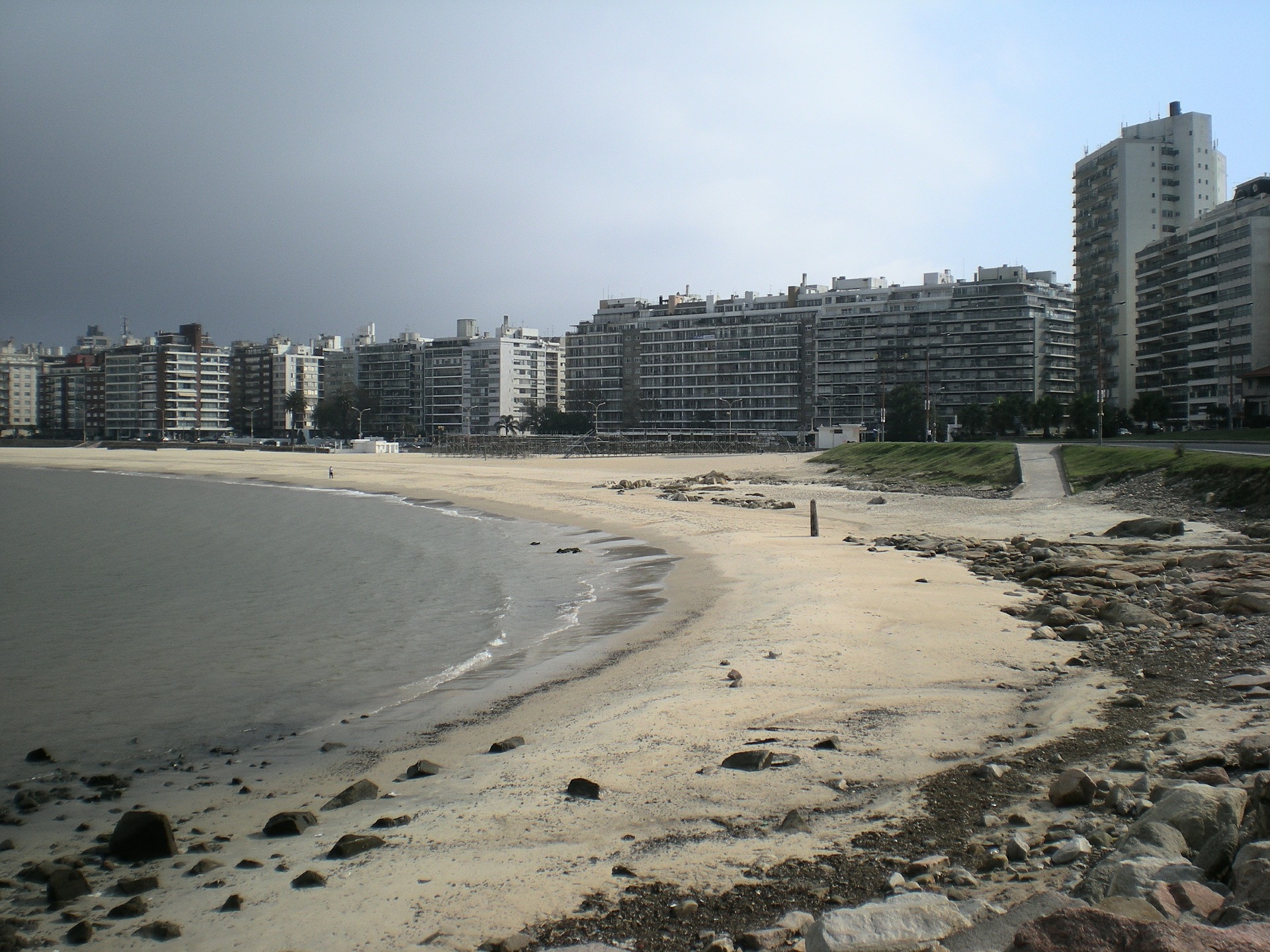
- Montevideo: The old town, Plaza Independencia and a 22 km seafront promenade, the Rambla.
- Punta del Este: The best-known beach resort, with the Los Dedos sculpture and Casa Pueblo.
- Cabo Polonio and Punta del Diablo: Quieter beaches on the Atlantic coast.
- Estancias and gauchos: Ranch stays in the interior, with cowboys in traditional dress in the north.
- Asado at the Mercado del Puerto: Grilled meats in Montevideo's old port market.
Places to visit
- City
- Coast
- Park
Cities
- Montevideo: The capital and largest city, home to a third of the population, with museums, beaches and festivals.
- Colonia del Sacramento: A well-preserved colonial town and UNESCO World Heritage Site, an hour from Buenos Aires by catamaran.
- Punta del Este: A very popular beach resort, nicknamed the Monaco of the South.
- Piriápolis: A beach resort, more laid back than Punta del Este, with the Castillo de Piria.
- La Paloma: A summer beach town on the Atlantic coast.
- Salto: A city on the border with Argentina, known for its hot springs and historic buildings.
- Paysandú: Across the river from Argentina, with hot springs and riverside beaches.
- Rivera: A hilly city in the north, right on the border with Brazil.
Beyond the cities
- Cabo Polonio (coast): One of the quieter beach spots on the Atlantic coast.
- Punta del Diablo (coast): A quieter beach spot on the Atlantic coast, also good for surfing.
- Barra de Valizas (coast): Another quiet beach on the Atlantic coast.
- Santa Teresa National Park (park): Beaches, a campground and the colonial Fortaleza de Santa Teresa.
- Quebrada de los Cuervos (park): The 'Ravens' Gorge', a protected area of rolling hills and a deep gorge.
- Cerro Pan de Azúcar (mountain): The third highest peak in Uruguay, topped with a large cross, near Piriápolis.
- Fray Bentos (site): A town whose former meat processing plant is a World Heritage Site.
Regions
- Atlantic Coast: Beach resorts such as Punta del Este and La Paloma, and quieter spots such as Cabo Polonio.
- Rio de la Plata
- Northern Interior: Rolling hills and gaucho country, with Rivera on the Brazilian border.
- Central Interior
Things to do
See
- Plaza Independencia and the old town Montevideo: The mausoleum of José Artigas, Palacio Salvo and the city gate, then museums and old mansions inside the old town.
- Colonia's historic quarter Colonia del Sacramento: The colonial barrio histórico, two and a half hours from Montevideo by bus.
- Fray Bentos: Uruguay's industrial history in a former meat plant, now a World Heritage Site.
Do
- The Rambla Montevideo: A 22 km promenade along the shore of the capital.
- Beaches and surfing Atlantic coast: Punta del Este, Piriápolis, La Paloma, La Pedrera, Cabo Polonio, Punta del Diablo and Santa Teresa.
- Estancias: Ranch stays in the interior; in Rocha some are known for birdwatching.
- A football match Montevideo: Nacional against Peñarol is the big game; keep clear of the hard-core fans, who can get violent. The Centenario Stadium has a football museum next door.
- Tacuarembó to Rivera by train Rivera: A 118 km ride through the rolling hills of the north, on the only active public rail line.
Eat
- Mercado del Puerto Montevideo: A traditional place for asado in the port area.
Drink
- Tannat wine Canelones: Most wineries lie between Montevideo and Canelones, many of them family-run.
Itineraries
Montevideo and Colonia in 5 days (5 days)
- Montevideo (3 nights): The old town, the Rambla and the Mercado del Puerto.
- Colonia del Sacramento (1 night): The colonial quarter; ferries link it with Buenos Aires.
The Atlantic coast in 8 days (8 days)
- Punta del Este (3 nights): Los Dedos, Casa Pueblo and the beaches.
- La Paloma (2 nights): A summer beach town.
- Cabo Polonio (2 nights): A quieter stretch of coast.
Hot springs and the north in 7 days (7 days)
- Paysandú (2 nights): Hot springs and river beaches.
- Salto (2 nights): Hot springs and historic buildings.
- Rivera (2 nights): Gaucho country on the Brazilian border.
Climate and best time to visit
| Jan | Feb | Mar | Apr | May | Jun | Jul | Aug | Sep | Oct | Nov | Dec | |
|---|---|---|---|---|---|---|---|---|---|---|---|---|
| Max °C | 28 | 28 | 26 | 22 | 19 | 15 | 15 | 16 | 18 | 21 | 24 | 27 |
| Min °C | 18 | 18 | 16 | 13 | 10 | 8 | 7 | 8 | 9 | 12 | 14 | 16 |
| Rain mm | 87 | 102 | 105 | 86 | 89 | 83 | 86 | 88 | 94 | 109 | 89 | 84 |
Uruguay lies entirely in the temperate zone, and because it is south of the Equator its seasons are the reverse of Europe's and North America's. In Montevideo the average maximum is 28.4 °C in January and 15 °C in July, when nights drop to about 7 °C; frost is rare. Rain is spread evenly through the year, with 83 to 109 mm every month. December to March is beach season, when many beaches have lifeguards, but the first two weeks of January are booked months ahead.
The country is flat grassland with no mountains to break the wind, so the weather can change fast and winds can be strong. Storms lasting 2 or 3 days can cause flooding, forest fires can break out in dry areas from December to March, and Canada notes that El Niño is expected to bring more droughts, floods and storms through 2026 and 2027.
Holidays and events
- 1 January 2026 · New Year's Day
- 6 January 2026 · Children's Day
- 16 February 2026 · Carnival
- 17 February 2026 · Carnival
- 2 April 2026 · Maundy Thursday
- 3 April 2026 · Good Friday
- 19 April 2026 · Landing of the 33 Patriots Day
- 1 May 2026 · International Workers' Day
- 18 May 2026 · Battle of Las Piedras
- 19 June 2026 · Birthday of José Gervasio Artigas and Never Again Day
- 18 July 2026 · Constitution Day
- 25 August 2026 · Independence Day
- 12 October 2026 · Columbus Day (Día de la Raza)
- 2 November 2026 · All Souls' Day (Día de los Difuntos)
- 25 December 2026 · Christmas Day
Getting around
Buses are the main way between cities: frequent, safe, comfortable and usually on time, leaving Montevideo from Tres Cruces. Buy a ticket in advance for a reserved seat, or pay the inspector on board; to stop a bus, hold your arm out horizontally. One-day bus strikes (paros) happen. Passenger trains are almost absent, apart from the slow line between Tacuarembó and Rivera. Taxis are safe; in Montevideo they use meters, sometimes showing 'fichas' that are converted to pesos with a chart, while taxis in smaller towns may not have meters. Uber works in Montevideo and Punta del Este.
Driving is on the right. Headlights must be on during the day, everyone must wear a seatbelt, you cannot turn right on a red light and the alcohol limit is zero. Cars must carry a safety kit, usually supplied with rentals, and tolls are moving to electronic tags, which rental cars already have. Canadians can drive on their licence for 6 months, and UK photocard licences are valid for 90 days. The toll roads from Colonia to Montevideo and Punta del Este are good, but other roads vary, with potholes and sudden changes. Accidents rise in summer, at Carnival and in Easter week, and fuel can be scarce in rural areas.
Flying to Uruguay? PartnerCompare fares and find the cheapest datesSearch flightsWhere to stay
- Hotels: Fewer along the coast than holiday houses.
- Beach houses: Plentiful along the coast and affordable outside the high season.
- Estancias: Ranches in quiet countryside, good for birdwatching.
- Hostels: Found in tourist areas such as Colonia and the Atlantic coast.
- Camping: Possible in many places, especially near the beach, but much land is private.
During the first two weeks of January every hotel room and cottage on the coast is booked months in advance, so plan early for a summer trip. Outside the high season, holiday rentals on the coast are easy to find and affordable.
Eat and drink
Dishes to try
- Asado: Grilled beef short ribs, sausages and offal, cooked over wood coals.
- Chivito: A huge steak sandwich with ham, bacon, egg, cheese and salad, served on bread or on a plate.
- Milanesa: A breaded beef cutlet, also served as a sandwich.
- Empanadas: Hand-sized meat or cheese pies from corner bakeries.
- Tortas fritas: Fried pancakes sold on the street, along with choripanes.
- Brotola: The most common fish, known as hake elsewhere.
- Dulce de leche and alfajores: Milk caramel, in ice cream and in sandwich biscuits.
Drinks
- Mate: Bitter yerba mate carried everywhere in a gourd and thermos; cafés rarely serve it, but a group may offer you some.
- Tannat: The red grape behind Uruguay's best-known wines.
- Medio y medio: A mix of wines, sold bottled in most shops.
- Beer: Lagers such as Patricia and Pilsen, often in 1-litre bottles, and a growing craft scene in Montevideo.
- Grappa con limón: Local grappa flavoured with lemon, served in many pizzerias.
| Tipping | Not compulsory; about 10% in restaurants is enough, and tipping taxi drivers is optional. |
|---|
Uruguayan food is rich and mild, with a strong Italian influence, and steaks are excellent and affordable. Many restaurants add a cover charge. Vegetarians can find pasta almost anywhere (check the sauce), but vegans will struggle. Nightlife starts late and often ends around dawn. Smoking, including e-cigarettes, is banned in enclosed public places such as restaurants.
Entry requirements and visas
| Passport validity | Valid for the whole stay, with at least one blank page for the entry stamp |
|---|
| Passport | Entry | Max stay | Notes |
|---|---|---|---|
| United Kingdom | Visa free | 90 days | To stay longer, contact the Dirección Nacional de Migración. |
| Canada | Visa free | 90 days | No tourist visa required for stays up to 90 days; ask migration authorities in Uruguay for an extension. |
| United States | Visa free | 90 days | According to Wikivoyage. |
| Australia | Visa free | 90 days | According to Wikivoyage. |
| EU / EEA | Visa free | 90 days | All EU and EEA countries are on the visa-free list, according to Wikivoyage. |
Other nationalities: check the official source below.
Visitors from the UK and Canada can stay up to 90 days without a visa, and Wikivoyage lists the US, Australia and all EU and EEA countries as visa-free for 90 days too. Your passport must be valid for the whole stay and have a blank page for the entry stamp. To stay longer, ask the migration authorities in Uruguay for an extension. No yellow fever vaccination is required.
All baggage is X-rayed on arrival, and you cannot bring in fruit, vegetables, animals or dairy products. Declare cash above US$10,000. Children who live in Uruguay, or who have been there for a year or more, need written permission from a parent who is not travelling with them to leave on a non-Uruguayan passport. Rules depend on your passport and can change: check the official link before you book.
Money and payments
| Currency | Uruguayan Peso (UYU) |
|---|---|
| Cards | Common |
The currency is the Uruguayan peso (UYU). Prices often use a $ or U$ sign, and pricier goods and services are often quoted in US dollars, which are widely accepted; tourist businesses may also take Argentine pesos or Brazilian reais, so check which currency a price is in. Notes go from 20 to 2,000 pesos.
Cards are less widely accepted than in North America or Europe, small places often take only cash, and outside the major towns you cannot always pay by card. Restaurants and some other services give a VAT discount when you pay with a foreign card. ATMs on the BanRed and RedBrou networks often dispense US dollars too, though some may not accept UK debit cards; use machines inside banks or shopping centres. Exchange offices (cambios) are everywhere and give good rates for US dollars; euros get worse rates, and changing euros at the airport is expensive. Keep small notes, as even supermarkets can struggle to give change.
Health
| Recommended vaccines | Routine vaccines, including measles (MMR), Hepatitis A, Hepatitis B, Typhoid, for some travellers, Rabies, for some travellers |
|---|---|
| Malaria | None |
| Tap water | Safe |
No vaccines are required to enter Uruguay, and the CDC does not recommend yellow fever vaccination. Check your routine vaccines and ask a travel health professional about hepatitis A and B. Dengue is a sporadic risk, and mosquitoes appear in summer, especially after big storms. The sun is strong, with high UV levels.
Tap water is safe to drink in the major cities, though many locals prefer bottled water; follow your host's advice if they say otherwise. Health care is very good but expensive, and you may have to pay upfront. In Montevideo the British Hospital, Sanatorio Americano and MP Medicina Privada accept tourists without insurance for 24-hour emergencies, with payment before you leave. Pharmacies keep all medicines behind the counter, and prescription drugs need a prescription from a local doctor. For an ambulance dial 911.
This is general information, not medical advice: check with a travel health professional before you go.
Safety
- United States: Level 2: Exercise Increased Caution (2026-10-20)
- Canada: Take normal security precautions (2026-10-20)
- United Kingdom: No advice against travel (2026-10-20)
Canada advises a high degree of caution in Montevideo because of crime. Bag snatching, pickpocketing and muggings, sometimes armed, are more common around 18 de Julio Avenue, the Ciudad Vieja, Plaza Independencia and the port area, so avoid walking alone downtown or by the port at night and at weekends. Thieves often work in pairs on motorbikes, snatching phones and bags at traffic lights, car parks, ATMs and hotels. Canada also lists critical neighbourhoods to treat with great caution: 40 Semanas, Barrio Borro, Bella Italia, Casabó, Casavalle, Hipódromo, La Teja, Malvín Norte, Marconi, Tres Ombúes, Villa del Cerro and Villa Española.
Crime is lower elsewhere, but in summer thieves follow tourists to Punta del Este, Rocha and Colonia del Sacramento, and petty crime is more common in towns on the Brazilian border. Car break-ins are frequent: park in paid car parks and leave nothing in sight. Use ATMs inside banks or businesses. Demonstrations in Montevideo are usually peaceful, but avoid them.
At the beach, riptides, rocks and sudden drops are common. Lifeguards work many beaches from December to March and use flags: green for good conditions, yellow for caution, red for danger, red with a green cross for unsanitary water, and black for thunderstorms. Heavy storms can cause flooding, and Uruguay lies in a tornado corridor, so follow local warnings.
Customs and etiquette
Uruguay is a secular, socially progressive country: Easter week is officially 'Tourism Week' and Christmas is 'Family Day'. People greet with a kiss on the cheek, really a touch of cheeks with a kiss in the air, and men often greet each other this way too, though a handshake is fine. Being a few minutes late is normal. Uruguayans are proud of being different from their neighbours, so never call Montevideo a suburb of Buenos Aires.
The 'OK' hand sign is very offensive, while a thumbs up is fine. Do not put your feet on chairs or tables. Same-sex marriage is legal and same-sex couples are a common sight. Cannabis is legal only for registered residents: buying or growing it is illegal for tourists. Smoking and vaping are banned in enclosed public places. Carry a photocopy of your passport and keep the original somewhere safe.
Language
| Official languages | Spanish |
|---|---|
| English | Limited |
| Hello | Hola OH-lah |
|---|---|
| Good morning | Buenos días BWEH-nohs DEE-ahs |
| Please | Por favor POHR fah-BOHR |
| Thank you | Gracias GRAH-syahs |
| Excuse me | Disculpe dees-KOOL-peh |
| Do you speak English? | ¿Habla usted inglés? AH-blah oos-TEHD een-GLEHS |
| I don't understand | No entiendo NOH ehn-TYEHN-doh |
| Where is the toilet? | ¿Dónde está el baño? DOHN-deh ehs-TAH EHL BAH-nyoh |
What to pack
- A photocopy of your passport: Carry it day to day and leave the original in a safe place.
- Sun protection: The sun is strong and UV levels are high.
- A windproof layer: Winds can be strong and the weather changes quickly on the open grassland.
- Insect repellent: Mosquitoes appear in summer, especially after storms.
- Small notes: Many small places take only cash and struggle to give change.
- Basic Spanish: Outside Montevideo, Colonia and Punta del Este few people speak English.
Quick reference
Country facts
| Capital | Montevideo |
|---|---|
| Population | 3,384,688 (2025) |
| Area | 175,016 km² |
| Time zone | America/Montevideo (UTC-3) |
| Calling code | +598 |
| Driving side | right |
Staying connected
| SIM and eSIM | Antel, Movistar and Claro have kiosks and stores across the country. As of 2023, free Antel SIM cards were handed out at the information desk of Carrasco airport. |
|---|---|
| Wi-Fi | Wi-Fi is everywhere in decent hotels, many restaurants and shopping malls, and free at Carrasco airport; some parks have free but unreliable government Wi-Fi called Ceibal. |
Useful apps
- Uber: Rides in Montevideo and Punta del Este
- URUBUS: Bus tickets for all companies at terminal prices
Emergency numbers
| Emergency | 911 |
|---|
Frequently asked questions
Do I need a visa for Uruguay?
Not for stays up to 90 days with a UK or Canadian passport, and Wikivoyage lists the US, Australia and all EU and EEA countries as visa-free too. Check the official link before you book.
Can I drink the tap water in Uruguay?
Yes, it is safe in the major cities, though many locals prefer bottled water. Follow your host's advice.
When is the best time to visit Uruguay?
December to March is beach season, with lifeguards on many beaches, but the first two weeks of January are booked months ahead. Winters are cool, around 15 °C by day in Montevideo.
Can I pay with US dollars in Uruguay?
Often, yes: US dollars are widely accepted and pricier items are quoted in dollars. Check which currency a price is in, as both use the $ sign.
Is Montevideo safe?
Canada advises a high degree of caution there because of crime. Avoid walking alone downtown or in the port area at night and keep your phone and bag out of reach of motorbike thieves.
Do I have to tip in Uruguay?
It is not compulsory; about 10% in restaurants is enough, and tipping taxi drivers is optional.
Sources This guide was last checked on · 17 sources
- Wikivoyage: Uruguay · Overview, Places to visit, Things to do, Itineraries, Climate and best time to visit, Getting around, Where to stay, Eat and drink, Entry requirements and visas, Money and payments, Health, Safety, Customs and etiquette, Language, What to pack, Staying connected, Frequently asked questions
- Wikidata: Uruguay · Overview, Places to visit, Money and payments, Country facts
- WMO World Weather Information Service: Montevideo · Climate and best time to visit
- UK FCDO: Uruguay safety and security · Climate and best time to visit, Getting around, Eat and drink, Money and payments, Safety, Customs and etiquette
- Government of Canada: Uruguay travel advice (updated 13 October 2026) · Climate and best time to visit, Getting around, Entry requirements and visas, Money and payments, Health, Safety, Customs and etiquette, What to pack, Frequently asked questions
- Nager.Date: public holidays in Uruguay, 2026 · Holidays and events
- UK FCDO: Uruguay entry requirements · Entry requirements and visas, Frequently asked questions
- CDC Travelers' Health: Uruguay · Entry requirements and visas, Health, Frequently asked questions
- ISO 4217 (SIX), published 2026-09-17 · Money and payments
- UK FCDO: Uruguay health · Health, What to pack
- US Department of State: Uruguay travel advisory · Safety
- UK FCDO: Uruguay travel advice · Safety
- Wikivoyage: Spanish phrasebook · Language
- World Bank, SP.POP.TOTL · Country facts
- World Bank, AG.LND.TOTL.K2 · Country facts
- IANA Time Zone Database, zone.tab · Country facts
- UK FCDO: Uruguay getting help · Emergency numbers
Suggest an update
Travel rules, prices and timetables change. If something in this guide is out of date, tell us: we check every suggestion against an official source before changing the page.