

- Local time
- 04:26
- Currency
- Surinamese Dollar (SRD)
- Capital
- Paramaribo
- Calling code
- +597
- Drive on the
- left
Overview
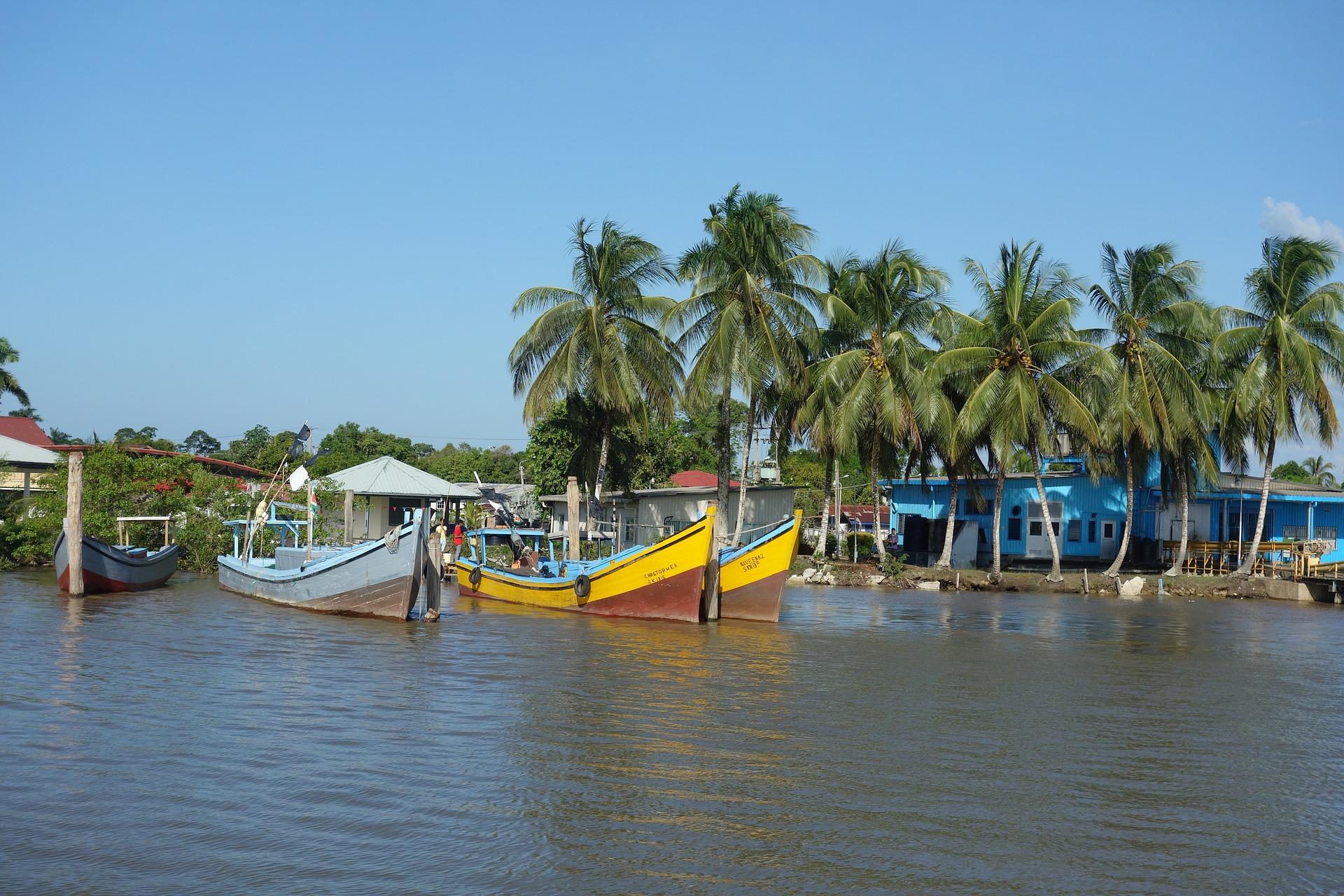
Suriname pairs Paramaribo's wooden colonial old town, a World Heritage Site, with Amazon rainforest reserves, Maroon river villages and turtle beaches at Galibi.
Suriname, the former Dutch Guiana, lies on the north-east coast of South America between Guyana and French Guiana, and is the smallest independent country on the continent. Its people descend from Amerindians, Dutch colonists, enslaved Africans and contract workers from India and Java, so you hear Dutch, English, Sranan Tongo, Sarnami and Javanese, and the food mixes Indian, Javanese, Chinese and Creole cooking. Half the population lives in Paramaribo, whose historic centre is a UNESCO World Heritage Site.
About 80% of the country is rainforest, and almost a third is protected. Most visitors go inland on package tours by boat or small plane, to the Central Suriname Nature Reserve, the Brokopondo Reservoir near Brownsberg or the Maroon villages of the Upper Suriname River. On the coast you can visit old plantations in Commewijne, watch leatherback turtles nest at Galibi or see scarlet ibis at Bigi Pan. The US and Canada advise normal precautions.
- Paramaribo: A historic centre of wooden colonial houses, with the Waterkant, Fort Zeelandia and a huge wooden cathedral.
- Central Suriname Nature Reserve: The most popular reserve, with the Raleigh falls and Mount Voltzberg.
- Galibi: Beaches where leatherback turtles lay their eggs.
- Commewijne plantations: Former coffee and sugar plantations, explored by bike.
- Bigi Pan: Open water, mudflats and mangroves in Nickerie district, known for scarlet ibis.
- Upper Suriname River: Maroon villages along the river in the interior.
Places to visit
- City
- Town
- Coast
- Park
- Historic site
- Area
Cities
- Paramaribo: The capital and largest city, home to half the population, with a historic centre listed by UNESCO.
- Lelydorp: The second-largest town, on the road from the airport, known for its Javanese warungs.
- Nieuw Nickerie: The westernmost town, protected by a sea wall, near the ferry to Guyana and Bigi Pan.
- Nieuw Amsterdam: Best known for its fort.
- Albina: The crossing point to French Guiana; Canada warns about robberies here.
- Domburg: Where people from Paramaribo like to meet on Sundays.
- Groningen: A quiet town on the Saramacca River.
Beyond the cities
- Central Suriname Nature Reserve (park): A remote wilderness and the most popular reserve, with the Raleigh falls and Mount Voltzberg.
- Brownsberg Nature Park (park): A park close to Paramaribo above the Brokopondo Reservoir, one of the largest artificial lakes in the world.
- Galibi Nature Reserve (coast): Beaches where leatherback turtles lay their eggs.
- Bigi Pan Nature Reserve (park): Open water, mudflats and mangrove forest in Nickerie, with scarlet ibis.
- Colakreek (area): A black-water swimming park in the savannah, about 50 km from Paramaribo and popular with families.
- Jodensavanne (site): The ruins of a 17th-century settlement of Sephardic Jews.
- Commewijne plantations (area): Former colonial plantations, some restored, a few still making coffee or drying shrimp.
- Upper Suriname River (area): Maroon villages along the river in the interior.
- Santigron (town): A Maroon village on the Saramacca River.
Regions
- Paramaribo: The capital, where half the country lives.
- West Coast: Nieuw Nickerie, Groningen and the wetlands of Bigi Pan.
- East Coast: The Commewijne plantations, Albina and the turtle beaches of Galibi.
- Surinamese Rainforest: The interior, mostly jungle, with nature reserves and Maroon and Amerindian villages along the rivers.
Things to do
See
- Historic Paramaribo Paramaribo: Walk the Waterkant with its wooden colonial houses, Fort Zeelandia and Independence Square, and the Cathedral of Saints Peter and Paul, the largest wooden building in South America.
- Leatherback turtles Galibi: Watch the turtles nest on the beaches of Galibi and Albina.
- Brokopondo Reservoir and Tonka Island Brownsberg Nature Park: A huge artificial lake, and an ecotourism project run by Saramaccan Maroons.
- Scarlet ibis Bigi Pan: One of the few tours in Suriname geared to wildlife watching.
Do
- Cycling the plantations Commewijne: Ride between banana plants to former plantations such as Zorgvliet and Zeldenrust.
- Raleigh falls and Voltzberg Central Suriname Nature Reserve: Rapids on the upper Coppename River and Mount Voltzberg, in the most popular reserve.
- Swimming at Colakreek Colakreek: A family day out in cola-coloured black water; stop at Jodensavanne on the way back.
- A boat trip on the Marowijne Marowijne River: Forest, river villages and French Guiana on the other bank.
Eat
- Javanese warungs Lelydorp: Bami, nasi, satay with peanut sauce and saoto soup.
Drink
- Parbo beer: The local lager, called a 'djogo' in the one-litre bottle.
Shop
- Central Market Paramaribo: The city's main market; handcrafted jewellery, woodcarvings and art make good souvenirs.
Itineraries
Paramaribo and Commewijne in 5 days (5 days)
- Paramaribo (3 nights): The historic centre, the Waterkant and the Central Market.
- Commewijne plantations (2 nights): Cycle between former plantations among the banana plants.
Paramaribo and the rainforest in 7 days (7 days)
- Paramaribo (3 nights): Arrange an inland package tour, as most visitors do.
- Central Suriname Nature Reserve (4 nights): The Raleigh falls and Mount Voltzberg.
Climate and best time to visit
| Jan | Feb | Mar | Apr | May | Jun | Jul | Aug | Sep | Oct | Nov | Dec | |
|---|---|---|---|---|---|---|---|---|---|---|---|---|
| Max °C | 32 | 31 | 32 | 33 | 33 | 33 | 34 | 34 | 35 | 35 | 34 | 33 |
| Min °C | 22 | 22 | 22 | 23 | 23 | 23 | 23 | 23 | 23 | 23 | 23 | 23 |
| Rain mm | 160 | 168 | 152 | 206 | 328 | 275 | 225 | 150 | 95 | 76 | 134 | 179 |
Suriname is hot and humid all year, with humidity around 80%. In Paramaribo the average maximum runs from 31 °C to 35 °C and nights stay around 22 °C. There are two rainy seasons: a long one from late April to mid-August (May is the wettest month, with 328 mm) and a short one from mid-December to mid-February. Rain usually comes as heavy afternoon showers rather than all day.
September to November falls in the drier season from mid-August to mid-December, and September and October are the driest months (76 to 95 mm), which is why we suggest them; expect heat, as temperatures can then reach 35 °C to 40 °C. The FCDO warns of flooding in the north and centre in the rainy season from May to August, and of heatwaves.
Holidays and events
- 1 January 2026 · New Year's Day
- 6 January 2026 · Three Kings Day
- 18 January 2026 · World Religion Day
- 17 February 2026 · Chinese New Year
- 25 February 2026 · Day of the Revolution
- 3 April 2026 · Good Friday
- 5 April 2026 · Easter Sunday
- 1 May 2026 · Labour Day
- 14 May 2026 · Ascension Day
- 5 June 2026 · Indian Arrival Day
- 1 July 2026 · Keti Koti
- 8 August 2026 · Javanese Arrival Day
- 9 August 2026 · Indigenous People's Day
- 10 October 2026 · Day of the Maroons
- 20 October 2026 · Chinese Arrival day
- 25 November 2026 · Independence Day
- 25 December 2026 · Christmas Day
- 26 December 2026 · Boxing Day
Getting around
| Main airports | PBM |
|---|
There are no trains. Long-distance buses link Paramaribo with other towns, but minibuses and taxis are what most people use; Canada advises avoiding public minibuses. Take licensed taxis or those at hotel ranks, agree the fare first and do not hail taxis in the street. Uber does not operate; the only ride-hailing app is Ride Technologies. The interior is reached by chartered boat, ideally with a guide, or by small plane with Bluewing Airlines or Gum Air.
Driving is on the left. Rent a four-wheel drive for dirt roads, and expect high speed bumps (drempels), unmarked roads, bridges in bad condition and dangerous driving outside the main towns. UK drivers need an International Driving Permit together with their licence. Fill up before you leave the paved roads, and take care at night with cyclists, pedestrians and animals.
Flying to Suriname? PartnerCompare fares and find the cheapest datesSearch flightsWhere to stay
- Hostels and guest houses: Several good ones in Paramaribo and Nickerie.
- Jungle lodges and resorts: A growing number in the rainforest, often part of guided tours.
- Hammocks: Common in forest camps; buy your own in Paramaribo, as shared ones are not always clean.
Accommodation and food are relatively cheap, but tours and transport inland cost more than you might expect. Bring mosquito repellent and sunscreen for nights in the forest.
Eat and drink
Dishes to try
- Roti: Pancakes filled with chicken, potato and long beans cooked with masala, a very popular East Indian dish.
- Bami and nasi: Javanese noodles and fried rice, served in every warung with spicy chicken or satay.
- Saoto: A Javanese broth with chicken, bean sprouts, egg and peppers.
- Pom: A Creole oven dish of grated tayer root and salted meat.
- Peanut soup with tom tom: A Creole soup served with dumplings of cooked banana.
- Baka bana and petjil: Fried banana and vegetables with peanut sauce, two vegetarian options.
Drinks
- Fresh fruit juices: Passion fruit (markoesa) and soursop (zuurzak); bottled juices are sweetened, so ask for fresh.
- Dawet: A pink Javanese coconut milk drink.
- Parbo beer: The local lager, also brewed as a stout.
- Borgoe and Black Cat: Local rums.
The mix of peoples gives Suriname Indian, Chinese, Javanese and Creole kitchens side by side. Look for warungs in Lelydorp, in Blauwgrond in Paramaribo and near the bridge in Commewijne, and for dim sum and the Sunday Chinese market in the capital. East Indian food is milder than in India. Street vendors in the city sell flavoured shaved ice.
Entry requirements and visas
| Passport validity | 6 months beyond your arrival date |
|---|
| Passport | Entry | Max stay | Notes |
|---|---|---|---|
| United Kingdom | Visa free | 90 days | Tourism. Pay the US$54 entry fee and fill in the online Immigration and Customs Form before you travel. |
| Canada | Eta | 90 days | No visa, but apply online for a single-entry tourist card before arrival and pay the entry tax. |
Other nationalities: check the official source below.
Your passport must be valid for at least 6 months after you arrive. All travellers must complete the online Immigration and Customs Form (ICF) up to three days before arrival and again before departure, and pay an entry fee or tax before travelling; Canada says airlines check the payment voucher at check-in. British visitors need no visa for tourism up to 90 days. Canadians apply online for a tourist card, valid for one entry and 90 days. Wikivoyage lists US and many European citizens among those who need a tourist card, and notes that cards are not sold at land borders: check the official rules for your passport.
After 30 days in the country, Canada says foreigners must report to the immigration police within a week for an extension stamp. Overstaying is illegal. Children travelling without a parent need signed consent and a copy of the parent's passport. A yellow fever certificate is needed if you come from a country with yellow fever risk. Rules depend on your passport and can change: check the official link before you book.
Money and payments
| Currency | Surinamese Dollar (SRD) |
|---|---|
| Cards | Limited |
The currency is the Surinamese dollar (SRD), written with a $ sign. It is hard to change back outside Suriname and its neighbours, so do not buy more than you need. Bring US dollars or euros in cash: British pounds cannot be exchanged. Banks and most cambios change money. ATMs work in Paramaribo and the larger northern towns, and RBTT machines accept most foreign cards; the ATM in Albina does not.
Cards are not widely accepted outside the major hotels, and where they are you may pay 2% to 6% extra. Tours, hotels and better restaurants usually price in euros or US dollars, converted into SRD at the day's rate.
Costs and budget
- Package tour into the interior, per day: about €100 to 200
- Ferry from Guyana (Moleson Creek to South Drain), one way: about €20
- Boat from Saint-Laurent-du-Maroni to Albina: about €5
Prices from Wikivoyage for 2025. Accommodation and food are relatively cheap, but trips inland are expensive because the interior is hard to reach, and some tourist attractions cost more than in Europe or the US. On top, budget for the entry fee (US$54 for British visitors).
Health
| Required vaccines | Yellow fever certificate, for travellers aged 1 and over arriving from a country with yellow fever risk, including airport stays of more than 12 hours there |
|---|---|
| Recommended vaccines | Routine vaccines, including measles (MMR), Hepatitis A, Hepatitis B, Yellow fever, from 9 months of age, Typhoid, for some travellers, Rabies, for some travellers |
| Malaria | None |
| Tap water | Varies |
The CDC reports no local cases of malaria since 2021 (it used to occur mainly in Sipaliwini near the French Guiana border) and advises only protection against mosquito bites. Dengue, Zika and chikungunya are present, so use repellent. Avoid swimming in fresh water because of schistosomiasis. Ask a travel health professional at least 8 weeks before you go.
Tap water is drinkable in Paramaribo but not elsewhere. Medical facilities are severely limited, some do not accept insurance, and you may have to pay in advance: get insurance that covers evacuation. Near the French Guiana border, EU visitors can get treatment on the French side with an EHIC. For an ambulance, dial 113 or 115.
This is general information, not medical advice: check with a travel health professional before you go.
Safety
- United States: Level 1: Exercise Normal Precautions (2026-10-20)
- Canada: Take normal security precautions (2026-10-20)
- United Kingdom: No advice against travel (2026-10-20)
The US and Canada advise normal precautions, and the UK has no advice against travel. Burglary, armed robbery and violent crime occur in Paramaribo and around it, and pickpocketing is increasingly common in the shopping and business areas and near the big hotels. Avoid the Palm Garden (Palmentuin), especially at night, do not walk alone after dark and keep valuables out of sight.
Canada warns of robberies in Albina and Moengo, on the East-West highway between Paramaribo and Albina, on the Afobakka Highway in Para and in Brokopondo district, and of gangs along the border with Guyana. Police are scarce outside Paramaribo, and tourists have been robbed in central Suriname: travel inland with a well-established tour company, never trek alone and take insurance that covers helicopter rescue. The UK advises care near the disputed border areas with Guyana and French Guiana. Demonstrations, often on Saturdays in Paramaribo, can turn violent. Drug penalties are severe.
Customs and etiquette
Suriname is proud of its mix of peoples and religions: about half the population is Christian, 22% Hindu and 14% Muslim, and Hindu, Javanese, Maroon and Creole festivals are all celebrated. Ask before taking photos, especially in the interior, where some trees and places are sacred; your guide will tell you. Shops usually open from 08:00 to 16:30, stay open later on Fridays and close at 14:00 on Saturdays.
Language
| Official languages | Dutch |
|---|---|
| English | Widespread |
What to pack
- US dollars or euros in cash: Cards are rarely accepted and pounds cannot be exchanged.
- A hammock: Useful in forest camps; buy one in Paramaribo.
- Mosquito repellent and sunscreen: Needed in the forest; dengue, Zika and chikungunya are present.
- Yellow fever certificate: Required if you arrive from a country with yellow fever risk.
- Photocopies of your documents: Keep them apart from your passport and cards.
- International Driving Permit: UK drivers need it with their licence, and it cannot be bought in Suriname.
Quick reference
Country facts
| Capital | Paramaribo |
|---|---|
| Population | 639,850 (2025) |
| Area | 160,508 km² |
| Time zone | America/Paramaribo (UTC-3) |
| Calling code | +597 |
| Driving side | left |
Emergency numbers
| Emergency | 115 |
|---|---|
| Ambulance | 113 |
| Fire | 110 |
Frequently asked questions
Do I need a visa for Suriname?
British visitors need no visa for up to 90 days but must pay an entry fee and fill in an online form before travelling. Canadians apply online for a tourist card. Check the official link before you book.
Is English spoken in Suriname?
Yes, widely. Dutch is the official language, and Sranan Tongo is the common language between communities.
Can I pay by card in Suriname?
Rarely outside the major hotels. Bring US dollars or euros in cash and use ATMs in Paramaribo.
Can I drink the tap water in Suriname?
In Paramaribo, yes. Elsewhere drink bottled water.
Do I need a yellow fever vaccine for Suriname?
A certificate is required if you arrive from a country with yellow fever risk, and the CDC recommends the vaccine for travellers from 9 months of age. Ask a travel health professional.
When is the best time to visit Suriname?
September to November, in the drier season, though it is very hot. The long rainy season runs from late April to mid-August.
Sources This guide was last checked on · 16 sources
- Wikivoyage: Suriname · Overview, Places to visit, Things to do, Itineraries, Climate and best time to visit, Getting around, Where to stay, Eat and drink, Entry requirements and visas, Money and payments, Costs and budget, Health, Safety, Customs and etiquette, Language, What to pack, Frequently asked questions
- Wikidata: Suriname · Overview, Places to visit, Money and payments, Country facts
- US Department of State: Suriname travel advisory · Overview, Safety, Frequently asked questions
- Government of Canada: Suriname travel advice (updated 13 October 2026) · Overview, Places to visit, Getting around, Entry requirements and visas, Health, Safety, Frequently asked questions
- WMO World Weather Information Service: Paramaribo · Climate and best time to visit
- UK FCDO: Suriname safety and security · Climate and best time to visit, Getting around, Money and payments, Safety, Customs and etiquette, What to pack
- Nager.Date: public holidays in Suriname, 2026 · Holidays and events
- UK FCDO: Suriname entry requirements · Entry requirements and visas, Money and payments, Health, What to pack, Frequently asked questions
- ISO 4217 (SIX), published 2026-09-17 · Money and payments
- CDC Travelers' Health: Suriname · Health, What to pack, Frequently asked questions
- UK FCDO: Suriname health · Health
- UK FCDO: Suriname travel advice · Safety
- World Bank, SP.POP.TOTL · Country facts
- World Bank, AG.LND.TOTL.K2 · Country facts
- IANA Time Zone Database, zone.tab · Country facts
- UK FCDO: Suriname getting help · Emergency numbers
Suggest an update
Travel rules, prices and timetables change. If something in this guide is out of date, tell us: we check every suggestion against an official source before changing the page.