


- Local time
- 12:22
- Currency
- Colombian Peso (COP)
- Capital
- Bogotá
- Calling code
- +57
- Drive on the
- right
Overview
Colombia has the walled old town of Cartagena, Bogotá high in the Andes, coffee country and Caribbean beaches. Official advice warns against travel to several border and rural areas.
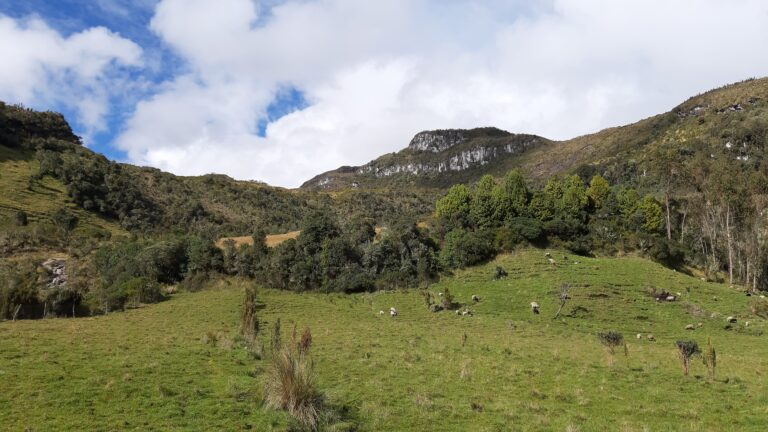
Colombia sits in the north-west corner of South America, with coasts on both the Caribbean and the Pacific, the Andes running through the middle, wide plains to the east and Amazon rainforest to the south. Altitude sets the climate more than the season: Bogotá, at about 2,600 m, needs a jacket, while the Caribbean coast is hot and humid all year. The highest peaks, in the Sierra Nevada de Santa Marta, reach 5,775 m and form the world's highest coastal range.
Most visitors combine Cartagena's colonial old city, the museums and restaurants of Bogotá, Medellín and the coffee farms of the Zona Cafetera, and the beaches near Santa Marta. Cali is known for salsa and Barranquilla for its carnival. There are no intercity trains and the mountains make bus trips slow, so many travellers fly between cities.
Check the official advice before you plan a route. The US State Department rates Colombia at Level 3: Reconsider Travel. Canada advises a high degree of caution due to high levels of crime and says to avoid all travel to several departments and border areas. The UK advises against all but essential travel to parts of the country, mostly near the borders with Venezuela, Ecuador and Panama, on the Pacific coast and in parts of central and southern Colombia. The safety section lists the areas.
- Cartagena: The main tourist city on the Caribbean, with a walled colonial old town and boat trips to the Rosario Islands.
- Bogotá: The capital in the Andes, with an old centre, museums and a wide choice of restaurants.
- Medellín: The 'City of Eternal Spring', with a metro, cable cars and many works by Fernando Botero.
- The coffee region: Coffee farms around Manizales and Pereira, and treks in Los Nevados National Park.
- Tayrona National Park: Caribbean beaches and coastline near Santa Marta.
- Ciudad Perdida: The jungle terraces of a pre-Columbian city in the Sierra Nevada de Santa Marta, reached only on an organised tour.
Places to visit
- City
- Island
- Park
- Historic site
Cities
- Bogotá: The capital, a big city at about 2,600 m in the Andes, with good museums and a wide choice of restaurants.
- Cartagena: The country's leading tourist city, where a colonial walled town stands next to modern towers on the Caribbean.
- Medellín: Capital of Antioquia, called the City of Eternal Spring, home town of the painter Fernando Botero and the only city with a metro.
- Cali: The third-largest city, known as the salsa capital of Latin America.
- Barranquilla: A Caribbean port, quiet most of the year, whose carnival is said to be second in size only to Rio de Janeiro's.
- Santa Marta: A Caribbean base for beaches and for trips into the Sierra Nevada de Santa Marta, the highest mountains in the country.
- Manizales: The centre of the Zona Cafetera, for coffee farm visits and Los Nevados National Park.
- Pereira: Capital of Risaralda and a major city of the coffee region, close to the Santa Rosa hot springs.
Beyond the cities
- Tayrona National Park (park): Caribbean coastline near Santa Marta, reached on Route 90.
- Ciudad Perdida (site): Stone terraces of a city built by the Tayrona people between the 8th and 14th centuries, in the jungle near Santa Marta.
- Zipaquirá Salt Cathedral (site): A huge church dug into a former salt mine, with sculptures along the tunnels and a lit cross above the altar.
- Rosario Islands (island): An archipelago a short boat ride from Cartagena.
- Providencia (island): A remote Caribbean island about halfway to Jamaica, a UNESCO Biosphere Reserve with a long barrier reef.
- Los Nevados National Park (park): A high-altitude park of volcanoes with good trekking, close to Manizales and Pereira.
- Amacayacu National Park (park): A large park in the Amazon rainforest, explored by boat, with monkeys and pink river dolphins.
- San Agustín (site): An archaeological park in Huila department, in the south-west.
Regions
- Andean region: The mountains where most Colombians live, with Bogotá, Medellín and the coffee region.
- Caribbean coast: Hot and humid lowlands with Cartagena, Barranquilla, Santa Marta and the Sierra Nevada.
- Orinoquía: The eastern plains, the Llanos, flat grasslands that stretch to the horizon.
- Pacific coast: A remote coast where rainforest meets dark volcanic sand, with whale watching and diving. Canada advises against all travel to most of Chocó, except Bahía Solano, Capurganá and Nuquí, which should be reached by air.
- Amazonia: Rainforest in the south-east, reached by air through Leticia.
- Colombian islands: The Caribbean archipelago of San Andrés and Providencia, where an English-based creole is also spoken.
Things to do
See
- The walled city of Cartagena Cartagena: Walk the narrow streets of the old town and along its fortified walls.
- Old Bogotá and its museums Bogotá: Narrow colonial streets and good museums; keep valuables out of sight, as robberies happen in La Candelaria.
- Zipaquirá Salt Cathedral Zipaquirá: A church built underground in an old salt mine.
- Villa de Leyva: An old Spanish colonial town that served as a provincial retreat.
- Barranquilla Carnival Barranquilla: An enormous carnival of music and dance.
Do
- Trek to Ciudad Perdida Sierra Nevada de Santa Marta: A jungle trek to the Lost City of the Tayrona; go only as part of an organised tour.
- Coffee farm stay Zona Cafetera: Stay on a finca cafetera and ask to taste the coffee the farmers keep for themselves.
- Cable cars Medellín and Manizales: Ride the cable cars that are part of the public transport network, or the one above the Chicamocha canyon in Santander.
- Tejo: A traditional game from central Colombia, like horseshoes but with small explosions, usually played over beer.
Eat
- Ajiaco Bogotá: Chicken soup with three kinds of potato, served with rice, avocado, cream and capers.
After dark
- Salsa Cali: Clubs and dance schools in Cali and Cartagena; locals are happy to teach beginners.
Itineraries
Bogotá, Medellín and the coffee region in 9 days (9 days)
- Bogotá (3 nights): The old centre, the museums and the restaurants.
- Manizales (3 nights): Coffee farms and treks in Los Nevados National Park.
- Medellín (3 nights): The metro and cable cars, and the works of Fernando Botero.
The Caribbean coast in 9 days (9 days)
- Cartagena (4 nights): The walled old town and a boat trip to the Rosario Islands.
- Santa Marta (5 nights): Beaches, Tayrona National Park and, with an organised tour, Ciudad Perdida.
Climate and best time to visit
| Jan | Feb | Mar | Apr | May | Jun | Jul | Aug | Sep | Oct | Nov | Dec | |
|---|---|---|---|---|---|---|---|---|---|---|---|---|
| Max °C | 16 | 17 | 17 | 16 | 16 | 16 | 15 | 15 | 16 | 16 | 16 | 16 |
| Min °C | 6 | 7 | 8 | 9 | 9 | 8 | 8 | 7 | 7 | 8 | 8 | 6 |
| Rain mm | 29 | 44 | 66 | 101 | 93 | 54 | 43 | 46 | 72 | 107 | 91 | 53 |
Colombia lies close to the equator, so altitude matters more than the calendar. In Bogotá, at about 2,600 m, the average maximum stays between 15 °C and 17 °C all year and nights fall to around 6 °C to 9 °C, so bring a warm layer. Rain comes in two seasons: April and May, October and November are the wettest months in the capital (91 to 107 mm), while December to February and July to August are drier (29 to 53 mm). These drier months are the ones we suggest.
The Caribbean coast, with Cartagena, Barranquilla and Santa Marta, is hot and humid; Medellín and the coffee region are mild all year, and the highest mountains keep their snow. Rainy seasons differ from region to region. Canada notes that driving is particularly hazardous in the rainy seasons from April to May and October to November. Hurricanes are uncommon but can reach the Caribbean coast and San Andrés. The Colombian government has declared an El Niño event, expected to be strong until at least March 2027, which may bring heavy rain, floods and landslides, but also heat, drought and wildfires.
Holidays and events
- 1 January 2026 · New Year's Day
- 12 January 2026 · Epiphany
- 23 March 2026 · Saint Joseph's Day
- 2 April 2026 · Maundy Thursday
- 3 April 2026 · Good Friday
- 1 May 2026 · Labour Day
- 18 May 2026 · Ascension Day
- 8 June 2026 · Corpus Christi
- 15 June 2026 · Sacred Heart
- 29 June 2026 · Saint Peter and Saint Paul
- 13 July 2026 · Our Lady of Chiquinquirá Day
- 20 July 2026 · Declaration of Independence
- 7 August 2026 · Battle of Boyacá
- 17 August 2026 · Assumption of Mary
- 12 October 2026 · Columbus Day
- 2 November 2026 · All Saints’ Day
- 16 November 2026 · Independence of Cartagena
- 8 December 2026 · Immaculate Conception
- 25 December 2026 · Christmas Day
Getting there and around
Getting there
By air: international flights land in Bogotá, Medellín, Cali, Barranquilla, Bucaramanga, Cartagena, Pereira and San Andrés, with direct services from the US, Canada, Mexico, Costa Rica, Panama, Spain, France and the rest of South America. Colombian airlines ask for proof of an onward ticket before you board. Medellín has two airports: international and long-distance flights use José María Córdova (MDE), regional flights Olaya Herrera (EOH). At Bogotá's El Dorado airport only authorised yellow taxis may pick up passengers.
By land and river: the UK advises not to use any of the land crossings with Venezuela. Most crossings with Ecuador are closed; the Rumichaca bridge between Tulcán and Ipiales remains open. There is no road from Panama, and the UK advises against crossing the Darién Gap by land; sailing boats run from Portobelo in Panama to Cartagena. From Brazil, boats sail up the Amazon from Manaus to Leticia, from where you fly on. If you arrive by land, sea or river, make sure your passport is stamped.
Getting around
Flying is the usual way to cover long distances: there are no intercity trains and the mountains slow the roads. Avianca, LATAM, Wingo, JetSMART, Clic and Satena run domestic routes, and Bogotá to Medellín was the busiest air route in Latin America in 2024. The capitals of Amazonas, Vaupés and Guainía departments can be reached only by air.
Buses go everywhere, at different levels of comfort. You usually buy a ticket at the terminal for the next departure. Main roads have two lanes and lots of trucks, and many routes climb above 3,000 m, so trips are slow; for more than about five hours, consider a flight. Both the UK and Canada warn about armed robberies and druggings on buses: keep bags with you and do not accept food or drinks from strangers. Canada advises avoiding public transport altogether. Bogotá has the TransMilenio bus system and Medellín the country's only metro.
Taxis: do not hail them in the street. Book through an app such as Uber or Cabify, by phone or through your hotel or restaurant. Driving is on the right; speed limits are 30 km/h in residential areas, 60 km/h in towns and 80 km/h elsewhere, and insurance is compulsory. The UK says a UK photocard licence is accepted, while hire companies may also ask for an International Driving Permit. Avoid driving at night and on secondary roads, and expect landslides after heavy rain; dial 767 for road closures (in Spanish).
Flying to Colombia? PartnerCompare fares and find the cheapest datesSearch flightsWhere to stay
- Hotels: From simple, clean hotels to five-star properties in the big cities.
- Hostels: Common, with shared dorms.
- Bed and breakfasts: Run to western standards.
- Apartments: Rented by the day.
- Haciendas and coffee farms: Country houses rented privately, and fincas cafeteras in the coffee region.
In Colombia a motel is a place rented for short stays, usually by couples, not a hotel for travellers. Many hotels do not let people who are not registered guests beyond reception. Canada advises choosing reputable places with good security and not renting in poorer neighbourhoods (comunas), where gang violence is common and police help is limited.
Eat and drink
Dishes to try
- Ajiaco: Bogotá's chicken and potato soup, with rice, avocado, cream and capers.
- Bandeja paisa: A heavy plate of rice, beans, fried plantain, arepa, fried egg, chorizo and pork crackling.
- Sancocho: A hearty soup found all over the country, usually with chicken; on the coast it is made with fish.
- Arepas: Thick corn cakes, often with cheese and butter, eaten at breakfast.
- Tamales: Corn dough with pork or chicken and vegetables, steamed in plantain leaves; every region has its own.
- Empanadas: Potato and meat in a yellow corn crust, unlike the Mexican or Argentine kind.
Drinks
- Tinto: A small black filter coffee, not red wine.
- Hot chocolate with cheese: In Bogotá pieces of cheese go into the cup to melt.
- Agua de panela: A hot drink of dried sugar cane juice, sometimes with cinnamon and cloves.
- Fruit juices: Cheap and everywhere, made with water or milk from lulo, guanábana, mango and more.
- Aguardiente: The national spirit, flavoured with anise and drunk in shots; each region has its own brand.
| Tipping | Nicer restaurants usually add a 10% service charge; if not, add it yourself. Elsewhere people round up to the next thousand pesos, and taxi drivers are not normally tipped. |
|---|
Colombian food is not spicy. Most meals are meat with rice, potatoes and avocado, and on the coast the rice is often cooked with coconut. Soup is a regular part of lunch. Vegetarian choices are limited. Drinking alcohol in public spaces is illegal. In tourist areas ask for a printed price list before you order, and never leave your drink unattended.
Entry requirements and visas
| Passport validity | Valid on entry; 6 months beyond departure is recommended |
|---|
| Passport | Entry | Max stay | Notes |
|---|---|---|---|
| United Kingdom | Visa free | 90 days | Business or tourism, at the discretion of the immigration officer. Show an onward or return ticket within the 90 days. |
| Canada | Visa free | 90 days | No tourist visa required. Canada says you must pay an entry fee on arrival, updated every year. |
Other nationalities: check the official source below.
Visitors from the UK and Canada can visit Colombia for tourism without a visa for up to 90 days; the officer on arrival decides how long you may stay. You can apply to Migración Colombia to extend, up to 180 days in a year. Your passport must be valid on entry, and the Colombian authorities recommend 6 months of validity after you leave. Expect to show an onward or return ticket and possibly proof of enough money.
Fill in the free online Check-Mig form between 72 hours and 1 hour before you travel: Canada says it is required, the UK says it speeds up entry. If you fly to San Andrés or Providencia you must buy a tourist card. Declare more than US$10,000 in cash. Customs may search you and your luggage for drugs. Children resident in Colombia travelling without both parents need a notarised letter of permission. Rules depend on your passport and can change: check the official link before you book.
Money and payments
| Currency | Colombian Peso (COP) |
|---|---|
| Cards | Widespread |
The currency is the Colombian peso (COP), written with the $ sign. Notes run from 2,000 to 100,000 pesos. Cards are widely accepted in hotels, shops and restaurants, but card fraud and overcharging happen in tourist areas: watch your card and check your statements.
ATMs are everywhere, with limits and fees that vary by bank; in June 2024 a withdrawal cost between COP$15,000 and COP$26,900 in fees. Use ATMs inside banks, supermarkets or shopping centres during business hours, as express kidnappings often start near cash machines. If the ATM offers to convert at its own rate, you can refuse and let your bank convert. Change US dollars or euros only at banks and authorised exchange offices, never in the street.
Costs and budget
- Bed in a well-rated hostel dorm: US$5 to 10
- Room in a modest, clean hotel: US$20 to 25
- Set meal in a simple local restaurant: US$2.50 to 4
- Meal in an upper mid-range restaurant: about US$15
- Air-conditioned intercity bus, 100 km: about US$6
- Urban bus or metro ride: US$0.50 to 0.90
These are Wikivoyage prices from November 2021, the latest available in our sources, so check current prices before you budget. Taxis are cheap in Bogotá but expensive in Cartagena, and taxi and bus fares rise on Sundays, public holidays and late at night.
Health
| Required vaccines | Yellow fever certificate: the CDC lists it as required for all arriving travellers aged 1 and over; the UK and Canada say only if you arrive from certain countries |
|---|---|
| Recommended vaccines | Routine vaccines, including measles (MMR), Hepatitis A, Hepatitis B, Yellow fever, from 9 months; generally not for trips limited to Barranquilla, Cali, Cartagena, Medellín, Bogotá, San Andrés, Providencia or areas above 2,300 m, Typhoid, for some travellers, Rabies, for some travellers, Chikungunya, for stays of 6 months or more |
| Malaria | Some areas |
| Tap water | Varies |
Yellow fever: the CDC reports an increased number of cases in Colombia, mostly in Tolima, and recommends the vaccine for the newly affected areas there (travel notice updated 16 October 2026). It recommends the vaccine for most travellers, though generally not for trips limited to Barranquilla, Cali, Cartagena or Medellín, and not for trips limited to Bogotá, San Andrés and Providencia, or areas above 2,300 m. Entry rules differ between sources, so carry your certificate and confirm with the Colombian embassy. Malaria is present in all areas below 1,700 m, but not in Bogotá, Cartagena or Medellín; the CDC recommends preventive medicine for certain areas. Dengue, Zika and chikungunya are also carried by mosquitoes, so use repellent. Altitude sickness is a risk in Bogotá and parts of the Andes. Ask a travel health professional at least 8 weeks before you go.
The UK says tap water is safe only in Bogotá; elsewhere drink bottled water and avoid ice. Private clinics in big cities give good care, while public hospitals are often poorly equipped and ambulances in remote areas unreliable: get insurance that covers evacuation. Pharmacies (droguerías) are easy to find in cities; bring your medicines in their original packaging with a copy of the prescription. For an ambulance, dial 123.
This is general information, not medical advice: check with a travel health professional before you go.
Safety
- United States: Level 3: Reconsider Travel (2026-10-20)
- Canada: Exercise a high degree of caution (2026-10-20)
- United Kingdom: Advises against all but essential travel to parts of the country (2026-10-20)
Official advice is severe for parts of Colombia. The US State Department rates the country at Level 3: Reconsider Travel. Canada says to exercise a high degree of caution due to high levels of crime, and to avoid all travel to Arauca; Caquetá except Florencia; Cauca except Popayán; Chocó except Bahía Solano, Capurganá and Nuquí; Norte de Santander except Cúcuta; the municipalities of González and Río de Oro in Cesar; areas within 50 km of the Venezuelan and Ecuadorian borders and within 100 km of the Panamanian border; and Tumaco and Buenaventura. The UK FCDO advises against all but essential travel to areas near the borders with Venezuela (including Norte de Santander and Arauca), Ecuador and Panama, most of Chocó, western Valle del Cauca including Buenaventura, Guaviare except San José del Guaviare, and parts of Cauca, Caquetá, Meta, Nariño, Putumayo, Antioquia, Córdoba and Bolívar. It says not to use any land crossing with Venezuela. Travelling against this advice can invalidate your insurance.
Where you can travel, the UK and Canada advise care with these risks:
- Street crime: pickpocketing, phone snatching and armed robbery are common in Bogotá, Medellín, Cali and on the Caribbean coast, including La Candelaria in Bogotá. Do not resist a robbery. Avoid walking alone after dark and wear no jewellery or expensive watches.
- Taxis and express kidnappings: criminals force victims to withdraw cash at ATMs. Do not hail taxis in the street; use apps, phone bookings or your hotel, and ATMs inside banks during business hours.
- Drugging: scopolamine and other drugs are put in drinks, food or cigarettes, sometimes after contact through dating apps. Never leave a drink unattended and do not invite strangers to your room.
- Fake police may ask to check your money; ask to go to the nearest police station (CAI).
- Remote areas: landmines remain in rural areas, often unmarked. Visit Ciudad Perdida only with an organised tour, and reach Caño Cristales by air from La Macarena with a reputable operator.
- Ayahuasca ceremonies are unregulated and have led to assaults, illness and deaths; Canada advises not to take part.
Armed groups carry out attacks with little warning, often against police and military targets but also in public places, and protests can block roads at short notice. Earthquakes are common, Colombia has 25 active volcanoes, and heavy rain brings floods and landslides. Choose reputable boat operators in Cartagena, Santa Marta and San Andrés, as overloaded tour boats have had accidents.
Customs and etiquette
Colombians are more formal than many Latin Americans: say por favor and muchas gracias to everyone, and answer with '¿Señor?' or '¿Señora?' when someone calls you. The Caribbean coast is more relaxed. People point with their chin or lips, and pointing at someone with a finger can seem rude. Do not show a person's height with your palm facing down, which is used for animals and objects.
Avoid tactless remarks about the country's history of violence. Nicknames such as 'gringo' or 'mono' (for blondes) are usually not meant to offend. Most Colombians are Catholic and public displays of affection are rare. Same-sex marriage has been legal since 2016, but the UK notes that same-sex couples are not widely accepted, especially in rural areas. Drinking alcohol in public is illegal, and photographing military sites is forbidden. Carry a colour copy of your passport photo page and keep the passport somewhere safe.
Language
| Official languages | Spanish |
|---|---|
| English | Limited |
| Hello | Hola OH-lah |
|---|---|
| Good morning | Buenos días BWEH-nohs DEE-ahs |
| Please | Por favor POHR fah-BOHR |
| Thank you | Gracias GRAH-syahs |
| Excuse me | Disculpe dees-KOOL-peh |
| Do you speak English? | ¿Habla usted inglés? AH-blah oos-TEHD een-GLEHS |
| I don't understand | No entiendo NOH ehn-TYEHN-doh |
| Where is the toilet? | ¿Dónde está el baño? DOHN-deh ehs-TAH EHL BAH-nyoh |
What to pack
- Passport and a colour copy of the photo page: The UK advises carrying the copy for ID and keeping the passport somewhere safe.
- A warm jacket: Bogotá and the highlands can drop below 0 °C.
- Light clothes for the heat: The Caribbean coast is hot and humid.
- Insect repellent: Mosquitoes carry dengue, Zika, chikungunya and, in the lowlands, malaria and yellow fever.
- Yellow fever certificate: It may be checked on arrival or when visiting high-risk areas.
- Medicines in their original packaging: With a copy of the prescription; some medicines are hard to find outside the big cities.
Quick reference
Country facts
| Capital | Bogotá |
|---|---|
| Population | 53,425,635 (2025) |
| Area | 1,109,500 km² |
| Time zone | America/Bogota (UTC-5) |
| Calling code | +57 |
| Driving side | right |
Staying connected
| SIM and eSIM | Claro, Tigo and Movistar sell prepaid SIM cards; Claro has the widest coverage, but signal is often limited in rural areas. In October 2025 a 30-day plan with 30 GB cost COP$32,000. SIMs are sold at Bogotá airport at higher prices and in shops in every city. |
|---|
Useful apps
- Uber and Cabify: Book licensed taxis instead of hailing them in the street
- RedBus: Find intercity bus companies and price estimates
Emergency numbers
| Police | 123 |
|---|---|
| Ambulance | 123 |
| Fire | 119 |
Frequently asked questions
Do I need a visa for Colombia?
Not for tourism if you hold a UK or Canadian passport: you can usually stay up to 90 days. Fill in the free Check-Mig form before you fly and check the official link before you book.
Is it safe to travel to Colombia?
The US rates Colombia at Level 3: Reconsider Travel, and the UK and Canada advise against travel to several border and rural areas. Read the safety section, avoid hailing taxis in the street and never leave drinks unattended.
Can I drink the tap water in Colombia?
The UK says tap water is safe only in Bogotá. Elsewhere drink bottled water and avoid ice.
Do I need a yellow fever vaccine for Colombia?
The CDC recommends it for most travellers from 9 months of age, but generally not for trips limited to Barranquilla, Cali, Cartagena or Medellín, and not for trips limited to Bogotá, San Andrés and Providencia, or areas above 2,300 m. Entry rules differ between sources, so carry your certificate and ask a travel health professional.
When is the best time to visit Colombia?
In Bogotá December to February and July to August are the drier months. The climate depends mostly on altitude, so the coast is hot all year and the highlands cool.
Do I have to tip in Colombia?
Nicer restaurants usually add a 10% service charge. Elsewhere people round up, and taxi drivers are not normally tipped.
More Travel Stories from Colombia
 Colombia +1
Sources This guide was last checked on · 18 sources
- Wikivoyage: Colombia · Overview, Places to visit, Things to do, Itineraries, Climate and best time to visit, Getting there and around, Where to stay, Eat and drink, Entry requirements and visas, Money and payments, Costs and budget, Health, Safety, Customs and etiquette, Language, What to pack, Staying connected, Frequently asked questions
- Wikidata: Colombia · Overview, Places to visit, Money and payments, Country facts
- US Department of State: Colombia travel advisory · Overview, Safety, Frequently asked questions
- Government of Canada: Colombia travel advice (updated 14 October 2026) · Overview, Places to visit, Climate and best time to visit, Getting there and around, Where to stay, Eat and drink, Entry requirements and visas, Money and payments, Health, Safety, Frequently asked questions
- UK FCDO: Colombia travel advice (updated 15 October 2026) · Overview, Getting there and around, Safety
- UK FCDO: Colombia safety and security · Things to do, Climate and best time to visit, Getting there and around, Eat and drink, Money and payments, Safety, Customs and etiquette, What to pack, Staying connected
- WMO World Weather Information Service: Bogota · Climate and best time to visit
- Nager.Date: public holidays in Colombia, 2026 · Holidays and events
- UK FCDO: Colombia entry requirements · Entry requirements and visas, Health, Frequently asked questions
- ISO 4217 (SIX), published 2026-09-17 · Money and payments
- CDC Travelers' Health: Colombia · Health, What to pack, Frequently asked questions
- UK FCDO: Colombia health · Health, What to pack, Frequently asked questions
- CDC Travel Health Notice: Yellow Fever in Colombia (Level 2, updated 16 October 2026) · Health
- Wikivoyage: Spanish phrasebook · Language
- World Bank, SP.POP.TOTL · Country facts
- World Bank, AG.LND.TOTL.K2 · Country facts
- IANA Time Zone Database, zone.tab · Country facts
- UK FCDO: Colombia getting help · Emergency numbers
Suggest an update
Travel rules, prices and timetables change. If something in this guide is out of date, tell us: we check every suggestion against an official source before changing the page.