

- Local time
- 05:28 (capital)
- Currency
- Brazilian Real (BRL)
- Capital
- Brasília
- Calling code
- +55
- Drive on the
- right
Overview
Brazil takes in the Amazon rainforest, the Pantanal wetlands and Iguaçu Falls, with Rio de Janeiro, the Carnival of Salvador and a coast lined with beaches.
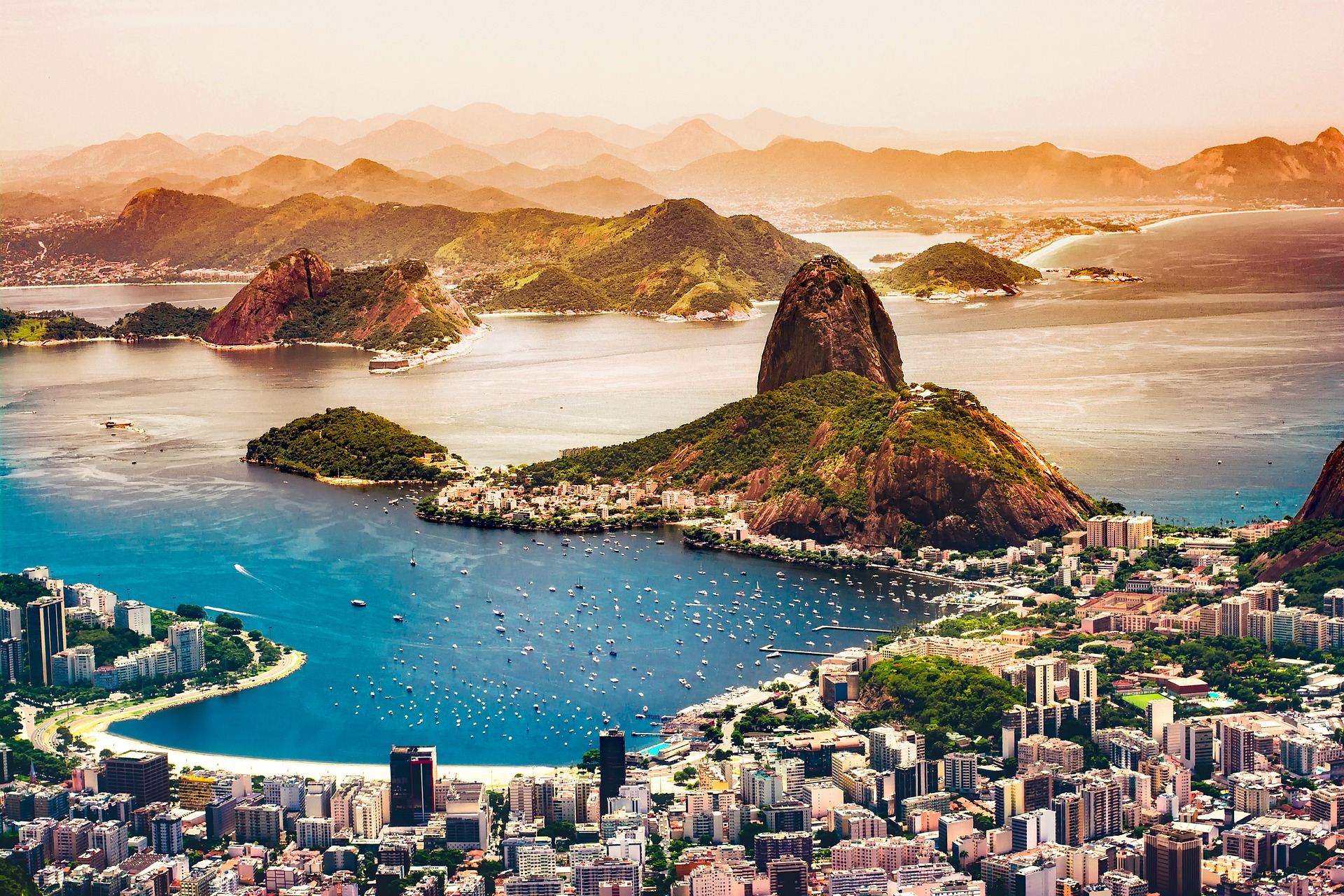
Brazil is the largest country in South America and the fifth largest in the world, so a first trip means choosing a region or two. Most people live near the Atlantic coast, where almost all the big cities are: Rio de Janeiro with its beaches and the statue of Christ on Corcovado, São Paulo, the largest and most cosmopolitan city, and Salvador, the first capital, where African culture shapes the food, music and religion. Inland lie the Amazon rainforest in the north, the savannas of the Central West and the Pantanal, one of the largest tropical wetlands in the world.
Brazil speaks Portuguese, not Spanish, and English is limited outside big hotels and tourist areas. Distances are huge and there is almost no passenger rail, so domestic flights and long-distance buses do the work. Crime is high in the big cities, and the official advice is detailed: read the safety section before you plan your days.
- Rio de Janeiro: Copacabana and Ipanema beaches and the statue of Christ on Corcovado Hill.
- Iguaçu Falls: Waterfalls on the border with Argentina.
- The Amazon from Manaus: Jungle tours from the city where the Negro and Solimões rivers meet.
- The Pantanal: A vast wetland with caimans, jaguars, giant anteaters and giant otters.
- Salvador: The first capital, with a strong African heritage and a famous Carnival.
- Ouro Preto: An old gold-mining town with the largest collection of baroque art in Latin America.
Places to visit
- City
- Town
- Island
- Park
- Area
Cities
- Rio de Janeiro: The capital until 1960, known for its beaches and the statue of Christ on Corcovado Hill.
- São Paulo: The largest and richest city, shaped by Italian, Japanese, Arab and many other communities.
- Salvador: The first capital of Brazil, a mix of indigenous, African and European cultures, with a famous Carnival.
- Brasília: The purpose-built capital, with architecture by Oscar Niemeyer such as the basket-shaped cathedral.
- Manaus: The largest city of the Amazon and the usual base for rainforest trips.
- Recife: A city built on islands linked by bridges, and the gateway to Fernando de Noronha.
- Florianópolis: A city on an island in Santa Catarina with lagoons, dunes and more than 40 beaches.
- Fortaleza: The fourth-largest city and a base for the beaches of the north-east coast, including Jericoacoara.
Beyond the cities
- Iguaçu Falls (park): Waterfalls along the border between Brazil and Argentina, in Paraná state.
- Pantanal (area): A tropical wetland, mostly in Mato Grosso do Sul, with caimans, jaguars, anacondas and giant otters.
- Fernando de Noronha (island): An archipelago in the Atlantic, a marine national park since 1997 and a UNESCO World Heritage Site.
- Lençóis Maranhenses (park): A park of sand dunes and freshwater lagoons.
- Chapada Diamantina National Park (park): A park in Bahia with Cachoeira da Fumaça, at 353 m the second highest waterfall in Brazil.
- Chapada dos Veadeiros (park): Cerrado, the tropical savanna, with its wildlife and waterfalls.
- Ouro Preto (town): A colonial town of the gold rush, with the largest collection of baroque art in Latin America.
- Olinda (town): A colonial town next to Recife, a UNESCO World Heritage Site for its 16th and 17th century buildings.
Regions
- North: The Amazon rainforest, with Manaus as the main city and rivers as the main roads.
- Northeast: Beaches and colonial cities on the coast, such as Salvador and Recife, and a semi-arid interior.
- Central West: Savanna, the capital Brasília and the Pantanal wetlands.
- Southeast: Rio de Janeiro, São Paulo and the colonial towns of Minas Gerais.
- South: Subtropical states with cold winters, Florianópolis and Porto Alegre, and strong German and Italian roots.
Things to do
See
- Christ the Redeemer Rio de Janeiro: The statue on top of Corcovado Hill; armed robberies have been reported on the walking trail.
- Iguaçu Falls Paraná: Waterfalls on the border with Argentina; read the Canadian border advice in the safety section first.
- Wildlife in the Pantanal Pantanal: Stay on a ranch (fazenda) or a boat hotel to watch caimans, giant otters and other wildlife.
- Colonial towns Ouro Preto and Tiradentes: Churches, monasteries and old streets in the former gold-mining towns.
- Niemeyer's Brasília Brasília: The curved concrete buildings Oscar Niemeyer designed for the new capital in the 1950s.
Do
- Copacabana and Ipanema Rio de Janeiro: The city's famous beaches; take only what you need and leave before dark.
- Carnival Rio de Janeiro, Salvador, Olinda: Almost a week of parties in February or early March: samba parades in Rio and São Paulo, trios elétricos in Salvador, giant figures (bonecos) in Olinda. Book well ahead.
- Amazon jungle trips Manaus: Boat trips and jungle tours from the city, which is also the gateway to the Anavilhanas and Jaú National Park.
- A football match Belo Horizonte, São Paulo: Games at stadiums such as the Mineirão or Morumbi; do not wear team colours on match days.
Eat
- Churrasco: Barbecue served rodízio style, with waiters carving meat from skewers at your table.
Itineraries
Rio de Janeiro and Iguaçu Falls in 7 days (7 days)
- Rio de Janeiro (4 nights): Corcovado, Copacabana and Ipanema.
- Iguaçu Falls (2 nights): The falls lie on the border with Argentina; read the Canadian border advice in the safety section first.
The north-east coast in 10 days (10 days)
- Salvador (4 nights): African culture and religion in the first capital.
- Olinda (2 nights): The colonial town next to Recife.
- Fernando de Noronha (3 nights): The island park, reached from Recife.
Amazon and Pantanal in 9 days (9 days)
- Manaus (4 nights): Jungle tours and the meeting of the Negro and Solimões rivers.
- Pantanal (4 nights): Wildlife from a ranch or boat hotel; Cuiabá is the main gateway.
Climate and best time to visit
| Jan | Feb | Mar | Apr | May | Jun | Jul | Aug | Sep | Oct | Nov | Dec | |
|---|---|---|---|---|---|---|---|---|---|---|---|---|
| Max °C | 27 | 27 | 27 | 27 | 26 | 25 | 25 | 27 | 28 | 28 | 27 | 26 |
| Min °C | 17 | 17 | 18 | 17 | 15 | 13 | 13 | 15 | 16 | 17 | 18 | 18 |
| Rain mm | 241 | 215 | 189 | 124 | 39 | 9 | 12 | 13 | 52 | 172 | 238 | 249 |
Most of Brazil is in the tropics, and the weather depends on where you go. In Brasília, the reference city here, the average maximum stays between 25 °C and 28 °C all year. Rain falls mostly from October to April, with more than 120 mm a month, while June, July and August get less than 15 mm. May to August is the dry season there, with nights down to about 13 °C in July, but the air in the centre of the country is very dry in the middle of the year: drink plenty of water, and expect forest fires between May and September.
The Amazon is hot and wet almost all year, and many unpaved roads there become impassable in the rainy season. On the coast of the north-east the rain comes in winter, from April to July, while in the south and south-east, including Rio de Janeiro, the rainy season runs from November to March, with flash floods and landslides. The southern states are subtropical, with hot summers and cold winters, frost and sometimes snow in the highest towns. December and January are the high season, and prices peak at New Year, Carnival and Holy Week.
Holidays and events
- 1 January 2026 · New Year's Day
- 16 February 2026 · Carnival
- 17 February 2026 · Carnival
- 3 April 2026 · Good Friday
- 5 April 2026 · Easter Sunday
- 21 April 2026 · Tiradentes
- 1 May 2026 · Labour Day
- 4 June 2026 · Corpus Christi
- 7 September 2026 · Independence Day
- 12 October 2026 · Our Lady of Aparecida
- 2 November 2026 · All Souls' Day
- 15 November 2026 · Republic Proclamation Day
- 20 November 2026 · Black Awareness Day
- 25 December 2026 · Christmas Day
Getting around
| Main airports | GRU, GIG |
|---|
Travelling between big cities takes a long time, and domestic flights are usually the best option over long distances. LATAM, Gol and Azul serve all the state capitals. Many flights make several stops, so check your flight number with ground staff. Long-distance buses are comfortable and come in three classes: regular, executive and leito, with only three wide seats per row. Buses on trips over 4 hours have toilets, and you may need your passport to buy a ticket and to board. Bus stations are often far from the centre, so take a taxi at night. Passenger trains are almost nonexistent, apart from a few tourist lines. In the Amazon, boats are the main way to travel.
In cities, do not hail taxis on the street: registered taxis have red licence plates and a meter, and ride-hailing apps are widely available if you book through the official app and check the plate. Driving is on the right. UK drivers can use a photocard licence; holders of a paper licence may also need a 1968 International Driving Permit. Roads are good in big cities and on federal highways but often poor in rural areas, and accidents are frequent. Keep doors locked and windows closed, avoid driving at night and never drink and drive: checkpoints are common.
Flying to Brazil? PartnerCompare fares and find the cheapest datesSearch flightsWhere to stay
- Hotels: From beach resorts to simple places; star ratings are no longer enforced, so check what services are included.
- Pousadas: Guesthouses, simpler than hotels and found almost everywhere.
- Hostels: Youth hostels (albergues da juventude) are more and more common.
- Fazendas: Ranches with guest rooms, the usual base in the Pantanal.
- Hotéis-fazenda: Farm hotels in Minas Gerais, with riding, swimming and walks.
- Boat hotels: Boats with air-conditioned cabins for fishing and wildlife trips in the Pantanal.
In Brazil a motel rents rooms by the hour to couples, so it is not a roadside hotel. High season is December and January, and New Year, Carnival and Holy Week are the busiest times: prices rise sharply in coastal cities such as Rio and Salvador, and many hotels ask for a minimum stay of 3 or 4 nights, paid in advance. Booking directly with the hotel can get you a discount. Many hotels do not let visitors who are not registered guests beyond reception. Thefts from hotel rooms happen in the north-east, so use the safe.
Eat and drink
Dishes to try
- Feijoada: The national dish, a heavy stew of black beans, pork and dried beef, often served on Wednesdays and Saturdays.
- Prato feito: The everyday set lunch of rice, beans and a small steak, chicken or fish.
- Churrasco: Barbecue, often all-you-can-eat (rodízio), with meat carved at the table.
- Moqueca: A seafood stew cooked in a clay pot, in different versions in Bahia and Espírito Santo.
- Acarajé: A Bahian snack filled with prawns; ask for it 'frio' if you want less pepper.
- Pão de queijo: Cheese rolls made with manioc flour, popular in Minas Gerais and classic with a coffee.
- Coxinha and pastel: Common snacks: fried chicken croquettes and turnovers filled with cheese, meat or ham.
- Brigadeiro: A sweet of cocoa, condensed milk and butter.
Drinks
- Caipirinha: Cachaça, the sugar-cane spirit, mixed with lime, sugar and ice.
- Cafezinho: A small, strong, sweet coffee, often served after meals.
- Chope: Draught lager, served very cold.
- Guaraná: A soft drink made from an Amazon berry, with many regional brands.
- Água de coco: Coconut water drunk from the fruit with a straw.
- Fruit juices and açaí: Juice bars are common, especially in Rio de Janeiro.
| Tipping | Restaurants usually add a 10% service charge, and that is generally the only tip. Tips are not expected in taxis, though people sometimes round up, nor at the bar. |
|---|
At lunchtime look for restaurants por quilo: you fill your plate at the buffet and pay by weight, so weigh it before you eat. Some dishes are meant for two people; ask if a half portion (meia-porção) is possible. Coastal towns, especially in the north-east, are good for seafood. Food from street and beach vendors has a poor reputation for hygiene, while bottled and canned drinks are safe.
People have died in Brazil after drinking spirits mixed with methanol, in São Paulo and Pernambuco states and in Brasília. The UK and Canada advise care with spirit-based drinks such as gin, vodka and whisky, and Canada advises ordering drinks in sealed bottles or cans. Never leave your drink unattended.
Entry requirements and visas
| Passport validity | UK passports: at least 6 months after the date you arrive. Canadian passports: valid for the whole stay. |
|---|
| Passport | Entry | Max stay | Notes |
|---|---|---|---|
| United Kingdom | Visa free | 90 days | Tourism only. Make sure your passport is stamped on entry. To stay longer, contact the Federal Police before your stay ends. |
| Canada | Evisa | 90 days | A tourist visa is required; you can apply online for an eVisa. To stay more than 90 days, ask the Federal Police for an extension. |
| United States | Evisa | A visa is required; you can apply for an eVisa, according to Wikivoyage. | |
| Australia | Evisa | A visa is required; you can apply for an eVisa, according to Wikivoyage. | |
| EU / EEA | Visa free | 90 days | EU passports, according to Wikivoyage: up to 90 days in any 180-day period for most countries, with different terms for some. |
Other nationalities: check the official source below.
UK citizens can visit Brazil without a visa for up to 90 days for tourism, with a passport valid for at least 6 months after arrival. Check that the border officer stamps your passport: without a stamp you may be fined when you leave, and overstaying brings a daily fine. Canadians need a tourist visa, which can be requested online as an eVisa, and Wikivoyage says the same applies to US and Australian citizens. Officials may ask for a return or onward ticket and proof that you have enough money for your stay.
Dual nationals usually have to enter and leave on their Brazilian passport. Brazilian children, including dual nationals, need a travel authorisation to leave without both parents; for other children travelling without one or both parents, carry the original or a notarised copy of the birth certificate. Declare cash of US$10,000 or more online. Animals, meat, dairy, seeds, plants, fruit and other unprocessed food need a permit, and vapes are illegal. Rules depend on your passport and can change: check the official link before you book.
Money and payments
| Currency | Brazilian Real (BRL) |
|---|---|
| Cards | Widespread |
The currency is the Brazilian real (BRL), written R$, plural reais; notes go from R$2 to R$200. Most businesses take credit and debit cards, and in big cities cash is used less and less; you will often be asked 'crédito ou débito?'. PIX, the popular instant payment system, needs a Brazilian bank account or a CPF tax number. Small shops and street vendors rarely have change for R$50 notes or larger, so keep small notes.
ATMs: look for your card's logo; the Banco 24 Horas network accepts foreign cards. In small towns there may be no ATM that takes a foreign card, so carry enough cash. Card cloning is common: cover the keypad, keep your card in sight, check the amount on the payment terminal and use ATMs inside banks or businesses. If cash from an ATM has pink marks, ask the bank to change it. US dollars and euros can be changed at exchange offices and main branches of Banco do Brasil with your passport; other currencies are hard to exchange.
Health
| Recommended vaccines | Routine vaccines, including measles (MMR), Hepatitis A, Hepatitis B, Yellow fever, for most states including Rio de Janeiro, São Paulo, Brasília and Iguaçu Falls (not Fortaleza or Recife), Typhoid, for some travellers, Rabies, for some travellers, Chikungunya, for stays of 6 months or more |
|---|---|
| Malaria | Some areas |
| Tap water | Varies |
No vaccine is required to enter Brazil, but the CDC recommends yellow fever vaccination for most of the country, including the cities of Rio de Janeiro, São Paulo and Brasília and Iguaçu Falls; it is not recommended for trips limited to areas such as Fortaleza and Recife. Some countries ask for proof of yellow fever vaccination if you arrive from Brazil, so check the rules of your next destination. Ask a travel health professional at least 8 weeks before you go.
Malaria is present in all of Acre, Amapá, Amazonas, Rondônia and Roraima, and in parts of Maranhão, Mato Grosso and Pará; there is none in Brasília, Rio de Janeiro, São Paulo or at Iguaçu Falls. Mosquitoes also carry dengue, Zika, chikungunya and oropouche, so use repellent day and night. Tap water varies from place to place, and Brazilians usually filter it: drink bottled water. For an ambulance dial 192. Public hospitals give emergency care to foreigners but are crowded, and private hospitals ask for proof of insurance or funds, so get travel insurance.
This is general information, not medical advice: check with a travel health professional before you go.
Safety
- United States: Level 2: Exercise Increased Caution (2026-10-20)
- Canada: Exercise a high degree of caution (2026-10-20)
- United Kingdom: Advises against all but essential travel to parts of the country (2026-10-20)
Areas to avoid: the UK advises against all but essential travel to river areas in the west of Amazonas State: the Amazon and its tributaries west of Codajás and east of Belém do Solimões, the Itaquaí and Japurá rivers, and the Rio Negro north or west of Barcelos. Canada advises against non-essential travel within 20 km of the borders with Bolivia (except Pantanal National Park), Colombia, French Guiana, Guyana, Paraguay, Peru and Suriname, and within 50 km of the border with Venezuela, and against all travel to Complexo da Maré and Complexo da Penha in Rio de Janeiro. Both advise you to stay out of favelas, including tours, and to check that your GPS route does not lead you into one.
Crime is high in the big cities. Robberies are common, especially on buses, and thieves target phones, so avoid using yours in the street. If you are threatened, hand over your valuables and do not resist. Groups of thieves sometimes sweep through beaches (arrastões): take little to the beach and leave city beaches before dark. In Rio, thefts are frequent around Copacabana, Ipanema, Lapa and Santa Teresa, and armed robberies have been reported on the trail up Corcovado. Short 'express kidnappings', where victims are forced to withdraw cash, also happen. Drinks have been spiked, sometimes after meetings arranged through dating apps: buy your own drinks and keep them in sight.
Do not hail taxis in the street; use official taxi booths or book through the official app. Avoid demonstrations. Strong currents affect some beaches, and sharks are a danger around Recife, so follow the flags and lifeguards. Heavy rain causes flash floods and landslides, and forest fires are common from May to September.
Customs and etiquette
Brazilians are open and talkative, and strangers often start conversations; ignoring them can seem rude. Women, and women and men, greet with cheek kisses, while two men shake hands. The number of kisses depends on the city: one in São Paulo, two in Rio, three in Florianópolis and Belo Horizonte. You touch cheeks and kiss the air. People are relaxed about time in social life, but long-distance buses and concerts start on time.
Brazil speaks Portuguese, so do not assume people speak Spanish or call them Hispanic. Racism is a serious crime, and so is religious intolerance. Avoid criticising the government or asking about salary or religion, and dress respectfully at religious sites. By law you must carry photo ID: a colour photocopy of your passport is usually accepted. Same-sex marriage is legal and the big cities have gay scenes, but small towns and rural areas are more conservative. Vapes are illegal, and drug penalties are severe: never carry a package for someone else.
Language
| Official languages | Portuguese |
|---|---|
| English | Limited |
What to pack
- Passport and a colour photocopy: Photo ID is required by law; carry the copy day to day and leave the passport in a safe.
- Plug adapter: Sockets take round pins and often flat pins, and the voltage switches between 110 V and 220 V: check that your devices accept both.
- Insect repellent: Mosquitoes carry dengue, Zika, chikungunya and, in some areas, malaria.
- Sun protection: UV levels are high.
- A long-sleeved layer: Air conditioning in airports and long-distance buses is often very strong.
- Small notes in reais: Small shops rarely have change for large notes, and small towns may have no ATM for foreign cards.
Leave vapes and refills at home: they are illegal in Brazil and customs can confiscate them.
Quick reference
Country facts
| Capital | Brasília |
|---|---|
| Population | 212,812,405 (2025) |
| Area | 8,358,140 km² |
| Time zone | America/Noronha (UTC-2), America/Belem (UTC-3), America/Fortaleza (UTC-3), America/Recife (UTC-3), America/Araguaina (UTC-3), America/Maceio (UTC-3), America/Bahia (UTC-3), America/Sao_Paulo (UTC-3), America/Campo_Grande (UTC-4), America/Cuiaba (UTC-4), America/Santarem (UTC-3), America/Porto_Velho (UTC-4), America/Boa_Vista (UTC-4), America/Manaus (UTC-4), America/Eirunepe (UTC-5), America/Rio_Branco (UTC-5) |
| Calling code | +55 |
| Driving side | right |
Electricity and plugs
| Plug types | C, N |
|---|---|
| Frequency | 60 Hz |
Staying connected
| SIM and eSIM | Prepaid SIM cards (pré-pago chip) from Vivo, Claro, TIM and Oi are sold widely, but registration needs a CPF tax number; as a tourist, look for a store that will register it with your passport. Official operator stores are cheaper. |
|---|---|
| Roaming | International roaming works with operators that have an agreement with your home carrier. |
| Wi-Fi | Hotels, airports and shopping malls often have free Wi-Fi. Use secure networks, as criminals can compromise public Wi-Fi. |
Useful apps
- Uber, 99 and Cabify: Ride-hailing in the cities; book in the official app and check the plate and driver
- BlaBlaCar: Shared rides between cities
Emergency numbers
| Police | 190 or 911 |
|---|---|
| Ambulance | 192 |
| Fire | 193 |
Frequently asked questions
Do I need a visa for Brazil?
UK citizens can visit for up to 90 days without a visa. Canadians need a tourist visa, which can be requested online as an eVisa, and Wikivoyage says the same for US and Australian citizens. Check the official link before you book.
Do I need a yellow fever vaccine for Brazil?
It is not required to enter, but the CDC recommends it for most of the country, including Rio de Janeiro, São Paulo, Brasília and Iguaçu Falls. Ask a travel health professional.
Can I drink the tap water in Brazil?
It varies from place to place, and Brazilians usually filter it. Drink bottled water.
Is Brazil safe for tourists?
The US asks travellers to exercise increased caution and Canada a high degree of caution, because of high crime in the big cities. Avoid favelas and the border and river areas named in the official advice, and do not resist a robbery.
When is the best time to visit Brazil?
It depends on the region. Around Brasília May to August is dry; Rio de Janeiro and the south-east get most rain from November to March, and the north-east coast from April to July.
Do I have to tip in Brazil?
Restaurants usually add a 10% service charge, and that is generally the only tip. Tips are not expected in taxis or at the bar.
Sources This guide was last checked on · 16 sources
- Wikivoyage: Brazil · Overview, Places to visit, Things to do, Itineraries, Climate and best time to visit, Getting around, Where to stay, Eat and drink, Entry requirements and visas, Money and payments, Health, Safety, Customs and etiquette, Language, What to pack, Electricity and plugs, Staying connected, Frequently asked questions
- Wikidata: Brazil · Overview, Places to visit, Money and payments, Country facts, Electricity and plugs
- UK FCDO: Brazil safety and security · Things to do, Climate and best time to visit, Getting around, Where to stay, Eat and drink, Money and payments, Safety, Customs and etiquette, What to pack, Staying connected
- Government of Canada: Brazil travel advice (updated 14 October 2026) · Things to do, Getting around, Eat and drink, Entry requirements and visas, Money and payments, Health, Safety, Customs and etiquette, What to pack, Staying connected, Frequently asked questions
- WMO World Weather Information Service: Brasilia · Climate and best time to visit
- Nager.Date: public holidays in Brazil, 2026 · Holidays and events
- UK FCDO: Brazil entry requirements · Entry requirements and visas, Frequently asked questions
- ISO 4217 (SIX), published 2026-09-17 · Money and payments
- CDC Travelers' Health: Brazil · Health, What to pack, Frequently asked questions
- UK FCDO: Brazil health · Health, What to pack
- US Department of State: Brazil travel advisory · Safety
- UK FCDO: Brazil travel advice · Safety
- World Bank, SP.POP.TOTL · Country facts
- World Bank, AG.LND.TOTL.K2 · Country facts
- IANA Time Zone Database, zone.tab · Country facts
- UK FCDO: Brazil getting help · Emergency numbers
Suggest an update
Travel rules, prices and timetables change. If something in this guide is out of date, tell us: we check every suggestion against an official source before changing the page.