

- Local time
- 16:28
- Currency
- Peruvian Sol (PEN)
- Capital
- Lima
- Calling code
- +51
- Drive on the
- right
Overview
Peru brings together Machu Picchu and Cusco, the Nazca Lines, Lake Titicaca and the Amazon, with a cuisine that is best tasted in Lima.
Peru was the heart of the Inca Empire, ruled from Cusco, and later the largest Spanish viceroyalty in the Americas. Long before the Incas, cultures such as Chavín, Paracas, Nazca, Moche and Chimú left the sites you can visit today, from the desert lines of Nazca to the mud city of Chan Chan. The country has three very different zones: the dry Pacific coast, the high Andes, and the Amazon rainforest in the east.
Hop-on, hop-off buses follow the classic southern route from Lima to Cusco, via Paracas, Nazca, Arequipa and Puno on Lake Titicaca, and Cusco is the base for Machu Picchu. Nature is a reason to come on its own, as Peru holds 84 of the world's 104 recognised ecological zones and protects about 10% of its land, from Manú National Park to Huascarán, the highest peak in the country at 6,768 m. Plan for altitude in Cusco and Puno, and for long distances: flying saves days.
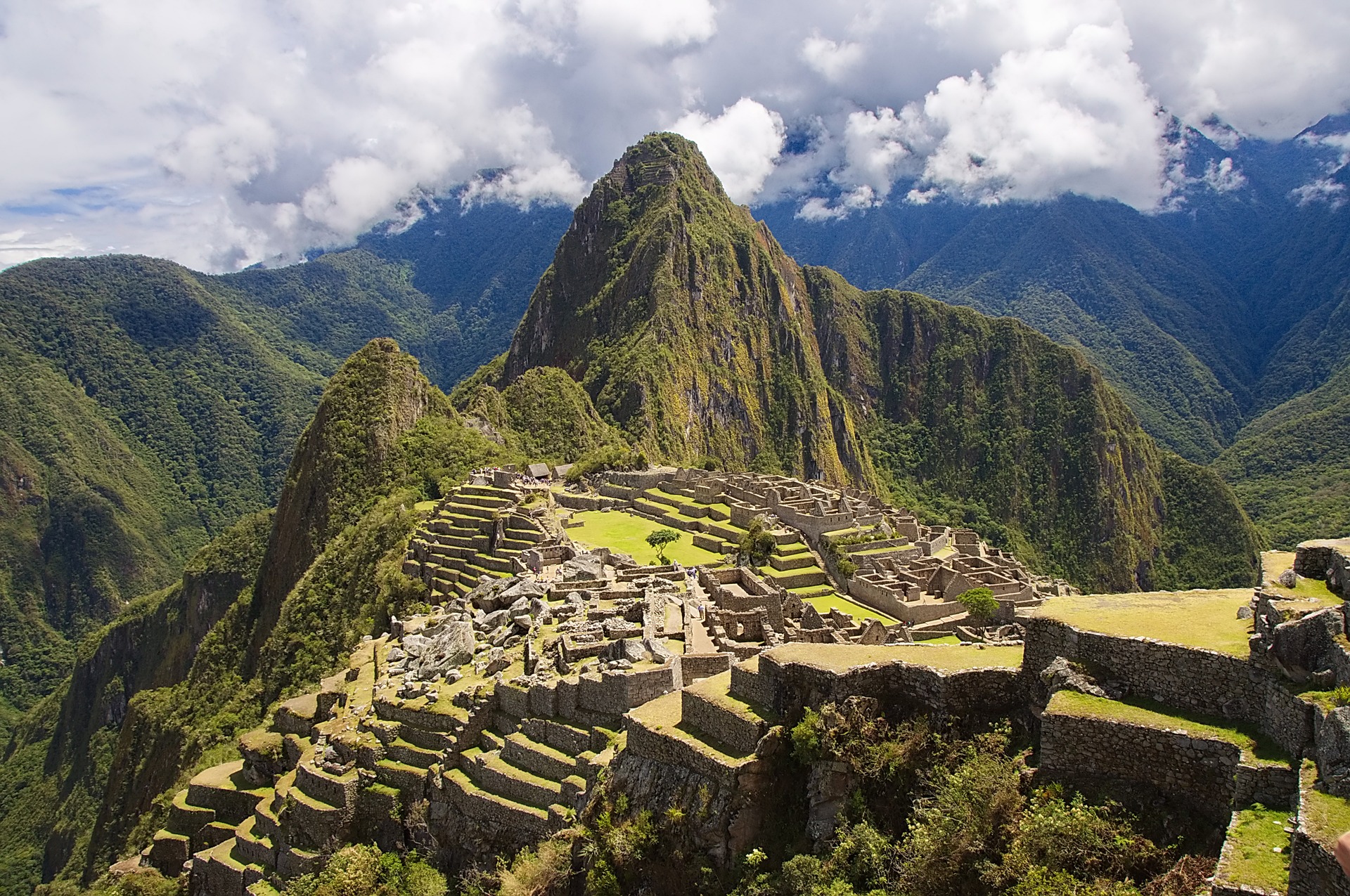
- Machu Picchu: The best-known Inca site, reached by train from Cusco or on foot along the Inca Trail.
- Cusco: The former Inca capital and a World Heritage Site, base for the Sacred Valley.
- Nazca Lines: Giant figures drawn in the desert sand, best seen from the air.
- Lake Titicaca: Boat trips from Puno to the islands and towns on and around the lake.
- Colca Canyon: Condors flying along the canyon walls, near Arequipa.
- Lima: The capital, with colonial and modern buildings, good museums and the best place to try Peruvian food.
Places to visit
- City
- Town
- Park
- Historic site
- Area
Cities
- Lima: The capital and largest city, a mix of colonial and modern architecture, and the best place to eat Peruvian food.
- Cusco: The old Inca capital and the most comfortable base for Machu Picchu and the Sacred Valley.
- Arequipa: A UNESCO World Heritage city that mixes indigenous and Spanish colonial culture, close to the Colca Canyon.
- Puno: The starting point for the floating islands on the Peruvian side of Lake Titicaca, near the Bolivian border.
- Iquitos: The gateway to Amazon boat trips and reserves, reached only by air or river.
- Trujillo: A city close to the archaeological sites of the Chimú civilisation, including Chan Chan.
- Chiclayo: A lively city with several archaeological sites and museums, and dozens of tombs around it.
- Cajamarca: Known for its cheeses, its churches and its role in the Spanish conquest.
- Ayacucho: Home of the Morochuco people, a Quechua group.
Beyond the cities
- Machu Picchu (site): The UNESCO-listed Inca citadel, one of the most famous ruins in the world.
- Nazca Lines (site): Geometric figures and giant drawings in the desert sand.
- Chan Chan (site): The ruins of the Chimú mud-brick capital near Trujillo, a UNESCO World Heritage Site.
- Chavín de Huántar (site): A UNESCO site of the pre-Inca Chavín culture, from around 900 BC.
- Lake Titicaca (area): Considered the highest commercially navigable body of water in the world, shared with Bolivia.
- Huascarán National Park (park): The high mountains of the Cordillera Blanca, with 663 glaciers and Peru's highest peak.
- Manú National Park (park): One of the most diverse areas in Peru, with over 15,000 plant species and about 1,000 kinds of birds.
- Paracas National Reservation (park): A popular nature reserve on the southern coast.
- Colca Canyon (area): A deep canyon near Arequipa, the third most visited place in Peru, known for its condors.
- Máncora (town): A small beach town in the north with good surf, busy on weekends and holidays.
Regions
- Central Coast
- Southern Coast: Home of the Paracas nature reserve.
- Northern Coast: The warmer, wetter north of the coast, with Trujillo, Chiclayo and the beaches of Piura and Tumbes.
- Southern Sierra
- Central Sierra
- Northern Sierra
- Altiplano: The high plateau around Lake Titicaca and Puno, where Aymara is widely spoken.
- San Martín
- Peruvian Amazon: Rainforest and rivers around Iquitos, with heavy rain and high temperatures.
- Madre de Dios
Things to do
See
- Cusco and the Sacred Valley Cusco: The old Inca capital, now a World Heritage Site, and many more Inca sites in the neighbouring Sacred Valley.
- A flight over the Nazca Lines Nazca: The lines are best seen from the air; choose a licensed, certified operator with a good safety record.
- Condors in the Colca Canyon Arequipa: Watch Andean condors along the canyon walls and buy handmade textiles in the Colca Valley.
- Lake Titicaca by boat Puno: Boat trips from Puno to the islands and Altiplano towns on and around the lake.
- Wildlife in Manú Manú National Park: Pumas, giant anteaters, many monkeys and about 1,000 kinds of birds.
- Chan Chan and the tombs of Sipán Trujillo and Chiclayo: The Chimú mud city and the burial sites of the north coast.
Do
- The Inca Trail to Machu Picchu Cusco region: The classic 4-day trek, commonly starting near Ollantaytambo; book at least six months ahead. Huayna Picchu is steep: take care.
- Trekking in the Cordillera Blanca Huaraz: Huaraz is the hiking centre, with agencies for guided treks; contact iPerú in Huaraz before you set off and hike in a group.
- The Amazon from Iquitos Iquitos: Boat trips and reserves along the river; travel with a reputable operator.
Eat
- Eating in Lima Lima: Ceviche, criollo dishes and Chinese-Peruvian chifas, plus many good museums.
Itineraries
Cusco and Machu Picchu in 7 days (7 days)
- Lima (2 nights): Food and museums before you fly to Cusco, about 1.5 hours away.
- Cusco (3 nights): Altitude sickness is a serious risk in Cusco: allow time to acclimatise.
- Machu Picchu (2 nights): Trains run from Cusco and Ollantaytambo to Aguas Calientes for the ruins.
The southern route in 14 days (14 days)
- Lima (2 nights): Start in the capital.
- Paracas National Reservation (2 nights): The reserve on the southern coast.
- Nazca Lines (1 night): A flight over the lines with a licensed operator.
- Arequipa (3 nights): The colonial centre, and a trip to the Colca Canyon.
- Puno (2 nights): Boat trips on Lake Titicaca; Puno is high, so mind the altitude.
- Cusco (4 nights): PeruRail runs a train between Puno and Cusco; from Cusco, visit Machu Picchu.
The north coast in 7 days (7 days)
- Trujillo (2 nights): Chan Chan and other Chimú sites.
- Chiclayo (2 nights): The tombs of Sipán and the city's museums.
- Máncora (3 nights): Beaches and surf; the town gets busy at weekends.
Climate and best time to visit
| Jan | Feb | Mar | Apr | May | Jun | Jul | Aug | Sep | Oct | Nov | Dec | |
|---|---|---|---|---|---|---|---|---|---|---|---|---|
| Max °C | 26 | 27 | 26 | 24 | 22 | 20 | 19 | 18 | 19 | 20 | 22 | 24 |
| Min °C | 19 | 19 | 19 | 18 | 16 | 15 | 15 | 15 | 15 | 15 | 16 | 18 |
| Rain mm | 1 | 0 | 5 | 0 | 0 | 0 | 0 | 0 | 5 | 0 | 0 | 0 |
Peru lies in the tropics, but the mountains and the ocean currents give it many climates. The coast gets little rain but is humid, with mild temperatures: in Lima it almost never rains, the average maximum is about 26 °C in January to March and about 18 °C to 19 °C from July to September. In the Andes, rain falls mostly in summer and it gets colder the higher you go; nights at 4,500 m can drop to about minus 10 °C. The Amazon is hot and very wet.
The rainy season runs from November to May, with heavy rain and snow in the north and in the Andes, including Cusco, and landslides that can cut roads, railways and trekking routes, including those to Machu Picchu. So June to October, the drier months, are the best choice, especially for hiking, which Wikivoyage advises doing in the dry season. The UK also expects the El Niño event to bring heavy rain and possible floods, mainly to the northern and central coast, from late 2026 to April 2027.
Holidays and events
- 1 January 2026 · New Year's Day
- 2 April 2026 · Maundy Thursday
- 3 April 2026 · Good Friday
- 5 April 2026 · Easter Sunday
- 1 May 2026 · Labour Day
- 29 June 2026 · Saint Peter and Saint Paul
- 23 July 2026 · Air Force Day
- 28 July 2026 · Independence Day
- 29 July 2026 · Independence Day
- 6 August 2026 · Battle of Junin
- 30 August 2026 · Santa Rosa de Lima
- 8 October 2026 · Battle of Angamos
- 1 November 2026 · All Saints Day
- 8 December 2026 · Immaculate Conception
- 9 December 2026 · Battle of Ayacucho
- 25 December 2026 · Christmas Day
Getting there and around
| Main airports | LIM |
|---|
Getting there
By air: the main international airport is Jorge Chávez International Airport in Lima (LIM), with direct flights from North and South America and Europe; Cusco has only a few international flights. Fake taxi drivers target arriving passengers: use the official taxi desks just outside the baggage hall or the Airport Express Lima bus. The UK says passengers transiting or connecting through Lima must pay an airport use fee (TUUA) that is not currently included in the ticket: pay it online in advance or at the airport.
By land and river: international buses link Peru with Bolivia, Ecuador, Chile and Colombia, and a short train runs from Arica in Chile to Tacna. Boats connect Iquitos with Leticia in Colombia and Tabatinga in Brazil; Canada warns that thieves, often armed, have targeted tourists on Amazon boats, so use only a reputable tour operator. If you enter by land, get an entry stamp: you cannot leave without one. The only open land crossing with Ecuador is near Tumbes, on the Pan-American Highway; Ecuador asks travellers arriving overland from Peru for a criminal record check.
Getting around
Flying is the easiest way to cover the distances: Lima to Cusco takes about 1.5 hours by plane and 21 hours by bus, and Iquitos can only be reached by air or river. Most flights go through Lima, and some fares are for residents only. Carry your passport, which is also checked on domestic and Nazca flights.
Buses run between most cities. Use major, reputable companies, board only at official terminals, and avoid night buses, especially in the mountains, as crashes and hold-ups are more common then. Buy your ticket a day ahead and keep your bag with you. Trains run from Cusco and Ollantaytambo to Machu Picchu, between Cusco, Puno and Arequipa, and from Lima to Huancayo; protests and landslides can suspend them.
Taxis have no meters: book through your hotel or an app, agree the fare first and do not hail cars in the street. Avoid the crowded city minibuses. Driving: UK drivers can use a photocard licence for up to 6 months and Canadian drivers their own licence during their authorised stay; Wikivoyage says other drivers need an international licence. Driving standards are poor, most roads are unpaved, a 4x4 helps in the rainy season, and you should not drive outside cities after dark. Police often stop drivers, so carry ID and the vehicle registration. Do not pay a fine in cash to an officer: Canada says to pay it at the tax office (Servicio de Administración Tributaria) or a Banco de la Nación branch.
Flying to Peru? PartnerCompare fares and find the cheapest datesSearch flightsWhere to stay
- Hotels: Common and fairly cheap, rated from 1 to 5 stars; the cheapest may lack hot water.
- Hospedajes and hostales: Basic inns found even in small towns.
- Guesthouses and backpacker hostels: A fast-growing choice in recent years.
- Bed and breakfasts and holiday rentals: Short-term apartments and B&Bs, newer on the market.
Be careful with places signed 'Hostel' in residential areas of the cities: some are rooms for couples, not backpacker lodgings. In budget places water can run out, and in the Andes showers may only be hot in the afternoon. Many showers have an electric heater on the shower head, so check the wiring before you turn it on. Book through reputable platforms, as scammers pose as rental owners.
Eat and drink
Dishes to try
- Ceviche: Raw fish marinated in lime juice, often spicy; eat it where hygiene looks good.
- Lomo saltado: Beef stir-fried with tomato and onion, with chips and rice, a dish of Chinese influence.
- Ají de gallina: Shredded chicken in a thick, spicy cheese sauce over potatoes.
- Papa a la huancaína: Sliced potatoes and boiled egg under a creamy yellow sauce.
- Anticuchos: Skewers of marinated beef heart, a common street food.
- Pachamanca: Meat, tubers and beans cooked in a stone oven in the Andes.
- Cuy: Guinea pig, an Andean delicacy.
- Picarones: Fried dough made with yams, served with chancaca, a sweet sugarcane syrup.
Drinks
- Pisco sour: A cocktail made with pisco brandy.
- Chicha morada: A soft drink made from boiled purple corn.
- Chicha de jora: A cheap, low-alcohol drink of fermented corn.
- Emoliente: A herbal tea from the coast, sold widely in Lima.
- Coca tea: Legal in Peru and used against altitude sickness, but do not take it home.
- Beer: Cusqueña and Cristal are sold across the country.
| Tipping | Tipping in basic and mid-range restaurants is not common, but 10% for good service is polite. Taxi drivers are not tipped. |
|---|
Peruvian food mixes Amerindian, Spanish, African, Chinese, Japanese and Italian influences. Rice is the staple on the coast, corn and potatoes in the Andes and yuca in the jungle, and most dishes include meat. Locals often eat a set menu of soup, main course and drink in small restaurants or chifas, the Chinese-Peruvian eateries. Vegetarian restaurants exist in all cities but are rare, and desserts are very sweet.
Bars often serve two drinks for the listed price at happy hour, so pace yourself. Methanol in alcoholic drinks has caused deaths and serious illness in Peru, and it cannot be detected by taste or smell. Buy your own drinks and keep them in sight.
Entry requirements and visas
| Passport validity | At least 6 months from the date you arrive |
|---|
| Passport | Entry | Max stay | Notes |
|---|---|---|---|
| United Kingdom | Visa free | 90 days | For tourism, normally up to 90 days in a 180-day period, with a maximum of 183 days in 365. |
| Canada | Visa free | Tourist visa not required for a stay of less than 90 days per 365-day period. |
Other nationalities: check the official source below.
UK and Canadian tourists do not need a visa. UK visitors normally get up to 90 days in a 180-day period. Your passport must be valid for at least 6 months from arrival. Officials may ask for a return or onward ticket, proof of where you will stay and proof of enough money.
At international airports your entry is recorded digitally with the Tarjeta Andina de Migración (TAM) and passports are not stamped; you can check your permitted stay on the Migraciones website. If you arrive by land, you must get an entry stamp, or you cannot leave the country. Overstaying brings a daily fine and can lead to detention. You can bring in one laptop and two mobile phones tax-free. It is illegal to take out archaeological artefacts or souvenirs made from wild animals, such as condor feathers.
Rules depend on your passport and can change: check the official link before you book.
Money and payments
| Currency | Peruvian Sol (PEN) |
|---|---|
| Cards | Limited |
The currency is the sol (PEN), written S/. Notes go from S/10 to S/200, but S/200 notes are uncommon and not always accepted; carry small notes, as shops and taxi drivers often claim to have no change. Canada says credit cards are not commonly accepted outside major cities, and that many businesses ask to see your passport when you pay by card. Carry cash for budget hotels, small shops and smaller towns.
ATMs are found in most cities and tourist areas but not easily in small towns, and they often limit the amount and number of daily withdrawals. Fees can be high, above all around Lima airport and tourist sites. Use ATMs inside banks during business hours. Counterfeit soles and US dollars are a serious problem: check every note, refuse torn ones and avoid street money changers. Canada says US dollars are widely accepted, while Wikivoyage finds them less common than in Ecuador. You must declare more than US$10,000, or the same in another currency, on arrival and on departure.
Health
| Recommended vaccines | Routine vaccines, including measles (MMR), Hepatitis A, Hepatitis B, Yellow fever, for areas below 2,300 m in the Amazon regions, including Loreto, Madre de Dios and San Martín, Chikungunya, for stays of 6 months or more, Typhoid, for some travellers, Rabies, for some travellers |
|---|---|
| Malaria | Some areas |
| Tap water | Not safe |
Altitude sickness is a serious risk in Cusco, Puno, the Colca Canyon and Kuelap. If you are not used to altitudes above 3,500 m, do not underestimate it: Wikivoyage suggests spending time around 3,000 m before going higher. The UV is strong in the Sierra, so use sunscreen and good sunglasses.
The CDC recommends yellow fever vaccination for areas below 2,300 m in Amazonas, Cusco, Huánuco, Junín, Loreto, Madre de Dios, Pasco, Puno, San Martín and Ucayali, and parts of some other regions, but not for Lima, the city of Cusco, the Inca Trail or Machu Picchu. It is not required for entry. Malaria is present below 2,500 m east of the Andes, including Iquitos and Puerto Maldonado, with rare cases in Tumbes and Piura; there is none in Lima, Arequipa, Nazca, Puno, Cusco, Machu Picchu or Lake Titicaca. The UK reports a major dengue outbreak, and Zika, Oropouche and chikungunya are also present, so avoid mosquito bites. Ask a travel health professional at least 8 weeks before you go.
Tap water is not safe, even for brushing your teeth, unless boiled; drink sealed bottled water and avoid ice if in doubt. Medical care is harder to reach outside Lima: get insurance that covers treatment and repatriation. For an ambulance, the UK gives 106, while Canada gives 116, the fire service number, for medical assistance.
This is general information, not medical advice: check with a travel health professional before you go.
Safety
- United States: Level 2: Exercise Increased Caution (2026-10-20)
- Canada: Exercise a high degree of caution (2026-10-20)
- United Kingdom: Advises against all but essential travel to parts of the country (2026-10-20)
The UK advises against all but essential travel to the VRAEM (the valley of the Apurímac, Ene and Mantaro rivers) and to areas within 20 km of the Colombian border in Loreto, except the Amazon River itself and the triple border around Caballococha. Canada advises against all travel to the VRAEM and its surroundings, which for Canada include the provinces of Abancay, Andahuaylas and Chincheros (Apurímac), Huanta and La Mar (Ayacucho), Churcampa and Tayacaja (Huancavelica) and Concepción and Satipo (Junín), and the districts of Pichari, Quimbiri and Vilcabamba (Cusco). It advises against non-essential travel to the Upper Huallaga valley and to areas within 20 km of the borders with Colombia and Ecuador; along the Ecuador border there are landmines, so cross only at Tumbes.
Street crime, including armed robbery, is a significant problem in Lima, Cusco, Arequipa and other cities, including tourist areas of Lima such as Miraflores and Barranco. Do not walk alone in quiet areas or at night, do not show valuables, keep your phone away at the roadside, and if you are robbed, do not resist. Fake taxis are a risk at Lima airport and bus terminals, and express kidnappings often involve taxis: use official desks, apps or hotel bookings. Do not accept snacks or drinks from new acquaintances. States of emergency are in force in Lima, Callao and other provinces: follow local instructions.
Protests and strikes can start with little notice, block roads and stop trains, including to Machu Picchu: avoid them, as foreigners may not take part in political activity. Use licensed operators for Nazca flights, rafting and adventure sports, avoid the unregulated sand buggies around Huacachina, and take care on Huayna Picchu, where climbers have fallen. Peru is in an active earthquake zone, and the rainy season brings landslides.
Customs and etiquette
Do not use the word indio, which is deeply offensive; say indígena. Words like cholo or cholita are used among indigenous people but are offensive from an outsider. You will hear gringo often, usually without bad intent. Things rarely run exactly on time, so go with the flow. Coca leaves are legal and part of Andean life; chewing them or drinking coca tea is normal, but never take coca products across a border.
Most Peruvians are Catholic, and in the countryside old beliefs mix with the church: behave at ruins and ritual places as you would in a church, as Canada warns of fines for behaviour considered disrespectful at historical and archaeological sites. Avoid charged topics such as the gap between city and countryside. Bargaining is common in markets: offer 20% to 30% less and walk away politely if you do not agree, but do not start if you do not mean to buy. Always carry ID, and never photograph anything military, which can mean prison. Illegal drug use and trafficking carry long prison sentences: pack your own bags and carry nothing for anyone. Same-sex relations are legal, but attitudes are conservative and public affection may draw negative attention.
Language
| Official languages | Spanish |
|---|---|
| English | Limited |
| Hello | Hola OH-lah |
|---|---|
| Good morning | Buenos días BWEH-nohs DEE-ahs |
| Please | Por favor POHR fah-BOHR |
| Thank you | Gracias GRAH-syahs |
| Excuse me | Disculpe dees-KOOL-peh |
| Do you speak English? | ¿Habla usted inglés? AH-blah oos-TEHD een-GLEHS |
| I don't understand | No entiendo NOH ehn-TYEHN-doh |
| Where is the toilet? | ¿Dónde está el baño? DOHN-deh ehs-TAH EHL BAH-nyoh |
What to pack
- Passport: Always carry ID; you also need your passport for domestic flights, including Nazca flights.
- Warm layers and a good sleeping bag for treks: Nights in the Sierra are very cold, around minus 10 °C at 4,500 m.
- Sunscreen and UV-blocking sunglasses: UV is strong at altitude.
- Insect repellent and long sleeves: Mosquitoes carry dengue, Zika, yellow fever and malaria in some areas.
- Small notes in soles: Many places cannot change large notes.
- Rain cover for your luggage: Bags often ride on the bus roof in the Andes.
- Toilet paper and a first aid kit: Public toilets are often basic, and a first aid kit is useful if you hike in the countryside.
- Plug adapter: Sockets take flat and round two-pin plugs at 220 V; check that your devices accept 220 V.
Quick reference
Country facts
| Capital | Lima |
|---|---|
| Population | 34,576,665 (2025) |
| Area | 1,280,000 km² |
| Time zone | America/Lima (UTC-5) |
| Calling code | +51 |
| Driving side | right |
Electricity and plugs
| Plug types | A, C |
|---|---|
| Voltage | 220 V |
| Frequency | 60 Hz |
Emergency numbers
| Police | 105 |
|---|---|
| Ambulance | 106 or 116 |
| Fire | 116 |
| Tourist police | +51 980 122 335 (WhatsApp) |
Frequently asked questions
Do I need a visa for Peru?
Not as a UK or Canadian tourist: UK visitors normally get up to 90 days in a 180-day period. Your passport must be valid for 6 months from arrival. Check the official link before you book.
When is the best time to visit Peru?
June to October, outside the rainy season that runs from November to May. Lima is dry all year and mild, with maximums of about 18 °C to 26 °C.
Will the altitude affect me in Cusco?
It can: altitude sickness is a serious risk in Cusco, Puno, the Colca Canyon and Kuelap. Allow time to acclimatise and learn the symptoms.
Do I need a yellow fever vaccine for Peru?
It is not required for entry. The CDC recommends it for areas below 2,300 m in the Amazon regions, but not for Lima, Cusco, the Inca Trail or Machu Picchu. Ask a travel health professional.
Can I drink the tap water in Peru?
No, not even to brush your teeth, unless it is boiled. Drink sealed bottled water.
How far ahead should I book the Inca Trail?
At least six months ahead for the classic 4-day trek to Machu Picchu.
More Travel Stories from South America
 Colombia +1
Sources This guide was last checked on · 19 sources
- Wikivoyage: Peru · Overview, Places to visit, Things to do, Itineraries, Climate and best time to visit, Getting there and around, Where to stay, Eat and drink, Entry requirements and visas, Money and payments, Health, Safety, Customs and etiquette, Language, What to pack, Electricity and plugs, Frequently asked questions
- Wikidata: Peru · Overview, Places to visit, Money and payments, Country facts, Electricity and plugs
- Wikidata: Morochuco · Places to visit
- UK FCDO: Peru regional risks (updated 9 October 2026) · Things to do, Getting there and around, Safety
- Government of Canada: Peru travel advice (updated 15 October 2026) · Things to do, Getting there and around, Where to stay, Entry requirements and visas, Money and payments, Health, Safety, Customs and etiquette, What to pack, Emergency numbers, Frequently asked questions
- UK FCDO: Peru health (updated 9 October 2026) · Itineraries, Health, Frequently asked questions
- WMO World Weather Information Service: Lima · Climate and best time to visit
- UK FCDO: Peru safety and security (updated 9 October 2026) · Climate and best time to visit, Getting there and around, Eat and drink, Money and payments, Safety, Customs and etiquette, What to pack, Frequently asked questions
- Nager.Date: public holidays in Peru, 2026 · Holidays and events
- UK FCDO: Peru entry requirements (updated 9 October 2026) · Getting there and around, Entry requirements and visas, What to pack, Frequently asked questions
- ISO 4217 (SIX), published 2026-09-17 · Money and payments
- CDC Travelers' Health: Peru · Health, Frequently asked questions
- US Department of State: Peru travel advisory · Safety
- UK FCDO: Peru travel advice · Safety
- Wikivoyage: Spanish phrasebook · Language
- World Bank, SP.POP.TOTL · Country facts
- World Bank, AG.LND.TOTL.K2 · Country facts
- IANA Time Zone Database, zone.tab · Country facts
- UK FCDO: Peru getting help · Emergency numbers
Suggest an update
Travel rules, prices and timetables change. If something in this guide is out of date, tell us: we check every suggestion against an official source before changing the page.