

- Local time
- 05:08
- Currency
- Falkland Islands Pound (FKP)
- Capital
- Stanley
- Calling code
- +500
- Drive on the
- left
Overview
Remote islands in the South Atlantic for wildlife: five species of penguin, seals and albatrosses, with Stanley as the only real town.
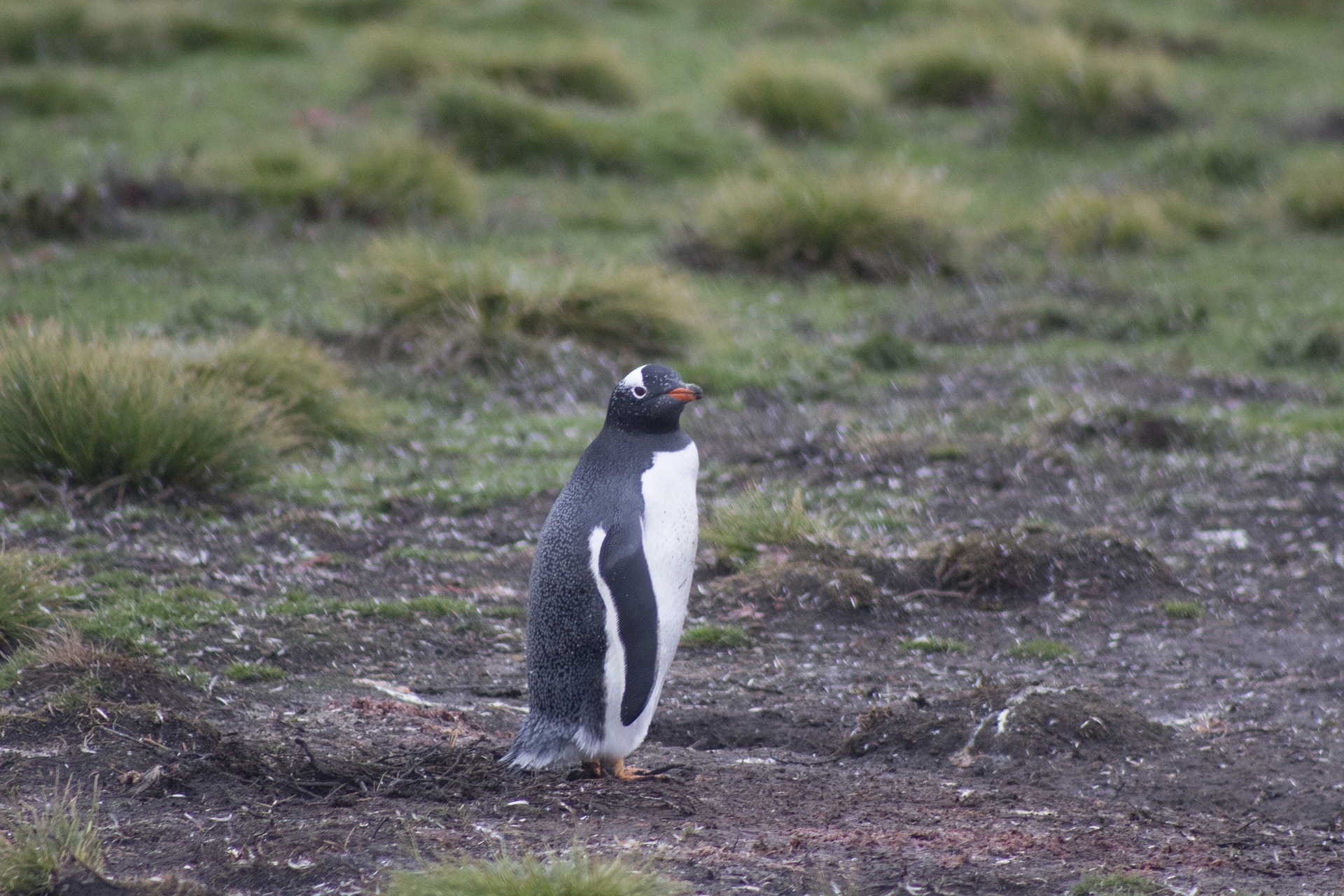
The Falkland Islands are two main islands, East and West Falkland, and several hundred smaller ones in the South Atlantic, off the coast of southern South America. They are a British Overseas Territory. The archipelago is roughly the size of Wales but almost empty: Stanley, the capital, has about 2,000 people, other settlements from a handful of people to about 20, and penguins outnumber people by a hundred to one. Everywhere outside Stanley is called 'camp'.
People come for the wildlife and the open, rocky and hilly country: penguins, seals, albatrosses and other seabirds, with dolphins often seen offshore. Most visitors arrive between November and March, many of them on cruise ships. Getting here on your own takes time and money: there are few flights, they are often delayed, and you need to book accommodation and island flights in advance.
- Volunteer Point: Penguins near Stanley.
- Wildlife: Five species of penguin, four of seal, albatrosses and the striated caracara, a bird of prey found only here and on some islands off Cape Horn.
- Stanley: The small capital, with its cathedral and whale bone arch, a history museum and the governor's residence.
- The smaller islands: Sea Lion, Pebble and Saunders islands, reached by small FIGAS planes.
- Port Howard: A large sheep farm on West Falkland, with wide views and good hiking.
Places to visit
- City
Cities
- Stanley: The capital and port, and the only town in the usual sense, with a cathedral, a museum and penguins at Volunteer Point nearby.
- Goose Green: A small settlement on East Falkland with many remains of the 1982 war, and a base for exploring Lafonia in the south.
- Port Howard: An 800 km² sheep farm on West Falkland, reached by plane or by ferry, with far-reaching views and hiking.
- North Arm: The largest settlement in Lafonia and centre of North Arm Farm.
Beyond the cities
- Volunteer Point (area): Home to penguins, near Stanley.
- Sea Lion Island (island): One of the smaller islands, with FIGAS flights from Stanley.
- Pebble Island (island): A smaller island linked by FIGAS flights to Stanley and Saunders Island.
- Saunders Island (island): A smaller island served by FIGAS flights.
- Mount Usbourne (mountain): The highest point in the islands, at 705 m.
Regions
- East Falkland: One of the two main islands, with Goose Green and the southern area of Lafonia.
- West Falkland: The other main island, with Port Howard, reached by air or by ferry from East Falkland.
- The smaller islands: Carcass, New, Pebble, Saunders, Sea Lion and West Point islands, among others; many charge landing fees, so contact the owner before you visit.
Things to do
See
- Penguins at Volunteer Point Near Stanley: Penguins close to the capital.
- Wildlife watching: Penguins, seals, albatrosses, petrels, geese and the flightless steamer duck; dolphins and porpoises are often seen, whales occasionally.
- Stanley Stanley: The cathedral and its whale bone arch, the museum on Holdfast Road and the governor's residence.
- 1982 war sites Goose Green: Many remains of the 1982 war around the settlement; stay on paths, as old explosives can still turn up.
Do
- Hiking Port Howard: Walks with far-reaching views on a large sheep farm on West Falkland.
- Fishing: Sea trout and mullet, in a season from September to April.
Eat
- Diddle-dee jam: A local jam made from the red crowberry that grows wild on the heaths.
Drink
- Local beer Stanley: Beer from a few local microbreweries, on tap in some Stanley bars and sold in gift shops.
Itineraries
Stanley and East Falkland in 5 days (5 days)
- Stanley (3 nights): The cathedral, the museum and the penguins at Volunteer Point.
- Goose Green (2 nights): 1982 war sites and a base for Lafonia; accommodation is limited, so book ahead.
The islands by small plane in 8 days (8 days)
- Stanley (2 nights): Book FIGAS flights at least 24 hours ahead.
- Sea Lion Island (2 nights): By FIGAS flight from Stanley.
- Pebble Island (2 nights): By FIGAS flight.
- Port Howard (2 nights): Hiking on West Falkland, then back to Stanley by air.
Holidays and events
- 1 January 2026 · New Year's Day
- 3 April 2026 · Good Friday
- 15 June 2026 · Liberation Day
- 5 October 2026 · Peat Cutting Day
- 16 November 2026 · King's Birthday
- 8 December 2026 · Battle Day
- 25 December 2026 · Christmas Day
- 26 December 2026 · St. Stephen's Day
- 27 December 2026 · Christmas Holiday
- 30 December 2026 · Government Holiday
- 31 December 2026 · Government Holiday
Getting around
| Main airports | MPN |
|---|
Between the islands you fly with FIGAS, the government air service, in eight-seat planes from the airstrip outside Stanley (PSY). Book at least 24 hours ahead, keep to the 20 kg baggage limit, and check the afternoon before that your flight is confirmed; schedules are announced the night before on Falklands Radio. A passenger ferry runs between New Haven, two hours' drive from Stanley, and Port Howard on West Falkland; book in advance.
There are no public buses. Stanley has two taxi services; taxis have no meters, so agree the fare first. Driving: you drive on the left, the speed limit is 25 mph in Stanley and 40 mph elsewhere, and there are around 600 miles of unsurfaced roads outside Stanley, so a 4x4 is the safe choice. UK visitors can drive on their UK licence for up to 12 months. The road between Mount Pleasant and Stanley is exposed to strong winds and accidents are common.
Flying to Falkland Islands? PartnerCompare fares and find the cheapest datesSearch flightsWhere to stay
- Bed and breakfasts: The most common choice in Stanley.
- Hotels: A handful, in Stanley.
- Lodges and farmhouses: In camp, from old farmhouses to lodges built for visitors, often with home-cooked meals.
- Self-catering: Many places in camp; bring supplies from Stanley.
- Camping: Only with the landowner's permission.
Book camp accommodation in advance: it is essential, as places are few and small. In Stanley you can sometimes find a room on arrival, but booking ahead is still advised. Immigration also asks to see your accommodation when you arrive.
Eat and drink
Dishes to try
- Fish and chips: Standard fare, as in Britain.
- Roast beef and mutton: Mutton is the only fresh meat sold in the supermarket.
- Milanesa and cazuela: Signs of Spanish influence on the menu.
- Diddle-dee jam: Made from wild red crowberries.
Drinks
- Beer: There is no tax on alcohol, so beer is fairly cheap; a few local microbreweries make their own.
- Tea: Standard fare, with the British-style meals.
Food is mainly traditional British. The lodges in camp serve generous home-cooked meals, often better than the pubs and cafés of Stanley, although the capital has a few good restaurants. Almost everything is imported and expensive: fresh fruit and vegetables are scarce and costly, and all milk is long-life.
Entry requirements and visas
| Passport validity | Valid for the length of your stay |
|---|
| Passport | Entry | Max stay | Notes |
|---|---|---|---|
| United Kingdom | Visa free | 30 days | Permission to stay for one month is given on arrival; apply in advance to stay longer. A passport is needed. |
| Canada | Visa free | Tourist visa not required for stays up to 4 months, according to the Government of Canada. |
Other nationalities: check the official source below.
The Falkland Islands run their own immigration, separate from the UK: a UK visa does not cover them. British visitors need a passport and get one month on arrival. On arrival every visitor must show a return or onward ticket, proof of accommodation, enough money for the stay and travel insurance that covers medical evacuation, with at least US$2 million of cover. Many nationalities need a visa in advance, so check before you book.
If you fly through Chile, you must also meet Chile's entry rules. A departure tax is charged when you leave from Mount Pleasant Airport; carry cash in pounds, euros or US dollars. You may not take whalebones, skulls or eggs out of the islands. Rules depend on your passport and can change: check the official link before you book.
Money and payments
| Currency | Falkland Islands Pound (FKP) |
|---|---|
| Cards | Limited |
The currency is the Falkland Islands pound (FKP), worth the same as the British pound, and British pounds are accepted everywhere. Cards are increasingly accepted, and in Stanley euros and US dollars often are too, but on the outer islands cards will probably not work: ask your host in advance and carry some cash in pounds or US dollars.
There is only one ATM, at the petrol station in Stanley. If it does not work, the bank in Stanley can give a cash advance on a Visa or Mastercard. Falklands notes are very hard to exchange outside the islands, so spend or change them before you leave.
Costs and budget
- LATAM return flight, Punta Arenas to Mount Pleasant: about US$500
- LATAM one-way flight to or from Río Gallegos: about US$250 to 300
These are example prices from April 2025. The Falklands are expensive: flights from the UK cost much more than those from South America, almost everything in the shops is imported, and package tours are very expensive.
Health
| Recommended vaccines | Routine vaccines, including measles (MMR), Hepatitis A, Hepatitis B, Typhoid, for some travellers, Rabies, for some travellers |
|---|---|
| Malaria | None |
| Tap water | Safe |
No vaccines are required to enter, and the CDC does not recommend yellow fever vaccination. Check with a travel health professional at least 8 weeks before you go. Stanley has a modern hospital, but outside the capital there are no medical facilities and help can take time to arrive. Complex cases are evacuated to Chile or Uruguay, which is very expensive: your insurance must cover medical evacuation, with at least US$2 million of cover. UK residents get free local treatment under a reciprocal agreement, but it does not cover evacuation.
Tap water is safe to drink. From August to December the Antarctic ozone hole raises the risk of sunburn, and the wind hides the strength of the sun: wear sunscreen, a hat and good sunglasses. For an ambulance call 999.
This is general information, not medical advice: check with a travel health professional before you go.
Safety
- Canada: Take normal security precautions (2026-10-20)
- United Kingdom: No advice against travel (2026-10-20)
Crime is very low; take ordinary care of your belongings. The real risks are the weather and the wildlife. Conditions change fast, with several seasons in a single day. Elephant seals, sea lions and fur seals can be dangerous when cornered or with young: if an animal notices you, you are too close. Nesting terns and skuas will attack if you approach their nests, and striated caracaras steal phones, cameras and hats.
The islands were declared clear of landmines in 2020, but the UK warns that explosives from 1982 can still be found on the main battlefields and sometimes wash up on beaches: do not touch them, mark the spot and call 999 from a safe distance. Canada advises never to trek alone and to keep to marked trails. Peat makes the fire risk high, so be careful with cigarettes. Taking photos at the Mount Pleasant military base without a permit can lead to a prison sentence.
Customs and etiquette
Customs are British, and islanders are in many ways more conservative than people in Britain. Avoid the nicknames 'kelper' and 'benny', which can offend. Same-sex marriage has been legal since 2017, and LGBT+ travellers are unlikely to have problems. Drug laws are strict.
Visitors should follow the local Country Code: ask before entering private land, leave gates as you found them, take your rubbish with you and never feed or touch wild animals. Stay at least six metres from bird and seal colonies, keep low and move slowly when you take photos, and let animals coming ashore pass. Some plants are protected.
Language
| English | Widespread |
|---|
What to pack
- Proof of travel insurance: Needed to enter; it must cover medical evacuation.
- Windproof and waterproof layers: Strong westerly winds are constant and the weather changes quickly.
- Sunscreen, a hat and sunglasses: The sun is strong, especially from August to December.
- Cash in pounds or US dollars: There is only one ATM, and cards may not work on the outer islands.
- Essentials for an extra night: Flights can be delayed or diverted to South America.
Quick reference
Country facts
| Capital | Stanley |
|---|---|
| Population | 4,550 (2018) |
| Area | 12,200 km² |
| Time zone | Atlantic/Stanley (UTC-3) |
| Calling code | +500 |
| Driving side | left |
Staying connected
| SIM and eSIM | Sure, the local phone company, sells phone and internet cards at its office in Stanley and in some shops; the 4G network covers the settlements, but outside them signal is hard to find. |
|---|---|
| Wi-Fi | Wi-Fi hotspots are increasing, and some hotels and the visitor centre have computers, but connections are slow. |
Emergency numbers
| Emergency | 999 |
|---|
Frequently asked questions
How do I get to the Falkland Islands?
LATAM flies once a week from Santiago via Punta Arenas, and the UK Ministry of Defence runs a flight from RAF Brize Norton twice a week. Many visitors come on cruise ships. Flights are often delayed, so keep spare days.
Do I need a visa for the Falkland Islands?
Not if you hold a UK or Canadian passport, but you must show a return ticket, accommodation, enough money and insurance that covers medical evacuation. Many nationalities need a visa in advance. Check the official link before you book.
When do most people visit the Falkland Islands?
Between November and March, the southern summer. Cruise ships call from October to April.
Can I use cards in the Falkland Islands?
Increasingly in Stanley, but probably not on the outer islands. There is only one ATM, so bring some cash in pounds or US dollars.
Can I drink the tap water in the Falkland Islands?
Yes, tap water is safe to drink.
Are there still landmines in the Falkland Islands?
The islands were declared clear in 2020, but explosives from 1982 can still turn up on old battlefields and beaches. Do not touch anything suspicious and call 999.
Sources This guide was last checked on · 12 sources
- Wikivoyage: Falkland Islands · Overview, Places to visit, Things to do, Itineraries, Getting around, Where to stay, Eat and drink, Entry requirements and visas, Money and payments, Costs and budget, Health, Safety, Customs and etiquette, Language, What to pack, Staying connected, Frequently asked questions
- Wikidata: Falkland Islands · Overview, Places to visit, Money and payments, Country facts
- UK FCDO: Falkland Islands entry requirements (updated 10 August 2026) · Overview, Entry requirements and visas, What to pack, Frequently asked questions
- UK FCDO: Falkland Islands safety and security (updated 10 August 2026) · Itineraries, Getting around, Money and payments, Safety, Customs and etiquette, What to pack
- Nager.Date: public holidays in Falkland Islands, 2026 · Holidays and events
- Government of Canada: Falkland Islands travel advice (updated 23 June 2026) · Getting around, Entry requirements and visas, Money and payments, Health, Safety, Frequently asked questions
- UK FCDO: Falkland Islands health (updated 10 August 2026) · Entry requirements and visas, Health, What to pack
- ISO 4217 (SIX), published 2026-09-17 · Money and payments
- CDC Travelers' Health: Falkland Islands · Health, Frequently asked questions
- UK FCDO: Falkland Islands travel advice · Safety
- IANA Time Zone Database, zone.tab · Country facts
- UK FCDO: Falkland Islands getting help · Emergency numbers
Suggest an update
Travel rules, prices and timetables change. If something in this guide is out of date, tell us: we check every suggestion against an official source before changing the page.