

- Local time
- 18:28 (capital)
- Currency
- Chilean Peso (CLP)
- Capital
- Santiago
- Calling code
- +56
- Drive on the
- right
Overview
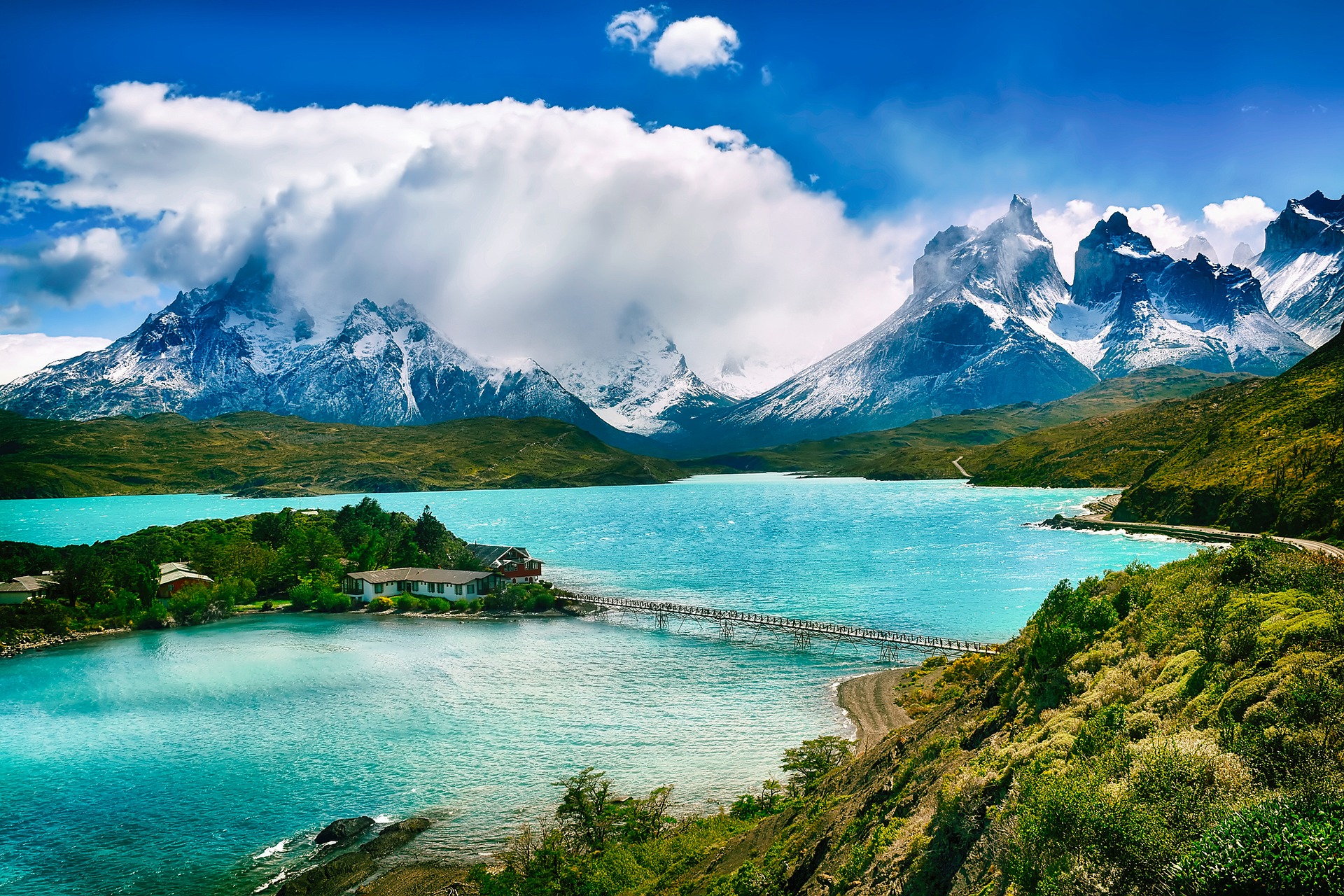
Chile runs 4,300 km between the Andes and the Pacific, from the Atacama desert in the north to the lakes, glaciers and Torres del Paine of Patagonia.
Chile is a long, narrow strip of land between the Andes and the Pacific Ocean: about 4,300 km from north to south and on average only 175 km wide, with more than 5,000 km of coast. The climate changes along the way, from the Atacama, the driest desert in the world, through the Mediterranean centre to the rainy south, while the Andes are cold. High mountains are never far away.
Most trips start in Santiago, the capital and largest city, with many wineries within easy driving distance. In the north you find desert, high Andes and old saltpeter works; in the south lakes, volcanoes, the island of Chiloé and the mountains and glaciers of Patagonia. Easter Island, out in the Pacific, is five and a half hours away by plane. Seasons are the reverse of the northern hemisphere, and the local high season runs from December to the first week of March.
- Torres del Paine National Park: Mountains, lakes and glaciers in Patagonia, including the Towers of Paine.
- San Pedro de Atacama: The base for the desert around it, including the dunes and rock formations of Valle de la Luna.
- Valparaíso: A seaside city of brightly coloured houses on its hills, with an old town listed by UNESCO.
- Easter Island: A Pacific island of Polynesian culture and a UNESCO World Heritage Site, reached by flights from Santiago.
- Chiloé Island: The largest island in the country, known for its UNESCO-listed churches, its own mythology and curanto.
- The wine valleys: Wineries within easy reach of Santiago, especially in the Maipo Valley.
Places to visit
- City
- Town
- Coast
- Island
- Park
- Area
Cities
- Santiago: The capital and largest city, and the main hub for flights.
- Valparaíso: Brightly coloured houses, sea views and a bohemian reputation; the old town is a UNESCO World Heritage Site.
- Viña del Mar: A beach resort with a casino and a music festival.
- San Pedro de Atacama: A small town that many visitors use as the base for the desert around it.
- La Serena: A city of well-kept neocolonial buildings and long beaches.
- Iquique: A tourist centre of the north, close to the Humberstone and Santa Laura saltpeter works.
- Concepción: The second largest city in Chile, with its own metro system.
- Valdivia: Known as the 'City of Rivers' and the beer capital of Chile, with coastal reserves and walks nearby.
- Punta Arenas: One of the southernmost cities in the world, starting point for trips to Antarctica and the Falkland Islands.
Beyond the cities
- Torres del Paine National Park (park): Mountains, lakes and glaciers, including the Towers of Paine; popular and expensive.
- Valle de la Luna (area): A desert valley of sand dunes and rock formations.
- Chiloé Island (island): The largest island in the country, with UNESCO-listed churches and a coastal national park.
- Lauca National Park (park): Home to Lago Chungará, one of the highest lakes in the world, below the Parinacota volcano.
- Valle de Elqui (area): A valley of wine and pisco, also known for its astronomical observatories.
- Villarrica (town): A popular tourist town surrounded by lakes and volcanoes.
- Pichilemu (coast): The best-known surfing spot in Chile.
- Laguna San Rafael National Park (park): Home to the San Rafael Glacier, which you can reach only by boat or plane.
- Robinson Crusoe Island (island): An island known for its jungle and endemic plants, with weekly flights from Santiago and Valparaíso.
Regions
- Northern Chile: Desert, high Andes and old saltpeter works, with San Pedro de Atacama, Iquique and Lauca National Park.
- Central Chile: Where most Chileans live: Santiago, Valparaíso, the wine valleys and the ski resorts.
- Southern Chile: Lakes, volcanoes, forests and the island of Chiloé, with Mapuche culture in La Araucanía and German influence around Valdivia.
- Patagonia (Chile): Mountains, lakes and glaciers in the far south, with Torres del Paine and Punta Arenas.
- Juan Fernández Islands: Islands off the mainland coast.
- Easter Island: A remote Pacific island of Polynesian culture, a UNESCO World Heritage Site.
Things to do
See
- Old Valparaíso Valparaíso: The UNESCO-listed old port, with colourful houses on the hills.
- Desert landscapes San Pedro de Atacama: Dunes, rock formations and high Andes around the town, including Valle de la Luna.
- Humberstone and Santa Laura Iquique: Abandoned saltpeter works outside the city, a UNESCO World Heritage Site.
- The churches of Chiloé Chiloé Island: Churches listed by UNESCO, on an island with its own culture and food.
- Easter Island Easter Island: A UNESCO World Heritage Site in the Pacific, reached only by LATAM flights from Santiago.
Do
- Hiking and trekking Torres del Paine, Cochamó Valley and Chiloé: Trails through mountains, forests and coast; carry a reliable map, as many routes are remote.
- Skiing and snowboarding Valle Nevado, Portillo, El Colorado, La Parva: Andean ski resorts that draw skiers from around the world between June and October.
- Surfing Pichilemu: The best-known surf spot; the coast between Cobquecura and Pelluhue has uncrowded breaks.
- Pisco and stars Valle de Elqui: A valley of pisco and wine, also known for its astronomical observatories.
Drink
- Winery visits Maipo Valley: Many wineries are an easy drive from Santiago; other regions include Colchagua, Casablanca and Maule.
Itineraries
Santiago and Valparaíso in 6 days (6 days)
- Santiago (3 nights): The capital, with wineries of the Maipo Valley within easy driving distance.
- Valparaíso (2 nights): The UNESCO-listed old port and its colourful hills.
- Viña del Mar (1 night): Beaches and the casino.
The Atacama and the north in 7 days (7 days)
- San Pedro de Atacama (4 nights): Base for the desert landscapes around the town, including Valle de la Luna.
- Iquique (3 nights): The Humberstone and Santa Laura saltpeter works outside the city.
Lakes, volcanoes and Chiloé in 8 days (8 days)
- Valdivia (3 nights): The City of Rivers and beer capital of Chile, with a coastal reserve nearby.
- Villarrica (2 nights): Lakes and volcanoes; follow local advice, as the Villarrica volcano is active.
- Chiloé Island (3 nights): UNESCO-listed churches, flat coastal hikes and curanto.
Climate and best time to visit
| Jan | Feb | Mar | Apr | May | Jun | Jul | Aug | Sep | Oct | Nov | Dec | |
|---|---|---|---|---|---|---|---|---|---|---|---|---|
| Max °C | 30 | 30 | 27 | 23 | 19 | 16 | 15 | 17 | 19 | 23 | 26 | 29 |
| Min °C | 13 | 13 | 11 | 9 | 6 | 5 | 4 | 5 | 7 | 9 | 10 | 12 |
| Rain mm | 1 | 1 | 6 | 16 | 56 | 83 | 76 | 55 | 27 | 13 | 6 | 2 |
Chile's seasons are the reverse of Europe's and North America's. In Santiago summer is hot and almost dry, with an average maximum of about 30 °C in January, while winter is cool and wetter: June is the rainiest month, with about 83 mm, and July maximums are around 15 °C. March, April, October and November are mild in the capital, with maximums between about 23 °C and 27 °C and little rain, and they fall outside the local high season, which runs from December to the first week of March.
The rest of the country is very different: the Atacama in the north is the driest desert in the world, the centre has a Mediterranean climate, the south is rainy and temperate, and the Andes are cold. The ski season runs from June to October, and winter weather can close the border crossings with Argentina between June and September. Ultraviolet radiation is very strong, especially from September to November and from Christmas to March.
Holidays and events
- 1 January 2026 · New Year's Day
- 3 April 2026 · Good Friday
- 4 April 2026 · Holy Saturday
- 1 May 2026 · Labour Day
- 21 May 2026 · Navy Day
- 21 June 2026 · National Day of Indigenous Peoples
- 29 June 2026 · Saint Peter and Saint Paul
- 16 July 2026 · Our Lady of Mount Carmel
- 15 August 2026 · Assumption of Mary
- 18 September 2026 · National holiday
- 19 September 2026 · Army Day
- 12 October 2026 · Columbus Day
- 31 October 2026 · Reformation Day
- 1 November 2026 · All Saints Day
- 8 December 2026 · Immaculate Conception
- 25 December 2026 · Christmas Day
Getting there and around
| Main airports | SCL |
|---|---|
| International driving permit | Recommended |
Getting there
By air: most visitors land at Arturo Merino Benítez International Airport (SCL), about 15 km north-west of central Santiago. LATAM, the largest Chilean airline, and many foreign airlines fly there from the Americas, Europe and Oceania. Arica, Iquique, Antofagasta, Calama, Puerto Montt and Punta Arenas also have flights to neighbouring countries. At Santiago airport, book and pay for an official taxi at the booths in the arrivals hall, before you leave the building.
By bus: buses run daily from Mendoza, Bariloche and San Martín de los Andes in Argentina, and there are services from Peru and Bolivia. The Andes crossings reach about 4,000 m, and winter weather can close the crossings with Argentina between June and September, including Los Libertadores between Santiago and Mendoza. By boat: boat trips cross the border from Bariloche in Argentina.
Getting around
Long-distance buses are cheap, comfortable and the usual way between towns. Choose between cama (bed), semi-cama and ejecutivo seats, and ask for a directo service to avoid many stops. You can usually buy tickets at the station without booking, except during the Chilean holidays (January and February, Easter and the Fiestas Patrias in September); you give your passport number when you buy. Canada warns that tourists have been robbed while sleeping on intercity buses, especially from Calama to Antofagasta, San Pedro de Atacama or Santiago: keep your valuables with you. Domestic flights with LATAM, Sky and JetSmart save days, but most pass through Santiago; book on the airlines' Chilean websites, which charge in pesos. Trains are few: Tren Central runs between Santiago and Chillán.
Santiago, Valparaíso and Concepción have a metro. In Santiago you need a prepaid bip card for buses and the metro. Driving: you drive on the right, headlights must be on day and night, there is no right turn on red unless signed, there is zero tolerance for drinking and driving, and many highways have tolls. UK drivers can use a photocard licence for 3 months; Canada says a Canadian licence is valid for up to 90 days but you should still carry an International Driving Permit, and Wikivoyage advises one if your licence is not in Spanish. Keep your passport and tourist card in the car. Canada warns that drivers are often reckless or aggressive. Main roads are surfaced, but rural roads may need a 4x4. Near the borders with Peru, Bolivia and Argentina there are minefields: stay on marked roads. You cannot get car insurance on Easter Island, so you pay for any damage yourself.
Flying to Chile? PartnerCompare fares and find the cheapest datesSearch flightsWhere to stay
- Hotels: International chains such as Sheraton, Marriott and Holiday Inn in the cities.
- Hostels: Found on the backpacker trail; elsewhere they are rare.
- Hospedajes and hostales: A hospedaje is usually a guest house and a hostal a small hotel; neither has dormitories.
- Ski resorts: Accommodation at mountain resorts such as Portillo and Valle Nevado.
- Campsites: Many official campsites, useful where budget rooms are scarce.
- Motels: In Chile a motel usually rents rooms by the hour to couples, not to travellers.
Prices on booking websites are often shown without the 19% VAT, which is added when you pay. Foreign tourists can be exempt if they pay in foreign currency, but many places do not accept it, so carry some US dollars and ask before you pay. Book ahead in the high season, from December to early March; turning up without a booking rarely gets a better price. To stay on Easter Island you need a reservation registered with SERNATUR, the national tourism service.
Eat and drink
Dishes to try
- Empanada de pino: A baked pastry filled with minced beef, onion, raisins, egg and an olive, often with its stone.
- Pastel de choclo: A corn casserole over minced beef, chicken, onion, olives and egg, topped with sugar and butter.
- Cazuela: A soup of beef or chicken with potato, rice, corn and squash.
- Curanto: Seafood, meats and potatoes cooked in a hole in the ground or a pot, a dish from Chiloé.
- Completo and italiano: Loaded hot dogs; the italiano comes with tomato, avocado and mayonnaise.
- Lomo a lo pobre: Steak with chips, fried eggs and fried onions.
- Chorrillana: A rich dish to try in Valparaíso.
Drinks
- Wine: From the Maipo, Colchagua, Casablanca, Maule and other valleys.
- Pisco sour: Pisco, a brandy made from Muscat grapes, with lemon juice and sugar.
- Mote con huesillo: A cold, sweet summer drink of wheat and dried peaches, sold at street stands.
- Beer: The most popular alcoholic drink, with about 300 small craft breweries as of 2024.
- Terremoto: Pipeño wine with pineapple ice cream and grenadine.
| Tipping | Not compulsory but expected: about 10% in restaurants if the service was good; sometimes it is already on the bill. Supermarket baggers also expect a small tip. |
|---|
Chilean food mixes indigenous and Spanish traditions, with German, Italian and French influences; kuchen and strudel came with German immigrants. Fish and seafood are everywhere along the coast, but be careful with raw shellfish because of frequent red tides. Fruit from central Chile is good and cheap. Portions grow larger the further south you travel. Drinking alcohol in streets, parks and other public places is illegal.
Entry requirements and visas
| Passport validity | Valid for the length of your stay |
|---|
| Passport | Entry | Max stay | Notes |
|---|---|---|---|
| United Kingdom | Visa free | 90 days | You receive a tourist card on arrival; keep it and hand it in when you leave. |
| Canada | Visa free | 90 days | Tourist visa not required; the tourist card is valid for up to 90 days. |
Other nationalities: check the official source below.
Visitors from the UK and Canada can visit Chile for tourism without a visa, for up to 90 days. Your passport must be valid for the whole stay. Immigration gives you a tourist card: keep it safe, because you must show it when you leave, and if you lose it you can request a copy online from the police (PDI). You can ask online for one extension of up to 90 days, for a fee, before the card expires. Canada says officials may ask for proof of at least US$46 a day for your stay.
Easter Island (Rapa Nui): stays are limited to 30 days. You need a return ticket, a reservation registered with the authorities and the Rapa Nui entry form. Children travelling with one parent, a guardian or alone need a notarised authorisation from the absent parent and a birth certificate. Declare all food of animal or plant origin on arrival: Chile is strict and the fines are heavy. Rules depend on your passport and can change: check the official link before you book.
Money and payments
| Currency | Chilean Peso (CLP) |
|---|---|
| Cards | Common |
The currency is the Chilean peso (CLP), written with the $ sign. Notes go from 1,000 to 20,000 pesos, and people call 1,000 pesos a 'luca'. Cards are accepted in most shops in the big cities and in all chains, but smaller places may take only cash. When a card machine asks 'sin cuotas' or 'con cuotas', choose sin: cuotas means paying in instalments.
ATMs charge foreign cards a fee shown on screen: as of 2026, Banco Estado charged 5,500 pesos and Banco de Chile 8,000 pesos on Visa cards. Cover the keypad, as skimmers have been found. Exchange offices give competitive rates for US dollars and euros, better than hotels and the airport; never change money on the street. Bring clean, undamaged dollar notes: paying for accommodation in foreign currency can save you the 19% VAT.
Costs and budget
- ATM fee on a Visa card, Banco Estado: 5,500 pesos
- ATM fee on a Visa card, Banco de Chile: 8,000 pesos
Accommodation prices online often leave out the 19% VAT, so check the final price before you pay. Rental cars in Santiago cost about the same as in the US, but more in other cities, and small cars with automatic transmission are often unavailable. Temperate fruit is much cheaper than in Western Europe or the US.
Health
| Recommended vaccines | Routine vaccines, including measles (MMR), Hepatitis A, Hepatitis B, Typhoid, for some travellers, Rabies, for some travellers, Mpox, for adults who may have sexual contact with new partners during the trip |
|---|---|
| Malaria | None |
| Tap water | Varies |
No vaccines are required to enter Chile, and the CDC does not recommend yellow fever vaccination. Ask a travel health professional at least 8 weeks before you go. Rabies is present in bats. Altitude sickness is a risk in parts of the country, hantavirus is present, and there are cases of dengue on Easter Island, so use insect repellent there. The sun is strong: the ozone layer is thin, so wear sunscreen, a hat and sunglasses, especially from September to November and from Christmas to March.
Wikivoyage reports that tap water is safe to drink, but the UK, Canada and the CDC do not confirm it. It comes from the mountains and is treated with chlorine, so some visitors, like many locals, prefer bottled water. Santiago and the big cities have good health facilities, but private clinics are expensive: get travel insurance. Easter Island has only one hospital, and serious cases are flown to the mainland. For an ambulance call 131; the operator may not speak English.
This is general information, not medical advice: check with a travel health professional before you go.
Safety
- United States: Level 2: Exercise Increased Caution (2026-10-20)
- Canada: Exercise a high degree of caution (2026-10-20)
- United Kingdom: No advice against travel (2026-10-20)
Pickpocketing, muggings and thefts from cars are very common, including at Santiago airport, bus stations, hotels, viewpoints and petrol stations. Thieves often work in pairs: one spills a liquid on you or punctures a hire car's tyre while the other takes your bag. Keep bags on your lap, not on a chair, keep your passport in the hotel safe and carry a copy. Muggings happen often in Santiago and Valparaíso: never resist. At Santiago airport, pay for an official taxi at the booths inside the arrivals hall and check the number of zeros on any card machine.
Canada advises not to walk after dark around Cerro Alegre and the other hills of Valparaíso, in Cerro San Cristóbal park, in the parks of Bellavista and Barrio Lastarria, at Cerro Santa Lucía, the Plaza de Armas and the Mercado Central. Watch your drink in the bars of Bellavista and Suecia. The UK and Canada advise caution in the Araucanía and Biobío regions, where a state of emergency is in place. Avoid all demonstrations: foreigners can be deported for taking part. Chile has earthquakes, tsunamis, active volcanoes and forest fires; follow the alerts of SENAPRED, the civil protection service. Open fires are illegal in national parks outside camping areas.
Customs and etiquette
Men greet each other with a handshake; between a man and a woman, or two women, the greeting is a light touch of right cheeks. When you arrive at or leave a home or a gathering, greet everyone one by one. Answer offers with 'sí, por favor' or 'no, gracias': a bare yes or no sounds rude. Being called gringo or gringa is not an insult.
Dress respectfully in churches. Politics divides people: listen and stay neutral. Football is taken very seriously. Do not photograph military buildings or guards, and never try to bribe a police officer. Using or possessing drugs is illegal and can lead to prison. Always carry a printed copy of your passport's photo page. Same-sex relationships are legal and increasingly accepted, although much of society is conservative.
Language
| Official languages | Spanish |
|---|---|
| English | Limited |
| Hello | Hola OH-lah |
|---|---|
| Please | Por favor POHR fah-BOHR |
| Thank you | Gracias GRAH-syahs |
| Excuse me | Disculpe dees-KOOL-peh |
| Do you speak English? | ¿Habla usted inglés? AH-blah oos-TEHD een-GLEHS |
| I don't understand | No entiendo NOH ehn-TYEHN-doh |
| Could you speak more slowly, please? | ¿Podría usted hablar más despacio por favor? poh-DREE-ah oos-TEHD ah-BLAHR MAHS dehs-PAH-syoh pohr fah-BOHR |
| Where is the toilet? | ¿Dónde está el baño? DOHN-deh ehss-TAH EHL BAH-nyoh |
What to pack
- Passport and a printed copy of the photo page: You must always carry a copy; keep the passport itself somewhere safe.
- Your tourist card: You must hand it in when you leave the country.
- Sunscreen, a hat and sunglasses: Ultraviolet radiation is very strong, especially in spring and summer.
- Warm layers and a rain jacket: The Andes are cold and the south is rainy.
- Clean US dollar notes: Useful for exchange and to avoid VAT on accommodation; worn or marked notes are often refused.
- Insect repellent: Dengue is present on Easter Island.
- A tent: Hostels are rare off the backpacker trail, and there are many campsites.
Quick reference
Country facts
| Capital | Santiago |
|---|---|
| Population | 19,859,921 (2025) |
| Area | 742,032 km² |
| Time zone | America/Santiago (UTC-3), America/Coyhaique (UTC-3), America/Punta_Arenas (UTC-3), Pacific/Easter (UTC-5) |
| Calling code | +56 |
| Driving side | right |
Staying connected
| SIM and eSIM | SIM cards from Entel, Movistar and Claro are sold at kiosks, supermarkets, petrol stations and phone shops; you can top up at most ATMs and some pharmacies. |
|---|---|
| Wi-Fi | Free Wi-Fi ('gratis') is common in metro stations, airports, malls and cafés, and many rural towns have free Wi-Fi in the main square. |
Useful apps
- Recorrido: Long-distance bus tickets
- Ridesharing apps: Book well-known taxi companies instead of hailing a cab
Emergency numbers
| Police | 133 |
|---|---|
| Ambulance | 131 |
| Fire | 132 |
Frequently asked questions
Do I need a visa for Chile?
Not for tourism if you hold a UK or Canadian passport: you can stay up to 90 days. Keep the tourist card you receive on arrival. Check the official link before you book.
Can I drink the tap water in Chile?
Wikivoyage reports that it is safe, although it is treated with chlorine and many locals prefer bottled water. The UK, Canada and the CDC do not confirm this.
When is the best time to visit Chile?
In Santiago, March, April, October and November are mild and dry, and outside the high season of December to early March. The south and the Andes are much colder, so check each region you plan to visit.
Do I need anything special to visit Easter Island?
Yes. Stays are limited to 30 days, and you need a return ticket, a registered accommodation booking and the Rapa Nui entry form.
Can I avoid VAT on hotels in Chile?
Often, if you pay in foreign currency as a tourist, but many places do not accept it. Carry some clean US dollar notes and ask before you pay.
Do I need a yellow fever vaccine for Chile?
No. It is not required to enter, and the CDC does not recommend it. Ask a travel health professional about routine vaccines and hepatitis A.
More Travel Stories from South America
 Colombia +1
Sources This guide was last checked on · 17 sources
- Wikivoyage: Chile · Overview, Places to visit, Things to do, Itineraries, Climate and best time to visit, Getting there and around, Where to stay, Eat and drink, Entry requirements and visas, Money and payments, Costs and budget, Health, Safety, Customs and etiquette, Language, What to pack, Staying connected, Frequently asked questions
- Wikidata: Chile · Overview, Places to visit, Money and payments, Country facts
- WMO World Weather Information Service: Santiago · Climate and best time to visit
- Government of Canada: Chile travel advice (updated 19 October 2026) · Climate and best time to visit, Getting there and around, Entry requirements and visas, Money and payments, Health, Safety, Frequently asked questions
- Nager.Date: public holidays in Chile, 2026 · Holidays and events
- UK FCDO: Chile safety and security (updated 9 October 2026) · Getting there and around, Eat and drink, Safety, Customs and etiquette, What to pack, Staying connected
- UK FCDO: Chile entry requirements (updated 9 October 2026) · Where to stay, Entry requirements and visas, What to pack, Frequently asked questions
- ISO 4217 (SIX), published 2026-09-17 · Money and payments
- CDC Travelers' Health: Chile · Health, Frequently asked questions
- UK FCDO: Chile health (updated 9 October 2026) · Health, What to pack
- US Department of State: Chile travel advisory · Safety
- UK FCDO: Chile travel advice · Safety
- Wikivoyage: Spanish phrasebook · Language
- World Bank, SP.POP.TOTL · Country facts
- World Bank, AG.LND.TOTL.K2 · Country facts
- IANA Time Zone Database, zone.tab · Country facts
- UK FCDO: Chile getting help · Emergency numbers
Suggest an update
Travel rules, prices and timetables change. If something in this guide is out of date, tell us: we check every suggestion against an official source before changing the page.