

- Local time
- 11:51
- Currency
- US Dollar (USD), Panamanian Balboa (PAB)
- Capital
- Panama City
- Calling code
- +507
- Drive on the
- right
Overview
Panama joins two oceans and two continents: watch ships climb the Canal locks, walk the old town of Casco Viejo, then head for the Guna islands of San Blas or the coffee hills of Boquete.
Panama sits at the southern end of Central America, the link between North and South America, with about 2,500 km of coast on the Pacific and the Caribbean. For most travellers the Panama Canal comes first: you can watch it from the Miraflores Locks in Panama City or from the Agua Clara visitor centre at Colón. The capital also has Casco Viejo, the colonial district, and the ruins of Panamá Viejo, the first city, destroyed by the pirate Henry Morgan in 1671; both are UNESCO World Heritage Sites.
The country is small, so in a few days you can see a beach, a mountain, a modern city and historic ruins. Rainforest starts minutes from the capital, and Panama is often said to have more bird species than any other country, close to 900 according to Wikivoyage. In the west, Boquete grows coffee below Volcán Barú, the highest peak at 3,475 m, while the Guna people govern the hundreds of islands of San Blas. The US dollar is the currency, and roads and hospitals are better than in neighbouring countries.
- Panama Canal: Watch ships rise and fall in the Miraflores Locks, or cross part of the canal by boat.
- Casco Viejo: The colonial old town of Panama City, with plazas, churches, museums and cobbled streets.
- San Blas Islands: Hundreds of islands in a territory governed by the Guna people.
- Boquete: Coffee estates, the Quetzal Trail and Volcán Barú in the Chiriquí Highlands.
- Portobelo: Spanish fortresses on the Caribbean coast, a UNESCO World Heritage Site.
- Coiba National Park: A protected island and marine park for diving and snorkelling with rare ocean species.
Places to visit
- City
- Town
- Island
- Park
- Mountain
Cities
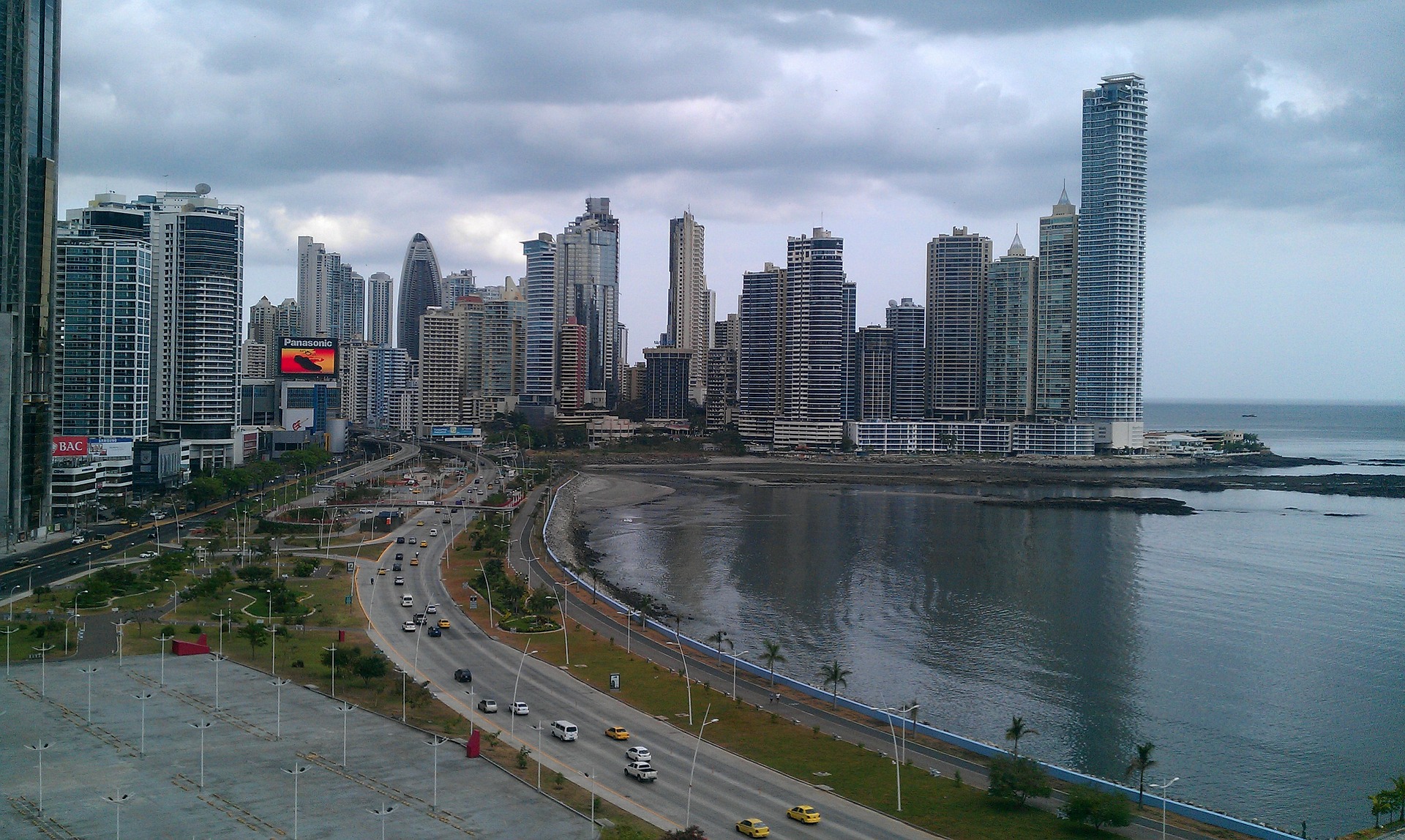
- Panama City: The capital and largest city, with a modern centre, the old town of Casco Viejo and the ruins of Panamá Viejo; the Miraflores Locks are a short trip away.
- Balboa: A base for exploring the former Canal Zone, with a craft market at the YMCA.
- Colón: The Caribbean end of the canal, with the Agua Clara visitor centre, historic monuments and Afro-Antillean culture.
- Portobelo: A historic town of Spanish fortresses, a UNESCO World Heritage Site.
- Gamboa: A base for ecotourism, including birdwatching on Pipeline Road.
- Boquete: The coffee capital of Panama, in the Chiriquí Highlands, with cool nights.
- David: The capital of Chiriquí, a hub for travellers between Panama City, Bocas del Toro and Costa Rica.
- Boca Chica: On the Gulf of Chiriquí, with its islands and marine park offshore.
Beyond the cities
- Panama Canal (site): The canal between the oceans, seen from the Miraflores Locks in Panama City or the Agua Clara visitor centre at Colón.
- San Blas Islands (island): Hundreds of islands in an autonomous territory managed by the Guna people, who keep their own culture.
- Coiba National Park (park): A marine park often called the Galápagos of Central America for its rare species; you need a permit, arranged by tour operators.
- Gulf of Chiriquí National Marine Park (park): Dozens of small islands, with sport fishing and whale watching.
- Pearl Islands (island): A Pacific archipelago with clear water and quiet beaches.
- Taboga (island): An island close to Panama City, with beaches, history and trails.
- El Valle (town): A small town inside an inhabited volcanic caldera, with a craft market known for soapstone carving.
- Volcán Barú National Park (mountain): Home to the highest peak in Panama, 3,475 m; on a clear day you may see both oceans from the top.
- La Amistad International Park (park): A park shared with Costa Rica that protects cloud forest and wildlife in the highlands.
Regions
- Central Panama
- Caribbean West
- Pacific West
- Eastern Panama
Things to do
See
- Miraflores Locks Panama City: Watch ships pass through the old locks from the visitor centre, which has a museum on how the canal works.
- Casco Viejo Panama City: The colonial district, with the Canal Museum, art galleries, the National Theatre and some of the city's best bars and restaurants.
- Panamá Viejo Panama City: Ruins of the first Spanish city on the Pacific, founded in 1519. Canada lists the Panamá Viejo township among high-crime areas, and the UK advises care against mugging at the ruins.
Do
- A boat trip on the canal Panama Canal: A partial transit takes about four hours and a full crossing about eight; a guide who knows the canal's history helps.
- Rainforest near the canal Gamboa: Hike in Soberanía and nearby parks, 15 minutes from the city, and look for birds on Pipeline Road.
- Quetzal Trail Boquete: The best-known trail in Panama; hire a guide if you want to see a resplendent quetzal.
- Diving and snorkelling Coiba National Park: Pacific waters for rare ocean species and whale watching; Bocas del Toro, on the Caribbean, for coral and reef fish. Choose an insured, reputable operator.
- White-water rafting Boquete: Rivers such as the Chiriquí Viejo; water is highest in November and lowest in May.
Drink
- Coffee tasting Boquete: Visit a coffee estate for a tasting and a look at how the beans are processed.
Shop
- Molas San Blas Islands: Guna reverse-appliqué textiles, Panama's best-known craft, also sold on the seawall in Casco Viejo.
After dark
- Carnaval in Las Tablas: The biggest carnival in the country, in the days before Ash Wednesday, with rival street queens, parades and music.
Itineraries
Panama City and the canal in 5 days (5 days)
- Panama City (3 nights): Casco Viejo, Panamá Viejo and the Miraflores Locks.
- Gamboa (1 night): Rainforest walks and birdwatching on Pipeline Road.
- Portobelo (1 night): The Spanish fortresses of the Caribbean coast.
Chiriquí: highlands and the Pacific in 7 days (7 days)
- Boquete (3 nights): Coffee estates, the Quetzal Trail and hot springs around Volcán Barú.
- David (1 night): The regional hub; the port of Pedregal is 5 minutes away by taxi.
- Boca Chica (3 nights): Islands, sport fishing and whale watching in the Gulf of Chiriquí.
Panama City and the islands in 6 days (6 days)
- Panama City (2 nights): The canal and the old town.
- Taboga (1 night): A close getaway with beaches and trails.
- San Blas Islands (3 nights): Guna islands; ask before photographing people in traditional dress.
Climate and best time to visit
| Jan | Feb | Mar | Apr | May | Jun | Jul | Aug | Sep | Oct | Nov | Dec | |
|---|---|---|---|---|---|---|---|---|---|---|---|---|
| Max °C | 33 | 34 | 35 | 35 | 35 | 34 | 34 | 34 | 33 | 33 | 33 | 33 |
| Min °C | 19 | 18 | 18 | 20 | 21 | 21 | 21 | 21 | 21 | 21 | 20 | 19 |
| Rain mm | 29 | 10 | 13 | 65 | 225 | 235 | 169 | 220 | 254 | 331 | 252 | 105 |
Panama is hot all year. In Panama City the average maximum stays between about 33 °C and 35 °C and the minimum between 18 °C and 21 °C, so the seasons are about rain, not temperature. The dry season runs from December to April, and the WMO table shows little rain in January, February and March (between 10 mm and 30 mm a month). January to March is the best time to go, and Wikivoyage says December to March is the most popular period. April is the hottest month, with an average maximum of 35.4 °C.
The rainy season lasts from May to November, usually with sunny mornings and showers in the late afternoon and evening. October is the wettest month, with 331 mm in Panama City, and the UK says October and November have the heaviest rain. Hurricanes do not hit Panama directly but can bring heavy rain, flash floods and landslides. Boquete, Cerro Punta and El Valle can be chilly at night, and the top of Volcán Barú, above 3,000 m, needs a good rain jacket.
Holidays and events
- 1 January 2026 · New Year's Day
- 9 January 2026 · Martyr's Day
- 16 February 2026 · Carnival
- 17 February 2026 · Carnival
- 3 April 2026 · Good Friday
- 1 May 2026 · Labour Day
- 3 November 2026 · Separation Day
- 4 November 2026 · Flag Day
- 5 November 2026 · Colon Day
- 10 November 2026 · Shout in Villa de los Santos
- 28 November 2026 · Independence Day
- 8 December 2026 · Mother's Day
- 25 December 2026 · Christmas Day
Getting there and around
| Main airports | PTY, PAC |
|---|---|
| International driving permit | Recommended |
Getting there
By air: international flights land at Tocumen International Airport (PTY), about 32 km east of Panama City. Copa Airlines flies non-stop to almost 20 countries in the Americas, and there are daily flights to several Colombian cities. Air Panama also flies from Costa Rica to David. The departure tax of US$40 is usually included in your ticket.
By land: the main crossing from Costa Rica is Paso Canoas on the Pacific side, a busy and confusing border that closes at 23:00 Panama time; the others are Río Sereno and Sixaola/Guabito. Coaches such as Tica Bus and Panaline run from San José to David and Panama City in about 18 hours. Protests can block the road to Paso Canoas and to airports. There is no road to Colombia: the Pan-American Highway ends at Yaviza, at the start of the Darién Gap, an area under severe travel warnings (see safety). By sea: many cruises transit the canal, and sailing boats link Cartagena in Colombia with Panama via the San Blas Islands, usually in 5 days. If you arrive on a private boat rather than a cruise ship, you need a visa.
Getting around
Buses: highway buses leave the Albrook terminal in Panama City for towns along the Pan-American Highway; they are frequent, cheap and mostly air-conditioned, and will stop anywhere on the route. Know the fare before you board. In the capital, the Metro has two lines, the first starting at the Albrook terminal, and the same card works on Metrobuses. Watch your belongings on buses and at bus stations, where pickpockets work. Domestic flights with Air Panama leave from Albrook airport (PAC). The canal railway no longer runs regular passenger trains.
Taxis have no meters, so agree the fare first. The UK advises using ride-hailing apps or transport arranged by your hotel. Canada says registered yellow taxis at official stands are generally safe; tell the driver you do not want to share and sit in the back. Fares from Tocumen airport are much higher than in town. Driving: UK drivers can use a photocard licence for up to 3 months; carry a copy of your passport with the entry stamp. Canadian drivers can use their licence for up to 90 days, and Canada advises carrying an international driving permit. Canada says road conditions and road safety are poor, drivers often drive dangerously, and the Pan-American Highway has frequent night roadworks and poor lighting. The UK says traffic is heavy in and around Panama City. Seatbelts are compulsory and any alcohol in your blood can cost you your licence. The Corredor Sur and Corredor Norte toll roads accept only the Panapass sticker. After an accident, wait in your car for the insurer and the traffic police.
Flying to Panama? PartnerCompare fares and find the cheapest datesSearch flightsWhere to stay
- City hotels: High-rise five-star hotels in central Panama City.
- B&Bs: Some in former Canal Zone military barracks.
- Apartment rentals: The main option in Casco Viejo.
- Cabañas: Island cabins and small hotels in Bocas del Toro, some right on the water.
- Hostels and boutique hotels: Around Boquete, from cheap hostels to artsy boutique hotels and casitas.
- Eco-lodges: Such as the reserve at Chorcha in Chiriquí, where you sleep in jungle hammocks.
A 'motel' in Panama is not a roadside hotel: it rents rooms by the hour to couples, and payment is usually cash only. Many hotels do not let visitors who are not registered guests past reception. Thefts from hotel rooms happen in cities and resorts, so Canada advises staying in busy, reputable hotels with good security, checking who is at the door before you open it, and locking doors and windows.
Eat and drink
Dishes to try
- Patacones: Green plantains, fried twice; plantains appear more often than beans.
- Coconut rice: Served with most dishes, often with squash or another local vegetable.
- Fonda lunch: Rice and beans with chicken or fish and a salad, at small eateries near schools, stadiums and work sites.
- Mondongo: Beef tripe, one of the choices in family restaurants.
- Seafood and beef: Outside the cities, fish and beef from the farms and fishing grounds.
Drinks
- Chichas: Fruit, water and sugar: tamarind, passion fruit, mango or papaya.
- Agua de pipa: The juice of a young green coconut.
- Seco: A raw white rum, the national spirit; in the countryside it is drunk with milk.
- Beer and rum: Local beers Balboa, Atlas and Soberana; rums Carta Vieja and Ron Abuelo.
The taste of Panamanian cooking comes from culantro, a herb like coriander but much stronger, and from Afro-Caribbean, French and Spanish influences. Food is not spicy, though hot sauce is around. For a cheap lunch, look for the fonda with the longest queue. The big cities have restaurants from all over the world.
Entry requirements and visas
| Passport validity | The UK says 6 months after the day you leave, with one blank page; Canada says 3 months after you leave |
|---|
| Passport | Entry | Max stay | Notes |
|---|---|---|---|
| United Kingdom | Visa free | Up to 3 months if you arrive by land or air. You cannot normally extend, and leaving for a neighbouring country to restart your stay can lead to detention. | |
| Canada | Visa free | 180 days | Tourist visa not required for up to 180 days. To start a new tourist stay you must leave Panama for at least 30 days. |
Other nationalities: check the official source below.
British and Canadian visitors do not need a visa for a tourist stay. The UK allows British visitors up to 3 months if they arrive by air or land; Canada allows Canadians up to 180 days. Officials may ask for a return or onward ticket, especially if you arrive by land from Costa Rica, the address and phone number of your accommodation, and proof of funds: US$1,000 or a credit card according to the UK, US$500 or a credit card according to Canada. You give fingerprints and a face scan on arrival. Make sure your passport is stamped with your date of entry: Canada says a missing stamp can mean a US$1,000 fine. You may be refused entry, even in transit, if you have a criminal record.
If you arrive by private boat rather than a cruise ship, you need a visa and pay US$100 plus US$5 registration per person. Cruise passengers and canal transits do not need one. A yellow fever certificate is required only if you come from a country with yellow fever risk, from 1 year of age. Carry a copy of your passport photo page and entry stamp at all times. Rules depend on your passport and can change: check the official link before you book.
Money and payments
| Currency | US Dollar (USD), Panamanian Balboa (PAB) |
|---|---|
| Cards | Common |
Panama has used the US dollar (USD) since 1904, alongside its own currency, the balboa (PAB). Panama has its own coins, made by the US and Canadian mints with the same size and value as US coins, and the two are used side by side. Many businesses refuse US$50 and US$100 notes because of forgeries, and those that take them may note your passport details, so bring smaller notes.
Cards are accepted in hotels in the capital and in mid-sized towns such as David, Colón, Santiago and Bocas del Toro, and in restaurants, supermarkets and department stores in the big cities; elsewhere they can be hard to use, so carry cash in small notes. ATMs work on the Cirrus/Plus networks. People have been attacked after using ATMs: use one inside a bank or shopping centre. Most banks will not let you in wearing shorts or flip-flops.
Health
| Required vaccines | Yellow fever certificate, only if you arrive from a country with yellow fever risk (from 1 year of age) |
|---|---|
| Recommended vaccines | Routine vaccines, including measles (MMR), Hepatitis A, Hepatitis B, Typhoid, for most travellers, Yellow fever, from 9 months of age, for mainland areas east of the Canal Zone, including Darién, Emberá, Guna Yala and eastern Colón and Panamá provinces, Rabies, for some travellers, Mpox, for travellers at risk of sexual exposure |
| Malaria | Some areas |
| Tap water | Varies |
Yellow fever: the CDC recommends the vaccine for mainland areas east of the Canal Zone, but not for trips limited to Panama City, the Canal Zone, areas west of it, the Pearl Islands or the San Blas Islands. Malaria occurs in the provinces of Bocas del Toro, Chiriquí, Colón, Darién, Panamá, Panamá Oeste and Veraguas and in the Emberá, Guna Yala and Ngäbe-Buglé comarcas, with no transmission in Panama City or the Canal Zone; the CDC recommends preventive medicine there. Dengue, Zika and chikungunya are spread by mosquitoes, so use repellent. Altitude sickness is a risk in parts of the country. Ask a travel health professional at least 8 weeks before you go.
Tap water is safe in most of the country, but follow local advice in rural and island areas; Wikivoyage recommends bottled water in Bocas del Toro. Panama City has good private hospitals, but care outside the capital is limited, you may have to pay up front in cash, and evacuation is expensive: get insurance that covers it. Pharmacy chains include Arrocha and Farmaplus. Dial 911 for emergencies or 103 for an ambulance.
This is general information, not medical advice: check with a travel health professional before you go.
Safety
- United States: Level 2: Exercise Increased Caution (2026-10-20)
- Canada: Take normal security precautions (2026-10-20)
- United Kingdom: No advice against travel (2026-10-20)
The US State Department rates Panama at Level 2: Exercise Increased Caution, and Canada says to take normal security precautions, but both the UK and Canada single out some areas:
- Darién and the Colombian border: Canada says to avoid all travel south of Metetí in Darién Province to the border, because of extremely high levels of violent crime. The UK says to go east of a line from Punta Carreto (Guna Yala) through Yaviza to Punta Piña only in an organised group, after telling the local police, because armed groups operate there.
- Mosquito Gulf: Canada says to avoid all travel to the coast from Boca de Río Chiriquí to Coclé del Norte, because of drug smuggling and human trafficking.
- Earthquake damage: after the magnitude 7.6 earthquake of 9 October 2026, about 39 km west of Tonosí, Canada advises against non-essential travel to the townships of Arena, El Cacao and Quebro in Veraguas. Expect aftershocks.
- High-crime areas: Canada advises a high degree of caution in Colón Province, San Miguelito district and the Panama City townships of Calidonia, Curundú, El Chorrillo, Panamá Viejo, Río Abajo, Santa Ana and 24 de Diciembre. The UK also names Juan Díaz among the areas of Panama City with higher crime.
Pickpockets work in busy areas, on buses and at bus stations. The UK advises care against mugging at Albrook Mall, Vía España and Avenida Central, in Calidonia, Casco Viejo and Panamá Viejo, around Madden Dam and in Colón; leave valuables in the hotel safe. Express kidnappings have happened, and violent crime has been reported in Colón, David and some beach communities. Women should avoid walking alone after dark; assaults on foreigners have occurred at beach resorts. Report any crime before you leave Panama, or the police may not investigate.
Protests can block roads at short notice, especially in Colón City. Beaches have strong currents and rarely have lifeguards or warning signs, and the UK advises against swimming in the Bay of Panama, which is polluted with sewage. Hike with a guide: trails are often unmarked and tourists have died hiking alone. Canada warns boaters that the south-east coast of Guna Yala, Coiba Island, the Mosquito Gulf and the Pacific coast are drug smuggling routes, most dangerous at night.
Customs and etiquette
Panamanians speak directly, and in the capital people can seem abrupt; it is not rudeness, and the interior is more relaxed. Do not point at or photograph people in traditional dress without asking. Call Indigenous peoples by their names, such as Guna, Emberá or Ngäbe, never 'Indians'. Locals use words like 'moreno' or 'chombo' casually, but they can be misunderstood from a foreigner, so avoid them.
People dress neatly and conservatively. Shorts are fine at the beach, but in towns, banks and public offices they can be frowned upon or refused. You must carry ID; a printed copy of your passport is usually accepted. Smoking is illegal in public places, with fines of US$25 to 100, and e-cigarettes are banned there too. Even small amounts of drugs can bring prison, often after up to 2 years in detention before sentencing. Same-sex relationships are legal and most Panamanians are tolerant, but public affection can attract unwanted attention and police have detained couples for 'public indecency'; Casco Viejo is considered safe. In remote and coastal areas, put toilet paper in the bin, not the toilet.
Language
| English | Limited |
|---|
| Hello | Hola OH-lah |
|---|---|
| Good morning | Buenos días BWEH-nohs DEE-ahs |
| Please | Por favor POHR fah-BOHR |
| Thank you | Gracias GRAH-syahs |
| Excuse me | Disculpe dees-KOOL-peh |
| Do you speak English? | ¿Habla usted inglés? AH-blah oos-TEHD een-GLEHS |
| I don't understand | No entiendo NOH ehn-TYEHN-doh |
| Where is the toilet? | ¿Dónde está el baño? DOHN-deh ehs-TAH EHL BAH-nyoh |
What to pack
- Proof of funds: A credit card or cash: the UK says US$1,000, Canada US$500.
- Return or onward ticket: Officials may ask for it, especially at land borders.
- Passport copy with the entry stamp: You must carry ID, and drivers use the stamp to prove they are within 3 months.
- Small US dollar notes: Many shops refuse US$50 and US$100 notes, and cards are harder to use outside the cities.
- Rain jacket and layers: Afternoon rain from May to November, and chilly nights in Boquete and on Volcán Barú.
- Long trousers: Shorts can be refused in banks and public offices.
- Insect repellent: Mosquitoes carry dengue, Zika and chikungunya, and malaria in several provinces.
Quick reference
Country facts
| Capital | Panama City |
|---|---|
| Population | 4,571,189 (2025) |
| Area | 74,180 km² |
| Time zone | America/Panama (UTC-5) |
| Calling code | +507 |
| Driving side | right |
Staying connected
Useful apps
- WhatsApp: The most used app for calls and messages in Panama
- Viber: Cheap calls home over the internet
- Ride-hailing apps: The UK advises them, or hotel transport, instead of street taxis; Canada says to check the driver and plate before you get in
Emergency numbers
| Emergency | 911 |
|---|---|
| Police | 104 |
| Ambulance | 103 |
| Fire | 103 |
Frequently asked questions
Do I need a visa for Panama?
Not for a tourist stay with a UK or Canadian passport: British visitors get up to 3 months if they arrive by air or land, Canadians up to 180 days. With any passport, check the official link before you book.
What currency is used in Panama?
The US dollar. Panama has its own balboa coins, which have the same value as US coins. Bring small notes, as US$50 and US$100 notes are often refused.
Can I drink the tap water in Panama?
In most of the country, yes. Follow local advice in rural and island areas, and drink bottled water in Bocas del Toro.
Do I need a yellow fever vaccine for Panama?
A certificate is required only if you arrive from a country with yellow fever risk. The CDC recommends the vaccine for mainland areas east of the Canal Zone, but not for Panama City, the canal, the west or the San Blas Islands.
Is it safe to visit the Darién?
Canada advises against all travel south of Metetí to the Colombian border, and the UK says to go east of the Yaviza line only in an organised group. There is no road to Colombia.
When is the best time to visit Panama?
The dry season, from December to April. January to March is the driest in Panama City; October and November are the wettest months.
Sources This guide was last checked on · 18 sources
- Wikivoyage: Panama · Overview, Places to visit, Things to do, Itineraries, Climate and best time to visit, Getting there and around, Where to stay, Eat and drink, Entry requirements and visas, Money and payments, Health, Safety, Customs and etiquette, Language, What to pack, Staying connected, Frequently asked questions
- Wikidata: Panama · Overview, Places to visit, Money and payments, Country facts
- Government of Canada: Panama travel advice (updated 16 October 2026) · Things to do, Getting there and around, Where to stay, Entry requirements and visas, Money and payments, Health, Safety, What to pack, Staying connected, Frequently asked questions
- UK FCDO: Panama safety and security · Things to do, Climate and best time to visit, Getting there and around, Money and payments, Safety, Customs and etiquette, Staying connected
- WMO World Weather Information Service: Panama City · Climate and best time to visit
- Nager.Date: public holidays in Panama, 2026 · Holidays and events
- UK FCDO: Panama entry requirements · Getting there and around, Entry requirements and visas, What to pack, Frequently asked questions
- CDC Travelers' Health: Panama · Entry requirements and visas, Health, What to pack, Frequently asked questions
- ISO 4217 (SIX), published 2026-09-17 · Money and payments
- UK FCDO: Panama health · Health
- US Department of State: Panama travel advisory · Safety
- UK FCDO: Panama travel advice · Safety
- UK FCDO: Panama regional risks · Safety, Frequently asked questions
- Wikivoyage: Spanish phrasebook · Language
- World Bank, SP.POP.TOTL · Country facts
- World Bank, AG.LND.TOTL.K2 · Country facts
- IANA Time Zone Database, zone.tab · Country facts
- UK FCDO: Panama getting help · Emergency numbers
Suggest an update
Travel rules, prices and timetables change. If something in this guide is out of date, tell us: we check every suggestion against an official source before changing the page.