

- Local time
- 14:39
- Currency
- Israeli New Shekel (ILS)
- Capital
- Jerusalem
- Calling code
- +972
- Drive on the
- right
Overview
Holy places of three faiths in Jerusalem, Tel Aviv's beaches and nightlife, Masada and the Dead Sea, the Galilee and the Negev desert. Check the current travel advice before you book.
Read the official travel advice first. In 2026 Canada advises against non-essential travel to Israel and Jerusalem, the US says "reconsider travel", and the UK advises against all travel to Gaza, to areas near the borders with Gaza and Lebanon and to parts of the West Bank, because of the risk of rocket, missile and drone attacks and of terrorism. See the Safety section for the details.
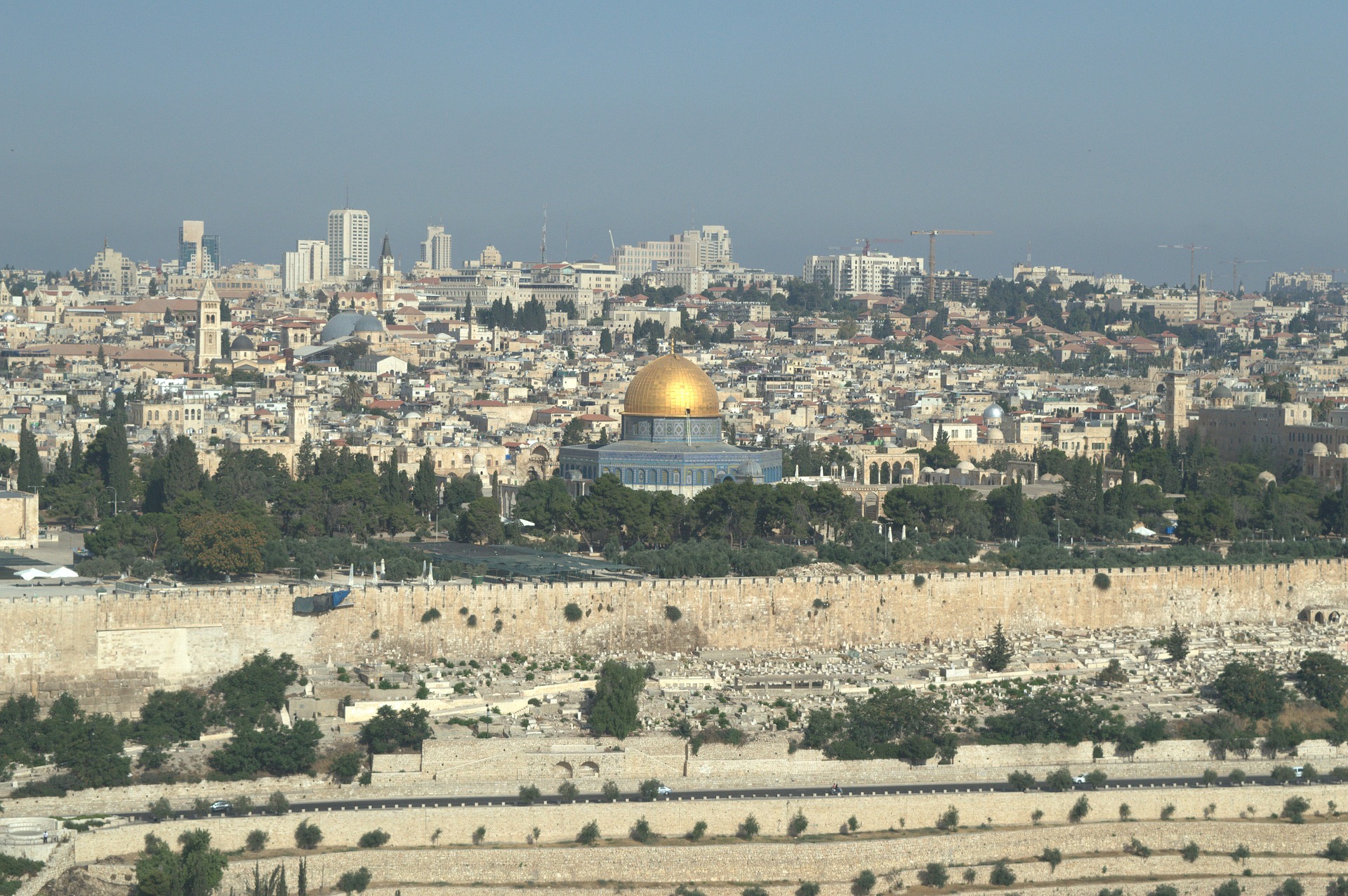
Israel is a small country with an enormous concentration of history. Jerusalem's walled Old City holds the Western Wall, the Church of the Holy Sepulchre, the Dome of the Rock and the al-Aqsa Mosque; the Galilee has Nazareth and the Sea of Galilee, sacred to Christians; Haifa and Akko have the shrines and gardens of the Bahá'í Faith. Masada, Caesarea and the Crusader castles add Roman and medieval history. Tel Aviv is a different world: Bauhaus architecture, beaches, markets and the biggest nightlife scene in the region. In the south, the Negev desert, the Ramon Crater and the Dead Sea lead down to the Red Sea at Eilat. English is widely spoken, but Israel is expensive and public transport stops for Shabbat, from Friday afternoon to Saturday evening.
- The Old City of Jerusalem: Four quarters inside the walls and some of the holiest sites of Judaism, Christianity and Islam; a UNESCO World Heritage Site.
- Tel Aviv: The "White City" of Bauhaus buildings, with Old Jaffa, beaches, markets and nightlife.
- Masada and the Dead Sea: The mountaintop fortress of the revolt against Rome, above the lowest point on earth.
- Haifa and Akko: The Bahá'í Gardens on Mount Carmel and the walled Crusader port of Akko, both on the UNESCO list.
- The Sea of Galilee and Nazareth: The places of Jesus's life, with the Jesus Trail between them.
- The Ramon Crater: A 40 km crater in the Negev desert, with wide desert views.
Places to visit
Cities
- Jerusalem: The largest city, sacred to Jews, Christians and Muslims, with five thousand years of historic sites.
- Tel Aviv: The centre of the economy and modern culture, with Bauhaus buildings, Old Jaffa, beaches and nightlife.
- Haifa: The largest city of the north, on Mount Carmel, with the Bahá'í World Centre and its gardens.
- Akko: An ancient walled port, a UNESCO site, with the most sacred Bahá'í shrine.
- Nazareth: The hometown of Jesus, today the largest Arab city in Israel.
- Tiberias: A resort town with an ancient past on the shore of the Sea of Galilee.
- Safed: A mountaintop city of artists and mystics, a centre of Kabbalah.
- Eilat: The resort city on the Red Sea, for diving among coral reefs.
- Be'er Sheva: The main city of the Negev desert.
Beyond the cities
- Old City of Jerusalem (district): The walled city of four quarters, Jewish, Christian, Muslim and Armenian, a UNESCO World Heritage Site.
- Dead Sea (coast): The lowest point on earth, where the salty water keeps you afloat.
- Masada (site): A fortress on a plateau above the Dead Sea, a UNESCO World Heritage Site.
- Sea of Galilee (area): The largest freshwater lake in the country and the home region of Jesus.
- Caesarea (site): A Roman and Crusader city with well-preserved remains on the coast.
- Ramon Crater (park): A 40 km crater-like landform in the middle of the Negev desert.
- Judaean Desert (area): Arid hills and canyons with hidden historic sites.
- Rosh HaNikra (coast): Sea caves on the Mediterranean near the border with Lebanon; check the travel advice, as this border area is under warnings.
Regions
- Israeli Coastal Plain: Tel Aviv and the Mediterranean coast.
- Jerusalem Hills: Jerusalem and the hills around it.
- Carmel Range: Forested hills along the coast south-east of Haifa.
- Dead Sea (Israel and the West Bank): The lowest point on earth, with Masada.
- Negev: The southern desert, with Be'er Sheva, the Ramon Crater and Eilat.
Things to do
See
- The holy sites of Jerusalem Jerusalem: The Western Wall, the Church of the Holy Sepulchre and the Dome of the Rock in the Old City; leave if tension rises, for example if shops start closing their shutters.
- Israel Museum and Yad Vashem Jerusalem: The Dead Sea Scrolls and archaeological treasures, and the largest Holocaust museum in the world.
- Masada Dead Sea: The clifftop fortress above the Dead Sea, a symbol of the revolt against Rome.
- Bahá'í Gardens Haifa: Terraced gardens around the golden-domed Shrine of the Báb.
- Roman and Crusader sites: Caesarea and Beit Shean for Roman streets and theatres, Akko and Belvoir for Crusader walls and castles.
Do
- Floating in the Dead Sea Dead Sea: The water is so salty that you can float while reading a newspaper.
- Hiking: The 940 km Israel National Trail, the 65 km Jesus Trail from Nazareth to Capernaum, and canyons in the Negev.
- Diving in the Red Sea Eilat: Coral reefs close to the shore.
Eat
- Markets: Machaneh Yehuda in Jerusalem and the Carmel market in Tel Aviv.
After dark
- Tel Aviv by night Tel Aviv: Bars, clubs and beach life in "the city that never stops".
Itineraries
Jerusalem, Tel Aviv and the Dead Sea in 7 days (7 days)
- Jerusalem (3 nights): The Old City, the Israel Museum and Yad Vashem.
- Dead Sea (1 night): Masada and a float in the sea.
- Tel Aviv (3 nights): Old Jaffa, the beaches and the Carmel market.
The north in 4 days (4 days)
- Haifa (2 nights): The Bahá'í Gardens on Mount Carmel.
- Akko (0 nights): The walled Crusader port.
- Nazareth (1 night): The town of Jesus's childhood.
- Tiberias (1 night): The shore of the Sea of Galilee.
Climate and best time to visit
| Jan | Feb | Mar | Apr | May | Jun | Jul | Aug | Sep | Oct | Nov | Dec | |
|---|---|---|---|---|---|---|---|---|---|---|---|---|
| Max °C | 13 | 14 | 17 | 22 | 26 | 28 | 30 | 30 | 28 | 25 | 20 | 15 |
| Min °C | 7 | 7 | 9 | 12 | 16 | 18 | 20 | 20 | 19 | 17 | 13 | 9 |
| Rain mm | 132 | 131 | 76 | 19 | 7 | 0 | 0 | 0 | 1 | 14 | 55 | 104 |
Summer, from mid-June to mid-October, is hot everywhere, and the coast stays warm even at night; in Jerusalem the average maximum is about 30 °C in July and August. Winter, from December to February, alternates mild sunny days and heavy rain: Jerusalem gets most of its rain then, the hills can drop below 10 °C, and about once a year it snows in Jerusalem.
The most popular months are April, May, October and November. Avoid the desert on rainy days, when flash floods are a risk, especially in the Negev.
Getting around
| Main airports | TLV, ETM, HFA |
|---|---|
| International driving permit | Recommended |
Public transport is safe and fairly good: Egged and other companies run buses everywhere, trains link Nahariya, Haifa, Tel Aviv, Ben Gurion Airport, Be'er Sheva and Jerusalem, and Jerusalem has a light rail line. Google Maps and Moovit show the timetables. On Shabbat, from Friday afternoon to Saturday evening, buses and trains stop in most of the country (not in Nazareth, Haifa, East Jerusalem and Eilat), and so do they on major Jewish holidays. The UK advises extra care on public transport in Jerusalem and Tel Aviv, where attacks have happened. Taxis should use the meter (moneh); the Gett app avoids disputes. There are domestic flights between Tel Aviv and Eilat.
Driving: British drivers need a 1968 International Driving Permit with their licence, and you must carry a green card for insurance and a high-visibility vest and warning triangle. Israeli drivers are aggressive and impatient; take care on two-lane roads in the Negev and when roads are wet after the first autumn rains. Do not drive into ultra-Orthodox areas of Jerusalem on Shabbat, or anywhere in Jewish areas on Yom Kippur. Check whether your rental insurance covers the West Bank. The UK says hitchhiking is not safe.
Flying to Israel? PartnerCompare fares and find the cheapest datesSearch flightsWhere to stay
- Hotels: From boutique hotels to international chains, at Western prices; there is no official star rating.
- Hostels: Two networks of independent hostels and youth hostels.
- Kibbutz guest houses and zimmers: Bed and breakfast on kibbutzim and rooms in private homes, especially in the north.
- Camping and Bedouin camps: Free campsites and Bedouin hospitality in the Negev.
Accommodation costs about the same as in Western Europe. Book online or by phone rather than bargaining at the door, and always ask for the price in shekels, not dollars.
Eat and drink
Dishes to try
- Falafel and hummus: Considered national dishes, served in pita with salads, and in hummus restaurants with many toppings.
- Shawarma: Sliced turkey or lamb in pita or lafa bread with hummus, chips and salad.
- Me'orav Yerushalmi: The "Jerusalem mix", another popular pita filling.
Drinks
- Israeli wine: Large wineries and a growing number of boutique ones, some of high quality.
- Arak: An aniseed spirit drunk with water and ice, sometimes with grapefruit juice.
| Tipping | About 10 to 15% for table service in restaurants and bars; not in fast food places or taxis. |
|---|
Food is generally excellent, and the cuisine is as varied as the population that brought it. Kosher food is widely available, and during Passover leavened bread is hard to find. Street food is usually safe. The drinking age is 18; shops may not sell alcohol between 23:00 and 05:00, and drinking in public is banned in those hours. Tel Aviv and Eilat have the liveliest nightlife, but drinks are expensive.
Entry requirements and visas
| Passport validity | At least 90 days after the date you arrive |
|---|
| Passport | Entry | Max stay | Notes |
|---|---|---|---|
| United Kingdom | Eta | 90 days | ETA-IL required before you travel: valid 2 years, 25 shekels; tourists get up to 3 months. |
| Canada | Eta | 90 days | ETA-IL required; apply at least 72 hours before arrival. |
| United States | Eta | 90 days | ETA-IL required (Wikivoyage). |
| Australia | Eta | 90 days | ETA-IL required (Wikivoyage). |
| EU / EEA | Eta | 90 days | ETA-IL required for all EU and EEA citizens (Wikivoyage). |
Other nationalities: check the official source below.
Visa-exempt visitors need an electronic travel authorisation (ETA-IL) before they fly; it does not guarantee entry. Rules depend on your passport and can change: check the official link before you book. At Ben Gurion you get an entry card instead of a passport stamp: keep it with your passport until you leave, as you need it at checkpoints.
Expect detailed questioning and baggage searches, and longer checks if you have Arab or Palestinian ancestry, previous travel in the region or have publicly criticised Israel; officials may ask to see your email or social media. Foreign nationals can legally be refused entry for, among other things, having publicly called for a boycott of Israel. Travellers of Palestinian origin, or with Iranian, Iraqi, Syrian or Lebanese nationality, should check with an Israeli embassy before travelling. Children travelling alone or with one parent should carry a consent letter. An Israeli visa or stamp, or a Jordanian or Egyptian stamp from a crossing with Israel, can lead to refusal of entry in some Arab countries.
Money and payments
| Currency | Israeli New Shekel (ILS) |
|---|---|
| Cards | Widespread |
The currency is the new Israeli shekel (ILS, NIS, ₪), divided into 100 agorot. Contactless card and phone payments are widely accepted, and card payments over 300 shekels need a PIN. ATMs are everywhere, though some charge a fee, which is displayed on screen.
Israel is expensive, with prices close to the upper end of Western and Northern Europe, and drinks in Tel Aviv are particularly dear. Some restaurants add a small "security fee", which you may ask to have removed. Many national parks charge an entry fee; a combined park ticket saves money if you visit many of them.
Health
| Recommended vaccines | Routine vaccines, including measles (MMR), polio and the seasonal flu, Hepatitis A, Hepatitis B, especially for the West Bank and Gaza, Typhoid, for the West Bank and Gaza |
|---|---|
| Tap water | Safe |
No vaccinations are required to enter Israel; ask a travel health professional about the recommended ones at least 6 to 8 weeks before you go. Health care is of a high Western standard and pharmacists speak English, but foreigners must pay, and hospitals may take legal action to stop you leaving until bills are settled: take full travel insurance.
Tap water is safe throughout Israel, but not in the West Bank or Gaza; avoid taps in farm fields, which may carry recycled water, and around the Dead Sea, where it is very salty. The heat is the main everyday risk, especially in summer: use sunscreen and drink plenty of water.
This is general information, not medical advice: check with a travel health professional before you go.
Safety
- United States: Level 3: Reconsider Travel (2026-10-20)
- Canada: Avoid non-essential travel (2026-10-29)
- United Kingdom: Advises against all travel to parts of the country; Advises against all but essential travel to parts of the country (2026-10-20)
Read the official advice before you go. Canada advises against non-essential travel to Israel and Jerusalem, and against all travel within 5 km of the border with Lebanon, within 10 km of the border with Gaza and to the parts of the Golan Heights east of Highway 98. In July 2026 the UK advised against all travel to Gaza and within 500 m of its border, to the Tulkarm, Jenin and Tubas governorates of the West Bank, to the area along the border with Lebanon north of routes 89 and 91, within 500 m of the Alpha Line in the Golan Heights and to Sheba'a Farms and Ghajar, and against all but essential travel to most of the rest of the West Bank.
There is a risk of rocket, missile and drone attacks across the country and of falling shrapnel from interceptions, and flights can be disrupted. Learn how to find shelter: the best place is a protected room (mamad) or a public shelter, otherwise a stairwell without windows. Follow the Home Front Command (call 104 in Israel) and install an alert app such as Home Front Command or Red Alert. Terrorists are very likely to try to carry out attacks, including in Jerusalem's Old City, Tel Aviv and on public transport; shootings, stabbings and rammings occurred in 2024 and 2025.
Demonstrations can turn violent, especially around the gates of Jerusalem's Old City after Friday prayers, on Jewish and Muslim holidays and on anniversaries: avoid crowds and leave if tension builds. Petty crime is low, but passports, cards and valuables are often stolen on beaches. Flash floods are a risk in the Negev, and the country lies in an earthquake zone.
Customs and etiquette
Israeli society is Western in outlook, and people are helpful and very direct: frank speech and loud debate are normal and not meant as rudeness. Dress is casual, but religious sites refuse entry in shorts, short skirts or vests; men must cover their heads at synagogues and at the Western Wall, and shoes come off in mosques. In Jerusalem, clothes should cover shoulders, upper arms and legs, and in ultra-Orthodox neighbourhoods and towns such as Bnei Brak, Beit Shemesh or Safed people can react strongly to anyone, especially women, dressed less conservatively.
The working week runs from Sunday to Thursday, and much of the country stops for Shabbat and the Jewish holidays. On Holocaust Remembrance Day and Memorial Day, when the siren sounds, everyone stands in silence for two minutes, drivers included: do the same. Be sensitive when photographing people in Muslim and Orthodox Jewish areas, and never photograph soldiers, police or military sites. Same-sex relations are legal, and Tel Aviv has a large LGBT+ community and a big Pride parade. Always carry ID, such as a copy of your passport and entry card. Drug offences lead to prison.
Language
| Official languages | Hebrew |
|---|---|
| English | Widespread |
| Hello (peace) | שלום shalom |
|---|---|
| Thank you | תודה todah |
| Please / You're welcome | בבקשה bevakashah |
| Excuse me | סליחה slichah |
| How much is it? | כמה זה? kamah zeh? |
| Do you speak English? | אתה מדבר אנגלית? atah medaber anglit? (to a man), at medaberet anglit? (to a woman) |
What to pack
- Passport valid at least 90 days and an approved ETA-IL: Both are needed to board and enter.
- International Driving Permit (1968): British drivers need it with their licence.
- Plug adapter: Israel uses type H sockets, which usually also take two-pin European (type C) plugs; 230 V.
- Clothes covering shoulders and knees, and a head covering: Required at religious sites.
- Sun protection: Summer heat is intense across the country.
- Full travel insurance: Foreigners pay for all medical care.
Quick reference
Country facts
| Capital | Jerusalem |
|---|---|
| Population | 10,122,800 (2025) |
| Area | 21,640 km² |
| Time zone | Asia/Jerusalem (UTC+2) |
| Calling code | +972 |
| Driving side | right |
Electricity and plugs
| Plug types | C, H |
|---|---|
| Voltage | 230 V |
Staying connected
| SIM and eSIM | Prepaid SIM cards are sold by Pelephone, Cellcom, Partner, HotMobile, Golan Telecom and others in shops and malls; mobile data is cheap. |
|---|---|
| Wi-Fi | Free Wi-Fi on buses and in cafes is common but not universal. |
Useful apps
- Home Front Command or Red Alert: Alerts for incoming rockets and missiles.
- Moovit: Bus and train timetables.
- Gett: Licensed taxis at metered fares, paid by card.
Emergency numbers
| Police | 100 |
|---|---|
| Ambulance | 101 |
| Fire | 102 |
Frequently asked questions
Is it safe to travel to Israel now?
In 2026 Canada advises against non-essential travel to Israel, the US says reconsider travel, and the UK advises against travel to several border areas and parts of the West Bank. Read the Safety section and the official links.
Do I need a visa for Israel?
Not for tourist stays of up to 90 days, but visitors from the UK, the US, Canada, Australia and the EU need an electronic travel authorisation (ETA-IL) before they travel.
Does public transport run on Saturdays?
Mostly not: buses and trains stop from Friday afternoon to Saturday evening, except in a few cities such as Nazareth, Haifa and Eilat.
Is the tap water safe in Israel?
Yes, throughout Israel, though not in the West Bank or Gaza. Near the Dead Sea it is very salty.
When is the best time to visit Israel?
April, May, October and November are the most popular months; summer is very hot and winter can be rainy.
Do I need to tip in Israel?
In restaurants and bars with table service, about 10 to 15%. Taxi drivers do not expect tips.
Sources This guide was last checked on · 18 sources
- Wikivoyage: Israel · Overview, Places to visit, Things to do, Itineraries, Climate and best time to visit, Getting around, Where to stay, Eat and drink, Entry requirements and visas, Money and payments, Health, Safety, Customs and etiquette, Language, What to pack, Electricity and plugs, Staying connected, Frequently asked questions
- UK FCDO: Israel warnings and insurance · Overview, Safety, Frequently asked questions
- Government of Canada: Israel and Palestine travel advice (updated 29 July 2026) · Overview, Getting around, Entry requirements and visas, Health, Safety, Frequently asked questions
- UK FCDO: Israel regional risks · Things to do, Getting around, Safety
- WMO World Weather Information Service: Jerusalem · Climate and best time to visit
- UK FCDO: Israel safety and security · Climate and best time to visit, Getting around, Safety, Customs and etiquette, What to pack
- UK FCDO: Israel entry requirements · Getting around, Entry requirements and visas, What to pack, Frequently asked questions
- Wikidata · Money and payments, What to pack, Country facts, Electricity and plugs
- ISO 4217 (SIX), published 2026-09-17 · Money and payments
- UK FCDO: Israel health · Health
- US CDC: Travelers' health, Israel · Health
- US Department of State: Israel travel advisory · Safety
- UK FCDO: Israel travel advice · Safety
- Wikivoyage: Hebrew phrasebook · Language
- World Bank, SP.POP.TOTL · Country facts
- World Bank, AG.LND.TOTL.K2 · Country facts
- IANA Time Zone Database, zone.tab · Country facts
- UK FCDO: Israel getting help · Emergency numbers
Suggest an update
Travel rules, prices and timetables change. If something in this guide is out of date, tell us: we check every suggestion against an official source before changing the page.