

- Local time
- 13:37
- Currency
- Lebanese Pound (LBP)
- Capital
- Beirut
- Calling code
- +961
- Drive on the
- right
Overview
Phoenician ports, Roman Baalbek, the Qadisha Valley, Beirut's food and nightlife and old vineyards. Canada and the US advise against all travel to Lebanon in 2026: read the safety advice first.
Read the official travel advice before anything else. In 2026 Canada advises against all travel to Lebanon, the United States says "do not travel", and the UK advises against all travel to the south, to Beirut's southern suburbs and to several other areas, because of airstrikes, armed groups and the risk of kidnapping. See the Safety section for the details.
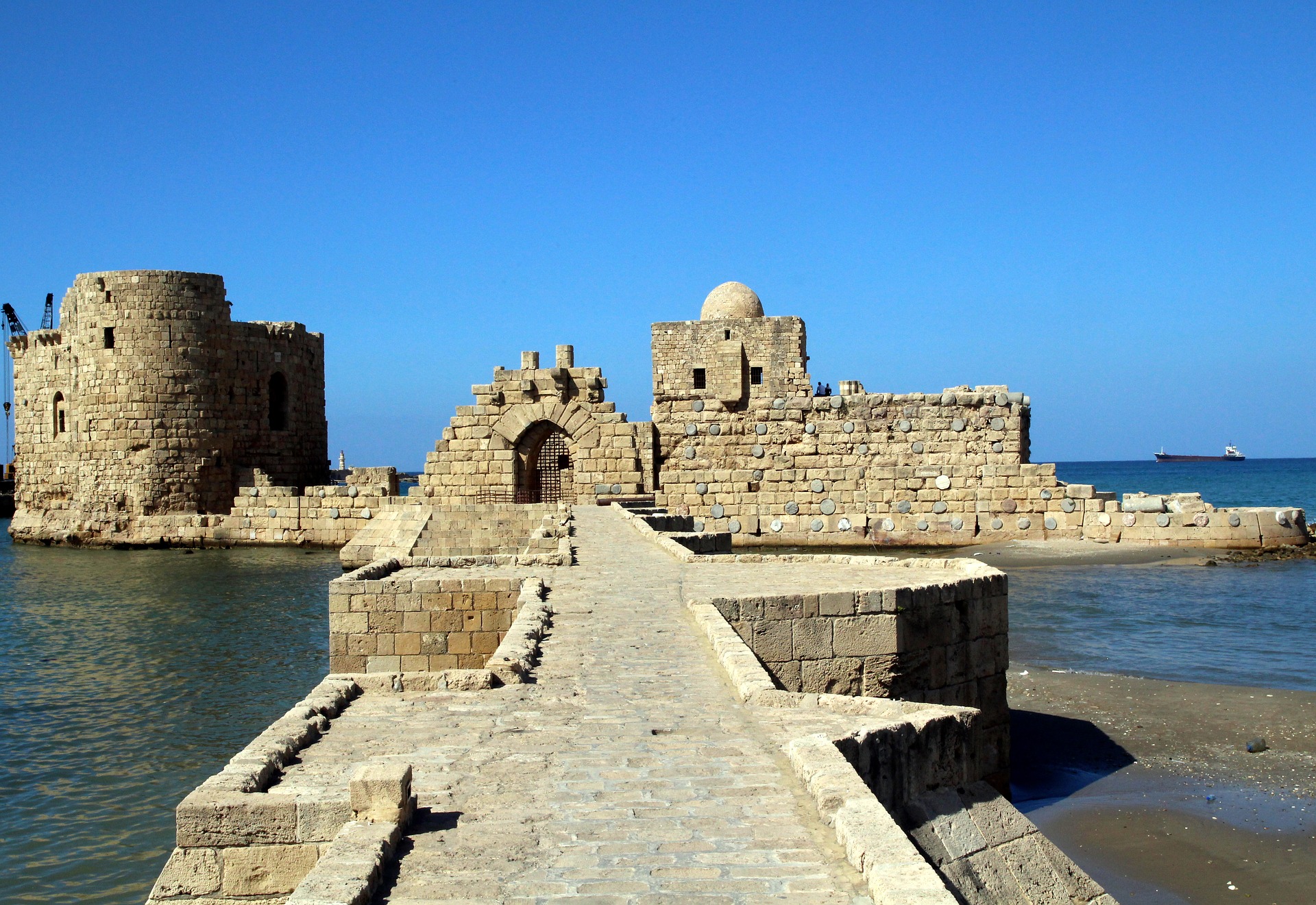
Lebanon is a small Mediterranean country of two parallel mountain ranges, with a long and layered history: the Phoenician cities of Byblos and Tyre, the Roman temples of Baalbek, Crusader castles, Mamluk Tripoli and the palace of Beiteddine. Its people belong to many Christian and Muslim communities, and French and English are widely spoken. Beirut is known for its food, its bars and its nightlife; the mountains have ski resorts in winter and hiking in summer, the country has some of the oldest wine-making sites in the world, with most vineyards in the Bekaa Valley, and Lebanese cuisine is among the most famous in the Middle East. Since 2019 the country has been in a deep economic crisis, with power cuts and a cash economy in US dollars.
- Byblos: One of the oldest continuously inhabited cities in the world, a UNESCO World Heritage Site with a harbour and souk.
- Jeita Grotto: Limestone caves with an underground river, 20 km north of Beirut.
- Qadisha Valley: The Holy Valley of caves, chapels and monasteries, on the UNESCO list.
- Beiteddine: A palace of courtyards and fountains, a jewel of Arab architecture.
- Beirut: The capital's downtown, its cafes and the liveliest nightlife in the Arab world.
- Lebanese wine: Wineries such as Chateau Musar, Ksara and Kefraya welcome visitors for tastings.
Places to visit
Cities
- Beirut: The cosmopolitan capital, with Franco-Mediterranean architecture and busy nightlife; the UK advises against all travel to its southern suburbs.
- Byblos: An ancient Phoenician port with Roman, Crusader and Ottoman remains, a castle, a harbour and seafood restaurants.
- Jounieh: A coastal town north of Beirut, known for its seaside resorts and nightclubs.
- Tripoli: The capital of the north, rich in Mamluk architecture and famous for sweets; the UK advises against all but essential travel to its eastern districts.
- Zahle: The main town of the Bekaa Valley, the wine region; parts of the Bekaa are under UK travel warnings.
- Tyre: An ancient Phoenician city with a UNESCO-listed Roman hippodrome; the UK advises against all travel to the South Governorate.
- Sidon: A port with Crusader and Ottoman buildings and a soap museum; the UK advises against all travel to the South Governorate.
Beyond the cities
- Jeita Grotto (site): Two limestone caves full of stalactites, with an underground river.
- Qadisha Valley (area): The UNESCO-listed Holy Valley in the north, with the home of the poet Khalil Gibran.
- Deir el Qamar (town): A traditional village in the Chouf district.
- Baalbek (site): Among the largest Roman temples anywhere; the UK advises against all but essential travel to this area, which has seen airstrikes.
- Anjar (site): The ruins of an 8th-century Umayyad city in the Bekaa Valley.
Regions
- Beirut: The capital and its suburbs.
- Mount Lebanon: The mountain range that runs close to the sea, cut by valleys and canyons.
- North Lebanon: Tripoli and the Qadisha Valley.
- Bekaa: The valley between the two mountain ranges, with most of the vineyards, Zahle and Anjar.
- South Lebanon: The south, with the summer resort of Jezzine; the UK advises against all travel to the South and Nabatiyeh governorates.
Things to do
See
- Downtown Beirut Beirut: Cafes and restaurants around Place de l'Etoile in the centre.
- Byblos Byblos: The medieval castle, the Roman theatre and seafood by the harbour.
- Jeita Grotto Mount Lebanon: Cathedral-like caves with huge stalactites, reached through the valley of the Dog River.
- Qadisha Valley North Lebanon: Caves, chapels and monasteries in the Holy Valley, and the house of Khalil Gibran.
- Beiteddine Palace: Two large courtyards and a fine fountain in one of the best examples of Arab architecture.
Do
- Skiing: Six ski resorts with groomed slopes, plus cross-country and snowshoe trails, in winter.
- Lebanon Mountain Trail: A 350 km national trail, poorly marked: go with a guide, and keep to well-used tracks because of landmines.
Eat
- Lebanese sweets Tripoli: Tripoli is known as the capital of Arabic sweets; check the travel advice before going.
Drink
- Wine tasting: Chateau Musar at Ghazir, north of Beirut, and the wineries of the Bekaa, including Ksara, the oldest, and Kefraya, with a restaurant.
After dark
- Nightlife Beirut: Bars in Gemmayze and clubs on Monot Street, plus open-air nightclubs; many places stay open very late.
Getting around
| Main airports | BEY |
|---|---|
| International driving permit | Recommended |
There are no trains. The UK and Canada advise against shared "service" taxis and taxis hailed in the street, where passengers have been robbed and attacked: use only taxis from recognised companies booked through your hotel. Canada advises avoiding public transport altogether.
Driving is hard work: roads are poor, drivers aggressive, and traffic lights often do not work because of power cuts. Hiring a car with a driver is the easier option. You need a UK licence or a 1968 International Driving Permit; seatbelts are compulsory, diesel cars are banned, and you should avoid driving outside towns at night. The army runs checkpoints on many roads, so always carry ID. Protests can block roads at short notice. Landmines and unexploded weapons remain in some areas: stay on well-used tracks.
Where to stay
- International and heritage hotels: Chains and grand hotels from the 1960s and 1970s in Beirut, on the coast and around Baalbek; often the only places with electricity round the clock.
- Family-run and boutique hotels: Cheaper, but expect power and Wi-Fi cuts for hours each day.
- Furnished apartments: The best value for long stays, with cleaning included.
Power cuts are common because the national grid produces little electricity, and many buildings rely on generators. Keep a torch by your bed and know how you would leave your room in the dark.
Eat and drink
Dishes to try
- Mezze: Tabbouleh, fattoush, stuffed vine leaves (warak enab), hummus and moutabal.
- Grilled meats: Shish tawouk (chicken), lahm mashwi and kafta, usually with garlic sauce.
- Manakish: Flatbread for breakfast, topped with zaatar, cheese or minced meat.
- Knefeh: Cheese pastry with syrup, eaten for breakfast or dessert.
- Shawarma: Rolled in thin Lebanese bread, from roadside shops.
Drinks
- Lebanese wine: Mostly from the Bekaa Valley, with wineries that welcome visitors.
- Arak: The national aniseed spirit, cloudy with water, drunk with mezze.
Lebanese food is one of the most famous cuisines of the Middle East, and Tripoli is considered the capital of Arabic sweets. Italian, French, Chinese and Japanese restaurants and international cafe chains are common in Beirut and along the coast to the north. Bring cash: many restaurants do not accept cards.
Entry requirements and visas
| Passport validity | At least 3 months from your entry date for British citizens; at least 6 months beyond your departure date for Canadians |
|---|
| Passport | Entry | Max stay | Notes |
|---|---|---|---|
| United Kingdom | Visa on arrival | 30 days | Free single-entry tourist visa at Beirut airport, valid one month and extendable up to three months at General Security. |
| Canada | Visa on arrival | 30 days | Visa at any port of entry or from a Lebanese mission; free one-month tourist visa according to Wikivoyage. |
| United States | Visa on arrival | 30 days | Free one-month tourist visa, extendable to three months (Wikivoyage). |
| Australia | Visa on arrival | 30 days | Free one-month tourist visa, extendable to three months (Wikivoyage). |
| EU / EEA | Visa on arrival | 30 days | Free one-month tourist visa, extendable to three months (Wikivoyage). |
Other nationalities: check the official source below.
Visitors from the UK, the US, Canada, Australia and the EU get a free one-month tourist visa on arrival. Overstay fines are paid at the airport, in Lebanese pounds only. Your passport must carry a Lebanese entry stamp for you to leave. Rules depend on your passport and can change: check the official link before you book.
Travel to or from Israel is illegal in Lebanon: you may be refused entry with an Israeli stamp or visa, or an Egyptian or Jordanian stamp from a crossing with Israel. Immigration checks every name against a database of wanted people; if your name matches, you may be held until you prove it is not you, so consider carrying a copy of your birth certificate. Areas south of the Litani River may require permits. Children travelling with one parent may need a letter from the other to leave.
Money and payments
| Currency | Lebanese Pound (LBP) |
|---|---|
| Cards | Rare |
Lebanon is in a deep economic crisis. The Lebanese pound (LBP, LL), also called the lira, has lost most of its value since 2019, and cash in US dollars is the main currency, accepted in most shops, supermarkets and restaurants; change often comes in pounds. Assume your cards will not work: many businesses, hospitals and ATMs do not accept foreign cards, and getting dollars locally is hard and expensive. Bring all the cash you need for your stay, keep it safe, and exchange at money shops, where the rate is better than on cards.
Health
| Recommended vaccines | Routine vaccines, including measles (MMR) and the seasonal flu, Hepatitis A, Hepatitis B, Typhoid, for some travellers, Rabies, for some travellers: ask a travel clinic, Cholera, for some high-risk travellers |
|---|
Ask a travel health professional about vaccines at least 6 to 8 weeks before you go. Cholera has been reported, so follow safe food and water precautions; drink bottled water rather than tap water. Cases of MERS have been reported, and rabies is present.
The economic crisis and fuel shortages have hit health care, although private hospitals in Beirut have stabilised. Doctors are generally well qualified, but care is expensive and most hospitals demand large cash deposits before admitting patients, even in emergencies: take insurance that covers evacuation and keep funds available. Medicines can be hard to find, so bring what you need, with a medical certificate for prescription drugs. For an ambulance (Red Cross), dial 140.
This is general information, not medical advice: check with a travel health professional before you go.
Safety
- United States: Level 4: Do Not Travel (2026-10-20)
- Canada: Avoid all travel (2026-10-20)
- United Kingdom: Advises against all travel to parts of the country; Advises against all but essential travel to parts of the country (2026-10-20)
Canada advises against all travel to Lebanon and tells Canadians there to leave; the United States says "do not travel". The UK, in August 2026, advised against all travel to the South and Nabatiyeh governorates, Beirut's southern suburbs (except Route 51 to the airport), the eastern Bekaa, the north and east of Baalbek-Hermel, the area of Akkar near Syria and the 12 Palestinian refugee camps, and against all but essential travel to parts of the Chouf, the southern Bekaa, the rest of Baalbek-Hermel and eastern Tripoli. According to the UK, since 2 March 2026 the conflict between Israel and Hizballah has escalated: Israeli airstrikes have hit mainly the south, the Bekaa and Beirut's southern suburbs, but also other areas, often without warning, and they continued in the south after a cessation of hostilities announced in June 2026.
There is a threat of terrorism and of kidnapping, including of foreigners, especially near the Syrian border and in the Bekaa. Weapons are common, arguments can turn violent, and celebratory gunfire kills people every year: if you hear shooting, go indoors away from windows. Protests and roadblocks can appear at short notice. Have a personal emergency plan, enough food, water and medicine to shelter for several days, and up-to-date documents to leave quickly; do not count on being evacuated. Do not take photographs in Hizballah areas or near military sites.
Crime is a moderate risk: watch for pickpockets, avoid flashing valuables, and take care at ATMs. With streetlights often off, carry a torch and a charged phone at night; women have reported harassment and assault in public places. Landmines remain in the south and near the Syrian border. Forest fires are a risk in summer, and Lebanon is in an earthquake zone.
Customs and etiquette
Lebanon is home to many Christian and Muslim communities, and respecting their differences matters. In Beirut Western clothes are normal and many women do not wear a headscarf, but dress modestly at churches and mosques, in villages, in conservative areas such as Beirut's southern suburbs and the old city of Tripoli, and in traditional souqs. Topless sunbathing is not acceptable anywhere. During Ramadan, be discreet about eating, drinking and smoking in public in daylight.
Lebanese people are hospitable and often happy to talk politics, but avoid taking sides in local disputes. Same-sex relations can be prosecuted under a law on acts "against nature". Respect your elders, never beckon a Lebanese person directly, and if someone does you a favour, accept it graciously. Flying a drone without permission and taking drugs are illegal.
Language
| Official languages | Arabic |
|---|---|
| English | Common |
| Hello | مرحبا marḥaban |
|---|---|
| Peace be with you (formal greeting) | السلام عليكم as-salaamu alaikum |
| Please | من فضلك min faḍlak (to a man), min faḍlik (to a woman) |
| Thank you | شكرا shukran |
| Excuse me | لو سمحت law samaḥta (to a man), law samaḥti (to a woman) |
| Goodbye | مع السلامة ma'a as-salaamah |
| Do you speak English? | هل تتكلم الانجليزية؟ hal tatakallam al-ingliziyyah? |
| How much is this? | بكم هذا؟ bikam hatha? |
What to pack
- All the cash you need, in US dollars: Foreign cards and ATMs often do not work.
- A torch and a power bank: Power cuts are frequent, and streets are dark at night.
- Passport with no Israeli stamps, and a copy of your birth certificate: Israeli stamps can mean refused entry, and the certificate helps if your name matches a wanted person.
- Your medicines and a medical certificate: Medicines can be hard to find.
- Travel insurance with evacuation cover: Hospitals demand large cash deposits.
- Modest clothes: For religious sites, villages and souqs.
Quick reference
Country facts
| Capital | Beirut |
|---|---|
| Population | 5,849,421 (2025) |
| Area | 10,230 km² |
| Time zone | Asia/Beirut (UTC+2) |
| Calling code | +961 |
| Driving side | right |
Staying connected
| SIM and eSIM | Two state-owned operators, Touch and Alfa, with similar regulated prices; Touch sells a prepaid visitor line with data, calls and texts. Power cuts can disrupt networks. |
|---|---|
| Wi-Fi | Available in hotels and international cafe chains, but often interrupted by power cuts outside the big hotels. |
Emergency numbers
| Police | 112 |
|---|---|
| Ambulance | 140 |
| Fire | 175 |
Frequently asked questions
Is it safe to travel to Lebanon now?
In 2026 Canada advises against all travel to Lebanon, the US says do not travel, and the UK advises against all travel to the south, Beirut's southern suburbs and several other areas. Read the Safety section and the official links.
Do I need a visa for Lebanon?
Visitors from the UK, the US, Canada, Australia and the EU get a free one-month tourist visa on arrival. You may be refused entry if your passport shows travel to Israel.
Can I use my credit card in Lebanon?
Assume not. Because of the economic crisis, bring all the cash you need in US dollars, which are accepted almost everywhere.
Can I drink the tap water in Lebanon?
Drink bottled water. Cholera has been reported in the country.
What languages are spoken in Lebanon?
Arabic is the official language; French is widely spoken, especially by older people, and English by the young, above all in Beirut.
Sources This guide was last checked on · 17 sources
- Wikivoyage: Lebanon · Overview, Places to visit, Things to do, Getting around, Where to stay, Eat and drink, Entry requirements and visas, Money and payments, Health, Safety, Customs and etiquette, Language, What to pack, Staying connected, Frequently asked questions
- UK FCDO: Lebanon warnings and insurance · Overview, Places to visit, Getting around, Safety, Frequently asked questions
- Government of Canada: Lebanon travel advice (updated 23 July 2026) · Overview, Getting around, Entry requirements and visas, Health, Safety, Customs and etiquette, Staying connected, Frequently asked questions
- UK FCDO: Lebanon safety and security · Getting around, Where to stay, Money and payments, Safety, Customs and etiquette, What to pack, Frequently asked questions
- UK FCDO: Lebanon entry requirements · Entry requirements and visas, What to pack, Frequently asked questions
- Wikidata · Money and payments, Country facts
- ISO 4217 (SIX), published 2026-09-17 · Money and payments
- UK FCDO: Lebanon health · Health, What to pack
- US CDC: Travelers' health, Lebanon · Health
- US Department of State: Lebanon travel advisory · Safety
- UK FCDO: Lebanon travel advice · Safety
- UK FCDO: Lebanon regional risks · Safety
- Wikivoyage: Arabic phrasebook · Language
- World Bank, SP.POP.TOTL · Country facts
- World Bank, AG.LND.TOTL.K2 · Country facts
- IANA Time Zone Database, zone.tab · Country facts
- UK FCDO: Lebanon getting help · Emergency numbers
Suggest an update
Travel rules, prices and timetables change. If something in this guide is out of date, tell us: we check every suggestion against an official source before changing the page.