

- Local time
- 18:07
- Currency
- Bahraini Dinar (BHD)
- Capital
- Manama
- Calling code
- +973
- Drive on the
- right
Overview
A small island kingdom in the Gulf with 5,000 years of history, UNESCO-listed forts and burial mounds, old souqs and a modern capital, more relaxed than its larger neighbours.
Bahrain is an archipelago in the Persian Gulf, between Saudi Arabia and Qatar, and its name means "two seas" in Arabic. It was the home of the ancient Dilmun civilisation, and the past is close at hand: the Bahrain Fort (Qal'at al-Bahrain) and the Dilmun Burial Mounds are on the UNESCO World Heritage List, and the National Museum holds finds that go back to the first people who lived on the islands.
Compared with its neighbours, Bahrain is socially liberal: alcohol is legal, and the islands have long been a getaway for visitors from Saudi Arabia. It is still a conservative Islamic country, so dress modestly in public and follow local customs, especially during Ramadan. The islands are small, and you can reach most places by car in about half an hour. The pleasant season is short: from November to March.
- Bahrain Fort (Qal'at al-Bahrain): A restored fort on the northern shore, a UNESCO World Heritage Site, with a site museum next door.
- Dilmun Burial Mounds: Ancient burial mounds around A'ali, on the UNESCO list since 2019.
- Bahrain National Museum: The country's history, from its first inhabitants onwards.
- Manama Souq and Gold Souq: The old market district of the capital, for haggling, gold and tailors.
- Tree of Life: A tree over 400 years old, alone in the Sakhir desert.
- Hawar Islands: Islands off the coast of Qatar, known for birdwatching.
Places to visit
- City
Cities
- Manama: The capital, with Manama Souq and the Gold Souq in its old district.
- Muharraq: The former capital, home to the international airport and to Arad Fort.
Beyond the cities
- Bahrain Fort (Qal'at al-Bahrain) (site): A restored fort and UNESCO World Heritage Site, a short drive from Manama, with a site museum and cafe.
- A'ali (town): The town where most of the Dilmun Burial Mounds stand, also known for its pottery.
- Southern Governorate (area): The thinly populated south of the main island, with the Formula One circuit at Sakhir and the Tree of Life.
- Hawar Islands (island): A group of islands close to the coast of Qatar, popular with birdwatchers.
Things to do
See
- Bahrain Fort and its museum North coast: A restored fort, free to enter in 2024, and next door a museum of finds from the Dilmun period to the Islamic era. Go to the cool museum after the fort on a hot day.
- Bahrain National Museum: Artefacts from the islands' long history, back to the first human settlers.
- Beit Al Quran: A museum of Islamic artefacts related to the Qur'an.
- Dilmun Burial Mounds A'ali: Ancient burial mounds, mostly in and around A'ali, inscribed on the UNESCO list in 2019.
- Ancient temples and mosques: Barbar Temple and Saar Temple from the Dilmun period, and Al Khamis Mosque, one of the oldest in the region.
- Arad Fort Muharraq: A historic fort in Muharraq, the town where the airport is.
- Tree of Life Sakhir desert: A tree more than 400 years old growing alone in the desert. You need a car; go near sunset.
Do
- Diving and sailing: Water sports are popular all year in the warm water of the Gulf.
- Bahrain Grand Prix Sakhir: The Formula One race is held at the Sakhir circuit in spring; hotel prices rise sharply that weekend.
- Birdwatching Hawar Islands: The main birdwatching area of the country.
Shop
- The souqs Manama: Haggle in Manama Souq and the Gold Souq, and have clothes made by one of the many tailors.
- Pottery A'ali: Buy local pottery in the village workshops.
Itineraries
Three days in Bahrain (3 days)
- Manama (3 nights): The souqs, the National Museum and Beit Al Quran; Bahrain Fort is a short drive away.
- A'ali (0 nights): A half day for the burial mounds and the pottery workshops.
- Southern Governorate (0 nights): By car to the Tree of Life, ideally at sunset.
- Muharraq (0 nights): Arad Fort, on the way to the airport.
Climate and best time to visit
| Jan | Feb | Mar | Apr | May | Jun | Jul | Aug | Sep | Oct | Nov | Dec | |
|---|---|---|---|---|---|---|---|---|---|---|---|---|
| Max °C | 20 | 21 | 25 | 29 | 34 | 36 | 38 | 38 | 37 | 33 | 28 | 22 |
| Min °C | 14 | 15 | 18 | 22 | 26 | 29 | 30 | 31 | 29 | 26 | 21 | 16 |
| Rain mm | 15 | 16 | 14 | 10 | 1 | 0 | 0 | 0 | 0 | 1 | 4 | 11 |
Bahrain is warm in winter and very hot in summer. In Manama the average maximum is 20 °C in January and 38 °C in August, and average rainfall is zero from June to September. Summer, from May to September, is also humid; hot, dry winds called qaws can bring sandstorms, and dust storms can happen at any time of year, reducing visibility on the roads and at the airport.
The best time to visit is November to March. From December to February evenings can be cool, around 15 °C, so pack a sweater. October and April are hot but bearable. The little rain falls between December and March, and heavy showers can cause local flooding.
Holidays and events
- 1 January 2026 · New Year's Day
- 22 February 2026 · Sports Day
- 1 May 2026 · Labour Day
- 16 December 2026 · National Day
- 17 December 2026 · National Day
Getting there and around
| Main airports | BAH |
|---|---|
| International driving permit | Recommended |
Getting there
By air: Bahrain International Airport (BAH) is in Muharraq, just east of Manama. It is the base of Gulf Air, with flights across the region, to London and to South-East Asia; Emirates, Qatar Airways and Etihad fly in from their hubs, and Air Arabia from Sharjah. The airport is small, so arrivals and departures are quick.
By road from Saudi Arabia: the 26 km King Fahd Causeway links Bahrain with the Saudi coast. Buses run several times a day from Dammam and Khobar to central Manama; with two passport checks and two customs checks, allow about 2 hours. Some Saudi visas are valid only for entry by air, so check yours before crossing by road. There is no scheduled passenger ferry; only the odd cruise ship calls at Manama.
Getting around
Taxis run on the meter; at the airport take an official taxi (white with a red roof, or a London-style cab), and insist on the meter or agree the fare first. Uber and Careem work, with a dedicated pick-up point at the airport. Public buses are cheap but limited; route A1 links the airport and Manama.
Renting a car is the easiest way to see the country, since most trips take about 30 minutes. Speed limits are usually 50 km/h in town and 80 to 120 km/h on highways, and fines are high. Drivers can be aggressive and change lanes without signalling. There is zero tolerance for alcohol, seatbelts are compulsory, and using a phone while driving is illegal. A UK photocard licence is valid for up to 3 months; Canada says its citizens must carry an International Driving Permit. After an accident with injuries, do not move the car until the police have made a report: call 999 if someone is hurt, 199 if not. Off-road, travel only in a convoy of four-wheel-drive vehicles with an experienced guide.
Flying to Bahrain? PartnerCompare fares and find the cheapest datesSearch flightsWhere to stay
- City hotels: The main choice; even an ordinary room in a good hotel is expensive.
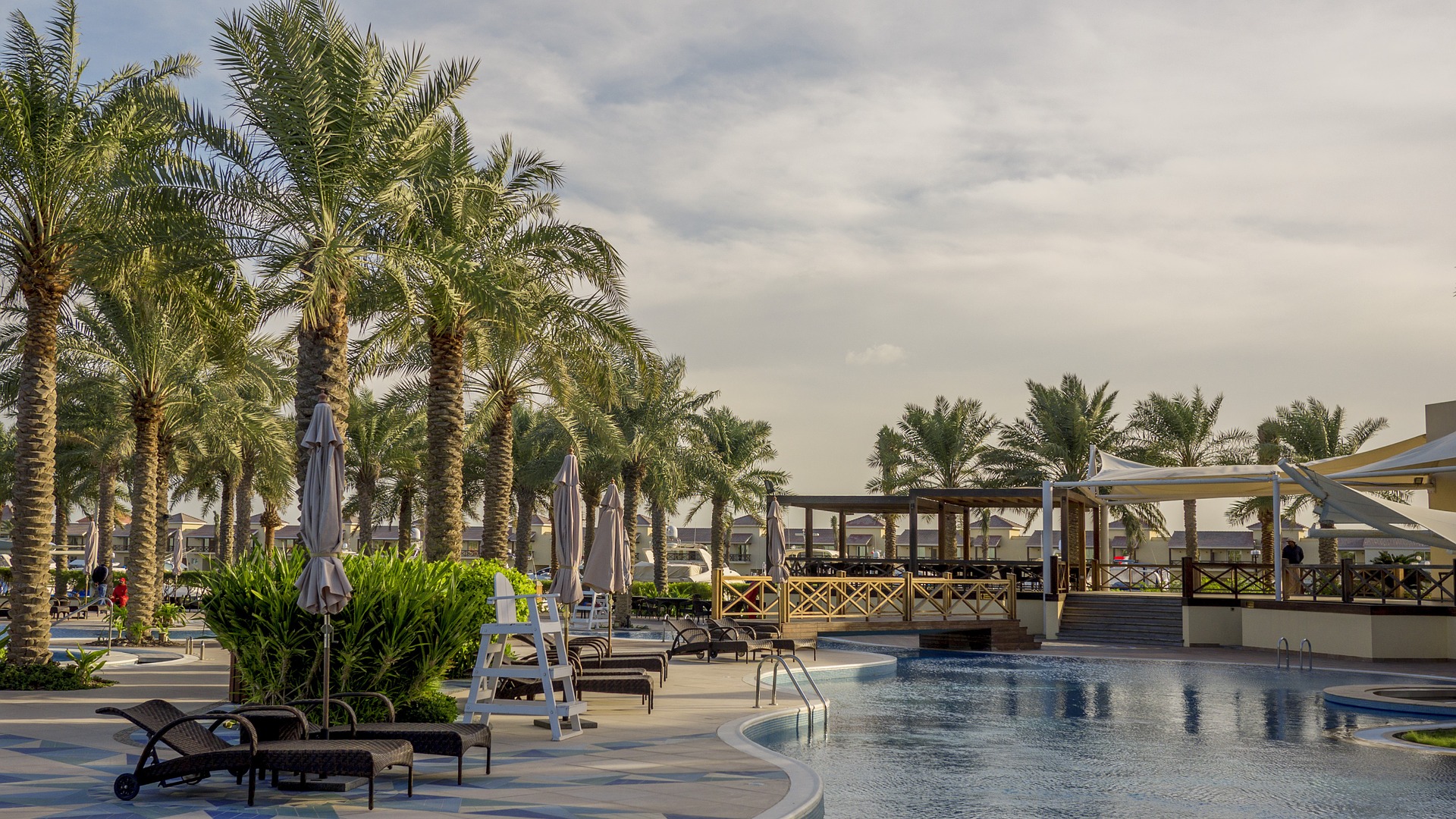
- Resort hotels and beach clubs: The only places with good beaches, which are private; swimwear is fine here.
Hotels are the biggest cost of a trip to Bahrain. During the Formula One Grand Prix weekend rates can be several times higher than usual, so book early or choose another date. Bahraini law does not stop unmarried couples from sharing a room, but some hotels may ask for proof of marriage: check the hotel's policy when you book.
Eat and drink
Dishes to try
- Machboos: Spiced rice, usually basmati, cooked with meat and vegetables.
- Muhammar: A sweet rice dish, usually served with fish.
- Halwa showaiter: The best known traditional dessert, a jelly-like halwa with saffron and nuts.
- Khubz and samosas: Flatbread, sold almost everywhere, and fried or baked pastries with savoury fillings.
Drinks
- Arabic coffee (gahwa): Part of the traditional welcome, poured from a dalla pot into small cups called finjan.
- Alcohol: Legal, and served in hotels of four stars and above; being drunk in public is an offence.
| Tipping | Not generally expected. Tipping the delivery rider who brings your food is a kind gesture. |
|---|
The main dining area is Adliya, with cafes, lounges and restaurants; in Juffair a street of American restaurants is known as "Americans' Alley". Traditional Bahraini food is hard to find in restaurants and is mostly cooked at home, so an invitation from a Bahraini family is the best way to taste it. Vegetarians eat well in the many Indian restaurants; vegan options are limited.
During Ramadan restaurants are closed in daylight hours and serve food only from iftar, the meal that breaks the fast at sunset. Eating, drinking or smoking in public during the day is an offence in that month.
Entry requirements and visas
| Passport validity | At least 6 months: from your arrival date for British citizens, beyond your departure date for Canadians |
|---|
| Passport | Entry | Max stay | Notes |
|---|---|---|---|
| United Kingdom | Visa on arrival | 14 days | A visa is required: get it online in advance, from the embassy, or on arrival. Visit visas of up to 6 months are also available. |
| Canada | Evisa | A tourist visa is required: apply online (eVisa) or at a Bahraini government office before you travel. |
Other nationalities: check the official source below.
Most visitors need a visa, which many nationalities can get online or on arrival; citizens of the other Gulf Cooperation Council countries do not need one. You may be asked for proof of onward or return travel. Rules depend on your passport and can change: check the official link before you book.
If you arrive from a country with a risk of yellow fever, you need a vaccination certificate. Non-Bahraini travellers who have been in a country affected by the Ebola outbreak in the past 30 days are refused entry. People involved in a legal or debt dispute can be stopped from leaving the country by a travel ban, sometimes without knowing in advance. If you plan to continue to Saudi Arabia by road, check that your Saudi visa allows entry over the causeway.
Money and payments
| Currency | Bahraini Dinar (BHD) |
|---|---|
| Cards | Widespread |
The currency is the Bahraini dinar (BHD, BD), divided into 1,000 fils. It is pegged to the US dollar, and one dinar is worth about US$2.66, so prices look lower than they are: a BD 10 taxi ride costs almost US$27. Saudi riyals are accepted almost everywhere at 10 riyals to the dinar, and US dollars are widely taken too, but you will get your change in dinars.
Credit cards are widely accepted and ATMs are easy to find; cash is really needed only for the bus. Spend or change your dinars before you leave, as they are hard to exchange abroad. VAT of 10% is usually included in prices.
Health
| Required vaccines | Yellow fever certificate, only if you arrive from a country with a risk of yellow fever |
|---|---|
| Recommended vaccines | Routine vaccines, including measles (MMR) and the seasonal flu, Hepatitis A, Hepatitis B, Typhoid: the CDC recommends it for most travellers, Canada for some, so ask a travel clinic, Rabies, if you will work with animals, Mpox, for travellers at risk of sexual exposure |
Check the vaccines you need with a travel health professional at least 6 to 8 weeks before you go. Medical services are adequate, but treatment must be paid for on the spot, emergency care included: take travel insurance that covers hospital stays and medical evacuation. If you travel with prescription medicines, carry a doctor's note, and check with a Bahraini embassy whether you need approval to bring them in.
The heat is the main everyday risk: from April onwards temperatures can climb towards 50 °C, so drink plenty of water and protect yourself from the sun. Outdoor air quality can be poor, and dust storms can cause breathing problems. Cases of MERS have been reported; avoid contact with camels and raw camel milk. Tap water is described as drinkable, but bottled or boiled water is recommended. For an ambulance, dial 999.
This is general information, not medical advice: check with a travel health professional before you go.
Safety
- United States: Level 3: Reconsider Travel (2026-10-20)
- Canada: Avoid non-essential travel (2026-10-20)
- United Kingdom: No advice against travel (2026-10-20)
The UK, Canadian and US governments give different advice for Bahrain: see their current levels above. Their warnings centre on the conflict in the region: according to Canada, missile and drone attacks have resumed and struck targets in Bahrain, including civilian infrastructure, and flights can be cancelled and airspace closed at short notice. In April 2026 the airspace and the King Fahd Causeway to Saudi Arabia closed at the same time. Keep your travel documents up to date and your departure plans under review, follow the instructions of the local authorities, and if you are told to take shelter, stay indoors away from windows. Never touch drone or missile fragments, and do not film or photograph military sites, security operations or damage: it is a crime.
There is also a threat of terrorism in the Gulf region, and protests take place, sometimes with little warning, mostly in villages and suburbs such as Sitra, Bani Jamra, Karbabad, Saar, Karzakan, Diraz, Sanabis, Al Dair, Adliya, Nuwaidrat and along the Budaiya Highway. Leave the area if a crowd gathers. To report a suspicious object, call the police on 999 or the police hotline 8000 8008.
Crime is low and violent crime is rare. Pickpocketing and bag snatching happen, especially in the souqs; be careful there and in poorer districts after dark. Use only official taxis. Women travelling alone may face harassment. Waterways around Bahrain are closed to boats from 6:30pm to 4am, and traditional dhows may not meet Western safety standards: check that life jackets are on board.
Customs and etiquette
Bahrain is more relaxed than its neighbours, but Islamic values shape public life. Dress modestly in malls, restaurants, parks and religious sites: clothes should not be see-through, women should cover shoulders and knees, and men should not wear shorts in public; some museums and government offices refuse entry in shorts. Swimwear is fine at hotel pools and beach clubs, but nudity, including topless sunbathing, is forbidden. Public displays of affection are not accepted, and Wikivoyage reports that couples have been arrested for kissing in public.
During Ramadan do not eat, drink, smoke or chew gum in public in daylight, even in your car, and avoid loud music and dancing. Swearing, spitting, rude gestures (road rage included) and disrespect towards religion can lead to prison and deportation. Posts on social media that criticise the government or the monarchy, or mock the country, can be a crime. By law you must carry photo ID, such as your passport. Drones need a licence, and the penalties for drugs are severe, even for traces; some skincare products and vape refills with CBD are illegal. The working week runs from Sunday to Thursday.
Language
| Official languages | Arabic |
|---|---|
| English | Widespread |
| Hello | مرحبا marḥaban |
|---|---|
| Peace be with you (formal greeting) | السلام عليكم as-salaamu alaikum |
| Please | من فضلك min faḍlak (to a man), min faḍlik (to a woman) |
| Thank you | شكرا shukran |
| Excuse me | لو سمحت law samaḥta (to a man), law samaḥti (to a woman) |
| Goodbye | مع السلامة ma'a as-salaamah |
| Do you speak English? | هل تتكلم الانجليزية؟ hal tatakallam al-ingliziyyah? |
| How much is this? | بكم هذا؟ bikam hatha? |
What to pack
- Passport valid at least 6 months: Needed for entry, and you must carry photo ID at all times.
- Plug adapter: Bahrain uses British three-pin sockets (type G).
- Modest clothes: Long trousers and covered shoulders and knees for malls, souqs, museums and mosques.
- A sweater: Evenings from December to February can be cool.
- Sun protection and a water bottle: The heat is intense from April to October.
- Doctor's note for prescription medicines: Some medicines need approval before you bring them in.
- Travel insurance with medical evacuation: You must pay for treatment on the spot.
Quick reference
Country facts
| Capital | Manama |
|---|---|
| Population | 1,600,366 (2025) |
| Area | 800 km² |
| Time zone | Asia/Bahrain (UTC+3) |
| Calling code | +973 |
| Driving side | right |
Electricity and plugs
| Plug types | G |
|---|
Staying connected
| SIM and eSIM | The main operators are Batelco, Zain and STC Bahrain. Prepaid SIM cards are sold at the airport and in small shops; 4G covers the country and 5G is spreading, though coverage may be missing in some remote parts. |
|---|---|
| Wi-Fi | Free Wi-Fi in many malls and restaurants; some malls offer the Bahrain Wi-Fi service with 15 free minutes a day. |
Useful apps
- Uber and Careem: Ride-hailing, with a pick-up point at the airport.
- Talabat: Food delivery; you need a Bahraini or GCC phone number to register.
Emergency numbers
| Emergency | 999 |
|---|
Frequently asked questions
Do I need a visa for Bahrain?
Most visitors do. British citizens can get one online, from the embassy or on arrival; Canadians must apply before travelling, online or at a Bahraini office. Citizens of the other Gulf states do not need a visa. Check the official link before you book.
Is alcohol legal in Bahrain?
Yes. It is served in hotels of four stars and above, but being drunk in public is an offence, and there is zero tolerance for alcohol when driving.
When is the best time to visit Bahrain?
From November to March, when it is warm rather than hot. From May to September the heat is extreme and humid.
Can I pay with Saudi riyals or cards?
Yes. Cards are widely accepted, and Saudi riyals are taken almost everywhere at 10 riyals to one dinar, though change comes in dinars.
What should I wear in Bahrain?
Modest clothes in public: no see-through clothing, shoulders and knees covered for women, no shorts for men in public, and some museums and offices refuse entry in shorts. Swimwear is fine at hotel pools and beach clubs.
Can I drink the tap water in Bahrain?
It is described as drinkable, but bottled or boiled water is recommended. Bottled water is sold everywhere.
Sources This guide was last checked on · 18 sources
- Wikivoyage: Bahrain · Overview, Places to visit, Things to do, Itineraries, Climate and best time to visit, Getting there and around, Where to stay, Eat and drink, Entry requirements and visas, Money and payments, Health, Safety, Customs and etiquette, Language, What to pack, Electricity and plugs, Staying connected, Frequently asked questions
- WMO World Weather Information Service: Bahrain/Manama · Climate and best time to visit, Frequently asked questions
- Government of Canada: Bahrain travel advice (updated 21 August 2026) · Climate and best time to visit, Getting there and around, Eat and drink, Entry requirements and visas, Money and payments, Health, Safety, Customs and etiquette, What to pack, Staying connected, Frequently asked questions
- Nager.Date: public holidays in Bahrain, 2026 · Holidays and events
- UK FCDO: Bahrain safety and security · Getting there and around, Where to stay, Eat and drink, Safety, Customs and etiquette, What to pack, Frequently asked questions
- UK FCDO: Bahrain entry requirements · Entry requirements and visas, Health, What to pack, Frequently asked questions
- Wikidata · Money and payments, What to pack, Country facts, Electricity and plugs
- ISO 4217 (SIX), published 2026-09-17 · Money and payments
- UK FCDO: Bahrain health · Health, What to pack
- US CDC: Travelers' health, Bahrain · Health
- US Department of State: Bahrain travel advisory · Safety
- UK FCDO: Bahrain travel advice · Safety
- UK FCDO: Bahrain warnings and insurance · Safety
- Wikivoyage: Arabic phrasebook · Language
- World Bank, SP.POP.TOTL · Country facts
- World Bank, AG.LND.TOTL.K2 · Country facts
- IANA Time Zone Database, zone.tab · Country facts
- UK FCDO: Bahrain getting help · Emergency numbers
Suggest an update
Travel rules, prices and timetables change. If something in this guide is out of date, tell us: we check every suggestion against an official source before changing the page.