

- Local time
- 10:51
- Currency
- US Dollar (USD)
- Capital
- San Salvador
- Calling code
- +503
- Drive on the
- right
Overview
El Salvador, the smallest country in Central America, has Pacific surf beaches, volcanoes to climb, colonial Suchitoto and the Maya site of Joya de Cerén.
El Salvador covers only about 21,040 km², the smallest country in Central America and the most densely populated. It has 25 volcanoes and 14 lakes, forests in the mountains and quiet beaches on the Pacific, and the surf breaks of La Libertad, El Zonte and El Cuco draw surfers from all over Central America. Inland you find colonial towns such as Suchitoto and Apaneca, the rural towns of the Ruta de las Flores and the archaeological sites of Joya de Cerén, a UNESCO World Heritage Site, and Tazumal.
San Salvador sits in a valley at the foot of the San Salvador volcano, with restaurants, shopping malls and nightlife in the Zona Rosa. The country uses the US dollar. Official advice differs: the US rates El Salvador at Level 1: Exercise Normal Precautions, while Canada advises a high degree of caution due to the risk of arbitrary enforcement of local laws and crime.
- Surfing on the Pacific: La Libertad, El Sunzal, El Zonte and El Cuco are known for their surf.
- Joya de Cerén: An archaeological site called the Pompeii of Central America, a UNESCO World Heritage Site.
- Suchitoto: A colonial town of well-kept buildings and cobblestone streets.
- Ruta de las Flores: A mountain route through six rural towns.
- Volcano hikes: Santa Ana, Izalco, El Boquerón and Chaparrastique, best climbed with a guide.
- Pupusas: The most common Salvadoran dish, with more than 50 stands competing in Olocuilta.
Places to visit
- City
- Park
- Mountain
- Area
Cities
- San Salvador: The capital and largest city, in a valley at the foot of the San Salvador volcano.
- Santa Ana: The second city, surrounded by coffee farms (fincas) that climb the hills.
- San Miguel: The largest city of the east, a farming centre with many beaches nearby.
- Suchitoto: A colonial town of well-kept buildings and cobblestone streets.
- La Libertad: El Salvador's surf beach, near San Salvador.
- Acajutla: A seaside town in the west, popular for bodysurfing.
- Ahuachapán: A small city near the Guatemalan border.
Beyond the cities
- Joya de Cerén (site): An archaeological site known as the Pompeii of Central America, a UNESCO World Heritage Site.
- Tazumal (site): Ancient structures in Chalchuapa, with a main pyramid about 33 m high and a museum of Pipil artefacts.
- Ruta de las Flores (area): A mountain route that visits six rural towns.
- Los Volcanes National Park (park): A national park also known as Cerro Verde.
- El Imposible National Park (park): A well-kept and almost empty national park in the west.
- Montecristo National Park (park): A national park with a cloud forest.
- El Pital (mountain): The highest mountain in El Salvador, with its rural life.
- El Cuco (coast): A surf beach near San Miguel, one of several beaches in the east with Playa Las Flores and Playa El Esteron.
Regions
- Western El Salvador: The west, with Santa Ana, the seaside town of Acajutla and El Imposible National Park.
- Eastern El Salvador: The east, around San Miguel, its largest city, and the beaches near it.
Things to do
See
- Joya de Cerén and Tazumal: The 'Pompeii of Central America', a UNESCO site, and the pyramid of Tazumal in Chalchuapa, with a museum on the Pipil culture.
- Colonial towns: Suchitoto, Apaneca, Juayúa and Panchimalco are the colonial towns to visit.
- Montecristo and El Imposible: A cloud forest and a quiet national park in the west.
Do
- Surf the Pacific coast La Libertad: La Libertad, El Sunzal, El Zonte and El Cuco are the best-known spots, and El Salvador is gaining a reputation for its surfing. Strong undertows make swimming dangerous, and there are few lifeguards.
- Climb a volcano: Santa Ana, Izalco, El Boquerón and Chaparrastique are the best known. Go with an experienced guide, in daylight, and check first: access can close for volcanic activity or high winds.
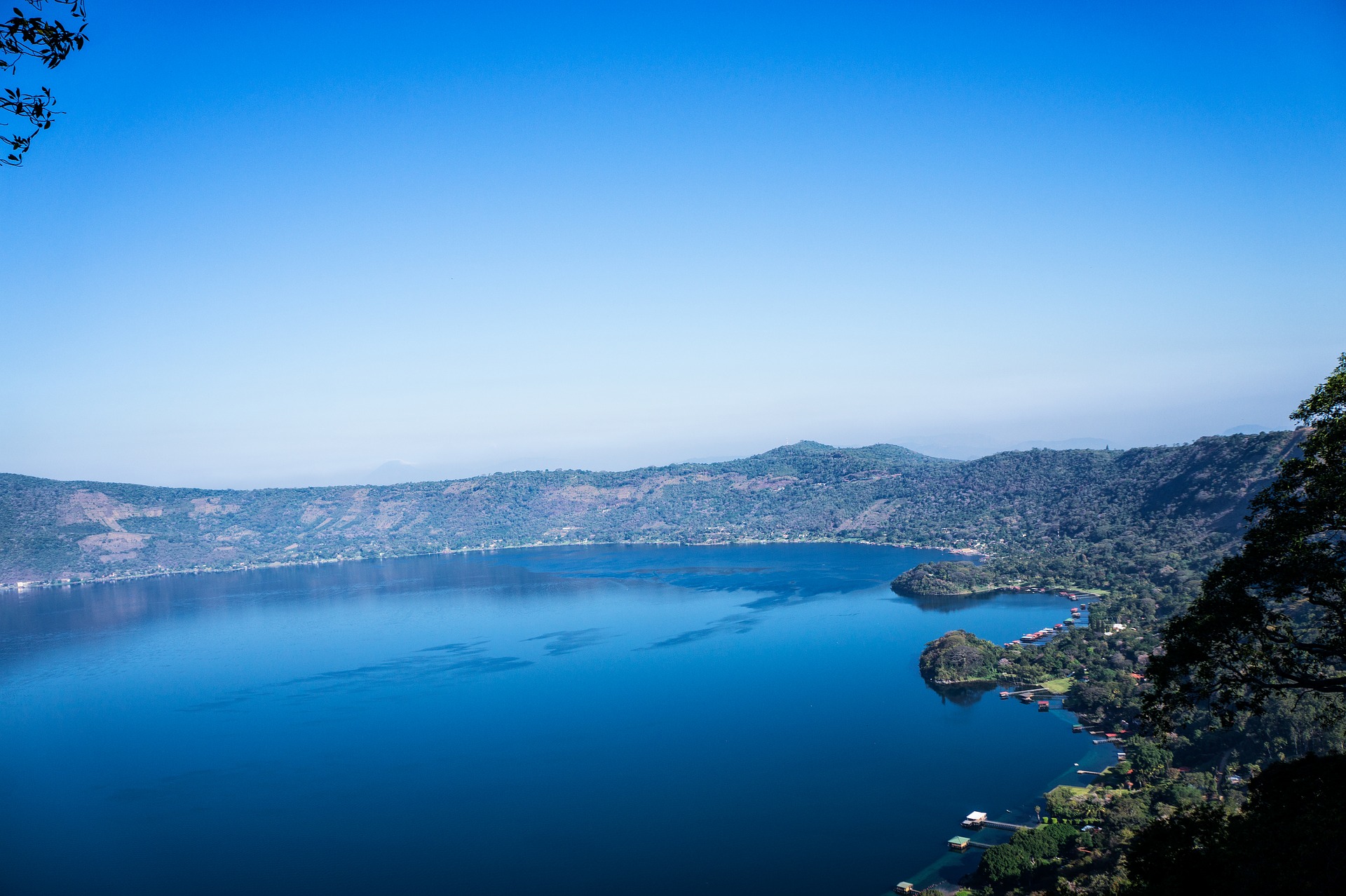
- Lake Coatepeque Santa Ana: Swimming, windsurfing and jet skiing on a lake near Santa Ana.
- Lake Olomega San Miguel: Nature walks and boat trips to Isla de Olomega.
Eat
- Pupusas in Olocuilta Olocuilta: More than 50 pupusa stands on the highway towards the airport.
Shop
- Crafts: Artisans in La Palma, the craft capital of the country, and San Juan El Espino.
After dark
- Zona Rosa San Salvador: Bars, nightclubs and some of the best restaurants of the capital in a small area.
Itineraries
San Salvador and Suchitoto in 4 days (4 days)
- San Salvador (2 nights): The Centro Histórico by day and the Zona Rosa for dinner.
- Suchitoto (2 nights): Colonial streets and architecture.
Volcanoes, flowers and surf in 7 days (7 days)
- Santa Ana (2 nights): A guided climb of the Santa Ana volcano and Lake Coatepeque.
- Ruta de las Flores (2 nights): The mountain route through six rural towns.
- La Libertad (3 nights): The surf beach; El Sunzal and El Zonte are other well-known surf spots.
The east in 4 days (4 days)
- San Miguel (2 nights): The countryside and Lake Olomega.
- El Cuco (2 nights): Surf and the beaches near San Miguel.
Climate and best time to visit
| Jan | Feb | Mar | Apr | May | Jun | Jul | Aug | Sep | Oct | Nov | Dec | |
|---|---|---|---|---|---|---|---|---|---|---|---|---|
| Max °C | 31 | 32 | 33 | 33 | 31 | 30 | 30 | 30 | 30 | 30 | 30 | 30 |
| Min °C | 17 | 18 | 18 | 20 | 20 | 20 | 20 | 20 | 20 | 19 | 18 | 17 |
| Rain mm | 3 | 2 | 10 | 35 | 180 | 282 | 335 | 323 | 339 | 210 | 51 | 8 |
El Salvador is tropical, with a rainy season and a dry season. In San Salvador the average maximum stays between about 29 °C and 33 °C all year, and the minimum between 17 °C and 20 °C. December to April is the dry season, with less than 35 mm of rain a month; from May to October each month brings between about 180 mm and 340 mm, and November is in between, with about 50 mm.
Temperatures change with altitude more than with the season: the Pacific coast is warm and the mountains are cooler. The UK says the rainy season runs from June to November, at the same time as the Caribbean hurricane season, with heavy rain, thunderstorms, floods and landslides, especially in the mountains. In the dry season the risk of wildfires rises, particularly around San Salvador.
Holidays and events
- 1 May 2026 · Labour Day
- 3 May 2026 · The Day of the Cross
- 7 May 2026 · Soldiers' Day
- 10 May 2026 · Mother's Day
- 10 May 2026 · Father's Day
- 1 August 2026 · August Festivals
- 2 August 2026 · August Festivals
- 3 August 2026 · August Festivals
- 4 August 2026 · August Festivals
- 5 August 2026 · August Festivals
- 6 August 2026 · August Festivals
- 7 August 2026 · August Festivals
- 15 September 2026 · Independence Day
- 1 October 2026 · Children's Day
- 12 October 2026 · Ethnic Pride Day
- 2 November 2026 · Day of the Dead
- 7 November 2026 · National Pupusa Festival
- 8 November 2026 · National Pupusa Festival
- 9 November 2026 · National Pupusa Festival
- 10 November 2026 · National Pupusa Festival
- 11 November 2026 · National Pupusa Festival
- 12 November 2026 · National Pupusa Festival
- 13 November 2026 · National Pupusa Festival
- 21 November 2026 · Day of the Queen of Peace
- 25 December 2026 · Christmas Day
- 31 December 2026 · New Year's Eve
Getting there and around
| Main airports | SAL |
|---|
Getting there
By air: El Salvador International Airport (SAL) is near San Juan Talpa, about 50 km or 45 minutes' drive south of San Salvador. Avianca, the national airline, flies around Central America and to North and South America; Volaris, American, Copa, Delta, United, Iberia (from Madrid) and others also serve it. Your hotel can arrange your transfer, and authorised airport taxi drivers wear clear ID badges.
By land: the Pan-American Highway (CA-1) is the main road through the country. International coaches link San Salvador with Guatemala City, Tegucigalpa, San Pedro Sula, Managua and San José, and shuttles run from Antigua in Guatemala to the beaches. The UK says vehicles have been attacked near the border with Guatemala, mostly on the Guatemalan side, and cars with Salvadoran plates are targeted: cross in the morning so you arrive before dark, as borders sometimes close in the early evening. Use official crossings only, and avoid changing money at the border.
Getting around
Buses: local buses are cheap and run often, but the UK and Canada advise against public buses because of theft, armed robbery and harassment; use reputable coach companies and tour operators instead. Microbuses are crowded and robberies are easy. There are no passenger trains of use to travellers. Uber is cheap and easy to find at the airport and in San Salvador, but outside that area you may wait a long time. With taxis, do not take one from a stand or hail one in the street, and agree the fare first.
Driving: roads between the main tourist places are good or acceptable, while small roads are often poor, worse in the rainy season, and in isolated areas you need a 4x4. Watch for potholes and missing manhole covers, and avoid driving between cities at night. Armed robbers target cars stopped at junctions, so keep doors locked and windows closed. Police checkpoints are common: carry your documents and the mandatory safety equipment, and do not drink any alcohol before driving. UK drivers can use a photocard licence and Canadian drivers their own licence for the first 90 days. The UK says El Salvador does not accept the international driving permit, while Canada says you must carry one if you drive between countries. Car insurance is essential. Rental companies include Alamo and Hertz.
Flying to El Salvador? PartnerCompare fares and find the cheapest datesSearch flightsWhere to stay
- Hotels: In San Miguel, high-end hotels stand on Avenida Roosevelt by the Metrocentro mall and budget hotels near the bus terminal.
- Beach hostels: On the coast, where shuttles from Antigua in Guatemala drop travellers.
Canada advises choosing hotels with robust security measures. Keep your passport and valuables in the hotel safe, and read the hotel's earthquake instructions when you arrive.
Eat and drink
Dishes to try
- Pupusa: A round corn tortilla filled with cheese and often chicharrón (shredded pork); Olocuilta is famous for them.
- Plátanos: Fried sliced plantains, usually with beans, sour cream, cheese and sometimes eggs.
- Yuca con chicharrón: Cassava with pork.
- Pastelitos de carne: Small meat pastries.
- Panes con pavo: Turkey sandwiches.
- Cóctel de conchas: Black clams with lime, onion, tomato, coriander and chillies in a spicy black sauce, on the coast.
Drinks
- Horchata: A drink made from rice and morro seeds.
- Cebada: A smooth, sweet pink barley drink.
- Fresh fruit juices: Guava, jocote, marañón and others; drink them at your own risk.
The everyday diet is rice and beans, with seafood on the coast. Restaurants serve food from many countries, the usual fast-food chains are easy to find in San Salvador, Santa Tecla and Santa Ana, and the Zona Rosa in the capital has some of the best restaurants. If you are not used to street food, try your first pupusas in a restaurant. Supermarkets such as La Despensa de Don Juan and Super Selectos are a cheaper option than eating out every night.
Entry requirements and visas
| Passport validity | The UK says at least 6 months after the day you arrive; Canada says valid on entry, in good condition and with at least one blank page. |
|---|
| Passport | Entry | Max stay | Notes |
|---|---|---|---|
| United Kingdom | Visa free | 180 days | Tourism or business. Within the CA-4 area (El Salvador, Guatemala, Nicaragua) the shared limit is 90 days; British nationals need a visa for Honduras. |
| Canada | Visa free | 180 days | Tourist visa not required for stays up to 180 days. Other CA-4 countries may recognise only the first 90 days. |
Other nationalities: check the official source below.
Visitors from the UK and Canada can stay in El Salvador up to 180 days without a visa. Officials may ask for a return or onward ticket and proof of enough money. Declare cash or travellers' cheques worth US$10,000 or more. You need a yellow fever certificate only if you come from a country with yellow fever risk. Because of Ebola, if you have been in or through Angola, Burundi, Ethiopia, Kenya, the Central African Republic, the Democratic Republic of the Congo, Rwanda or Uganda in the 21 days before arrival, you face a 21-day quarantine and may be refused entry if you cannot meet it.
CA-4: El Salvador, Guatemala, Honduras and Nicaragua share one period of stay of up to 90 days. It starts in the first of these countries you enter and does not restart when you cross between them, and the officer at that first entry decides the exact length; you still pass immigration and should get a stamp at every border. El Salvador itself may grant up to 180 days, but its neighbours may count only the first 90, so plan any trip to Guatemala or Nicaragua around that. Canada says that to stay longer within the CA-4 area you must ask for an extension, and pay a fee, in one of the other CA-4 countries before the 90 days run out. Overstaying means a fine.
Indian nationals and nationals of African countries travelling through El Salvador pay a fee of US$1,130 (2026). Our sources do not cover other passports, so ask the Salvadoran embassy. Rules depend on your passport and can change: check the official link before you book.
Money and payments
| Currency | US Dollar (USD) |
|---|---|
| Cards | Common |
El Salvador uses the US dollar ($), and bitcoin is also legal tender. Bring small notes of $1, $5, $10 and $20: many shops, bars and restaurants do not accept $50 or $100 notes, which you can change at any bank. British pounds are almost impossible to change, so arrive with dollars. Coins of $1 minted in El Salvador cannot be used in the United States.
ATMs are easy to find, especially in San Salvador and La Libertad. Use the ones in shopping centres or inside banks, avoid them at night and in badly lit places, and tell your bank you are travelling. Card fraud and identity theft happen, including with the local Chivo bitcoin wallet. The UK says bitcoin may not be accepted everywhere, so make sure you can get US dollars if needed. Wikivoyage notes that foreigners cannot install the Chivo app.
Health
| Required vaccines | Yellow fever certificate, only if you arrive from a country with yellow fever risk (from 1 year of age, including airport transits over 12 hours) |
|---|---|
| Recommended vaccines | Routine vaccines, including measles (MMR), Hepatitis A, Hepatitis B, Typhoid, for most travellers, Rabies, for some travellers, Mpox, for travellers at risk of sexual exposure |
| Malaria | None |
| Tap water | Not safe |
Mosquitoes carry dengue, chikungunya and Zika, so use repellent; Chagas disease, spread by bugs active at night, is a low risk for most travellers. Rabies is carried by dogs and bats, and the vaccine after a bite may only be available in larger medical facilities. The CDC does not recommend the yellow fever vaccine for El Salvador. Altitude sickness is a risk in parts of the country. Ask a travel health professional at least 8 weeks before you go.
Do not drink tap water: bottled water is cheap and easy to find. Rivers are often contaminated and unsafe for swimming. Care outside San Salvador is usually basic and state hospitals are under-equipped, so use private clinics, carry a copy of your insurance and make sure it covers evacuation; most medical staff speak little English. UK prescriptions cannot be used, but pharmacies are easy to find, including the chains Farmacia San Nicolás, Farmacias UNO and Farmacias Económicas. For an ambulance, dial 911. Canada also lists 132, a government line for urgent medical help.
This is general information, not medical advice: check with a travel health professional before you go.
Safety
- United States: Level 1: Exercise Normal Precautions (2026-10-20)
- Canada: Exercise a high degree of caution (2026-10-20)
- United Kingdom: No advice against travel (2026-10-20)
The US rates El Salvador at Level 1: Exercise Normal Precautions. Canada says to exercise a high degree of caution due to the risk of arbitrary enforcement of local laws and crime. The UK does not advise against travel to any part of the country, and says security has improved considerably but that violent and petty crime still exist.
State of exception: Canada and the UK explain that emergency measures in force since March 2022 give the security forces wider powers to search, seize and detain people, including foreigners. In practice:
- Always carry ID: the UK suggests a copy of your passport photo page. Expect checkpoints and searches, and co-operate with police and soldiers. Police may detain people they suspect of gang membership, and Canada notes that tattoos may be seen as a sign of it.
- Foreigners may not take part in political activity, including demonstrations, and risk detention and deportation. Canada advises not to comment on local or political events on social media.
- If you are arrested, consular help may be delayed or refused.
Crime: there have been isolated robberies, carjackings and assaults on tourists. In San Salvador the UK names Santa Elena, San Benito, Maquilishuat and the larger malls as areas with better security, and Canada says the Centro Histórico is much safer than the rest of downtown. Avoid walking alone at night or on remote trails, watch for pickpockets at bus stations, airports and tourist sites, and never resist a robbery. Do not use public buses or unofficial taxis. Never leave a drink unattended, and avoid informal guides.
Nature: the Pacific has strong undertows, especially at La Bocana de San Diego, and few lifeguards; avoid isolated beaches. Climb volcanoes with a guide and in daylight, and check warnings first. There is a small risk of landmines in remote areas off-road. Earthquakes are frequent, tsunamis can hit the coast, and the rainy season brings floods and landslides. The tourist police (POLITUR) answer on +503 2224 2705 according to the UK, and on +503 2511 8302 or +503 2511 8300 according to Canada.
Customs and etiquette
Salvadorans are known for their hospitality. With people you do not know, use the polite forms señor, señora and usted. Society is conservative and religious. Same-sex relationships are not illegal, but same-sex marriage, civil unions and adoption are, and public acceptance is limited: the UK warns that public displays of affection between people of the same sex, especially outside San Salvador, can lead to harassment and even violence.
Laws are strictly enforced. Drugs, including cannabis, are illegal and carry severe penalties, and drink-driving is not tolerated. Carry ID at all times and co-operate at checkpoints. It is illegal to photograph military sites and equipment, or schools when children are present, and Canada advises asking before you photograph people. Avoid any political activity, which is forbidden for foreigners.
Language
| Official languages | Spanish |
|---|
| Hello | Hola OH-lah |
|---|---|
| Good morning | Buenos días BWEH-nohs DEE-ahs |
| Please | Por favor POHR fah-BOHR |
| Thank you | Gracias GRAH-syahs |
| Excuse me | Disculpe dees-KOOL-peh |
| Do you speak English? | ¿Habla usted inglés? AH-blah oos-TEHD een-GLEHS |
| I don't understand | No entiendo NOH ehn-TYEHN-doh |
| Where is the toilet? | ¿Dónde está el baño? DOHN-deh ehs-TAH EHL BAH-nyoh |
What to pack
- Passport valid for 6 months, and a copy of the photo page: You must carry ID at all times, and checkpoints are common.
- Onward ticket and hotel bookings: Officials may ask for them on arrival.
- US dollars in small notes: Many shops refuse $50 and $100 notes, and pounds are almost impossible to change.
- Insect repellent: Mosquitoes carry dengue, chikungunya and Zika.
- A first-aid kit: Useful in the countryside and at archaeological sites.
- A copy of your insurance: Some hospitals want proof of insurance before treating you.
Quick reference
Country facts
| Capital | San Salvador |
|---|---|
| Population | 6,365,503 (2025) |
| Area | 20,720 km² |
| Time zone | America/El_Salvador (UTC-6) |
| Calling code | +503 |
| Driving side | right |
Staying connected
Useful apps
- Uber: Cheap rides at the airport and in San Salvador; check the driver and plate before getting in
- QFind: Local GPS navigation for towns and rural areas
Emergency numbers
| Emergency | 911 |
|---|
Frequently asked questions
Do I need a visa for El Salvador?
Not with a UK or Canadian passport: you can stay up to 180 days. Officials may ask for an onward ticket and proof of funds. Check the official link before you book.
How does the CA-4 agreement affect my trip?
El Salvador, Guatemala, Honduras and Nicaragua share one period of stay of up to 90 days, which starts in the first of these countries you enter. El Salvador may grant up to 180 days, but its neighbours may count only the first 90.
What currency is used in El Salvador?
The US dollar, and bitcoin is also legal tender. Bring small notes, as many shops refuse $50 and $100 notes.
Can I drink the tap water in El Salvador?
No. Bottled water is cheap and easy to find.
Is it safe to use public buses in El Salvador?
The UK and Canada advise against public buses because of theft and robbery. Use reputable coach companies, pre-booked taxis or Uber instead.
When is the best time to visit El Salvador?
December to April is the dry season, with very little rain in San Salvador. The rainy season brings heavy rain from about May to October or November.
Sources This guide was last checked on · 17 sources
- Wikivoyage: El Salvador · Overview, Places to visit, Things to do, Itineraries, Climate and best time to visit, Getting there and around, Where to stay, Eat and drink, Entry requirements and visas, Money and payments, Health, Customs and etiquette, Language, What to pack, Staying connected, Frequently asked questions
- Wikidata: El Salvador · Overview, Places to visit, Money and payments, Country facts
- US Department of State: El Salvador travel advisory · Overview, Safety
- Government of Canada: El Salvador travel advice (updated 14 October 2026) · Overview, Things to do, Getting there and around, Where to stay, Entry requirements and visas, Money and payments, Health, Safety, Customs and etiquette, What to pack, Staying connected, Frequently asked questions
- UK FCDO: El Salvador safety and security · Things to do, Climate and best time to visit, Getting there and around, Where to stay, Money and payments, Safety, Customs and etiquette, What to pack, Frequently asked questions
- WMO World Weather Information Service: San Salvador · Climate and best time to visit
- Nager.Date: public holidays in El Salvador, 2026 · Holidays and events
- UK FCDO: El Salvador entry requirements · Entry requirements and visas, What to pack, Frequently asked questions
- ISO 4217 (SIX), published 2026-09-17 · Money and payments
- CDC Travelers' Health: El Salvador · Health, Frequently asked questions
- UK FCDO: El Salvador health · Health, What to pack, Frequently asked questions
- UK FCDO: El Salvador travel advice · Safety
- UK FCDO: El Salvador getting help · Safety, Emergency numbers
- Wikivoyage: Spanish phrasebook · Language
- World Bank, SP.POP.TOTL · Country facts
- World Bank, AG.LND.TOTL.K2 · Country facts
- IANA Time Zone Database, zone.tab · Country facts
Suggest an update
Travel rules, prices and timetables change. If something in this guide is out of date, tell us: we check every suggestion against an official source before changing the page.