

- Local time
- 22:05
- Currency
- Euro (EUR)
- Capital
- Marigot
- Calling code
- +590
- Drive on the
- right
Overview
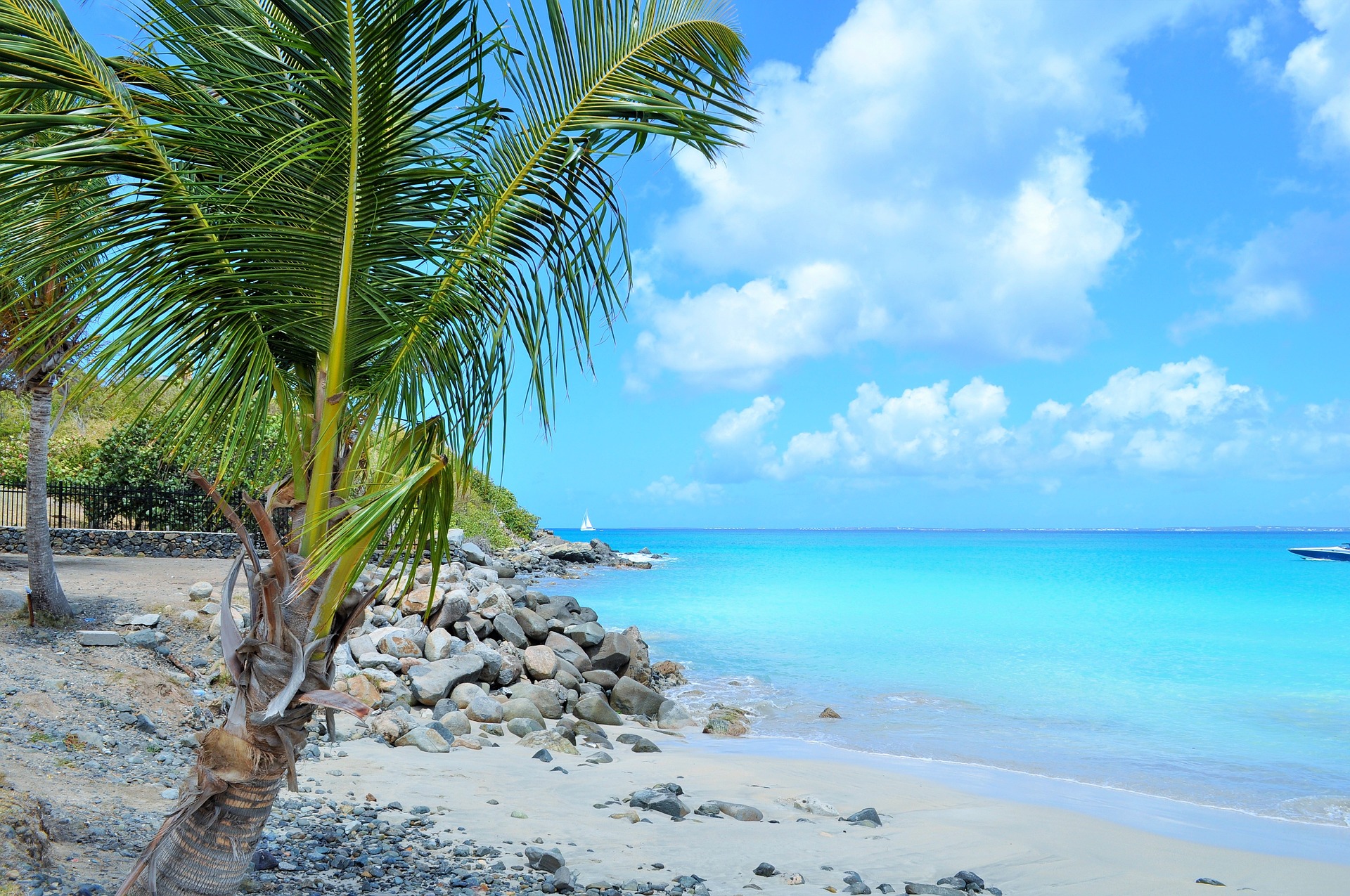
The French side of Saint Martin: the market town of Marigot, the restaurants of Grand Case, Orient Bay and Pic du Paradis, the island's highest point, across an open border from Dutch Sint Maarten.
Saint-Martin is the northern two-thirds of Saint Martin, a Caribbean island it shares with Dutch Sint Maarten. Governed from Guadeloupe until 2007, it is now a collectivity of its own within France, with the same laws as France. It is part of the European Union but not of the Schengen Area. There is no real border with the Dutch side: only monuments and signs mark the line, and people and vehicles cross freely.
The French side is less developed than the Dutch side and has no casinos, but it holds more of the island's natural sights, including Pic du Paradis, the highest point. Marigot, the capital, has a waterfront market and is where most inter-island ferries call, and the old fishing village of Grand Case is known for its restaurants. Orient Bay, partly clothing optional, has a marine reserve for snorkelling. French is the native language, English is widely spoken, and the euro is the currency, though US dollars are widely accepted.
- Grand Case: An old fishing village known for French and seafood restaurants, with a carnival mood on Tuesday evenings in spring.
- Marigot market: The open-air waterfront market for souvenirs and spices, best visited on Wednesday and Saturday mornings.
- Orient Bay: A beach with a marine reserve for snorkelling and water sports, clothing optional at its southern end.
- Pic du Paradis: The highest point on the island, at 427 m, with two viewing areas.
- Fort Louis: An 18th-century French fort above Marigot.
- Loterie Farm: A 150-acre preserve with hikes, zip lines and a restaurant on the road to Pic du Paradis.
Places to visit
- Historic site
- Area
Cities
- Marigot: The capital and largest town of the French side, with the waterfront market, marinas and most of the inter-island ferries.
- Grand Case: An old fishing village with a main street of restaurants, close to the inter-island airport.
Beyond the cities
- Orient Bay (coast): Hotels and spas behind the beach, an underwater marine reserve, and a clothing-optional stretch at the southern end.
- Baie Longue (coast): A beach with a luxury resort set on 55 acres.
- Fort Louis (site): A French fort built in the 18th century, overlooking Marigot.
- Pic du Paradis (mountain): The highest point on the island (427 m); the road is steep and isolated and needs four-wheel drive.
- Loterie Farm (park): A 150-acre preserve on the road to Pic du Paradis, with hikes, ecotours and zip-line courses.
- Simpson Bay Lagoon (area): An inland lagoon, also called the Great Pond, divided by the French-Dutch border.
- Oyster Pond (area): A departure point for the ferry to Gustavia on Saint-Barthélemy.
Things to do
See
- Fort Louis Marigot: The 18th-century fort and its view over Marigot.
- Pic du Paradis: Two viewing areas on the highest point of the island; the road is isolated, so it is safest to go with a tour.
Do
- Zip lines at Loterie Farm Route de Pic du Paradis: Rope zips and an obstacle course in the trees, with a course for children. Wear closed shoes and call ahead to check prices and whether a cruise tour is booked.
- Snorkelling in the marine reserve Orient Bay: The bay has an underwater marine reserve with snorkelling and other water sports.
- Boat to Saint-Barthélemy Marigot or Oyster Pond: Voyager boats sail to Gustavia every day except Sundays and public holidays.
Eat
- Mardis de Grand Case Grand Case: On Tuesday evenings in spring the main street fills with street vendors and a carnival mood, and the restaurants stay open late.
- French dinner in Grand Case Grand Case: The main street is lined with restaurants serving French and seafood cooking; book ahead at flagship places such as L'Auberge Gourmande.
- Festival de la Gastronomie: The November food festival with which the French side celebrates its cooking.
Drink
- Island cane rum: A rum made and bottled on the French side, which won a silver medal at the Concours général agricole in Paris in 2018.
Shop
- Marigot market Marigot: Souvenirs and spices at reasonable prices, and the banter of the vendors, especially on Wednesday and Saturday mornings.
Itineraries
Five days on the French side (5 days)
- Grand Case (2 nights): Dinners on the main street, Tuesday evenings in spring, and a tour up to Pic du Paradis and Loterie Farm.
- Orient Bay (3 nights): The beach and the marine reserve, with a day by boat to Saint-Barthélemy from Oyster Pond or Marigot.
A day in Marigot (1 days)
- Marigot (0 nights): The market on a Wednesday or Saturday morning, then Fort Louis above the town; many shops close from 12:00 to 15:00.
- Grand Case (0 nights): Dinner in one of the restaurants before heading back.
Holidays and events
- 1 January 2026 · New Year's Day
- 6 April 2026 · Easter Monday
- 1 May 2026 · Labour Day
- 8 May 2026 · Victory Day
- 14 May 2026 · Ascension Day
- 25 May 2026 · Whit Monday
- 28 May 2026 · Abolition Day
- 14 July 2026 · National Day
- 1 November 2026 · All Saints' Day
- 11 November 2026 · Armistice Day
- 25 December 2026 · Christmas Day
Getting there and around
| Main airports | SXM, SFG |
|---|
Getting there
By air: the larger of the island's two airports, Princess Juliana International Airport (SXM), is on the Dutch side, across the open border. Grand Case-Espérance Airport (SFG), near Grand Case, mainly serves inter-island flights. A departure tax is charged on international departures from Princess Juliana and by sea, though some airlines include it in the ticket; there is none at Grand Case. Winair has offered short flights designed for day trips since 2023, with reduced fares if you return within a day.
By sea: Marigot can host only one small cruise ship at a time, but has marinas for yachts of all sizes, and most inter-island ferries use it. Ferries link the island with Saint-Barthélemy and Anguilla. Voyager sails from Marigot or Oyster Pond to Gustavia every day except Sundays and public holidays. Crossings to St Barth and Anguilla take about 30 minutes and can occasionally be rough.
Getting around
There are no border formalities with the Dutch side, but you still need a valid visa for each side if your passport requires one. A ring road runs around both sides of the island. Canada describes the road network as well maintained, but traffic congestion is severe in the tourist season, from December to April, secondary and rural roads can be in poor condition, and driving can be hazardous in the rainy season. Some drivers ignore traffic laws, and scooters and motorcycles, especially on the French side, speed past on both sides; some moped riders even ride on one wheel in front of cars.
French driving rules apply. Canada says you may drive with a Canadian licence, and the UK says you can drive with a UK licence. If you have an accident, do not move your vehicle unless you must. Get written details of insurance and liability before you sign a rental contract. Minibuses, buses and taxis are available, and taxis are plentiful and convenient for short stays; there are no ride-sharing services. Minibuses run often between Marigot and Philipsburg. In Marigot and Grand Case you can walk, but watch the traffic and the narrow pavements in Marigot.
Flying to St. Martin? PartnerCompare fares and find the cheapest datesSearch flightsWhere to stay
- Hotels and spas at Orient Bay: Close to the beach and far from the main airport, about 15 to 20 minutes away by road depending on traffic.
- Luxury resort: A resort set on 55 acres behind the beach at Baie Longue.
- Bungalows with kitchens: Mid-range bungalows with a stove and refrigerator, for example within walking distance of Orient Beach.
- Budget hotels: Wikivoyage lists a few budget hotels on the French side.
| Tourist tax | Taxes and service charges are added to room rates, so check whether a quoted price includes them. |
|---|
Wikivoyage notes that hotel rooms on the island are almost never cheap, and taxes and service charges come on top of the room rate. High season runs from December to April, and rates are considerably lower the rest of the year. If you book at the last minute, ask for the "local rate" rather than the walk-in rate, and check that the hotel takes your card.
Eat and drink
Dishes to try
- French and seafood cooking: The speciality of the French side, especially along the main street of Grand Case.
- Curry chicken: Wikivoyage recommends it at the restaurant of Loterie Farm.
Drinks
- Island cane: A French rum made and bottled on the French side.
- French wine: You can find premium French wines and delicacies.
- Frozen cocktails: A trendy treat against the heat at the beach bars.
| Tipping | Some restaurants add 15% to the bill as "Tax" or "SC". The island has no dining tax, so treat it as the tip and do not pay another one on top. |
|---|
Saint Martin is nicknamed the culinary capital of the Caribbean, and the French side credits its high-end French and seafood cooking, above all in Grand Case. It celebrates its food each November with the Festival de la Gastronomie, and on Tuesday evenings in spring Grand Case turns its main street into a street party. Reservations are recommended at flagship restaurants such as L'Auberge Gourmande.
If you ask for water in a restaurant, staff assume you mean bottled water, which is sometimes more expensive than beer or wine: say clearly that you want tap water. The legal drinking age is 18.
Entry requirements and visas
| Passport validity | At least 3 months after the date you leave, according to the UK; Canada advises at least 6 months beyond the date you expect to leave |
|---|
| Passport | Entry | Max stay | Notes |
|---|---|---|---|
| United Kingdom | Visa free | 90 days | No visa for visits of up to 3 months. |
| Canada | Visa free | 90 days | No tourist visa for stays of up to 90 days. |
Other nationalities: check the official source below.
Saint-Martin is in the EU but outside the Schengen Area, so there are border controls between it and mainland France. UK passport holders can visit for up to 3 months without a visa, with a passport valid for at least 3 months after the day they leave. Canadians can stay up to 90 days without a tourist visa, with a passport valid for at least 6 months beyond departure.
Customs officials may ask for a return or onward ticket, proof of where you will stay and proof of enough money for your stay. Crossing to the Dutch side involves no border check, but you still need a valid visa for Sint Maarten if your passport requires one. Rules depend on your passport and can change: check the official link before you book.
Money and payments
| Currency | Euro (EUR) |
|---|---|
| Cards | Common |
The currency is the euro (EUR, €), and US dollars are widely accepted. Credit and debit cards are widely accepted too, but many places do not take them, so ask first and carry some small notes for small purchases and transport. Prices on the French side are often in euros, so some items look, or are, more expensive than on the Dutch side after conversion.
Many shops close from 12:00 to 15:00, and on Sundays only restaurants and some food shops are likely to be open. Card and ATM fraud may occur: cover the keypad, use machines in well-lit public places or inside banks and shops, and check your statements.
Health
| Required vaccines | Yellow fever, but only if you arrive from, or have transited through an airport of, a country where yellow fever occurs |
|---|---|
| Recommended vaccines | Routine vaccines, including measles (MMR), Hepatitis A, recommended for all travellers, Hepatitis B, recommended for all travellers, Typhoid, for some travellers: rural areas, long stays or visiting friends and relatives, Rabies, if you will work with wildlife, Mpox, for travellers at risk of sexual exposure |
| Tap water | Safe |
Canada reports no risk of yellow fever, but you need proof of vaccination if you arrive from, or have transited through an airport of, a country where it occurs. Dengue, Zika and chikungunya are spread by mosquitoes; dengue mosquitoes bite mainly in the daytime, so protect yourself from bites at all times. If you are pregnant or planning a pregnancy, talk to a doctor about Zika before you go. Check with a travel health professional before your trip. According to Wikivoyage, tap water comes from desalination and is drinkable, although most residents filter it or buy bottled water.
Good-quality medical care is available, but payment in advance is often expected. Ambulances are run by private companies, are equipped for basic emergencies and do not always respond quickly. Serious cases may be evacuated to Guadeloupe or Martinique, which can be very expensive, so take travel insurance that covers medical evacuation and hospital stays. For emergencies, dial 112.
This is general information, not medical advice: check with a travel health professional before you go.
Safety
- Canada: Take normal security precautions (2026-10-20)
- United Kingdom: No advice against travel (2026-11-04)
- United States: Level 1: Exercise Normal Precautions (2026-11-04)
Canada and the US advise normal precautions, and the UK does not advise against travel. Petty crime such as pickpocketing and bag snatching occurs, and burglaries happen in resorts, seaside homes, hotels and boats. Violent crime, including armed robbery, sometimes occurs, and criminals sometimes target tourists. Do not carry large amounts of cash or show signs of wealth, keep valuables and documents in the hotel safe, avoid isolated or poorly lit places, including beaches, and take care at night. Women travelling alone may face harassment. Demonstrations and strikes can disrupt services and traffic: avoid them.
Coastal waters can be dangerous and riptides are common. Beaches are unsupervised, with no warning flags, and water pollution is also a problem; ask locally where it is safe to swim and do not dive into unknown waters. For zip-lining, hiking and similar activities, note that trails are not always marked and equipment is not inspected regularly. The hurricane season runs from early June to the end of November, and the rainy season, from May to October, can bring severe flooding. The emergency number is 112.
Customs and etiquette
Topless sunbathing for women is accepted throughout the French side. Nudity is permitted at the Club Orient beach (Papagayo Beach) and at the southern end of Orient Bay, marked by bright yellow umbrellas, and nude sunbathing is tolerated at the southern ends of Prune and Rouge beaches, generally on weekdays. Wikivoyage reports that wearing a swimsuit away from the beach or pool is illegal, and dressing too revealingly can attract unwanted attention. Some high-end restaurants and night clubs have a dress code, so check in advance.
French law applies. You must be able to prove your identity when asked, or within 4 hours at a police station, with a passport, a photocard driving licence or another official document. Penalties for drugs are severe, with long jail sentences and heavy fines. Same-sex relationships are legal, but LGBTQ travellers may face discrimination. You can marry in Saint-Martin only if you or your partner is a resident. You need a permit to take photos with a drone.
Language
| Official languages | French |
|---|---|
| English | Widespread |
What to pack
- A passport valid for 6 months: Canada asks for at least 6 months beyond your departure date.
- Insect repellent: Dengue, Zika and chikungunya are spread by mosquitoes.
- Travel insurance with medical evacuation: Serious cases are evacuated to Guadeloupe or Martinique.
- Closed shoes: Flip-flops are not allowed on the zip lines at Loterie Farm.
- Small notes in cash: Many places do not accept cards, and you need cash for transport.
- Clothes to wear over your swimsuit: Wikivoyage reports that swimwear is illegal away from the beach or pool.
Quick reference
Country facts
| Capital | Marigot |
|---|---|
| Population | 24,941 (2025) |
| Area | 53 km² |
| Time zone | America/Marigot (UTC-4) |
| Calling code | +590 |
| Driving side | right |
Staying connected
| SIM and eSIM | Canadian mobile phones work throughout Saint-Martin and the network is reliable for emergency calls, according to Canada. |
|---|---|
| Roaming | Saint-Martin is in the EU, so EU mobile plans are generally charged the same as at home in the EU. On the Dutch side, which is outside the EU, costs are higher. Calls between the two sides are international: the French side's country code is +590 and Dutch numbers start with +1 721. |
Emergency numbers
| Emergency | 112 |
|---|---|
| Police | 17 |
| Ambulance | 15 |
| Fire | 18 |
Frequently asked questions
Do I need a visa for Saint-Martin?
Not for visits of up to 3 months with a UK passport or up to 90 days with a Canadian one. Rules depend on your passport, so check the official link before you book.
Is there a border between Saint-Martin and Sint Maarten?
There are no border formalities and you can cross freely, but you still need a valid visa for each side if your passport requires one.
What currency is used in Saint-Martin?
The euro. US dollars are widely accepted.
Which airport do I fly into for Saint-Martin?
The larger airport, Princess Juliana, is on the Dutch side, across the open border. Grand Case-Espérance Airport, on the French side, mainly handles inter-island flights.
Are there nude beaches in Saint-Martin?
Yes: nudity is permitted at Club Orient (Papagayo Beach) and at the southern end of Orient Bay, and topless sunbathing is accepted throughout the French side.
What is the emergency number in Saint-Martin?
Dial 112 for emergency assistance.
More Travel Stories from Caribbean
 Bermuda
Sources This guide was last checked on · 14 sources
- Wikivoyage: Saint Martin · Overview, Places to visit, Things to do, Itineraries, Getting there and around, Where to stay, Eat and drink, Entry requirements and visas, Money and payments, Health, Safety, Customs and etiquette, Language, What to pack, Staying connected, Frequently asked questions
- Wikidata: Saint-Martin · Overview, Money and payments, Country facts
- Government of Canada: Saint Martin travel advice (updated 26 May 2026) · Overview, Getting there and around, Entry requirements and visas, Money and payments, Health, Safety, Customs and etiquette, What to pack, Staying connected, Frequently asked questions
- Nager.Date: public holidays in St. Martin, 2026 · Holidays and events
- UK FCDO: St Martin and St Barthélemy safety and security · Getting there and around, Customs and etiquette
- UK FCDO: St Martin and St Barthélemy entry requirements · Entry requirements and visas
- ISO 4217 (SIX), published 2026-09-17 · Money and payments
- US CDC: Travelers' health, St. Martin · Health
- US Department of State: French Saint Martin travel advisory · Safety
- UK FCDO: St Martin and St Barthélemy travel advice · Safety
- World Bank, SP.POP.TOTL · Country facts
- World Bank, AG.LND.TOTL.K2 · Country facts
- IANA Time Zone Database, zone.tab · Country facts
- UK FCDO: St Martin and St Barthélemy getting help · Emergency numbers
Suggest an update
Travel rules, prices and timetables change. If something in this guide is out of date, tell us: we check every suggestion against an official source before changing the page.