

- Local time
- 22:05
- Currency
- US Dollar (USD)
- Capital
- The Bottom
- Calling code
- +5994
- Drive on the
- right
Overview
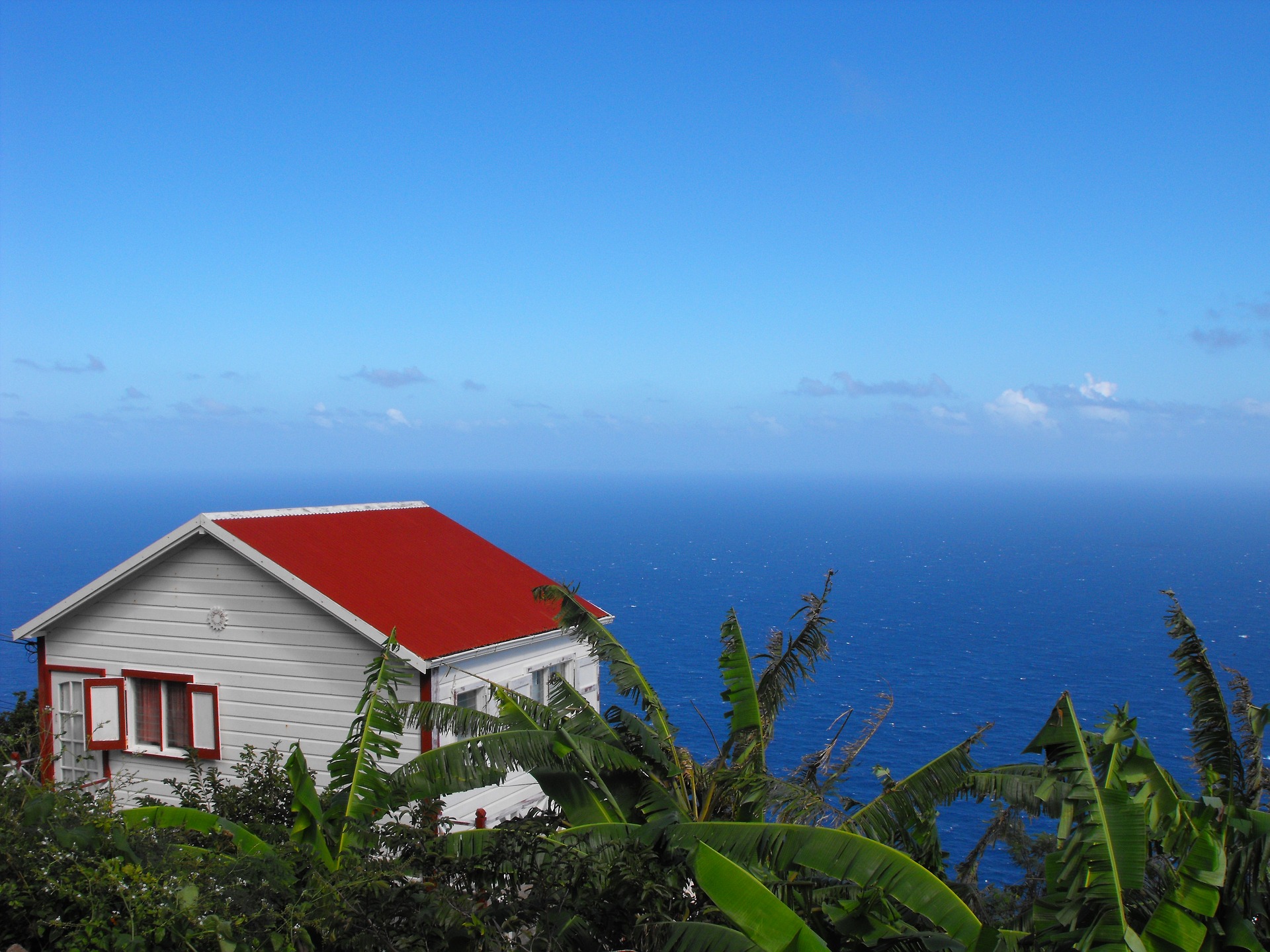
A small volcanic island in the Caribbean Netherlands, with cliffs instead of sandy beaches, rainforest trails up Mount Scenery and a protected marine park known for wall and pinnacle diving.
Saba is a volcanic island of 13 km² in the Leeward Islands and a special municipality of the Netherlands. It is not a reef island, so it has almost no sandy beaches: the coast is mostly cliffs and rocky shore. Visitors come for its nature and its diving, on walls and underwater pinnacles inside the Saba Marine Park.
About 2,150 people lived on the island in 2025, in four small villages linked by The Road, which locals built by hand over 23 years from 1938. Mount Scenery, at 862 metres, is the highest point in the Kingdom of the Netherlands. You arrive on a short flight or a ferry from Sint Maarten, and the currency is the US dollar.
- Saba Marine Park: A protected sea around the island with 26 designated dive sites, from walls to pinnacles.
- Mount Scenery: A marked trail of 1,064 steps through the rainforest to the highest point of the Netherlands.
- Windwardside: The second village, with most of the shops and sights, and a good base.
- The Road: The main road, laid by hand by locals once engineers had called it impossible.
- Saba lace: The pulled-thread work that Saban women once exported, still sold as a souvenir.
Places to visit
Cities
- The Bottom: The capital and largest village; despite the name, it sits high up on the island.
- Windwardside: Home to most of the shops and sights, cooled by a steady sea breeze.
- Hell's Gate: The first village on the road from the airport, starting point of the Sulphur Mine and Sandy Cruz tracks.
- St. John's: The smallest village, mostly residential, between The Bottom and Windwardside.
Beyond the cities
- Mount Scenery (mountain): An 862-metre peak covered in rainforest, often in fog in the afternoon.
- Saba Marine Park (park): The protected waters around the island, with 26 designated dive sites.
- Fort Bay (site): The harbour, with the ferries, the dive centres, the only petrol station and a hyperbaric chamber.
- Flat Point (site): The cliff-ringed promontory that holds the airport's 400-metre runway.
- The Ladder (site): The old landing above Ladder Bay, once the only way onto the island, now a steep track of 524 steps.
- Booby Hill (area): A road above Windwardside with a glass studio and a guava orchard.
Things to do
See
- Harry Luke Johnson Museum Windwardside: A sea captain's house of 1840, kept with most of its original furniture.
- Spot wild orchids and birds: Wild orchids grow along the trails, and more than 60 species of birds live on the island.
Do
- Dive the walls and pinnacles Saba Marine Park: Dives for every level, and the local dive shops can take beginners through a first course and certification.
- Climb Mount Scenery Windwardside: 60 to 90 minutes up 1,064 steps; go in the morning, tell the tourist office, and wear shoes with rubber soles.
- Walk the old tracks: Short marked trails such as Flat Point (easy, 10 minutes), The Ladder (hard, 30 minutes) and Sandy Cruz into the forest.
- Sea & Learn in October: A month of evening talks and field work by visiting scientists on the island's nature.
Shop
- Buy Saba lace and Saba Spice Windwardside: Handmade lace and a sweet spiced rum, sold in the village shops and at the museum.
After dark
- An evening in the village bars Windwardside: Locals stop by at the end of the day; one bar holds barbecue nights twice a week.
Itineraries
Four days of diving and walking on Saba (4 days)
- Windwardside (4 nights): Two days of diving from Fort Bay, one day up Mount Scenery in the morning, and the shorter tracks and the museum.
Getting there and around
| Main airports | SAB |
|---|
Getting there
By air: Winair flies from Princess Juliana Airport in Sint Maarten, about 15 minutes away, several times a day when the wind allows. The runway on Flat Point is only 400 metres long and pilots need special training to land there. Strong winds can cancel flights, so it can make sense to leave a day early and spend the night in Sint Maarten.
By sea: ferries run between Fort Bay and Sint Maarten on set days of the week, and one operator also sails to Sint Eustatius and St Kitts. Check the current timetable with the operators. A departure fee is charged in US dollars only, lower if you are going to another nearby island.
Getting around
The main road, called The Road, is narrow, steep and often lined with high stone walls. Taxis are the usual way between villages and fares are regulated: in March 2025 the airport to Windwardside cost US$16 plus US$3 per bag. The UK advises checking that a taxi is registered and agreeing the price before the ride, as most taxis on the islands have no meter. You can rent a car in The Bottom, but watch how the locals drive first. The UK says you can drive on a UK photocard licence. Traffic keeps to the right, the speed limit is 20 km/h in the villages and 40 km/h outside, and the only petrol station, at Fort Bay, closes in the early afternoon and on Sundays.
Within a village you can walk everywhere, but walking the road between villages is not pleasant because traffic is fast. Hitchhiking between villages is not rare.
Flying to Saba? PartnerCompare fares and find the cheapest datesSearch flightsWhere to stay
- Small hotels and inns: In Windwardside and The Bottom, some with a pool and restaurant.
- Cottages: Hillside cottages around Windwardside, some with kitchens and sea views.
- Eco-lodge: Rooms next to the forest outside Windwardside, without TV or radio.
- Private houses: Rented by the week; the dive shops usually know what is available.
| Tourist tax | A 5% room tax is added to the bill, plus a 10% service charge. |
|---|
Windwardside is a good base because most shops and restaurants are there. Many places have no air conditioning: the nights are cool enough with the windows open.
Eat and drink
Dishes to try
- Fresh seafood: Apart from Wednesday, when groceries arrive, seafood is the freshest food on the island.
- Guavas: Guava trees grow all over the island, and locals sometimes share the fruit.
Drinks
- Saba Spice: A sweet rum flavoured with local spices.
- Caribbean beers: Carib, El Presidente, Heineken and Mackeson are the most common.
There are grocery stores in The Bottom and Windwardside, and cooking for yourself is cheaper than eating out. Groceries, including meat other than seafood, arrive on the island on Wednesday, so that is the day for red meat. Some restaurants ask you to book, sometimes by the early afternoon of the same day.
Entry requirements and visas
| Passport validity | At least 6 months after the date you arrive (UK). |
|---|
| Passport | Entry | Max stay | Notes |
|---|---|---|---|
| United Kingdom | Visa free | Up to 3 months on each island, without a visa. |
Other nationalities: check the official source below.
With a British passport you can stay up to 3 months on each island of Bonaire, St Eustatius and Saba without a visa, according to the UK government. Your passport must be valid for at least 6 months after you arrive. Each island handles immigration separately, so carry your passport when you travel between them. Rules depend on your passport and can change: check with the Dutch authorities before you book.
A departure fee is charged when you leave, in US dollars only.
Money and payments
| Currency | US Dollar (USD) |
|---|---|
| Cards | Common |
Saba uses the US dollar (USD, $). There are two banks, both with ATMs, and major credit cards are accepted. Keep some US dollars in cash for the departure fee.
Health
| Recommended vaccines | Routine vaccines, including measles (MMR), Hepatitis B, Hepatitis A, Typhoid, for some travellers: rural areas, long stays or visiting friends and relatives |
|---|---|
| Tap water | Varies |
Wikivoyage reports that tap water on Saba is collected rainwater and is usually safe to drink, but ask locally whether it needs boiling; supermarkets sell spring water. A hyperbaric chamber for diving accidents is kept at Fort Bay, and the island also has a medical school. Otherwise there is only a GP practice, and serious cases may need evacuation to the hospital on Sint Maarten: make sure your insurance covers it, as the European EHIC and the UK GHIC are not valid on Saba. For an ambulance, call 911 or 913. Check with a travel health professional before your trip.
The UK says you need a yellow fever certificate if you arrive from a country with a risk of yellow fever transmission. The CDC lists no such entry requirement.
This is general information, not medical advice: check with a travel health professional before you go.
Safety
- United States: Level 1: Exercise Normal Precautions (2026-11-02)
- United Kingdom: No advice against travel (2026-11-03)
Check your government's travel advice before you go. The practical risks are on the trails and in the sea: some tracks are steep and slippery with moss and mud, so choose one that suits your level, wear good shoes and consider a walking stick for the descents to the coast. Do not enter the old sulphur mine, where the air can make you lose consciousness within seconds. Follow the usual precautions when diving. In an emergency, call 911 for the police, the fire service or an ambulance; the coastguard is 913.
Customs and etiquette
Dutch is the official language, but English is the language you will hear and most people understand it. Locals are used to visitors and often meet them in the village bars in the evening; on Wednesdays some grill at home and invite guests. Fruit from the guava trees is shared if you ask politely.
You must always carry ID, such as a copy of your passport. Drug smugglers use the islands as a route to Europe and North America: never agree to carry a package for anyone or leave your bags unattended, and expect your baggage to be screened.
Language
| Official languages | Dutch |
|---|---|
| English | Widespread |
What to pack
- Hiking shoes with rubber soles: The Mount Scenery path is slippery.
- A torch: Some restaurant paths and roads are dark at night.
- US dollars in cash: The departure fee is payable only in US dollars.
Quick reference
Country facts
| Capital | The Bottom |
|---|---|
| Population | 2,035 (2023) |
| Area | 13 km² |
| Time zone | America/Kralendijk (UTC-4) |
| Calling code | +5994 |
| Driving side | right |
Emergency numbers
| Police | 911 |
|---|---|
| Ambulance | 911 or 913 |
| Fire | 911 or 912 |
Frequently asked questions
How do I get to Saba?
By a 15-minute Winair flight from Princess Juliana Airport in Sint Maarten, or by ferry from Sint Maarten to Fort Bay. Wind can cancel flights.
Does Saba have beaches?
Hardly any: Saba is a volcanic island with cliffs and rocky shores. Visitors come for diving and hiking.
What currency is used on Saba?
The US dollar. There are two banks with ATMs, and major credit cards are accepted.
Can I drink the tap water on Saba?
Wikivoyage reports that it is collected rainwater and usually safe, but ask locally whether to boil it. Supermarkets sell spring water.
Is there a departure fee?
Yes, payable only in US dollars; it is lower if you are going to another nearby island.
More Travel Stories from Caribbean
 Bermuda
Sources This guide was last checked on · 11 sources
- Wikivoyage: Saba · Overview, Places to visit, Things to do, Itineraries, Getting there and around, Where to stay, Eat and drink, Entry requirements and visas, Money and payments, Health, Safety, Customs and etiquette, Language, What to pack, Frequently asked questions
- Wikidata: Saba · Overview, Country facts
- UK FCDO: Bonaire, St Eustatius and Saba safety and security · Getting there and around, Customs and etiquette
- UK FCDO: Bonaire, St Eustatius and Saba entry requirements · Entry requirements and visas, Health
- ISO 4217 (SIX), published 2026-09-17 · Money and payments
- US CDC: Travelers' health, Saba · Health
- UK FCDO: Bonaire, St Eustatius and Saba health · Health
- UK FCDO: Bonaire, St Eustatius and Saba travel advice · Safety
- US Department of State: Bonaire, Sint Eustatius and Saba travel advisory · Safety
- UK FCDO: Bonaire, St Eustatius and Saba getting help · Safety, Emergency numbers
- IANA Time Zone Database, zone.tab · Country facts
Suggest an update
Travel rules, prices and timetables change. If something in this guide is out of date, tell us: we check every suggestion against an official source before changing the page.