

- Local time
- 02:11
- Currency
- US Dollar (USD)
- Capital
- Charlotte Amalie
- Calling code
- +1340
- Drive on the
- left
Overview
A US territory east of Puerto Rico: St Thomas with the capital, St John with its national park and beaches such as Trunk Bay, and St Croix with Danish colonial towns and reefs. Uses the US dollar; you drive on the left.
The U.S. Virgin Islands are a territory of the United States east of Puerto Rico, between the Caribbean Sea and the Atlantic, and together with the British Virgin Islands they form the Virgin Islands archipelago. There are three main islands. St Thomas is the most populated and has the capital, Charlotte Amalie. St John is quieter, with a small town, a couple of resorts and the Virgin Islands National Park, which covers 60% of the island. St Croix, the largest, lies well to the south of the others.
Denmark held these islands until the United States bought them in 1917, and the Christiansted National Historic Site recalls the Danish period; colonial architecture is one of the sights. The land is hilly to mountainous, rising to 474 metres at Crown Mountain, and the islands' resources, in Wikivoyage's words, are sun, sand, sea and surf: beaches, snorkelling, sailing and coral reefs. For travellers from the US mainland it is a domestic trip, and the currency is the US dollar, but traffic keeps to the left.
- Trunk Bay: A beach on St John for snorkelling, with food, drink and showers.
- Virgin Islands National Park: More than 7,000 acres, covering 60% of St John, crossed by hiking trails.
- Buck Island Reef National Monument: A national monument reached from Christiansted, set up to preserve its marine gardens.
- Christiansted: A seaside town on St Croix with a national historic site of Danish colonial buildings.
- Cruzan Rum distillery: A distillery tour with a tasting on St Croix.
- Duty-free shopping: Shops selling rum, tanzanite and diamond and gold jewellery.
Places to visit
Cities
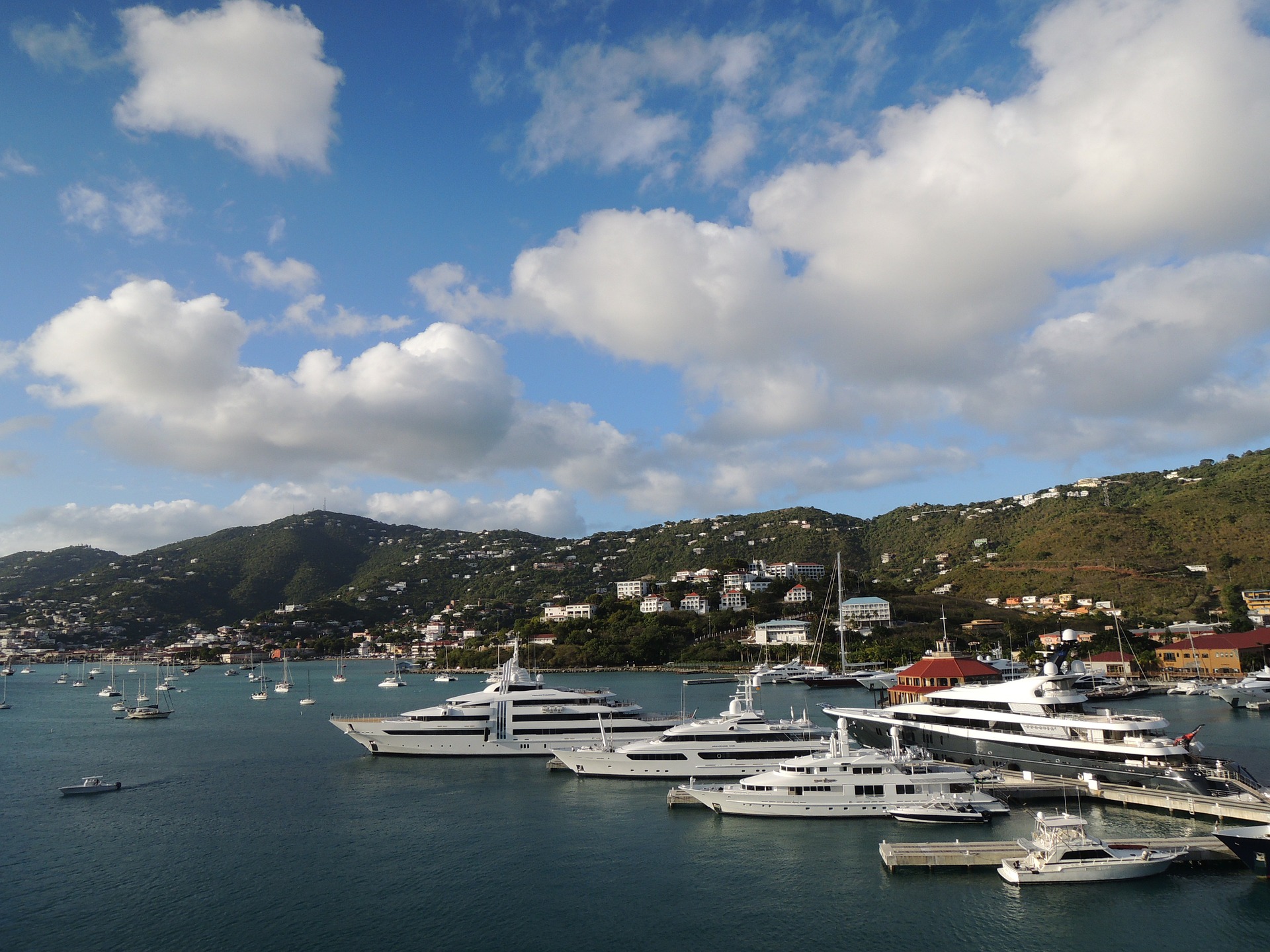
- Charlotte Amalie: The capital, on St Thomas, with ferries to Cruz Bay on St John.
- Red Hook: On the East End of St Thomas: ferries and a car ferry to Cruz Bay, sailboat rentals and several bars.
- Cruz Bay: The ferry port of St John, with taxis, rental cars and the US Park Service office.
- Christiansted: A seaside town on St Croix with a fort, a national historic site, galleries and a brewpub.
- Frederiksted: A town that is home to the Caribbean Museum Center for the Arts.
Beyond the cities
- Virgin Islands National Park (park): More than 7,000 acres on St John, with a human history going back more than a thousand years.
- Virgin Islands Coral Reef National Monument (park): Federal underwater lands within 3 miles of St John.
- Buck Island Reef National Monument (park): A national monument, reached from Christiansted, created to preserve its marine gardens.
- Christiansted National Historic Site (site): Five preserved buildings that tell the story of Danish rule, from 1733 to 1917.
- Salt River Bay National Historic Park and Ecological Preserve (park): A park and reserve with coral reefs and a submarine canyon.
- Trunk Bay (coast): A St John beach for snorkelling, with food, drink and showers.
- Coral Bay (coast): A bay on St John with guided kayak and snorkelling tours.
- Salt Pond Bay (coast): A secluded beach on St John; do not leave valuables in the car.
- Annaberg Sugar Plantation (site): A sugar plantation to visit on St John.
- Magens Bay (coast): A beach reached by taxi from Charlotte Amalie.
- Crown Mountain (mountain): The highest point of the islands, at 474 metres.
Regions
- Saint Thomas: The most populated island, with the capital.
- Saint John: Quieter, with a small town, a couple of resorts and the national park, which covers 60% of the island.
- Saint Croix: The largest island, far to the south of the rest of the Virgin Islands.
Things to do
See
- Look for a beach to yourself St John: Smaller bays such as Denis Bay and Little Cinnamon take more effort to reach than Trunk Bay.
- Annaberg and Johnny cake St John: Visit the sugar plantation and try a local Johnny cake.
- Historic St Croix St Croix: Two forts, Government House and Whim Great House, plus a self-guided Heritage Tour.
Do
- Snorkel at Trunk Bay St John: A beach with food, drink and showers.
- Hike the national park St John: Trails cross the island; get maps, or book a ranger-guided hike for a small fee, at the US Park Service office in Cruz Bay.
- Kayak or snorkel in Coral Bay Coral Bay: Guided tours, with other beaches such as Salt Pond nearby.
- Charter a boat for a day St John: A day of snorkelling and a view of the island from the water.
Eat
- St Croix Food & Wine Experience St Croix: A week-long food festival every April, whose main event is A Taste of St. Croix.
Drink
- Tour the Cruzan Rum distillery St Croix: A tour and a tasting; some flavours are not sold elsewhere in the United States.
Shop
- Duty-free shopping: Rum, tanzanite and jewellery; on St Croix, Christiansted has many art galleries.
Itineraries
Eight days on three islands (8 days)
- Charlotte Amalie (2 nights): Duty-free shopping and a taxi to Magens Bay.
- Cruz Bay (3 nights): Ferry from Red Hook or Charlotte Amalie: Trunk Bay, the national park and Coral Bay.
- Christiansted (2 nights): Fly or take the seaplane from St Thomas: Buck Island Reef and the Cruzan Rum distillery.
Five days on St John (5 days)
- Cruz Bay (4 nights): Trunk Bay, a ranger-guided hike, Annaberg and a day on a chartered boat.
Holidays and events
- 1 January 2026 · New Year's Day
- 6 January 2026 · Epiphany
- 19 January 2026 · Martin Luther King, Jr. Day
- 16 February 2026 · Presidents Day
- 31 March 2026 · Transfer Day
- 2 April 2026 · Maundy Thursday
- 3 April 2026 · Good Friday
- 6 April 2026 · Easter Monday
- 25 May 2026 · Memorial Day
- 19 June 2026 · Juneteenth National Independence Day
- 3 July 2026 · Emancipation Day
- 3 July 2026 · Independence Day
- 7 September 2026 · Labour Day
- 12 October 2026 · Columbus Day
- 11 November 2026 · Veterans Day
- 26 November 2026 · Thanksgiving Day
- 25 December 2026 · Christmas Day
- 26 December 2026 · St. Stephen's Day
Getting there and around
| Main airports | STT |
|---|
Getting there
By air: flights land on St Thomas, at Cyril E. King Airport (STT), or on St Croix; St John has no airport and is reached from St Thomas. According to Wikivoyage, American, Delta and United fly direct to St Thomas from cities such as Miami, Charlotte, New York, Atlanta, Newark and Chicago, and St Croix has direct flights from Miami, Charlotte (seasonal) and Atlanta. Many other flights connect in San Juan, Puerto Rico. Flights from Puerto Rico or the US mainland are domestic: there is no border control, and any ID accepted by the TSA will do.
By ferry: ferries link the three islands, the British Virgin Islands and, in some seasons, Puerto Rico. Coming back from the British Virgin Islands, everyone, US citizens included, needs a passport and must clear US Customs and Border Protection, which can add two to three hours.
Leaving for the US mainland: the islands are a free port with their own customs zone, so you pass a US customs inspection, and a USDA agricultural check of your bags, before boarding. Allow extra time and plan your purchases.
Getting around
Taxis are regulated: fares are set by the Virgin Islands Taxicab Commission and charged per person, one way, so if you plan several trips a rental car may work out cheaper. Shared open-air safari taxis are common on St Thomas and St John. Use only officially marked taxis and confirm the fare first. From the airport on St Thomas, taxis and buses run to Charlotte Amalie and Red Hook, which both have ferries to Cruz Bay on St John; a separate car ferry links Red Hook and Cruz Bay.
Driving is on the left, the only US territory where this is so, but most cars are left-hand drive, imported from the mainland. You can drive on a valid Canadian licence for up to 90 days; if your licence is not in English, carry an International Driving Permit. Roads are narrow, winding and mountainous, with large potholes, poor markings, unlit stretches and stray livestock, and drunk driving is common. On hairpin bends keep left and slow right down; some unpaved mountain roads need four-wheel drive. Canada advises against renting scooters: accidents are common and often deadly. Sailboats can be rented at Red Hook; to sail to the British Virgin Islands you need a passport.
Flying to Virgin Islands U.S.? PartnerCompare fares and find the cheapest datesSearch flightsEat and drink
Dishes to try
- Fish and fungi: The official national dish.
- Tart: The official national dessert.
- Stew goat and roti: Local food on St Croix, at places like Harvey's and Singh's.
- Johnny cake: A local speciality to try, for example on a visit to Annaberg.
Drinks
- Cruzan Rum: Made on St Croix; some flavours, such as Clipper, are not sold elsewhere in the US.
- Local beer: Brewed at the Brew Pub in Christiansted.
- Mama Wanna: One of the strong homemade drinks you may be offered at local events.
| Tipping | As on the US mainland: at least 15% in full-service restaurants. Service is almost never included, except for groups of more than 10. |
|---|
The drinking age is 18, unlike on the US mainland. St Croix holds a week-long food festival each April, the St Croix Food & Wine Experience. At local places and events, ask whether there is a local drink, and be careful with the home recipes: they are strong.
Entry requirements and visas
| Passport validity | Valid for the whole of your stay, according to both the UK and Canada |
|---|
| Passport | Entry | Max stay | Notes |
|---|---|---|---|
| Canada | Visa free | Canadians can usually stay in the United States for 6 months without a visa; declare how long you plan to stay on arrival. | |
| United Kingdom | Eta | An approved ESTA under the US Visa Waiver Program, or a US visa. The UK's travel advice for the USA also covers the US Virgin Islands. |
Other nationalities: check the official source below.
The islands are a US territory, so US entry rules apply. Canadians can usually stay up to 6 months without a visa and must declare how long they plan to stay; customs officials may ask for a return or onward ticket and proof of enough money for your stay. British visitors need an approved ESTA or a US visa. Other travellers need to meet the requirements for entering the United States, and anyone arriving from the British Virgin Islands goes through full US border control.
On flights to the US mainland you pass customs before boarding: US citizens show proof of citizenship and photo ID, and Wikivoyage recommends a passport to speed things up; everyone else needs a valid passport. Since early November 2026, because of Ebola, everyone boarding an international flight to or through the US must sign a statement that they have not been in the Democratic Republic of the Congo (DRC) in the previous 21 days, and there are temporary entry restrictions for some people recently in the DRC, Uganda or South Sudan. Rules depend on your passport and can change: check the official link before you book.
Money and payments
| Currency | US Dollar (USD) |
|---|---|
| Cards | Widespread |
The currency is the US dollar (USD, $). Credit cards are widely accepted and ATMs are found throughout the territory. Shops are duty-free. Tipping works as on the US mainland: at least 15% in full-service restaurants, and something for porters, hotel maids and valets. Power cuts can disrupt banking and card payments, so keep some cash.
Health
| Recommended vaccines | Routine vaccines, including measles (MMR), Hepatitis A, Hepatitis B, Typhoid, for some travellers: rural areas, long stays or visiting friends and relatives, Rabies, if you will work with wildlife, Mpox, for travellers at risk of sexual exposure |
|---|---|
| Tap water | Varies |
No vaccination certificate is required, and Canada reports no risk of yellow fever. The risk of dengue is sporadic, and Zika and chikungunya are also present, so protect yourself from mosquito bites; if you are pregnant or planning a pregnancy, talk to a doctor about Zika before you go. Check with a travel health professional before your trip. Wikivoyage says buildings in low-lying areas usually use the public water, which is fine to drink, while places in the mountains rely on rainwater cisterns, whose safety depends on cleaning and treatment.
Good health care is available, but conditions vary between the islands and health professionals are scarce. Facilities may ask for immediate payment in cash. Bring enough of any prescription medicine in its original container, with a copy of the prescription, in your hand luggage. Take insurance that covers medical evacuation and hospital stays. In an emergency, call 911.
This is general information, not medical advice: check with a travel health professional before you go.
Safety
- Canada: Take normal security precautions (2026-10-20)
Canada advises normal security precautions. Petty crime such as pickpocketing and bag snatching occurs, and so does violent crime: keep your passport and valuables secure, stay alert in busy tourist areas, choose accommodation with adequate security and avoid isolated beaches and deserted areas, especially after dark. Demonstrations can occur; keep away from them.
Power cuts and water shortages are frequent, and authorities may ration electricity and water. They can affect flights, medical services, phones and banking, not every building has a generator and drinking water can be hard to find, so keep water, food and an emergency kit at hand. Coastal waters can be dangerous because of tides and strong currents: ask locally where it is safe to swim, and dive only with a reputable company. Canada advises against renting scooters.
The hurricane season runs from early June to the end of November, and the rainy season from May to November. Heavy rain can cause floods and landslides, and dry, hot weather can lead to large wildfires. The islands are in an active seismic zone where earthquakes are frequent, and a tsunami can follow within minutes: if you stay on the coast, learn the evacuation plan. The emergency number is 911.
Customs and etiquette
Greetings matter. People greet each other according to the time of day, with good morning, good afternoon, good evening or good night, usually followed by "How are you?", and it is polite to greet everyone when you walk into a room. You may hear "Ya arright?", to which "Arright!" or "OK" is the answer. The local handshake is a normal shake, then a finger clasp, then a fist bump.
English is the official language; an English-based creole is used in informal situations, especially by older people, and some people also speak Spanish or French. Penalties for drugs are severe. If you take prescription medicine, it is up to you to check that it is legal here.
Language
| Official languages | English |
|---|---|
| English | Widespread |
| A greeting, roughly "are you all right?" (answer: arright! or OK) | Ya arright? |
|---|
What to pack
- A passport: Needed to visit the British Virgin Islands and come back, and recommended for US citizens flying home.
- Prescription medicines in their original containers: Some medicines may not be available; carry them in your hand luggage with the prescription.
- Insect repellent: Dengue, Zika and chikungunya are spread by mosquitoes.
- An emergency kit and a water supply: Power cuts and water shortages are frequent.
- An International Driving Permit: Recommended if your licence is not in English.
- Snorkel and mask: For snorkelling at Trunk Bay or on a boat trip.
Quick reference
Country facts
| Capital | Charlotte Amalie |
|---|---|
| Population | 103,792 (2025) |
| Area | 348 km² |
| Time zone | America/St_Thomas (UTC-4) |
| Calling code | +1340 |
| Driving side | left |
Emergency numbers
| Emergency | 911 |
|---|
Frequently asked questions
Do I need a visa?
US entry rules apply. Canadians can usually stay up to 6 months without a visa, British visitors need an approved ESTA or a US visa, and other travellers need to meet the requirements for entering the United States.
Which side of the road do you drive on?
On the left, although most cars are left-hand drive. Roads are narrow and winding, and Canada advises against renting scooters.
Is tap water safe to drink?
Public water in low-lying areas is fine to drink, according to Wikivoyage; in the mountains, water comes from cisterns and depends on how well they are maintained.
How do I get to St John?
There is no airport: take a ferry from Red Hook or Charlotte Amalie on St Thomas to Cruz Bay.
What currency is used?
The US dollar. Credit cards are widely accepted and ATMs are found throughout the islands.
Sources This guide was last checked on · 13 sources
- Wikivoyage: U.S. Virgin Islands · Overview, Places to visit, Things to do, Itineraries, Getting there and around, Eat and drink, Entry requirements and visas, Money and payments, Health, Safety, Customs and etiquette, Language, What to pack, Frequently asked questions
- Wikidata: U.S. Virgin Islands · Overview, Money and payments, Country facts
- Government of Canada: U.S. Virgin Islands travel advice (updated 8 September 2026) · Things to do, Getting there and around, Entry requirements and visas, Money and payments, Health, Safety, Customs and etiquette, What to pack, Emergency numbers, Frequently asked questions
- Nager.Date: public holidays in Virgin Islands U.S., 2026 · Holidays and events
- Wikivoyage: British Virgin Islands · Getting there and around
- UK FCDO: USA entry requirements (also covers the US Virgin Islands) · Entry requirements and visas, Frequently asked questions
- CDC: Information for Travelers Returning from Ebola-Affected Areas (30 October 2026) · Entry requirements and visas
- ISO 4217 (SIX), published 2026-09-17 · Money and payments
- US CDC: Travelers' health, US Virgin Islands · Health
- World Bank, SP.POP.TOTL · Country facts
- World Bank, AG.LND.TOTL.K2 · Country facts
- IANA Time Zone Database, zone.tab · Country facts
- UK FCDO: USA getting help · Emergency numbers
Suggest an update
Travel rules, prices and timetables change. If something in this guide is out of date, tell us: we check every suggestion against an official source before changing the page.