

- Local time
- 10:52
- Currency
- East Caribbean Dollar (XCD)
- Capital
- Castries
- Calling code
- +1758
- Drive on the
- left
Overview
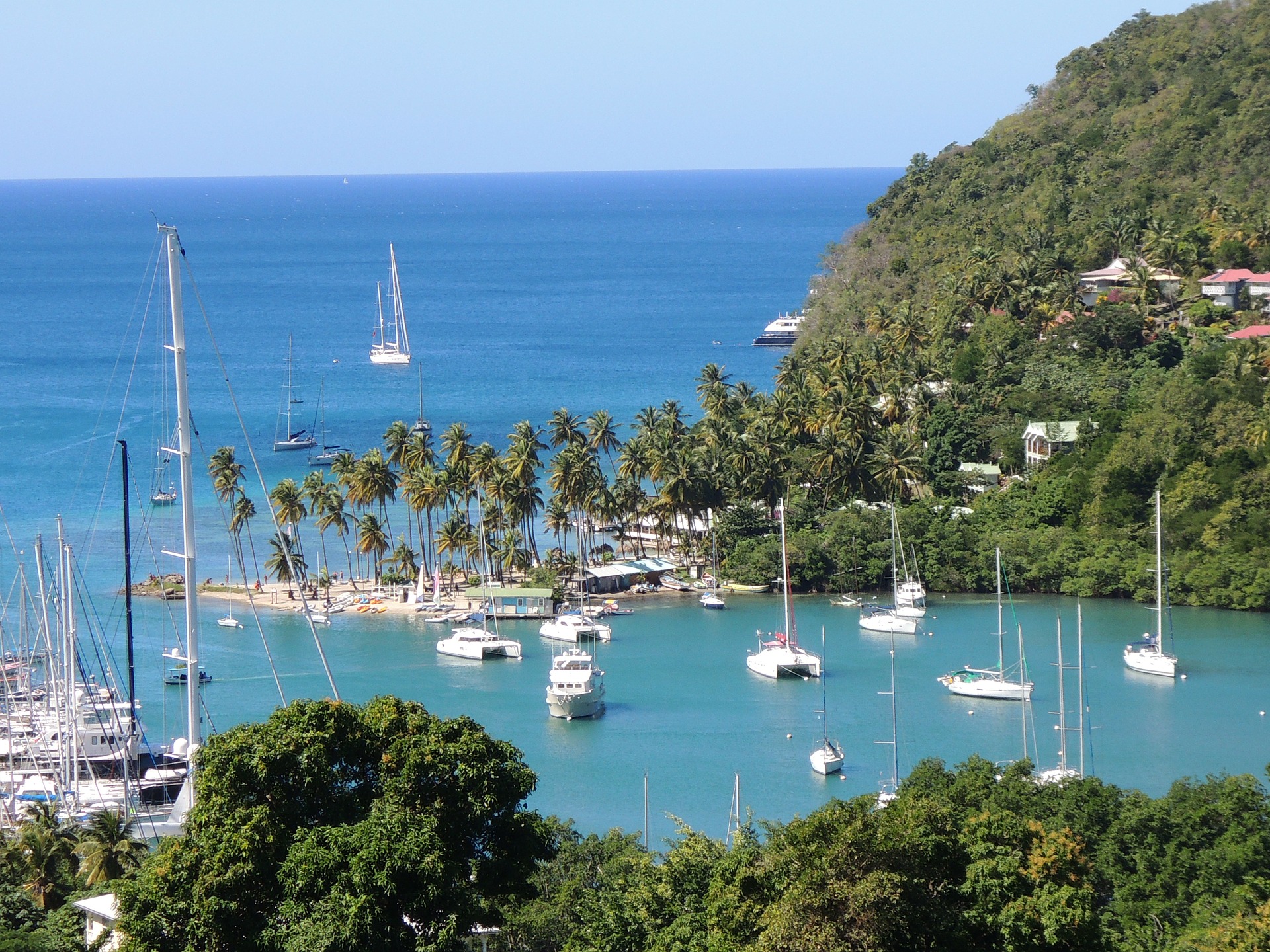
A volcanic, mountainous island of rainforest and beaches, known for the twin Pitons above Soufrière, its sulphur springs, reefs for diving and Friday night street parties.
Saint Lucia is an island nation in the Caribbean, volcanic and mountainous with some broad, fertile valleys; its highest point, Mount Gimie, reaches 950 m. The island's emblem is the pair of Pitons, Gros Piton and Petit Piton, cone-shaped volcanic peaks rising from the sea south of Soufrière. They are a UNESCO World Heritage Site and appear on the national flag. The French settled the island first, and it was contested with Britain until the British secured it in 1814; it has been independent since 1979.
Tourism is vital to the economy and busiest in the dry season, from January to April. Around Soufrière, the old capital, you find the sulphur springs, rainforest, waterfalls and reefs for diving and snorkelling; in the north are Rodney Bay, Pigeon Island and many of the resorts, and Castries, the capital, has a small harbour for cruise ships. English is the official language and almost everyone speaks it, alongside French patois, and the currency is the East Caribbean dollar.
- The Pitons: Two volcanic peaks rising from the sea south of Soufrière, a UNESCO World Heritage Site.
- Climbing Gros Piton: About two hours up from the trailhead to a summit near 800 m, with a required guide.
- Sulphur Springs: Hot springs just south of Soufrière, with a pool you can bathe in.
- Pigeon Island National Park: Fort Rodney, an old British military base, with some of the island's oldest buildings and views to Martinique.
- Friday night parties: Seafood Friday in Anse La Raye and the Jump-up in Rodney Bay, with food, music and dancing.
- Diving and snorkelling: Reefs around Soufrière, at Pigeon Island and between the Pitons.
Places to visit
Cities
- Castries: The capital, with a small harbour for cruise ships, a market and duty-free shops, close to George FL Charles Airport.
- Soufrière: The old capital, near the Pitons, with the sulphur springs, rainforest and reefs nearby and water taxis from its jetty.
- Vieux Fort: The town in the south where the international airport, Hewanorra, is located.
- Gros Islet: A town in the north, just south of Pigeon Island.
Beyond the cities
- The Pitons (mountain): Gros Piton and Petit Piton, two volcanic plugs south of Soufrière, a UNESCO World Heritage Site shown on the national flag.
- Sulphur Springs (site): Hot springs just south of Soufrière, called a drive-in volcano, with a pool fed by the hot water.
- Pigeon Island National Park (park): A nature reserve north of Gros Islet with Fort Rodney, an old British military base, and views to Martinique.
- Rodney Bay (area): The resort area in the north, with restaurants of many cuisines and a shopping mall.
- Mount Gimie (mountain): The highest point of the island, at 950 m.
- Anse Chastenet (coast): A beach by a marine sanctuary, reached by water taxi from Soufrière.
- Jalousie Beach (coast): A beach reached by water taxi from Soufrière.
- Vigie Beach (coast): The beach right next to George FL Charles Airport.
- Anse La Raye (town): A town known for its Seafood Friday street party.
- Dennery (town): An east coast town with a fish fry on Saturdays.
- Canaries (town): A town that holds the Creole Pot food party every second Saturday.
Things to do
See
- See the Pitons Soufrière: The two peaks rise straight from the sea and are the island's emblem, on the national flag.
- Pigeon Island National Park Gros Islet: Fort Rodney and some of the oldest buildings on the island, with views across to Martinique.
Do
- Climb Gros Piton Soufrière: About two hours of moderate to strenuous hiking from a trailhead at about 180 m to a summit near 800 m, and 1.5 hours down. A guide is required; reach the trailhead by taxi or bus.
- Bathe at the Sulphur Springs Soufrière: Hot water runs through a pool where you can swim, so bring your swimwear.
- Diving and snorkelling Pigeon Island and the Pitons: Dives at Pigeon Island and between the Pitons; several beaches are suitable for snorkelling, and there is a marine sanctuary by Anse Chastenet.
- Zip-lining: Courses in the north are more complex, with rainforest views; the course at the Morne Coubaril Estate near Soufrière is simpler, with a view of the Pitons.
- Rainforest hikes: Several official hiking routes cross the island's rainforest.
Eat
- Street food parties Anse La Raye, Rodney Bay, Dennery and Canaries: Seafood Friday in Anse La Raye and the Rodney Bay Jump-up on Friday nights, a fish fry in Dennery on Saturdays and the Canaries Creole Pot every second Saturday.
Drink
- Saint Lucian rum: Saint Lucia Distillers makes rums from the mass-market Bounty to the premium Chairman's Reserve and 1931; supermarkets sell them at good prices.
Shop
- Castries market Castries: A good place for gifts, along with the duty-free shops by the harbour; bring identification for duty-free prices.
Itineraries
A week from north to south (7 days)
- Gros Islet (3 nights): Pigeon Island, Rodney Bay, a zip-line course and the Friday night Jump-up.
- Soufrière (4 nights): The Pitons and the climb up Gros Piton, the Sulphur Springs, a dive and a water taxi to Anse Chastenet.
A cruise day from Castries (1 days)
- Castries (0 nights): The market and the duty-free shops by the harbour.
- Pigeon Island National Park (0 nights): By taxi to the north for Fort Rodney and the views; agree the fare first.
Holidays and events
- 1 January 2026 · New Year's Day
- 22 February 2026 · Independence Day
- 3 April 2026 · Good Friday
- 6 April 2026 · Easter Monday
- 1 May 2026 · May Day
- 25 May 2026 · Whit Monday
- 4 June 2026 · Corpus Christi
- 1 August 2026 · Emancipation Day
- 5 October 2026 · Thanksgiving
- 13 December 2026 · National day
- 25 December 2026 · Christmas Day
- 26 December 2026 · St. Stephen's Day
Getting there and around
| Main airports | UVF, SLU |
|---|
Getting there
By air: international flights from Europe and continental North America land at Hewanorra International (UVF), near Vieux Fort in the south. George FL Charles Airport (SLU), about two miles from Castries, handles inter-island flights and is closer to many of the all-inclusive resorts. From Hewanorra the drive to Castries and the resorts in the north takes about 1 to 1.5 hours; book a rental car or a taxi, because public transport is inconsistent, and the UK advice notes that accidents often happen on the main east coast road to and from the airport. A helicopter taxi also links Hewanorra and Vigie.
By sea: cruise ships, usually one or two at a time, call at the small harbour in Castries. Canada lists weekly ferries to Martinique and to Saint Vincent, and Wikivoyage mentions Express des Isles services to Martinique and Guadeloupe; seas around the island are rough.
Getting around
Most visitors get around by taxi, booked through the hotel, a taxi agency or individual drivers. Taxis are not metered, but standard fares exist for most destinations: agree the fare in local currency before you set off, have small notes ready and use only registered taxis, which have blue number plates. Ride-sharing apps are also available. In Soufrière, water taxis at the jetty go to Anse Chastenet and Jalousie Beach, and the price can be bargained down.
Minibuses of 10 to 14 seats are cheap and run often, though irregularly, between Soufrière, Castries and Vieux Fort, mostly towards Castries in the morning and back in the late afternoon. Canada calls them reliable but sometimes unsafe because of their speed.
You drive on the left, and you need a temporary driving permit: according to the UK advice (updated December 2025) it costs EC$54 or US$20 and needs your licence, passport and a passport photo. The UK says you must go in person to the Department of Transport in Union, Castries, though some hire companies can get it for you; Canada says you can buy it at most car rental agencies, the airport immigration desk or any police station. The minimum age to rent a car is 25. Canada says road conditions are generally good, but the UK warns that roads can have potholes and speed bumps, and minor roads are often narrow and steep, with hairpin bends and blind corners; the west coast road between Castries and Soufrière is particularly winding. You need a 4x4 for the mountains. Keep doors locked, do not stop if flagged down, and in an accident call the police and do not move the vehicle.
Flying to St. Lucia? PartnerCompare fares and find the cheapest datesSearch flightsWhere to stay
- All-inclusive resorts: Many of them, including couples-only resorts; many are in the north, closer to George FL Charles Airport.
- Boutique hotels: Small hotels, some with ocean-front cottages.
- Self-catering: Villas, condos and holiday apartments.
Saint Lucia has a large number of resort hotels as well as small boutique hotels and self-catering villas. Choose your base with the airport in mind: resorts in the north are 1 to 1.5 hours by road from Hewanorra, where flights from Europe and North America land. Tourism is busiest in the dry season, from January to April. Stay in accommodation with adequate security, as Canada advises.
Eat and drink
Dishes to try
- Coal pot: A stew from Carib tradition, served in local restaurants in Castries, Soufrière and Vieux Fort.
- Roti: Vegetarian or meat rotis from small local shops, usually made fresh in the morning.
- Barbecue and bake: Marinated chicken and pork, found in communities on Friday nights, with a barbecued or fried bake.
- Fish, chicken and goat plates: Served with sides such as salad, plantain, breadfruit, macaroni and rice.
Drinks
- Chairman's Reserve: A premium rum range from Saint Lucia Distillers, including spiced, white and dark rums.
- Bounty: A mass-market red rum commonly drunk on the island.
- Crystal Lime: A rum-based lime liqueur.
- Piton: The local lager, brewed and bottled on the island, at 5% alcohol.
Saint Lucian food is based on fresh fruit and vegetables, fish and a range of curry, jerk, rice and stewed dishes. Many rum shacks in rural towns cook if you ask in advance, and weekly parties in different communities are a good way to try seafood, barbecued meat and local drinks. Ask what is in the pots before you eat: blackfish, for example, is porpoise. Rodney Bay has restaurants with cuisines from East Indian to Italian.
Entry requirements and visas
| Passport validity | Valid beyond the day you leave, according to the UK; Canada advises at least 3 months beyond your departure date |
|---|
| Passport | Entry | Max stay | Notes |
|---|---|---|---|
| United Kingdom | Visa free | 42 days | No visa; on entry you can stay up to 6 weeks. |
| Canada | Visa free | 42 days | No tourist visa for stays of up to 6 weeks. |
Other nationalities: check the official source below.
British and Canadian travellers can stay up to 6 weeks without a visa. To stay longer you must apply at the Immigration Department in Castries. Make sure your passport is stamped on entry. Fill in the online immigration form no more than 3 days before you arrive (one per family or group if you fly); otherwise you will fill it in on arrival.
Customs officials may ask for a return or onward ticket, proof of where you will stay and proof of enough money. Children travelling alone or with one parent may need a notarised consent letter and proof of parentage. You need a yellow fever certificate if you arrive from a country with a risk of transmission. Customs rules are strict: declare anything that may be prohibited or taxed. Rules depend on your passport and can change: check the official link before you book.
Money and payments
| Currency | East Caribbean Dollar (XCD) |
|---|
The currency is the East Caribbean dollar (XCD, EC$), pegged at US$1 = EC$2.70 and shared with seven other Caribbean nations. US dollars are widely accepted, and taxis can often be paid in either currency, but agree the fare in local currency and keep small notes. Duty-free prices are available in Castries and elsewhere, and you may need identification as a visitor to get them.
Card and ATM fraud may occur: cover the keypad, use machines in well-lit public places or inside banks and shops, and check your statements. Medical services often expect immediate payment in cash.
Health
| Required vaccines | Yellow fever, but only if you arrive from a country with a risk of yellow fever transmission |
|---|---|
| Recommended vaccines | Routine vaccines, including measles (MMR), Hepatitis A, recommended for all travellers, Hepatitis B, recommended for all travellers, Typhoid, for some travellers: rural areas, long stays or visiting friends and relatives, Rabies, if you will work with wildlife, Mpox, for travellers at risk of sexual exposure |
| Tap water | Safe |
Canada reports no risk of yellow fever, but you need a certificate if you arrive from a country where it is transmitted. Dengue, Zika and chikungunya are spread by mosquitoes, so protect yourself from bites at all times; if you are pregnant or planning a pregnancy, talk to a doctor about Zika before you go. Check with a travel health professional at least 8 weeks before your trip. Wikivoyage says tap water is safe to drink and bottled water is easy to find; water shortages are regular, so keep a supply.
Good health care is limited and facilities are underequipped. The public hospitals are Victoria Hospital in Castries and St. Jude's Hospital in Vieux Fort, and the private Tapion Hospital near Castries does not accept travel or foreign medical insurance. Treatment is expensive and often paid in cash on the spot. Ambulances are run by the fire service and can be slow in traffic, and serious cases may be evacuated to Miami or Martinique, so take insurance that covers evacuation. Bring your medicines in their original containers with a copy of the prescription. For an ambulance, call 911.
This is general information, not medical advice: check with a travel health professional before you go.
Safety
- United States: Level 2: Exercise Increased Caution (2026-10-20)
- Canada: Take normal security precautions (2026-10-20)
- United Kingdom: No advice against travel (2026-10-20)
Canada advises normal security precautions, and the US advises increased caution. The UK advice reports a continuing serious risk of homicides, mostly gang-related and involving guns, some in public areas, and Canada notes that violent crime has increased, particularly in Vieux Fort. Make sure your accommodation, or your yacht, is secure, take care walking alone off main roads and after dark, avoid isolated areas and beaches at night, and do not show jewellery or carry large amounts of cash. Petty crime rises around big events such as the Saint Lucia Jazz and Arts Festival in May, Carnival in July and the winter holidays: do not leave drinks unattended and plan how you will get home. Women travelling alone may face harassment.
Currents can be deceptively strong and beaches are unsupervised, without warning flags, so ask locally where it is safe to swim. Saint Lucia regularly has water shortages. The hurricane season runs from June to November and can bring flash floods and landslides, and after a storm power, water and transport may be disrupted. The island is in an active seismic zone, with a risk of earthquakes and tsunamis. Check the alert levels of the Kick 'em Jenny underwater volcano off Grenada and of La Soufrière on St Vincent, whose 2021 eruption sent ash over Saint Lucia. The emergency number is 911.
Customs and etiquette
Camouflage clothing is illegal for everyone, including children, and Wikivoyage warns that camouflage-patterned luggage may be confiscated at the airport. Canada says you must not carry items that may look like military equipment either. Wikivoyage reports that nude sunbathing is illegal and that all beaches are open to the public. Street vendors usually accept a simple "no thank you". If someone offers you a "gift", expect to be asked for money in return.
Penalties for drug offences are severe: pack your own bags and never carry anything for someone else. On same-sex relationships the sources differ: the UK advice says certain same-sex sexual acts are illegal, while Canada says they are not prohibited. The UK advice describes attitudes as mostly conservative and public affection by any couple as uncommon; Canada says public displays of affection are not socially acceptable and that LGBTQ travellers have been verbally harassed.
Language
| Official languages | English |
|---|---|
| English | Widespread |
What to pack
- Your driving licence and a passport photo: You need both for the temporary driving permit.
- Luggage and clothes without camouflage: Camouflage is illegal and luggage may be confiscated.
- Motion sickness tablets: Wikivoyage advises them for the 90-minute transfer from Hewanorra to the north.
- Swimwear for the springs: You can bathe in the pool at the Sulphur Springs.
- Insect repellent: Dengue, Zika and chikungunya are spread by mosquitoes.
- A copy of your prescriptions: Especially for medicines that may be controlled drugs.
- Small notes in cash: For taxi fares and for medical bills, often paid in cash.
Quick reference
Country facts
| Capital | Castries |
|---|---|
| Population | 180,149 (2025) |
| Area | 610 km² |
| Time zone | America/St_Lucia (UTC-4) |
| Calling code | +1758 |
| Driving side | left |
Staying connected
| SIM and eSIM | Mobile reception covers the whole island and is reliable for emergency calls, according to Canada. |
|---|
Emergency numbers
| Emergency | 911 |
|---|
Frequently asked questions
Do I need a visa for Saint Lucia?
Not for stays of up to 6 weeks with a UK or Canadian passport. Fill in the online immigration form within 3 days before you arrive. Check the official link before you book.
Which airport should I fly into?
Flights from Europe and North America land at Hewanorra (UVF) in the south; George FL Charles (SLU), near Castries, handles inter-island flights and is closer to many northern resorts.
What currency is used in Saint Lucia?
The East Caribbean dollar, pegged at US$1 = EC$2.70. US dollars are widely accepted.
Can I drive in Saint Lucia?
Yes, with a temporary driving permit. The UK says to get it from the Department of Transport in Castries or through your hire company; Canada says rental agencies, the airport immigration desk and police stations sell it. Traffic drives on the left and mountain roads are steep and winding.
Is tap water safe to drink in Saint Lucia?
Wikivoyage says it is, and bottled water is easy to find. Water shortages are regular, so keep a supply.
What is the emergency number in Saint Lucia?
Call 911 for ambulance, fire and police, according to the UK advice.
Sources This guide was last checked on · 15 sources
- Wikivoyage: Saint Lucia · Overview, Places to visit, Things to do, Itineraries, Getting there and around, Where to stay, Eat and drink, Entry requirements and visas, Money and payments, Health, Customs and etiquette, Language, What to pack, Frequently asked questions
- Wikidata: Saint Lucia · Overview, Money and payments, Country facts
- Nager.Date: public holidays in St. Lucia, 2026 · Holidays and events
- UK FCDO: St Lucia safety and security · Getting there and around, Money and payments, Safety, Customs and etiquette, What to pack, Frequently asked questions
- Government of Canada: Saint Lucia travel advice (updated 26 May 2026) · Getting there and around, Entry requirements and visas, Money and payments, Health, Safety, Customs and etiquette, What to pack, Staying connected, Frequently asked questions
- UK FCDO: St Lucia entry requirements · Entry requirements and visas, Health, What to pack, Frequently asked questions
- ISO 4217 (SIX), published 2026-09-17 · Money and payments
- UK FCDO: St Lucia health · Health
- US CDC: Travelers' health, St. Lucia · Health
- US Department of State: St. Lucia travel advisory · Safety
- UK FCDO: St. Lucia travel advice · Safety
- World Bank, SP.POP.TOTL · Country facts
- World Bank, AG.LND.TOTL.K2 · Country facts
- IANA Time Zone Database, zone.tab · Country facts
- UK FCDO: St. Lucia getting help · Emergency numbers
Suggest an update
Travel rules, prices and timetables change. If something in this guide is out of date, tell us: we check every suggestion against an official source before changing the page.