

- Local time
- 10:52
- Currency
- East Caribbean Dollar (XCD)
- Capital
- St. George's
- Calling code
- +1473
- Drive on the
- left
Overview
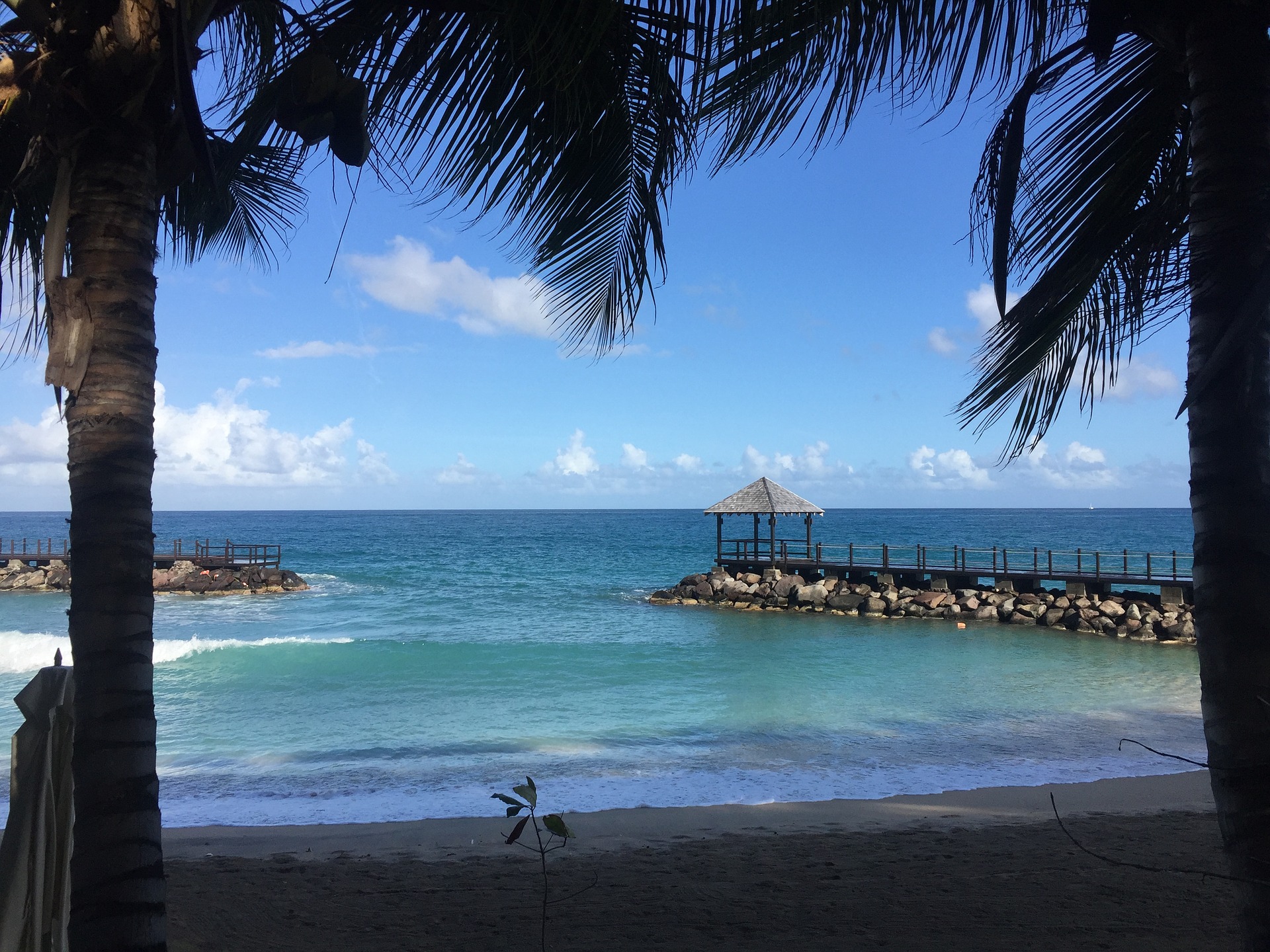
The Spice Isle: three main islands at the southern end of the Lesser Antilles, with nutmeg and cocoa estates, crater lakes, reef and wreck diving, and the palm-fringed sand of Grand Anse.
Grenada is made up of three larger islands, Grenada, Carriacou and Petite Martinique, plus several tiny ones, at the southern end of the Lesser Antilles, just north of Trinidad and Tobago. It is known as the Spice Isle because it grows nutmeg, cloves, ginger, cinnamon, vanilla and cocoa, and you can visit the estates and factories that process them. The main island is volcanic and rugged, with mountains that catch the rain, crater lakes, waterfalls and a large natural harbour at St George's.
On the main island, accommodation is concentrated around Grand Anse beach, near the airport, where the dive shops and all the water sports are. Carriacou, the quieter second island, is reached by ferry or by plane, and Petite Martinique by ferry; the UK travel advice notes that tourist facilities there are still reduced after Hurricane Beryl in July 2024. The currency is the East Caribbean dollar, and US dollar notes are accepted.
- Grand Anse: The island's best-known beach and the centre for hotels, dive shops and water sports.
- St George's: The capital, an old town around the carenage harbour, with Fort George on the knoll above.
- Grand Etang: A crater lake and nature reserve in the middle of the island, with Mona monkeys and birdlife.
- Bianca C: A cruise ship that sank in 1961, now the signature wreck dive off Grenada.
- Spice and cocoa estates: Nutmeg processing at Gouyave and cocoa for chocolate at Belmont.
- Carriacou: The smaller, quieter island, with several old ruins, a ferry ride or a flight away.
Places to visit
Cities
- St George's: The capital, built around the natural harbour of the carenage, with Fort George and the historic Church Street district; some buildings are still damaged from the 2004 hurricane.
- Grenville: A town with the Princess Alice hospital; minibus route 9 crosses the top of the island from here to Sauteurs.
- Gouyave: A town with a nutmeg factory, close to the Dougaldston spice estate.
- Sauteurs: The northern point of the island, where, according to legend, the last Caribs jumped from the cliffs in 1652.
- Hillsborough: A town on Carriacou, where most of the island's small places to stay are, where its minibuses start and where yachts can clear customs.
Beyond the cities
- Grand Anse (coast): A palm-fringed sweep of sand with the hotel strip and all the water sports, though erosion has made it narrow.
- Morne Rouge (BBC Beach) (coast): A much quieter beach beyond the headland west of Grand Anse.
- Prickly Bay (coast): A bay south of Grand Anse that often has surfable waves, and a port of entry for yachts.
- Grand Etang (park): A flooded crater lake and nature reserve mid-island, under Mount Qua Qua.
- Levera (park): A crater lake and park at the northern end of the island.
- Annandale Falls (site): The best-known waterfall on the west side of the island.
- Seven Sisters Falls (site): Waterfalls on the eastern slopes, along with Honeymoon Falls.
- Mount St Catherine (mountain): The highest mountain, a dormant volcano with geothermal hot springs.
- Belmont (site): An estate in the north that processes cocoa beans for chocolate.
- Carriacou (island): The second island, quieter, with small places to stay and old ruins; easier for cycling.
- Tyrell Bay (coast): A bay in the south-west of Carriacou with a few places to stay.
- Petite Martinique (island): A tiny island where you get around on foot.
Regions
- Grenada (island): The main island, with the capital, the airport, Grand Anse and the crater lake of Grand Etang.
- Carriacou: The second island, with its own airstrip and ferry links.
- Petite Martinique: A tiny island reached by Osprey ferry.
Things to do
See
- Grand Etang and the waterfalls Grand Etang, Annandale Falls, Seven Sisters Falls: A crater lake with Mona monkeys and tropical flowers, and waterfalls on both sides of the island.
- Spice and cocoa estates Gouyave and Belmont: See how nutmeg and other spices are processed near Gouyave, and how cocoa becomes chocolate at Belmont.
- Fort George and the carenage St George's: The natural harbour and the fort above it; the inland streets are steep, so a small tourist train helps.
- Watch cricket National Stadium, St George's: The national team and often the West Indies play here; the domestic season runs from December to May.
Do
- Dive the Bianca C: A 600 ft cruise ship that caught fire and sank in 1961, now lying 90 to 160 ft down.
- Snorkel and dive the west coast reefs Grand Anse: Dive shops offer training, and the sites are a 5 to 10 minute boat ride away; shallow reefs have soft coral within snorkelling depth, and there is usually a current, so dives are drifts.
- Surfing Prickly Bay: Not on the sheltered west coast: try Prickly Bay or the exposed beaches facing north-east.
- Run with the hash: Running trails are laid at different spots on the main island, usually on Saturday afternoons, followed by rum.
Drink
- Rum distillery tours Clarke's Court, Westerhall, River Antoine: The three distilleries of the main island offer tours; local bars may serve very strong rum.
Shop
- Buy spices and chocolate St George's and Grand Anse: Nutmeg and vanilla above all; supermarkets may be cheaper than the duty-free mall by the cruise terminal.
Itineraries
A week on Grenada and Carriacou (7 days)
- Grand Anse (4 nights): Diving or snorkelling, St George's by water taxi, and a taxi tour to Grand Etang and the spice estates.
- Hillsborough (3 nights): Ferry or flight to Carriacou, quieter roads and old ruins.
Four days on the main island (4 days)
- Grand Anse (2 nights): Beach, reefs and Morne Rouge.
- Gouyave (0 nights): A day by hired taxi: Annandale Falls, the nutmeg factory, then north to Sauteurs and Belmont.
- St George's (1 night): Fort George, the carenage and Church Street.
Holidays and events
- 1 January 2026 · New Year's Day
- 7 February 2026 · Independence Day
- 3 April 2026 · Good Friday
- 6 April 2026 · Easter Monday
- 1 May 2026 · Labour Day
- 1 May 2026 · Indian Arrival Day
- 25 May 2026 · Whit Monday
- 4 June 2026 · Corpus Christi
- 3 August 2026 · Emancipation Day
- 11 August 2026 · Carnival
- 25 October 2026 · Thanksgiving Day
- 25 December 2026 · Christmas Day
- 26 December 2026 · Boxing Day
Getting there and around
| Main airports | GND, CRU |
|---|---|
| International driving permit | Recommended |
Getting there
By air: Maurice Bishop International Airport (GND) is on the south-west tip of the main island, 8 km from St George's, with long-haul flights from North America and Europe and short hops to other islands. Lauriston Airport (CRU) on Carriacou is a small airstrip with daily flights from Maurice Bishop and direct flights from Saint Vincent.
By sea: cruise ships dock in St George's, usually from October to May. Osprey passenger ferries link Grenada, Carriacou and Petite Martinique, and a small ferry runs between Carriacou and Union Island on Mondays and Fridays. Yachts must clear immigration and customs at St George's, Prickly Bay or Hillsborough; Petite Martinique is not a port of entry.
Getting around
Minibuses are the everyday transport and run at fixed fares, though the UK warns that their drivers often exceed speed limits. Most routes start at the bus terminal in St George's, next to the cruise dock, and route 1 to Grand Anse is very frequent; on Carriacou buses start from Hillsborough. A water taxi runs between St George's and Grand Anse beach. Licensed taxis have number plates beginning with H. They are not metered but have standard fares: agree the price before you set off, in local currency to avoid being overcharged. Hiring a taxi for the day is often easier than driving, because drivers know the poorly signposted turnings.
To drive you need a temporary Grenadian licence, which car hire companies or the central police station in St George's issue when you show your own licence; Canada also advises carrying an International Driving Permit, and some hire companies require one. Traffic drives on the left. Roads are narrow and winding, with potholes, speed bumps, blind corners and poor lighting, and pedestrians often walk in the road. Do not stop if someone flags you down, keep the doors locked, and after an accident call the police and leave the car where it is. Cycling is hard work on the main island but easier on Carriacou.
Flying to Grenada? PartnerCompare fares and find the cheapest datesSearch flightsWhere to stay
- Beach hotels: Concentrated at Grand Anse, near the airport. Rooms are expensive, but Wikivoyage notes that long-haul flight and hotel packages cost little more.
- Small places on Carriacou: Mid-range places, mostly in Hillsborough, with a few at Tyrell Bay.
There is very little accommodation in St George's itself; from Grand Anse you can reach the capital by minibus or water taxi. On Carriacou and Petite Martinique, the UK travel advice says tourist facilities are still reduced after Hurricane Beryl in July 2024: check with your accommodation before you travel. Make sure your room is secure, and the same applies if you stay on a yacht.
Eat and drink
Dishes to try
- Fish and chicken: The staples, well seasoned with the island's spices.
- Pelau: A rice dish cooked in one pot.
- Cassava pone: A common dessert.
Drinks
- Rum: Made at Clarke's Court, Westerhall and River Antoine; be careful with the very strong rum in local bars.
- Local beer: Two breweries operate near Grand Anse.
- Tap water: Safe to drink according to Wikivoyage, and restaurants serve it on request.
The best restaurants are in the Grand Anse hotels, and most of them cater to non-residents. In St George's places cater for quick lunches and close early. Away from the beach, people dress conservatively, and you will not be served in beachwear.
Entry requirements and visas
| Passport validity | At least 6 months from the date you arrive (UK and Canada) |
|---|
| Passport | Entry | Max stay | Notes |
|---|---|---|---|
| United Kingdom | Visa free | 90 days | Up to 3 months on entry; longer stays through the Immigration Department. |
| Canada | Visa free | 90 days | No tourist visa for stays up to 90 days. |
Other nationalities: check the official source below.
British and Canadian visitors can stay up to 3 months (90 days) without a visa. Your passport must be valid for at least 6 months from the day you arrive. Customs officers will ask for a return or onward ticket and may ask for proof that you can pay for your stay. Make sure your passport is stamped on arrival: without a stamp you are treated as an illegal visitor.
From 1 year of age, you need a yellow fever certificate if you arrive from a country with a risk of yellow fever, including airport transits of more than 12 hours there. Overstaying or working without a permit is illegal. Rules depend on your passport and can change: check the official link before you book.
Money and payments
| Currency | East Caribbean Dollar (XCD) |
|---|
The currency is the East Caribbean dollar (XCD, EC$), pegged at US$1 = EC$2.70. US dollar notes are accepted everywhere, but coins are not, and change may come in EC cents. There is no exchange desk at the airport and EC dollars are hard to change outside the Caribbean, so bring enough US dollars to reach a bank and spend your EC dollars before you leave. Banks in St George's and Grand Anse have exchange desks open Monday to Friday, 08:00 to 14:00, according to Wikivoyage, and ATMs are only at banks.
Small businesses, taxi drivers included, seldom take cards. You can often pay taxi fares in US dollars as well. Do not carry large amounts of cash, and take care at ATMs, especially after dark.
Health
| Required vaccines | Yellow fever certificate, from 1 year of age, only if you arrive from a country with a risk of yellow fever, including airport transits of more than 12 hours there |
|---|---|
| Recommended vaccines | Routine vaccines, including measles (MMR), Hepatitis A, recommended for all travellers, Hepatitis B, recommended for all travellers, Typhoid, for some travellers: rural areas, long stays or visiting friends and relatives, Rabies, for people at higher risk of contact with animals, Mpox, for travellers at risk of sexual exposure |
| Tap water | Varies |
Dengue, Zika and chikungunya are spread by mosquitoes, so protect yourself from bites at all times; if you are pregnant or planning a pregnancy, talk to a doctor about Zika before you go. Rabies is carried by dogs and some wildlife, including bats: avoid contact with animals. Treatment after a bite may be limited or not available, and you may need to travel elsewhere for it. The sun is strong this close to the equator even on cloudy days, so use shade, a hat and high-factor sunscreen, and drink plenty of water. Wikivoyage reports that tap water is safe to drink, but the UK, Canada and the CDC do not confirm it, so use bottled water if you prefer. Check with a travel health professional at least 8 weeks before your trip.
Adequate healthcare is available, and private clinics are usually better equipped than public ones. Treatment can be expensive and most hospitals want cash, sometimes upfront; serious cases may need evacuation. Take travel insurance that covers medical evacuation. For an ambulance, call 434 for the general hospital in St George's, 724 for Princess Alice hospital in Grenville or 774 for Princess Royal hospital on Carriacou.
This is general information, not medical advice: check with a travel health professional before you go.
Safety
- United States: Level 2: Exercise Increased Caution (2026-10-20)
- Canada: Take normal security precautions (2026-10-20)
- United Kingdom: No advice against travel (2026-10-20)
Most crime is non-violent and opportunistic, such as theft of unattended belongings and break-ins at villas or cars, but the UK advice notes occasional armed robbery and sexual assault. Canada says petty crime rises before and during festivals such as Carnival in August. Take care at street and beach parties after dark, avoid isolated places, including beaches, at night, use only licensed taxis, keep valuables in the hotel safe and do not carry much cash or jewellery. There have been more thefts from yachts along the south coast, and Canada advises against sailing between the eastern Caribbean islands at night.
Currents can be strong and not all beaches have lifeguards or flags, so ask locally before you swim. If you hike, go with an experienced guide and stay on marked trails. The hurricane season runs from June to November; January to April is slightly drier and cooler. Grenada lies in an active seismic zone, and the underwater volcano Kick 'em Jenny lies off the coast: check its alert level and respect any maritime exclusion zone. The emergency number is 911.
Customs and etiquette
Camouflage clothing is illegal for everyone, children included. Penalties for drug offences are severe: pack your own bags and never carry anything through customs for someone else. Same-sex sexual acts are illegal, with sentences of up to life imprisonment according to Canada, and public affection between any couple is uncommon.
Away from the beach, people dress conservatively: shorts and a shirt are fine in town, beachwear is not. The duty-free allowance is one quart of wine and spirits in total and 200 cigarettes, 50 cigars or half a pound of tobacco; fruit, vegetables, meat, soil, firearms and drugs are restricted, and you must declare anything that may be prohibited or taxed. If you buy spices or food to take home, check your own country's import rules first.
Language
| Official languages | English |
|---|---|
| English | Widespread |
What to pack
- US dollar notes: There is no exchange at the airport and small businesses seldom take cards.
- Your driving licence: You need it to get the temporary Grenadian licence; Canada also advises an International Driving Permit.
- Insect repellent: Dengue, Zika and chikungunya are spread by mosquitoes.
- High-factor sunscreen and a hat: The sun burns quickly, even when it is cloudy.
- Proof of your onward ticket: Customs officers will ask for it.
- Clothes for town: Beachwear is not accepted away from the beach; leave camouflage clothing at home.
Quick reference
Country facts
| Capital | St. George's |
|---|---|
| Population | 117,303 (2025) |
| Area | 344 km² |
| Time zone | America/Grenada (UTC-4) |
| Calling code | +1473 |
| Driving side | left |
Staying connected
| SIM and eSIM | Almost everywhere on the three islands has 4G from Flow and Digicel, with a few dead spots in the mountains, according to Wikivoyage. |
|---|
Emergency numbers
| Police | 911 |
|---|---|
| Ambulance | 434 |
| Fire | 911 |
Frequently asked questions
Do I need a visa for Grenada?
Not for short stays with a UK or Canadian passport (up to 3 months or 90 days). Your passport must be valid for 6 months from arrival. Check the official link before you book.
What currency is used in Grenada?
The East Caribbean dollar, pegged at US$1 = EC$2.70. US dollar notes are accepted, but not coins, and there is no exchange desk at the airport.
Is tap water safe to drink in Grenada?
Wikivoyage reports that it is: it comes from the mountains and restaurants serve it on request. The UK, Canada and the CDC do not confirm this, so use bottled water if you prefer.
Can I drive in Grenada?
Yes, with a temporary Grenadian licence from the hire company or the police in St George's. Traffic drives on the left and roads are narrow and winding.
How do I get to Carriacou?
By Osprey ferry from Grenada or on a flight from Maurice Bishop to Lauriston Airport.
When is hurricane season in Grenada?
From June to November. January to April is slightly drier and cooler.
Sources This guide was last checked on · 15 sources
- Wikivoyage: Grenada · Overview, Places to visit, Things to do, Itineraries, Getting there and around, Where to stay, Eat and drink, Entry requirements and visas, Money and payments, Health, Safety, Customs and etiquette, Language, What to pack, Staying connected, Frequently asked questions
- Wikidata: Grenada · Overview, Money and payments, Country facts
- UK FCDO: Grenada safety and security · Overview, Getting there and around, Where to stay, Money and payments, Safety, Customs and etiquette, What to pack, Frequently asked questions
- UK FCDO: Grenada health · Places to visit, Health
- Government of Canada: Grenada travel advice (updated 13 October 2026) · Places to visit, Getting there and around, Entry requirements and visas, Money and payments, Health, Safety, Customs and etiquette, What to pack, Frequently asked questions
- Nager.Date: public holidays in Grenada, 2026 · Holidays and events
- UK FCDO: Grenada entry requirements · Entry requirements and visas, Health, Customs and etiquette, What to pack, Frequently asked questions
- US CDC: Travelers' health, Grenada · Entry requirements and visas, Health
- ISO 4217 (SIX), published 2026-09-17 · Money and payments
- US Department of State: Grenada travel advisory · Safety
- UK FCDO: Grenada travel advice · Safety
- World Bank, SP.POP.TOTL · Country facts
- World Bank, AG.LND.TOTL.K2 · Country facts
- IANA Time Zone Database, zone.tab · Country facts
- UK FCDO: Grenada getting help · Emergency numbers
Suggest an update
Travel rules, prices and timetables change. If something in this guide is out of date, tell us: we check every suggestion against an official source before changing the page.