

- Local time
- 08:39
- Currency
- XCG
- Capital
- Willemstad
- Calling code
- +5999
- Drive on the
- right
Overview
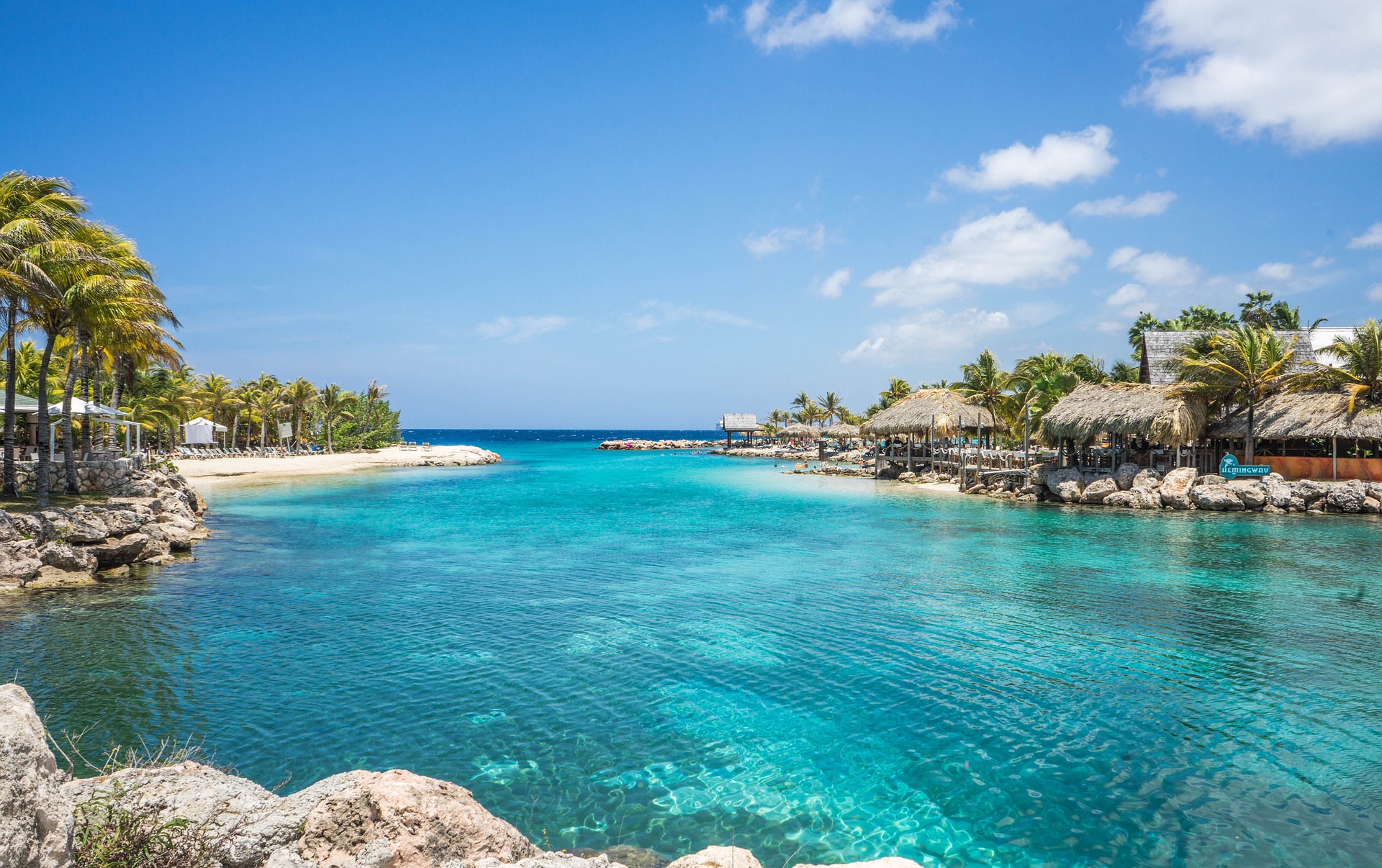
A Dutch Caribbean island off Venezuela, with the pastel waterfront of Willemstad on the UNESCO list, reef diving along the south-west coast and small beaches up to Westpunt.
Curaçao (Kòrsou in Papiamentu) is one of the ABC Islands, with Aruba and Bonaire, near the coast of Venezuela. It lies outside the hurricane belt, so tropical storms rarely disrupt a holiday. The capital, Willemstad, has Dutch-style houses painted in pastel colours, and its centre and waterfront are on the UNESCO World Heritage List. Many visitors arrive on cruise ships and stay only a day or two.
After cruise passengers, divers are the largest group of visitors: the whole south-western side of the island is one long coral reef and marine park, with easy shore dives and steep drop-offs. The public beaches are along the south coast, especially towards the western end, and the west also has the island's national parks, with caves, the bocas of Shete Boka and Mount Christoffel, the highest point at 394 metres. The local language is Papiamentu, and most people also speak Dutch, English and Spanish.
- Willemstad waterfront: The pastel-coloured centre on both sides of St Anna Bay, a UNESCO World Heritage Site.
- Queen Emma Bridge: A floating pontoon bridge between Punda and Otrobanda that swings open to let ships into the bay.
- Diving and snorkelling: The south-western coast is one long reef and marine park, with many shore dives.
- Christoffel National Park: Mount Christoffel, the highest point of the island, and caves with paintings left by the Arawak people.
- Shete Boka National Park: Seven bocas, including Boca Tabla and Boca Pistol, some of them used by sea turtles for breeding in season.
- Hato Caves: Limestone and coral caves with stalactites, pools, a waterfall and a colony of fruit bats.
Places to visit
Cities
- Willemstad: The capital and largest city, whose centre and waterfront are on the UNESCO World Heritage List.
- Hato: A town next to the international airport.
Beyond the cities
- Punda (district): The historic centre of Willemstad, with most of the shops and restaurants for visitors.
- Otrobanda (district): Across St Anna Bay from Punda, with the Rif Fort, the Mega Pier and shops for locals along Breedestraat.
- Scharloo (district): Scharlooweg was the main avenue of Jewish merchants at the end of the 19th century.
- Westpunt (town): The western tip of the island, with restaurants and small beaches.
- Christoffel National Park (park): Mount Christoffel, the highest point of the island, and caves with Arawak paintings.
- Shete Boka National Park (park): A park run by the Carmabi Foundation, with seven bocas, including Boca Tabla and Boca Pistol.
- Hato Caves (site): Caves carved below the sea and left dry when the sea level dropped, with guided tours.
- Playa Lagun (coast): A small sandy bay between tall cliffs, with good snorkelling along both sides.
- Playa Kalki (coast): A beach at the far western end of the island, past Westpunt, with a dive shop.
- Mambo Beach (coast): A beach east of Willemstad where locals and visitors go for nightlife.
- Klein Curaçao (island): An uninhabited island that you can reach only by boat.
Things to do
See
- Walk across the Queen Emma Bridge Willemstad: The floating bridge between Punda and Otrobanda swings open for ships; when it stays open, a ferry crosses the channel.
- Museum Kura Hulanda Willemstad: An anthropological museum on the African slave trade and the cultures of Curaçao; entry was Cg21 in October 2024.
- Mikvé Israel-Emanuel Synagogue Willemstad: Described by Wikivoyage as the oldest synagogue in the western hemisphere, with a sand floor and a museum.
- Explore Christoffel National Park Christoffel National Park: Home to Mount Christoffel, the highest point of the island at 394 metres, and to caves with Arawak paintings; the park is run by the Carmabi Foundation.
- See the bocas of Shete Boka Shete Boka National Park: The park's seven bocas include Boca Pistol, also called The Shooting Pistol; in season some serve as sea turtle breeding grounds.
- Tour the Hato Caves: Guided tours run twice a day; photography is limited because of the bat colony.
Do
- Dive or snorkel the marine park The south-western coast: Many dive schools offer courses, and the reef has everything from easy shore dives to sheer drop-offs.
Drink
- Try Blue Curaçao: The island's best-known product, a liqueur made from the peel of bitter oranges, mostly used in cocktails.
Shop
- Visit the floating market Punda: Boats from Venezuela sell fresh fish and fruit by the harbour.
After dark
- Go out at Mambo Beach Mambo Beach: The beach where locals and visitors gather for nightlife.
Itineraries
Five days on Curaçao (5 days)
- Willemstad (3 nights): Punda and Otrobanda, the Queen Emma Bridge, the museums, the Hato Caves and an evening at Mambo Beach.
- Westpunt (2 nights): Christoffel and Shete Boka national parks, then snorkelling at Playa Lagun and Playa Kalki.
Holidays and events
- 1 January 2026 · New Year's Day
- 16 February 2026 · Carnival Monday
- 3 April 2026 · Good Friday
- 5 April 2026 · Easter Sunday
- 6 April 2026 · Easter Monday
- 27 April 2026 · King's Day
- 1 May 2026 · Labour Day
- 14 May 2026 · Ascension Day
- 24 May 2026 · Pentecost
- 2 July 2026 · Curaçao National Flag and Anthem Day
- 10 October 2026 · Curaçao Day
- 25 December 2026 · Christmas Day
- 26 December 2026 · St. Stephen's Day
- 31 December 2026 · New Year's Eve
Getting around
| Main airports | CUR |
|---|
A car is close to essential: buses reach almost the whole island, but departures are often 1 to 2 hours apart, and many places in the west are hard or impossible to reach without a car. You can rent at the airport and around the island. You drive on the right, signs are in Dutch in the European style, and turning right on a red light is not allowed. Drivers can be aggressive, and donkeys, goats and iguanas wander onto the road. If you have an accident, the law forbids moving your car: call 199 for road service. Petrol has to be paid in cash. The UK advice says you can drive with a UK photocard licence; Canada accepts Canadian licences but advises carrying an International Driving Permit. Rental companies may ask for a year of driving experience and a higher minimum age.
Taxis must be registered and have plates starting with TX. They have no meters and charge flat rates by destination set by the government, but agree the fare before you get in. Click Curaçao is a local ride-hailing app. Buses leave from two stations in Willemstad, Otrobanda for the west and the airport, and Punda for the east. The large Konvoi buses run infrequently; the smaller BUS vans have BUS on the plate and a list of stops in the windscreen, and the driver may take you closer to your destination if you ask. Pay in cash with small notes, and look for the yellow Bushalte signs. Most routes run from about 6 am to 8 pm.
Flying to Curaçao? PartnerCompare fares and find the cheapest datesSearch flightsWhere to stay
- Beach resorts: Large beach hotels, including an all-inclusive beachfront resort in Willemstad.
- Villas: Private villas, some with their own pool, for example at St Willibrordus in Banda Abou.
- Apartments and bungalows: Self-catering apartments in Pietermaai and bungalows with kitchens at Westpunt.
- Town hotels: Hotels in town, including one in a fully restored colonial building.
If you stay outside Willemstad, renting a car is a good option: taxi fares can be quite expensive and public transport is not very reliable.
Eat and drink
Dishes to try
- Krioyo food: Local Creole cooking, served at lunch spots such as Plasa Bieu in Punda.
- Cabritu stoba: Stewed goat, a classic of the local cuisine.
- Saté with peanut sauce: Indonesian dishes came to the island by way of Suriname and are easy to find.
- Fresh fish: Red snapper, dradu and tuna at seaside restaurants.
- Chinese 'snacks': Small bar-restaurants serving inexpensive Chinese food, often open later than other places.
Drinks
- Blue Curaçao: A liqueur made from bitter oranges grown on the island, coloured blue, orange or green, mostly used in cocktails.
- Amstel Bright: A pale lager, usually served with a wedge of lime.
- Polar: A 5% lager brewed in Venezuela.
- Brion: The official local beer, although it is brewed in Barbados.
Local cooking mixes European, West Indian and Indonesian flavours, with Dutch cheese, bread and seafood. Prices in bars and restaurants tend to be high, especially in Punda, but happy hours help, and if you are not staying near the centre, groceries from a supermarket may cost less than eating out. Plasa Bieu, a group of small restaurants in Punda, is a lunch spot for people who work in the area, open on weekdays only.
Tap water comes from a seawater desalination plant and is safe to drink. On Sundays most businesses in the city other than restaurants are closed.
Entry requirements and visas
| Passport validity | UK: valid for your whole stay; Canada: at least 6 months after the date you expect to leave |
|---|
| Passport | Entry | Max stay | Notes |
|---|---|---|---|
| United Kingdom | Visa free | 90 days | Up to 90 days in a calendar year; an extension is possible at immigration with travel insurance for the extra time. |
| Canada | Visa free | 90 days | Up to 90 days in a 180-day period for tourism or business. |
Other nationalities: check the official source below.
British and Canadian visitors can stay up to 90 days without a visa. Every visitor, including those only in transit, must fill in the online Digital Immigration card (DI card) before arriving: the UK advice says to do it 48 hours before you arrive, and Canada says you can fill it in within 7 days before you travel. Officials may ask for a return or onward ticket, proof of the purpose of your stay, enough money for your stay and valid health insurance.
According to Wikivoyage, travellers who need a visa get one that is valid for Aruba, Curaçao, Sint Maarten and the Caribbean Netherlands, for up to 90 days in 180 days, with no more than 30 days in a row on any one island; it is not valid for the European Netherlands. Children under 18 need special documents, including identity documents and a consent form signed by the parent or parents, naming the adult who accompanies the child. Rules depend on your passport and can change: check the official link before you book.
Money and payments
| Currency | XCG |
|---|---|
| Cards | Widespread |
The currency is the Caribbean guilder (XCG, Cg), pegged at about 1.77 to the US dollar. It replaced the Netherlands Antillean guilder, which stopped being legal tender on 1 July 2025 but can still be exchanged at the Central Bank. US dollars and euros are readily accepted. Visa and Mastercard are accepted almost everywhere, though foreign cards are often charged in US dollars, and American Express is not widely taken.
ATMs are easy to find and many give both guilders and US dollars, but fees are high: in April 2022 they were US$10 a withdrawal at MCB and US$6 at RBC. Keep some cash for petrol, which must be paid in cash, and small notes for the bus, which does not take 50, 100 or 200 guilder notes.
Health
| Required vaccines | Yellow fever, only if you come from or have transited through an airport of a country where yellow fever occurs |
|---|---|
| Recommended vaccines | Routine vaccines, including measles (MMR), Hepatitis A, Hepatitis B, Rabies, if you will work directly with wildlife |
| Tap water | Safe |
There is no risk of yellow fever in Curaçao, but you need proof of vaccination if you arrive from, or have transited through an airport of, a country where it occurs. Dengue occurs sporadically, and Zika and chikungunya are also spread by mosquitoes, so protect yourself from bites; if you are pregnant or planning a pregnancy, talk to a doctor about Zika before you go. Check with a travel health professional at least 8 weeks before your trip. Wikivoyage says tap water, from a desalination plant, is safe to drink.
Curaçao has 3 hospitals. Curaçao Medical Center is the largest, with the island's only intensive care unit; Taams Clinic and the Antillean Adventist Hospital also offer a wide range of services. Medical care is generally good but may be limited, and facilities may ask for immediate payment in cash. The EHIC and GHIC are not valid here, so take travel insurance that covers hospital stays and medical evacuation. For an ambulance call 912.
This is general information, not medical advice: check with a travel health professional before you go.
Safety
- United States: Level 1: Exercise Normal Precautions (2026-10-20)
- Canada: Take normal security precautions (2026-10-20)
- United Kingdom: No advice against travel (2026-10-20)
Canada advises normal security precautions. Petty theft and bag snatching happen, as do break-ins at homes, hotel rooms and rental units and thefts from cars, and crime tends to rise during Carnival, from January to March. Never leave valuables in your car or on the beach. The UK advice says there is violent crime linked to the drug trade, but the main tourist areas are generally safe; avoid isolated areas and unpatrolled beaches after dark, and keep the doors and windows of your accommodation locked. Women travelling alone may face harassment.
Drug smugglers use the islands of the Dutch Caribbean, so never leave your luggage unattended when you leave and never carry a package for anyone; Dutch authorities generally screen all passengers and bags arriving from the Dutch Caribbean, and you may be asked to go through a body scanner. Penalties for drugs are severe. Coastal waters can be dangerous: follow local warnings, and check the equipment before diving or other water sports.
The hurricane season runs from June to November, but most hurricanes pass well to the north and Curaçao has no record of a recent major hurricane; tropical storms happen occasionally. Canada notes that El Niño conditions, expected to strengthen into 2027, may bring droughts, floods and severe storms. Curaçao is in an active seismic zone. For police and fire call 911, for an ambulance 912, and for the coastguard 913.
Customs and etiquette
You must always carry a copy of the photo page of your passport. Customs rules are strict: declare anything that may be prohibited or taxed, and do not take corals or conch shells off the island, which is strictly prohibited. Cocaine and cannabis may be offered to you quite openly; a polite no is enough.
Much of the land on the east coast is private and closed to visitors, and private security guards patrol it, so do not explore these areas. If you rent a boat, jet ski or car, buy insurance and get the details of your personal liability in writing.
Language
| English | Common |
|---|
| Thank you | Danki |
|---|---|
| Thank you very much | Dushi danki |
| Nice, lovely, delicious (said of almost anything good) | Dushi |
| Bus stop | Bushalte |
What to pack
- Your DI card confirmation: Every visitor must fill in the Digital Immigration card before arriving.
- A copy of your passport photo page: You must carry one at all times.
- Travel insurance: The EHIC and GHIC are not valid, and officials may ask for proof of health insurance.
- Insect repellent: Dengue, Zika and chikungunya are spread by mosquitoes.
- Some cash in small notes: Petrol is paid in cash, and buses do not take large notes.
- Snorkel and mask: The reef runs along the whole south-western coast, with many shore entries.
Quick reference
Country facts
| Capital | Willemstad |
|---|---|
| Population | 156,263 (2025) |
| Area | 444 km² |
| Time zone | America/Curacao (UTC-4) |
| Calling code | +5999 |
| Driving side | right |
Staying connected
| SIM and eSIM | UTS and Digicel are the two mobile networks, both with good coverage and LTE over most of the island; buy a prepaid SIM at their stores, which is usually cheaper than roaming. |
|---|---|
| Roaming | UTS includes roaming at no extra charge in Bonaire, Saba, St Eustatius, Sint Maarten, Saint-Martin and St Barts; Digicel does the same in Aruba and Bonaire. |
Useful apps
- Click Curaçao: Local ride-hailing app, cheaper than regular taxis.
- ABC Curaçao: Bus route planner and timetables.
Emergency numbers
| Police | 911 |
|---|---|
| Ambulance | 912 |
| Fire | 911 |
Frequently asked questions
Do I need a visa for Curaçao?
Not for stays of up to 90 days with a UK or Canadian passport. Every visitor must fill in the online Digital Immigration card before arriving. Check the official link before you book.
What currency is used in Curaçao?
The Caribbean guilder (XCG), which replaced the Netherlands Antillean guilder in 2025. US dollars and euros are readily accepted, and Visa and Mastercard work almost everywhere.
Is tap water safe to drink in Curaçao?
Yes. It comes from a seawater desalination plant and is safe to drink.
Do I need a car in Curaçao?
It helps a lot. Buses run every 1 to 2 hours and many places in the west are hard to reach without a car. Taxis have TX plates and flat rates: agree the fare first.
Is Curaçao affected by hurricanes?
Rarely. Most hurricanes pass well to the north, though tropical storms happen occasionally. The season runs from June to November.
Where are the public beaches?
The public beaches are along the south coast, especially towards the western end, from Rif St Marie to Westpunt.
Sources This guide was last checked on · 15 sources
- Wikivoyage: Curaçao · Overview, Places to visit, Things to do, Itineraries, Getting around, Where to stay, Eat and drink, Entry requirements and visas, Money and payments, Health, Safety, Customs and etiquette, Language, What to pack, Staying connected, Frequently asked questions
- Wikidata: Curaçao · Overview, Money and payments, Country facts
- Nager.Date: public holidays in Curaçao, 2026 · Holidays and events
- UK FCDO: Curaçao safety and security · Getting around, Safety, Customs and etiquette, What to pack, Frequently asked questions
- Government of Canada: Curaçao travel advice (updated 14 October 2026) · Getting around, Entry requirements and visas, Money and payments, Health, Safety, Customs and etiquette, What to pack, Frequently asked questions
- UK FCDO: Curaçao entry requirements · Entry requirements and visas, Health, Customs and etiquette, What to pack, Frequently asked questions
- ISO 4217 (SIX), published 2026-09-17 · Money and payments
- UK FCDO: Curaçao health · Health, What to pack
- US CDC: Travelers' health, Curaçao · Health
- US Department of State: Curaçao travel advisory · Safety
- UK FCDO: Curaçao travel advice · Safety
- World Bank, SP.POP.TOTL · Country facts
- World Bank, AG.LND.TOTL.K2 · Country facts
- IANA Time Zone Database, zone.tab · Country facts
- UK FCDO: Curaçao getting help · Emergency numbers
Suggest an update
Travel rules, prices and timetables change. If something in this guide is out of date, tell us: we check every suggestion against an official source before changing the page.